• KGS/USD = 0.01144 0%
  • KZT/USD = 0.00192 -0%
  • TJS/USD = 0.10849 0.37%
  • UZS/USD = 0.00008 0%
  • TMT/USD = 0.28571 0.28%
  • KGS/USD = 0.01144 0%
  • KZT/USD = 0.00192 -0%
  • TJS/USD = 0.10849 0.37%
  • UZS/USD = 0.00008 0%
  • TMT/USD = 0.28571 0.28%
  • KGS/USD = 0.01144 0%
  • KZT/USD = 0.00192 -0%
  • TJS/USD = 0.10849 0.37%
  • UZS/USD = 0.00008 0%
  • TMT/USD = 0.28571 0.28%
  • KGS/USD = 0.01144 0%
  • KZT/USD = 0.00192 -0%
  • TJS/USD = 0.10849 0.37%
  • UZS/USD = 0.00008 0%
  • TMT/USD = 0.28571 0.28%
  • KGS/USD = 0.01144 0%
  • KZT/USD = 0.00192 -0%
  • TJS/USD = 0.10849 0.37%
  • UZS/USD = 0.00008 0%
  • TMT/USD = 0.28571 0.28%
  • KGS/USD = 0.01144 0%
  • KZT/USD = 0.00192 -0%
  • TJS/USD = 0.10849 0.37%
  • UZS/USD = 0.00008 0%
  • TMT/USD = 0.28571 0.28%
  • KGS/USD = 0.01144 0%
  • KZT/USD = 0.00192 -0%
  • TJS/USD = 0.10849 0.37%
  • UZS/USD = 0.00008 0%
  • TMT/USD = 0.28571 0.28%
  • KGS/USD = 0.01144 0%
  • KZT/USD = 0.00192 -0%
  • TJS/USD = 0.10849 0.37%
  • UZS/USD = 0.00008 0%
  • TMT/USD = 0.28571 0.28%
11 December 2025

Kazakhstan Eyes Revival of Ili River Corridor as Logistics Artery

River transport has long offered a cost-effective and environmentally friendly alternative for moving cargo. Inland waterways present an alternative route that could unlock new logistics pathways for Kazakhstan and the broader Central Asian region. Yet the development of river navigation remains hindered by several challenges.

Kazakhstan’s inland waterway system faces numerous obstacles: insufficient investment, underdeveloped port infrastructure, an aging fleet, and bureaucratic red tape. Despite these issues, reviving river navigation could significantly boost mutual trade, increase cargo volumes, and ease pressure on overburdened road and rail networks. The government has initiated several projects aimed at doing just that.

One notable initiative is the proposed route along the transboundary Ili River in the Almaty Region, connecting the city of Konaev with Yining in China’s Xinjiang Uyghur Autonomous Region. Originating in the Tien Shan mountains, where the Kunges and Tekes rivers merge, the Ili River stretches 1,439 km, with 620 km or 43% within Kazakhstan’s borders.
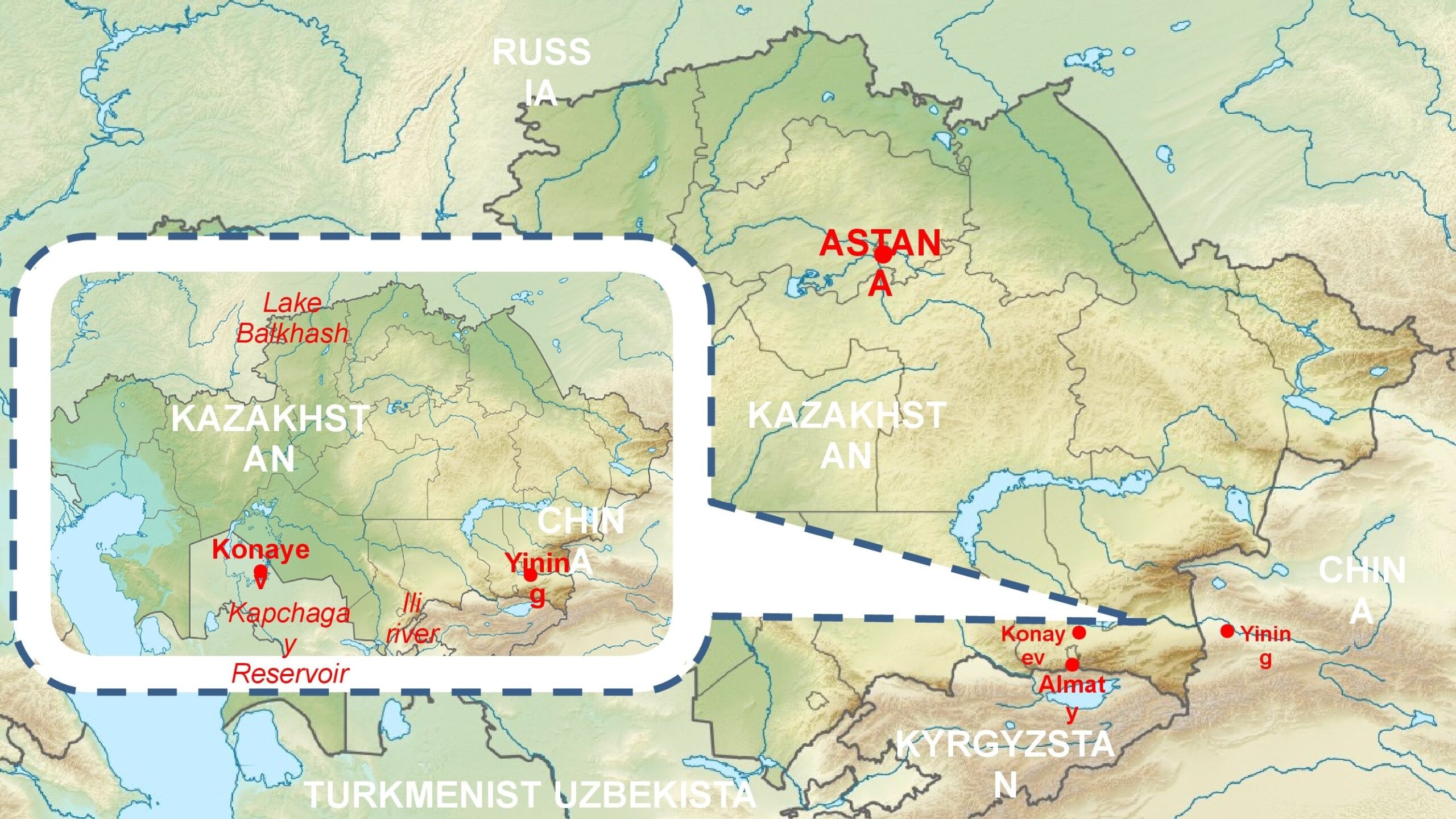
Image: Ili River Port LLP

The project is a joint venture between Kazakhstan’s Ili River Port LLP and China International Water & Electric Corp. In an interview with The Times of Central Asia, Marat Julaev, CEO of Ili River Port LLP, stated that the navigable section of the route spans 450 km. Historically, the Ili served as a key transport artery, facilitating trade and connectivity with remote regions.

“This route was navigable and operational until 1980. It was used to transport dry goods, ores, petroleum products, and consumer goods from China,” Julaev explained.

Following the collapse of the Soviet Union, navigation along the Ili declined sharply. Extensive water usage in China caused water levels to fall, compounding the route’s inability to compete with road and rail alternatives. However, with mounting congestion and capacity constraints in land-based infrastructure, the river’s strategic role is being reconsidered.

“In the Almaty Region, we’ve been allocated a 100-hectare plot on the coast of the Kapshagai Reservoir, providing a strategic advantage in reducing delivery time and costs,” Julaev told TCA. “Our Chinese partners, operating in Kazakhstan since 2006, are developing the route between Yining and Konaev.”

Image: Ili River Port LLP

A central component of the project is the creation of a transport and logistics hub to consolidate and distribute cargo across Central Asia. The river port will offer terminal services, storage, sorting, equipment maintenance, and passenger transport. Plans also include developing production facilities and cargo terminals on-site.

Commissioning is expected in 2027, with an initial cargo turnover capacity of one million tons annually, potentially rising to three million. According to Julaev, this development will enhance Kazakhstan’s foreign trade with China.

Julaev emphasized one of the route’s key advantages: the ability to transport oversized cargo, including materials for Kazakhstan’s first nuclear power plant under construction in the village of Ulken on Lake Balkhash, which is fed primarily by the Ili.

An equally critical issue is water availability. According to the UN Development Programme in Kazakhstan, over 44% of the country’s river flow originates in neighboring states, with intensive upstream water use leading to scarcity. The Ili River, flowing from northwestern China, has seen declining volumes since the 1970s, worsened by a 30% expansion of agricultural land along its banks in China over the past two decades. Further strain could disrupt the region’s ecological balance and threaten the viability of navigation.

Hence, maintaining the Ili’s water balance and that of Lake Balkhash is crucial. Kazakhstan has a strategic interest in ensuring bilateral cooperation with China, not only for logistics development but also for sustainable water resource management.

“Together with our Chinese partners, we’ve identified bottlenecks and developed measures such as dredging and shore reinforcement,” Julaev stated, noting that the project could also increase cargo traffic on the Trans-Caspian International Transport Corridor and enhance trade between Asia and Europe.

According to government targets, Kazakhstan aims to triple inland waterway freight volumes by 2027. The national strategy for developing transport and logistics potential through 2030 promotes shifting cargo from roads and rails to cleaner river-based alternatives. If successful, the Ili River project could provide a model for building out regional transit corridors, not only eastward toward China but westward via the Ural River to Russia, and northward via the Irtysh to the Northern Sea Route.


Future Chelsea Player Satpaev Seals Second Consecutive Title for Kairat

Almaty’s Kairat Football Club has secured its second consecutive Kazakhstan Premier League (KPL) championship. The decisive goal in the final match was scored by Kazakhstan national team striker Dastan Satpaev, currently on contract with London’s Chelsea.

Last year, Kairat won the national championship for the fourth time in its history. This summer, the club qualified for the UEFA Champions’ League group stage for the first time, intensifying pressure on the team as it competed simultaneously in both domestic and European tournaments. Entering the final round, Kairat held a narrow two-point lead over its closest challenger, FC Astana. Fittingly, the season concluded with a high-stakes home match against the capital’s team.

The match took place on Sunday, October 26. Despite Kairat’s territorial dominance, Astana struck first, 38-year-old midfielder Marin Tomasov scored in the 15th minute with a well-placed shot from the penalty area. The visitors threatened further, but Kairat goalkeeper Temirlan Anarbekov delivered several crucial saves to keep the deficit at one.

In the second half, Satpaev, who will join Chelsea after he turns 18, scored the equalizer, making it 1-1. The draw was enough to keep Kairat ahead in the standings, two points clear of Astana, and clinch the club’s fifth national title. Tomasov nearly scored a second goal during stoppage time, but his shot struck the crossbar.

With this result, Kairat became only the seventh club in KPL history to successfully defend its title. The league’s record for consecutive championships belongs to Astana, who won six straight from 2014 to 2019. Aktobe followed with a three-peat (2007–2009), while Yelimay (1994-1995), Zhenis (2000-2001), Irtysh (2002-2003), and Shakhtar Karagandy (2011-2012) each managed two. Between 2020 and 2024, no team had retained the championship, until now.

“There were certainly difficulties during the season, primarily the struggle on several fronts,” said Kairat head coach Rafael Urazbakhtin after the match.

He noted that frequent squad rotation, a demanding schedule, and long-distance travel forced the coaching staff to carefully manage the squad’s physical condition.

“Over time, the team adapted to the rhythm of two or three matches a week. Endurance and teamwork became key factors,” he added.

Kairat’s attention now shifts back to the Champions League, where the club sits in last place in its group with one point from three matches. The next fixture is on November 5 in Milan against second-placed Inter.

As previously reported by The Times of Central Asia, Kairat’s Champions League breakthrough was made possible in part by Anarbekov’s standout performance in a penalty shootout victory over Scotland’s Celtic.

“Music Is Born in Pain”: Kazakh Composer Robert Ziganshin on Inspiration, Integrity, and Creative Freedom

Robert Ziganshin is one of Kazakhstan’s most in-demand film composers. A graduate of the Lyon Conservatory in France, where he studied classical guitar and earned master’s degrees in both music for the visual arts and musicology, he returned home to rapidly establish himself in the country’s film and television industry.

Ziganshin’s credits include music for popular TV series and films such as Alisher Utev’s crime drama 5:32 (IMDB), the box office hit Kazakh Business in Brazil, and Malika, a feature film by Russian director Natalya Uvarova about a family of Ingush migrants.

In an interview with The Times of Central Asia, Ziganshin spoke about the influence of the French school, the ethics of film composition, and why writing music “that simply comments on the action” can mean sacrificing artistic integrity.

TCA: Robert, you graduated from KIMEP in Kazakhstan. How did you end up in France?

Ziganshin: I’ve been passionate about music since early childhood. Even when I was playing with building blocks, I was always humming something, as if adding a soundtrack to my own stories. I didn’t get into music school, and it wasn’t until I was fifteen that I started taking private guitar lessons. There were times I practiced six hours a day.

There was no higher education in classical guitar in Kazakhstan at the time, so I enrolled at KIMEP. After graduating, I applied to two conservatories in France and was accepted to the one in Lyon.

TCA: Why France?

Ziganshin: I spoke fluent French. My father had sent me to language school, and I took part in competitions. Later, a professor from Lyon gave a master class in Almaty, and I helped translate for him. He assessed my level and encouraged me to apply to his course.

TCA: Was tuition really that affordable?

Ziganshin: For foreign students, it was about €900 per year, including health insurance. Compared to the UK, it was a bargain. I spent four years there and earned a bachelor’s degree.

TCA: How did you shift into composing for film?

Ziganshin: I met students from the program Musique appliquée aux arts visuels, music created for film, theater, performance, and media art. I wanted to try it. The entrance exam was creative: we had to score scenes and compose music for a three-minute video in a week. I got in on my second try, only twelve of us were accepted.

It was a two-year program, starting with orchestration and sound engineering, then moving into practical work on student film projects.

TCA: What was the subject of your master’s thesis?

Ziganshin: When should a composer start work on a film? Personally, I prefer being involved from the script stage. After finishing that degree, I also enrolled in a master’s in musicology.

In 2021, I returned to Kazakhstan. I struggled to find paid work in music and almost joined my father’s printing business. I even started hand-making notebooks, neat and beautiful ones. But soon, small offers started coming in, and I returned to composing full-time, initially working on short films for free. Gradually, I gained access to the industry.

TCA: Your collaboration with Alisher Utev began with 5:32. What was your first impression?

Ziganshin: He arrived late to the script reading and didn’t pay much attention to the team. When they called my name, he didn’t seem to hear it. I thought I’d leave after the session. But during a break, he unexpectedly asked to talk, questioned me about music, and actually listened to my views. We clicked immediately and I stayed.

The fact that he invited a composer to the script reading already showed respect for my work. That’s rare. The more deeply I understand a project, the more precise the musical choices can be.

We still collaborate. I recently finished scoring his new series 1286, a crime drama that took about six months to complete.

TCA: You’ve been critical of the practice of using music to cue audience reactions.

Ziganshin: I call it “Mickey Mouse-ing.” The music becomes a caricature, where every gesture gets a musical comment. It reduces artistic value and turns the film into a puppet show, manipulating emotions.

Music should be a language of its own, not just an illustration. In Kazakh Business in Brazil, I used percussion instead of obvious musical cues to enhance the protagonist’s emotional highs. I even collaborated with a Brazilian artist who recorded Portuguese-language rap, though it wasn’t included in the final cut.

TCA: Tell us about scoring Malika.

Ziganshin: It was a rare case where the filmmakers welcomed experimentation. The music is almost invisible but sets the tone. At first, I questioned whether it was needed at all. Eventually, we chose two instruments, accordion and xylophone, as contrasting layers.

The accordion is significant in Ingush culture, but I didn’t want to use traditional folk motifs. Instead, I sampled and distorted chords to create a sound that blended tradition and modernity. The xylophone represented the heroine’s childhood and innocence. The music appears only in fragments, except during the credits.

TCA: Would you call yourself more disciplined or more inspired?

Ziganshin: I work every day, but the process isn’t easy. I’m always trying to find solutions that surprise and resonate. At first, everything often sounds wrong. I need time to “sleep on” the music and return with fresh ears.

I usually work four to five hours a day, nearly without breaks. I aim for high-quality production. Sometimes I feel embarrassed to release my music on streaming platforms because mixing is so expensive. For instance, 1286 has about thirty tracks, and mixing one track costs around $200.

I hope Kazakhstan will invest more in film music. That would strengthen the whole industry.

Uzbekistan and EU Sign Landmark Enhanced Partnership Agreement in Brussels

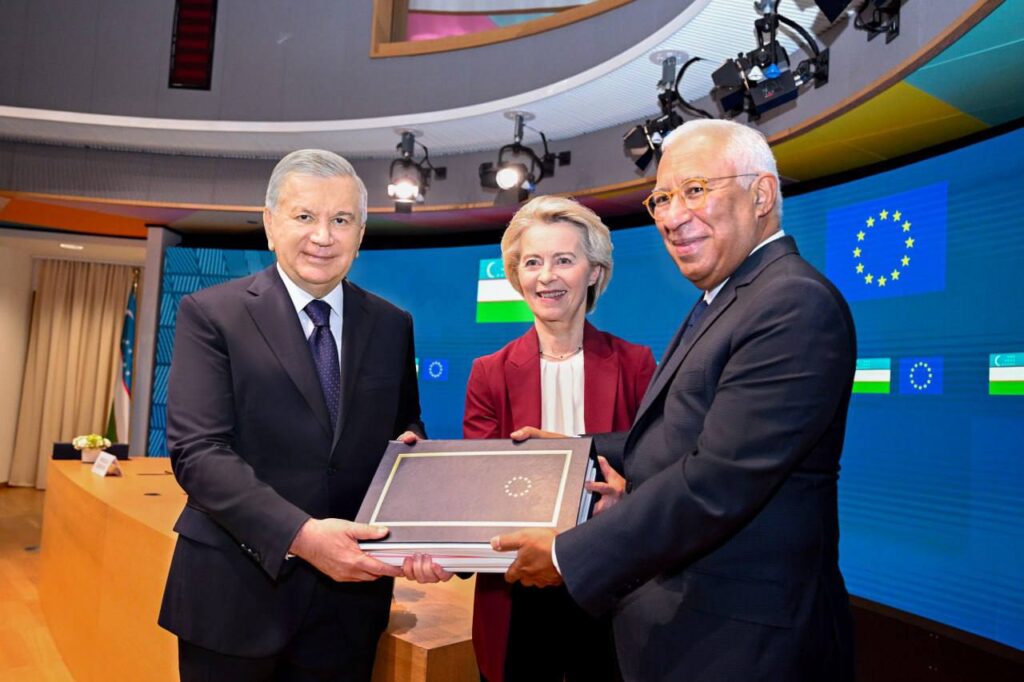
President Shavkat Mirziyoyev of Uzbekistan paid an official visit to Brussels on October 23-24 at the invitation of European Council President Antonio Costa and European Commission President Ursula von der Leyen, where a landmark agreement was signed to deepen Uzbekistan-EU cooperation across multiple sectors.

During the visit, Mirziyoyev attended the signing ceremony of the Enhanced Partnership and Cooperation Agreement (EPCA), which replaces the 1996 Partnership and Cooperation Agreement. The new accord significantly broadens the scope of bilateral ties, covering areas such as trade, investment, digital technologies, environmental protection, and climate resilience. Negotiations began in February 2019 and concluded in July 2022.

The EPCA includes nine sections, 356 articles, and 14 annexes, forming a comprehensive legal framework for political dialogue and long-term economic collaboration. It aims to bolster cooperation in trade, innovation, sustainable development, education, and cultural exchange between Uzbekistan and EU member states.

In Brussels, Mirziyoyev also participated in a roundtable with executives from leading European companies and financial institutions, including Vandewiele, Linde, Lasselsberger Group, Meridiam, SUEZ, the European Investment Bank, Commerzbank, and KfW. The parties agreed to pursue new joint projects worth over €10 billion in sectors such as energy, chemicals, critical minerals, logistics, textiles, and pharmaceuticals. These initiatives build on an existing portfolio of EU-led projects in Uzbekistan, currently valued at more than €40 billion.

Over the past seven years, trade between Uzbekistan and the European Union has doubled, while the number of joint ventures with European investment has surpassed one thousand. Mirziyoyev highlighted that the partnership is grounded in mutual trust and shared priorities, particularly in human capital development, renewable energy, digital transformation, and sustainable infrastructure.

The President outlined four priority areas for expanding cooperation: joint production of high-value goods through deeper processing of strategic raw materials; collaboration in the green economy; development of logistics and transport corridors linking Europe and Asia; and partnerships in digital technologies, including artificial intelligence and cybersecurity.

On the sidelines of the visit, Mirziyoyev met with King Philippe of Belgium at Laeken Palace. The two leaders discussed trade, investment, and cultural ties, with the King congratulating Uzbekistan on the signing of the historic EPCA.

Relations between Uzbekistan and Belgium continue to grow, with rising trade volumes and expanding business cooperation. Belgian firms are active in Uzbekistan’s textile, logistics, and service sectors, while cultural ties have also deepened. Notable milestones include the unveiling of a bust of Ibn Sina in Kortrijk and sister-city partnerships such as Tashkent-Kortrijk and Samarkand-Liège.

Mirziyoyev extended an official invitation to King Philippe to visit Uzbekistan, underscoring a shared commitment to strengthening bilateral ties in the years ahead.

Kazakhstan Responds to Claims It Has Abandoned Ethnic Kazakhs in Afghanistan

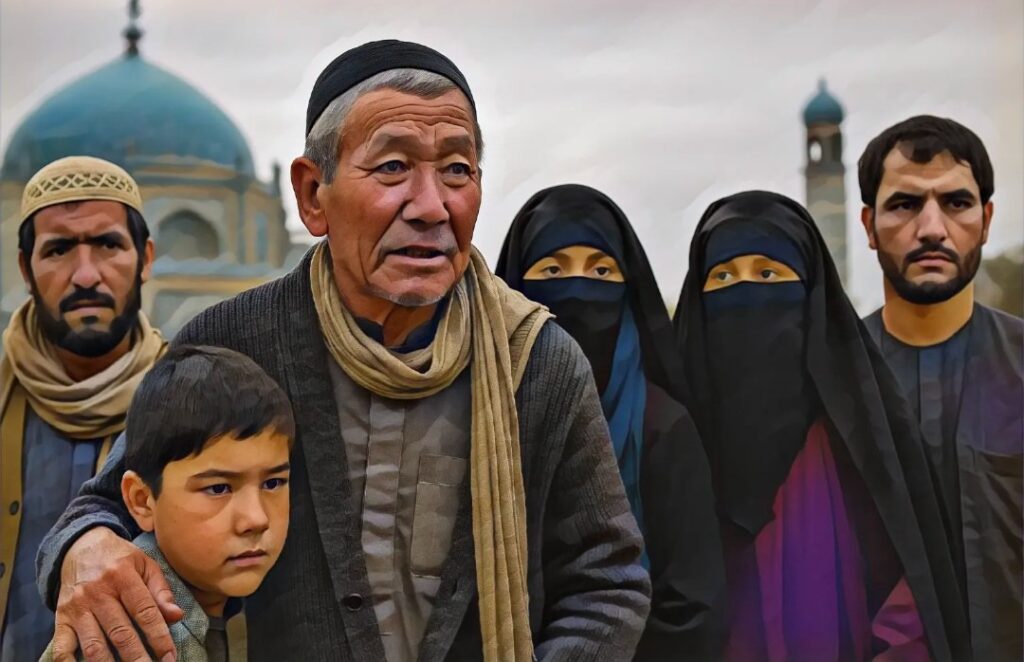
Recent claims circulating on social media have accused the Kazakh government of abandoning ethnic Kazakhs in Afghanistan, with posts often alleging that thousands of Kazakhs have been left to fend for themselves, painting an emotionally charged but factually questionable picture. The Times of Central Asia set out to verify these claims and found a far more complex reality.

Historical Background

Kazakh migration to Afghanistan dates back over a century. In the late 19th and early 20th centuries, some groups of Kazakhs arrived via Xinjiang, China. Later waves followed during the 1930s, prompted by famine and Stalinist repression in the USSR. Some speculate that early migrants may have included supporters of Kenesary Khan, but this remains the subject of academic debate.

While there are no official Afghan census records, estimates suggest that by the mid-20th century, the number of Kazakhs in Afghanistan may have reached 20,000-24,000. However, the repatriation programs of the 1990s drastically reduced these numbers.

Since Kazakhstan’s independence, approximately 13,000 Kazakhs have returned from Afghanistan, part of a broader national effort that has repatriated over 1.15 million ethnic Kazakhs from abroad.

Even after the Taliban takeover, repatriation efforts continued. In September 2021, for example, 35 ethnic Kazakhs were airlifted to Kazakhstan on a specially arranged flight.

Disputed Numbers

According to Kazakhstan’s Foreign Ministry and as confirmed by its embassy in Kabul, the number of ethnic Kazakhs remaining in Afghanistan is about 200 people, or roughly 15 families.

In contrast, some self-proclaimed “cultural centers” and online activists claim there are “thousands” of families, with some estimates as high as 3,600 people. These figures are not substantiated by either official data or independent research.

Verifying Ethnic Identity

The Kazakh embassy in Kabul maintains contact with community representatives to track and verify the status of ethnic Kazakhs. Yet, confirming identities is a serious challenge in Afghanistan due to the absence of a comprehensive population registry.

Since 2018, Afghan identity cards (e-Tazkira) have included a “nationality” field, but filling it is optional and based primarily on self-declaration or statements by local elders. This system is vulnerable to manipulation. The embassy reports cases where individuals from other ethnic backgrounds have falsely identified as Kazakh in the hope of qualifying for repatriation programs.

Additional complications include limited access to remote provinces, weak administrative oversight, and security concerns. The embassy thus relies on field visits, trusted local contacts, and cautious verification to produce its population estimates.

Mixed Marriages and Assimilation

One of the biggest challenges in identification is interethnic marriage. Over the decades, many Kazakhs in Afghanistan have assimilated into surrounding Uzbek, Turkmen, or Tajik communities. Many no longer speak Kazakh, and identity is maintained through fragmentary knowledge of family genealogies (shezhire), often insufficient for verification.

The embassy also raised concerns about “disputed applicants”, individuals attempting to exploit Kazakhstan’s earlier, more lenient kandastar (ethnic repatriation) policy. In the absence of rigorous documentation, ethnicity in Afghanistan has often been based on verbal claims, creating openings for abuse and corruption.

Why Not Use DNA?

Some social media users have suggested resolving the issue through DNA testing. However, this method is neither ethical nor practical for determining ethnicity.

The UNHCR uses DNA only as a last resort for confirming biological family relationships, not for verifying nationality. The European Union and the International Organization for Migration (IOM) follow similar standards, emphasizing interviews, documents, language skills, and cultural knowledge over genetic tests. Attempts to use genetics for nationality screening, such as in the UK in 2009, were widely condemned and quickly abandoned.

Kazakhstan’s verification process, in line with international norms, includes interviews based on shezhire, language assessments, biometric data, and cross-checks with relatives in Kazakhstan or neighboring countries such as Pakistan and Iran.

Those Who Remain

The claim that Kazakhstan has “abandoned thousands of Kazakhs” in Afghanistan is not supported by verifiable evidence. Approximately 200 people remain, and many of the broader community have already repatriated. While conditions in Afghanistan are difficult, the Kazakh government continues to engage with the remaining families through diplomatic channels.

While the humanitarian concerns are real, emotionally driven narratives circulating online oversimplify a complex issue. The Kazakh community in Afghanistan today represents a small, residual group, not a full-fledged diaspora. Their welfare matters, but policy must remain grounded in realism and security imperatives, not speculation.

Kazakhstan Highlights Its Literary Heritage at the 2025 Frankfurt Book Fair

From October 15 to 19, Kazakhstan took part in the 2025 Frankfurter Buchmesse in Germany – one of the world’s most prominent and influential international book fairs. At its national stand, the country presented a diverse selection of new publications from leading Kazakh publishers to a global readership. 

Celebrating its 77th edition, this year’s Frankfurt Book Fair featured more than 30 delegates from Kazakhstan, from major publishing houses such as Mektep, Almatykitap, Atamura, ARMAN-PV, Steppe & World Publishing, Evero, Kazformoms, and AmalBooks.

@TCA

The national pavilion became an important hub for expanding international publishing partnerships. Approximately 350 Kazakh titles were showcased, spanning a wide range of genres from literary fiction and scholarly works to educational and children’s books.

 Book Presentations and Highlights

Several notable book launches took place during the fair. Of particular interest was the multilingual edition Abai’s “Words of Wisdom: Legacy for Generations”, translated into seven languages and presented with the participation of German writer Anja Tuckermann. Another major highlight was a creative presentation of Mirzhakyp Dulatov’s timeless novel “Unfortunate Jamal”, regarded as one of the classics of Kazakh literature.

@TCA

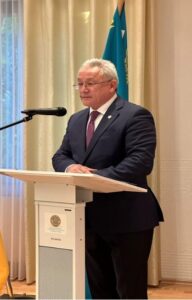
The Consul General of Kazakhstan in Frankfurt am Main, Tauboldy Umbetbayev, visited the national pavilion to show support for the Kazakh delegation and to emphasize literature’s vital role in promoting cultural diplomacy.

Throughout the fair, publishers from Canada, China, Turkey, Azerbaijan, Denmark, Germany, Singapore, and several other countries met with Kazakh representatives to discuss potential collaborations.