• KGS/USD = 0.01144 0%
  • KZT/USD = 0.00193 -0%
  • TJS/USD = 0.10811 -0.28%
  • UZS/USD = 0.00008 0%
  • TMT/USD = 0.28490 0%
  • KGS/USD = 0.01144 0%
  • KZT/USD = 0.00193 -0%
  • TJS/USD = 0.10811 -0.28%
  • UZS/USD = 0.00008 0%
  • TMT/USD = 0.28490 0%
  • KGS/USD = 0.01144 0%
  • KZT/USD = 0.00193 -0%
  • TJS/USD = 0.10811 -0.28%
  • UZS/USD = 0.00008 0%
  • TMT/USD = 0.28490 0%
  • KGS/USD = 0.01144 0%
  • KZT/USD = 0.00193 -0%
  • TJS/USD = 0.10811 -0.28%
  • UZS/USD = 0.00008 0%
  • TMT/USD = 0.28490 0%
  • KGS/USD = 0.01144 0%
  • KZT/USD = 0.00193 -0%
  • TJS/USD = 0.10811 -0.28%
  • UZS/USD = 0.00008 0%
  • TMT/USD = 0.28490 0%
  • KGS/USD = 0.01144 0%
  • KZT/USD = 0.00193 -0%
  • TJS/USD = 0.10811 -0.28%
  • UZS/USD = 0.00008 0%
  • TMT/USD = 0.28490 0%
  • KGS/USD = 0.01144 0%
  • KZT/USD = 0.00193 -0%
  • TJS/USD = 0.10811 -0.28%
  • UZS/USD = 0.00008 0%
  • TMT/USD = 0.28490 0%
  • KGS/USD = 0.01144 0%
  • KZT/USD = 0.00193 -0%
  • TJS/USD = 0.10811 -0.28%
  • UZS/USD = 0.00008 0%
  • TMT/USD = 0.28490 0%
10 December 2025

300 OSCE Observers to Monitor Kyrgyzstan’s Parliamentary Elections

The Organization for Security and Co-operation in Europe (OSCE) will deploy 300 observers to monitor Kyrgyzstan’s upcoming parliamentary elections. The country’s Central Election Commission (CEC) confirmed the news in a statement published on its official website.

According to the CEC, 30 long-term observers will begin work next week, monitoring the electoral process across all regions of Kyrgyzstan. An additional 300 short-term observers will arrive closer to election day to assess voting procedures and the vote count.

Ahead of the vote, CEC Chairman Tyntyk Shainazarov met in Bishkek with representatives from the OSCE’s Office for Democratic Institutions and Human Rights (ODIHR). Mission head Tamás Mészáros stated that the team had arrived in full and was ready to begin its work.

The CEC noted that OSCE representatives expressed interest in attending meetings of the election commission and its working groups, both prior to and following the elections. Both sides affirmed their commitment to open and comprehensive cooperation.

Shainazarov highlighted that Kyrgyzstan’s revised electoral system is designed to ensure fair representation of all regions in parliament, uphold gender balance, and facilitate remote voting.

For the first time, a remote voting system will allow citizens to vote in any district without needing absentee ballots or additional paperwork. Ballots will be generated at polling stations, listing candidates from the relevant constituency.

“We have achieved our goal: voters will vote only once and only for one candidate. This eliminates the possibility of fraud and other violations. I believe this is a great achievement,” Shainazarov said.

The OSCE mission also showed particular interest in the technical details of the new system. Observers were briefed on the equipment and voting procedures ahead of the election, which will take place on November 30.

As previously reported by The Times of Central Asia, the parliament voted on September 25 to dissolve itself, setting the stage for early elections. The decision was approved by 84 deputies, with five abstentions and one absence.

The upcoming vote will be conducted under revised rules. The country has been divided into 30 constituencies, each of which will elect three deputies.

Herat Tribal Peace Paves Way for Central Asian Connectivity Projects

In Herat province, a long-standing conflict between the Timuri and Achakzai tribal communities has officially ended. With the mediation of local authorities, religious scholars (ulemas), and community elders, peace was sealed by a public handshake. While the event may seem local in scope, it carries wider significance for Afghanistan and the broader Central Asian region.

The Timuri-Achakzai feud is emblematic of a broader pattern across Afghanistan’s periphery: limited resources and the absence of effective distribution mechanisms. Disputes over land and water, exacerbated by droughts, shifting river courses, and inadequate irrigation infrastructure, had long fueled tensions over pastures and access to irrigation ditches. Compounding the problem, the disputed areas serve as a critical logistical junction, with both groups vying for control over transit routes.

By the early 2020s, the conflict had calcified into a cycle of blood feuds. Traditional mediation efforts had collapsed, and the return of refugees from Iran, along with internal migration, further inflamed tensions as undocumented land claims surged. Weak central governance and legal ambiguity deepened the divide.

A turning point came in 2023-2024, when Herat’s provincial leadership, working with ulemas and tribal elders, revived dialogue. The key to de-escalation was the realization of mutual dependence. Both groups faced declining agricultural yields, shrinking incomes, and reduced access to state and international aid. Their shared losses laid the groundwork for a symbolic public reconciliation, restoring a platform of trust.

This reconciliation has practical implications for Central Asia. The proposed Turgundi, Herat-Kandahar-Spin Boldak railway, a critical trans-Afghan infrastructure project, passes through Timuri and Achakzai territories. Until recently, their rivalry posed a major risk from land disputes to construction security. Now, with both communities demonstrating their readiness to cooperate, political and transactional risks are receding.

Herat’s peace agreement offers lessons for regional stakeholders invested in trans-Afghan corridors.

First, infrastructure projects in Afghanistan require social engagement. Tribal structures must be included at every stage. Second, economic interdependence can be a catalyst for peace. When communities understand the tangible benefits of cooperation, they are more inclined to compromise. Third, local reconciliation creates what might be called a “social corridor.” The Achakzai and their related kin are present not only in Herat but also in Kandahar and Spin Boldak, spanning the planned railway’s route. Their buy-in transforms the line from a logistical corridor into a corridor of trust.

This development is a strategic signal for the region. Localized Afghan conflicts can either block or enable integration efforts. Every grassroots peacebuilding success strengthens the region’s broader architecture of stability.

Uzbekistan is eyeing the Trans-Afghan Highway. Turkmenistan is seeking to develop its connection through Turgundi. Kazakhstan is exploring how to link its rail networks with South Asia. All of these initiatives depend on the stability and cooperation of Afghan communities along the routes.

The reconciliation between the Timuri and Achakzai should not be dismissed as a minor episode. It sets a precedent. Transitioning from high-level political declarations to the technical implementation of cross-border transit projects becomes more plausible when social dynamics are respected.

If Central Asian states integrate social engagement into their infrastructure diplomacy, these transport corridors can evolve into pathways of trust. Such “small reconciliations,” driven by economic incentives, may ultimately reframe Afghanistan, not as a source of instability, but as a strategic bridge between Central and South Asia.

First Uzbek Genome Project Reveals High Rate of Hereditary Mutations

Uzbek scientists have completed the country’s first full-scale human genome study, marking a significant milestone in both national science and global genomics. Conducted by researchers at the Center for Advanced Technologies, the study identified dozens of previously undocumented genetic mutations unique to the Uzbek population.

The findings have been submitted to international genomic databases and signal Uzbekistan’s growing contribution to global biomedical research. The study revealed that 50% of children examined carried a hereditary mutation, and 86% were carriers of at least one defective gene, roughly double the global average. Experts linked the elevated rate to consanguineous marriages, which occur in up to a quarter of all unions in certain regions.

Professor Shakhlo Turdikulova, Director of the Center for Advanced Technologies and head of the “1,000 Genomes of Uzbekistan” project, emphasized the significance of the findings. “For the first time, we have a clear picture of the genetic makeup of our people,” she said. “If most children carry hidden hereditary mutations, we cannot reverse this trend without a system of genetic counseling and preventive screening. That is why implementing premarital genetic testing programs is essential.”

Beyond rare inherited conditions, the study found strong correlations between genetic mutations and common diseases such as diabetes, cardiovascular disorders, and cancer. More than half of the participants received precise genetic diagnoses, allowing physicians to tailor treatments more effectively. Roughly one-third of the mutations identified were previously unknown to global science.

The “1,000 Genomes of Uzbekistan” project is part of a broader initiative to establish a national biobank and genetic map. Its goals include advancing personalized medicine, supporting pharmaceutical development, and enabling early disease detection.

The Center for Advanced Technologies, which co-developed the ZF-UZ-VAC 2001 vaccine during the COVID-19 pandemic, continues to solidify Uzbekistan’s role as a regional leader in biotechnology and genetic science.

Researchers believe the project’s results will help shape nationwide preventive healthcare strategies and improve the health outlook for future generations.

Five Countries Complete Large-Scale ‘Birlik-2025’ Military Exercises in Uzbekistan

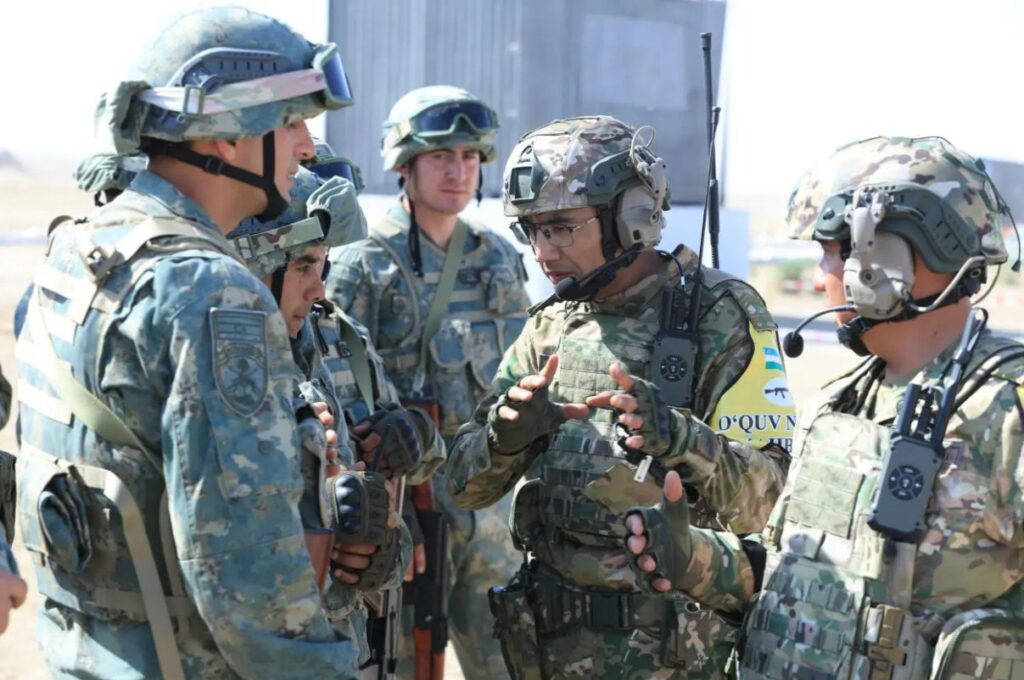
The multinational military exercises Birlik-2025 (“Unity-2025”) have concluded at the Kattakurgan training ground in Uzbekistan’s Samarkand region. The joint maneuvers, which began on October 14, brought together armed forces from Uzbekistan, Kazakhstan, Kyrgyzstan, Tajikistan, and Azerbaijan. According to the Uzbek Ministry of Defense, the drills were among the largest in the history of regional military cooperation.

The exercises focused on counterterrorism and defense operations, aiming to enhance interoperability, tactical coordination, and combat readiness among the participating countries. Scenarios included simulated urban warfare, reconnaissance, and joint air-ground operations.

Commanders utilized computer modeling and simulation technologies to analyze battlefield decisions and identify optimal tactical responses. These digital tools played a key role in shaping the exercise outcomes and refining strategic planning.

@Ministry of Defense of Uzbekistan

Observers included the defense ministers of all participating states, along with military representatives from Turkmenistan, who attended in a monitoring capacity.

The drills were conducted across more than 20 training grounds in multiple regions of Uzbekistan. In the initial phase, reconnaissance units deployed unmanned aerial vehicles to assess the territory of a hypothetical enemy. This was followed by a special operation to neutralize simulated illegal armed groups in an urban environment.

Precision artillery and air strikes were executed by ground forces, while the air forces of Uzbekistan and Kazakhstan provided air cover and destroyed critical enemy positions. Combat helicopters and fighter jets demonstrated joint tactical coordination with land-based units.

Troops also practiced offensive operations along the defensive line using a range of weapons and military equipment. The multi-stage training format included tasks of varying complexity, replicating conditions of high-intensity conflict.

@Ministry of Defense of Uzbekistan

According to the Uzbek Ministry of Defense, Birlik-2025 served as a valuable platform for exchanging experience in combating international terrorism, extremism, and armed insurgency. “Joint operations have made it possible to consolidate advanced methods of combat and improve interoperability between units from different countries,” the ministry stated.

Following the conclusion of the active phase, participants visited mobile maintenance workshops, command posts, and exhibits showcasing modernized weaponry and defense technologies.

Kyrgyzstan Confronts Transport-Driven Air Pollution

On October 21, Bishkek hosted the National Multi-Stakeholder Dialogue “Tackling Transport Air Pollution in Kyrgyzstan: Towards Clean Air in Cities All Year Round.” The event gathered representatives from government bodies, international organizations, environmental NGOs, academia, and civil society.

Participants discussed coordinated actions and practical solutions to reduce air pollution and improve environmental conditions in Kyrgyz cities. Key proposals included transitioning to cleaner fuels, expanding public transport, improving energy efficiency, and implementing stricter emission standards. A systemic approach was emphasized, involving the promotion of electric vehicles, public environmental education, and robust air quality monitoring.

Experts warned that transport-related pollution is a leading contributor to chronic diseases and premature death, particularly among vulnerable populations.

Kyrgyz Minister of Natural Resources, Ecology and Technical Supervision, Meder Mashiev, highlighted that while previous efforts had focused on pollution during the heating season, new World Bank analysis shows that vehicle emissions significantly impact air quality year-round in Bishkek.

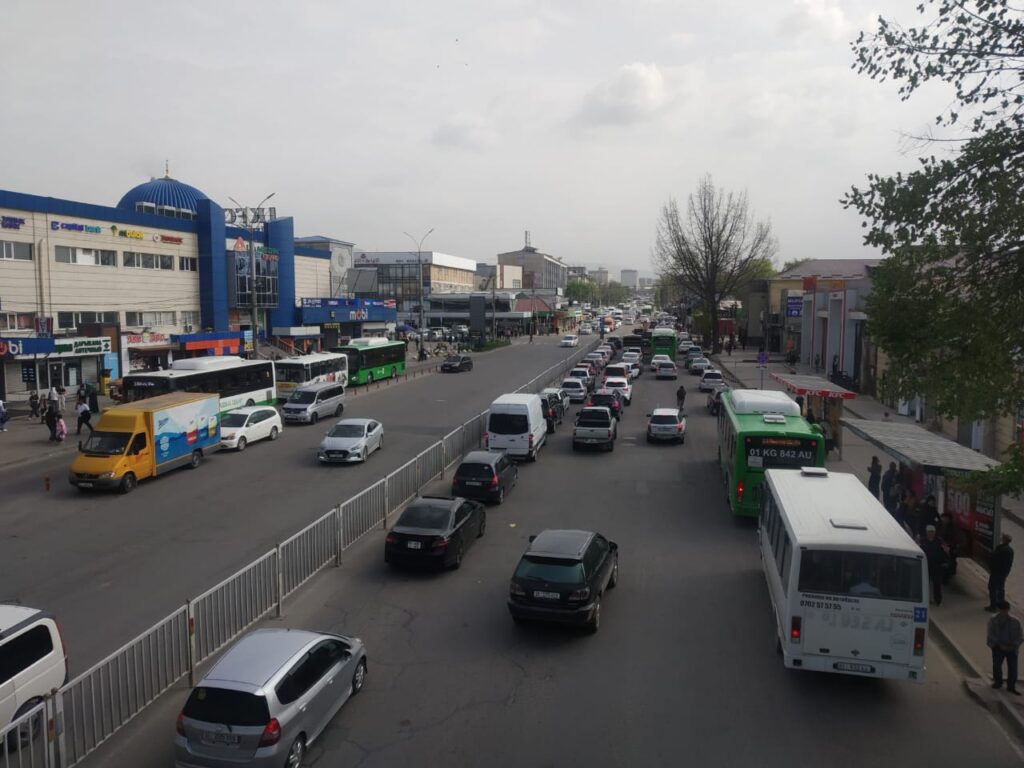
According to the Ministry, vehicle emissions account for roughly 30% of air pollution in the capital. In 2024, 1,674,085 vehicles were registered in Kyrgyzstan, with 83% or 1,392,737, over 15 years old. In Bishkek, 426,946 vehicles were registered, including 333,801 older than 15 years, most of which do not meet modern environmental standards.

The city administration reported that more than 750,000 vehicles operate on Bishkek’s roads daily, more than double the road network’s intended capacity of 350,000. This, combined with poor fuel quality and widespread reliance on private cars, has led to a systemic environmental challenge.

Mashiev outlined several initiatives to address the issue.

First, the city is transitioning to environmentally friendly public transport. Over 1,300 eco-friendly buses and 120 electric buses have been delivered to Bishkek. Each new bus replaces approximately four diesel buses, cutting diesel fuel consumption by around 100 tons per day. By the end of 2024, 3,535 electric vehicles were registered in the capital, and 44 charging stations had been installed.

Second, modern air quality monitoring systems are being deployed to enable more accurate and responsive pollution tracking.

Third, updates to the regulatory framework are being implemented to improve emission controls and compliance mechanisms.

“We have already taken concrete steps to improve air quality in Bishkek, the use of low-quality coal has been banned, large-scale greening projects are underway, and an active transition to alternative energy sources is in progress,” said Mashiev.

He concluded that similar measures would be introduced in other major cities across Kyrgyzstan, including Osh and Jalal-Abad.

Magzhan Ilyasov Appointed Kazakhstan’s Ambassador to the United States

President Kassym-Jomart Tokayev has appointed Magzhan Ilyasov as Kazakhstan’s new Ambassador Extraordinary and Plenipotentiary to the United States. The appointment is part of a broader reshuffling of the country’s foreign policy leadership.

The presidential decree announcing the appointment was published on the official Akorda website. Ilyasov succeeds Yerzhan Ashikbayev, who served in Washington from 2021 until his dismissal on September 26, 2025, shortly after Tokayev’s working visit to New York.

Born in Almaty in 1974, Ilyasov graduated with honors from the Faculty of International Relations at the Kazakh State University of World Languages. He later earned a master’s degree from Harvard University’s Kennedy School of Government.

Ilyasov began his diplomatic career in 1996 at the Ministry of Foreign Affairs, starting as a referent before serving as attaché and secretary in the Department of the United Nations and International Economic Organizations. By the late 1990s, he transitioned to the Presidential Administration, focusing on protocol and organizing international meetings.

From 2005 to 2016, he held senior roles in the foreign policy division of the Presidential Administration, eventually becoming an advisor to the president.

His diplomatic postings include:

  • 2016-2020: Ambassador to the Netherlands and Permanent Representative to the Organisation for the Prohibition of Chemical Weapons;
  • 2020-2022: Permanent Representative of Kazakhstan to the United Nations; and
  • 2022-2025: Ambassador to the United Kingdom, with concurrent accreditation to Iceland and Ireland beginning in 2023

Ilyasov’s appointment comes amid a broader realignment of Kazakhstan’s foreign policy team. On the same day Ashikbayev was dismissed, several key changes were announced:

  • Murat Nurtleu stepped down as Foreign Minister to become the president’s assistant for international investment and trade cooperation;
  • Yermek Kosherbayev was appointed as the new Foreign Minister; and
  • Yerzhan Kazykhan, formerly the president’s assistant for international affairs, was named Kazakhstan’s permanent representative to the United Nations and other international organizations in Geneva.

Ilyasov’s extensive diplomatic experience and recent high-profile postings are seen as aligning with Kazakhstan’s strategic priorities in the United States, particularly amid growing engagement in investment, trade, and security dialogue.