• KGS/USD = 0.01144 0%
  • KZT/USD = 0.00192 0%
  • TJS/USD = 0.10889 -0.09%
  • UZS/USD = 0.00008 0%
  • TMT/USD = 0.28490 0%
  • KGS/USD = 0.01144 0%
  • KZT/USD = 0.00192 0%
  • TJS/USD = 0.10889 -0.09%
  • UZS/USD = 0.00008 0%
  • TMT/USD = 0.28490 0%
  • KGS/USD = 0.01144 0%
  • KZT/USD = 0.00192 0%
  • TJS/USD = 0.10889 -0.09%
  • UZS/USD = 0.00008 0%
  • TMT/USD = 0.28490 0%
  • KGS/USD = 0.01144 0%
  • KZT/USD = 0.00192 0%
  • TJS/USD = 0.10889 -0.09%
  • UZS/USD = 0.00008 0%
  • TMT/USD = 0.28490 0%
  • KGS/USD = 0.01144 0%
  • KZT/USD = 0.00192 0%
  • TJS/USD = 0.10889 -0.09%
  • UZS/USD = 0.00008 0%
  • TMT/USD = 0.28490 0%
  • KGS/USD = 0.01144 0%
  • KZT/USD = 0.00192 0%
  • TJS/USD = 0.10889 -0.09%
  • UZS/USD = 0.00008 0%
  • TMT/USD = 0.28490 0%
  • KGS/USD = 0.01144 0%
  • KZT/USD = 0.00192 0%
  • TJS/USD = 0.10889 -0.09%
  • UZS/USD = 0.00008 0%
  • TMT/USD = 0.28490 0%
  • KGS/USD = 0.01144 0%
  • KZT/USD = 0.00192 0%
  • TJS/USD = 0.10889 -0.09%
  • UZS/USD = 0.00008 0%
  • TMT/USD = 0.28490 0%
15 December 2025

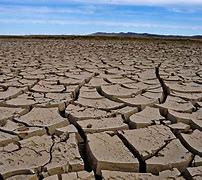
World Bank Helps Kyrgyzstan To Restore Its Natural Landscape

The World Bank will provide Kyrgyzstan with a $52.4 million loan to restore some of the country’s land. The allocated funds will be used to reconstruct over 450km of protective structures, build 26km of dams, strengthen riverbanks, undertake landscaping, and purchase equipment.

The project is designed to directly benefit more than 50,000 people in the Jalal-Abad, Osh, Issyk-Kul, and Naryn regions.

A government report on the landscaping project says: “Of this amount, 45 million dollars will be provided in the form of a loan from the World Bank, 5 million dollars will come in the form of a grant from the Global Partnership for Sustainable Landscapes (PROGREEN), and another 2.4 million dollars will be allocated by the Korea-World Bank Partnership Fund (KWPF).”

The loan will be for 10 years with a grace period of 50 years, with 38 years of the loan being interest-free.

Three Kazakh Officials Suspected of Taking Large Bribes

Three high-ranking officials from Kazakhstan’s Ministry of Emergency Situations have been accused of receiving bribes amounting to around 40 million tenge ($90,000).

The country’s Anti-Corruption Service is conducting an investigation into the conduct of the chairman of the ministry’s fire fighting service, and the heads of the emergency situations department of the city of Shymkent and the region of Zhetisu.

The service commented: “The officials are suspected of receiving bribes on a systematic basis from a representative of business for a total amount of more than 40 million tenge. The investigative court authorized a measure of restraint in the form of detention against the suspects. The criminal case is considered on the merits by the military court of Akmola garrison.”

No further information concerning the investigation has been published.

Almaty Hosts Conference on Tackling Climate Change in Central Asia

On 27 May, delegations from Central Asian countries and international experts convened in Almaty, Kazakhstan to discuss pressing issues of sustainable water and land management, energy, food security, and environmental sustainability in the context of climate change in the region.

Held annually, the Central Asia Climate Change Conference provides a platform to advance regional cooperation in addressing the impact of climate change and transboundary climate risks.

This year’s event, CACCC-2024, attracted over 400 participants, including policy and decision makers from Central Asian countries, international development partners, and representatives from civil societies, the private sector, and academia.

Addressing the delegates, Zafar Makhmudov, Executive Director of the Regional Environmental Centre for Central Asia (CAREC) announced: “Central Asia is vulnerable to the adverse effects of a rapidly changing climate, given its agricultural economy, aging infrastructure, and rapid population growth. The need to improve regional cooperation in energy and water resources management alongside approaches to adaptation to climate change is obvious. The conference aims to strengthen this cooperation to increase the region’s resilience.”

Regarding funding, Tatiana Proskuryakova, World Bank Regional Director for Central Asia, stated, “Climate change is an urgent challenge, and the countries of Central Asia can only address it if they work together. This means tackling a broad set of issues simultaneously, from adopting and implementing green policies to deploying green financing and investing in renewable energy, sustainable agriculture and natural resource management. We will continue working hand in hand with our government counterparts, sharing our analysis and advice, but also providing finance for priority investment projects for the benefit of people in Central Asia.”

On an encouraging note, Dr. Caroline Milow, Programme Manager for the Green Central Asia Initiative, GIZ added: “With the adoption of the Regional Climate Change Adaptation Strategy, Central Asia is one step ahead of many other regions in the world. It helps further cooperation and coordination to strengthen adaptation and mitigation to climate change, which is ever more felt in the region. I am positive that these joint efforts among the countries will bear fruit for the entire population of the Aral Sea Basin.”

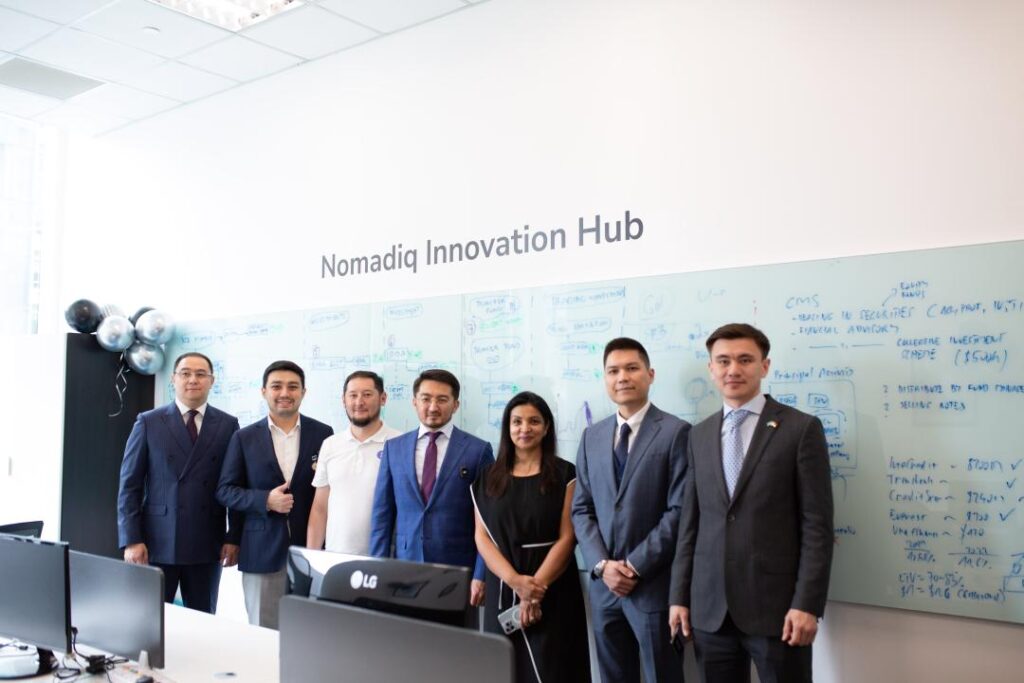
Kazakhstan’s Nomadiq Innovation Hub Opens in Singapore

The Nomadiq Innovation Hub has now officially opened in Singapore.

A private initiative, the aim of the hub is to promote Central Asia as a single region in Singapore and advance cooperation in IT entrepreneurship.

At the opening ceremony, Minister of Digital Development, Innovation and Aerospace Industry of Kazakhstan, Zhaslan Madiev remarked that the new hub was designed to attract new start-up projects and unite Turkic countries’ efforts to expand digital solutions.

“We have high hopes for the Nomadiq Innovation Hub in achieving goals that represent the interests of Kazakhstan and in particular, increasing the export of Kazakh IT products and attracting investment to our country,” the minister said. “Kazakhstan already has significant experience in developing and supporting start-ups and innovative projects. For example, the Astana Hub International Technology Park for IT Start-ups, launched five years ago, has now become one of the leading technology parks in Central Asia with 1,403 participants, including 388 foreign companies.”

Outlining the project’s objectives, Olzhas Zhienkul, Chairman of the Board of Nomadiq Innovation Hub, announced, “Our main goals include the provision of in-depth and personalized support to selected projects, helping build sustainable business models and developing customized growth strategies. We are also focused on overcoming barriers to entry into international markets and will strive to position our region as a promising platform for venture investors.”

Nomadiq is Kazakhstan’s third overseas innovation hub, joining the Silkroad Innovation Hub in the USA, and that in Riyadh, Saudi Arabia, named after the great philosopher al-Farabi.


Uzbekistan to Build a Nuclear Power Plant

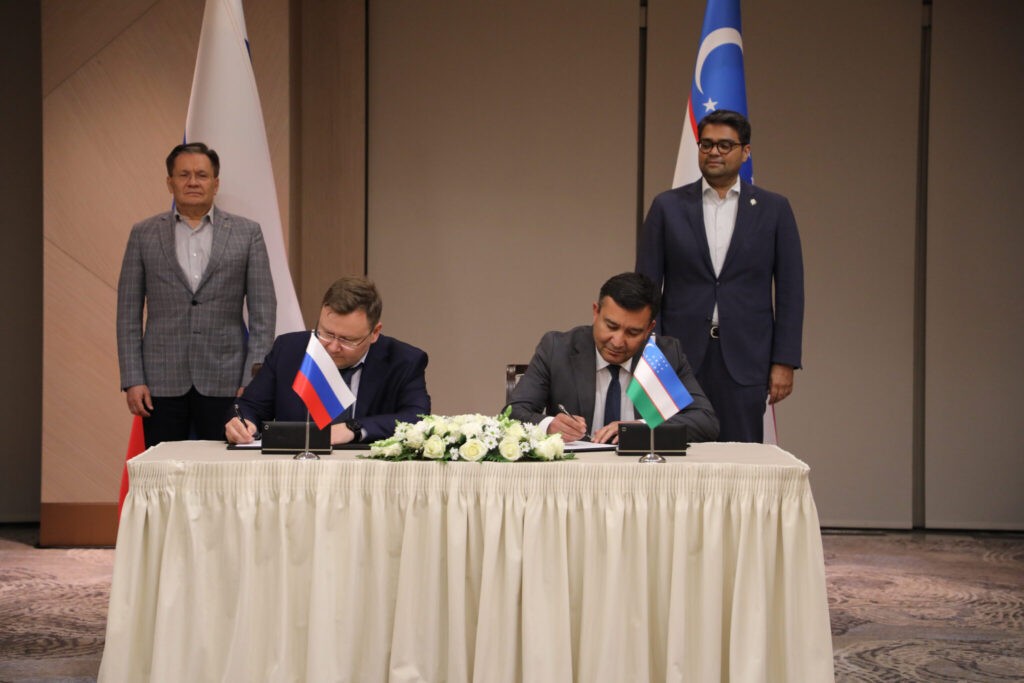
During the Russian president’s state visit to Uzbekistan, a protocol on amending the intergovernmental agreement on cooperation between the two countries in the construction of a nuclear power plant in Uzbekistan was signed, Atom Media reports.

On the margins of the event, Russia’s Atomstroyexport joint stock company and the Directorate for NPP Construction under the Atomic Energy Agency of the the Cabinet of Ministers of the Republic of Uzbekistan signed a contract for the construction of a small-capacity nuclear power plant (SCNPP). The project envisages a Russian-designed ASMP in the Jizzakh region with a capacity of 330 MW (six reactors with a capacity of 55 MW each). Rosatom will be the general contractor for the construction of the plant, with local companies also be involved in the construction.

Thus, Rosatom has signed the first-ever export contract to construct a small-capacity nuclear power plant.

“According to forecasts, the demand for energy resources in Uzbekistan will almost double by 2050, and it is obvious that for the stable operation of the energy system and the development of the economy, our country must provide itself with a basic source of energy. All over the world, we are now seeing a growing interest in the creation of new nuclear facilities, both in terms of building large-capacity NPPs and small modular reactor projects. We believe that expansion of cooperation with Rosatom will allow us to strengthen our energy complex with advanced technologies in nuclear energy,” Azim Akhmedkhadzhaev, director of the Atomic Energy Agency under the Cabinet of Ministers of the Republic of Uzbekistan commented on the signing.

Construction work on the site will begin this summer.

The project of construction of ASMM is based on the latest Russian development – the RITM-200n reactor. This development has been tested in Arctic conditions on the newest Russian icebreakers. Since 2012, 10 RITM-200 reactors have been manufactured for the universal nuclear icebreakers Arktika, Sibir, Ural, Yakutia and Chukotka. The first three have already been commissioned and are successfully fulfilling their obligations to guide caravans of ships in the western region of the Arctic.

The safety of the planned low-capacity nuclear power plant will be achieved through multilevel systems and containment barriers. The combination of active (requiring power supply sources) and passive (operating without a power source) safety systems makes it possible to achieve the highest possible level of plant safety. These systems are implemented to prevent the possibility of an accident, and several levels of barriers incorporated in the plant design avoid the release of radioactive substances into the environment.

According to the IAEA, approximately 50 ASMM designs and concepts are at various stages of development worldwide. Rosatom and Uzatom have yet to announce the cost and planned timing for the completion of the project.

Korean Company to Build Solar Panel Production Plant in Tajikistan

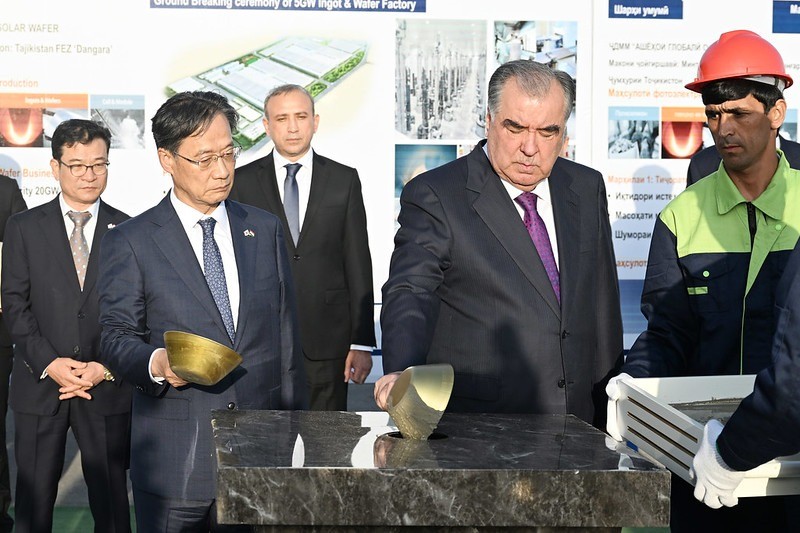
On 24 May, Tajikistan President Emomali Rahmon laid the foundation stone for the construction of the first solar panel production plant in the country’s Danghara Free Economic Zone.

According to the Tajik president’s press service, the facility will be built in four phases with government support and investment by the Global Solar Wafer company of the Republic of Korea totalling $2 billion.

Construction on 22 hectares of land in the western part of Danghara Free Economic Zone is scheduled to begin in July this year.

The first phase, comprising a facility to manufacture solar panels with a capacity of 5 thousand megawatts, will be completed in March 2025.

Once fully operational, the plant will provide 8,000 jobs, 95 percent will be allocated to Tajik citizens.

The launch of the domestic production of solar panels will contribute to the realization of goals set by Tajikistan’s green economy development strategy which aims to generate at least 1000 megawatts of green energy by 2030.