• KGS/USD = 0.01144 0%
  • KZT/USD = 0.00212 0%
  • TJS/USD = 0.10432 0%
  • UZS/USD = 0.00008 0%
  • TMT/USD = 0.28490 0%
  • KGS/USD = 0.01144 0%
  • KZT/USD = 0.00212 0%
  • TJS/USD = 0.10432 0%
  • UZS/USD = 0.00008 0%
  • TMT/USD = 0.28490 0%
  • KGS/USD = 0.01144 0%
  • KZT/USD = 0.00212 0%
  • TJS/USD = 0.10432 0%
  • UZS/USD = 0.00008 0%
  • TMT/USD = 0.28490 0%
  • KGS/USD = 0.01144 0%
  • KZT/USD = 0.00212 0%
  • TJS/USD = 0.10432 0%
  • UZS/USD = 0.00008 0%
  • TMT/USD = 0.28490 0%
  • KGS/USD = 0.01144 0%
  • KZT/USD = 0.00212 0%
  • TJS/USD = 0.10432 0%
  • UZS/USD = 0.00008 0%
  • TMT/USD = 0.28490 0%
  • KGS/USD = 0.01144 0%
  • KZT/USD = 0.00212 0%
  • TJS/USD = 0.10432 0%
  • UZS/USD = 0.00008 0%
  • TMT/USD = 0.28490 0%
  • KGS/USD = 0.01144 0%
  • KZT/USD = 0.00212 0%
  • TJS/USD = 0.10432 0%
  • UZS/USD = 0.00008 0%
  • TMT/USD = 0.28490 0%
  • KGS/USD = 0.01144 0%
  • KZT/USD = 0.00212 0%
  • TJS/USD = 0.10432 0%
  • UZS/USD = 0.00008 0%
  • TMT/USD = 0.28490 0%

Starlink Satellite Internet Now Available in Tajikistan

Starlink, the satellite internet service operated by SpaceX, has officially launched in Tajikistan, the company announced on February 5.

“Starlink’s high-speed, low-latency internet is now available in Tajikistan,” the company posted on X. The rollout expands Starlink’s coverage in Central Asia, a region where mountainous terrain and remote settlements have long made stable internet access difficult.

Starlink is operated by Starlink Services LLC, a global telecommunications provider and wholly owned subsidiary of the U.S. aerospace company SpaceX, founded by Elon Musk. The service operates via a constellation of low-Earth orbit satellites, delivering broadband internet to areas underserved by traditional infrastructure. It is now active in approximately 130 countries and territories worldwide.

The expansion into Tajikistan follows Starlink’s earlier rollout in Kazakhstan. On June 12, 2025, Kazakhstan’s Ministry of Digital Development, Innovation, and Aerospace Industry signed a formal agreement with Starlink, requiring the company to adhere to national telecommunications and information security regulations. This agreement paved the way for official use of the service by citizens, businesses, and government agencies, including in rural and hard-to-reach areas.

In Kazakhstan, Starlink’s pricing is publicly listed on the company’s website. The most basic home internet plan starts at 23,000 tenge (around $46) per month with speed limitations. Unlimited plans begin at 31,000 tenge (approximately $62), while mobile and travel packages are available at higher price points.

Starlink also plans to begin operations in Uzbekistan in 2026, although service has not yet launched there.


Kyrgyzstan Tightens Traffic Enforcement, Mandates Retesting for Repeat Offenders

Kyrgyzstan has implemented stricter traffic enforcement measures aimed at curbing repeat violations and improving road safety.

Under the new rules, drivers who commit three serious traffic violations within a 12-month period will be required to retake the traffic rules exam. Offenses triggering mandatory retesting include driving without license plates, failing to stop at the request of traffic police, exceeding the speed limit by more than 40 km/h, failing to yield to emergency vehicles, entering the oncoming lane while overtaking, damaging road infrastructure, causing injury, and permitting an intoxicated or unlicensed individual to drive.

The initiative is part of a broader set of reforms designed to enhance driver education and reduce accident rates. In a related move, Kyrgyz authorities have suspended all private driving schools until August 30, 2026. During this period, driver training will be limited to state-run institutions. The length of training has also been extended from 2.5 months to 10 months. Officials say the reforms are intended to eliminate corruption and ensure that drivers are properly prepared before receiving licenses.

President Sadyr Japarov has been a vocal proponent of the reforms. On February 3, he visited the State Center for Registration of Vehicles and Drivers to observe the new testing procedures. He criticized the former system, noting that over 90% of students at private driving schools previously passed licensing exams despite inadequate knowledge. Since the introduction of more rigorous exams, the pass rate has dropped to 18-20%, a figure authorities say better reflects actual preparedness.

Japarov emphasized the human toll of traffic accidents, stating that over 75,000 accidents in the past decade have claimed more than 9,000 lives in Kyrgyzstan.

The president also spoke candidly about personal losses caused by reckless driving. In 2019, his eldest son was killed when a vehicle illegally crossed a double line and struck his motorcycle. Years earlier, his brother and sister-in-law died in an accident caused by a drunk driver.

“There are thousands of such stories,” Japarov said, underscoring the urgent need for stronger enforcement and reform in the country’s road safety system.

Uzbekistan, Pakistan Set $2 Billion Trade Target Following High-Level Talks in Islamabad

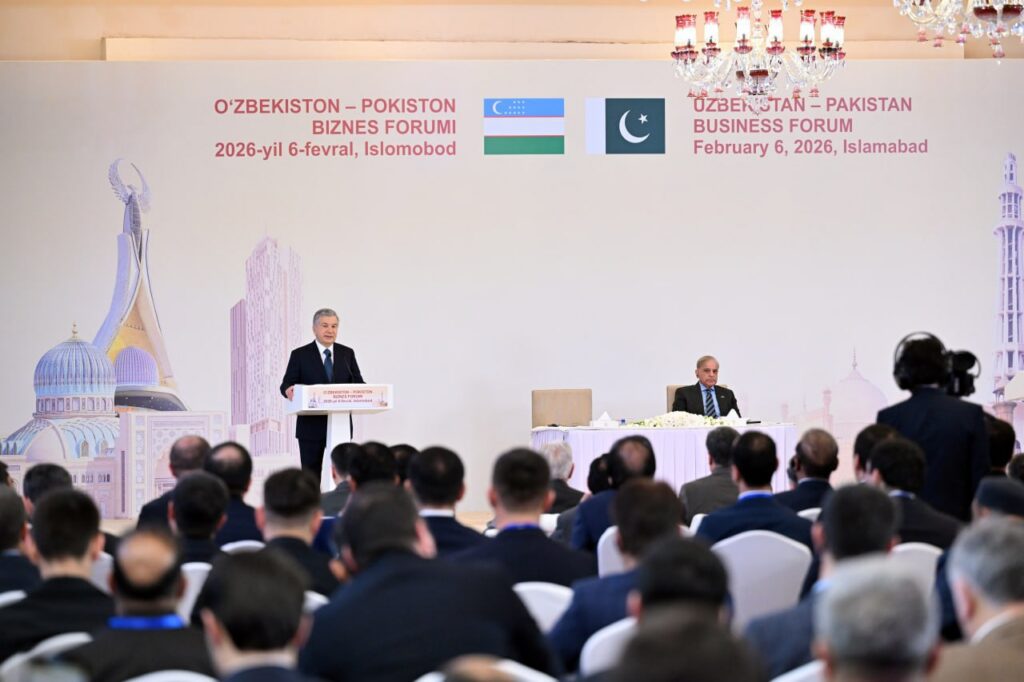
Uzbek President Shavkat Mirziyoyev arrived in Islamabad on a state visit on February 5, marking a new chapter in Uzbekistan-Pakistan relations. According to official sources, the Uzbek leader’s aircraft was escorted by Pakistan Air Force fighter jets upon entering the country’s airspace. At Nur Khan Airbase, Mirziyoyev was received by President Asif Ali Zardari, Prime Minister Shehbaz Sharif, and senior Pakistani officials.

Shortly after his arrival, Mirziyoyev visited the headquarters of Global Industrial & Defence Solutions, where he met with Pakistan’s Chief of Army Staff, Field Marshal Asim Munir. The two sides discussed strengthening the strategic partnership, with an emphasis on military and military-technical cooperation. Areas of focus included deepening collaboration between defense industry enterprises, expanding training for military personnel, sharing operational experience, and organizing joint exercises. Both countries agreed to draft a roadmap for future defense cooperation.

Later that day, Mirziyoyev held one-on-one talks with Prime Minister Sharif and chaired the inaugural meeting of the High-Level Strategic Cooperation Council. At the meeting’s outset, the Uzbek president extended greetings in advance of the holy month of Ramadan and Pakistan Day. Discussions centered on implementing existing agreements and expanding cooperation across political, economic, and humanitarian spheres.

Trade and economic cooperation featured prominently. Bilateral trade reached nearly $500 million by the end of last year, and approximately 230 Pakistani-capital companies are currently operating in Uzbekistan. Air connectivity and banking ties between the two countries are also expanding. Ongoing joint ventures span textiles, pharmaceuticals, chemicals, agriculture, and other sectors. An exhibition of Uzbek industrial products is being held in Islamabad as part of the visit.

The two leaders agreed to set a goal of raising bilateral trade turnover to $2 billion in the near future. Key measures include expanding the list of goods under the Preferential Trade Agreement, easing phytosanitary requirements for Uzbek agricultural exports, and increasing the use of Uzbekistan’s trade houses in Lahore and Karachi. A joint project portfolio valued at nearly $3.5 billion has already been developed.

Transport and logistics were another central topic. Both sides emphasized the strategic importance of advancing the Trans-Afghan railway and supporting the Pakistan-China-Kyrgyzstan-Uzbekistan transport corridor. They also agreed to establish an Uzbek-Pakistani Forum of Regions, with the inaugural meeting scheduled to take place this year in Uzbekistan’s Khorezm region.

Cultural cooperation was also addressed. Plans include hosting Uzbekistan Culture Weeks and Uzbek Cinema Days in Pakistan and exploring the creation of a joint cultural center in Lahore dedicated to the Baburid heritage.

The visit concluded with the signing of a Joint Declaration and a series of agreements spanning diplomacy, trade, defense, transport, agriculture, digital technologies, culture, security, and regional cooperation. Mirziyoyev also extended an invitation to Prime Minister Sharif for a return visit to Uzbekistan.

From Alatau to Almaty by Air: How Kazakhstan’s First Air Taxi Service Will Operate

The Almaty region is preparing to introduce a groundbreaking new mode of transport for Kazakhstan: electric air taxis. While the project remains in the development and testing phase, key details about routes, aircraft, and the projected launch timeline have already been outlined.

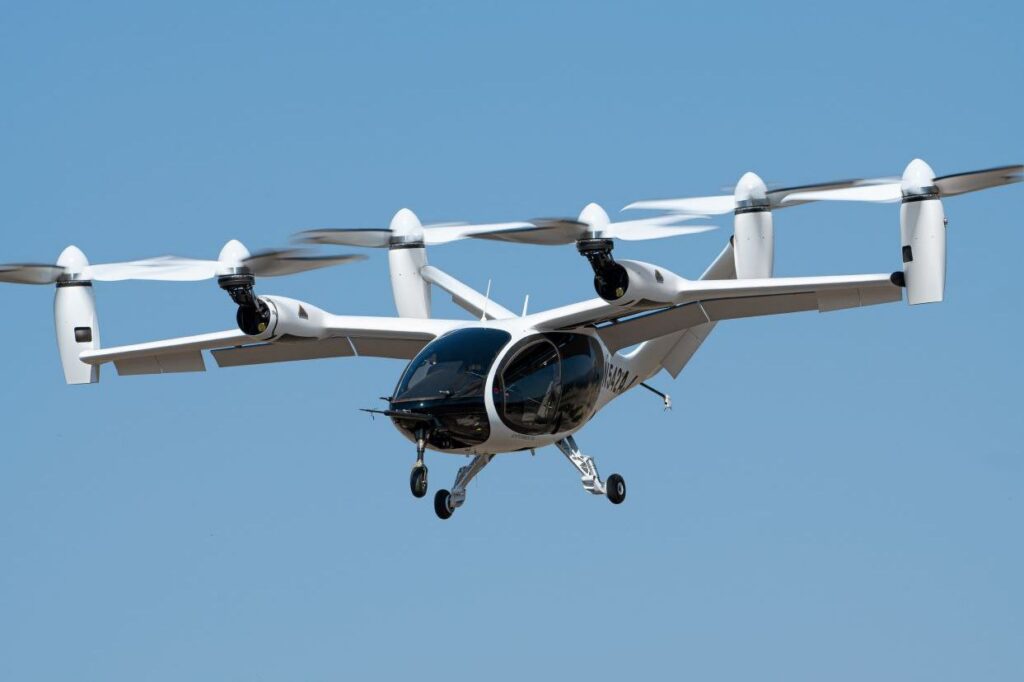
The first air taxi routes are expected to connect the newly developing city of Alatau with Almaty and other settlements across the region. The aircraft under consideration for this initiative is the Joby Aviation S4, an electric vertical take-off and landing (eVTOL) model developed by U.S.-based Joby Aviation. Test flights are scheduled for 2026.

Alatau Advance Air Group, a private company, has been designated as the air mobility operator for the Alatau region. In collaboration with partners from the U.S., South Korea, China, and Italy, the company is working on aircraft research, infrastructure planning, and building a testing ecosystem to support future operations.

Joby Aviation, one of the global leaders in eVTOL technology, has been named a strategic partner. The selected S4 model is in the final stages of certification by the U.S. Federal Aviation Administration (FAA) and has already undergone real-world testing. The aircraft is designed to carry four passengers and one pilot.

These capabilities will allow the air taxi service to cover both urban routes within the Almaty agglomeration and longer intercity routes across the wider region.

To accommodate operations, a network of vertiports, dedicated airfields for vertical take-off aircraft, is planned for Alatau, Almaty, and other key regional locations. The project is currently in the design phase, with testing sites under consideration.

Demonstration flights are slated for 2026, with commercial services expected to launch once aircraft certification by the FAA is finalized and validated by Kazakhstan’s aviation authorities.

“Air taxis will become an innovative form of transport that will provide fast connections between Alatau, Almaty, and other cities in the region,” the Almaty mayor’s office commented.

Flight pricing is expected to be announced following testing and preparations for the commercial rollout.

The air taxi concept was first introduced in October 2024 at a development forum in South Korea focused on the Alatau project. The initiative is being led by Alatau Advance Air Group, founded in March 2025. The company is connected via Caspian Integrity to entrepreneur and former senator Yuri Tskhai, one of the key investors behind Alatau City.

In November, a strategic agreement was signed in the U.S. between Kazakhstan’s Ministry of Digital Development and AI, Joby Aero, Alatau Advance Air Group, and entrepreneur Vyacheslav Kim. The deal includes the purchase of eVTOL aircraft valued at approximately $300 million.

Joby Aviation continues to be a major player in the global eVTOL industry, competing with major aerospace and automotive firms including Airbus, Boeing, Embraer, Honda, Hyundai, and Toyota.

Where Motherhood Meets Innovation: The Kyrgyz Startup Mama Space

Female tech founders face a lot more challenges globally, and Kyrgyzstan’s startup ecosystem is unfortunately no exception. Being a nascent stage ecosystem makes things even worse: according to IFC, in emerging markets, only 11% of seed funding goes to startups with women on their founding team. Despite such significant barriers, there is a generation of female founders with global ambitions. One of them is Gulnaza Khalmanbetova, who is using technology to make pregnancy and motherhood more peaceful.

Mama Space provides an ecosystem for pregnancy and motherhood. Its pregnancy tracker covers every stage, providing an entire library of up-to-date, medically approved articles and educational videos. An AI chatbot can answer questions about pregnancy with evidence-based knowledge. And there is a loyal online community where every mother can find support and understanding.

“It was my second experience of pregnancy that prompted me to create the app. My second pregnancy was complicated and could have ended in tragedy. During one of the surgeries, in the fifth month of pregnancy, I promised myself that if everything went well for me and my unborn son, I would do everything possible to ensure that every mother could find support and not be left alone with her problems. This is how the idea of Mama Space was born — a platform designed so that every woman can go through the stages of motherhood with reliable informational support,” recalled Gulnaza Khalmanbetova, CEO and Founder of Mama Space.

All images provided by Mama Space

In December 2025, during the Digital Startup Awards in Tashkent, Mama Space was named “Best Women-Founded Startup” — one of the many awards Mama Space has collected so far.

Khalmanbetova had previously had a successful career in the international development sector. Those organising, optimizing, and networking skills came in handy when entering the unpredictable path of a startup founder, with an aim to help women who are planning a pregnancy, are currently pregnant, or have recently given birth.

One of the sources of ideas for startup founders is trying to solve problems they face themselves. This was exactly the case with Mama Space. During her first pregnancy, which brought anxiety and difficulties with finding proper information, Khalmanbetova was inspired to organise a community of mothers with an event to celebrate pregnancy and motherhood. She named the event Mama Fest, which now brings together hundreds of women to celebrate motherhood. 

Mama Space is a textbook example of a successful launch. The MVP — the minimal viable product — was ready in three months, despite the fact that Khalmanbetova and her team still had their full-time jobs. And Khalmanbetova, traditionally for startup founders, has to wear a number of hats and utilise all her skills, from programming and business development to graphic design and running social media.

Given that the product is directly related to health, the startup relies on science and professional doctors. Mama Space partners with the Kyrgyz Association of Obstetricians, Gynecologists, and Neonatologists.

In June 2024, Mama Space won the ‘Unicorn from KG’ incubation program run by the High Technology Park of the Kyrgyz Republic. As a result, the team took part in the five-week Hero Training program by Draper University in Silicon Valley. In September the same year, Mama Space was awarded 2nd place during the regional Central Asian finals of the largest global startup contest for women, She Loves Tech. In February 202,5 Mama Space made it to the Top 10 of the Aurora Tech Award by inDrive out of 2,018 applications from 116 countries.

The preliminary goal of Mama Space is to become Central Asia’s number 1 parenting app. But Central Asia is not the final destination — Khalmanbetova aims to go global. She tells The Times of Central Asia: “Mama Space is not just a business for me — it’s my way of caring, supporting, and holding space for mothers. While many startups are driven by profit, I am driven by impact. I truly believe that real sustainability grows from meaningful impact.”

Uzbekistan Eases Data Localization Rules to Support Global Payment Platforms

Uzbekistan’s Senate has approved amendments to the Law on Personal Data, a move aimed at easing restrictions that have hindered the operation of international online payment platforms and slowed digital economic growth. The changes were adopted during the Senate’s 13th plenary session, according to official parliamentary sources.

Lawmakers noted that an increasing number of Uzbek freelance developers are selling software products and digital content to foreign clients via global platforms. While some major services accept payments through bank cards or transfers, others, such as Upwork, Fiverr, Envato, and Storyblocks, rely almost exclusively on PayPal. However, PayPal does not fully support bank cards issued in Uzbekistan, largely due to the country’s data localization requirements.

Under the current legislation, personal data must be stored on servers located within Uzbekistan. This requirement has discouraged several international payment providers from entering the local market. Senators stated that the newly approved amendments aim to remove these barriers and establish clearer conditions for cross-border data use.

The revised law stipulates that only specific categories of personal data, such as biometric, genetic, and telecommunications-related information, must remain stored domestically. Other types of personal data may be transferred and stored abroad, provided that strict information security protocols are observed. The Cabinet of Ministers will be authorized to approve a list of countries deemed to offer adequate personal data protection standards.

According to lawmakers, these changes will accelerate the development of fintech, e-commerce, and the broader digital economy. They are also expected to enable legal and transparent payment mechanisms for freelancers and improve access to contactless payment options for foreign tourists.

The reform builds on a government initiative launched in October 2024, when authorities instructed the Tourism Committee, the Central Bank, and the Ministry of Digital Technologies to engage with payment providers such as Alipay, Apple Pay, Google Pay, PayPal, and UniPay. The directive included a review of national legislation to facilitate their integration into Uzbekistan’s financial system.