• KGS/USD = 0.01144 0%
  • KZT/USD = 0.00211 0%
  • TJS/USD = 0.10460 0.19%
  • UZS/USD = 0.00008 0%
  • TMT/USD = 0.28490 0%
  • KGS/USD = 0.01144 0%
  • KZT/USD = 0.00211 0%
  • TJS/USD = 0.10460 0.19%
  • UZS/USD = 0.00008 0%
  • TMT/USD = 0.28490 0%
  • KGS/USD = 0.01144 0%
  • KZT/USD = 0.00211 0%
  • TJS/USD = 0.10460 0.19%
  • UZS/USD = 0.00008 0%
  • TMT/USD = 0.28490 0%
  • KGS/USD = 0.01144 0%
  • KZT/USD = 0.00211 0%
  • TJS/USD = 0.10460 0.19%
  • UZS/USD = 0.00008 0%
  • TMT/USD = 0.28490 0%
  • KGS/USD = 0.01144 0%
  • KZT/USD = 0.00211 0%
  • TJS/USD = 0.10460 0.19%
  • UZS/USD = 0.00008 0%
  • TMT/USD = 0.28490 0%
  • KGS/USD = 0.01144 0%
  • KZT/USD = 0.00211 0%
  • TJS/USD = 0.10460 0.19%
  • UZS/USD = 0.00008 0%
  • TMT/USD = 0.28490 0%
  • KGS/USD = 0.01144 0%
  • KZT/USD = 0.00211 0%
  • TJS/USD = 0.10460 0.19%
  • UZS/USD = 0.00008 0%
  • TMT/USD = 0.28490 0%
  • KGS/USD = 0.01144 0%
  • KZT/USD = 0.00211 0%
  • TJS/USD = 0.10460 0.19%
  • UZS/USD = 0.00008 0%
  • TMT/USD = 0.28490 0%

China Supports Kazakhstan’s Bid to Join BRICS

Beijing has officially supported Kazakhstan’s application to join BRICS, a group of emerging economies founded by Brazil, Russia, India and China in 2009, which South Africa joined a year later. In January of this year, Saudi Arabia, Egypt, Ethiopia, Iran, and the UAE were also admitted as full members.

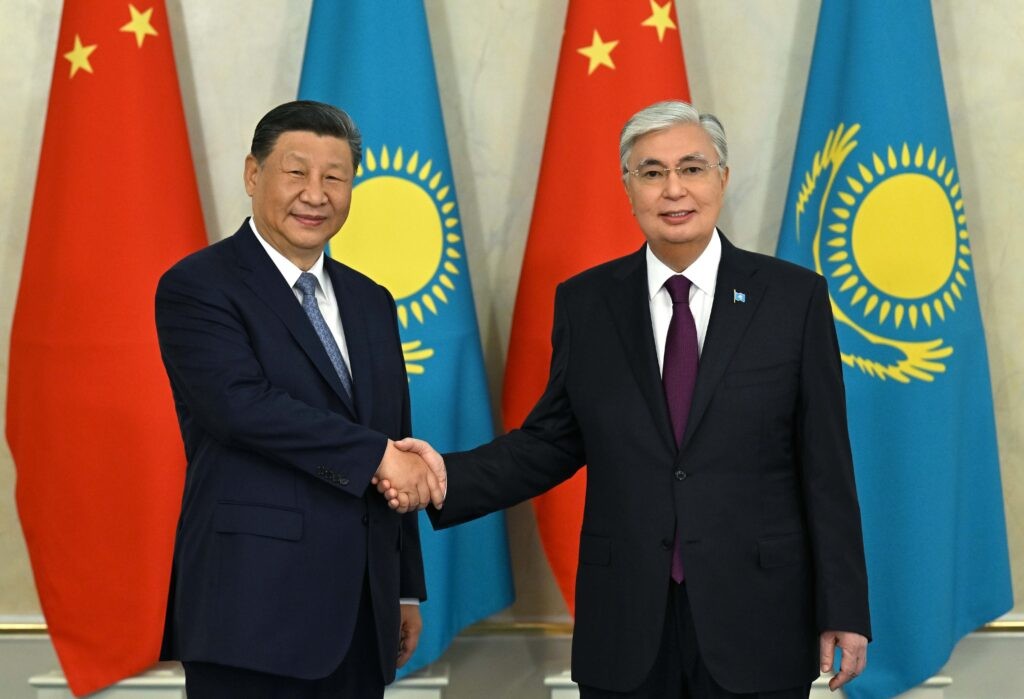
The Anadolu Agency reports that Kazakhstan’s bid to join became known after a meeting between Kassym-Jomart Tokayev and Xi Jinping last week. According to the Chinese leader, “China and Kazakhstan are walking side by side on the road to modernization.” Xi Jinping noted a great synergy between the two countries and said he supports the application.

During the meeting, the president of Kazakhstan also supported China’s initiative to “create a community [for the] common destiny of mankind,” expressing his country’s readiness to “constructively support” issues related to its realization.

Kazakhstan’s Rail Transportation of Cargo Rises to Over 122 Million Tons

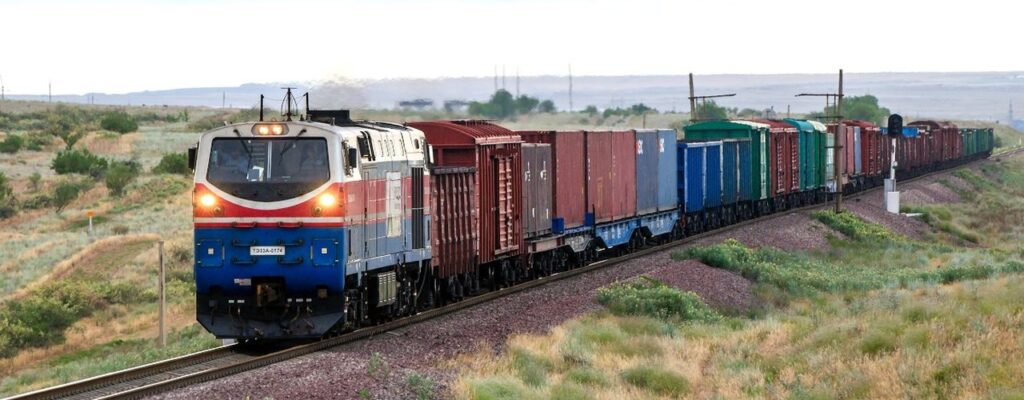
Kazakhstan’s national railway company Kazakhstan Temir Zholy (KTZ) reports that from January-June 2024, it transported more than 122 million tons of cargo.

Transportation within the country increased by 2.1% compared to the same period last year and amounted to 81.5 million tons, and over 41 million tons of cargo were destined for export.

During this period, KTZ transported 47.5 million tons of coal, including 34.8 million tons within the country.

The volume of grain transportation within the country increased by 5%, to 1.1 million tons.

During the first half of the year, rail transportation of ferrous metals increased by 7.2%, to 2.2 million tons; iron ore and manganese by 9.6%, to 10.5 million tons; and non-ferrous ore and sulfur, by 13%, to 12.1 million tons.

Rail transportation for exports of oil increased by 8.3%, to 2.7 million tons; ferrous metals by 6% to 1.6 million tons; chemical fertilizers by 10% to 648 thousand tons: iron ore and manganese by 4% to 5.6 million tons, and 68% for construction cargo by 68% to267 thousand tons.


Kazakhstan to Double Milk Production in Three Years

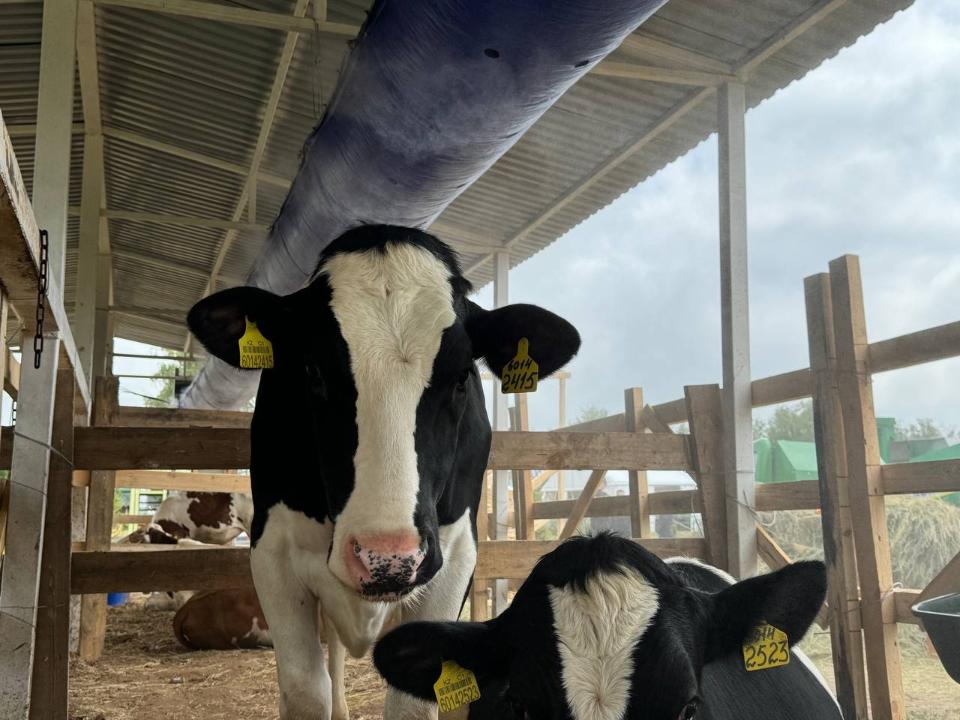
Since 2021, Kazakhstan’s milk production has increased by almost 20% and exceeded 600 thousand tons. Over the next three years, that volume is set to double to 1.2 million tons, through a government preferential financing program announced by Kazakh Minister of Agriculture Aidarbek Saparov at the 3rd International Forum of Dairy Farming and Processing, PRO Milk 24.

The forum held in Astana last week, gathered over 500 milk producing and processing enterprises, as well as dairy industry experts from 12 countries, to share their best practices.

The minister outlined government measures to lower the cost of milk. As animal feed accounts for up to 70% of the cost of milk production, the Ministry of Agriculture plans to diversify fodder crops, increase their yields, and develop efficient irrigation.

At last year’s forum, it was reported that whilst Kazakhstan’s milk processing reached 2.1 million tons, the import of raw milk remained high, increasing from 580 thousand tons in 2022 to 800 thousand tons in 2023.

In addition to increasing domestic milk production, Kazakhstan needs to reduce the share of imported dairy products, the bulk of which comprises cream, butter, and cheese.

Speaking at the forum, Bauyrzhan Aitkulov, Director of the Projects Department at Kazakh Invest, stressed the importance of adopting new approaches to improve investment in the dairy industry and in this regard, said that the Government of Kazakhstan is introducing proactive mechanisms for attracting investment and expanding its measures of support.


Kyrgyz-Turkish Oil Refinery Nears Completion in South Kyrgyzstan

On July 8, Minister of Energy of the Kyrgyz Republic, Taalaibek Ibraev inspected the construction of the Kyrgyz-Turk K-OilGas oil refinery in the village of Kok-Talaa in the southern Batken region.

An agreement between Kyrgyztransneftegaz (Kyrgyzstan) and Kyrgyz-Turk K-OilGas (Turkey) on the joint development of the North Sokh and Chongara Galcha oil fields was signed back in March 2023.

According to General Director of Kyrgyztransneftegaz Aibek Chodonov, over 90% of the refinery’s construction has now been completed, and preparatory work is currently underway at four oil wells. The commission of the refinery is scheduled for the end of September.

Investment in the project amounts to $91 million, and once in operation, the  refinery will have a daily capacity of 500 tons of oil products. At present, the refinery has 51 employees, including 10 Turkish specialists and 41 local citizens, with 150 new jobs on the horizon from October.

Kyrgyzstan has some oil deposits in the south of the country but today, imports almost all of its oil products (gasoline and diesel) from Russia.

Central Asian Countries and Azerbaijan Begin Military Exercises in Kazakhstan

On July 8, Kazakhstan’s Ministry of Defense announced the start of joint military exercises – ‘Birlestik-2024’ (Association-2024) – by Azerbaijan, Kazakhstan, Kyrgyzstan, Tajikistan, and Uzbekistan in the country’s Mangystau region.

Until July 17, the states’ military contingents will be modelling and practicing a joint operation to localize an armed conflict in manoeuvres at both the Oimasha training ground and a Caspian Sea site two kilometers from Cape Tokmak.

Some four thousand military personnel and up to 700 pieces of military equipment will be involved in the exercise. Tactical episodes will be played out with the participation of ground and air reconnaissance groups, naval special forces, army and front-line aviation crews, warships and boats, artillery crews, assault and tank units.

In recent years, there has been talk about increasing military cooperation between Turkic-speaking countries.

In November 2023, Azerbaijani President Ilham Aliyev called on leaders of Turkic states to strengthen defense cooperation and at a summit of the Organization of Turkic States (OTS) in Astana, Kazakhstan, stated: “Wars and bloody conflicts break out. In this case, the main guarantor of security, first of all, becomes the defense potential. I believe that cooperation between the member states in areas such as security, defense, and the defense industry should be further increased.”

Member countries of the OTS, established in 2009, include Turkey, Azerbaijan, Kazakhstan, Kyrgyzstan, and Uzbekistan, while Hungary, Turkmenistan, and the Turkish Republic of Northern Cyprus have observer status.

Paving the Path Westward: Insights from the Astana and Shusha Summits

The informal OTS summit in Shusha, hosted at the invitation of Ilham Aliyev, centered on the theme of “Building a Sustainable Future through Transportation, Connectivity and Climate Action.” Attendees included Presidents Kassym-Jomart Tokayev of Kazakhstan, Sadyr Japarov of Kyrgyzstan, Shavkat Mirziyoyev of Uzbekistan, Ersin Tatar of the Turkish Republic of Northern Cyprus, Prime Minister Viktor Orban of Hungary, and OTS Secretary General Kubanychbek Omuraliev. In place of Erdoğan, who was in Germany supporting the Turkish national soccer team ahead of a crucial Euro 2024 quarter-final against the Netherlands, Vice President Cevdet Yılmaz attended. Turkmen President Serdar Berdimuhamedov was also absent due to hosting UN Secretary-General António Guterres in Ashgabat.

Notably, the Shusha summit occurred just two days after the meeting of SCO leaders in Astana, which drew an exceptional amount of attention from international observers due to the participation of the Russian and Chinese leaders.

The intrigue surrounding the SCO summit was linked to its closed session, attended only by the Shanghai Ten. At the summit, only the speech delivered by Tokayev was made available to the press. Speeches made in the subsequent SCO+ format sessions were made public, wherein Russian President Vladimir Putin and Chinese President Xi Jinping underscored the need for a multi-polar world, suggesting that the SCO members had discussed shifting away from Western cooperation towards the Global South.

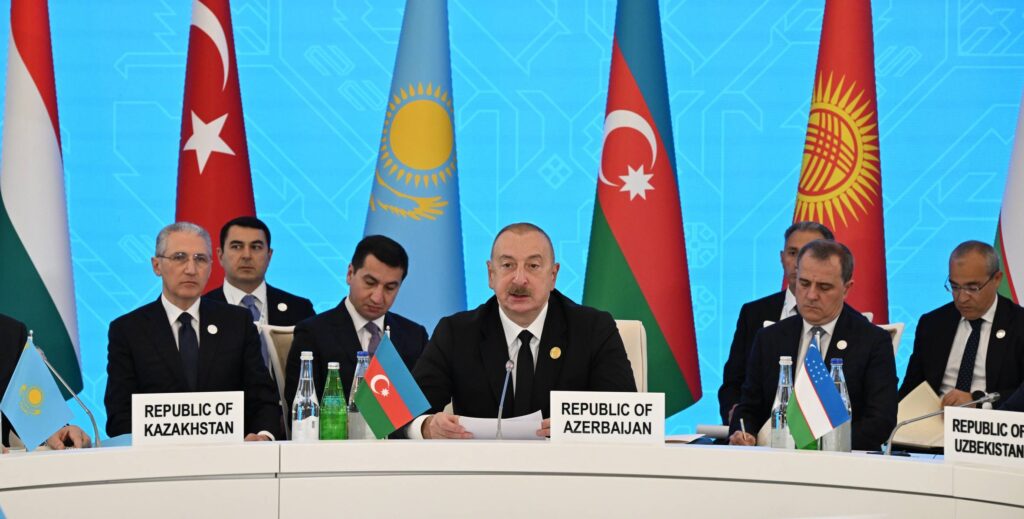
At the Shusha summit Aliyev highlighted Azerbaijan’s commitment to strengthening ties within the Turkic world, emphasizing the importance of the political, economic, and military consolidation of Turkic States as a global power center. Aliyev stated that Azerbaijan has consistently sought to unite the Turkic world and enhance its influence on the global stage, stressing that the OTS should seek to emerge as a significant global power.

“We cover a large geographical space and positive demographic dynamics are observed in the member countries. Our greatest assets are our rich natural resources, modern infrastructure for their delivery, transportation corridors connecting Central Asia and the Caucasus with Mediterranean and Black Sea ports, and our rich and ancient history and culture. The commitment of our people to traditional values and ethnic commonality closely unites our countries. The 21st century should become the century of prosperity of the Turkic world,” the Azerbaijani leader emphasized.

Aliyev also addressed the primary tasks which lie ahead for the OTS, referencing the Astana Declaration of the SCO, which designates Central Asian republics as the organization’s foundation. Leaders of these republics who attended the summit in Shusha, Tokayev, Shavkat Mirziyoyev, and Sadyr Japarov, endorsed Aliyev’s call for the expansion of the East-West transport corridor connecting Central Asia and Eurasia to Europe.

Aliyev further highlighted the Digital Silk Road project, which aims to establish a fiber-optic telecommunication route between Europe and Asia via the Caspian Sea through Azerbaijan.

Furthermore, when the President of Kazakhstan delivered his speech, he stressed the significance of the Trans-Caspian International Transportation Route.

“The potential of the Trans-Caspian International Transport Route should be fully utilized. Today, the volume of container transportation along this corridor has doubled compared to 2023. We have launched a multimodal digital platform, Digital Trade Corridor, to reduce cargo transit time. The Azerbaijani side is closely cooperating with us in this direction,” Tokayev stated.

Aliyev also took the opportunity to highlight the fact that Azerbaijan will host COP29 this year. “We regard the chairmanship of COP29 and the hosting of this event in Baku as a clear example of the great confidence the international community has in our country,” he stated. “About 200 countries unanimously supported our candidacy. Using the experience gained during its four-year chairmanship of the Non-Aligned Movement, Azerbaijan will strive to strengthen solidarity and achieve consensus between developed and developing countries.”

The Karabakh Declaration, adopted by participants of the informal summit in Shusha, further proves that Central Asia and the Organization of Turkic States remain committed to regional cooperation and maintaining good relations with Europe.

In fact, one of the clauses within the declaration explicitly states the aspirations of the OTS and Central Asia for global cooperation and openness: “Strengthening regional ties and economic integration between the member states through the Trans-Caspian International East-West Corridor (Middle Corridor) connecting Europe, Turkey, the South Caucasus, Central Asia, and China… for sustainable development, economic prosperity, and international trade by increasing trade and attracting investment in the infrastructure of ports and railroads.”

In essence, whilst the Western media may choose to focus on Putin and Xi, the influence of China and Russia on the rest of the SCO members is overly exaggerated, and any talk of Central Asia isolating itself from the West is unfounded.