• KGS/USD = 0.01144 0%
  • KZT/USD = 0.00209 0%
  • TJS/USD = 0.10523 0%
  • UZS/USD = 0.00008 0%
  • TMT/USD = 0.28530 0%
  • KGS/USD = 0.01144 0%
  • KZT/USD = 0.00209 0%
  • TJS/USD = 0.10523 0%
  • UZS/USD = 0.00008 0%
  • TMT/USD = 0.28530 0%
  • KGS/USD = 0.01144 0%
  • KZT/USD = 0.00209 0%
  • TJS/USD = 0.10523 0%
  • UZS/USD = 0.00008 0%
  • TMT/USD = 0.28530 0%
  • KGS/USD = 0.01144 0%
  • KZT/USD = 0.00209 0%
  • TJS/USD = 0.10523 0%
  • UZS/USD = 0.00008 0%
  • TMT/USD = 0.28530 0%
  • KGS/USD = 0.01144 0%
  • KZT/USD = 0.00209 0%
  • TJS/USD = 0.10523 0%
  • UZS/USD = 0.00008 0%
  • TMT/USD = 0.28530 0%
  • KGS/USD = 0.01144 0%
  • KZT/USD = 0.00209 0%
  • TJS/USD = 0.10523 0%
  • UZS/USD = 0.00008 0%
  • TMT/USD = 0.28530 0%
  • KGS/USD = 0.01144 0%
  • KZT/USD = 0.00209 0%
  • TJS/USD = 0.10523 0%
  • UZS/USD = 0.00008 0%
  • TMT/USD = 0.28530 0%
  • KGS/USD = 0.01144 0%
  • KZT/USD = 0.00209 0%
  • TJS/USD = 0.10523 0%
  • UZS/USD = 0.00008 0%
  • TMT/USD = 0.28530 0%

Russian Laboratory to Combat Dangerous Infections in Kyrgyzstan

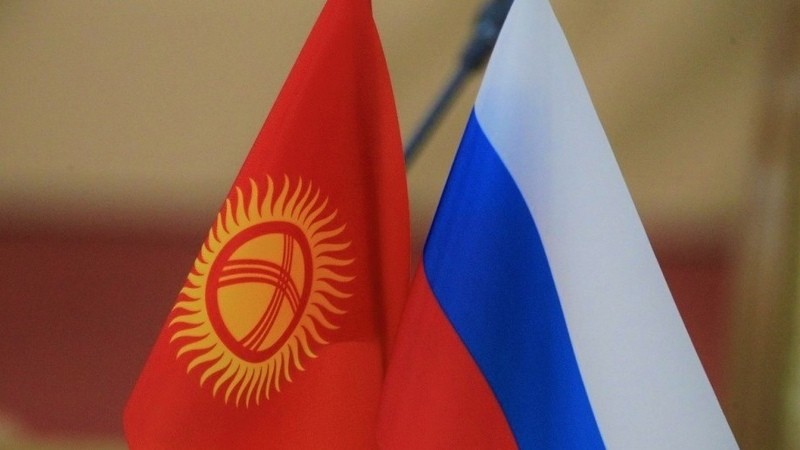
Russia has allocated funds for the construction of a laboratory in Kyrgyzstan to combat dangerous infections. The announcement was made by a member of the Russian Academy of Sciences, Gennady Onishchenko, during a video conference on biosafety in the countries of the Eurasian Economic Union.

Kyrgyzstan has yet to determine where the laboratory will be located. Russian officials have stated that it cannot be sited near residential areas and prior to its construction, associated personnel — virologists and microbiologists — should be provided with necessary training and equipment.

As reported by 24.kg, the planned laboratory is part of a memorandum of understanding on ensuring biological safety, signed in October 2023 by the governments of Kyrgyzstan and Russia.


Poland Asks Turkmenistan to Open a Consulate in Warsaw

Poland has asked Turkmenistan to consider opening a consulate in Warsaw. The country’s minister of external affairs, Rashid Meredov, announced this at a government meeting on July 5.

Turkmenistan will send an official delegation to Poland in the fourth quarter of 2024 to study the possibility of opening a consulate.

Turkmenistan and Poland have also formed a working group on economic cooperation and plan to organize an exhibition of the Museum of Turkmenistan’s exhibits in Poland in 2025.

The number of Turkmen immigrants in Poland has increased dramatically in recent years. In 2022, Turkey, the most popular destination for Turkmen labor migration, introduced a visa regime at the request of the Turkmen side. The report stated: “The decline of the Turkish economy and the devaluation of the lira also played an important role. Migrants began to look for other options, including Poland. The request to open a consulate is probably related to this, but Rashid Meredov did not mention it in his report. The government of Turkmenistan wants to curb labor migration with bureaucratic obstacles.”

Meredov also announced the expansion of cooperation with other Eastern European countries that are members of the European Union: Hungary, the Czech Republic, Romania, and Slovakia.

Kyrgyz Minister: Dependence on Western Technology to Blame for Russian Payment Ban

Kyrgyzstan’s Minister of Economy and Commerce Daniyar Amangeldiev recently took part in an international industrial exhibition in Yekaterinburg, Russia. In an interview with Russian media, Amangeldiev said that Kyrgyzstan has faced problems because of its dependence on western technology. It is for this reason, he said, that the country had to suspend the service of Russian ‘MIR’ payment cards in April this year.

MIR payment cards stopped being accepted in Kyrgyzstan at the request of Elkart, the Interbank Processing Center (IPC) that services the Kyrgyz payment system.

Amangeldiev commented: “The sanctions applied to the Russian Federation are also reflected in our economy. The software on which “Elkart” is based belongs to European partners. We are forced to refuse service to MIR cards because it would have undermined our domestic payment system.”

Amangeldiev emphasized that Kyrgyzstan is currently developing its own payment software, which will allow payments using Russian cards. Kyrgyzstan’s prime minister, Akylbek Japarov, has noted that a fully functioning payment system is needed most of all by Kyrgyz labor migrants working in Russia.

Expansion of Japanese Investment in Uzbekistan

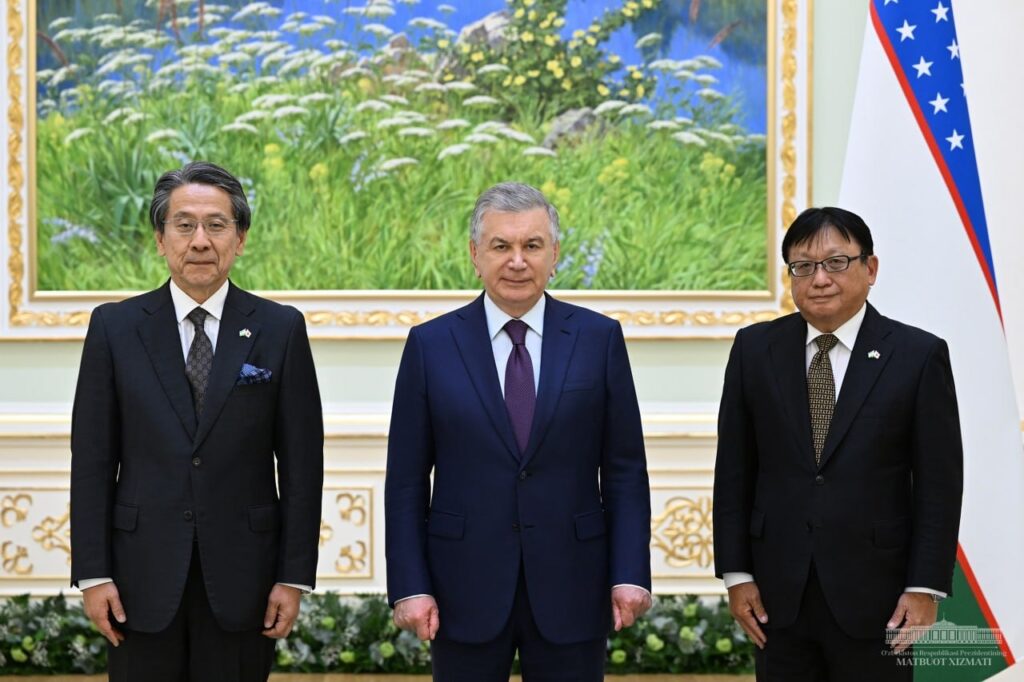
On July 9, Uzbekistan’s President Shavkat Mirziyoyev held a meeting in Tashkent with a Japanese delegation, including Tadashi Maeda, Chairman of the Board of Directors of the Japan Bank for International Cooperation (JBIC), and a representative of the Sojitz Corporation.

Agreements were reached on the adoption of a three-year cooperation program with JBIC, as well as a roadmap with Sojitz Corporation for the implementation of potential projects in high-tech sectors of Uzbekistan’s economy.

The Uzbek leader noted JBIC’s significant role in the implementation of investment projects in the country, which today includes a portfolio of joint initiatives worth over $3.7 billion in the petrochemical and textile industries, energy, and infrastructure modernization.

The president also expressed his deep appreciation of Sojitz’s implementation of projects in the country’s oil and gas sector.

The Japanese company confirmed its intention to expand business activities in Uzbekistan, including, based on an agreement signed in 2022, the Syrdarya II IPP project, destined to become one of the largest power generation facilities in Uzbekistan.

The Sojitz Corporation also announced its opening of a liaison office in Tashkent through which it aims to strengthen existing business as well as develop new business while striving to address regional needs across Central Asia.

USAID Equips Mega Fruit Storage Facility in South Kyrgyzstan

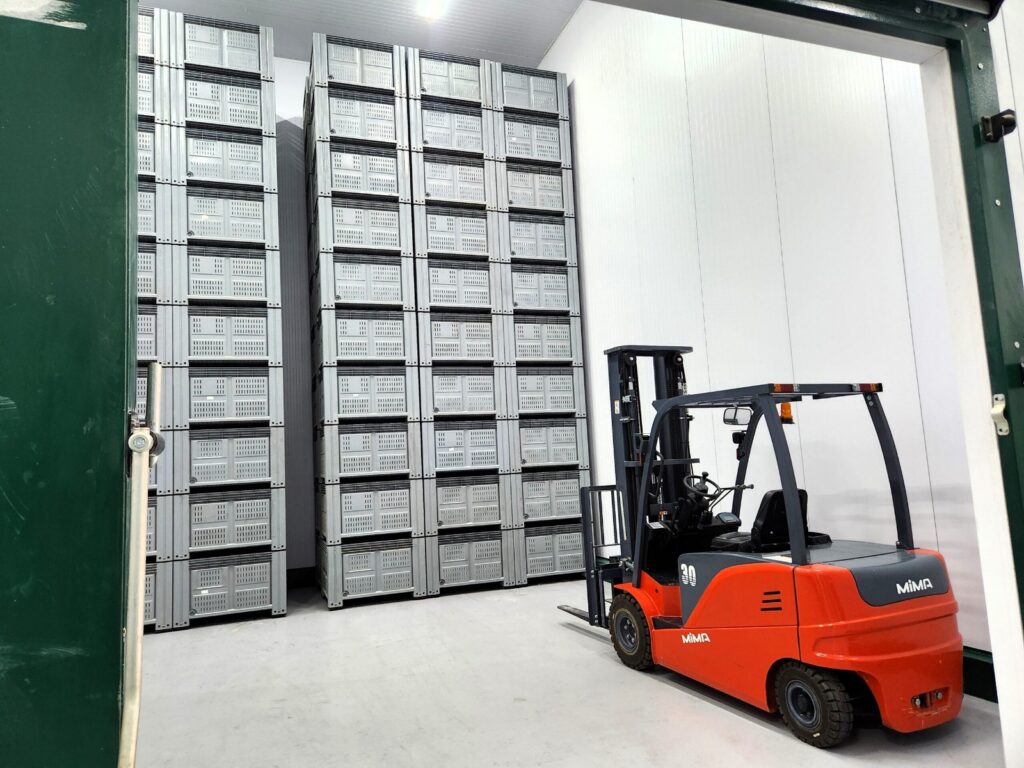
The United States Agency for International Development (USAID) has helped Kyrgyzstan’s Nookat Almasy Cooperative open the largest cold storage facility in the Nookat district of the southern Osh region.

Deputy Chairman of the Cabinet of Ministers of the Kyrgyz Republic Bakyt Torobaev and USAID Mission Director in the Kyrgyz Republic Kaya Adams attended the facility’s opening ceremony.

As reported by the U.S. Embassy in Kyrgyzstan, the new facility will generate 200 full-time jobs and assist local farmers in marketing and expanding sales of their produce.

Thanks to cooling equipment worth $78,400 from USAID, the Nookat Almasy Cooperative’s new facility can now store locally grown apples and raspberries for up to four months. By extending their shelf life and enabling farmers to sell at a higher price when market conditions improve, the enhanced storage will help maintain market stability and ensure a reliable and consistent food supply throughout the year.

Since 2018, the U.S. government has helped establish over 20 new cold storage facilities in southern Kyrgyzstan, more than doubling capacity to reach 12,500 tons, decreasing food spoilage by 40%, and creating income-generating activities for over 4,000 local farmers.


Will Kazakhstan Manage to Save the National Fund?

Experts report that Kazakhstan’s National Fund has seen cumulative withdrawals of $100 billion over the past decade. The sovereign wealth fund, managed by the National Bank of the Republic of Kazakhstan, has often been used to meet state needs. Despite this, with the National Fund for Children program set to launch in 2024, President Tokayev has instructed an increase in its assets.

The National Fund was established in 2000 by a decree from former President Nursultan Nazarbayev. It consolidates state assets held in the national bank account of the Republic of Kazakhstan. The fund’s income is derived from two sources: tax receipts from the oil and gas sector and earnings from managing its assets. Starting in 2024, the National Fund for Children program will receive 50% of the fund’s annual income.

Business analyst Abzal Narymbetov explained that the fund’s initial influx came from the sale of a 5% stake in the Tengiz oil field for $660 million in 2001. At its inception, the fund was intended to benefit future generations. However, various crises and management errors have frequently forced the government to dip into what is often called the “people’s piggy bank.”

Likening the National Fund to a similar structure in Norway, Narymbetov states that the fund’s accumulation peaked at more than $70 billion in 2014. “Since then, the NF has diverted money to ‘urgent current needs,’ such as bailing out commercial banks, supporting national companies, and filling holes in the state budget. At the moment, less than $60 billion remains in the fund. Kazakhstan began accumulating oil money with the production of 0.8 million barrels in 2001. Norwegian and Kazakh oil production has been in the same range of 1.8-2.0 million barrels for the last eight years. In other words, Kazakhstan and Norway have been producing in the same range for the last eight years; however, we spend significantly more.

“For example, the Norwegian Petroleum Fund (renamed the state pension fund) was established by the government in 1990. Money was first invested in 1996, but the first figures that can be traced are $23 billion in 1998. The oil money, in my opinion, has been wisely invested in different assets. As a result, it has reached a record level of $1.4 trillion today,” said Narymbetov.

The analyst pointed to research by economists indicating that if money from the National Fund of Kazakhstan had not been used for current spending needs, it would now exceed $150 billion. He also cited a study suggesting that if oil prices drop to $30 per barrel, the fund’s reserves could be depleted within five years.

Twenty years ago, Kazakhstan had high expectations for the National Fund, hoping it would act as a financial savior during crises and provide support for young citizens. In 2022, President Tokayev announced plans to increase the National Fund’s assets to $100 billion. “Everything that rightfully belongs to the people of Kazakhstan will serve their interests. For this purpose, we will ensure effective fund management and enhance its investment income,” he stated. These commitments became central to his election platform.

As noted, the National Fund for Children program is scheduled to launch in 2024. This initiative aims to allocate 50% of the National Fund’s annual investment income to special savings accounts for children. These funds cannot be accessed before the age of eighteen and are intended for purchasing housing or funding education. On November 16, 2023, President Tokayev signed this project into law.

However, many experts view the program as largely symbolic, given the minimal funds allocated. Former Minister of the National Economy, Alibek Kuantyrov, estimates that the average child will receive about $100-150 annually, excluding reinvestment. Over eighteen years, approximately $3,000 would accumulate in the account, which is insufficient to cover educational expenses or purchase a home.

The National Fund’s mismanagement and potential hydrocarbon price declines pose additional risks to its replenishment. This summer, economists have expressed doubts about the government’s ability to meet the President’s objectives. For instance, Nurlan Zhumagulov, an expert in the oil and gas industry and director of the public fund Energy Monitor, noted that in the first five months of 2024, 2.5 billion KZT was withdrawn from the National Fund, while only 2.2 trillion KZT was deposited. The net income from managing the National Fund since the beginning of the year amounted to a relatively modest 465 billion tenge ($967 million). With such figures, achieving the President’s goals appears challenging.

“It’s too early to dream of accumulating $100 billion in assets in the National Fund and doubling GDP by the end of Tokayev’s presidency. I can bet that in dollar terms, there will be no doubling of GDP by 2029,” Zhumagulov stated.

Economist Galymzhan Aitkazin has also highlighted a negative trend in the National Fund’s revenue data. Previously, the fund received significantly more money than was withdrawn. Now, with declining discipline in fund usage, withdrawals are being masked by investment income.