• KGS/USD = 0.01144 0%
  • KZT/USD = 0.00213 0%
  • TJS/USD = 0.10456 0.19%
  • UZS/USD = 0.00008 0%
  • TMT/USD = 0.28490 0%
  • KGS/USD = 0.01144 0%
  • KZT/USD = 0.00213 0%
  • TJS/USD = 0.10456 0.19%
  • UZS/USD = 0.00008 0%
  • TMT/USD = 0.28490 0%
  • KGS/USD = 0.01144 0%
  • KZT/USD = 0.00213 0%
  • TJS/USD = 0.10456 0.19%
  • UZS/USD = 0.00008 0%
  • TMT/USD = 0.28490 0%
  • KGS/USD = 0.01144 0%
  • KZT/USD = 0.00213 0%
  • TJS/USD = 0.10456 0.19%
  • UZS/USD = 0.00008 0%
  • TMT/USD = 0.28490 0%
  • KGS/USD = 0.01144 0%
  • KZT/USD = 0.00213 0%
  • TJS/USD = 0.10456 0.19%
  • UZS/USD = 0.00008 0%
  • TMT/USD = 0.28490 0%
  • KGS/USD = 0.01144 0%
  • KZT/USD = 0.00213 0%
  • TJS/USD = 0.10456 0.19%
  • UZS/USD = 0.00008 0%
  • TMT/USD = 0.28490 0%
  • KGS/USD = 0.01144 0%
  • KZT/USD = 0.00213 0%
  • TJS/USD = 0.10456 0.19%
  • UZS/USD = 0.00008 0%
  • TMT/USD = 0.28490 0%
  • KGS/USD = 0.01144 0%
  • KZT/USD = 0.00213 0%
  • TJS/USD = 0.10456 0.19%
  • UZS/USD = 0.00008 0%
  • TMT/USD = 0.28490 0%

A Permanent Piece of ‘Home’: The Trend for Kyrgyz Ornament Tattoos

An interview with Master Tattoo Artist, Zarema Kubanychbekova

In recent years, there has been a growing interest in representing traditional, national ornament in the art of tattooing in Kyrgyzstan. TCA met Zarema Kubanychbekova, a talented tattoo artist with nine years’ experience, to discuss this trend and its peculiarities.


TCA: How did you become involved in the tattoo industry?

I first picked up a tattooing machine on October 17, 2015, almost 9 years ago. It was challenging but exciting. I have been drawing since early childhood, literally from kindergarten, and subsequently all my activities were somehow connected with creativity, but I never imagined that my life would be connected with tattooing. The decision to embark on this path was absolutely spontaneous, but after completing my first piece, I was in no doubt that it was exactly what I wanted to do.
Zarema


TCA: What can you say about the popularity of tattoos incorporating traditional Kyrgyz motifs?

There is definitely a trend, and it is good to see. I believe that it is mostly because people have begun to value their roots and culture. A lot of tattoos are made for people who travelling abroad, want something to remind them of home. Tourists regard them as souvenirs of their time spent in Kyrgyzstan whilst locals want something to remind them of their origins.


TCA: What features of Kyrgyz ornament do you use most frequently in your work and what do they symbolise?

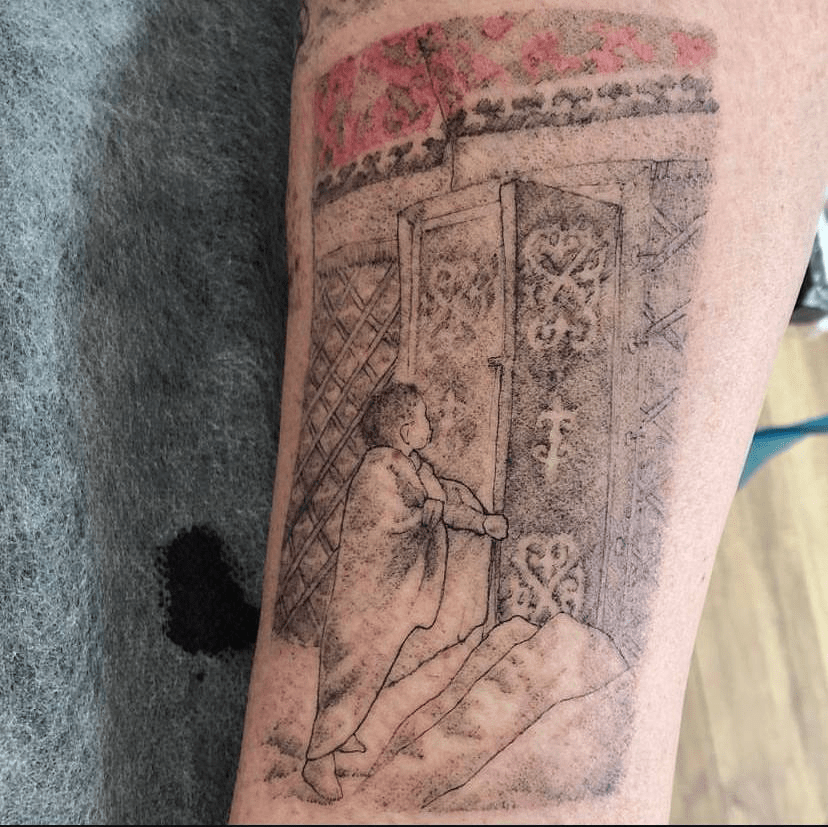
Some time ago, we collaborated with a client on the idea to ‘embroider’ the ornament on the skin. In other words, to replicate the texture of threads to make it resemble a ‘tush-kiyiz’ or traditional wall-hanging. It came together somehow by itself, although the initial request was for a simple contour work, and the result was both highly unusual and beautiful. I often create patterns inspired by petroglyphs using point by point (dot work), which is interesting, because motifs were originally applied to these ancient stones by almost the same method. Each ornament has its own unique meaning, and people generally choose those which best resonate with them.

 

artist’s own tattoo


TCA: Do you consider such tattoos a form of self-expression?

Yes; in recent years I have noticed more and more, people’s desire to express themselves through their ethnicity and love for their land. It’s great!


TCA: What are the difficulties or peculiarities of creating tattoos from traditional motifs compared to other styles?

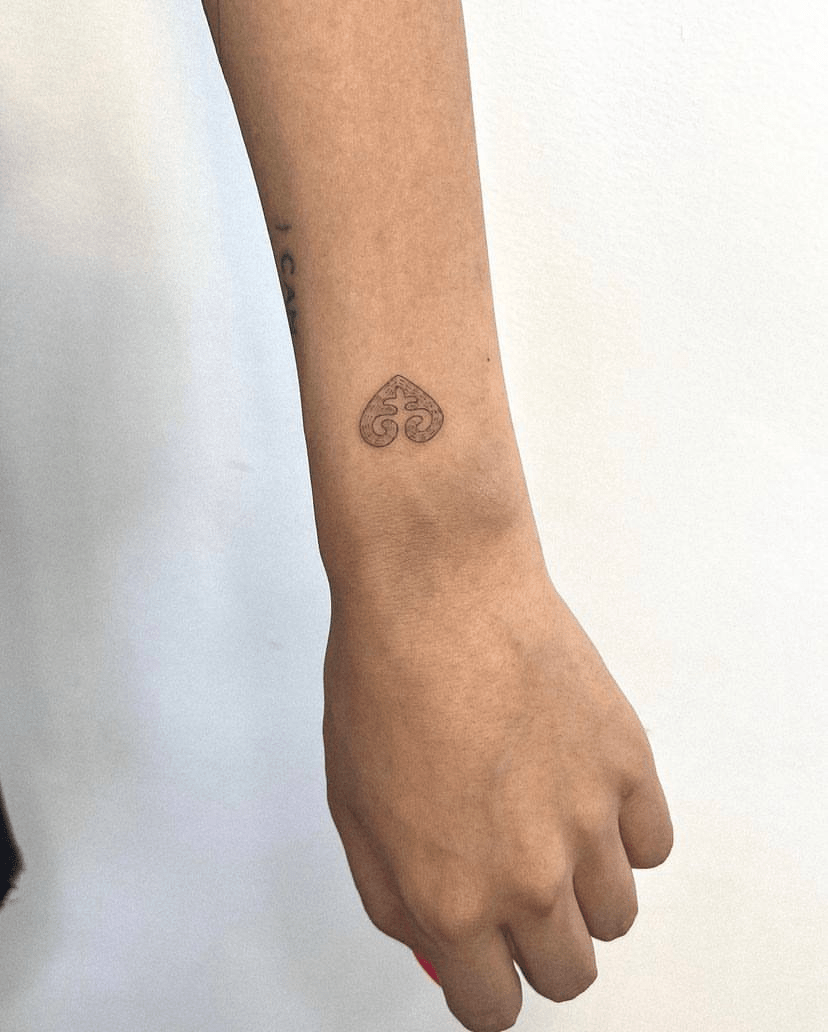
There are no particular difficulties as such. There was however, a case whereby my client and I consulted with a woman specialist in runes/ornaments to clarify how best to marry two symbols so that when combined, they would not lose their meaning.
Zarema


TCA: How do you view the future of this current trend in Kyrgyzstan?

I think the theme of Kyrgyz ornamental tattoos will always be relevant. Time passes, the world changes, but our roots remain solid.
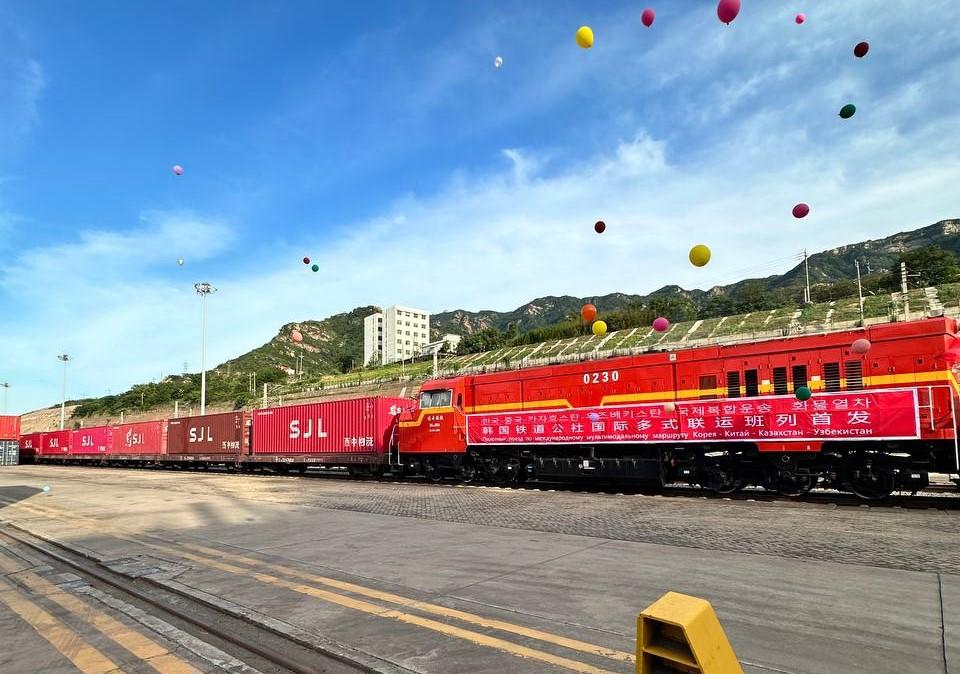
First Container Train on South Korea – China – Kazakhstan – Uzbekistan Route

On June 26, on the initiative of South Korea, China, Kazakhstan, and Uzbekistan railway administrations, and in cooperation with SJ Logistics Group, a ceremony was held at the Kazakh-Chinese logistics terminal in the port of Lianyungang, to launch the first container train from South Korea to Uzbekistan through China and Kazakhstan.

The national railways company Kazakhstan Temir Zholy (KTZ), the subsidiary of which, KTZ Express, operates the route through Kazakhstan, reported that covering 7 thousand kilometres, the railway opens new avenues for economic interaction between the associated countries.

Speaking at the ceremony, Deputy General Director for Commerce of KTZ Express Ulugbek Orazov, noted: “The launch of the pilot train demonstrates our common desire to develop joint multimodal transportation, which will certainly open up new horizons for trade and interaction in the region.”

He continued by adding that the event marked an important step in the development of new opportunities to increase the transit potential of Kazakhstan as well as its establishment as a key transport hub in the international supply chain.


The National Bank of Uzbekistan Places Bonds on the London Stock Exchange

JSC National Bank for Foreign Economic Activity of the Republic of Uzbekistan (Uznatsbank) has successfully placed bonds on the London Stock Exchange  in two tranches totalling $411 million :  $300 million maturing in 5 years, and 1.4 trillion UZS ($111 million) maturing in 3 years.

Uznatsbank’s placement of the bonds follows Uzbekistan’s successful placement of sovereign bonds, totalling $1.5 billion in three currencies, in international financial markets on May 21.

Funds raised by bonds on the London Stock Exchange will primarily be used to carry out directives, issued by the President of Uzbekistan at a meeting on May 20, to attract foreign investment by commercial banks. Monies will also be invested in critical projects across various economic sectors to stimulate the country’s economic growth.

Uznatsbank is one of the Uzbekistan’s first commercial banks to place bonds in the national currency in the international financial market and as such, the transaction will serve as a benchmark for other commercial banks and enterprises of the country.

The London Stock Exchange, founded in 1801, is one of world’s  leading stock exchanges.

Representatives of World Bank and IFC Speak About Projects in Tajikistan

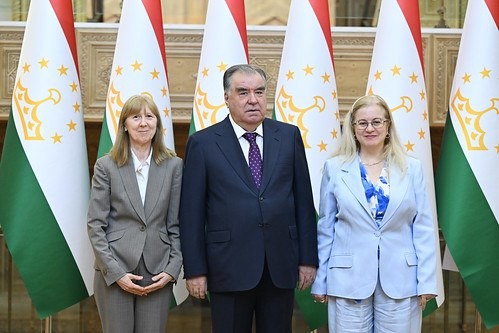
The President of Tajikistan, Emomali Rahmon received Vice President of the World Bank, Antonella Bassani and Vice President of the International Finance Corporation, Hela Cheikhrouhou. The meeting was followed by a press conference wherein joint projects were spoken about, Avesta.tj has reported. According to Bassani, the parties discussed the state of their bilateral partnership and cooperation between Tajikistan and the World Bank.

Twenty-five projects worth $1.7 billion are being implemented in Tajikistan under the International Development Association. These projects cover investment development, political reform implementation, energy, water supply, agriculture, education, health, natural resource management, and other sectors.

“The meeting also discussed promising areas contributing to deepening and expanding cooperation. We concluded that in the area of drinking water supply, it is necessary to intensify further actions in this direction and improve cooperation,” the World Bank Vice President said, noting that the government’s efforts to promote reforms are appreciated.

Vice-President of the IFC, Hela Cheikhrouhou said that simplifying entrepreneurship for young people and women was also on the agenda. “The International Finance Corporation team decided to introduce global knowledge and experience into the private sector, which can become a source of quality jobs and economic development in Tajikistan,” she stated. Cheikhrouhou also noted that she looks forward to cooperating within the framework of the Roadmap to reduce barriers to entrepreneurship and provide opportunities for young people, women, and girls to create successful enterprises in various sectors of Tajikistan’s economy.

“The International Finance Corporation for Tajikistan has sent $60 million of investments in the last 12 months, and we intend to increase it soon,” Cheikhrouhou emphasized.

Uzbek Electronics Retailer Secures EBRD $10 Million Loan

On July 1, the European Bank for Reconstruction and Development (EBRD) announced its support to further develop retail standards and e-commerce in Uzbekistan by financing the expansion of one of the country’s leading consumer electronics and household appliances chains, CA-store (formerly Credit Asia).

The loan of up to $10 million will finance the working capital required by CA-store for its expansion beyond the capital city of Tashkent. It is expected that in the coming years, the Uzbek retailer will extend its business to all the country’s major cities.

The funds will also be used to develop CA-store’s online sales by introducing new e-commerce standards in Uzbekistan’s fast growing e-commerce market and offer online shopping to customers across the country.

CA-store’s increased regional coverage will contribute to the reduction of the shadow economy by offering authentic goods and fully complying with national tax requirements.

Integral to the project, is a commitment by CA-store to create equal and fair employment opportunities for staff.


Turkmenistan to Start Cargo Transit via Iranian Railroads

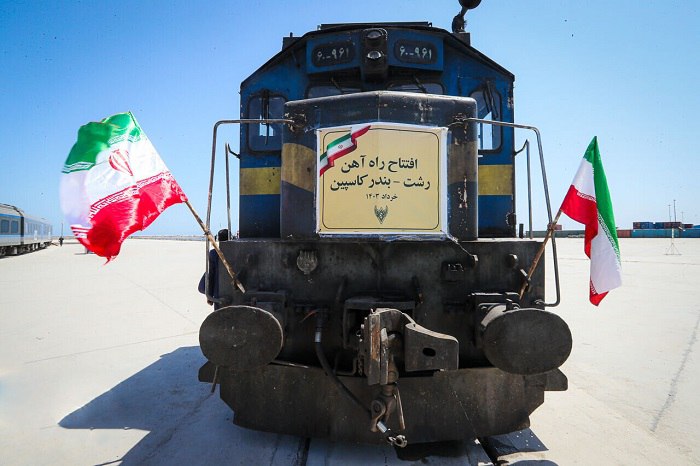
Turkmenistan will start the transit of cargo along the Resht-Kaspian railroad line in Iran, as reported by the publication, Turkmenistan: Golden Age, citing Milad Salehi, the Director General of Railways of the Islamic Republic of Iran. Sulfur transit from Turkmenistan will start  along this route next week.

The Resht-Kaspian railroad is an important part of the North-South international transportation corridor connecting the Caspian Sea with the Persian Gulf and the Sea of Oman. It also links the north and south of the country. This route opens up new opportunities for cargo transit from Central Asia to the Middle East and South Asia.