• KGS/USD = 0.01144 0%
  • KZT/USD = 0.00196 -0%
  • TJS/USD = 0.10899 0%
  • UZS/USD = 0.00008 0%
  • TMT/USD = 0.28490 0%
  • KGS/USD = 0.01144 0%
  • KZT/USD = 0.00196 -0%
  • TJS/USD = 0.10899 0%
  • UZS/USD = 0.00008 0%
  • TMT/USD = 0.28490 0%
  • KGS/USD = 0.01144 0%
  • KZT/USD = 0.00196 -0%
  • TJS/USD = 0.10899 0%
  • UZS/USD = 0.00008 0%
  • TMT/USD = 0.28490 0%
  • KGS/USD = 0.01144 0%
  • KZT/USD = 0.00196 -0%
  • TJS/USD = 0.10899 0%
  • UZS/USD = 0.00008 0%
  • TMT/USD = 0.28490 0%
  • KGS/USD = 0.01144 0%
  • KZT/USD = 0.00196 -0%
  • TJS/USD = 0.10899 0%
  • UZS/USD = 0.00008 0%
  • TMT/USD = 0.28490 0%
  • KGS/USD = 0.01144 0%
  • KZT/USD = 0.00196 -0%
  • TJS/USD = 0.10899 0%
  • UZS/USD = 0.00008 0%
  • TMT/USD = 0.28490 0%
  • KGS/USD = 0.01144 0%
  • KZT/USD = 0.00196 -0%
  • TJS/USD = 0.10899 0%
  • UZS/USD = 0.00008 0%
  • TMT/USD = 0.28490 0%
  • KGS/USD = 0.01144 0%
  • KZT/USD = 0.00196 -0%
  • TJS/USD = 0.10899 0%
  • UZS/USD = 0.00008 0%
  • TMT/USD = 0.28490 0%
08 December 2025

Kyrgyzstan’s Foreign Ministry Urges Its Citizens to Temporarily Refrain From Traveling to Russia

A recommendation posted on the Kyrgyzstan Foreign Ministry website has urged its citizens to temporarily refrain From traveling to Russia in relation to the terrorist attack in Crocus City Hall near Moscow on March 22, 2024, which killed over 130 people, as well as the introduction of enhanced security measures throughout Russia.

The Ministry of Foreign Affairs asked fellow citizens who do not have good reasons and urgent business in Russia to refrain from traveling to Russia as long as the additional security measures and increased control of passage across the border are still in place. For those who have already planned their trip, the foreign ministry recommends checking for restrictions under their name on the website of the Russian Interior Ministry.

“Citizens who have [committed] two or more administrative offenses during their previous stay on the territory of the Russian Federation, refrain from traveling to its territory to avoid not passing through the state border and the consequences associated with this procedure,”  reads a warning on the website of the Foreign Ministry.

Furthermore, Kyrgyz diplomats recommend that citizens who are already in Russia refrain from visiting mass gatherings of any kind, as well as carry identification documents and the documents that confirm the legality of their stay in the Russian Federation. The Foreign Ministry warned that citizens should comply with the legal requirements of Russian security forces as part of their mandate to ensure public safety.
“In case of emergency questions, citizens should contact the hotline of the Embassy of the Kyrgyz Republic in Moscow at +7 925 115 50 47, as well as the Consular Department of the Ministry of Foreign Affairs of the Kyrgyz Republic at +996 999 312 002,” reads the statement.

Russian authorities have stepped up security measures in many cities after the terrorist attack in the Moscow region that killed 139 people and injured 182 others, according to the latest figures. Tajik passports were found on the suspected perpetrators of the mass shooting, making Russian citizens and law enforcement more suspicious of Tajikistani nationals and citizens of neighboring Central Asian countries. After the terrorist attack, checks on citizens of all Central Asian countries in Russia have intensified. There is also talk of strengthening migration control in Russia.

Tajik Migrants Facing Xenophobia in Russia After Moscow Terrorist Attack

After the detention of four Tajik nationals suspected of committing the terrorist attack at the Crocus City Hall near Moscow, migrants have faced a wave of hatred and aggression. In Blagoveshchensk, along the Amur River that borders China, unknown persons set fire to a market pavilion belonging to migrants. According to the city’s mayor, Oleg Imameyev, the arson was committed “obviously on ethnic grounds.” In Kaluga, a group of unidentified men beat up three Tajik citizens on the street, with one of them requiring hospitalization. In some regions of Russia, taxi passengers are refusing to use transportation services if they learn the driver is Tajik.

Telegram channel, Baza, reports that after the terrorist attack special units were created among domestic law enforcement to conduct additional checks on foreign citizens. Together with traffic police officers, they will check hostels, hostels, businesses and road routes, as well as other places where migrants congregate.

Even those Tajiks who have been living in Russia for many years with their families, some whom have Russian citizenship, have felt an increase in xenophobic sentiment. After it became known that one of the detainees, 19-year-old Muhammadsoobir Faizov, had worked for several months in the Ploschadka barbershop in the town of Teykovo, Ivanovo region, local residents started to threaten the salon’s manager and hairdressers. The director of the barbershop, Yamina Safieva, told the Moskovsky Komsomolets newspaper that the salon employees’ phones “do not stop ringing” with menacing phone calls and messages.

Leaders among the Tajik diaspora have recommended that their fellow citizens do not go out on the streets unless necessary and do not to attend mass events. Kyrgyz citizens in Russia have also received similar from their diaspora leaders and government representatives.

The Ministry of Internal Affairs of Tajikistan released a statement saying that three citizens of Tajikistan who were named by Russian media were not involved in the terrorist attack: one of them was in Samara at the time of the attack, where he works as a cab driver, and two of them have been living in their home country since November last year.

According to various sources, there are about 1.5 million migrant workers from Tajikistan in Russia. As one of the remittance-based countries in the world, in 2021 Tajikistan was also the poorest country in post-Soviet space in terms of GDP per capita, which according to the World Bank was at $878 annually. In Kyrgyzstan, by way of comparison, at that time this indicator was $1,328. At the same time, Tajikistan has a high rate of population growth at 2.7%. Given rampant unemployment in the country – 7.8% in 2023, labor migration is an most important means of livelihood for Tajik citizens.

Russian Atomic Energy Company to Build Renewable Energy Facilities in Kyrgyzstan

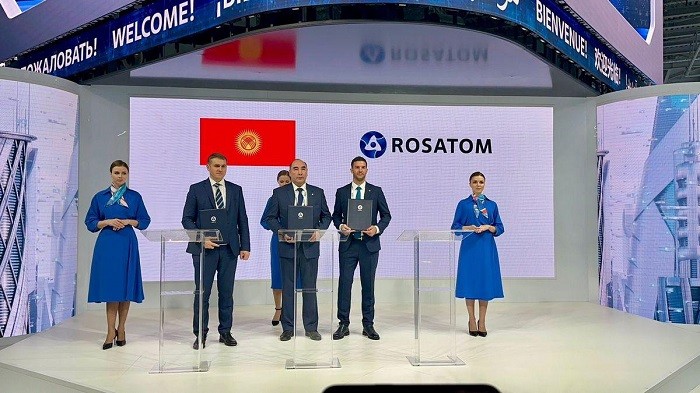
On March 26th, at the 13th ATOMEXPO 2024 International Forum in Sochi, Russia, Kyrgyzstan’s Ministry of Energy and Russia’s State Atomic Energy Corporation Rosatom announced joint investment in the construction of renewable energy facilities in Kyrgyzstan with a capacity of up to 1 GW.

The agreement was signed by Grigory Nazarov, General Director of the Wind Energy Division of Rosatom; Talaibek Baigaziev, Deputy Minister of Energy of the Kyrgyz Republic, and Dmitry Konstantinov General Director of Rosatom’s office in Kyrgyzstan.

According to Rosatom, the first stage of the project will involve the implementation of a pilot project for the construction of a wind power plant with a capacity of 100 MW in Kyrgyzstan’s Issyk-Kul region. The Russian company has already installed a mast for wind measurement and is undertaking surveys on the location of wind farms. The second stage will include the development of additional sites for renewable energy facilities with a total capacity of up to 900 MW.

EU Supports Renovation of Agricultural College in Bukhara

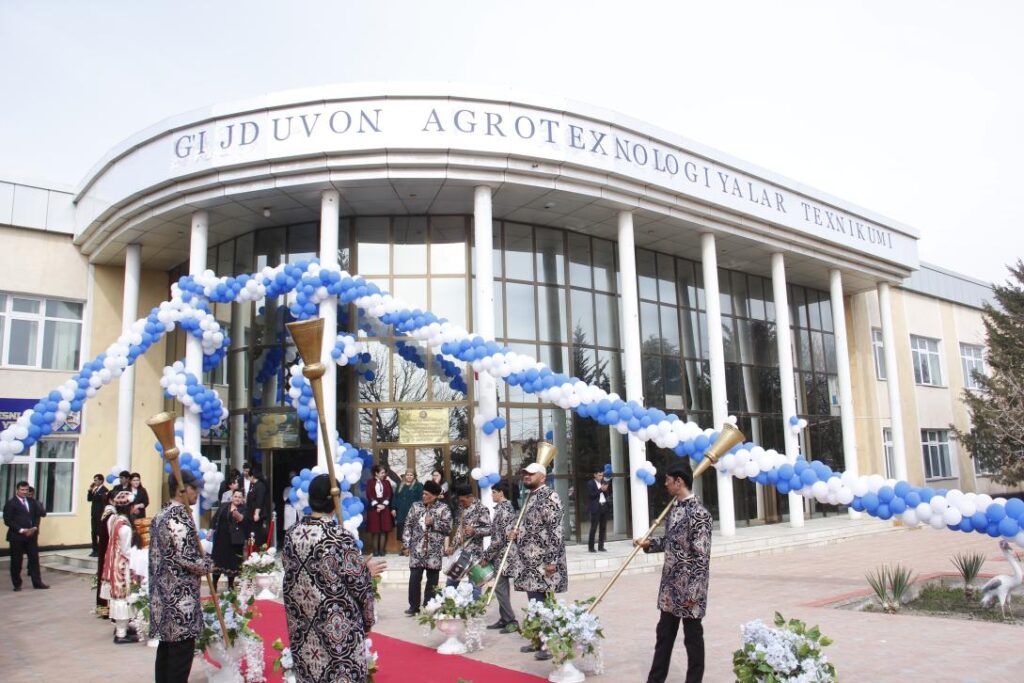
The Gijduvon Technical College of Agro Technologies recently opened its newly renovated facilities in Bukhara at an event attended by representatives of UNESCO, local government officials, the college’s staff and students, and members of Gijduvon’s community. Integral to the ‘Skills Development for Employability in Rural Areas of Uzbekistan’ project, the renovations were funded by the European Union.

Since its inception, Gijduvon College has been committed to providing vocational education for rural youth. Supported by the European Union, UNESCO’s extensive renovations have modernized workshops, classrooms, and laboratories through the installation of new flooring, ceilings, and enhanced lighting. In addition to revitalizing learning spaces, the project has also provided essential tools and resources, including tractors, greenhouses, refrigeration units, and contemporary furniture.

By contributing to the College’s success in equipping students with the skills necessary for work in agriculture and irrigation, the improved facilities will help further sustainable development and enhanced living standards in rural Uzbekistan.

Tashkent to Establish Yangi Avod Industrial Zone

Uzbekistan is to open a special industrial zone called Yangi Avlod (New Generation) in Tashkent. Yangi Avlod will be located in the Yangihayot district of the capital, and has been awarded a 30-year operating term.

Companies operating within the special industrial zone will receive preferential tax rates and customs benefits. A limited liability company is to be opened to manage the zone; this LLC will lease out land for investment projects via the electronic trading platform Ye-auction.

The special industrial zone is forecast to receive up to $1.5 billion in foreign direct investments (FDI) by the end of 2025, which will generate over 2,500 new jobs at Yangi Avlod

Uzbekistan To Open Three New Power Projects in Namangan

Three large energy projects are being put into operation in Uzbekistan’s Namangan region. The projects have an overall capacity of 1,200 megawatts, and a total cost of $1.1 billion.

Uzbekhydroenergo will build six cascades of 228 megawatt hydroelectric power generation in Uychi district, on the Norin river, for $434 million. As a result, 1 billion kilowatt-hours (KWh) of electricity will be produced per year, 310 million cubic meters of gas will be saved, and electricity will be delivered to 430,000 households.

Construction will use exclusively Uzbek technology and equipment, making it the country’s first completely domestic hydroelectric power plant.

The Pop and Uychi districts of the Namangan region are scheduled in 2025 to host the installation of pumped-storage hydroelectric systems with a capacity of 200 megawatts. These projects serve to stabilize the unified energy system and provide adequate energy supply to households and businesses during periods of increased consumption.

This year alone, 2,600 megawatts of power will be connected to the grid as part of the construction of 14 solar and wind farms in Uzbekistan.