• KGS/USD = 0.01144 0%
  • KZT/USD = 0.00193 -0%
  • TJS/USD = 0.10811 -0.28%
  • UZS/USD = 0.00008 0%
  • TMT/USD = 0.28490 0%
  • KGS/USD = 0.01144 0%
  • KZT/USD = 0.00193 -0%
  • TJS/USD = 0.10811 -0.28%
  • UZS/USD = 0.00008 0%
  • TMT/USD = 0.28490 0%
  • KGS/USD = 0.01144 0%
  • KZT/USD = 0.00193 -0%
  • TJS/USD = 0.10811 -0.28%
  • UZS/USD = 0.00008 0%
  • TMT/USD = 0.28490 0%
  • KGS/USD = 0.01144 0%
  • KZT/USD = 0.00193 -0%
  • TJS/USD = 0.10811 -0.28%
  • UZS/USD = 0.00008 0%
  • TMT/USD = 0.28490 0%
  • KGS/USD = 0.01144 0%
  • KZT/USD = 0.00193 -0%
  • TJS/USD = 0.10811 -0.28%
  • UZS/USD = 0.00008 0%
  • TMT/USD = 0.28490 0%
  • KGS/USD = 0.01144 0%
  • KZT/USD = 0.00193 -0%
  • TJS/USD = 0.10811 -0.28%
  • UZS/USD = 0.00008 0%
  • TMT/USD = 0.28490 0%
  • KGS/USD = 0.01144 0%
  • KZT/USD = 0.00193 -0%
  • TJS/USD = 0.10811 -0.28%
  • UZS/USD = 0.00008 0%
  • TMT/USD = 0.28490 0%
  • KGS/USD = 0.01144 0%
  • KZT/USD = 0.00193 -0%
  • TJS/USD = 0.10811 -0.28%
  • UZS/USD = 0.00008 0%
  • TMT/USD = 0.28490 0%
10 December 2025

Scandal on Khabar TV Raises Discussions About Domestic Violence in Kazakhstan

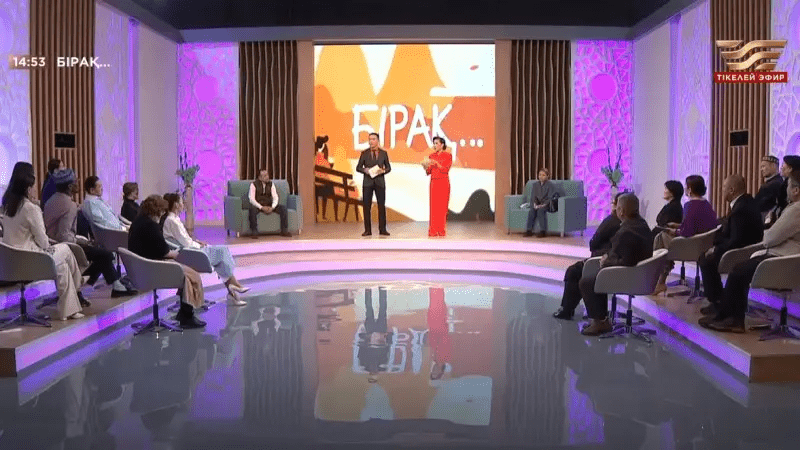
A scandal which erupted on Kazakhstan’s state television channel, Khabar, has caused huge public outrage. At the center of events was a woman named Gulmira, who had suffered years of abuse at the hands of her husband. Her story became the subject of discussion on the talk show, Birak, which is dedicated to family relations.

On Khabar, Gulmira spoke about the eighteen years of beatings and violence she had suffered in her marriage. She ran away from her hard drinking husband with her six children, but he found her in Astana, and arranged another humiliation, with the talk show hosts secretly and without any warning bringing her husband to the studio, which caused Gulmira to break down live on air. The shows hosts even tried to reconcile the spouses, which only served to aggravate the already extremely strained situation.

On social networks, the public actively discussed the abhorrent behavior of the presenters and espoused their support for Gulmira. Videos were created which commented on the show, and many media outlets spoke out in defense of the woman, emphasizing the fact that such things should not be staged on national television.

As a result of the wave of indignation, the state television channel Khabar decided to stop airing the talk show Birak. The Minister of Culture and Information of Kazakhstan, Aida Balayeva, promised to shut down the talk show, stating that the problem of family violence requires serious attention.

This event took place against the background of huge public attention on the trial of former Minister of the National Economy, Kuandyk Bishembayev, who is accused of murdering his wife. In such an environment, any justification for the actions of an aggressor on state TV was deemed hugely inappropriate and only served to highlight the issue of domestic violence.

Kazakhstan: A Rising Global Player in Trade and Diplomacy

Over the past decade, Kazakhstan has become an increasingly important land-bridge between East and West, both in terms of trade and diplomacy. A vast nation the size of Western Europe with powerful neighbors in the form of China and Russia, yet on the doorstep of Europe with access to the Caspian Sea, Kazakhstan’s location has elevated it to the cusp of becoming a global power.

Given its geography, it is reasonable to assert that many decisions in Kazakhstan are, out of necessity, the result of a geopolitical tightrope act necessitating a balanced and far-reaching policy outlook. This strategic position has been described by Ariel Cohen, a Nonresident Senior Fellow at the Eurasia Center of the Atlantic Council, as a “visionary multi-vector policy pioneered” by President Tokayev. Indeed, “mutually beneficially cooperation” and “mutually beneficial strategic partnership” have become watchwords of Tokayev’s presidency.

Due to projects such as the Belt and Road Initiative and the Middle Corridor, Kazakhstan’s location has made it an indispensable ally to China. Playing a pivotal role in the expansion of transcontinental trade has led the whole of Central Asia to, in the words of Tokayev, “become a global stakeholder.” Trade turnover between Kazakhstan and China continues to expand, reaching $31.5 billion in 2023 (a 30% increase on 2022), and new transit routes are continuously under construction, with the Bakhty-Ayagoz railway line set to lead the opening of a third border crossing with China and increase the throughput capacity between the two nations from 28 million to around 48 million tons. Both cultural and political ties continue to grow, with a 30-day visa-free travel regime coming into force in November 2023. As for the total amount of Chinese investment in Kazakhstan over the past eighteen years, estimates vary from $23.2 to over $36 billion.

Even these huge sums, however, are dwarfed in comparison to the Netherlands, which, in the last five years alone, has invested a colossal $33.8 billion in Kazakhstan. Meanwhile, according to Kazakhstan’s Bureau of National Statistics data for January to December 2022, Italy was Kazakhstan’s largest exporter, accounting for 16.4% of exports worth $13.9 billion during this period. The strength of this partnership was evinced by President Tokayev paying an official visit to Italy in January 2024, during which he held talks with Prime Minister Giorgia Meloni and spoke about the two nations’ “dynamically” developing relationship and its “enormous potential”. As a block, the EU is Kazakhstan’s biggest overall trading partner, the destination for 39% of total exports and accounting for 29.4% of its total trade in 2021.

Through initiatives such as the C5+1 and the B5+1, meanwhile, the United States has increasingly sought to engage with Central Asia, and with Kazakhstan in particular. With investment totaling $19.4 billion, the U.S. ranks second in terms of foreign investment over the past five years. A driving force behind this engagement has been the huge untapped reserves of Rare Earth Elements (REEs) located in Kazakhstan. According to the Brookings Institute, whilst China is the dominant player in REEs, producing approximately 60% and processing 85% of the global output, Kazakhstan is the world’s largest producer of uranium – responsible for 33% of global output as of 2021 – a large amount of which is found in rare earth deposits.

As stated by Wesley Hill, an International Program Manager at the Energy, Growth, and Security Program of the International Tax and Investment Center, “in the same way we competed and continued to compete for other energy resources, most especially crude oil, we will be competing for REEs. It’s happening already, this geopolitical clash primarily driven by competition between the United States and China.”

Of course, given its shared history as part of the Soviet Union and a vast 4,700-mile shared border, Russia remains of huge significance to Kazakhstan. In 2023, trade turnover with Russia amounted to $26 billion, although this represented a 3.7% decrease on the previous year. Whilst preserving its ties with Moscow, however, Kazakhstan has consistently distanced itself from Russia’s war in Ukraine, with the authorities allowing large-scale rallies against the invasion to be staged. Even the death of Alexei Navalny – historically not a friend of Central Asia – saw makeshift memorials erected in several cities.

Some U.S. experts have characterized Kazakhstan’s relationship with Russia as “very fraught” and defined by “multi-generational trauma”, whereas others, citing facts such as Russia’s control over the Caspian Pipeline Consortium and 25% of Kazakhstan’s uranium production, have argued that Russian influence over Kazakhstan continues to grow. Given Kazakhstan’s membership in the CSTO and Tokayev’s meeting with Vladimir Putin in Moscow in October 2023, the depth of Russian influence in Kazakhstan is currently a hot topic for observers of the region.

In a sense this in itself speaks to the effectiveness of Tokayev’s multi-vector foreign policy, an approach based not on choosing sides, but on maximizing potential benefits for the nation. The fact that its foreign policy carries such significant consequences for both East and West speaks to Kazakhstan’s emergence as an international facilitator and a power in its own right. As a nation with an ever expanding reputation as a facilitator of mediation and dialogue, the second edition of the Astana International Forum in June could well serve to further enhance Kazakhstan’s burgeoning global standing.

Swiss Holding to Invest in Kazakhstan

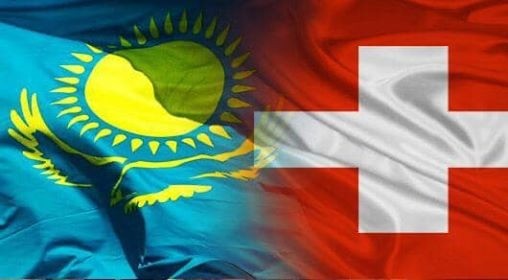
At a meeting on March 19th between Yerzhan Yelekeyev, chairman of Kazakh Invest, and representatives of Eurasia Swiss Holding AG, the latter announced its intention to invest in two new projects in Kazakhstan.

The Swiss holding company plans to build an innovative medical centre equipped with positron emission tomography and computed tomography services. According to Gulmira Amatova, director of Eurasia Swiss Holding Investment LLP, a subsidiary of Eurasia Swiss Holding AG, the centre will provide wide public access to new technologies and methods of tomography which will significantly enhance the quality of life of cancer patients.

The second initiative planned by the Swiss holding company at a cost of $62 million, comprises the construction of dairy farms and a dairy plant in Kazakhstan’s northern Kostanay region.

Eurasia Swiss Holding AG looks forward to concluding an investment agreement with the Government of Kazakhstan on both projects.

Kazakhstan And Uzbekistan To Install Transboundary Water Meters

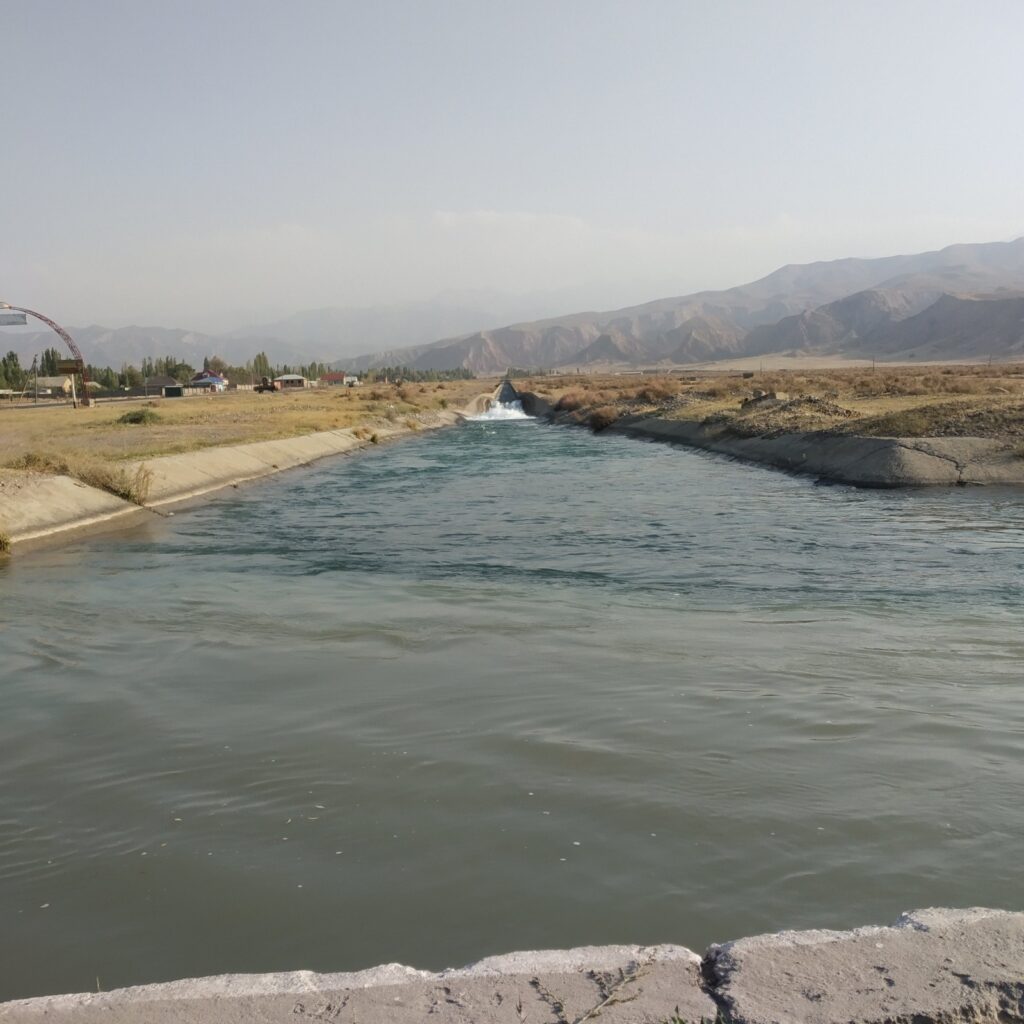
Since the use of transboundary water resources for irrigation remains a pressing issue in Central Asia, Kazakhstan and Uzbekistan have agreed to install meters to calculate the exact volume of water consumed by both countries.

Kazakhstan will install meters on the territory of Uzbekistan, and the Uzbek side will install meters in Kazakhstan. Experts from both countries are currently determining the best locations of the meters. Negotiations are also underway for the involvement of international organizations in the project.

Emphasizing the importance of the agreement for Kazakhstan, which is located downstream of the region’s rivers, the Minister of Water Resources and Irrigation of Kazakhstan, Nurzhan Nurzhigitov stated, “The installation of meters will make it possible to monitor the volumes of water consumed by both countries online. In April, we plan to begin negotiations on the implementation of similar projects with Kazakhstan’s other neighbours.”

Kyrgyzstan’s ‘Be Responsible!’ Health Program Screens 680,000 Men

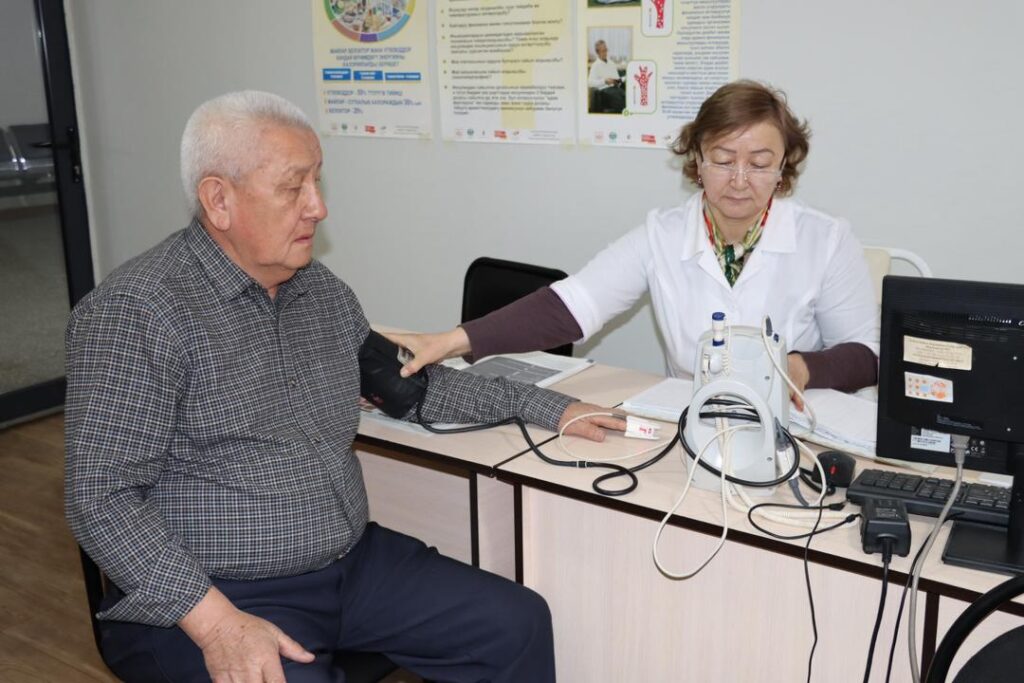
The key aim of Kyrgyzstan’s ‘Be Responsible!’ program is to encourage men to attend primary health care institutions for check-ups and specifically, the early detection of non-communicable and chronic diseases.

According to a new report by the country’s Ministry of Health, in just under a month, more than 680,000 men visited family doctors. For 149,000, it was either their first ever visit or the first in two years.

The Ministry of Health’s press centre hailed the success of the widespread campaign to attract attendances saying, “More than 44,000 men were categorized as having a high risk of cardiovascular diseases, and almost 33,000, a high risk of diabetes. The total number of men who visited medical institutions amounted to 47 percent of those over 18 years of age living in the country.”

Cardiovascular disease, cancer, lung disease and diabetes are categorized as chronic diseases. Data collected by the ministry indicates that in 2022, 52.1% of the mortality rate in men was caused by cardiovascular disease; 12.2% by cancer, and 5.5% by respiratory diseases.

Doctors also drew attention to poor nutrition including a high salt intake and insufficient consumption of fruits and vegetables; the use of tobacco, alcohol abuse, and low levels of physical activity as contributing factors to poor health.

With financial support from the Swiss government, the first screening campaign for Kyrgyz men was conducted in 2019. In response to doctors’ reports of the rising number of men taking better care of their health, the Ministry of Health issued an order for the program to be conducted nationwide, on an annual basis, from 2023 onwards.

Uzbekistan Plans to Increase Exports of Agricultural Products to $3.5 Billion Annually

President Shavkat Mirziyoyev visited the Uzbek Plant Quarantine and Protection Agency on March 18, the president’s official website says, where officials discussed the agency’s mandate for managing the cultivation of exportable goods and identifying new markets for them. It’s anticipated that projects like those managed by the agency will help increase agricultural product exports to $3.5 billion this year. The amount of agricultural exports in 2023 was close to $2 billion.

Measures related to the production of fruits and vegetables date back to an agreement from January 18, 2019, when guidelines were adopted during online meetings on export and industrial matters. The Plant Quarantine and Protection Agency, in particular, was entrusted with executing the agreement.

One of the projects is a mobile application called Agroko‘makchi, which provides services related to plant protection, helpful information, export advice, and deeper familiarity with agricultural subjects. Exporters in Uzbekistan can connect with buyers overseas through the Asiaexport.se platform. Information is posted on the platform about a wide range of products, including fruits, vegetables, dried fruits, juices, household goods, confectionery, textiles, leather goods, and pharmaceuticals.

Additionally, officials shared details regarding the agency’s collaboration within the ePhyto global solution innovation system. With this system, phytosanitary certificates can be electronically exchanged with 119 nations. This year, eight more countries will receive phytosanitary permits for 25 types of products.

Ten mobile labs will be set up around the regions this year. Over 3,000 vineyards, 6,000 gardens, 344 packaging businesses, and more will all be brought into compliance with foreign phytosanitary regulations. Digitalization of pesticide trade and inventories is aimed at ending the illicit import of low-quality pesticides into Uzbekistan.