• KGS/USD = 0.01144 0%
  • KZT/USD = 0.00193 -0%
  • TJS/USD = 0.10811 -0.28%
  • UZS/USD = 0.00008 0%
  • TMT/USD = 0.28490 0%
  • KGS/USD = 0.01144 0%
  • KZT/USD = 0.00193 -0%
  • TJS/USD = 0.10811 -0.28%
  • UZS/USD = 0.00008 0%
  • TMT/USD = 0.28490 0%
  • KGS/USD = 0.01144 0%
  • KZT/USD = 0.00193 -0%
  • TJS/USD = 0.10811 -0.28%
  • UZS/USD = 0.00008 0%
  • TMT/USD = 0.28490 0%
  • KGS/USD = 0.01144 0%
  • KZT/USD = 0.00193 -0%
  • TJS/USD = 0.10811 -0.28%
  • UZS/USD = 0.00008 0%
  • TMT/USD = 0.28490 0%
  • KGS/USD = 0.01144 0%
  • KZT/USD = 0.00193 -0%
  • TJS/USD = 0.10811 -0.28%
  • UZS/USD = 0.00008 0%
  • TMT/USD = 0.28490 0%
  • KGS/USD = 0.01144 0%
  • KZT/USD = 0.00193 -0%
  • TJS/USD = 0.10811 -0.28%
  • UZS/USD = 0.00008 0%
  • TMT/USD = 0.28490 0%
  • KGS/USD = 0.01144 0%
  • KZT/USD = 0.00193 -0%
  • TJS/USD = 0.10811 -0.28%
  • UZS/USD = 0.00008 0%
  • TMT/USD = 0.28490 0%
  • KGS/USD = 0.01144 0%
  • KZT/USD = 0.00193 -0%
  • TJS/USD = 0.10811 -0.28%
  • UZS/USD = 0.00008 0%
  • TMT/USD = 0.28490 0%
10 December 2025

Turkmenistan and Turkey to Collaborate on Export of Natural Gas to Europe

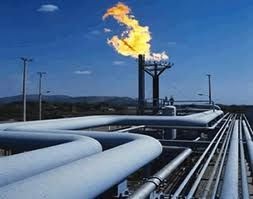
Turkmenistan and Turkey are to collaborate on a project that will pave the way for transportation of Turkmen natural gas through Turkey to European markets.

A declaration of intent on cooperation in the field of hydrocarbon resources, alongside a memorandum on natural-gas partnership between the Turkmen State Concern Türkmengaz and the Ministry of Energy and Natural Resources of Turkey, were signed by Turkish President Recep Tayyip Erdogan and Turkmenistan’s Chairman of the People’s Council, Gurbanguly Berdimuhamedov at a meeting on the margins of the Antalya Diplomatic Forum on March 1st.

The export of Turkmen gas to Europe will necessitate the construction of a gas pipeline across the Caspian Sea to Azerbaijan; a project revisited since the 1990s but not yet implemented.

Diversification of natural-gas export routes remains a pressing issue for gas-rich Turkmenistan. Today, China is the largest importer of Turkmen gas, transported by pipeline via Uzbekistan and Kazakhstan. Smaller volumes of Turkmen gas are exported to Russia.

Turkmenistan continues to work on the Turkmenistan-Afghanistan-Pakistan-India (TAPI) project to transport natural gas to South Asia. After years of delays in the construction of the Afghan section due to funding and security issues, Turkmen and Afghan authorities are now close to advancing the project.

Kazakhstan Comments on Russian Missile Tests on its Territory

Kazakhstan’s Ministry of Defense has confirmed that Russia tests its missiles inside of Kazakhstan’s borders. The country’s deputy minister of defense Shaykh-Khasan Zhazykbayev has gone on record to say that in Kazakhstan there is a military test range called Saryshagan, where the 110th training center of the Russian Federation does indeed conduct missile tests. Zhazykbayev noted that Russia has a treaty dating back to 1993, according to which it has the right to use this land as a testing ground.

“Missiles of up to 200 kilometers’ range are tested there. There is no infrastructure and population [on] this range, so no one suffers,” said Zhazykbayev. The deputy minister also noted that Russia conducts only 50 hours of missile testing at Saryshagan each year.

The Saryshagan military training range in Kazakhstan is located in the Karaganda and Zhambyl regions, to the northwest and west of Lake Balkhash in the Betpak-Dala steppe. Its construction began in 1956, and its area now holds an active military airfield and several abandoned dirt airfields. The Yekaterinburg to Almaty highway runs through it. Presently it’s considered to be the first and the only military range in Eurasia where missile weapons are developed and tested.

World Bank Supports Development of Tajikistan’s Emerging E-Commerce Market

On March 1st, Dushanbe played host to ‘Elevating Global Access through E-Commerce (E-GATE)’, a conference organized by the World Bank and the IFC. A first for Tajikistan, its goal was to facilitate knowledge and resource exchange amongst the country’s small and medium enterprises as well as with regional and global players in the e-commerce ecosystem.

“Recognizing the pivotal role e-commerce plays in modern economies, the World Bank is actively supporting Tajikistan in its journey to develop appropriate platforms, including E-GATE,” said Ozan Sevimli, World Bank Country Manager for Tajikistan. “The E-GATE program offers Tajik small and medium enterprises highly valuable membership of global B2B e-commerce platforms to access markets unavailable offline, and provide technical support to the government on drafting enabling legislation, and channel global knowledge to Tajik e-sellers through capacity building activities.”

The conference attracted e-commerce stakeholders from Tajikistan, Kazakhstan, Kyrgyzstan, Turkmenistan, and Uzbekistan, as well as global e-commerce giants including Amazon and Alibaba.

In landlocked Tajikistan, as in the whole of Central Asia, the emergence of e-commerce is proving a powerful tool to tap into global markets for locally made products, modernize traditional supply chains, and foster growth in employment opportunities.

To ensure the smooth functioning of E-commerce operations, Tajikistan recently introduced a ‘On Electronic Commerce’ law.

According to ECDB, a specialized e-commerce data analytics company (https://ecommercedb.com/markets/tj/all), Tajikistan is currently one of the smaller markets for e-commerce. The predicted revenue for 2024 is $17.1 million but once developed, is expected to increase by 5.4% per annum resulting in a projected market volume of $21.1 million by 2028.

Kazakhstan’s Improving Corruption Score Leads Central Asian Peers

Transparency International’s annual Corruption Perceptions Index (CPI) for 2023 has been published, with the global anti-corruption organization ranking 180 countries using a 100-point system. On the CPI scale, the higher the score, the lower the degree of corruption.

Kazakhstan achieved the highest ranking  — i.e. the highest score, and the lowest degree of corruption — among Central Asian states, taking 93rd place with a score of 39. The republic improved its ranking by three places compared to 2022, meaning that the level of corruption has improved.

With 33 points, Uzbekistan ranked 121st out of 180 countries in the new ranking, a gain of five places on its ranking for 2022. In 2023’s CPI rating Kyrgyzstan scored 26 points and took 141st place, a rise of one place. Kyrgyzstan now has the same score as Russia.

The lowest absolute CPI scores in the Central Asia region were observed in Tajikistan and Turkmenistan. Tajikistan took 162nd place with 20 points, and Turkmenistan took 170th place with 18 points. Compared to last year, Tajikistan improved by four places on the list, and Turkmenistan gained one spot.

Kyrgyzstan Responds to Climate Change with Artificial Glaciers

Global climate change, a topic which is always on the minds of scientists around the world, has particularly acute effects in landlocked Central Asia, where water has always been in limited supply, the effects of climate change – a topic increasingly on the minds of people around the world – have been particularly acute. In recent years, the shortage of water in rivers and lakes has had an extremely negative impact on agriculture and livestock farming.

With 94% of the country’s landmass covered by mountains, Kyrgyzstan feels the negative effects of climate change first and foremost. A harsh continental climate with a wide range of average annual temperature fluctuations (from +40℃ to -40℃) and low precipitation makes livestock farming difficult. In addition, the inaccessible mountainous terrain makes it challenging for local residents to access drinking water – the main source of which is mountain springs.

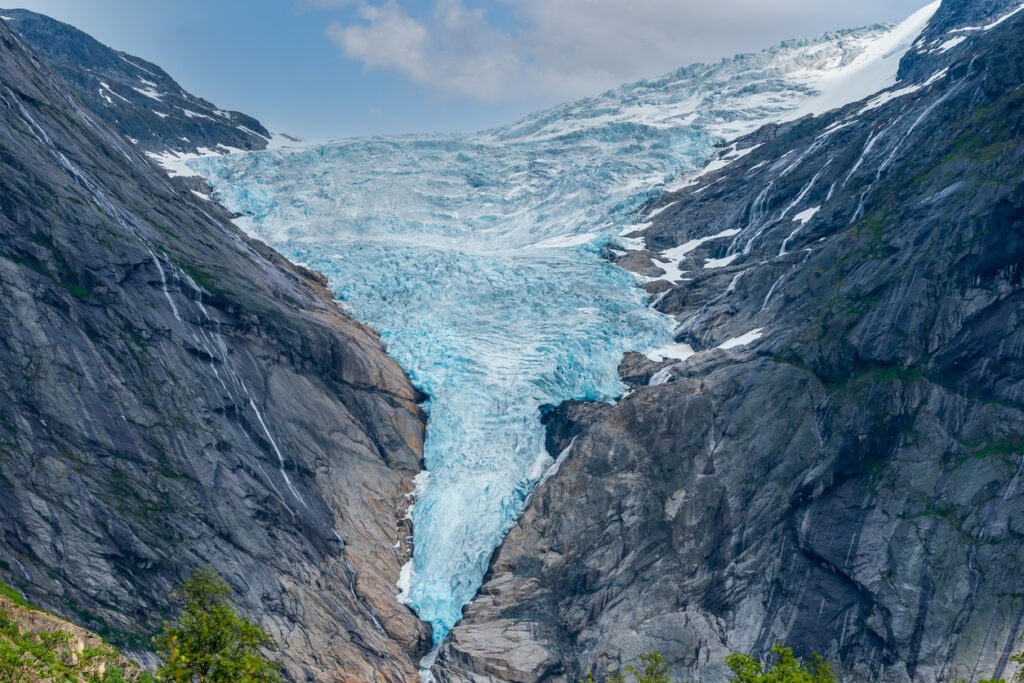
Therefore, artificial glaciers have been created to combat the negative effects of rising temperatures. The first project of its kind appeared in the Republic in 2019 in the village of Jergetal in the Naryn Region. By 2021, the total number of artificial ice deposits had grown to eleven.

These numbers continue to grow. In 2022, an artificial glacier was built in the remote pasture of Kara-Dobo in the Jalal-Abad region thanks to the efforts of local residents, and with technical assistance from the UN Food and Agriculture Organization (FAO) and financial support of $5,500 from the UN Peacebuilding Fund. The next year, more villages followed this example to preserve livestock farming in arid areas.

The artificial ice in Orozbekov in the Batken Region is expected to help provide sustenance for livestock belonging to the residents of three villages. “Water for the glacier comes from a mountain spring through pipelines,” Chairman of the Pasture Users Committee of the Orozbekov village area, Eminbek Temirbayev explained. “This system works without requiring electricity.”

It is believed that the world’s first artificial glacier was created in the late 1980s by the engineer, the “Ice Man” Chewang Norphel from the Indian village of Skara in the western Tibetan Plateau. Later, having improved the methods for creating these glaciers, the specialist helped local villagers store and deliver water for fields and pastures.

Artificial glaciers are created by freezing a natural spring of water that emerges from a mountain source. Gradually, ice towers of 30 to 50 meters high form around those springs. With warming temperatures, the glacier begins to melt, becoming a prolonged source of drinking water.

The relative cheapness of such structures and the simplicity of their design make artificial glaciers a universal means of providing water to residents in arid and hard to access mountainous areas. People only need to install the pipes, and nature will take care of the rest.
Given the successful experience with the installations in Kyrgyzstan, the authorities are planning to build four more artificial glaciers in 2024 as part of a joint project in the Batken and Leilek districts of Batken Region. According to the Kyrgyz Zhayity Association, there are now 30 artificial glaciers in Kyrgyzstan.

USAID Supports Uzbekistan’s First Green Hydrogen Hub

According to a statement issued by the U.S. Embassy in Uzbekistan on February 29th, the United States Agency for International Development (USAID) is set to introduce a new initiative to support Uzbekistan’s clean energy objectives.

Under Uzbekistan’s “Strategy for the Development of Renewable and Hydrogen Energy,” the region has a target to increase its generation of renewable energy (solar, wind, and hydro) by 25 percent by 2030, and carbon neutrality by 2050.

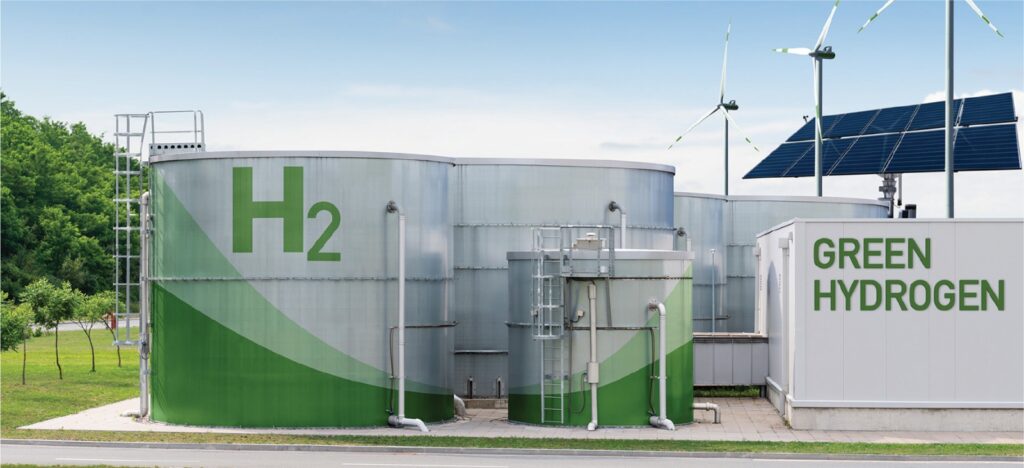
To support the government’s goals and with the collaboration of the Uzbek Ministry of Energy and energy sector stakeholders, USAID has announced the launch a Green Hydrogen Hub.
Edward Michalski, Acting Director of USAID Mission to Uzbekistan, reported, “USAID is committed to supporting the Central Asian countries in the pursuit of clean energy development and other energy priorities, as not just a goal, but a necessity.”

By helping to further the energy sector’s expertise in clean energy technologies, the Hub will play an important role in shaping the region’s future energy landscape.
A new curriculum on green hydrogen established by USAID in partnership with the University of Delaware, USA, and Tashkent State Technical University, has now been incorporated into a master’s degree program.