• KGS/USD = 0.01144 0%
  • KZT/USD = 0.00212 0%
  • TJS/USD = 0.10432 -0.29%
  • UZS/USD = 0.00008 0%
  • TMT/USD = 0.28571 0.28%
  • KGS/USD = 0.01144 0%
  • KZT/USD = 0.00212 0%
  • TJS/USD = 0.10432 -0.29%
  • UZS/USD = 0.00008 0%
  • TMT/USD = 0.28571 0.28%
  • KGS/USD = 0.01144 0%
  • KZT/USD = 0.00212 0%
  • TJS/USD = 0.10432 -0.29%
  • UZS/USD = 0.00008 0%
  • TMT/USD = 0.28571 0.28%
  • KGS/USD = 0.01144 0%
  • KZT/USD = 0.00212 0%
  • TJS/USD = 0.10432 -0.29%
  • UZS/USD = 0.00008 0%
  • TMT/USD = 0.28571 0.28%
  • KGS/USD = 0.01144 0%
  • KZT/USD = 0.00212 0%
  • TJS/USD = 0.10432 -0.29%
  • UZS/USD = 0.00008 0%
  • TMT/USD = 0.28571 0.28%
  • KGS/USD = 0.01144 0%
  • KZT/USD = 0.00212 0%
  • TJS/USD = 0.10432 -0.29%
  • UZS/USD = 0.00008 0%
  • TMT/USD = 0.28571 0.28%
  • KGS/USD = 0.01144 0%
  • KZT/USD = 0.00212 0%
  • TJS/USD = 0.10432 -0.29%
  • UZS/USD = 0.00008 0%
  • TMT/USD = 0.28571 0.28%
  • KGS/USD = 0.01144 0%
  • KZT/USD = 0.00212 0%
  • TJS/USD = 0.10432 -0.29%
  • UZS/USD = 0.00008 0%
  • TMT/USD = 0.28571 0.28%

Educating Uzbekistan: QR Codes, Quizzes and Some Critical Thought

The Times of Central Asia visited a school in Uzbekistan and talked to students and teachers for a report about the government’s push to reform education.

Break time at a school in Uzbekistan. Clusters of students in uniform – white shirt and dark trousers or skirts – chatter in a classroom. Two stand at the world map on the wall, figuring out where historical events happened. As soon as history teacher Dilobar Yodgorova enters, they form groups and sit at round tables.

The students play “Zakovat,” a quiz designed to increase class participation. The game is based on a Russian show called “What? Where? When?” that later inspired a similar American show.

“Catherine II, the Queen of Russia who lived in the 18th century, sentenced Nikolay Novikov, a famous Russian historian of that time, to 15 years in prison on August 1, 1792, for criticizing her,” Yodgorova says. She goes on: “But for a natural reason, Novikov was released after 4 years. What was the reason for that?”

The students frantically debate the answer within their groups. They only have one minute to respond to the teacher in writing.

The answer? Catherine II died in 1796. Pavel I, who succeeded her, freed Novikov.

Zakovat” is the Uzbek word for “ingenuity,” and the game reflects Uzbekistan’s ambitious plans to overhaul a public education system that was poorly equipped to sustain a growing number of children in Central Asia’s most populous country (about 35 million people).

Transforming the education system is critical to shaping a nimble workforce and fostering economic prosperity. Many new school textbooks aim to get students to analyze and assess. The old ones were about memorizing lots of facts.

Many Uzbeks can’t afford private schooling. For more than two decades, children in the state system, which is free of charge, studied at primary and secondary school for 9 years, and colleges or lyceums for the last 3 years of their undergraduate education. In 2019, the system changed. Now most students go through 11 years of streamlined education in the same school. The idea was to provide continuity for students by keeping them in the same environment in the critical last few years of undergraduate schooling.

“In the upper grades, children are formed as individuals and as a team,” Uzbek President Shavkat Mirziyoyev said in 2017.

Uzbekistan is also improving teaching methods, renovating decrepit school buildings and introducing up-to-date technology and new textbooks that encourage critical thinking even if there are constraints on unfettered investigation and free expression in the wider society. In the last few years, a working group of more than 240 experts has been working on the plan. It has included representatives of international organizations such as the United Nations and USAID. UNESCO conducted a training program for dozens of Uzbek teachers last week.

Higher education remains a weak point. If they have the resources, many Uzbeks go abroad for university. Uzbekistan is among countries with the highest number of students studying at tertiary institutions overseas, according to 2021 data.

One spring day, The Times of Central Asia visited School No. 2 in the industrial city of Zarafshan in central Navoi region to see how changes were being implemented – and received.

A display of updated – and more colorful – textbooks for 10th grade students in Uzbekistan; image: TCA

In an interview in the teachers´common room, Yodgorova said a new government-provided digital platform had greatly reduced the time that teachers spend on record-keeping. Teachers using the platform can plan and create lessons as well as track students’ progress and achievements. Yodgorova is still busy, tutoring students outside of school to prepare them for university entrance exams.

Yodgorova, who has worked as a history teacher for two decades, said educators can also voluntarily take a teaching exam every three years to hone their skills. The test, conducted by the state Agency for the Assessment of Knowledge and Skills, is first given as a qualification exam to newly hired teachers.

Textbooks have been updated several times during Yodgorova’s career. She said the latest ones contain exercises that encourage students to think critically, whereas the old textbooks had a more one-way approach, drilling information into students.

“We start each lesson with critical thinking exercises that students have been preparing for. This is an interesting process. Students sometimes write essays about historical events and read them to the audience,” Yodgorova said.

The updated 10th grade textbooks for history, literature, the Uzbek language and tarbiya (training), contain tasks aimed at developing communication, and research and problem-solving skills. The design is colorful. QR codes are attached to the new textbooks, allowing students to connect to YouTube tutorials.

Each topic concluded with sections such as “For reflection” – “Creative activity” – “Looking at history” – “For independent activity” – and “On logical reasoning.”

Tarbiya is taught to students from 1st to 11th grade (the age of students is 7-18). The training textbook touches on spiritual-ethical, intellectual, legal, civil, economic, physical, ecological, and aesthetic training. Section titles include – “I’m also responsible for the development of the country” – “The meaning of a free and prosperous life” – “Humanistic ideas of world religions” – “Social networks: what is behind fake news” – “Safe media” – “Secrets of choosing a profession” – and “Family is the bastion of happiness.”

The themes of nation and family emphasize a sense of collective duty, potentially in contrast with the idea of individual autonomy found in liberal academia.

Freedom House, a Washington-based group, said in its 2023 report that there is a tradition of limits on academic freedom in Uzbekistan but that the country’s universities “have slowly expanded their cooperation with foreign counterparts” since 2016, the year that Mirziyoyev became president.

Teachers and students welcome the improvements of recent years, though some want more fine-tuning.

Gavhar Rahmatova, who teaches the Uzbek language and literature at School No. 1, a different school in Zarafshon, said the new primary school textbooks are too advanced for some students.

“For example, take the 2nd grade Uzbek language textbooks,” said Rahmatova, who teaches Uzbek to students whose first language is Russian. “Students who have just finished learning the alphabet are given complex tasks related to grammar and the topic. Frankly, it is a bit difficult for teachers to explain.”

Shodiyona Samadova, a 17-year-old student, said she wants to pursue a career in medicine. However, she said a heavy workload at school limits her time for studying natural sciences. Academics aside, she attends free volleyball training organized by the school and her team has won several games at the city level. Samadova is also active in preparing school dances with other students.

“Due to the relocation of our family, I had to change schools six times,” Samadova said. “Disadvantages in schools are the inability of some subject teachers to make lessons interesting and to organize them on the basis of interaction with students. I witnessed this situation in almost all schools. I want, all teachers to turn us and ask, ‘What is your opinion?’”

Students typically manage 10-15 subjects, with four to six subjects covered each day, totaling up to five hours of daily class time. Music, painting and physical education are included among the activities.

Teachers’ salaries are another vulnerability in Uzbekistan, where educators have traditionally received low pay.

However, Eldor Tulyakov, director of the state Development Strategy Center, said in an article in 2023 that teachers’ salaries had increased by almost four times and that the state budget spending on education had increased by 4.3 times in the last six years. Some data estimates the average monthly salary of a public school teacher in Uzbekistan is around $250, still several times lower than the earnings of teachers in neighboring Kazakhstan. Salaries depend on the number of weekly teaching hours as well as years of experience.

On the spring day when The Times of Central Asia visited the school, students crowded the yard during break. Some kicked a ball around; others talked and laughed. Three boys sat in the shade of a tree and looked at a mobile phone. Inside, children played table tennis on a table without a net. The walls were dark blue years ago but now they are light yellow, making the building interior seem brighter and more spacious.

On the first floor, there used to be a board displaying photos and information about students who are active in the school and winners of various contests and sports competitions. It has been replaced by several posters about the government’s education strategy, the schedule for extracurricular activities and psychological counseling.

High Gold Prices Keep the Uzbek Economy Afloat

In March this year, Uzbekistan became the largest seller of gold in the world: eleven tons of the strategic asset were sold. This strategy has allowed it to maintain reserves at a time of increasing government debt and state budget deficit.

“We have a trade deficit, a budget deficit. Perhaps other exports are not as good as we would like them to be. With high gold prices amid geopolitical instability, there are worse times to sell gold,” Yuli Yusupov, an independent Tashkent-based economist, told Radio Ozodlik.

As of May 1, Uzbekistan’s foreign exchange reserves totaled $34.2 billion, of which about $26.5 billion was gold, according to the country’s Central Bank. By the end of 2023, the country’s “financial safety cushion” has decreased by $1.2 billion – from $35.77 billion to $34.56 billion. Gold helps Uzbekistan “stay afloat” in difficult economic conditions. Between 2010 and 2014 the country exported 207 tons; between 2015 and 2020 it exported 480 tons.

Now, Uzbekistan produces an average of 100 tons of gold per year, with plans to produce 150 tons. At this rate, gold reserves should last 20-30 years, but the republic is developing new quarries, the reserves of which could be quite impressive. For example, reserves in the Yoshlik mine may be up to 5,000 tons.

Nevertheless, according to analysts, the constant sale of gold is not a long-term solution, and it will be necessary to develop industrial production and services, and export goods with high added value.

Uzbekistan’s growing dependence on gold is evidence of obvious problems in the economy, which, despite visible positive changes, remains in a deadlock. By the end of 2023, when Uzbekistan’s trade deficit amounted to a record $13.7 billion, the share of gold exports in the total volume rose to a third.

President Mirziyoyev’s rise to power marked sweeping economic reforms that have attracted foreign investors, but at the same time increased external debt, which by the end of 2023, according to the International Monetary Fund, amounted to $31.7 billion, or 35.1% of the country’s GDP, roughly doubling in the past five years. Under Islam Karimov (Uzbekistan’s first president) this varied between 10-15%.

An Uneasy Calm After Unrest in Bishkek

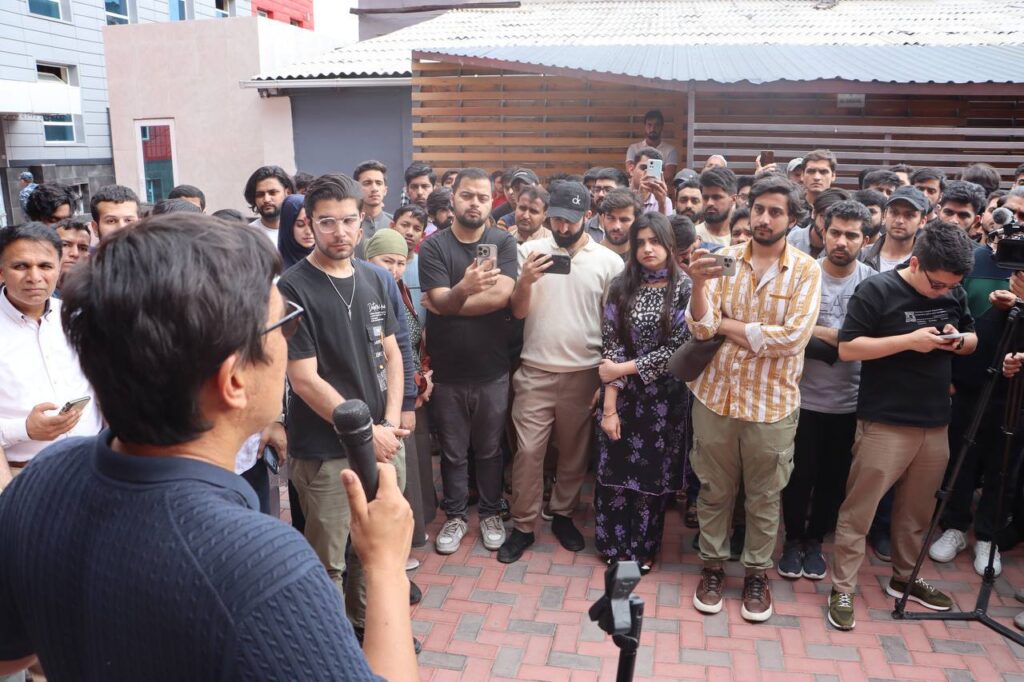
On the night of May 18, riots took place in Bishkek. The reason – a fight between foreign medical students and local youth. The trigger was a video of a scuffle, which occurred on May 13, when Egyptian citizens beat several locals. This video was then widely circulated on social networks. Local politicians have stated that they believe the situation was fueled from the outside.


What happened?

On the night of May 18, protesters blocked several streets in the center of Bishkek. According to the Interior Ministry, the number of people continued to grow, and there was a threat of mass disorder, so all personnel from the capital’s police were placed on alert. All hostels and dormitories in the city where foreign citizens live were put under guard. The protesters expressed dissatisfaction with the large number of migrants coming into the country from Egypt, Pakistan, India, and Bangladesh. The head of Kyrgyzstan’s National Security Committee said law enforcement agencies detained several provocateurs who were calling for the overthrow of the government. By morning, the participants in the unauthorized rally had been dispersed. In total, about 1,000 people took part in the unrest, according to the capital’s police. Law enforcement urged citizens not to give in to provocations and show a high-level of civil responsibility. The Ministry of Health of the Kyrgyz Republic reported that following the incident, 41 people sought medical assistance in Bishkek.

Four Egyptians were detained – local media claim they were participants in the conflict that took place on May 13. Later, it became known that some Kyrgyz citizens had also been detained. The confrontation between local residents and foreigners has acquired an international dimension, with a number of government agencies in neighboring countries expressing their concern. For example, Kazakhstan introduced a special regime on the border with Kyrgyzstan. The authorities in Pakistan, meanwhile, have organized emergency flights, and a number of their students and workers are leaving Kyrgyzstan.

Several thousand students from India, Pakistan, Egypt, Bangladesh and Nepal study at Bishkek’s medical institutes. There are also migrant workers from these countries living in the country, who are mainly employed in the production of garments.


Who benefits from the unrest?

According to deputy Dastan Bekeshev of the Jokorku Kenesh, the unrest is an attempt to find the authorities’ vulnerabilities.

“One of the indicators of economic growth is when citizens of the country hire foreign citizens as workers. And there is no way for us to avoid conflicts with foreign citizens. Conflicts are also arranged by our own citizens abroad. Of course, guests should not forget that they are guests and must coexist peacefully with the citizens of the country they are in. But we should also learn tolerance and wisdom when various conflicts occur. There are law enforcement agencies and they have every opportunity to punish a foreigner and expel him from Kyrgyzstan for a long time. Our laws on external migration are very strict,” the parliamentarian wrote on his Telegram channel.

The MP said the authorities need to uncover the ultimate beneficiary behind the unrest.

“It reminds me of the situation when a number of citizens formed the Kyrk Choro movement, which spoke not against the authorities, but against the Chinese. Later, it turned into a political movement… We must remember that it’s not the one who criticizes publicly that’s dangerous, but the one who can quietly organize a mass mindless protest,” Bekeshev said.

Asylbek Aidaraliyev, an academician and teacher at a university in the capital, stated at a press conference in Bishkek that he is convinced the situation around the fight is being heated on purpose. For example, Pakistani media are spreading fake news about murders and severed hands. A lot of negative information is appearing, which can reduce the number of tourists.

“When they break into your house and beat you up, it’s certainly scary. Honestly, this is the first time I’ve seen such a reaction. It needs to be dealt with very seriously, here. Of course, this is a massive blow to us. I’m not sure whether there will be a new intake of foreign students in our educational institutions, now. I hope the situation will normalize,” Aidaraliyev said.

After the incident, many foreign students were transferred to distance learning, with 130 going home and 540 preparing to go to Pakistan, university officials said. There are a few weeks left until the end of the academic year, so many have been allowed to take their exams remotely.

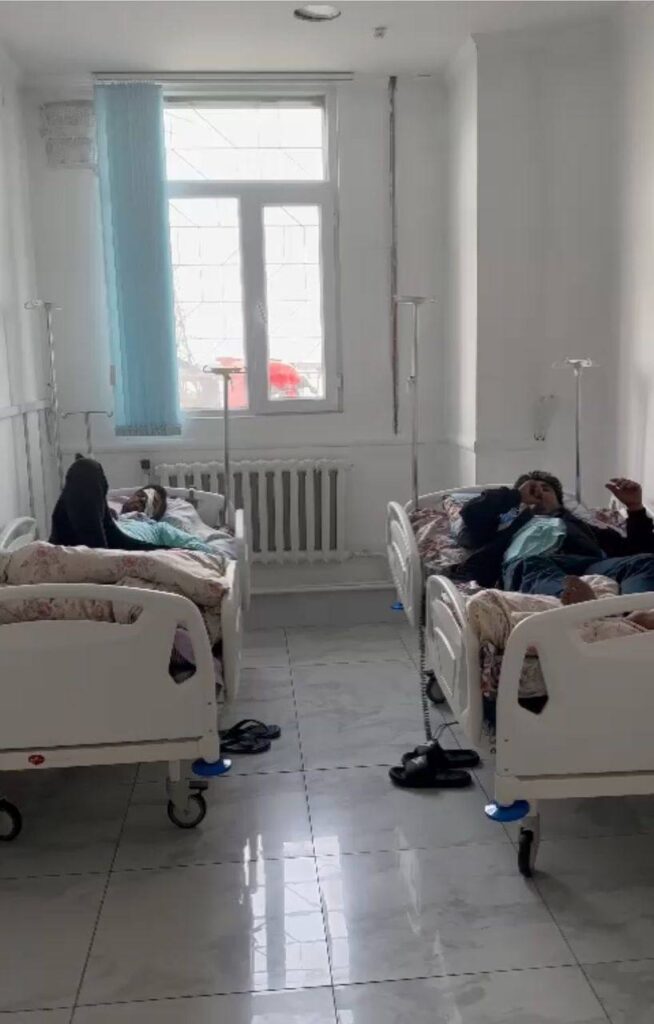
Injured parties in a Bishkek hospital; image: TCA, A.Chipegin


At the same time, the Pakistani authorities noted the promptness with which the Kyrgyz authorities engaged in resolving the conflict.

“The situation is now normal: Kyrgyz students are visiting the wounded as a gesture of goodwill. Security measures have been strengthened in Kyrgyzstan as a precautionary measure,” Ishaq Dar noted.

The day after the incident, Edil Baisalov, deputy chairman of the Kyrgyz Cabinet of Ministers, arrived at the hostel where the pogroms took place, where he apologized for the harm caused by the hooligans.

“The criminal actions of individuals have nothing to do with our culture and traditions of hospitality. Our nation respects guests and cares for them. Foreign students are treated with great sympathy in our country. Nothing threatens you in Kyrgyzstan, the authorities are fully responsible for your wellbeing. The events of one night do not reflect the attitude of our people towards you,” Baisalov said, emphasizing that those responsible will be punished.

Local volunteers have become active since the incident, bringing food to foreign students, helping them financially and lending moral support. Many foreigners remain afraid to go outside.

The Kyrgyz Interior Ministry said police are patrolling all areas around the dormitories. The situation in Bishkek is stable, and people’s groups have been formed to help keep order.

Electronic Information Exchange Systems to Be Introduced in Turkmenistan’s Agencies

The Türkmenaragatnaşyk Agency and UNDP (United Nations Development Program) have signed an agreement to assist the introduction of an inter-agency electronic information exchange system in Turkmenistan in accordance with the decree of President Serdar Berdimuhamedov, as reported by Arzuw.news.

“The document provides for the connection of Turkmenistan’s agencies to the systems of electronic information exchange and electronic document management, as well as training of specialized staff in this area, taking into account international experience,” the report states.

The President of Turkmenistan stressed that the country is currently actively working on digitization in various spheres of life in the state.

At the meeting of the Government of Turkmenistan, Director General of the Agency of Transport and Communications, Mammetkhan Chakyev presented for consideration projects on introduction of electronic information exchange systems in the country’s agencies.

Villagers in Tajikistan Building a Hospital With Their Own Funds

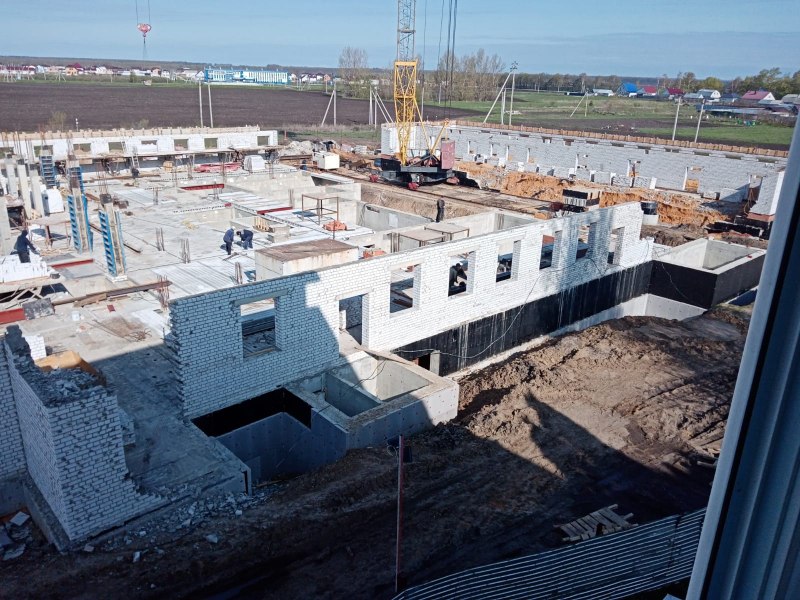
In the village of Kalai Dust in Tajikistan, locals have begun building a hospital on their own. Currently, there isn’t even an outpatient clinic, and women go to a neighboring village to give birth, Radio Ozodi reports. Local entrepreneurs together with migrant workers from the village have already collected half of the sum of 8 million somoni required ($740,000).

“According to the project, there will be 16 wards. Zoning is envisioned – on the lower floor there will be a maternity ward and on the second floor a children’s hospital for children up to 12-years-old… [It’s] on the initiative of our migrants working in Russia, thanks to them: they organized it,” said Asliddin Tojizoda, a resident of the village.

Residents hope that when the hospital is built, albeit at the expense of the villagers themselves, it will be fully transferred to the state and the authorities will provide it with the necessary specialists. The village needs doctors very badly.

Approximately 30 hectares of land have been allocated for the hospital in a plot adjacent to the local school. According to some villagers, while people were collecting money, the local authorities gave part of the land for private construction; now, residents are trying to challenge the officials’ decision and return the land to public use. They are filing a collective complaint against the district chairman.

Agreement on Classified Military Information Signed between Uzbekistan and U.S.

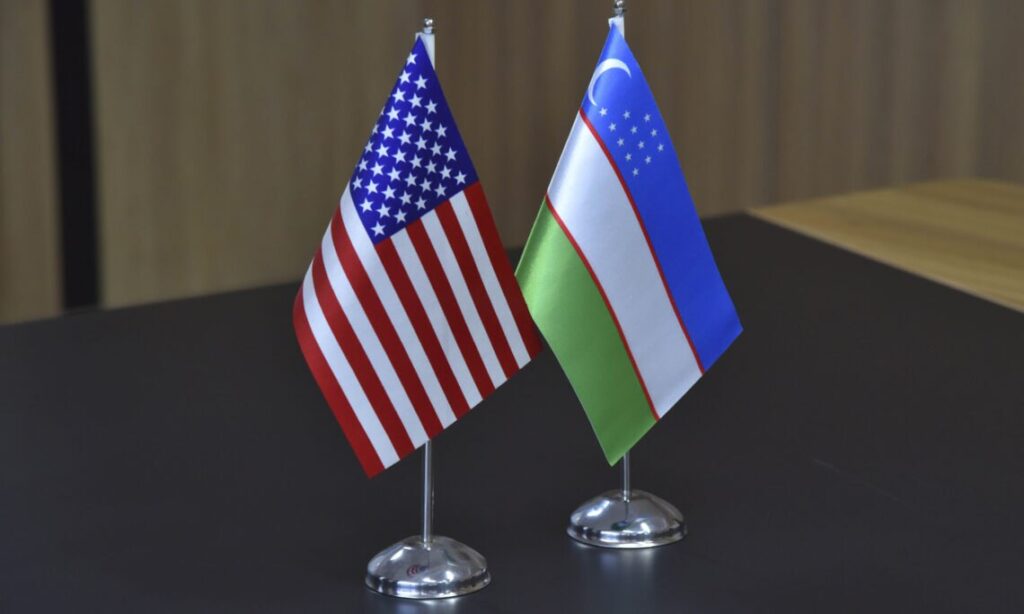
The agreement “On the ratification of the agreement between the Ministry of Defense of the Republic of Uzbekistan and the U.S. Department of Defense on measures to protect classified military information” was approved, Platina.uz reports. This decision was made during a regular plenary session of the Senate of Uzbekistan.

The 25-point agreement prepared by the Senate Committee on International Relations, Foreign Economic Relations, Foreign Investments and Tourism, was signed in Washington on June 9, 2023.

According to the chairman of the Committee, Ravshanbek Alimov, the official visit of the President of Uzbekistan to the USA on May 15-17, 2018 was a strong impetus to the strategic development of Uzbekistan-U.S. relations. One of the important directions of partnership between the two countries is, of course, the military-technical partnership.

In the discussion, it was noted that ratification of this agreement does not require any changes to the practical legislation of Uzbekistan or the allocation of additional funds from the budget.