• KGS/USD = 0.01144 0%
  • KZT/USD = 0.00193 -0%
  • TJS/USD = 0.10876 0.55%
  • UZS/USD = 0.00008 0%
  • TMT/USD = 0.28490 0%
  • KGS/USD = 0.01144 0%
  • KZT/USD = 0.00193 -0%
  • TJS/USD = 0.10876 0.55%
  • UZS/USD = 0.00008 0%
  • TMT/USD = 0.28490 0%
  • KGS/USD = 0.01144 0%
  • KZT/USD = 0.00193 -0%
  • TJS/USD = 0.10876 0.55%
  • UZS/USD = 0.00008 0%
  • TMT/USD = 0.28490 0%
  • KGS/USD = 0.01144 0%
  • KZT/USD = 0.00193 -0%
  • TJS/USD = 0.10876 0.55%
  • UZS/USD = 0.00008 0%
  • TMT/USD = 0.28490 0%
  • KGS/USD = 0.01144 0%
  • KZT/USD = 0.00193 -0%
  • TJS/USD = 0.10876 0.55%
  • UZS/USD = 0.00008 0%
  • TMT/USD = 0.28490 0%
  • KGS/USD = 0.01144 0%
  • KZT/USD = 0.00193 -0%
  • TJS/USD = 0.10876 0.55%
  • UZS/USD = 0.00008 0%
  • TMT/USD = 0.28490 0%
  • KGS/USD = 0.01144 0%
  • KZT/USD = 0.00193 -0%
  • TJS/USD = 0.10876 0.55%
  • UZS/USD = 0.00008 0%
  • TMT/USD = 0.28490 0%
  • KGS/USD = 0.01144 0%
  • KZT/USD = 0.00193 -0%
  • TJS/USD = 0.10876 0.55%
  • UZS/USD = 0.00008 0%
  • TMT/USD = 0.28490 0%
11 December 2025

World Bank Provides Additional Support For Rural Water Services In Kyrgyzstan

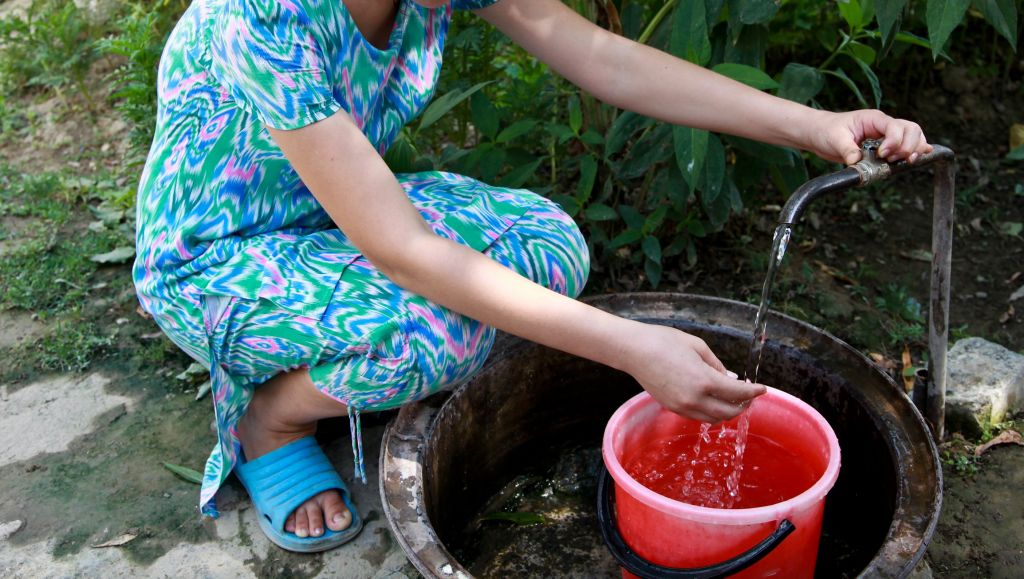
On January 31st the World Bank’s executive board approved $7.64m in additional financing for its ‘Sustainable Rural Water Supply and Sanitation Development’ project in Kyrgyzstan. This funding tops up the World Bank’s earlier commitment of $59.5m for the project, aimed at improving water supply and sanitation services in rural communities.

Naveed Hassan Naqvi, the World Bank’s country manager for Kyrgyzstan, said that the project will improve the quality of life of rural citizens, especially women, children and the most vulnerable, and will bring a major decrease in water-borne diseases.

The total combined investments under the project are expected to reach 94 villages in the Osh, Chui and Issyk-Kul regions, and directly benefit some 200,000 people, the World Bank said.

The project funds the construction and rehabilitation of 57 climate-resilient water supply subprojects, aiming to enhance both climate adaptation and mitigation by diversifying water supply sources, increasing storage capacity, replacing key assets and installing water meters. It will also retrofit sanitary facilities in 99 social institutions and provide small grants to 1,350 households to upgrade their sanitation facilities. 

The project will also enhance national and local institutional capacity for sustainable service delivery and climate-informed sector reforms, including the revision of water supply and sanitation laws.

Odete Muximpua, the World Bank’s senior water supply and sanitation specialist, commented: “The second additional financing will address the financing gap caused by increased construction material prices as a result of the economic crisis. It will also allow for an increase in the size of grants to poor households in all project villages to finance the upgrades of their sanitation facilities.”


70% Of Kazakhstanis Happy With Their Life, World Bank Survey Finds

According to the World Bank’s latest ‘Listening to Kazakhstan’ survey, around 70% of people in the country are happy with their life – a figure that has remained constant since its first survey in 2021. 

The survey for 2023, conducted in partnership with the United Kingdom’s department for international development, monitors the economic and social wellbeing of Kazakhstan’s population, and provides insights into the impact of policy changes on households.

The survey reaches 1,400 households in urban and rural areas. It revealed that public perceptions of economic conditions significantly improved last year. It found that a higher percentage of respondents in 2023 believed it was a good time to start a business compared to 2021 and 2022. However, this opinion dipped in the final quarter of 2023.  

Around three-quarters of respondents expressed optimism about the country’s long-term economic outlook. This optimism was especially strong in respondents aged 18-24 and in high-income families. The survey showed that support for the government’s reforms increased to 67% last year and was particularly high among young people, the elderly, and people in rural areas. 

Metin Nebiler, head of the World Bank in Kazakhstan’s poverty and equity team, commented: “We found it very encouraging to see that the overall wellbeing of Kazakhstanis has been improving. The views on the [economic] outlook and the government’s performance are stable or trending positive.” 

However, citizens also registered several concerns. Inflation remains a significant issue for 94% of respondents, although the annual inflation rate declined in 2023.

The survey also found that challenges such as income inequality (92%) and worries about job losses (over 50%) still need to be addressed. Additionally, perceptions of government openness and anti-corruption efforts only showed only slight improvement.

Electronic Devices Banned From Classrooms

The use of personal electronic devices has been banned in schools, the head of Tajikistan’s Ministry of Education and Science, Rahim Saidzoda has said in an interview with Omuzgor.

“We have made significant efforts to prevent students from using electronic copies [of materials] while they are in school. We have nearly finished supplying the necessary number of [physical] books to schools. Students were permitted to use electronics in class until recently – this was because of a lack of textbooks. Presently, the circumstances have changed; funds are sufficient, and the books have been published,” the minister stated.

Another reason for the ban is that parents frequently protested that their childrens’ phones were taken away from them at during random searches at some schools, and that some administrators were even demanding payment in exchange for returning the device.

Teachers and parents appear split on the issue. The first group feels that gadgets keep kids from studying and they haven’t figured out how to use these devices for learning; the second, on the other hand, feels that new technologies need to be introduced in order to stay up to date.

A look at how the issue is handled in Kazakhstan – where children are banned by law from using phones in class – may shed light on the issue. In Kazakhstan, if the school has special boxes, children leave their devices in there, and if not, they are to remain in the children’s backpacks. The Deputy Minister of Education of Kazakhstan, Natalya Jumadildayeva, said she agrees with parents in Tajikistan who believe that use of electronic devices during classes will lower the results of both those using them, and their distracted classmates.

Earthquakes Rekindle Fears Over Lake Sarez

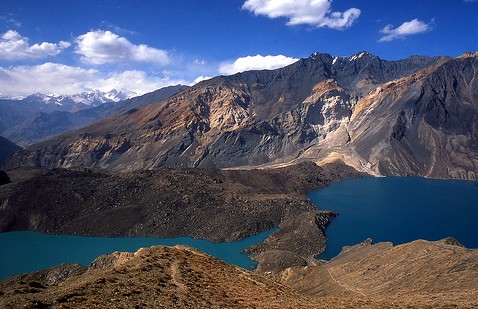
On the evening of January 30th, an earthquake struck in the Gorno-Badakhshan Autonomous Province on the border between Tajikistan and Xinjiang. Though this instance only had a magnitude of 4.4, it comes in the wake of the magnitude 7 quake which pounded the China-Kyrgyzstan border on January 23rd, shaking buildings in Almaty. As recently as February 2023, a series of earthquakes, the largest measuring 6.8, hit forty miles west of Murgab on the border between Tajikistan and China’s Xinjiang province. This was the eighteenth such instance measuring 6.5 or more over the course of the last century, and serves to focus attention on extremely remote Lake Sarez in Tajikistan.

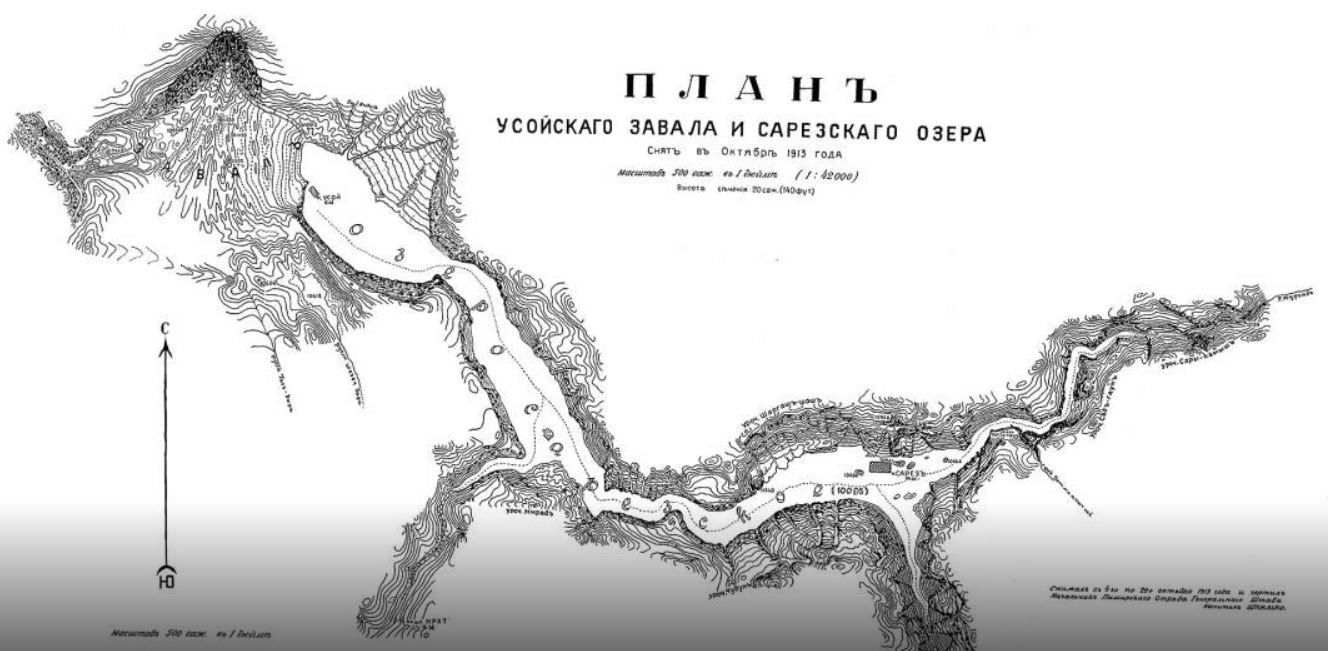
Plan of Lake Sarez and the Usoi Dam 1913

Plan of Lake Sarez and the Usoi Dam, 1913

At five-hundred-meters deep and 47 miles long, mountainous Lake Sarez contains more than 3.85 cubic miles of water. It was formed in 1911, when a 2.2 billion cubic meter landslide caused by an earthquake with an estimated magnitude of 6.5-7.0 blocked the Bartang River’s path. The sound of the quake was recorded over 2,350 miles away at the Pulkovo seismic station near St. Petersburg. Thus, the tallest natural dam in the world, the three-mile long, 567-meter high Usoi Dam was formed, whilst the villages of Usoi and Sarez were buried beneath the landslide and the lake, respectively, killing 302 people. According to the two survivors, the dust clouds cleared only after some days to reveal a mountain where the village of Usoi used to stand.

The lake has been a potential disaster waiting to happen ever since. In 1968, a landslide caused two-meter-tall waves to rock the lake, and with glacial melting causing water levels to rise by eight inches a year, pressure on the natural dam is building. As early as the 1970s, plans were hatched to harness the lake as a hydroelectric power station, but technical issues and its far-flung location saw the scheme come to nothing. In 2018, a deal was signed with Hong Kong-based Heaven Springs Harvest Group to sell the lake’s “blue gold” as drinking water, but inaccessibility again largely scuppered the project.

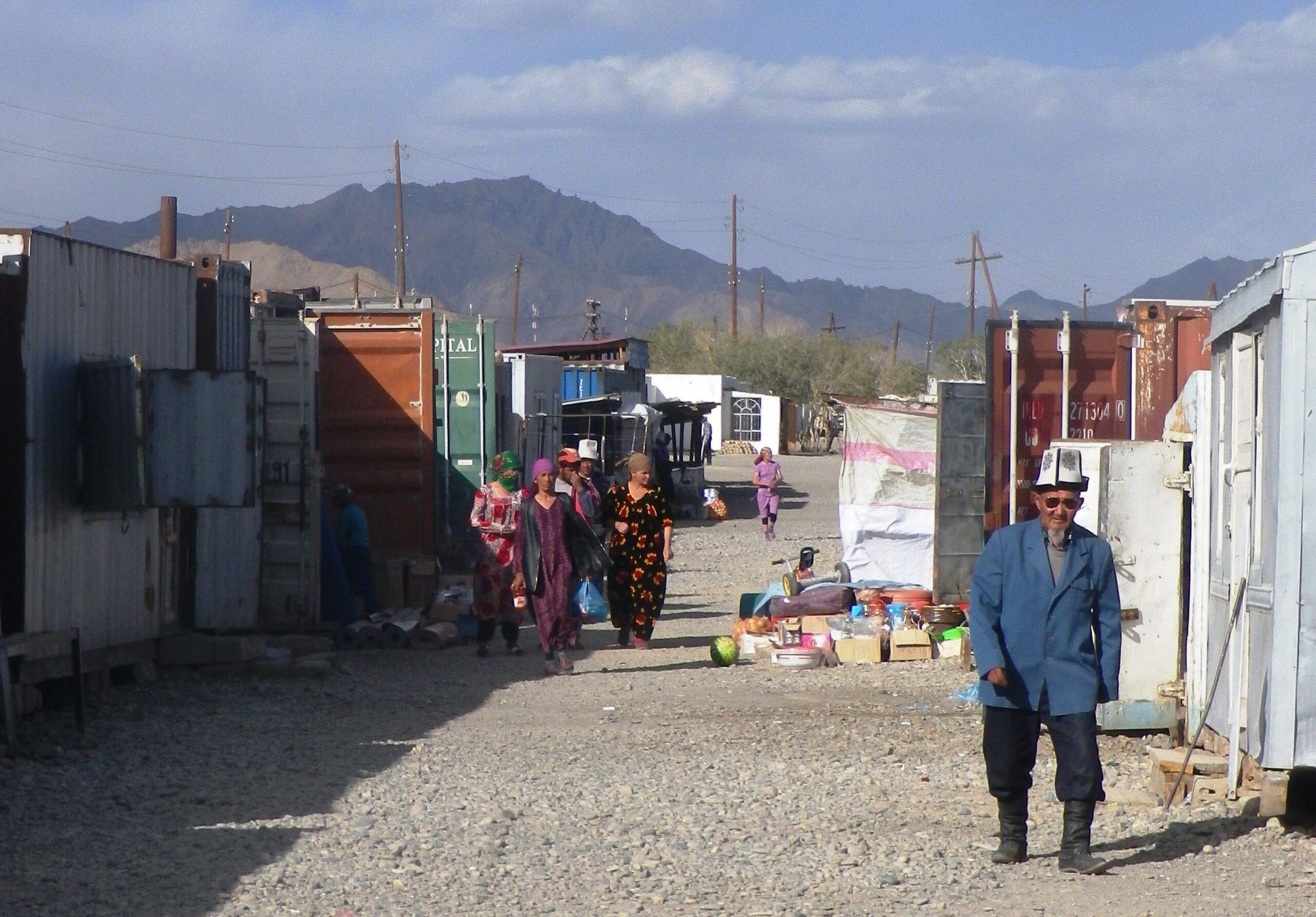
Murgab Bazaar, Gorno-Badakhshan - Phot: TCA

Murgab Bazaar, Gorno-Badakhshan – Photo: Times of Central Asia

Back in 1997, a gathering of experts in Dushanbe concluded that the Usoi Dam was unstable. Their findings suggested that a powerful earthquake could precipitate a collapse of the dam. However, a study conducted by the World Bank in 2004 contradicted these conclusions, arguing that the dam was, in fact, stable.

Nevertheless, the main threat identified was not the dam’s general stability but a specific geological feature – a partially detached mass of rock, approximately 0.72 cubic miles in size. There are concerns that this precarious massive rock formation could detach and plunge into the lake. This event could trigger a catastrophic flood, and, as such, while the dam itself may be stable, the potential for disaster still looms large.

In this earthquake-prone environment, were the dam to be breached a tidal wave up to 250-meters high moving at six-meters per second could kill up to 130,000 in the sparsely populated Tajik flood zone alone, whilst six million people inhabit the area at risk. With the waters eventually settling in Afghanistan and Uzbekistan, partly refilling the so-called Large Aral Sea in the process, it would be the worst natural disaster ever witnessed by humans.

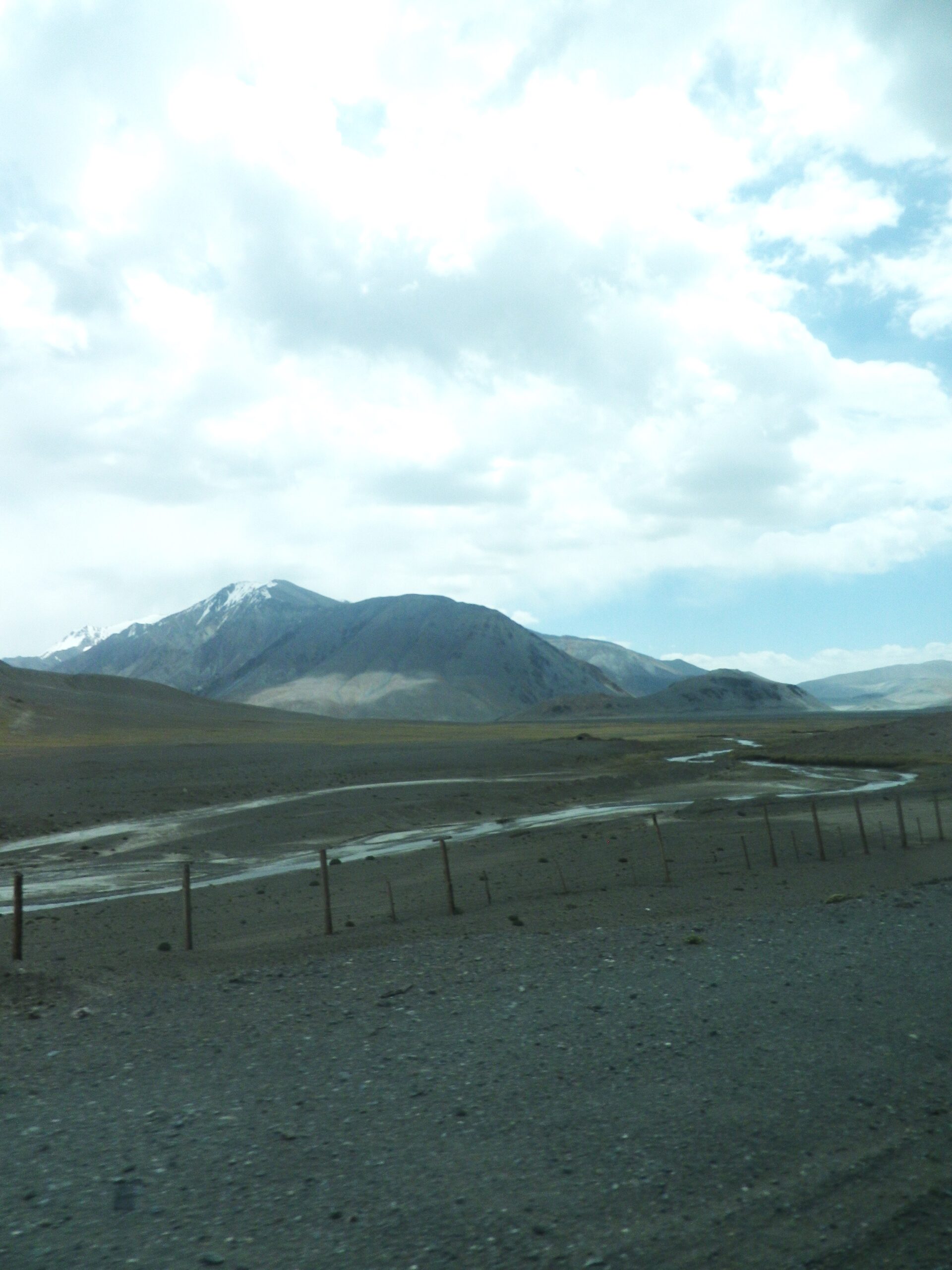
Tajikistan-China Border Fence Photo TCA

Tajikistan-China Border Fence – Photo: Times of Central Asia

The geophysicist, Leonid Papyrin, has argued that a doomsday scenario could see up to 600,000 perish if the dam were to break, whilst hydraulic engineer, Andrey Zakhvatov has stated that those who “escape the flood will lose their homes and sources of clean water. Flooded cemeteries and cattle burial grounds will spread dangerous infections. The wave will disrupt the minefields left after the civil war in Tajikistan on the banks of the Pyanj River. Several million survivors from the flood zone will become refugees who will pour into neighboring countries;” and all this in a region where water is an extremely precious commodity.

Since 2003, a “modest” World Bank funded monitoring station has observed the lake, allowing the Minister of Emergency Situations of Tajikistan at the time to tell the nation’s citizens that they could “sleep well.” Given recent seismic activity, however, observation and preparedness are not the same thing.

According to Andrei Grozin from the Institute of CIS Countries, $2-3 billion would be required to address the problem, a “fantastic amount of money,” which Tajikistan simply does not possess. “It is believed that Lake Sarez has already lasted for a hundred years, which means it can last for the same amount of time,” Grozin stated. “In Dushanbe, they like to compare the [Lake Sarez] with volcanoes. Those too may suddenly begin to erupt, but people live next to them.”

Kyrgyz Gold Mines Produce Over 20 Tons Annually, But Local Jewelers Pay Above Global Price

Jewelers in Kyrgyzstan produced goods worth $1.6 million in 2023, five times more than in 2022, the Ministry of Economy and Commerce of Kyrgyzstan has stated. The ministry said the jewelry industry is important for the republic, not only because of its income, but also because of its importance in the country’s culture, history, and tourism, and the government will support it in every way possible.
“As part of the state support to date, jewelry manufacturers pay VAT with an 80% reduction. The leadership of the ministry highly appreciates the contribution of manufacturers to the preservation and development of this beautiful art,” Deputy Minister of the Economy and Commerce, Ainura Usenbekova said at a meeting with jewelers.
Meanwhile, the jewelers noted that despite the fact that more than 20 tons of gold is mined annually in Kyrgyzstan, the main problem for their industry is the supply of this precious metal.

“The situation in this area has not changed for many years. We do not have physical access to metal, and if we do, it is at an inflated price. Gold bars sold to us by the National Bank between 5 and 20% more expensive than the global gold price. Plus, another 5% is added by Kyrgyzaltyn,” said Stalbek Akmatov, president of the Kyrgyz Jewellers Union. Kyrgyzaltyn a Kyrgyz state company which controls gold circulation in the country
Jewelers believe that until issues with the price of gold are settled so it’s sold on the domestic market at prices comparable to those on the London Mercantile Exchange, serious development of the industry is out of the question. The Ministry of the Economy stated that they are aware of the problem, and the authorities are ready to discuss and work on creating competitive conditions for the continued development of the industry.

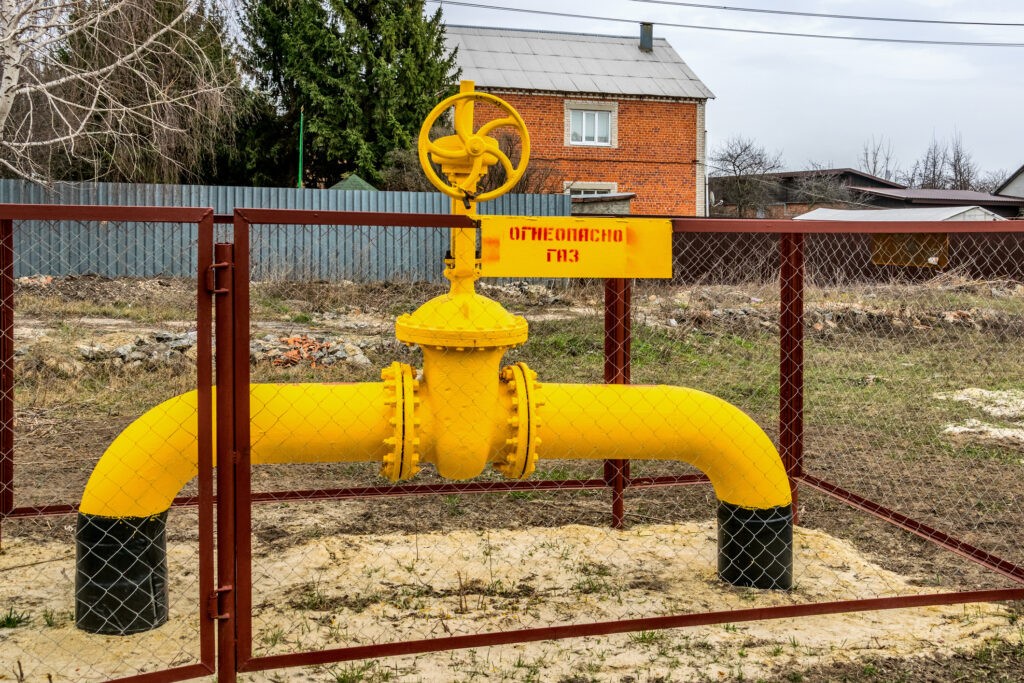
Kyrgyzstan Wins ICC Case Against Kazakh State Gas Company

Officials at the International Chamber of Commerce’s (ICC) International Court of Arbitrations in Paris, France, have ruled unanimously ruled in favor of the Kyrgyz Republic in a case brought by Kazakhstan’s state natural gas company QazaqGaz that sought $35 million, according to the Ministry of Justice of the Kyrgyz Republic.

The Kazakh company’s claim was filed in 2020. QazaqGaz had originally sought $35 million during the arbitration proceedings, but later reduced its claims to $15 million by waiving its claim to lost profit. The claims against the Kyrgyz government were based on “expropriation and other violations of the claimant’s rights.”

In 2004, QazaqGaz, together with the Kyrgyz national gas operator, JSC Kyrgyzgaz, established a joint venture (JV) for the purpose of modernizing and operating the Kyrgyz section of the Bukhara-Tashkent-Bishkek-Almaty gas trunk-line.  Under the agreement, the Kyrgyz gas operator transferred its share of the gas pipeline to the new JV. The investment agreement called for pipeline modernization, but later the contract was terminated by mutual consent.

The Kazakh company then made claims based on three legal instruments: the Kyrgyz-Kazakh intergovernmental agreement on the promotion and protection of investments; the International Energy Charter, which includes substantive guarantees for the protection of foreign investments; and the Kyrgyz Republic’s law on investments, which protects investors coming into the country.

“The arbitration tribunal agreed with the Kyrgyz Republic’s argument on the expiration of the statute of limitations on the plaintiff’s claims arising from the Law on Investments in the Kyrgyz Republic and considered them inadmissible,” the Kyrgyz Ministry of Justice said in a statement. It’s worth noting that according to Kyrgyz law, the statute of limitations is three years from the moment the claimant discovered the violation of their rights.

The International Arbitration Court rejected the claim on two other legal instruments. According to the Kyrgyz Ministry of Justice, the arbitration panel agreed with the defendant’s argument that the actions of Kyrgyzgaz – which allegedly violated the rights of the plaintiff – cannot be attributed to the Kyrgyz Republic under the rules of international law on state responsibility. Therefore, the Kyrgyz Government cannot be held liable for the actions of Kyrgyzgaz in allegedly wrongfully terminating the contract.

The International Arbitration Court ordered the Kazakh company to reimburse the Kyrgyz side for 60% of its arbitration costs. The decision can be appealed within one month. KyrgyzGaz is now called Gazprom Kyrgyzstan, and is owned by the Russian state gas company.