• KGS/USD = 0.01144 0%
  • KZT/USD = 0.00211 0%
  • TJS/USD = 0.10460 0%
  • UZS/USD = 0.00008 0%
  • TMT/USD = 0.28571 0.28%
  • KGS/USD = 0.01144 0%
  • KZT/USD = 0.00211 0%
  • TJS/USD = 0.10460 0%
  • UZS/USD = 0.00008 0%
  • TMT/USD = 0.28571 0.28%
  • KGS/USD = 0.01144 0%
  • KZT/USD = 0.00211 0%
  • TJS/USD = 0.10460 0%
  • UZS/USD = 0.00008 0%
  • TMT/USD = 0.28571 0.28%
  • KGS/USD = 0.01144 0%
  • KZT/USD = 0.00211 0%
  • TJS/USD = 0.10460 0%
  • UZS/USD = 0.00008 0%
  • TMT/USD = 0.28571 0.28%
  • KGS/USD = 0.01144 0%
  • KZT/USD = 0.00211 0%
  • TJS/USD = 0.10460 0%
  • UZS/USD = 0.00008 0%
  • TMT/USD = 0.28571 0.28%
  • KGS/USD = 0.01144 0%
  • KZT/USD = 0.00211 0%
  • TJS/USD = 0.10460 0%
  • UZS/USD = 0.00008 0%
  • TMT/USD = 0.28571 0.28%
  • KGS/USD = 0.01144 0%
  • KZT/USD = 0.00211 0%
  • TJS/USD = 0.10460 0%
  • UZS/USD = 0.00008 0%
  • TMT/USD = 0.28571 0.28%
  • KGS/USD = 0.01144 0%
  • KZT/USD = 0.00211 0%
  • TJS/USD = 0.10460 0%
  • UZS/USD = 0.00008 0%
  • TMT/USD = 0.28571 0.28%

Kazakhstan President Signs Landmark Legislation on Domestic Violence

On April 15, President Kassym-Jomart Tokayev signed into law amendments and additions passed by Kazakhstan’s parliament on April 11 on legislative acts and the code on administrative offenses on ensuring the rights of women and the safety of children. The initiative represents a first in the CIS in terms of how far it goes to provide protection for women and children in the country. The United States embassy in Kazakhstan said on April 15 through its Twitter (X) account that they welcomed the adoption of the new law, highlighting its strengthened protections against domestic violence. The United Nations Development Programme (UNDP) in Kazakhstan also commended the “legislative initiatives protecting women’s [and] children’s rights,” calling them a “crucial step towards equality, justice [and] safety for all citizens” that “lay a foundation for a stable, prosperous society.” On Instagram, the OSCE Programme Office in Astana stated that it “welcomes the adoption and signing of two laws aimed at ensuring and protecting the rights of women and children, including the criminalization of violence towards them, by @tokayev_online”.

This is seen as the latest improvement in an upward trend. Since coming to power in 2019, President Tokayev has tightened criminal liability for crimes against women and children, as well as human trafficking. Special units were formed within the Ministry of Internal Affairs to protect women, and in 2021, their number increased to 256. Specialized female investigators were also introduced to investigate violent sexual crimes against women and minors.

The new law, which goes further in introducing additional legal mechanisms to protect women and children, comes on the heels of domestic and international protests following the televised trial for the alleged violent murder of Saltanat Nukenova by her husband, Kuandyk Bishimbayev, in November 2023. In addition to local rallies, the Kazakhstani diaspora in New York, Amsterdam , Milan, and many other places around the globe have also called for increased accountability for domestic violence under the hashtag #ForSaltanat.

Critically, the new legislation criminalizes domestic violence, increases penalties for perpetrators and provides a range of preventative measures alongside punitive ones. It also imposes tougher penalties for all forms of violence against children. Overall, it is an important step in improving the legal, economic, and social foundations of state policy and strengthening the principle of social equality with zero tolerance against violence towards women and children.

The recent amendments and additions largely represent the demands of the public and civil society, who were involved in the process of their development and adoption. The legislation has been widely discussed in the country’s media. Representatives from NGOs took part in parliamentary meetings alongside the National Commission for Women’s Affairs and Family and Demographic Policy, the National Center for Human Rights and the Commissioner for Children’s Rights. In November 2023, Kazakhstanis demanded tougher punishment for domestic violence through an open letter to Tokayev on the Otinish.kz website. This month, a group of activists and human rights defenders launched the “Write a Letter to Parliament” campaign, asking residents to send a letter to in support of the new law. By the time the bill was discussed in the Senate, over 154,000 people had signed an online petition.


Some key improvements under the new law

Critically, on women’s rights, the law restores criminal liability for causing minor harm to health and battery, which was abolished in 2017. Intentional infliction of medium and grave bodily harm carries an imprisonment sentence of up to eight years, while causing minor harm to health can result in a fine or up to two years imprisonment. Beating is reclassified as a criminal offense and can result in up to 50 days incarceration.

Moreover, previously it was necessary to prove systematic beatings and other violent acts to hold a person accountable for torture; under the new law, violent acts committed with extreme cruelty and abuse with the aim of causing agony to the victim will be considered under this category and liability for torture can result in up to seven years imprisonment. In cases of rape, the previous requirement that the victim systematically experience such violent actions was removed.

The law also allows for the possibility of isolating the offender for 30 days and imposing a ban on contacting the victims, whilst a specialized unit to combat domestic violence will be created within the Ministry of Internal Affairs.

Regarding the provisions in the new law on the protection and safety of children, cases of murder, rape or sexual assault of a minor face the most severe punishment of life imprisonment. For the first time, criminal liability is introduced for the sexual harassment of individuals under the age of 16. Additionally, the prison sentence for child abduction has been raised from 7-to-12 years to 10-to-15 years, and illegal deprivation of the liberty of minors now holds a sentence of 5-to-10 years (previously up to 5 years).

Furthermore, those that commit crimes against minors as defined under the Criminal Code, from causing harm to health, to kidnapping and murder, cannot be released from their criminal liability if they reconcile with the victims. The law’s exclusion of the possibility of reconciliation in crimes related to physical violence and cruel treatment of minors may help take victims out of abusive relationships.

The new regulations aim to reduce the numbers of suicides among minors by including inducement and assistance in committing suicide under criminal liability. It also targets bullying, including cyber-bullying, with the imposition of fines and warnings, which can be imposed on parents if the perpetrator is between the ages of 12 and 16. The law also makes it an administrative offense to forcibly remove children from public transportation.

The law provides a legal framework for the operation of a call center on family issues and the protection of the rights of women and children, as well as the legislative consolidation of the creation and operation of Family Support Centers. It has a provision of mandatory psychological assistance to criminals by court decisions. Additionally, the victims of abuse can receive full protection and support, including in the event of a “loss of the breadwinner.”
Kyrgyzstan’s New Tariff Policy Aim to Solve Problems in Energy Sector

Kyrgyzstan’s minister of economy Daniyar Amangeldiev has told a press conference in Bishkek about his vision for the country’s energy sector. A new tariff pricing policy has been presented to the Kyrgyz parliament, and will be adopted in May this year.

According to Amangeldiev, the new electricity tariff policy will allow for new capacity to be introduced, and for the country to reduce the country’s electricity deficit year by year until the country’s power-demand needs are met. Electricity prices will rise by 10.8% as early as May 2024, and taking into account inflation, this increase will be permanent.

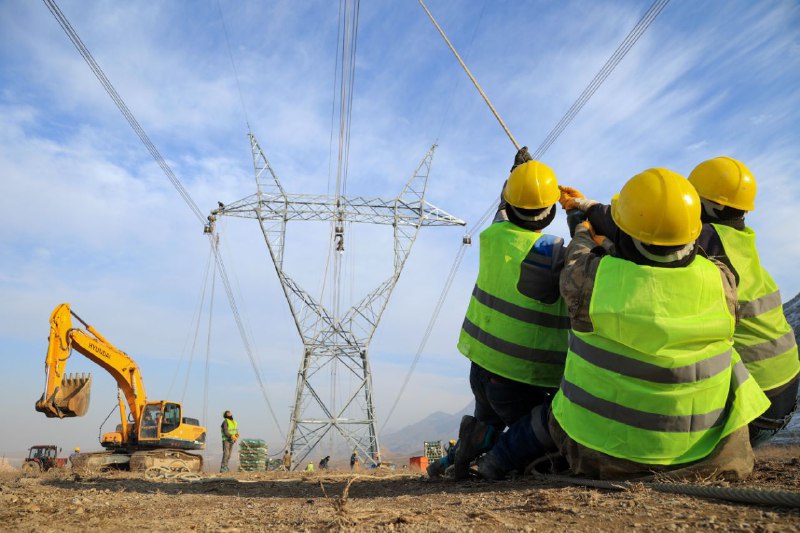
Amangeldiev said that it will now be much easier to obtain permission from the authorities to build energy facilities in the country. Measures have also been taken to make it easier for investors to invest in Kyrgyzstan’s energy sector. “With its adoption (the new law on tariff policy), those capacities that are planned will be introduced, and accordingly, every year we will reduce the shortage of electricity to fully meet the needs of the country, and possibly [lead to] electricity export,” he commented, adding that this year in Kyrgyzstan developers have started 10 small hydropower plants (HPPs).

Earlier, Kyrgyz president Sadyr Japarov said that in addition to the construction of large energy facilities, it’s necessary to build small HPPs.

In 2022, the World Bank allocated $50 million to Kyrgyzstan to modernize its energy infrastructure — upgrading transformers, power lines and installing smart meters. A year later, the bank provided another $80 million in concessional loans (at below-market lending rates) to improve the power grid and support small-scale power generation. Last fall, the World Bank allocated $5 million to the republic for a feasibility study of the project of a new large HPP called Kambarata-1.

Central Asian and Gulf Cooperation Council Countries Engage in Strategic Dialogue

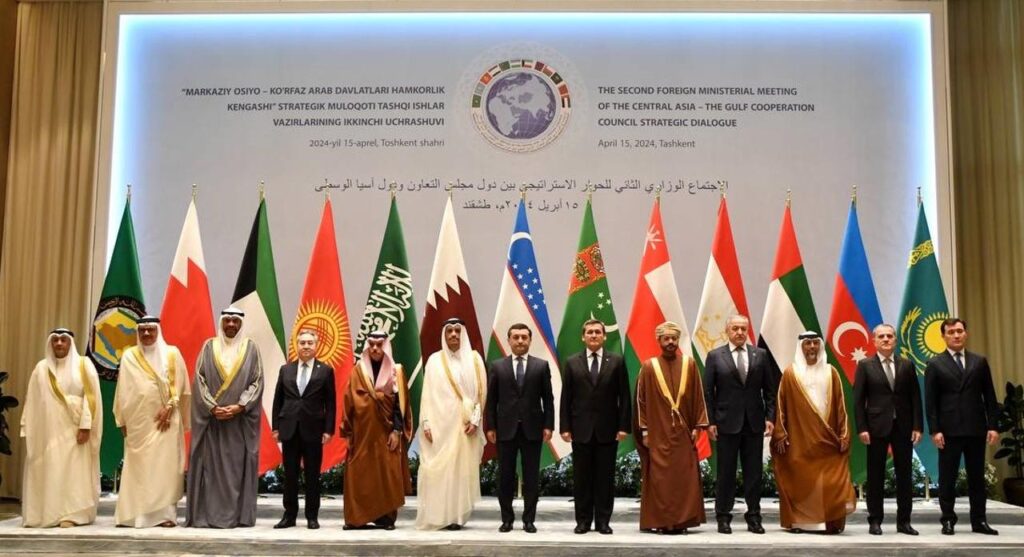
The 2nd Ministerial Meeting of Strategic Dialogue ‘Central Asia – Gulf Cooperation Council (GCC)’, hosted by Tashkent on April 15, was attended by top diplomats from Central Asia and six member states of the Gulf Cooperation Council: Saudi Arabia, the United Arab Emirates, Qatar, Kuwait, the Sultanate of Oman, and Bahrain.

Aimed at strengthening comprehensive cooperation between Central Asia and Gulf Cooperation Council states, discussions focused on political, security, trade, economic, investment, transport and logistics, environmental protection, green energy, cultural and humanitarian issues.

In his address, Alibek Bakayev, Deputy Minister of Foreign Affairs of Kazakhstan, emphasized the importance of strengthening trade relations between the two regions and encouraged the Gulf States to actively participate in the implementation of joint investment projects in both Kazakhstan and other Central Asian countries.

In addition, he outlined various initiatives currently in operation in Kazakhstan including expanding the activities of the Islamic Organization for Food Security and exploiting the potential of the International Technopark of IT start-ups, ‘Astana Hub’.

Reporting on the outcome of the Ministerial Meeting, Uzbekistan’s First Deputy Foreign Minister Bakhromjon Aloyev stated that participants had unanimously agreed to a further summit of the Central Asia – Gulf Arab States Strategic Dialogue, to be held in Samarkand in 2025.

The ‘Central Asia – GCC’ dialogue platform was launched in 2022 and the first Ministerial Meeting took place that September in Riyadh, Saudi Arabia.

World Bank Forecasts Slowdown for Economic Growth in Kyrgyzstan

The World Bank is forecasting a slowdown in economic growth this year for the countries of Central Asia, with Kyrgyzstan a cause for particular caution.

The disappointing forecast, published in a new report, stems from the general weakening of the global economy. Additional negative factors cited were the five governments’ tight credit policies, lower commodity prices, and slowing economic growth in China. The World Bank’s Vice President for Europe and Central Asia Antonella Basani commented: “The states of Europe and Central Asia continue to confront multiple crises, exacerbated by unfavorable dynamics of global economic growth. Restoring productivity growth by fostering business dynamism and building resilience to climate change risks can help protect the region’s [local] population and boost economic growth.”

The World Bank’s outlook for Kyrgyzstan’s economy is particularly muted. The bank said in its report: “GDP growth is expected to slow down to 4.5 percent in 2024 as growth in the services sector slows down. On the demand side, consumption growth will slow despite a slight increase in remittance inflows, while investment and net exports are expected to support growth.”

World Bank analysts say that due to the lack of structural reforms in Kyrgyzstan, the the economy’s growth rate will slow down from year to year. However, with a reasonable monetary policy from the National Bank and stable prices for fuels and lubricants, inflation may fall to 5-7% annually.  The budget surplus, which the Kyrgyz authorities have boasted about, will turn into a deficit by the end of the year due to a decrease in tax revenues. Furthermore, due to increased expenditures on capital investments, the budget deficit may grow to 2.4% by 2026.

“There are external risks to growth, mainly driven by the geopolitical situation and the state of trade flows with Russia. There could be a marked deterioration in the Russian economy and, due to this, a reduction in remittances and exports. Possible spikes in global food and fuel prices may reverse the downward trend and push inflation to double digits,” the World Bank report says.

At the same time, the negative economic trends can be avoided. To do so, the Kyrgyz government needs to undertake radical reforms to improve governance and reduce corruption. The authorities need to help the private sector develop by removing administrative barriers, World Bank analysts have said.

Kazakhstan Exceeds Oil Production Quota Under OPEC+ Agreement

Last month Kazakhstan exceeded its oil production quota under its agreement with the Organization of Petroleum Exporting Countries (OPEC+). According to Times of Central Asia research into oil data, Kazakhstan exceeded its March 2024 limits by 131,000 barrels per day (bpd). However, Kazakhstan’s Energy Ministry emphasized that this was a one-off occurrence, brought about by climatic factors in the country.

“Despite this, Kazakhstan will continue efforts to comply with its obligations and compensate for overproduction in the first quarter [of 2024],” said the ministry’s press service. In addition, based on the results of the 53rd meeting of OPEC’s Joint Ministerial Monitoring Committee, Kazakhstan committed to submit a detailed compensation plan to the OPEC Secretariat by April 30.

In early March, Kazakhstan agreed to extend its voluntary crude production cut of 82,000bpd until the end of June 2024, reaffirming its commitment to comply with international agreements and maintain stability in oil markets.

Tajikistan Denounces “Torture” of Tajik Suspects in Moscow Attack, Urges Fair Trial

Tajikistan’s foreign minister has described the beating and abuse of several Tajik suspects in the mass killing of more than 140 people at a Russian concert hall as “torture” that is at odds with the need for a thorough investigation and a fair trial.

Foreign Minister, Sirojiddin Muhriddin also said that Tajik people had faced an “information campaign” of racism and xenophobia since the attack at the Crocus City Hall in Moscow on March 22. His comments were some of the strongest yet by Tajikistan’s Government, reflecting increased worry over the national image and the plight of many poor Tajik migrants in Russia who were already living in precarious conditions.

Muhriddin urged the Russian authorities to conduct an investigation into the Crocus City Hall attack according to international norms, including the right to a fair trial, reported Asia-Plus, a media group in Tajikistan. He spoke at a meeting of regional foreign ministers in Minsk, Belarus.

“The demonstration in the open information space of footage of the detention of suspected perpetrators of a terrorist act with the use of torture against them in the form of bodily mutilation is unacceptable,” Muhriddin said. “The price of confessions obtained in this way is well known to everyone.”

Several migrant laborers from Tajikistan were among suspects charged with terrorism in the wake of the attack, and they appeared in court with visible injuries. At the time, videos and photographs circulating on social media showed the men being beaten and abused while in detention. In one video, a man in camouflage cuts off part of the ear of a suspect and forces it into his mouth.

The Islamic State group claimed responsibility for the Crocus City Hall attack, which focused attention on the group’s efforts to recruit people from Central Asia into its ranks. Muhriddin alluded to widespread reports of harassment and hostility toward Tajik migrants, particularly in Russia.

“As a result of an ill-conceived information campaign, a negative perception of citizens of Tajikistan and Tajiks is being formed,” the Tajik foreign minister said. As for the attack, he said: “All criminals must be punished: the organizers, the perpetrators, the accomplices, and the masterminds of this monstrous crime.”

In the face of overwhelming evidence to the contrary, despite ongoing Russian attempts to pin the blame for the atrocity on Ukraine, Russia has pressed ahead with new laws targeting migrants.

Focusing on Russia’s “unreliable narrative” regarding the attack, Noah Tucker, a Senior Research Consultant at the Oxus Society and Program Associate of the Central Asia Program at George Washington University stated that the “last major attack inside Russia was the 2017 metro bombing. [In a] strategy of authoritarian cooperation… that was also blamed on Central Asian migrants, and the security services arrested two Uzbek brothers and sent them to jail as the direct orchestrators of the attack – only the facts never added up… One of the brothers, who was charged as being the mastermind, was lying in a hospital in Osh during the attack, and was allegedly extradited to Russia only to be arrested in a made for TV event a few weeks later.

“ISIS K have not really made any particular effort to recruit Central Asians other than to come and join their civil war inside Afghanistan, [because none of their goals] has any relevance for Central Asians migrants.”

Prior to the attack, the U.S specifically warned the Russian authorities that the Crocus City Hall was a potential target, leading Edward Lemon, President and CEO of the Oxus Society, to characterize the event as “extreme negligence in not preventing this attack or willful neglect in allowing it to happen.”