• KGS/USD = 0.01144 0%
  • KZT/USD = 0.00213 0%
  • TJS/USD = 0.10456 0.19%
  • UZS/USD = 0.00008 0%
  • TMT/USD = 0.28490 0%
  • KGS/USD = 0.01144 0%
  • KZT/USD = 0.00213 0%
  • TJS/USD = 0.10456 0.19%
  • UZS/USD = 0.00008 0%
  • TMT/USD = 0.28490 0%
  • KGS/USD = 0.01144 0%
  • KZT/USD = 0.00213 0%
  • TJS/USD = 0.10456 0.19%
  • UZS/USD = 0.00008 0%
  • TMT/USD = 0.28490 0%
  • KGS/USD = 0.01144 0%
  • KZT/USD = 0.00213 0%
  • TJS/USD = 0.10456 0.19%
  • UZS/USD = 0.00008 0%
  • TMT/USD = 0.28490 0%
  • KGS/USD = 0.01144 0%
  • KZT/USD = 0.00213 0%
  • TJS/USD = 0.10456 0.19%
  • UZS/USD = 0.00008 0%
  • TMT/USD = 0.28490 0%
  • KGS/USD = 0.01144 0%
  • KZT/USD = 0.00213 0%
  • TJS/USD = 0.10456 0.19%
  • UZS/USD = 0.00008 0%
  • TMT/USD = 0.28490 0%
  • KGS/USD = 0.01144 0%
  • KZT/USD = 0.00213 0%
  • TJS/USD = 0.10456 0.19%
  • UZS/USD = 0.00008 0%
  • TMT/USD = 0.28490 0%
  • KGS/USD = 0.01144 0%
  • KZT/USD = 0.00213 0%
  • TJS/USD = 0.10456 0.19%
  • UZS/USD = 0.00008 0%
  • TMT/USD = 0.28490 0%

Russia Increases Natural Gas Exports to Uzbekistan

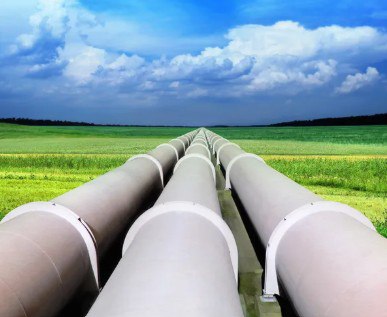
Russia significantly increased natural gas exports to Uzbekistan in 2025, with deliveries rising by about 30% to more than 7 billion cubic meters via the Central Asia–Center pipeline system, according to the International Energy Agency (IEA). The increase came despite an overall decline in Russia’s gas production and a sharp drop in exports to Europe, pointing to Central Asia’s growing role in Moscow’s energy strategy.

In its latest report, the IEA said natural gas output across Eurasia fell by an estimated 2% in 2025, largely due to lower production in Russia. Preliminary data point to a 3% decline in Russian gas output, or around 22 billion cubic meters, amid weaker domestic demand and shrinking exports. Domestic deliveries dropped by nearly 3%, with the sharpest decline recorded in the first quarter, when milder winter temperatures reduced heating demand.

At the same time, pipeline gas exports to Europe plunged by roughly 25% year on year following the halt of transit through Ukraine on January 1, 2025. The shortfall was only partly offset by increased supplies to China and Central Asia. Exports to China via the Power of Siberia pipeline rose by 25% to nearly 39 billion cubic meters, while shipments to Uzbekistan through Kazakhstan continued to increase.

The IEA also noted diverging trends across Central Asia’s gas sector. Turkmenistan’s gas production rose by about 3% to roughly 80 billion cubic meters. By contrast, Uzbekistan’s output fell by 4.5% in the first 11 months of 2025 due to upstream capacity constraints. Kazakhstan, meanwhile, recorded a gain of more than 10% in sales gas production, although regional pipeline exports to China declined by around 5%.

Against this backdrop, Russia is moving to formalize energy ties with Central Asian countries. The Russian Energy Ministry announced the creation of a joint energy working group following expert-level consultations held under the “Central Asia–Russia” framework at the Russian Foreign Ministry.

Deputy Energy Minister Roman Marshavin, who participated in the talks, said the working group will operate at the deputy minister level and include representatives from Russia, Kazakhstan, Kyrgyzstan, Uzbekistan, Tajikistan, and Turkmenistan. The body will be tasked with implementing the Joint Action Plan for 2025-2027, adopted at the second Central Asia-Russia summit in Dushanbe in October 2025.

The ministry said the group will focus on coordinating fuel and energy policy and overseeing the implementation of decisions approved by regional leaders.


European Investment Bank to Allocate €100 Million for Tajikistan’s Transport Infrastructure Upgrade

The European Investment Bank (EIB) plans to allocate €100 million to finance transport infrastructure projects in Tajikistan, according to an announcement by the country’s Ministry of Transport. The funding will support upgrades to existing infrastructure and improve the accessibility of transport services across the country.

The investment is aimed at accelerating economic development, reinforcing the national transport network, and enhancing Tajikistan’s integration into regional logistics corridors.

The funding is outlined in a Memorandum of Understanding signed between Tajikistan and the EIB, which serves as a framework for long-term cooperation. The memorandum was initially presented at the Global Gateway Investor Forum on Sustainable Transport Links between Europe and Central Asia, held in Brussels in January 2024, and was formally signed on April 4, 2025.

Implementation efforts advanced during a working meeting on January 19 between Tajikistan’s Minister of Transport and Communications, Azim Ibrahim, and an EIB delegation led by Edvardas Bumsteinas, the bank’s Director for Asia and the Pacific Region. The two sides discussed project parameters, financing mechanisms, fund monitoring, and a preliminary list of initiatives eligible for support.

The EIB reaffirmed its interest in “close cooperation” with Tajikistan and stressed that it will prioritize projects with regional significance that foster economic growth and transport integration.

Officials on both sides believe that implementing the memorandum’s provisions will lay a foundation for the comprehensive development of Tajikistan’s transport sector and bolster its role as a key transit hub in Central Asia.

This initiative complements a parallel effort by the European Bank for Reconstruction and Development (EBRD), which recently approved €10 million for the modernization of electric public transport in the city of Bokhtar.

The EIB is the European Union’s official investment bank, wholly owned by EU member states. It operates in alignment with EU policy priorities and often partners with other European institutions to promote sustainable development globally.

Uzbekistan Proposes Tougher Penalties for Violence Against Women and Children

Uzbekistan is preparing a comprehensive package of legal reforms aimed at eliminating violence against women and children and establishing a societal culture of zero tolerance toward abuse. The measures are outlined in a draft State Program tied to the implementation of the “Uzbekistan-2030” strategy and the national reform agenda for the Year of Mahalla Development and Community Advancement.

Under the proposed reforms, criminal penalties for acts of violence against women and minors would be significantly increased. One of the most consequential provisions includes harsher sentencing for sexual crimes against children under 14, including the possibility of life imprisonment.

The draft program also recommends transferring the investigation of sexual and violent crimes involving minors to the exclusive jurisdiction of the prosecutor’s office. Additionally, a specialized system of investigators and judges would be introduced, with dedicated training to handle sensitive cases involving abuse. These specialists would be responsible for both the investigation and adjudication of such cases, ensuring a more consistent and victim-centered approach.

Another key component of the reform targets early and forced marriages. The program proposes administrative penalties for those who engage or betroth individuals below the legal marriage age. Sanctions could also apply to parents, guardians, or others who facilitate or promote underage unions, including those who publicly advocate for such practices.

Officials say these steps are intended to entrench a culture of intolerance toward violence and to develop a more effective system for preventing early and forced marriages. The draft emphasizes the role of community-level engagement, with family and women’s support centers expected to reach at least 40% of young couples through specialized educational programs. These initiatives will involve psychologists, legal professionals, and other experts to bolster domestic violence prevention efforts.

If adopted, the measures are scheduled to take effect on April 1, 2026.

In a related development, Kazakhstan’s Ministry of Health last year proposed tightening the application of chemical castration for individuals convicted of sexual offenses against children. According to draft amendments published on the Open NPA platform, Kazakhstan’s government-run portal for public discussion of draft legislation, the procedure would be administered six months prior to an inmate’s release, following a mandatory forensic psychiatric evaluation conducted up to a year in advance.

Kazakhstan’s Health Ministry stated that this measure, regulated under Article 91 of the country’s Criminal Code, is designed to reduce the risk of recidivism during the immediate post-release period, which authorities view as particularly high-risk.

Kazakhstan to Expand Use of AI for Early Detection of Strokes and Cancer

Kazakhstan’s Ministry of Health is moving to expand the use of AI to improve early diagnosis of strokes, cancer, and other high-impact diseases. Officials say the rollout aims to reduce mortality, increase diagnostic accuracy, and ease the workload of healthcare professionals.

According to the ministry, a list of priority AI initiatives has been compiled to help detect socially significant diseases at early stages and support clinical decision-making. The targeted areas include stroke, lung cancer, breast cancer, and dental diagnostics through the analysis of medical imagery using machine learning algorithms. Several platforms are already operational and are being integrated more widely into the national healthcare system.

Among the current AI platforms in use:

  • Cerebra – deployed in nine category II and III stroke centers across five regions, capable of identifying stroke symptoms in under three minutes;
  • WDsoft used in 190 healthcare facilities in 10 regions to assist in the early detection of cancer and pneumonia;
  • AIDENTIS adopted by 65 dental clinics and three medical universities to analyze X-ray imagery;
  • ALIMA – an AI-based medical assistant now active in over 700 clinics nationwide.

The ALIMA platform processes patient complaints, medical records, and images to suggest potential diagnoses, recommend examinations, and propose treatment plans aligned with clinical protocols.

These AI initiatives rely on computing resources provided by the Ministry of Artificial Intelligence and Digital Development, including eight graphics processors, and are supported through API-based integrations.

Looking ahead, the Ministry of Health intends to introduce AI tools to evaluate pharmaceuticals and medical devices and to launch a project for early detection of chronic heart failure using the Smart ECG system. This technology enables remote interpretation of electrocardiograms in clinics that lack specialized functional diagnostics staff.

As previously reported by The Times of Central Asia, Kazakhstani surgeons recently conducted the region’s first joint replacement surgeries in Tashkent using the MAKO robotic system, another example of the country’s growing investment in med-tech innovation.

Kyrgyzstan to Launch Unified Digital Tourism Platform to Attract Foreign Visitors

Kyrgyzstan is preparing to launch a unified Digital Tourism Platform designed to simplify travel procedures and strengthen the country’s appeal to foreign tourists.

At a government meeting on January 26, Chairman of the Cabinet of Ministers Adylbek Kasymaliev pointed to long-standing structural challenges in the tourism sector, including fragmented services for visas, logistics, and insurance, as well as the absence of a centralized coordination mechanism.

“Tourists should not face bureaucracy and language barriers at every stage. A single-window platform must integrate government services, private-sector offerings, and payment instruments from entry to exit,” Kasymaliev stated.

He directed the Department of Tourism, the Ministry of Digital Development, and the Ministry of Finance, in coordination with the Tunduk State Portal of Electronic Services, to secure funding and oversee the platform’s technical implementation.

Tourism’s economic contribution is steadily increasing. In 2025, the sector accounted for 4.3% of Kyrgyzstan’s GDP, with nearly 10 million tourist arrivals, according to Adilet Januzakov, Director of the Tourism Support and Development Fund, speaking on Sputnik Radio.

Januzakov noted a shift in government policy from maximizing tourist numbers to improving infrastructure and service standards. The aim is to create comfortable conditions for a wide range of travel experiences, from ecotourism and camping to premium hospitality.

Key initiatives include the construction of an Olympic village on Lake Issyk-Kul, the development of ski resorts and amusement parks, and the continued digitalization of tourist routes, such as integrating eco-trails into the 2GIS navigation system.

Authorities also plan to implement a national classification system for hotels and guesthouses, designed to increase market transparency and provide consistent service quality for visitors.

According to the National Statistical Committee, revenue from foreign tourists exceeded $813 million between January and September 2025, making tourism one of Kyrgyzstan’s key non-resource sectors.

Electricity Generation in Kyrgyzstan Stagnates as Demand Surges

Electricity consumption in Kyrgyzstan has surged by nearly 25% over the past five years, rising from 15.4 billion kWh in 2020 to 19.3 billion kWh in 2025. However, electricity generation has remained virtually flat, increasing by just 0.1 billion kWh during the same period, according to data presented at the Ministry of Energy’s board meeting on January 23.

The widening gap between supply and demand is attributed to sustained economic growth, the launch of new industrial facilities, and delays in commissioning new power infrastructure. Compounding the issue, hydropower output, the backbone of Kyrgyzstan’s energy mix, is increasingly constrained by declining water levels linked to climate change.

In 2025, Kyrgyzstan’s electricity generation structure was as follows:

  • 12.9 billion kWh – large hydropower plants
  • 0.223 billion kWh – small hydropower plants
  • 0.234 billion kWh – mini-hydro, solar, and wind power plants
  • 2.01 billion kWh – thermal power plants

To meet domestic demand, the country imported 3.8 billion kWh of electricity from neighboring states.

A key long-term solution lies in the construction of the Kambarata-1 hydropower plant, a strategic regional project being developed in cooperation with Kazakhstan and Uzbekistan. Once completed, the plant is expected to have a capacity of 1,860 MW and generate 5.6 billion kWh annually.

In 2025, Kyrgyzstan updated the project’s feasibility study, originally prepared in 2014, finalized the dam type, and signed a contract with the tender winner. The World Bank is considering up to $1.5 billion in financing, while nine international donors have expressed interest in contributing an additional $2.5 billion.

In parallel, the country is expanding its renewable energy portfolio. Eight small hydropower plants with a combined capacity of 44.6 MW and solar plants totaling 102 MW were commissioned in 2025. Investment agreements have also been signed for the construction of five solar plants and one wind farm with a total capacity of 3,150 MW. These projects represent a planned investment of approximately $4.2 billion.

Additionally, on January 23, the Cabinet of Ministers signed a memorandum of understanding with China’s Kyrgyzstan Reclaim Co. Ltd. to build a 200 MW cascade of small hydropower plants on the Tar River in the Osh region. The investment is projected at around $300 million.

Officials say these projects are aimed at boosting generation capacity and enhancing Kyrgyzstan’s long-term energy resilience amid growing domestic consumption.