• KGS/USD = 0.01144 0%
  • KZT/USD = 0.00213 0%
  • TJS/USD = 0.10456 0.19%
  • UZS/USD = 0.00008 0%
  • TMT/USD = 0.28490 0%
  • KGS/USD = 0.01144 0%
  • KZT/USD = 0.00213 0%
  • TJS/USD = 0.10456 0.19%
  • UZS/USD = 0.00008 0%
  • TMT/USD = 0.28490 0%
  • KGS/USD = 0.01144 0%
  • KZT/USD = 0.00213 0%
  • TJS/USD = 0.10456 0.19%
  • UZS/USD = 0.00008 0%
  • TMT/USD = 0.28490 0%
  • KGS/USD = 0.01144 0%
  • KZT/USD = 0.00213 0%
  • TJS/USD = 0.10456 0.19%
  • UZS/USD = 0.00008 0%
  • TMT/USD = 0.28490 0%
  • KGS/USD = 0.01144 0%
  • KZT/USD = 0.00213 0%
  • TJS/USD = 0.10456 0.19%
  • UZS/USD = 0.00008 0%
  • TMT/USD = 0.28490 0%
  • KGS/USD = 0.01144 0%
  • KZT/USD = 0.00213 0%
  • TJS/USD = 0.10456 0.19%
  • UZS/USD = 0.00008 0%
  • TMT/USD = 0.28490 0%
  • KGS/USD = 0.01144 0%
  • KZT/USD = 0.00213 0%
  • TJS/USD = 0.10456 0.19%
  • UZS/USD = 0.00008 0%
  • TMT/USD = 0.28490 0%
  • KGS/USD = 0.01144 0%
  • KZT/USD = 0.00213 0%
  • TJS/USD = 0.10456 0.19%
  • UZS/USD = 0.00008 0%
  • TMT/USD = 0.28490 0%

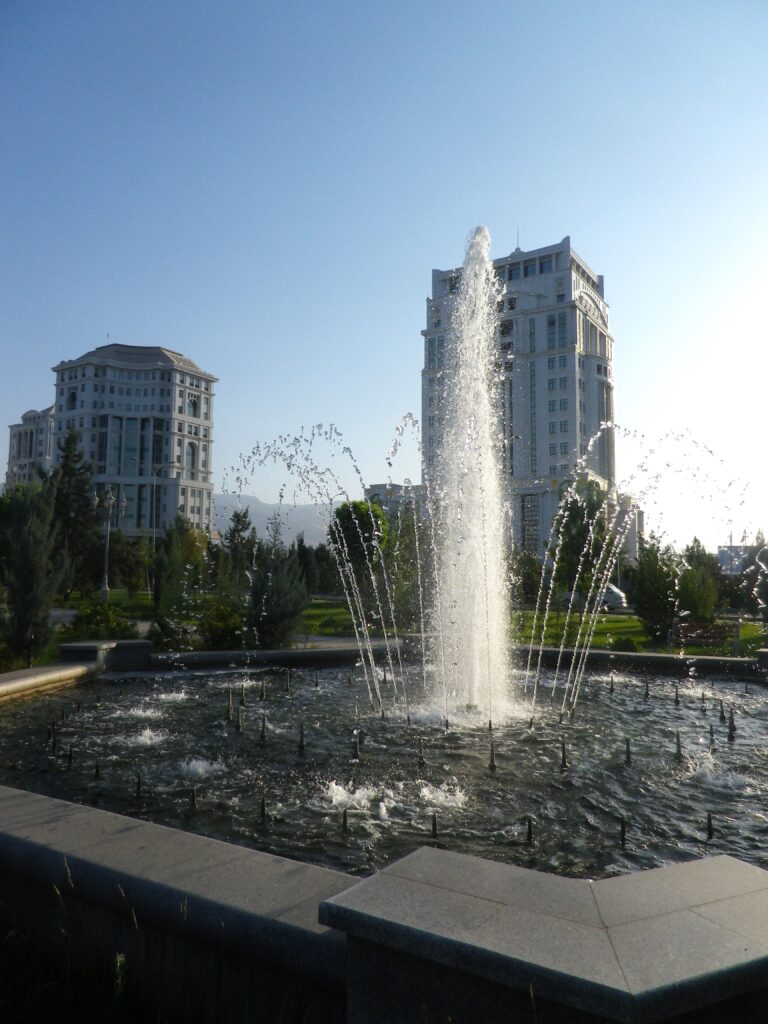
Turkmenistan Using Almost All Available Water Resources With No Additions in Sight

Meteojournal has reported that Turkmenistan‘s State Statistics Committee has published a voluntary national review of its progress in implementing the global agenda for sustainable development until 2023 on its website. According to MeteoJournal, in 2021, almost all water resources in the country – 92% – went to agricultural needs. Another 5% was used by industry, and only 3% went to household needs.

At the same time, Turkmenistan used almost all available fresh water resources, and due to increasing consumption, the country has no additional water sources. In 2016, the utilization rate of water resources reached 97.5%; in 2018, it had dropped to 89.9%, then in 2020 it reached 85.2%, and in 2021 — 87.1 percent. Meteojournal stated that the increase in demand for fresh water can be met only through its rational use.

According to the review, 95% of the population has access to clean and safe water, whilst 99.9% of the population uses water supply services organized in compliance with safety requirements. The share of safely treated wastewater in 2022 was 57.4%.

Meteojournal, which familiarized itself with the review, noted that Turkmenistan – which possesses huge potential for using renewable energy sources such as solar and wind energy – is currently not harnessing its potential. The review mentioned the construction of a 10-megawatt (MW) hybrid power plant using solar and wind energy in Kyzil-Arvat. The project was planned to be completed in January 2024, but has yet to open, and local media haven’t reported any updates on the pace and status of the work.

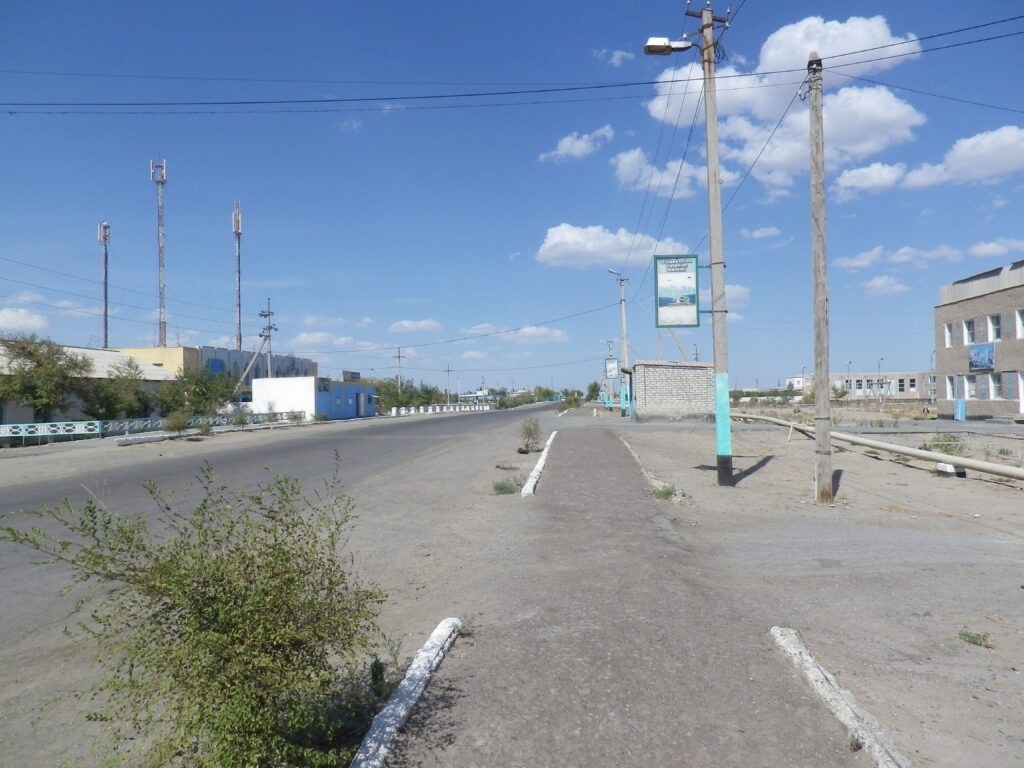
Uzbekistan to Host Eco Race in Support of Aral Sea Region

On April 18 in Moynaq, Karakalpakstan, organizers Prorun will host an Aral Sea Eco Race with a total distance of two kilometers. Participants will run one km to the location of a tree planting, plant a tree, and then return. At the finish line, each participant will receive a medal in the form of a symbolic tree for partaking in the restoration project.

As organizer Andrey Kulikov told the Times of Central Asia, “the run is being held to draw the world’s attention to the environmental problems of the region and inspire everyone to take actions to protect it. Twelve participants have already registered, and about a hundred runners are expected. The run will be held at the experimental site next to the nature museum in Moynaq. The three fastest runners will receive commemorative prizes. In every race organized by the Prorun movement, we aim to attract as many people as possible to a healthy lifestyle and to dedicate the races to environmental protection and environmental issues. Our biggest event will be a 42-km marathon on the dried-up Aral Sea bed, which will take place on June 17. A hundred people will take part in the race dedicated to the International Day to Combat Desertification and Drought. In addition, Prorun practices ‘plogging’ races, during which participants collect rubbish along their route.”

The Aral Sea Eco Race is being held as part of the Aral Sea Tourism Week, which will run from April 16-19 in the Nukus and Moynaq districts of Karakalpakstan. During the week, there will be an international scientific and practical seminar “Goodwill Ambassadors of the Aral Sea,” an exhibition and an art exhibition entitled “The Aral Sea Through the Eyes of Artists,” where paintings of the Aral Sea will be presented. The participants will also enjoy a gastronomic festival called 99 kinds of fish dishes of the Aral Sea, and a trip to historical monuments.

Last autumn, Uzbekistan planted 28,000 hectares of greenery in the Moynaq district and the desert areas of the Aral Sea basin as part of a nationwide greening campaign called Yashil Makon (Green Edge).

In 2024, Kazakhstan plans to plant on 275,000 hectares of the former Aral Sea bed. In total, according to the Ministry of Ecology and Natural Resources of Kazakhstan, 544,500 hectares of forest were sown between 2021-2023.

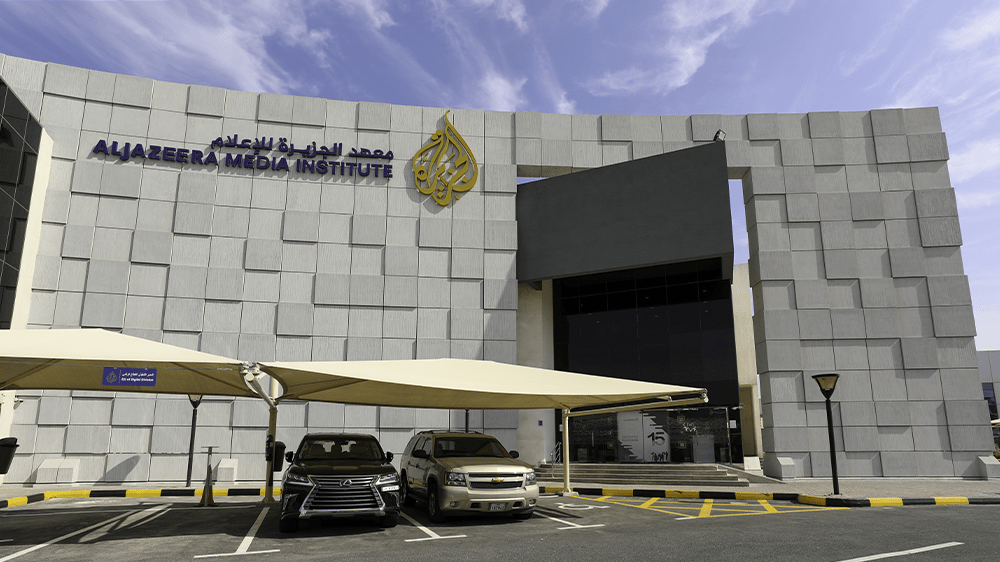
Al Jazeera Media Institute Delegation Will Visit Uzbekistan

According to the Dunyo state news outlet, Uzbekistan’s Ambassador to Qatar Ashraf Khojayev held talks with the Director of Al Jazeera Media Institute Eman Al Amri. The two discussed the possibilities for representatives from Uzbek ministries and agencies, workers in the field of Uzbekistan’s mass media, and students from Uzbekistan’s University of Journalism and Mass Communications to participate in training programs and courses offered by the Al Jazeera Media Institute.

The report states that the director of the institute, Al Amri, was thoroughly briefed on the reforms being implemented in Uzbekistan to democratize the information sector, ensure freedom of speech and access to information, and strengthen the role of the mass media in improving public debate.

At the end of the meeting, the Al Jazeera Media Institute delegation was invited to Uzbekistan to establish cooperative ties with the University of Journalism and Mass Communications, the Dunyo Agency, and the Information and Mass Communications Agency, which is under the administration of Uzbek President Shavkat Mirziyoyev.

Kyrgyzstan Minister Says Case Against Media Workers Not About Politics

BISHKEK, Kyrgyzstan – Kyrgyzstan is pushing back against international criticism of a high-profile prosecution of media workers, saying the case is not politically motivated and that those facing charges of inciting mass unrest are poorly educated people masquerading as journalists.

Minister of Internal Affairs, Ulan Niyazbekov, said the case against 11 former and current workers for media outlet Temirov Live stems from the publication of false information that flouts the basic rules of journalism. Free speech advocates say Kyrgyzstan is clamping down on what was once a relatively permissive environment for the media.

“If they continue to write everything that comes to their mind without facts and evidence, just saying that they are journalists, then we will arrest them,” Niyazbekov said in an interview with Kabar, Kyrgyzstan’s national news agency. He said most of the people accused in the Temirov Live case are “bloggers,” not journalists.

“They spread false information because they don’t have education and make people panic. And there is no need to make noise about them saying that they are journalists,” he said.

The minister’s comments were published on Thursday, two days after a court in Bishkek ordered the transfer of four of the journalists from prison to house arrest. Four others accused in the same case remain in pretrial detention. If convicted, they could be sent to prison for years.

Temirov Live is a YouTube-based outlet that has published and broadcast reports on alleged corruption by senior officials. It was founded in 2020 by Bolot Temirov, who was expelled from Kyrgyzstan in 2022. He has said the ongoing case against his colleagues is in retaliation for Temirov Live’s investigations into alleged government misconduct.

In an interview with Kabar, Niyazbekov noted that there were potential penalties in Europe and the United States for journalists who spread false or unconfirmed information.

“They don’t accuse someone without proof,” he said. “If someone tries to slander someone or spread false information about the activities of the authorities, they will be brought to court and pay a large compensation or be imprisoned.”

The government in Kyrgyzstan tolerates criticism but its “only demand” is that critics “gather evidence or make the information very precise and then release it to the public,” Niyazbekov stated.

Kyrgyz Taxi Drivers to Continue Working in Russia

Kyrgyz officials attended a meeting in Moscow and persuaded Russian lawmakers to withdraw a draft document that would ban Kyrgyz citizens from working as taxi drivers. Following the terrorist attack at the Crocus City Hall near Moscow on March 22, Russian State Duma representatives prepared a bill to ban foreigners from working in the passenger transport industry using their home countries’ driver’s licenses. The unprecedented decision came against the background of an acute shortage of taxi drivers and public transport workers. The capital region alone lacks 80,000 drivers.

In an interview with Kyrgyz state media, Jogorku Kenesh (Supreme Council) representative Marlen Mamataliyev said the parliamentary delegation held a number of talks with members of various Russian State Duma factions. At one such meeting, Kyrgyz representatives presented their arguments to their Russian counterparts to have the bill withdrawn before the committee’s discussions.

“We explained that Kyrgyzstan has tightened the issuing of driving licenses and, even, the president’s niece was able to get a driving license only on the fifth attempt. We also suggested exchanging databases of drivers. This would allow Russian law enforcement agencies to track the authenticity of driver’s licenses,” Mamataliyev said. According to him, Russian colleagues listened to them and put the bill on hold.

After arriving in Kyrgyzstan, the deputies instructed the Interior Ministry to speed up the creation of a unified database of driver’s licenses and give Russian law enforcement agencies access to it.

However, one of the authors of the bill, Duma deputy Yaroslav Nilov, told the media that no one had contacted him. “I am the author of this bill and no one has held any negotiations with me… I believe that the issue of safety should be a priority for our country, including this driving with a national driving license,” he said.

The Russian MP believes that if Kyrgyz citizens work in freight or passenger transport, they should have Russian-style driver’s licenses like citizens of other countries. The exception is citizens of Belarus, another Eurasian Economic Union (EAEU) state, alongside Kyrgyzstan. Nilov admitted the possibility of a simplified procedure for issuing Russian driver’s licenses to citizens of Kyrgyzstan, but not its complete cancellation.

Citizens of the EAEU can drive cars in member states using their domestic driver’s license. However, not all countries allow such drivers to get a job. According to official data, about a million Kyrgyz citizens live in Russia today, and many of them continue to work in taxi transportation and municipal public transport using Kyrgyz driving licenses.

Economist Marat Kairlenov: Kazakhstan Must Keep Up With Uzbekistan

In 2023, crude oil remained Kazakhstan’s main export commodity, accounting for $42.3 billion, or 53.8%, of the republic’s total gross domestic product (GDP). According to a proprietary forecast, Uzbekistan may overtake its neighbor in terms of GDP by 2037. This is due to the continuing technological lag in the raw materials-based economy of Kazakhstan, according to economist Marat Kairlenov, who recently discussed ways to diversify Kazakhstan’s economy and create jobs.

“We remain predominantly a raw material country; however, in the GDP structure, agriculture accounts for only 4%, industry — 36%, and services — 56%,” Kairlenov told kapital.kz. He emphasized that changing the economic orientation requires time, and active use of raw materials sector opportunities, as other countries have done during reforms.

The key issue is the equal distribution of national wealth. It’s important to revise agreements with large subsoil producers to increase the wages of citizens. “In 2023, Kazakhstan’s GDP reached 119 trillion tenge ($266.2 billion) with only 31% going to wages. This shows the need for policy correction,” Kairlenov added.

Speaking about economic diversification, the economist mentioned new technologies in mining rare metals, such as high-grade nickel. “Our country is rich in various minerals and we should actively develop their extraction,” he believes. However, oil dependence remains an issue. “The price of oil is crucial, and the war in Ukraine incentivizes countries to give up oil”. He assumes that at an average oil price of $30 per barrel, production will become unprofitable.

In this regard, Kairlenov calls for the active development of other sectors of the economy, such as the extraction of rare metals and the information technology (IT) sector. “We need to get rid of misconceptions, for example, about the contribution of [cryptocurrency] mining farms to the economy,” he stressed.

Kairlenov draws attention to fading investment activity — and the growing number of seized accounts, which indicates negative trends in the economy. “Policies must change to incentivize job creation and improve the welfare of citizens,” he concludes.

How can Kazakhstan create new jobs and stimulate economic growth? Kairlenov suggests a number of concrete steps to create jobs in the country. “Very simple — we need to reduce customs duties on imported cars and machinery to the level of 2010. The same applies to scrappage duty.” Reducing the cost of cars stimulates tourism and the development of agriculture, which needs modern equipment.

In addition, Kairlenov notes the need for infrastructure renewal. “Costs are inevitable for new power lines, pipes and other engineering systems. The whole country needs renewal, which will create demand for machinery and many jobs,” he explains.

It’s also important to create a favorable environment for business development. “Liberalizing the economy is the key to progress. Less regulation is required from the state and more freedom for entrepreneurs.” he added. Kairlenov also calls for attracting foreign investment in promising industries. “Why don’t we launch the production of [railroad] carriages or other goods in which we have advantages?”

Asked about Uzbekistan’s future as a regional economic leader, Kairlenov believes it’s likely. “Competing neighbors may eventually become an incentive for our development,” he says.

The environmental agenda is also an important aspect. Marat emphasises the need to adapt to new requirements and technologies. “‘Carbon neutrality is a challenge, but also an opportunity. We must prepare for the changes now so that we do not fall by the wayside of economic progress,” he concludes.