The Priority of Maintaining a United and Stable Afghanistan

The issue of inter-ethnic relations in Afghanistan affects not only the country itself but also its surrounding region. Recent history has placed a heightened importance on the “nation” question in Afghanistan in terms of the country’s political and social stability. Since regaining power in 2021, the de facto Taliban authorities have focused primarily on social policies to respond to the people’s immediate needs as well as on implementing trade and economic cooperation with regional countries to realize the geo-economic potential of the country. To a large degree, they have been successful in these endeavors.
The important question now is how the Taliban will work to synthesize various ethnic groups into a society that has a strong identity as a nation while preserving the Pashtun status quo and the legacy of Durrani statehood. Afghanistan in its current state is not ready for a federal structure, and outside actors pushing this now could possibly undermine its stability. On the other hand, the country and the wider region have a long history of diverse ethnic and national groups managing to find a way to coexist and function effectively. As the Afghan people try to overcome humanitarian crises and focus on their economic and social recovery, the Taliban’s strategy will likely continue to be based on the consolidation of ethnic groups around itself and under the umbrella of Islam, supported by measures of assimilation and expansion, as Pashtun rulers did in the country’s history.
Understanding the historical role of ethnicity and nationality in Afghanistan
So far, no modern regime in Afghanistan has been able to significantly advance the idea of “Afghan nationalism,” reflecting the national unity of the country’s people. Slogans about “one nation” have always been promoted by the capital, but did not necessarily reflect realities on the ground.
The latest (2004) republican constitution states in its Article 4 that the Afghan nation consists of “Pashtuns, Tajiks, Hazaras, Uzbeks, Turkmen, Baluchis, Pashais, Nuristans, Aimaks, Arabs, Kyrgyz, Qizilbash, Gujars, Brahuis and other tribes,” and that the word “Afghan” applies to every citizen of Afghanistan. This multinational state has so far shown stability in its ethnic groups, but cannot demonstrate their synthesis into a society with a strong self-identification as the Afghan nation, and the term “Afghan” continues to serve as an exonym, a general name for the inhabitants of the country.
After regaining power in 2021, the Taliban worked to stop a bloody civil war that had begun in 1978, but faced a set of problems including the big “national question.” Against the backdrop of demands from the international community to ensure an inclusive government, the idea of federalism is once again being brought up in information spheres, which, according to its few supporters, presents the only way to ensure long-term peace in this diverse country.
Discussions about federalism in Afghanistan are not new and are largely connected to events in recent history, primarily the civil war that began in 1978 with the “April Revolution.” That said, there has not been enough technical analysis and evaluation on this concept with regard to this particular country, and its supporters rely too much on the historical region of Khorasan (that united different parts of modern Afghanistan, Iran, Turkmenistan, Uzbekistan and Tajikistan) and the larger region of Ariana (up to modern Pakistan).
In essence, the emergence of Afghanistan’s modern borders, primarily in the north with the Central Asian republics and the Durand Line (the border with Pakistan), did not happen through natural processes like a settlement of peoples, ethno-linguistic identity, geographical background, or historical ties. They were formed as a result of the rivalry between British and Russian empires. At the same time, the first Afghan state, i.e. the Durrani Empire in the 18th-19th centuries, extended its power to wider territories.
The border situation can be considered a historically relevant factor just like the fact that modern Afghanistan is the successor of Ahmad Shah Durrani’s state. Since Durrani’s time, central authorities in Kabul and Kandahar have been engaged in maintaining their power with a focus on a diverse ethnic, cultural and religious composition, but always with an emphasis on Pashtun ethnocentrism. At the same time, separatism has never been characteristic of the peoples of northern Afghanistan.
Even the communists had ethnic differences. The People’s Democratic Party of Afghanistan (PDPA) was initially divided into warring factions such as the Pashtuns united in the Khalq (“people”) faction and the Parcham (“banner”) bloc who were predominantly Tajiks.
After the overthrow of the Najibullah regime in the early 1990s, groups that were formerly allies began to war among themselves. The attempt to create a coalition government (inclusive in the modern sense) only led to unprecedented chaos. The Pashtun Islamic Party of Afghanistan (Hezb-e Islami led by Gulbuddin Hekmatyar) fought with the Tajik-Uzbek alliance made up of the Islamic Society of Afghanistan (Jamiat-e Islami under Masud Ismail Khan) and the National Islamic Movement of Afghanistan (NIDA, led by Marshal Abdul Rashid Dostum). Dostum then reached a truce with Hekmatyar and began a war against Ahmad Shah Massoud, a Tajik who was also opposed by the Hazara community (see below). These events only represent some of the highlights from the civil war. Overall, the situation at that time can be best characterized as bellum omnium contra omnes: a war of all against all.
While the Mujahideen were fighting for power, a new player emerged: the Taliban, who founded their first Islamic Emirate in 1996. The non-Pashtuns again acted as a united front, reviving the so-called “Northern Alliance” (United Islamic Front for the Salvation of Afghanistan), where the main role was played by Ahmad Shah Massoud, a Tajik. It was Operation Enduring Freedom (2001-2014) spearheaded by the United States that resuscitated the former Mujahideen. But for the Afghans themselves, the war against the Taliban became only a new stage in civil conflict.
The cabinets of ministers during the transitional and republican periods looked very ethnically diverse. The representation of Pashtuns was on average 50-60%, representatives of national minorities periodically replaced each other in the post of vice president, while the presidents were Pashtuns (i.e. Karzai, Ghani) and the parliament was inclusive. The issue in the “center” seemed to have been thus resolved, but in the provinces, the situation did not really change. Through all this, the Taliban have always been present as shadow governments, de facto controlling entire regions.
In terms of the “national question,” one can argue that the communist and republican periods intensified interethnic contradictions, and political choices opened up new struggles for dominance in an ethnically diverse country, gradually disrupting the historical balance between Pashtuns and non-Pashtuns. This led to the modern realities in which Pashtuns do not know the Dari language, and national minorities do not speak (and don’t want to learn) Pashto. Non-Pashtuns gained true power only with the advent of the Soviet Union, and subsequently established themselves as a political and military force.
Separately, consider the position of the Hazara community in the modern history of Afghanistan, which has made its own adjustments to the ethnopolitical situation and is considered the most oppressed ethnic group in Afghanistan. For centuries, the Hazaras, who have Turkic-Mongolian-Iranian roots and practice Shi’ism, have been subjected to tyranny at the hands of Pashtuns and other ethnic groups.
The relatively independent political activity of the Hazaras began in the 1990s after the collapse of the communist regime. Apart from dominating certain parts of the capital, they became completely autonomous in the Hazarajat and skillfully maneuvered between various forces. However, their position improved qualitatively only with the advent of the Western coalition. A whole stratum of Hazara politicians and statesmen appeared. The Hazaras are thriving in business like never before
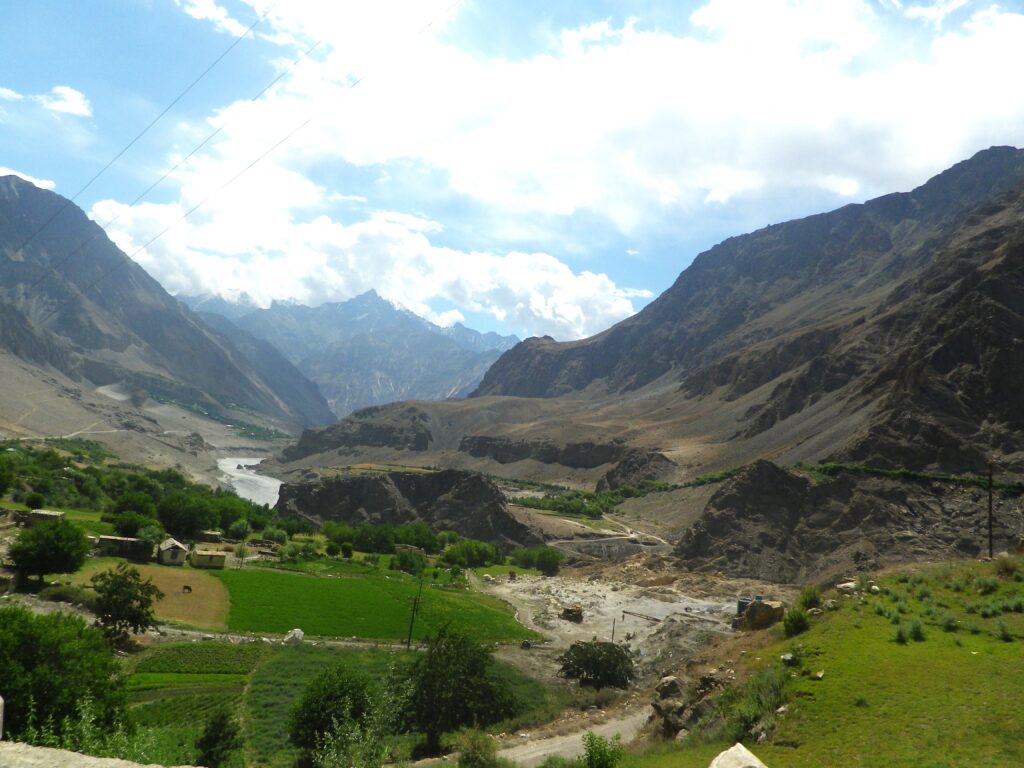
The Afghan territories, which are part of the historical region of Hazarajat, constituting about 12% of the country’s territory, hold significant hydropower potential and are rich in minerals, including the largest iron deposit in Hajigak, as well as deposits of tungsten, tin, zinc, lead, and lithium salts, among others. The area also houses the Bande Amir National Park with the only ski resort in the country, as well as the world-famous Buddha statues destroyed by the Taliban during the first Islamic Emirate. Also, the Hazara territory is famous for its farmland, which produces, among other things, the famous Bamiyan potato.
Addressing the priorities of today’s Afghanistan
The above realities under the current Taliban regime have not changed. The Taliban will not support regional autonomy as this is fundamentally contrary to the idea of an “Afghan state,” and the memories of decades of civil war remain fresh in the memory of the Afghan people.
Afghanistan in its current condition is not ready for a federal structure. For its people, overcoming humanitarian crises and economic and social recovery are more important than the ambitions of a small group of politicians. The region (and the world) needs an Afghanistan that is stable in every sense and not undergoing a process of “Balkanization.”
The de facto authorities have so far focused on social policy to provide for the needs of the people and appear to be working to fulfill the geo-economic potential of the country. They are implementing regional trade and economic cooperation. Their calculation appears to be simple: the government ensures economic stability and fights poverty, which increases the confidence of all ethnic groups, representing a kind of “internal jihad,” i.e. the fight against poverty, devastation and social injustice, in contrast to bringing the people together against a foreign threat.
On the domestic political front, the Taliban (Pashtun) will likely try to consolidate of all of the various ethnic groups around itself, using Islam as the main instrument and through assimilation and expansion, much like all Pashtun rulers of Afghanistan have done.
Aidar Borangaziyev is an Open World Foundation expert and a consultant for the Investment Group, ACME.