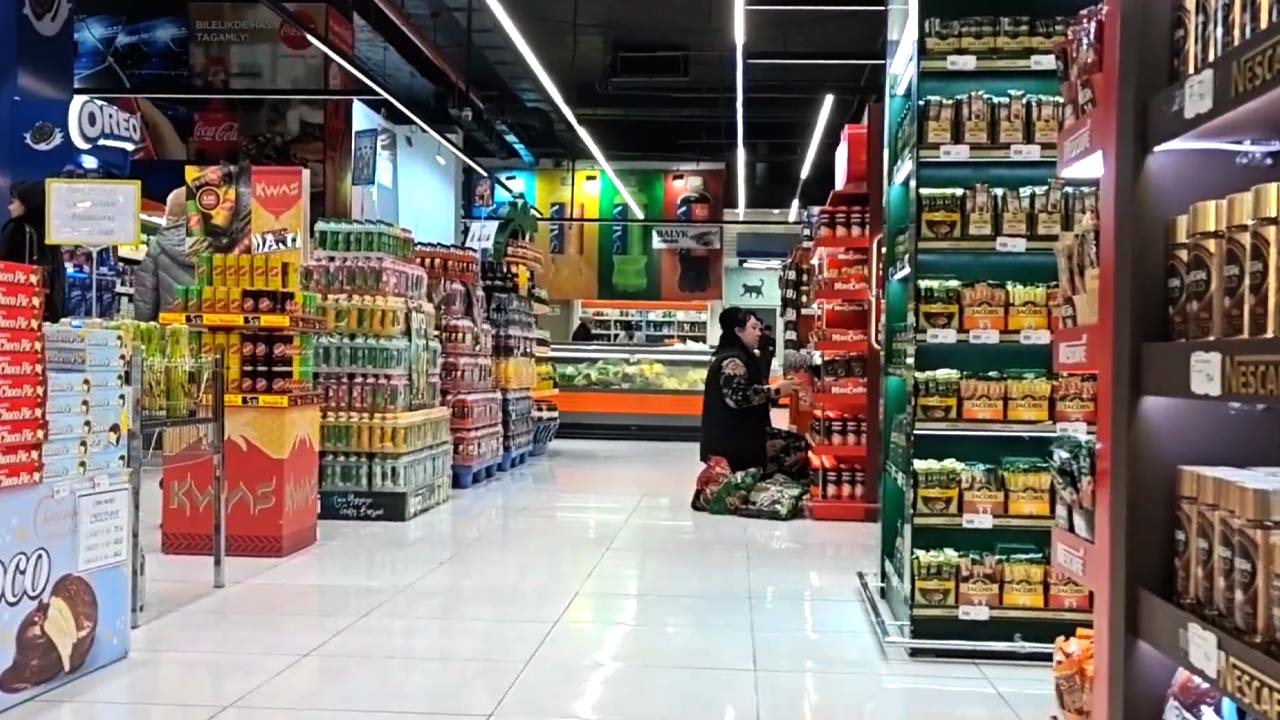
Military activity in neighboring Iran has begun to directly affect Turkmenistan’s economy. Disruptions to supplies from a key trading partner have triggered a sharp increase in prices for food, household chemicals, building materials, and cigarettes. According to retailers, this may only be the beginning as existing stocks are running low and prices continue to climb.
Despite having domestic production, Turkmenistan remains heavily dependent on imports from Iran, particularly for food products, household chemicals, and construction materials.
The conflict in Iran has disrupted established logistics routes, causing prices for several categories of goods to rise significantly across Turkmenistan.
Vegetables and citrus fruits have seen some of the steepest increases. Prices for potatoes and cucumbers have risen by three to three-and-a-half times, while citrus fruits have become about 50% more expensive. Cigarette prices have already increased by roughly 40%, and traders warn that further rises are likely.
At the end of February, a kilogram of potatoes imported from Iran cost between $1.45 and $1.74 in Ashgabat. The price has now risen to $4.93 per kilogram. A similar trend has been observed for cucumbers, whose price increased from $2.32 to $4.93 per kilogram.
Citrus fruits have become even more expensive. Oranges have risen in price from $2.61 to $5.22 per kilogram, while mandarins have increased from $3.48 to $6.38.
Residents of Turkmenistan are also facing higher prices for household chemicals. Although the increase has not yet been as dramatic, retailers say the upward trend is clear. Tobacco products have also risen significantly in price, with cigarettes increasing by an average of about 35%.
The construction sector has also been affected. Prices for cement, wood, metal, and other building materials have increased by around 40%.
These increases are linked to disruptions in established supply routes. Some construction materials were previously imported from the United Arab Emirates via Iran. Businesses are now being forced to search for alternative logistics routes, including through Georgia and Azerbaijan, which significantly increases transportation costs.
On March 4, customs regulation issues were discussed at a meeting of Turkmenistan’s Security Council.
However, according to a report by the state news agency TDH, the head of the State Customs Service, Maksat Khudaygulyev, did not address the current supply disruptions. His remarks focused on the planned development of the agency.
Price increases linked to events in Iran are not new for Turkmenistan. A similar situation was observed in the summer during the 12-day war.
Supply problems also emerged in the fall of 2024, when Iran temporarily closed its border. During that period, vegetable oil prices increased significantly and shortages were reported.