TASHKENT (TCA) — Uzbekistan is pursuing a production localization policy, refusing from the import of 100 different types of goods and considerably reducing the import of 300 types of goods last year alone, the Jahon information agency reports.
Uzbekistan’s Production Localization Program for 2017-2019 provides for the implementation of projects with a total output of $3.4 billion. A total of 1,146 projects for the establishment of competitive import-substituting productions are scheduled for three years.
Some 960 projects with a total output of localized products worth approximately 6.5 trillion soums are scheduled for 2017. A total of 122 types of popular products are recommended for production by domestic manufacturers. More than 400 additional localization projects with an annual output of over 900 billion soums are currently under preparation for launch. Once launched, they will be included in the Localization Program and enjoy benefits and preferences from the state.
There are new criteria for extended and re-included localization projects: at least 36% of products in the first year, at least 45% in the second and at least 50% in the third year from the moment of inclusion in the program. The share of exports in the total volume of sold products should reach at least 20% in the second and about a third in the third year of operation.
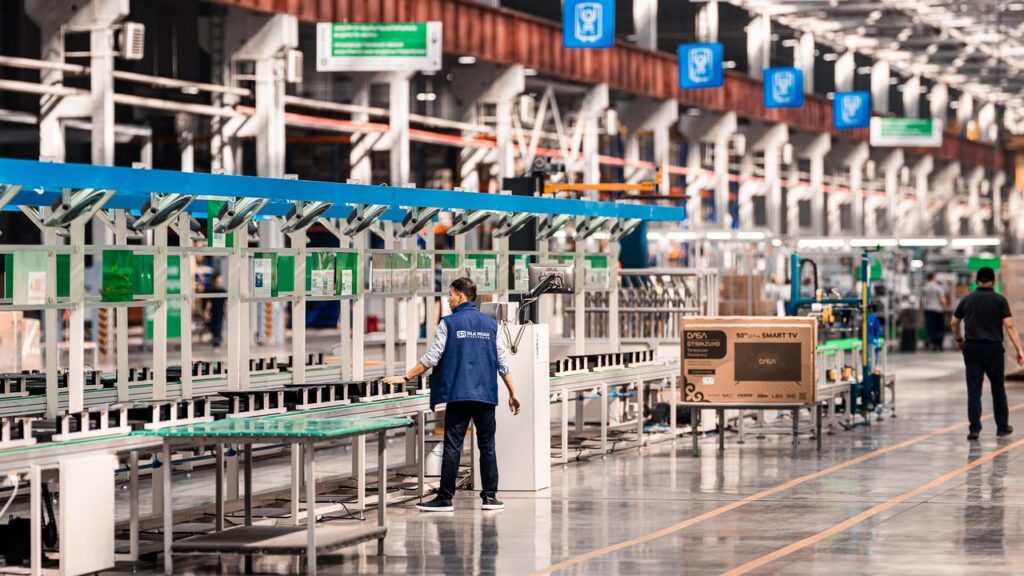
Imports of more than 100 commodity groups — mine trolleys, vacuum pumps, tower cranes, refractory and acid-resistant materials, sandwich panels, carpets, artificial turf, bоttles, starch, and others — have been completely stopped over the last three years. Imports of 350 items have been cut more than twice, including of TV sets, air conditioners, refrigerators, vacuum cleaners, lamps, car filters and radiators, steel and copper pipes, ceramic tile, linoleum, various types of fabrics, paints, children’s toys, and sports equipment.
Almost 2,000 production localization projects have been carried out in Uzbekistan over the past seven years, with the import substitution effect exceeding $7.5 billion per year.