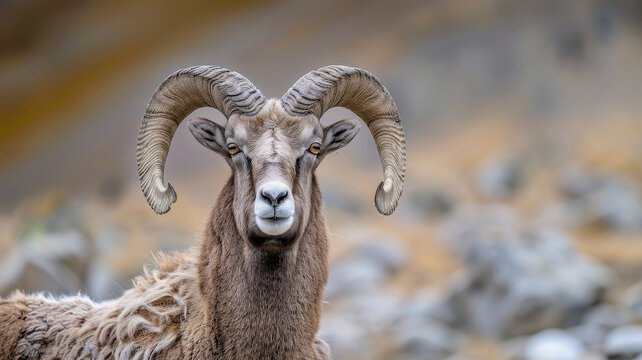
Uzbekistan is intensifying conservation efforts in its protected areas, with new data indicating a stable population of its endangered wild sheep, the Kyzylkum argali, in the Nurata State Nature Reserve.
According to the National Committee for Ecology and Climate Change, the reserve is currently home to approximately 1,700-1,800 argali, also known as Severtsov’s wild sheep. Monitoring data collected in recent years show that the population has remained stable, highlighting the effectiveness of ongoing conservation and protection measures.
The Kyzylkum argali is classified as an endangered species. It is listed in the national Red Book, included in the International Union for Conservation of Nature Red List of Threatened Species, and protected under Appendix II of the Convention on International Trade in Endangered Species of Wild Fauna and Flora, which regulates international trade in vulnerable species. As a result, systematic monitoring of the population remains a priority for environmental authorities.
Established in 1973, the Nurata State Nature Reserve is located in the Farish district of the Jizzakh region and plays a key role in preserving biodiversity in the Nurata mountain range. A total of 247 animal species have been recorded in the reserve, 31 of which are included in Uzbekistan’s Red Book. Specialists note that the stable argali population is closely linked to broader ecosystem protection measures, strengthened anti-poaching enforcement, and continuous scientific monitoring.
Further progress is expected under the national development strategy “Uzbekistan – 2030,” which prioritizes environmental security, expansion of specially protected natural areas, and long-term conservation of rare plant and animal species.
Officials state that protection measures for Red Book species will continue to be reinforced, with the aim of sustaining positive trends observed in Uzbekistan’s reserves, including the Nurata reserve, over the long term.
The stable argali population in Nurata is increasingly cited by environmental authorities as an example of how consistent policy implementation and institutional oversight can contribute to preserving the country’s natural heritage.