• KGS/USD = 0.01144 0%
  • KZT/USD = 0.00196 -0%
  • TJS/USD = 0.10899 -0%
  • UZS/USD = 0.00008 -0%
  • TMT/USD = 0.28490 0%
  • KGS/USD = 0.01144 0%
  • KZT/USD = 0.00196 -0%
  • TJS/USD = 0.10899 -0%
  • UZS/USD = 0.00008 -0%
  • TMT/USD = 0.28490 0%
  • KGS/USD = 0.01144 0%
  • KZT/USD = 0.00196 -0%
  • TJS/USD = 0.10899 -0%
  • UZS/USD = 0.00008 -0%
  • TMT/USD = 0.28490 0%
  • KGS/USD = 0.01144 0%
  • KZT/USD = 0.00196 -0%
  • TJS/USD = 0.10899 -0%
  • UZS/USD = 0.00008 -0%
  • TMT/USD = 0.28490 0%
  • KGS/USD = 0.01144 0%
  • KZT/USD = 0.00196 -0%
  • TJS/USD = 0.10899 -0%
  • UZS/USD = 0.00008 -0%
  • TMT/USD = 0.28490 0%
  • KGS/USD = 0.01144 0%
  • KZT/USD = 0.00196 -0%
  • TJS/USD = 0.10899 -0%
  • UZS/USD = 0.00008 -0%
  • TMT/USD = 0.28490 0%
  • KGS/USD = 0.01144 0%
  • KZT/USD = 0.00196 -0%
  • TJS/USD = 0.10899 -0%
  • UZS/USD = 0.00008 -0%
  • TMT/USD = 0.28490 0%
  • KGS/USD = 0.01144 0%
  • KZT/USD = 0.00196 -0%
  • TJS/USD = 0.10899 -0%
  • UZS/USD = 0.00008 -0%
  • TMT/USD = 0.28490 0%
08 December 2025

Kazakh Journalists Set to Ring in 2026 at the “JingleBendz” Media Party

On 12 December, Almaty will host the New Year’s edition of the professional media party “Day J,” titled JingleBendz 2025. The annual event brings together journalists, editors, public relations specialists, and media executives, and is regarded as one of the leading informal networking platforms in Kazakhstan’s communications industry.

According to the organizers, the evening will include informal awards for journalists and PR professionals. Since the project’s launch 11 years ago, more than 140 representatives of the media sector have received accolades.

This year, participants will also receive special gifts, including a separate award presented by the event’s general sponsor, Yandex Qazaqstan. The party is supported by several project partners, including Oriflame, KAZ Minerals, RG Brands, and First Brewery, all of which will provide prizes and New Year gifts.

Kazakhstan’s major media outlets are backing the event, among them The Times of Central Asia, Tribune, BesMedia, Kapital, Kursiv, Shishkin_like, BlueScreen, Profit, Finratings, CheckPoint, Newtimes.kz, and Aleminform.kz.

The Times of Central Asia editorial team will attend JingleBendz 2025 and report on the event’s key moments.

New CIVICUS Report Warns of Mounting Restrictions on Freedoms in Turkmenistan

The global civil society alliance CIVICUS has published an updated report on the worsening state of rights and freedoms in Turkmenistan. The document, compiled by the International Partnership for Human Rights (IPHR) and the Turkmen Initiative for Human Rights (TIHR), covers the period from June to November 2025 and outlines several disturbing trends.

According to the report, Turkmen authorities continue to target individuals they deem politically “inconvenient.” This includes former political prisoners, who, despite their release, remain under tight surveillance and face ongoing restrictions.

The report highlights an intensifying crackdown on freedom of expression. While state-controlled media project an image of national prosperity, the country is, in reality, grappling with a prolonged socio-economic crisis and widespread human rights abuses.

One section focuses on the growing phenomenon of transnational repression. Human rights groups report that Turkmenistan’s security services have increased pressure on dissidents living abroad. These efforts include attempts to forcibly repatriate activists with the cooperation of foreign governments, most notably in Turkey and Russia.

CIVICUS also draws attention to expanding internet restrictions. The report suggests that these limitations are not solely politically driven but are also linked to corruption. Cybersecurity officials are alleged to intentionally disrupt internet access to boost demand for censorship circumvention tools, tools that are often monetized through state-controlled channels.

Another concern is the continued practice of compulsory mobilization for public events. Citizens are routinely forced to participate in state-organized gatherings, with those who refuse facing threats of punitive measures.

Earlier this year, The Times of Central Asia reported that in the lead-up to Turkmenistan’s celebration of the 30th anniversary of its status as a permanently neutral state on 12 December, international human rights organizations had urged Ashgabat to release civil society activists jailed on politically motivated charges.

Protecting Critical Infrastructure: Lessons from the CPC Drone Attack

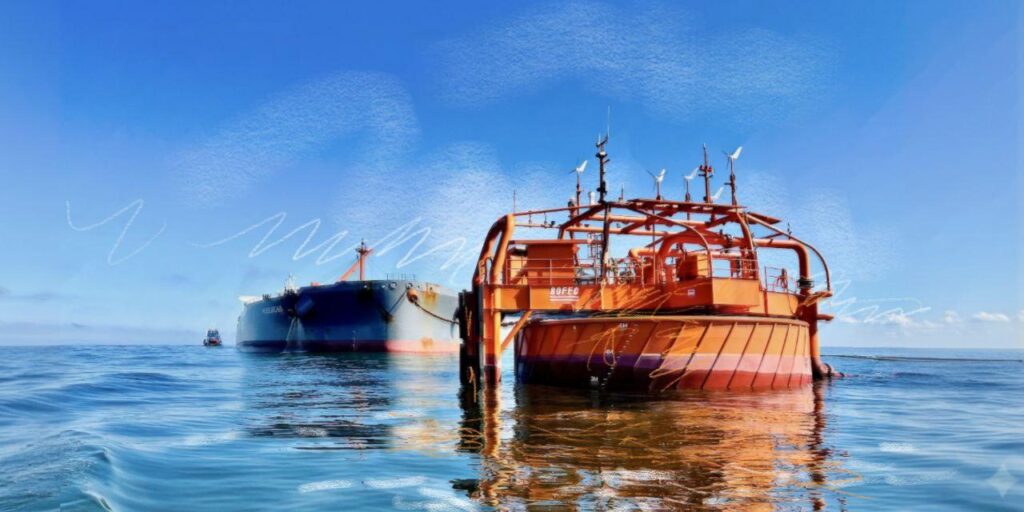
The attack by naval drones on the infrastructure of the Caspian Pipeline Consortium (CPC) on 29 November was an alarming signal, not only for Kazakhstan but for the global energy sector. The temporary suspension of shipments and the shift to operating through a single remote mooring facility struck at the heart of Kazakhstan’s economy. Around 80% of Kazakhstan’s oil exports – generating roughly 40% of its export revenues – pass through the CPC, which has handled over 60 million tons of crude annually in recent years.

The vulnerability of CPC infrastructure serves as a reminder of how tightly global energy security is intertwined with regional conflicts. The consortium not only carries Kazakh crude; it also plays a stabilizing role for several international stakeholders, including European refiners and multinational shareholders, such as Chevron and ExxonMobil. Any prolonged disruption would reverberate across global markets, raising transport premiums, tightening supplies in Southern Europe, and undermining confidence in the safety of trans-Eurasian energy routes. For a world already grappling with supply shocks, the Novorossiysk incident underscored how the effects from a single strike can ripple far beyond the immediate impact zone.

At the same time, the incident revealed a broader and more urgent issue. Military operations are not supposed to target civilian infrastructure, particularly when it belongs to neutral third parties uninvolved in the conflict. While international humanitarian law (IHL) explicitly prohibits attacks on such facilities unless they are being used for military purposes, the reality on the ground is far less clear-cut. In contemporary conflicts, the line between civilian and military use can blur quickly, creating space for competing interpretations and contested justifications.

The Legal Grey Zone of Modern Warfare

Although the legal framework is clear on paper, its practical application has become increasingly strained in recent conflicts. The increasing use of drones, long-range precision munitions, and cyber tools has blurred the distinction between civilian and military infrastructure and has outpaced the mechanisms designed to protect them. Energy pipelines, ports, and terminal facilities – which once lay far from the frontlines – can now be struck at minimal cost and with limited attribution. This technological shift has opened a grey zone that existing IHL was never designed to manage, heightening the urgency for clearer norms and enforcement tools. The real challenge lies not in the absence of legal norms but in the lack of mechanisms to enforce them, particularly in cases where neutral countries’ assets become collateral damage.

There is, therefore, an argument for the introduction of a new international legal framework – or supplementing existing provisions via a UN protocol – to safeguard critical infrastructure. This is especially relevant in an era of precision weapons and drone warfare, where pipelines, energy terminals, and logistics hubs increasingly fall within potential strike zones.

Yet the implementation of such a framework faces complications. Under existing IHL, dual-use infrastructure, such as pipelines that may carry resources for both civilian and military use, can be deemed legitimate military targets. Ukrainian officials have justified strikes on Russian energy and logistics facilities because they sustain Russia’s war effort, effectively treating them as dual-use targets. Kyiv insists that such actions are aimed at Russia, not at neutral third parties such as Kazakhstan. But who determines what constitutes dual use? Too often, it is left to the interpretation of the belligerent parties rather than an independent body or a UN-sanctioned legal process.

This underscores the case for a dedicated UN mechanism capable of rapidly investigating incidents, enforcing compliance, and holding violators accountable. Without such tools, even neutral states risk being drawn into conflicts beyond their control.

This challenge is not only legal, but also diplomatic. The CPC incident highlighted the weaknesses of current conflict-prevention frameworks. At a time of heightened global tensions, and as the U.S., under President Donald Trump, pursues renewed peace initiatives on Ukraine, there is an opportunity to explore alternative diplomatic formats.

Why Middle Powers Matter Now

Any renewed diplomatic architecture will, however, require a mediator that both Kyiv and Moscow perceive as sufficiently balanced. While neither side is currently inclined toward major concessions, both have shown an openness to intermediaries that can maintain dialogue channels without imposing political costs. Middle powers with regional credibility, such as Kazakhstan, are uniquely positioned here: they have the proximity to understand the stakes, yet enough distance to avoid being seen as partisan. This middle power diplomacy has become increasingly important as great power mediation has become more fragmented and inconsistent.

Kazakhstan, which has historically positioned itself as a platform for multilateral dialogue, through the Conference on Confidence-Building Measures in Asia, the Congress of Leaders of World and Traditional Religions, and the Astana Process on Syria, could take on a more proactive role in the Ukraine crisis under the auspices of the UN.

The principles of nonviolent communication (NVC), as articulated by Marshall Rosenberg and widely adopted in mediation, could underpin this approach. The dialogue could shift from blame to interests, moving beyond binary definitions of “aggressor” and “victim” to a focus on the unmet needs of both Kyiv and Moscow in areas such as national security, identity, and economic stability.

By fostering a “map of needs,” mediators could uncover shared ground for a durable peace, rather than pursuing a short-term truce. Kazakhstan, which maintains working relations with multiple global power centres and is widely viewed as relatively neutral, broadly fits the profile of a facilitator as defined by the Harvard Negotiation Project. Its Astana platform could apply key principles such as “separating the people from the problem,” which helps depersonalize political hostility and dismantle entrenched stereotypes.

The use of “objective criteria”, i.e., negotiating based on shared standards rather than unilateral demands, could further enhance neutrality. This would require the presence of actors, such as the UN, the U.S., and China, as well as an agreement by both Russia and Ukraine to refrain from provocative rhetoric.

A New Role for Kazakhstan

Given the protracted nature of the war in Ukraine, Kazakhstan could contribute to a micro-format of talks, drawing on its experience from the Syrian process and talks between Armenia and Azerbaijan in Almaty, to reduce the risk of escalation, protect civilian infrastructure, and promote confidence-building. Research on negotiation and conflict resolution, including work associated with the Harvard Negotiation Project, suggests that even modest, concrete steps can catalyze breakthroughs during periods of high tension.

These initiatives align with Kazakhstan’s identity as a middle power committed to diplomacy, international law, and new security instruments, particularly those that protect neutral states from external conflicts. In a world where the old rules are no longer effective, Kazakhstan may have a rare opportunity to help shape new ones.

“Winter Begins in Karakol”: Kyrgyzstan Launches Ski Season with Cultural Events

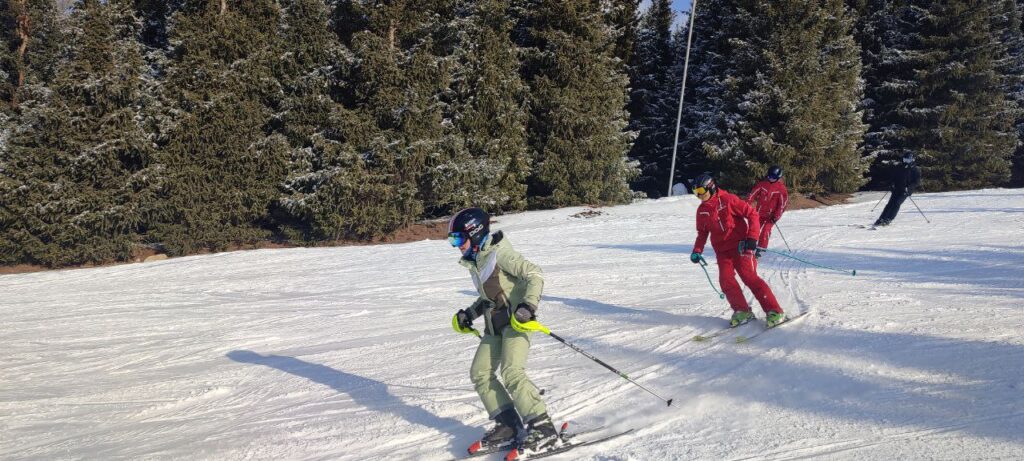
The winter tourist season has officially opened in Karakol, Kyrgyzstan, long considered one of Central Asia’s top destinations for active winter tourism. The city is traditionally the first in the country to open its ski slopes, and this year’s launch was not merely technical, but a full-scale event aimed at boosting both domestic and international tourism.

A festive program was held at the ski base, featuring music and dance performances, as well as the launch of the “Jaryk Fest” festival. Local artisans hosted master classes in felt-making, showcasing clothing and souvenir production. This crafts section played an important role in positioning the region as a cultural as well as an adventure destination.

@TCA

“Jaryk Fest is a celebration of light, snow, and vivid emotions. It’s timed to coincide with the opening of the winter season across Kyrgyzstan. We even have a slogan: ‘Winter begins in Karakol,’” said Ulukbek Almakebek, manager of the Karakol ski resort, in an interview with The Times of Central Asia.

According to the organizers, the resort continues to draw tourists from Russia and Kazakhstan, but recent years have seen a notable rise in visitors from Europe and Southeast Asia, a trend that Kyrgyzstan is actively encouraging by expanding its winter tourism offerings.

Skiers highlight Karakol’s unique terrain as one of its main attractions. Many of the trails pass through dense coniferous forests, creating picturesque and varied descents not found at other regional resorts.

Erdenet Kasymov, director of the Kyrgyzstan Tourism Department, noted that winter tourism is rapidly diversifying. In addition to traditional skiing and hot springs, European tourists are increasingly opting for mountain hiking and horseback riding.

@TCA

“Tourists from South Korea and India are particularly drawn to snowshoeing in deep snow. It’s a relatively new form of recreation, but one that’s quickly gaining popularity,” Kasymov said.

One emerging trend is winter yachting on Issyk-Kul Lake. Because the lake does not freeze in winter, it offers an extended season and opportunities for new types of recreation. Two modern yachts have already been acquired for the region, and work is ongoing to restore older vessels and build docks and piers.

This approach aligns with a vision outlined by President Sadyr Japarov, a native of the Issyk-Kul region, who has previously called for moving beyond the traditional separation of “winter” and “summer” tourism. According to Japarov, Kyrgyzstan is building a model of year-round tourism designed to take advantage of the country’s diverse natural offerings.

Kazakhstan Projects Strong GDP Growth as Economy Nears 300 Billion Dollars in 2025

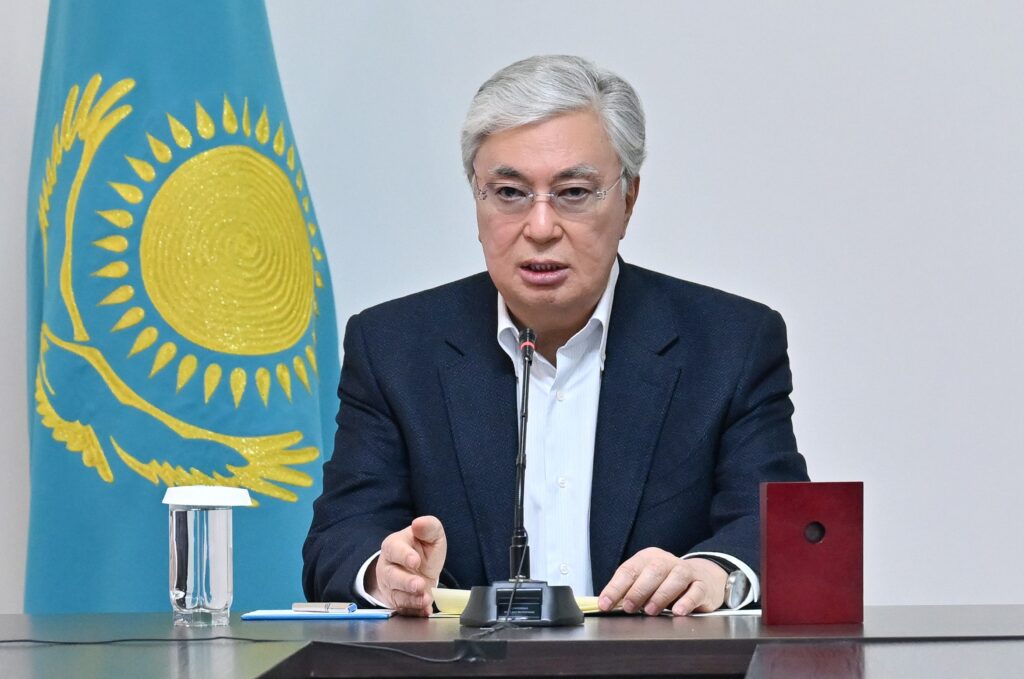
Kazakhstan’s economy is entering a new phase of growth. By the end of 2025, the country’s gross domestic product is projected to exceed $300 billion for the first time, President Kassym-Jomart Tokayev announced at a national award ceremony for the Altyn Sapa, Paryz, and Best Product of Kazakhstan prizes.

Over the past decade, Kazakhstan’s GDP has shown consistent growth in absolute terms, with the exception of the pandemic year of 2020, when the economy contracted to $171.1 billion. Since then, the country has reached new historical highs each year, from $197.1 billion in 2021 to $288.41 billion in 2024. In 2025, growth is expected to reach a record level.The president noted that, over the past five years, growth in the real sector has become noticeably more balanced. Gross value added in the manufacturing industry increased by 25 percent, outpacing growth in the extractive sector.

“Economic growth is expected to exceed 6% this year,” Tokayev said. “Moreover, GDP is projected to exceed $300 billion for the first time”

The president highlighted that, over the past five years, growth in the real sector has become noticeably more balanced. Gross value added in the manufacturing industry increased by 25%, outpacing the growth of the extractive sector.

Investments in fixed capital grew by 70% over the same period, and labor productivity rose by 40%. As a result, non-resource exports doubled, the number of exporters tripled, and the geography of supply expanded to 140 countries.

According to Tokayev, small and medium-sized enterprises (SMEs) now account for 40% of GDP and remain one of the most dynamic segments of the economy.

“Over the past five years, the number of SMEs has increased by 1.5 times, and their output by 2.5 times. Today, 4.5 million people work in the business sector, almost half of the country’s employed population,” the president said.

Tokayev also placed particular emphasis on the finalization of certain provisions in the new Tax Code, which is set to take effect in 2026.

The president acknowledged that he had received a large number of appeals from entrepreneurs and instructed the government to carefully review the most problematic provisions.

“It is important to understand that the sustainable development of entrepreneurship is based on the fulfillment of mutual obligations: the state creates the climate, and businesses pay taxes. The government must find a reasonable balance, there is no other option,” he stated.

The president also called for continued development of the country’s digital business ecosystem to enhance transparency and reduce bureaucratic hurdles.

Kazakhstan plans to significantly increase investment in its economy over the next five years, with the goal of nearly tripling its volume by 2029.

Turkic Investment Fund to Launch Operations in Early 2026

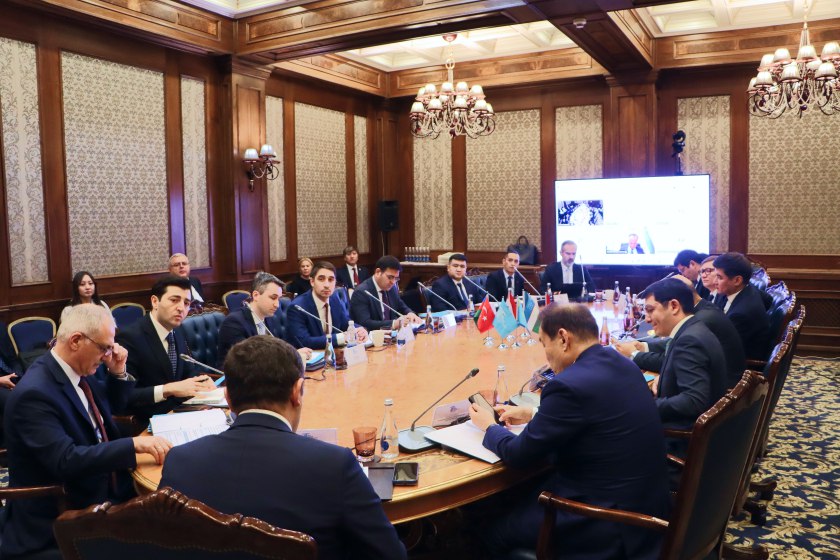
At a meeting held in Bishkek on December 5, the Board of Governors of the Turkic Investment Fund (TIF) announced that the Fund will begin its operational activities in the first quarter of 2026.

With an initial authorized capital of 500 million dollars and a potential increase to 1.5 billion dollars, the TIF is the first dedicated financial institution jointly established by the Turkic states. Its mission is to enhance economic cooperation, boost intra-regional trade, and support sustainable development across the Turkic world. Headquartered in Istanbul, the Fund will finance major joint projects among member states of the Organization of Turkic States (OTS).

The OTS, founded in 2009, includes Azerbaijan, Kazakhstan, Kyrgyzstan, Turkey, Uzbekistan, and Turkmenistan. Hungary and the Turkish Republic of Northern Cyprus participate as observer states.

The TIF was officially established during an extraordinary OTS summit in Ankara in March 2023, with Azerbaijan, Kazakhstan, Kyrgyzstan, Turkey, and Uzbekistan as founding members. Hungary joined in June 2024, while Turkmenistan maintains observer status.

According to the Board of Governors, the institutional infrastructure required for TIF operations was largely completed in 2025, and preparatory work on a pipeline of investment projects is currently underway.

The Board emphasized that the decision to initiate operations reflects growing expectations among member states for the Fund to begin allocating resources and advancing strategic initiatives.

During the Bishkek meeting, Uzbekistan’s representative, Laziz Kudratov, Minister of Investment, Industry and Trade, was elected Chairman of the TIF Board of Governors.

The Fund will pursue its mandate by offering preferential loans, co-financing projects alongside international financial institutions, and attracting private investment into key sectors of the region’s economies.

Following the inaugural meeting of the TIF Board in Istanbul in May 2024, the Turkish Ministry of Finance projected that the combined economic output of the Turkic states would reach $1.9 trillion by the end of 2024, with a population of approximately 178 million.