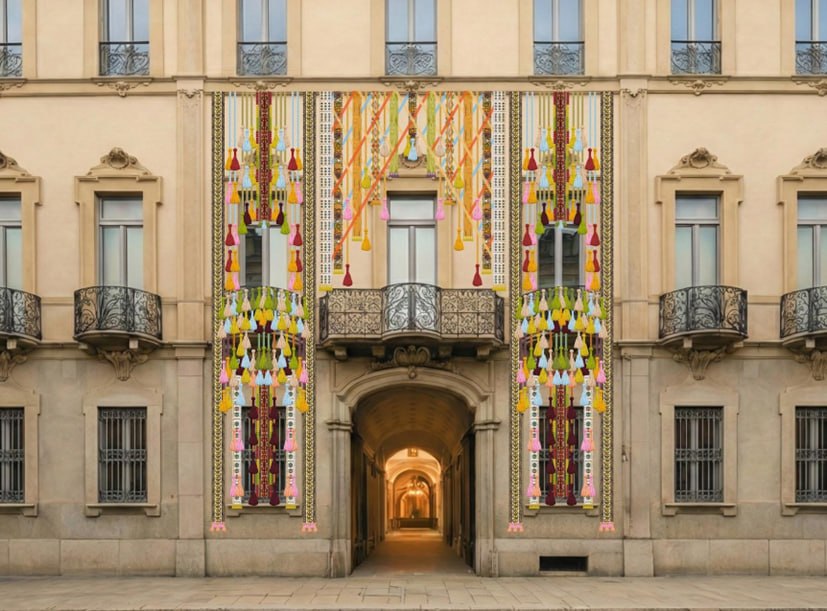
From April 20 to 26, 2026, Uzbekistan will present one of its most ambitious cultural projects to date at the Milan Design Week. Titled When Apricots Blossom, the exhibition will take place at Palazzo Citterio in Milan’s Brera district, transforming the historic space into a multi-layered exploration of craft, memory, and environmental change.
Organized by the Uzbekistan Art and Culture Development Foundation, the exhibition is commissioned by its chairperson, Gayane Umerova, and curated by architect Kulapat Yantrasast, founder of WHY Architecture. Bringing together twelve international designers and Uzbek artisans, the project explores how traditional knowledge can help societies respond to environmental crises.
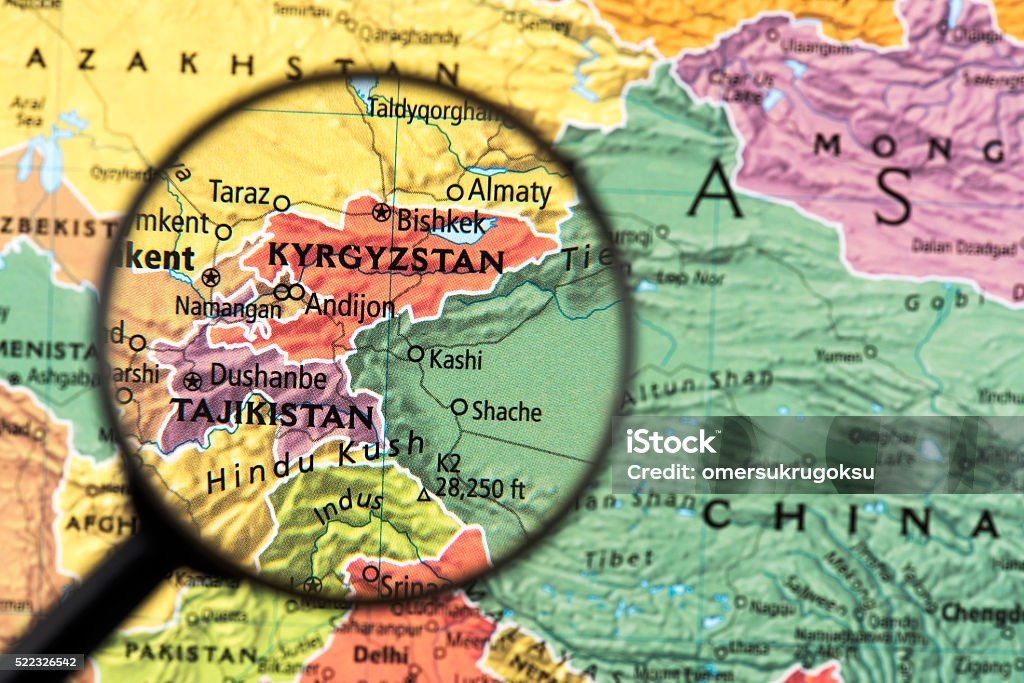
At its core lies Karakalpakstan, an autonomous region in northwestern Uzbekistan that has experienced one of the world’s most severe ecological disasters.
A Story Rooted in Loss and Resilience
The exhibition takes its name from a poem by Hamid Olimjon, written in the 1930s as a reflection on hope and renewal. Today, that symbolism carries renewed relevance.
For decades, the Aral Sea has been shrinking. Once one of the largest inland bodies of water in the world, it has lost more than 90% of its volume since the 1960s, largely due to irrigation policies that diverted its feeder rivers. The result is a transformed landscape of desert, salt plains, and fragmented ecosystems, with communities forced to adapt to rapid environmental change.
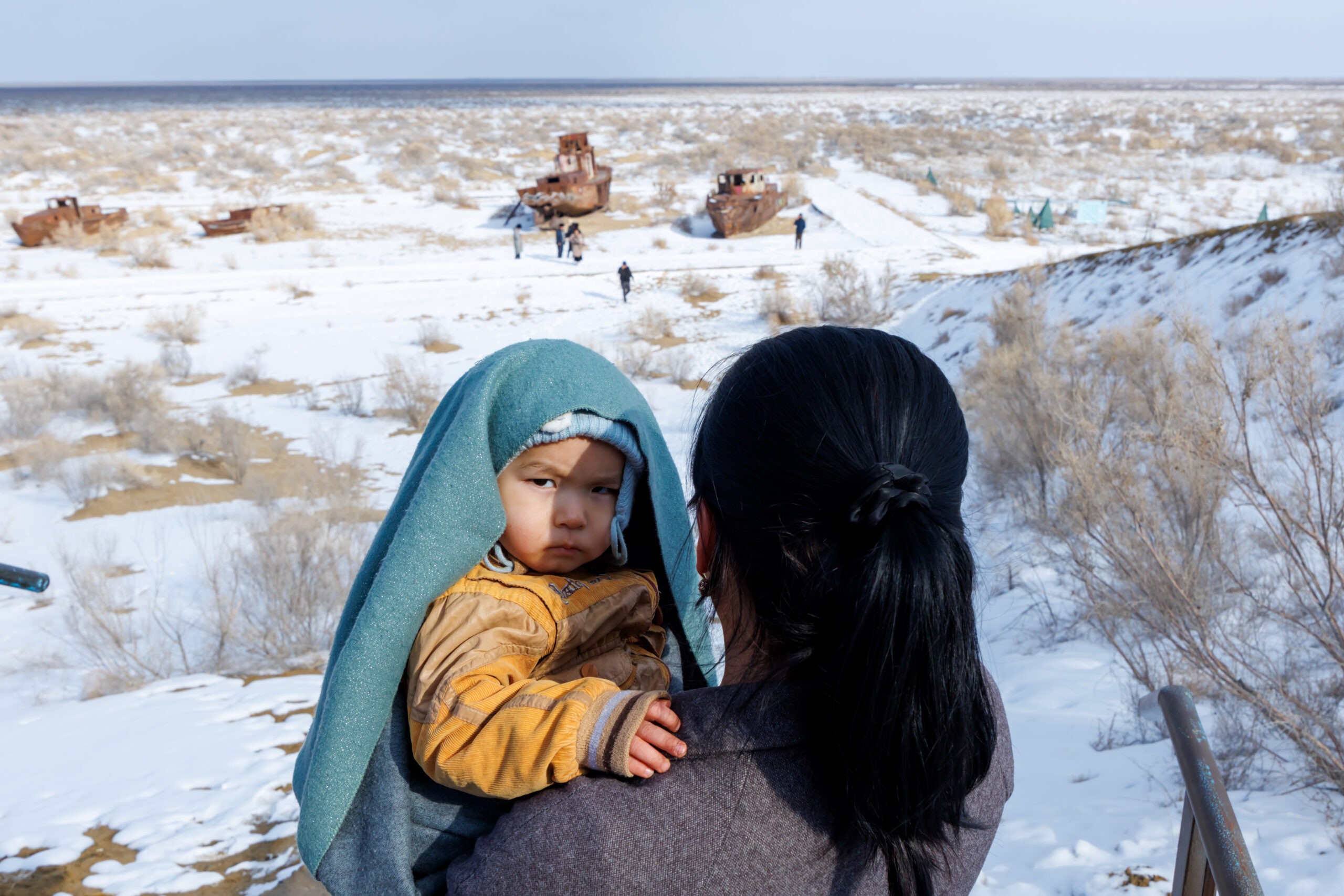
Moynaq. Aral Culture Summit 2025; image courtesy of Iwan Baan and ACDF
Rather than focusing solely on loss, When Apricots Blossom highlights how communities continue to live, create, and adapt.
Visitors enter through a façade transformed by a large textile installation by British designer Bethan Laura Wood, created in collaboration with Uzbek artisans. Drawing on decorative elements used in nomadic yurts, tassels, ribbons, and woven patterns, the work creates a vivid and tactile threshold.
Inside the courtyard, an installation of apricot trees by Uzbek floral artist Ruben Saakyan sets the tone. The apricot, both a symbol of hospitality and a key Uzbek export, also reflects resilience, continuing to grow even in the harsh conditions of the Aral Sea region.
Further inside, a “deconstructed yurt” designed by WHY Architecture serves as a central gathering space, reflecting the adaptability of nomadic shelter traditions.
Craft as Knowledge, Not Decoration
For Umerova, this distinction is central.
“Craft in Karakalpakstan is more than tradition, it is a system of knowledge,” she told The Times of Central Asia. “It has evolved over centuries in close relationship with the land.”
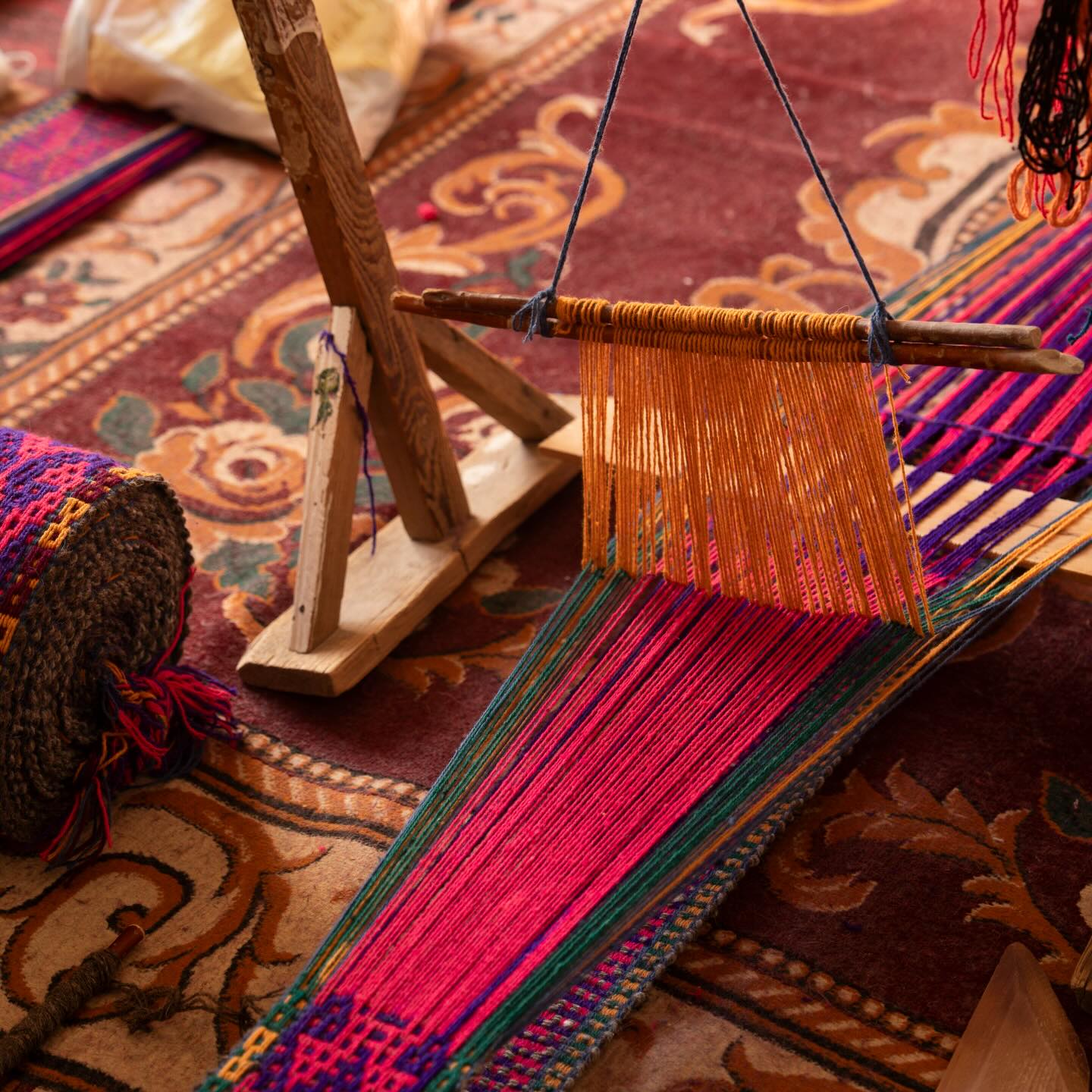
Handwoven textiles on a traditional loom at “When Apricots Blossom”; image: ACDF
Umerova notes that materials such as wood, silk, felt, ceramic, and reed reflect a deep understanding of local ecosystems. These practices are passed down through generations, carrying both technical skills and cultural knowledge.
In the context of the Aral Sea crisis, this knowledge takes on renewed importance.
“The communities there have long developed ways of adapting to changing environments,” she told TCA. “Their craft traditions embody this resilience.”
For Umerova, sustainability is as much cultural as it is technological.
“Sustainability is not only a technological question but also a cultural one, about memory, responsibility, and continuity.”
Throughout the exhibition, objects are presented not merely as artifacts, but as expressions shaped by necessity, environment, and history.
Beyond the Exhibition: A Long-Term Vision
When Apricots Blossom forms part of a broader strategy aimed at supporting long-term regeneration in the Aral Sea region.
Alongside the installations, the exhibition introduces initiatives such as the Aral School and the Aral Culture Summit, as well as development projects in Nukus.
“Environmental recovery is essential, but cultural and educational investment is equally important,” Umerova said.
The Aral School is envisioned as a platform for young designers, artists, and researchers to explore new approaches to environmental and cultural challenges.
“The aim is not only to preserve traditions, but to reinterpret them,” she said.
Meanwhile, the Aral Culture Summit brings together designers, architects, scientists, and policymakers to develop integrated solutions.
“This transdisciplinary approach is essential. It allows us to connect culture with science, data, and policy.”
The exhibition will also present an architectural model for a redevelopment project in Nukus, where an old hangar is being transformed into a community and cultural center.
Bringing the Aral Sea to the World
Presenting the exhibition at Milan Design Week is a deliberate choice aimed at drawing global attention to the region.
“The Aral Sea is a cautionary tale,” Umerova said. “But it can also offer a blueprint.”
By placing Uzbek artisans alongside international designers, the exhibition highlights both the global relevance of traditional knowledge and the environmental realities that shape it.
Designing Everyday Experience
Yantrasast, the founder of WHY Architecture, approached the project by focusing on the fundamentals of daily life.
“The exhibition centers on shelter, sustenance, and clothing,” he said. “These are not just necessities, they are the essential arts of living.”
By grounding the exhibition in familiar elements, food, textiles, and structures, the project makes complex environmental narratives more accessible.
“Resilience is not abstract,” he added. “It is embedded in everyday life.”
He also emphasized the importance of reframing perceptions of the region.
“Many people know the Aral Sea only as an ecological disaster. But the communities there demonstrate remarkable ingenuity.”
Collaboration Across Cultures
A central feature of the exhibition is collaboration between international designers and Uzbek artisans.
Twelve designers were invited to create bread trays and stamps; objects rooted in everyday Uzbek culture. Bread, or non, carries deep symbolic meaning, representing hospitality and continuity.
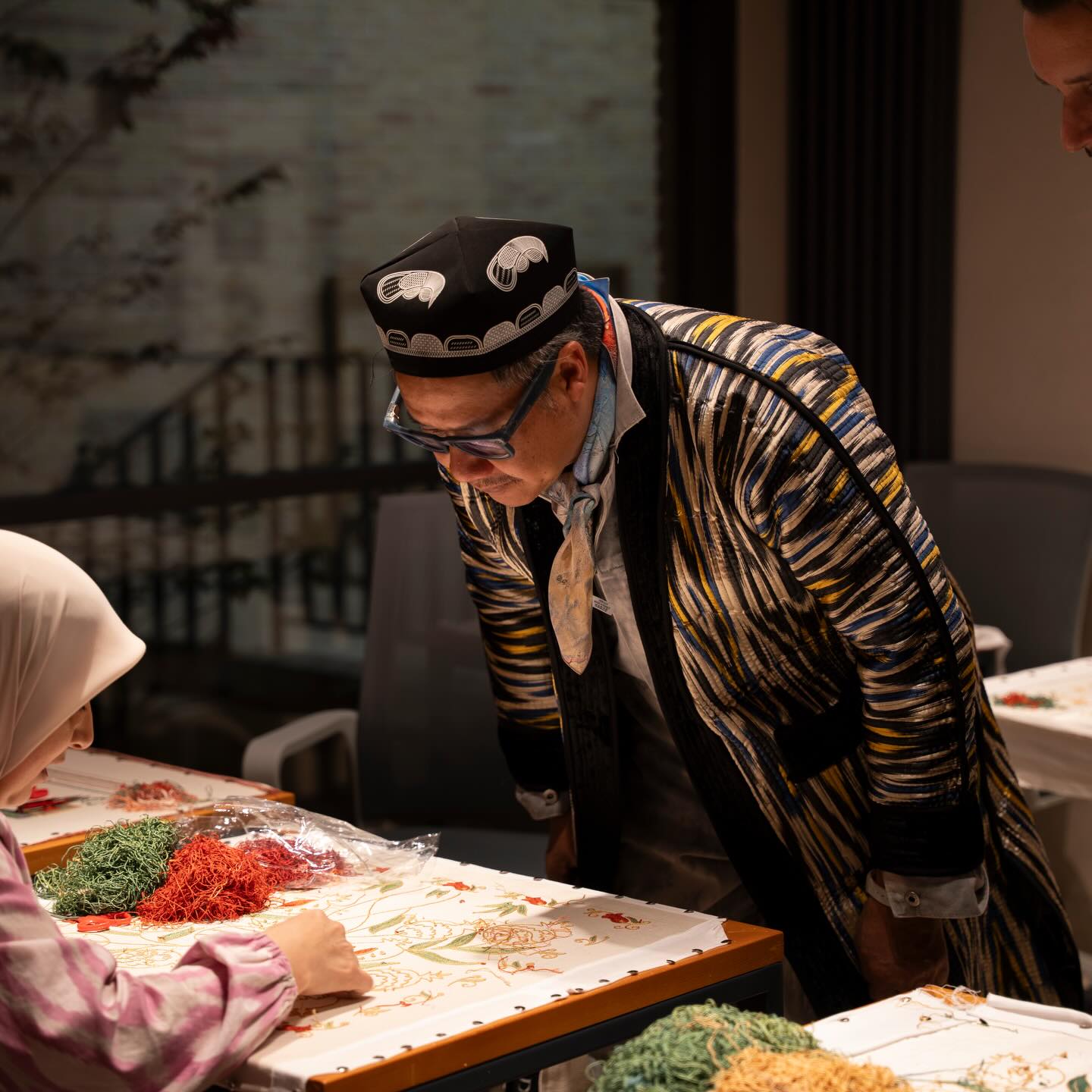
An artisan demonstrates embroidery techniques; image: ACDF
Dutch designer Sanne Visser described the process as one of constant exchange.
“It’s a dialogue,” she said. “The materials guide the design, but so does the artisan’s expertise.”
Environmental realities also shaped the work.
“There are limited resources and a rapidly changing climate,” she noted. “This affects how crafts are practiced.”
For example, traditional materials used in yurt-making are becoming less available, prompting artisans to adapt with alternatives.
“These changes show how traditions evolve,” Visser said.
Rethinking Karakalpakstan
Uzbek architect Bobir Klichev said the project challenged common perceptions of Karakalpakstan.
“It is often seen as a desert with a vanished sea,” he said.
Closer engagement revealed a more complex landscape, including canals, agricultural areas, and ecological diversity.
“This diversity became central to my work,” Klichev said.
A Different Way of Looking
At Palazzo Citterio, the exhibition is designed to encourage close attention to materials and textures. In the main gallery, an installation of reed-like structures evokes the Aral Sea landscape. A specially commissioned film, Where The Water Ends, explores how communities preserve memory amid environmental change.
Together, these elements create a narrative that moves between past, present, and future.
More Than an Exhibition
Ultimately, When Apricots Blossom is not only about design, but about how people respond to change.
It suggests that solutions to global challenges may lie not only in new technologies, but also in knowledge embedded in everyday practices.
By bringing these stories to Milan, Uzbekistan is not only presenting its culture; it is also inviting a broader reconsideration of how resilience and knowledge are understood.
As Umerova put it, the goal is to connect past and future through practice, demonstrating that even in the face of loss, creativity continues to endure.