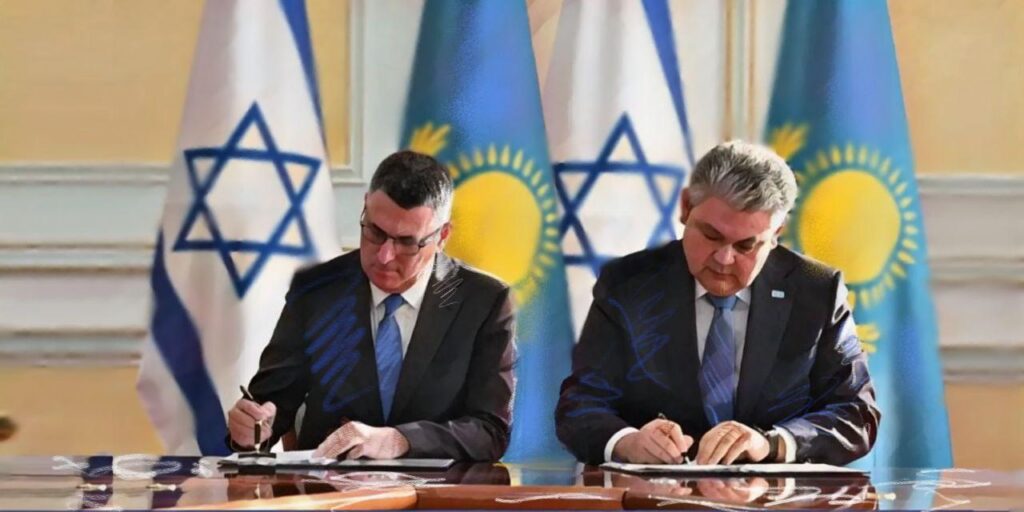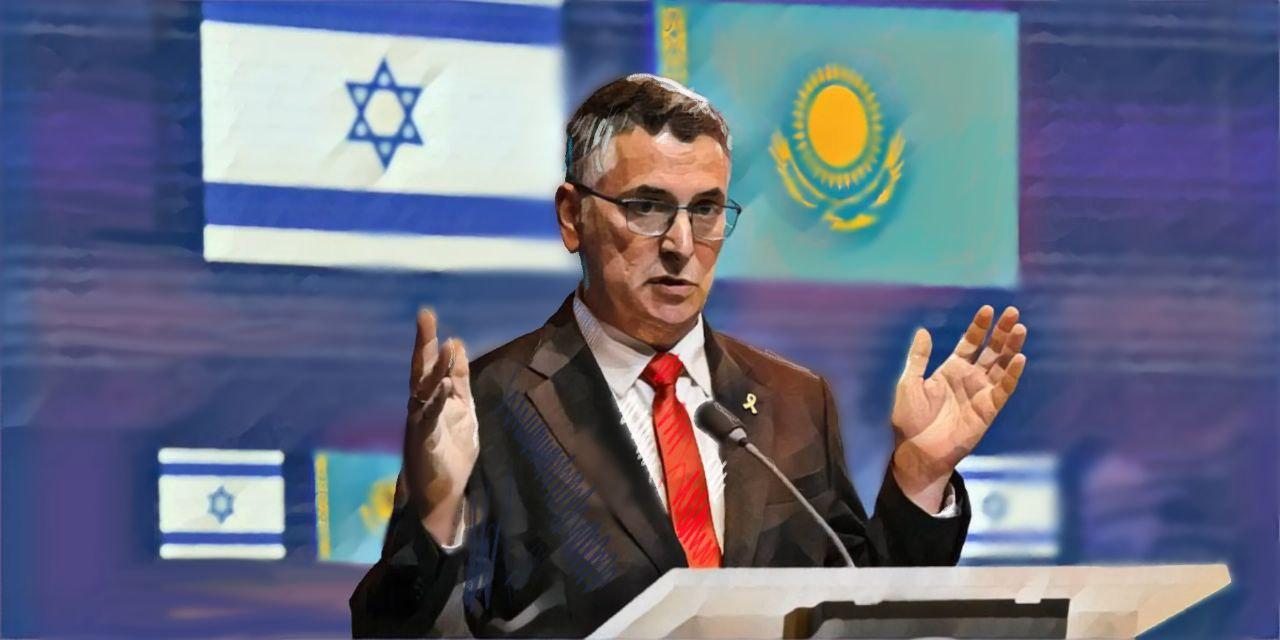
Kazakh President Kassym-Jomart Tokayev met Israeli Foreign Minister Gideon Sa’ar in Astana on January 27, marking the first official visit by an Israeli foreign minister to Kazakhstan in almost 16 years, and underscoring Astana’s stated interest in deepening economic and technological cooperation with Israel as it continues to recalibrate its foreign policy.
According to the Kazakh presidential administration, the talks focused on expanding bilateral relations across trade, investment, science, and technology, with both sides emphasizing practical areas of cooperation. The visit came as Kazakhstan seeks to diversify its economy beyond hydrocarbons and strengthen partnerships with countries at the forefront of applied innovation.
Tokayev said the visit demonstrated Israel’s commitment to strengthening comprehensive cooperation with Kazakhstan, while discussions highlighted concrete sectors for collaboration, including artificial intelligence, agrotechnology, water resource management, and digital governance. These areas align closely with Kazakhstan’s national development priorities, particularly its focus on digital transformation, public-sector reform, and productivity-driven growth.
Economic cooperation featured prominently throughout the visit. A Kazakh-Israeli business forum was held alongside the high-level talks, aimed at translating diplomatic engagement into commercial outcomes. Kazakhstan’s Foreign Ministry said the forum is expected to support new investment partnerships and initiate joint projects in high-value sectors, with a focus on technology transfer and localized projects.
Kazakh officials said bilateral trade reached $162.4 million between January and November 2025, with exports totaling $92.1 million and imports $70.3 million. While modest in absolute terms, the figures were cited as evidence of untapped potential, particularly in non-resource sectors where Israeli companies have global expertise.
As part of the discussions, Kazakhstan invited Israeli firms to participate in national digital transformation initiatives, including projects related to e-government, data-driven public services, and digital infrastructure. Officials cited Kazakhstan’s recent progress in digital governance and public-sector innovation as a foundation for expanded cooperation.
Kazakhstan and Israel established diplomatic relations in 1992, shortly after Kazakhstan gained independence. Israel opened its embassy in Almaty in 1996, while Kazakhstan inaugurated its embassy in Tel Aviv in 2000, laying the groundwork for steady but largely low-profile bilateral ties.
Political relations have traditionally been pragmatic, with cooperation focused on trade, agriculture, healthcare, and education rather than formal alliances. Bilateral trade has remained modest, reflecting limited commercial engagement beyond specific sectors such as agrotechnology, pharmaceuticals, and water management.
In recent years, Astana has shown growing interest in Israel’s applied innovation ecosystem, particularly in areas aligned with Kazakhstan’s domestic reform agenda, including digital governance, artificial intelligence, and public-sector modernization. Israeli firms have previously participated in pilot projects and advisory initiatives in Kazakhstan, though large-scale joint ventures have been limited.
Kazakhstan has also positioned itself as a neutral diplomatic actor in the Middle East, maintaining relations with Israel while emphasizing interfaith dialogue and mediation.
Beyond economic ties, the talks also addressed regional and international issues, including developments in the Middle East and Kazakhstan’s diplomatic positioning in support of the objectives underpinning the Abraham Accords framework. Sa’ar welcomed Kazakhstan’s engagement, describing it as a constructive contribution to dialogue and cooperation between Israel and Muslim-majority countries.
Sa’ar also held separate talks with Kazakh Deputy Prime Minister and Foreign Minister Murat Nurtleu as part of the 12th round of political consultations between the two countries. According to Israel’s Foreign Ministry, the discussions covered bilateral relations, regional security, and further steps to expand intergovernmental cooperation.
The timing of the visit coincided with International Holocaust Remembrance Day. The two sides discussed cooperation on Holocaust remembrance and education, with reference to the work of the International Holocaust Remembrance Alliance (IHRA), according to official statements. At a Holocaust Remembrance Day event, Sa’ar stated that “antisemitism … is once again showing its ugly face,” adding that “we have sworn — never again! This oath will not be broken.”
In a message marking the day, Tokayev wrote that, “Firmly condemning any manifestations of ethnic and religious hatred and violence, our country supports the collective efforts of the international community to prevent a repetition of such crimes against humanity. Kazakhstan became home to many Jews evacuated during the Holocaust, and today the Jewish community is an integral part of our society.”
Sa’ar also acknowledged Kazakhstan’s humanitarian legacy during World War II and praised its emphasis on interfaith dialogue and tolerance, including its role in hosting the Congress of Leaders of World and Traditional Religions.
Kazakh officials described the visit as supporting longer-term efforts to expand the country’s role in regional connectivity, linking Central Asia with the Middle East and broader Eurasian markets. For Israel, Kazakhstan represents the region’s largest economy and a strategic entry point into Central Asian and Eurasian value chains.
While no major agreements were announced, both sides described the meetings as laying the groundwork for deeper cooperation, particularly in technology-driven sectors where joint projects and third-country exports are seen as longer-term goals.
Officials said follow-up work is expected through existing bilateral mechanisms, with further consultations planned to translate political commitments into concrete economic and technological outcomes.