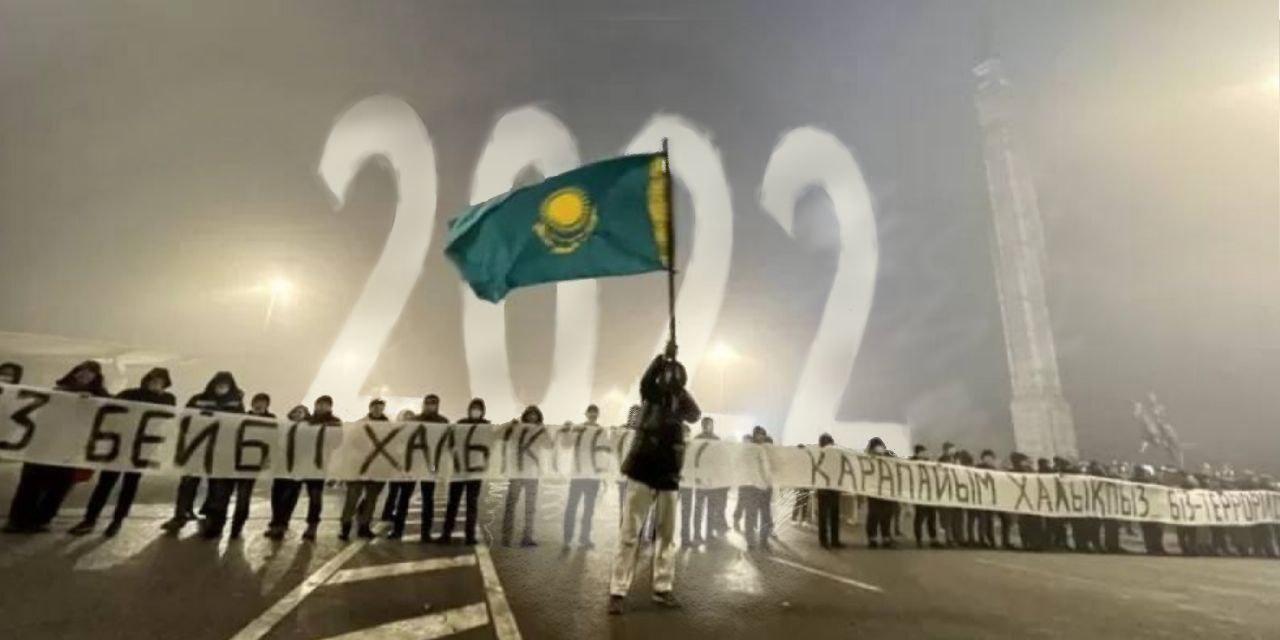
The upcoming anniversary of the events that started on 2 January 2022 in Kazakhstan invites a measured reflection rather than simple retrospection. The protests and subsequent violence marked a decisive turning point in the country’s recent history, exposing deep structural challenges and forcing a reassessment of the relationship between state and society. More than merely presenting an occasion to recall a time of crisis, this anniversary should also serve as an opportunity to assess how Kazakhstan has since evolved — specifically, whether the lessons of that rupture have been translated into durable political reforms and have created a more resilient path forward.
Remembering the onset and evolution of the events
The January 2022 protests were triggered by a sudden surge in liquefied petroleum gas prices, a critical cost for many households, particularly in western regions of Kazakhstan. The immediate economic shock quickly gave rise to broader demands rooted in long-standing grievances over rising living costs, inequality, corruption, and the concentration of political power.
The violent escalation also unfolded against resistance from some political elites to President Kassym-Jomart Tokayev’s emerging reform agenda. As Svante E. Cornell of the Washington D.C.-based Central Asia Caucasus Institute notes, efforts to curb entrenched patronage networks and rebalance authority had already generated opposition within the ruling elite, and the January crisis exposed these internal fractures. This context helps explain why the unrest moved beyond socioeconomic protests to a direct challenge to constitutional order.
Initially peaceful, the demonstrations deteriorated as state authority weakened and organized groups linked to the old political elite exploited the unrest, transforming socioeconomic protest into coordinated violence. While the relative roles of spontaneous escalation, elite manipulation, and institutional failure remain contested, armories were raided, government buildings set ablaze, and security forces attacked in a coordinated manner, most notably in Almaty. Official figures put the death toll at at least 238, including 19 law-enforcement officers, marking a clear rupture between legitimate protest and armed unrest driven by criminal networks, intra-elite contestation, and failures of command and control. Had the violent seizure of power by non-constitutional means succeeded, it would likely have entrenched authority through force, foreclosed institutional reform, and plunged Kazakhstan into prolonged instability and isolation.
Investigations followed the January 2022 violence, but key aspects—including the sequence of events and responsibility for deaths of peaceful civilians—have not been fully clarified in a comprehensive public account. While the state restored order and proceeded with reforms, dissatisfaction persists, particularly from some of the families of the deceased.
Subsequent reforms and policy shifts
After January 2022, President Tokayev moved quickly to stabilize the country and initiate a series of political and constitutional reforms. The unrest exposed longstanding structural imbalances in governance and state–society relations, reinforcing the rationale for a reform agenda centered on a “Fair and Just Kazakhstan” and a state more responsive to citizens’ needs. Significant constitutional changes adopted by referendum in June of 2022 were a key part of this process.
These reforms reduced the concentration of presidential power, strengthened parliament, limited presidential terms, eased party registration, expanded the space for independent candidates, and barred close relatives of the President from obtaining senior state roles. Decentralization measures and expanded local elections further broadened formal political participation. Taken together, these changes altered the legal framework governing political authority and were intended to reduce reliance on entrenched patronage networks by formalizing rules of governance.
The political impact of these changes has unfolded more gradually. While the legal framework shifted decisively, entrenched practices and institutional habits have been slower to adjust. Executive authority, though reduced compared to the pre-2022 period, remains a central feature of day-to-day governance, alongside gradual adjustments in legislative and political practice. The durability of reform will depend less on formal statutes than on their consistent application across electoral cycles, and outcomes continue to hinge on implementation capacity over time.
In parallel, Tokayev paired political reform with economic and social measures aimed at reinforcing state capacity and addressing grievances exposed by the crisis. Social spending was expanded, unpopular pricing mechanisms were reversed, and an asset recovery campaign was launched to identify and recover assets linked to corruption among senior officials. Recovered funds were then directed toward public projects such as schools, hospitals, and regional infrastructure, linking redistribution to visible state action.
At the same time, leading business figures have emphasized that recent reforms have improved the policy environment for private enterprise, aligning commercial interests with the government’s economic reform trajectory.
The state’s structural vulnerabilities revealed in January 2022, particularly in the energy sector, were also addressed through infrastructure upgrades and plans to diversify the energy mix, including nuclear energy development. These initiatives were intended to reduce exposure to supply shocks and reinforce long-term economic stability.
Taken together, these reforms sought not only to restore order but to strengthen institutional capacity and place Kazakhstan on a more balanced and durable trajectory.
Persistent challenges
Despite reforms introduced since January 2022, the translation of legal change into everyday governance has been uneven. While institutional frameworks have shifted, implementation—particularly at the local level—has varied, reflecting differences in administrative capacity and coordination.
Kazakh political commentator Janibek Suleev told The Times of Central Asia that “the events of January 2022 became a turning point for a new phase in public expectations in Kazakhstan,” while noting that the pace of change has been slower than many initially hoped.
On the foreign stage, paramount for Kazakhstan’s sovereignty and economic security, Suleev says that “Kazakhstan’s external position remains stable,” where “President Kassym-Jomart Tokayev, who has considerable diplomatic experience, has managed to strengthen the country’s international image and maintain balance amid global turbulence. Kazakhstan is increasingly present at key international forums and is perceived as a predictable partner.”
Suleev adds that the main challenge ahead is converting this external credibility into tangible domestic results, particularly by easing inflationary pressures, supporting the middle class, and ensuring that reforms deliver visible benefits across society.
Indeed, states undergoing elite restructuring and administrative reform often experience extended lags between legal redesign and practical outcomes, especially where regional inequality places uneven demands on governance capacity. In Kazakhstan, these structural constraints continue to shape how reforms are implemented and experienced across the country.
External assessments add another layer of pressure. Human Rights Watch continues to criticize restrictions on political freedoms and media across Central Asia, as well as in Russia and China, and Kazakhstan is not exempt from this judgment. Some of these critiques predate January 2022, while others point to unresolved constraints that reforms have yet to address fully, highlighting the persistence of limits within the political operating environment.
Economic capacity underpins progress across all reform areas. The war between Russia and Ukraine has strained Kazakhstan’s economy through disrupted oil exports, supply-chain shocks, and inflationary spillovers, narrowing fiscal space at a time when reform implementation requires sustained resources. In response, diversification efforts have expanded toward critical minerals, transport and logistics, and the digital economy, though these initiatives will take time to generate durable growth and fiscal relief.
A Measured but Positive Trajectory
The outlook for Kazakhstan after January 2022 compares favorably with most post-Soviet states and structurally similar upper-middle-income economies, though important institutional constraints remain. Under President Tokayev, post-crisis reforms have aimed to recalibrate the balance of power, constrain the influence of the country’s entrenched patronage networks, and strengthen more rules-based governance. While implementation remains uneven, the direction marks a clear departure from the pre-January 2022 political equilibrium.
Kazakhstan’s strong regional position reinforces this assessment. Within Central Asia, it continues to lead on indicators critical to long-term state performance, including fiscal capacity, wages and pensions, access to healthcare, education, utilities, energy security, and the size of the formal labor market. More developed institutions and advanced digital service platforms further support consistent policy delivery relative to regional peers.
Some constraints persist, however. Political pluralism remains limited, implementation varies across regions, and external pressures—particularly economic spillovers from the Russia-Ukraine war—will continue to shape outcomes. Even so, to date, compared with its peers, Kazakhstan has demonstrated a stronger ability to absorb shocks, sustain reform momentum, and translate post-January 2022 stability into durable institutional development.
Ultimately, the significance of Kazakhstan’s trajectory will be measured less by institutional design than by outcomes. Reform matters insofar as it produces more predictable governance, greater economic security, and tangible improvements in daily life. Even as progress remains uneven, the combination of reform momentum and state capacity has the potential, over time, to translate political stability into a better quality of life for Kazakhstan’s citizens. Four years after January 2022, the test lies not in reform, but in the institutionalization of stability.