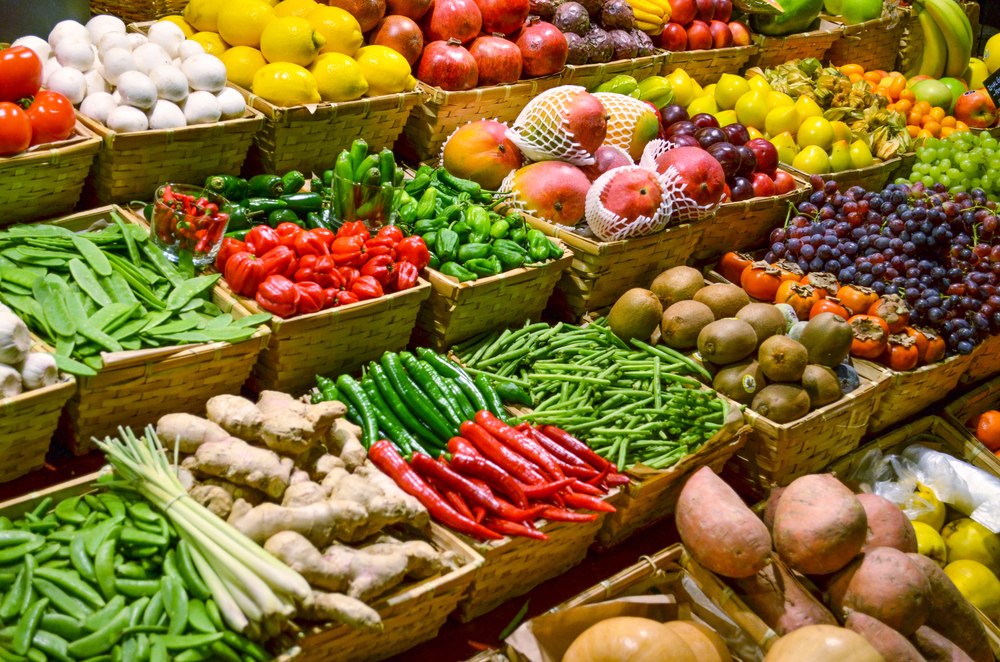
BISHKEK (TCA) — Favorable weather conditions led to a good harvest of cereals and vegetables this year in Kyrgyzstan.
Sugar
Due to the increased area under sugar beet and its bountiful yields, sugar imports will be reduced this year, the Economy Ministry of Kyrgyzstan said. More than 1.3 thousand hectares were planted with sugar beet this year, which is 6.5 thousand hectares more than in 2015. Besides the northern Chui province, sugar beet was planted in the western Talas province on 499 hectares.
Domestic producers do not meet the needs of the population in sugar, and the country imports about 82% of sugar consumed annually. In 2015, the Kaindy-Kant JSC (the only plant for sugar production in the country) produced 24.1 thousand tons of sugar, 20% of the country’s demand.
In the first 10 months of 2016, Kaindy-Kant produced 44.9 thousand tons of sugar, including 32.1 thousand tons from sugar cane and 12.8 thousand tons from sugar beet.
However, the good harvest brought trouble to Kaindy-Kant, which is now exporting beet to Kazakhstan at a loss because the plant cannot process all of the harvested beets. This year, about 600 thousand tons were harvested (threefold more than last year) while the plant can process 450 thousand tons only.
The farmers did not suffer, since they signed contracts with the plant in the spring and the plant has to buy the entire beet production.
The Government plans to increase sugar production and have sugar beet sown on 17,000 hectares next year. Consequently, an additional sugar-beet processing capacity is needed. The Russian-Kyrgyz Development Fund has supported two sugar plants in the Chui province — Koshoy JSC and Kaindy-Kant — by investing $15.5 million.
It is planned to meet at least half of the country’s need for sugar by 2018. According to experts, it is necessary to harvest 1 million tons to meet the goal, which is quite feasible.
According to farmers, the biggest problem is a lack of equipment for the cultivation and harvesting and a lack of good agronomists. Most farmers do not know the technology of cultivation and soil tillage and lose up to 25% of profits annually.
Honey
Kyrgyzstan exported 177.5 tons of honey in the first nine months of 2016, mainly to China. But Kyrgyzstan is also focused on the Middle East markets. Kyrgyzstan has exported 86.7 tons of honey to China, 40.9 tons to Saudi Arabia, 15.7 tons to the United Arab Emirates, 10.3 tons to Malaysia, 4.6 tons to Japan and 4.5 tons to South Korea.
Chinese importers prefer to buy high-quality Kyrgyz honey because it was produced in pure nature with alpine herbs.
At the SCO summit in China in 2017, presidents of the SCO member states will be presented with Kyrgyz honey, the Kyrgyz government said. This will be a good promotion for this product.
According to local farmers, it is now difficult to export products to China, because there is no laboratory to test honey and they have to go to Almaty, Kazakhstan.
China plans to build a veterinary laboratory in Kyrgyzstan that will allow the country to export products not only to the Eurasian Economic Union member countries but also to China.
Kyrgyzstan is now on the list of states that can export honey to the European Union, said the Business Association of Young Entrepreneurs of Kyrgyzstan. Earlier this year, Kyrgyzstan got a status under the EU Generalized System of Preferences (GSP+) which allows local exporters to import more than 6,000 kinds of products zero-rated. Previously, exporters from Kyrgyzstan had to pay 14.6% customs duties for the export of agricultural products.
Kyrgyzstan is the only country in Central Asia to receive this status.
Importers from the Netherlands now buy nuts and dried apricots in Kyrgyzstan as raw material and then process and sell them in the EU market.
Therefore, Kyrgyzstan should produce a final product. Now local entrepreneurs are little aware of the GSP+ scheme, but if they sell at least 20 kinds of products from the 6,000, it would be a good influx of foreign cash to the country.