Researchers at Al-Farabi Kazakh National University have developed a mobile unit capable of processing and storing agricultural products for up to 50 years. The unit, named “Dayar 20,” utilizes freeze-drying technology and is designed to be transported directly to fields and orchards, an essential advantage for remote agricultural operations.
Takeaway Food with a Half-Century Shelf Life
The underlying technology is lyophilization, which involves removing water from frozen products by evaporation under low pressure. The process allows food to retain its taste, color, aroma, shape, and nutritional content.
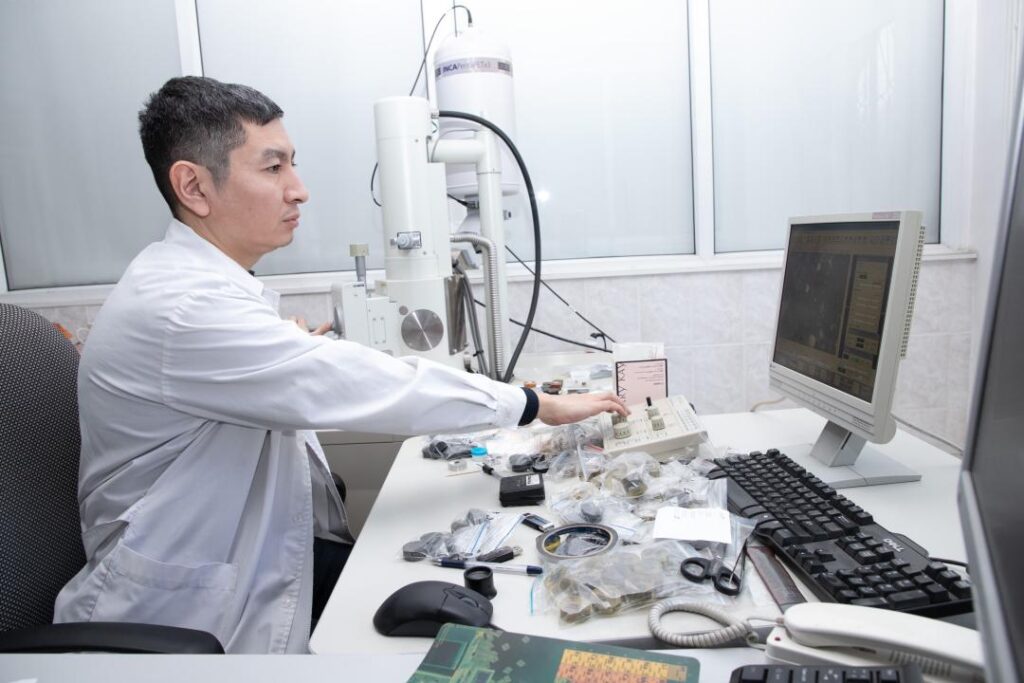
“Products dried using the Dayar 20 unit remain usable for a long time, retaining their taste, color, smell, shape, and vitamins,” said project manager Yerbol Ikhsanov, PhD in chemistry.
The unit can process a variety of goods, including fruits, vegetables, meat, dairy products, and ready-to-eat meals. Shelf life ranges from three years at room temperature to 10 to 50 years when vacuum-sealed. The innovation is expected to improve the sustainability of Kazakhstan’s agricultural sector and enhance its export potential.
Breakthrough in Hydrogen Production
This is not the only recent scientific achievement in Kazakhstan. Researchers at the Institute of Combustion Problems have developed a reactor that decomposes hydrocarbon gases into hydrogen and carbon using low-temperature plasma, without the need for catalysts and with minimal energy input.
Inside the plasma reactor, gases are heated to temperatures between 1,800 and 2,700°C, triggering pyrolysis. The result is hydrogen with a purity of up to 98.9% and technical carbon. Notably, scientists also identified giant carbon nanotubes, up to 100 nanometers in diameter, within the by-product. These nanotubes are considered a promising material for super-strong fibers and composites, far exceeding typical size expectations under normal conditions.
The method offers nearly 100% efficiency in hydrocarbon recycling and significantly accelerates hydrogen production.
Kazakh Anti-Cancer Drug Shows Early Promise
In another separate development, Kazakh scientists have made progress on an anti-cancer drug that has yielded promising results in early clinical trials. Dos Sarbasov, Vice President of the National Academy of Sciences, reported that tumor growth had ceased in six patients and shrunk by 30% in one case.
“After the first dose of the drug, the condition of fifteen cancer patients stabilized, and in six of them, the tumor stopped growing,” Sarbasov said.
The drug targets cells that actively absorb glucose and has shown no signs of toxicity. Clinical testing began two years ago and has already passed two phases. The trials, conducted at the Kazakh Institute of Oncology and Radiology, are expected to conclude within the next two to three years. The drug has received international patent protection.