Kazakhstan intends to establish a major data center hub in the Pavlodar region, powered by the coal-rich Ekibastuz basin. The announcement was made by President Kassym-Jomart Tokayev during a meeting of the National Kurultai (Assembly), where he outlined key steps in the country’s digital and energy strategies.
The initiative is part of Kazakhstan’s broader goal to develop a fully-fledged digital economy by 2029. As Tokayev noted, 2026 has been declared the Year of Digitalization and Artificial Intelligence. In line with this vision, the government recently established the Ministry of Artificial Intelligence and Digital Development to oversee technological transformation.
“The introduction of digital solutions and AI technologies will improve the quality of public administration and industrial efficiency. But these plans require robust and sustainable energy infrastructure,” Tokayev stated.
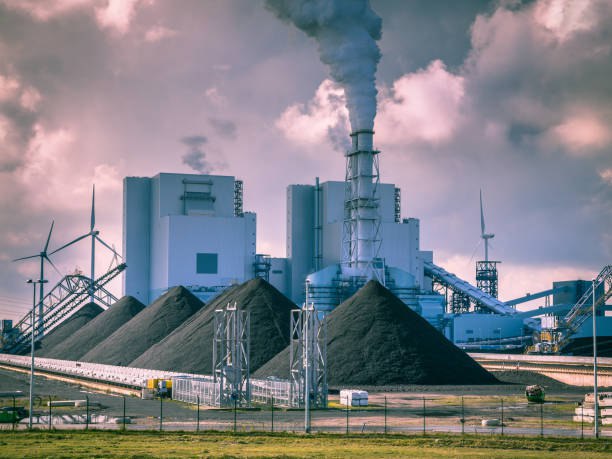
He stressed the need to designate zones in advance for the construction of high-capacity data centers, complete with energy, cooling, and security systems. The proposed “data center valley,” developed in cooperation with the Pavlodar regional akimat, is expected to be powered by the Ekibastuz coal basin, one of the largest in the country.
Tokayev emphasized that Kazakhstan must not delay the commissioning of new energy infrastructure and should not rely solely on nuclear power. The country’s first nuclear plant, currently in planning with Russia’s Rosatom, is not scheduled to come online until 2035.
He compared data centers to metallurgical plants in terms of electricity demand, underscoring that energy self-sufficiency is becoming central to Kazakhstan’s economic strategy. The country’s current electricity output of 123.1 billion kWh is insufficient to support both its industrial and digital development targets.
Kazakhstan holds an estimated 33 billion tons of coal reserves, enough to last 300 years at present consumption levels. Tokayev called for coal to be treated as a strategic resource, with the application of modern environmental technologies to reduce its environmental impact.
The president instructed the government to present a proposal by March 20 to grant coal generation the status of a national project. Planned energy infrastructure projects include new coal-fired thermal plants in Kokshetau, Semey, and Oskemen, the commissioning of a plant in Kurchatov, and the expansion of GRES-2 and construction of GRES-3 in Ekibastuz.
Simultaneously, the government aims to speed up the deployment of balancing capacities, particularly gas-based generation. However, Tokayev also warned of a worsening gas deficit: in 2024, Kazakhstan’s commercial gas imports surged by 18%, reaching 4.5 billion cubic meters.
As previously reported by The Times of Central Asia, the Ministry of Energy plans to eliminate the country’s electricity shortfall and begin energy exports by 2027.