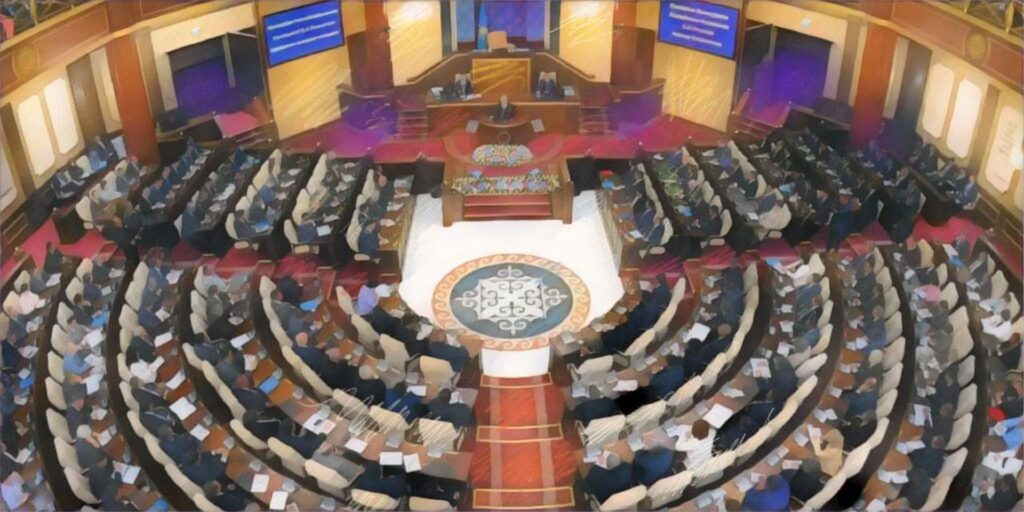
Kazakhstan’s current constitutional reform is no longer limited to parliamentary redesign. A draft updated basic law has been released for public discussion, and it presents the effort as a review of the state’s political architecture culminating in a nationwide referendum. The draft is described as the product of months of work initiated by President Kassym-Jomart Tokayev, with large-scale changes proposed for the country’s political system. A replacement-style text, an explicit state-architecture rationale, and a referendum endpoint together signal a reform agenda that reaches beyond legislative mechanics to the overall distribution of authority, the protection of fundamental rights, and strengthening of the rule of law.
Kazakhstan’s current constitution was adopted by referendum in August 1995, replacing the January 1993 basic law. It has been amended repeatedly, including significant revisions in 1998, 2007, 2011, and 2022. The 2022 referendum package was a particularly extensive set of amendments. It presented a model of a presidential republic with a strong parliament, redistributed selected powers from the presidency to parliament, and created new parliamentary mechanisms. It also strengthened the ombudsman, enabled direct citizen appeals to the Constitutional Court, established a commissioner framework for socially vulnerable categories, established a ban on the death penalty, and set a single seven-year presidential term without the possibility of reelection.
From Proposal to Draft Basic Law
The current draft emerged from a process launched under Tokayev in late 2025. In September 2025, he proposed moving to a unicameral parliament, which set the reform’s initial direction. A working group was established in October 2025 to develop proposals, and in January 2026, a commission was formed to carry the work forward. The commission was chaired by Elvira Azimova, head of the Constitutional Court of Kazakhstan, linking the drafting process to the institution that reviews the basic law.
The commission’s work moved beyond incremental amendments. It reviewed proposals affecting seventy-seven constitutional articles, about 84% of the current text, and that breadth drove the decision to prepare a fundamentally new basic law rather than another package of revisions. Rewriting most of the operative text shifts the reform from a parliamentary adjustment to a redesign of the state’s governing framework. The resulting draft is structured as a replacement-style document, with an updated preamble and a reorganization into eleven sections and ninety-five articles.
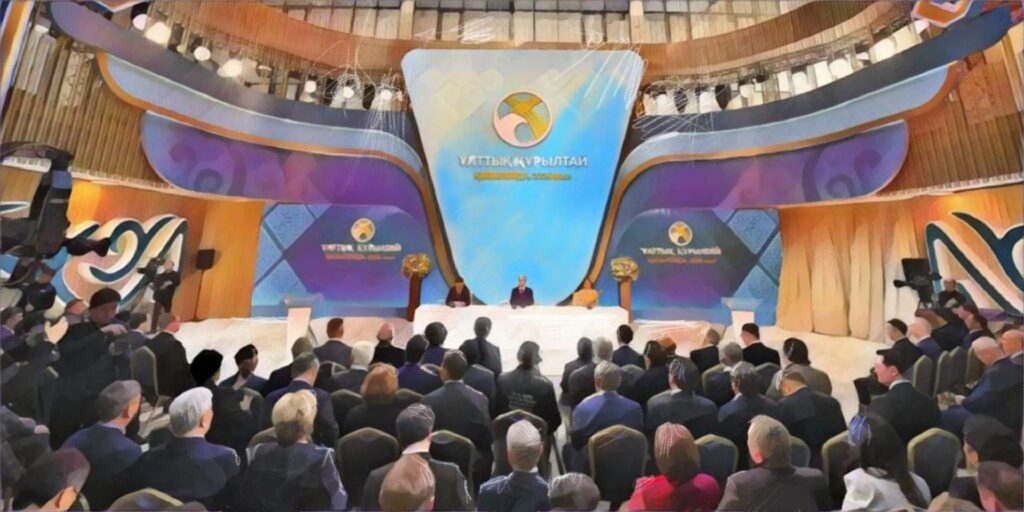
The institutional centerpiece of the draft is a shift from a two-chamber parliament to a single chamber and to proportional representation for electing deputies. The proposed supreme legislative body, the Kurultai, would have 145 deputies, slightly fewer than the combined 148 members of the current Mazhilis and Senate of Kazakhstan. The draft also grants the Kurultai expanded powers, pairing structural consolidation with a change in how legislative authority is organized, including oversight, political accountability, and approval of key state appointments and conciliation procedures.
Alongside the proposed legislature, the draft creates a national dialogue platform, the People’s Council of Kazakhstan, described as the highest advisory body representing citizens’ interests and granted the right of legislative initiative. This adds a second channel for agenda-setting with a formal pathway into lawmaking. In that context, the reform is framed as enhancing institutional resilience within a redesign broader than a parliamentary upgrade. It intends in this way to secure a new configuration of political authority through a clearer allocation of responsibility across branches of government
The draft constitutionalizes a Vice President as the designated successor, with the stated aim of making executive transfer more rule-bound and predictable. Parliamentary involvement in the appointment is meant to locate the office within the system of institutional counterweights rather than treat it as an exclusively presidential device. It then specifies a new line of succession—Vice President, Chair of the Kurultai, then Prime Minister—in place of the current default under which the Senate chair assumes presidential powers. By entrenching that order in the constitution, the reform reduces ambiguity over interim authority and lowers the risk of a temporary institutional vacuum.
Rights, Values, and Governance Boundaries
The draft’s preamble elevates language about rights to a first-order constitutional commitment. For the first time, it declares that human rights and freedoms are the state’s main priority. It identifies sovereignty, independence, the unitary character of the state, and territorial integrity as immutable values, and it defines the foundations of statehood to comprise unity, solidarity, and interethnic and interfaith harmony. By placing these commitments in the preamble, the draft treats the reform as a statement not only about how institutions will operate but about what the state is for and what it holds to be inviolable. It reaffirms freedom of expression, the prohibition of censorship, and an unconditional ban on torture and cruel or degrading treatment as basic constitutional norms. All this is framed by the accountability of public authority within a law-based state.
The draft constitutionalized foreign policy by extending statehood principles to Kazakhstan’s external orientation. It defines foreign policy as peaceful and pragmatic, reaffirms commitment to the UN Charter and international law, and emphasizes strategic stability. Regionally, it frames Kazakhstan as a responsible Central Asian actor, prioritizing stability, transit connectivity, and energy security. By embedding these commitments in the basic law, the draft treats foreign policy as an element of constitutional identity and aims to increase predictability for external partners and investors by constraining policy shifts.
Alongside rights and statehood commitments, the draft adds programmatic priorities to the basic law. It introduces the principles of justice, law, and order into the constitution for the first time. It also elevates education, science, culture, and innovation as constitutional priorities, linking these values to long-term human-capital development.
The draft constitution makes environmental protection and the responsible use of natural resources state responsibilities, bringing sustainability into the core of state obligations.
The new draft also puts procedural constraints on state power directly into the constitutional text, tightening legal safeguards. It bars the retroactive application of new laws that would increase punishment or otherwise penalize citizens, and it establishes the double-jeopardy rule that citizens cannot be repeatedly prosecuted for the same offense. It also introduces direct procedural guarantees upon detention (including access to legal counsel and clear notification of rights) and, for the first time, a dedicated article on the legal profession, giving it constitutional standing. It treats access to qualified legal representation as a constitutional matter, and not an administrative detail. The same package reinforces the protection of intellectual property and guarantees of private property and the freedom of entrepreneurship, enhancing the legal certainty and predictability for investors.
The draft also uses constitutional text to define boundaries in social policy and modern governance. It reinforces the separation of religion and the state and affirms the secular character of education and upbringing. It defines marriage as a voluntary and equal union of a man and a woman, placing this norm in the basic law rather than leaving it to ordinary legislation. For the first time at the constitutional level, it also introduces a norm on protecting citizens’ rights in the digital environment, including personal data protection and privacy.
Regime Renewal and Referendum Legitimacy
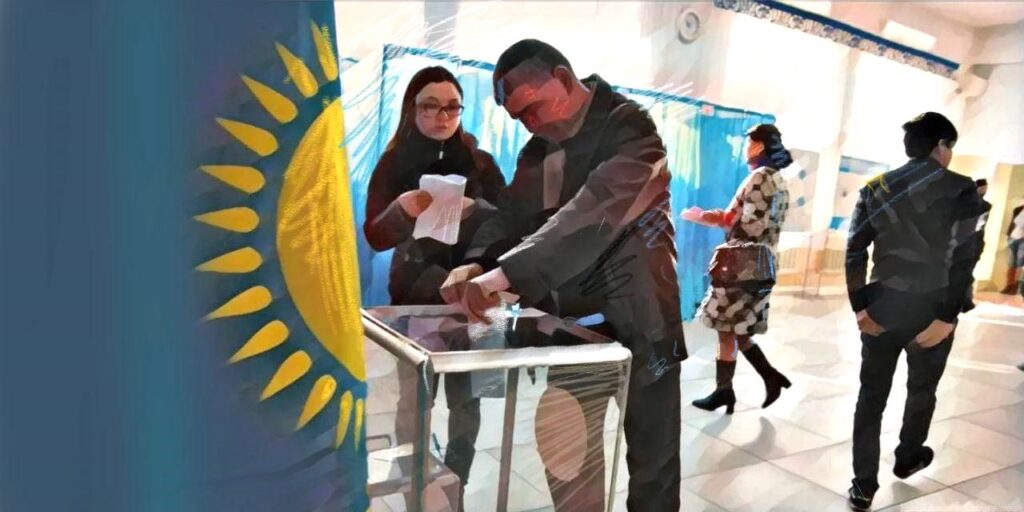
The political meaning of the current reform becomes clearer when juxtaposed with the 2022 referendum package and the subsequent effort to unwind Nursultan Nazarbayev-era constitutional arrangements. The 2022 amendments already modified relations among key state institutions, strengthened rights-protection channels, and established a single seven-year presidential term without reelection, reducing the likelihood of excessive concentration of power. Later de-Nazarbayevization measures removed Nazarbayev’s special constitutional status and restricted his relatives’ access to high office, indicating that regime renewal accompanied institutional redesign. Far beyond any refinement of parliamentary procedure, the replacement-style basic law, to be adopted by referendum, is intended to establish a higher order of legitimacy for a new allocation of authority and a revised set of state values.
The draft limits constitutional amendments to nationwide referenda requiring territorially balanced support, increasing long-term legal predictability for international partners.
With a replacement-style draft now in public discussion, Kazakhstan is moving toward a referendum that would adopt a new basic law. The package combines institutional redesign with programmatic constitutional content: a restructured legislature and electoral system, new agenda-setting mechanisms, and a preamble that elevates rights and statehood commitments, alongside provisions that strengthen procedural guarantees, give the legal profession explicit constitutional standing, protect private property and freedom of entrepreneurship, and address rights in the digital environment. The result makes clear that parliamentary restructuring is only one component of a broader effort to define authority, responsibility, policy predictability, and the state’s declared priorities.