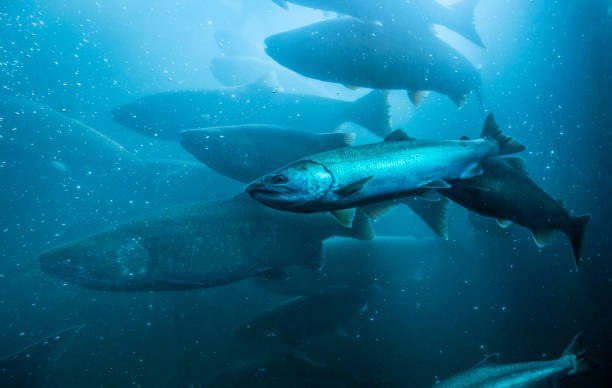
Authorities in Kazakhstan’s Mangistau region, located on the Caspian Sea coast, have announced plans to significantly expand domestic salmon farming, with the aim of replacing up to 60% of the country’s salmon imports within five years.
At a press conference in Astana, regional governor Nurdaulet Kilybay said fisheries are emerging as a key pillar in efforts to diversify the regional economy. Between 2025 and 2027, four major aquaculture projects are planned, including the industrial farming of marine salmon species in offshore cage systems. Currently, Kazakhstan imports over 8,000 tons of salmon annually, primarily from European suppliers.
“Next year, by producing 1,300 tons of salmon, we will reduce imports by about 16%. By 2029, we aim to increase production to 5,000 tons, which will replace about 60% of the country’s imports,” Kilybay said.
Kazakhstan’s Ministry of Agriculture has previously highlighted cage fish farming, raising fish in controlled, semi-open water environments, as one of the most promising aquaculture formats in the country.
A flagship project in Mangistau is being implemented by Organic Fish LLP, with a planned capacity of 5,000 tons of sea trout per year. The company has received preferential financing for equipment and sea cage installation. In autumn, approximately 10,000 juvenile trout were released into the Caspian Sea, with some expected to reach market size by next year.
Since 2021, 44 cage farms have been launched across Kazakhstan, concentrated in the East Kazakhstan, Almaty, and Turkestan regions. Of the country’s total annual fish production, estimated at 20,000 tons, about 3,500 tons now come from cage farming. By 2027, 39 new aquaculture projects are planned under the national fisheries development strategy. In total, roughly 600 fish farms of various types currently operate across the country.
According to official data, Kazakhstan’s fish market grew by 9.3% in 2024, reaching 96,600 tons, up from 88,300 tons the previous year.
However, exports declined by 11% to 23,400 tons, despite consistent demand for Kazakhstani fish in over 20 countries. The drop has been attributed to changes in logistics and rising delivery costs to the European Union.
As previously reported by The Times of Central Asia, a new fish processing facility opened in the Kyzylorda region in October, marking another milestone in the recovery of Kazakhstan’s fishing industry, including in the Aral Sea basin.