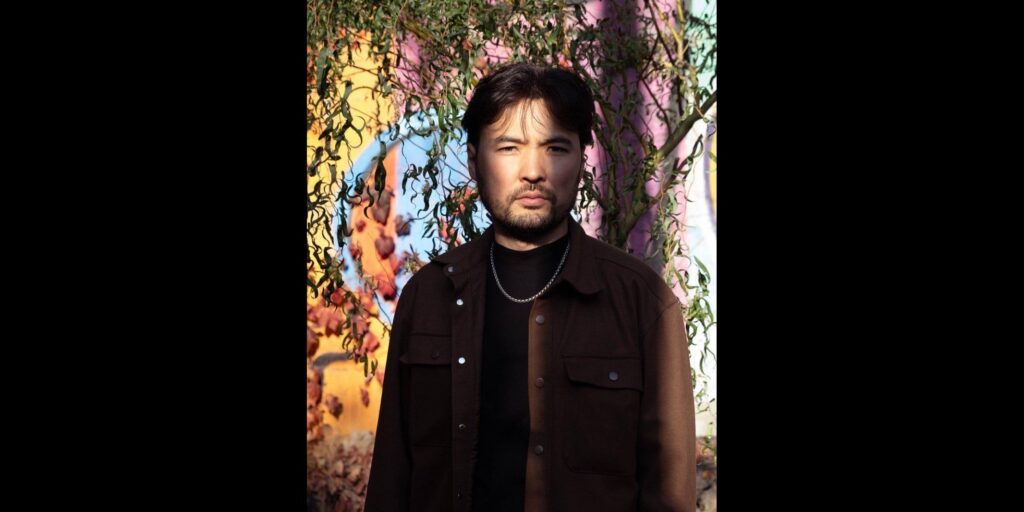
For all its beauty and Silk Road history, Tajikistan remains one of the least visited countries on earth. Life in its epic mountain ranges is rarely captured by photographers, and documentary films are few and far between – mainly half-hearted vlogs by the foreigners who pass through on the Pamir Highway. But in recent years, one Tajik filmmaker and travel influencer has made it her mission to show both her own people and the wider world what makes her homeland so extraordinary.
Nigora Fazliddin, a former journalist from Dushanbe, is part of a new generation of creators using social media to bridge cultural distances. Posting simple videos and photographs from her journeys in Tajikistan, she captures the landscapes and communities that outsiders, and even many Tajiks, rarely get to see. “This love I have for our land – its wild beauty, its silence, its soul – I try to share with others,” she tells The Times of Central Asia.
“On X I mostly reach an international audience, since it’s not very popular in Tajikistan. But on Instagram, it’s a different story. That’s where Tajiks find me, and where I find them.”

Image: Nigora Fazliddin
One of her favorite discoveries, she says, is Shirkent National Park in the south-west of the country, where fossilized dinosaur footprints mark the earth. “It gives you goosebumps to stand there and imagine creatures walking those same paths millions of years ago,” she adds.
Then there are the Pamirs, often called “the roof of the world.” At 7,495 meters, Peak Somoni attracts mountaineers from Central Asia and further afield. The region is also home to the rare Marco Polo sheep and shaggy yaks, which are found only here. But what lingers most for Fazliddin is not the challenge of climbing or the sight of wildlife, but the solitude of valleys so remote that no car can reach them.
She also cherishes journeys into the Yaghnob Gorge, where people still live as their ancestors did. There she met a shepherd in his seventies, Mirzoali, who has spent four decades with his flock among the peaks. “He told me, “I’ve been a shepherd for 40 years – and I never get tired of it.’” His secret? Clean air, peace, a healthy routine – and living in the mountains year-round. That’s the kind of wisdom you can only find in the mountains,” she says.
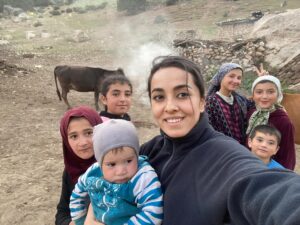
Image: Nigora Fazliddin
What Fazliddin shares online is more than travel content. For many Tajiks, especially those in cities, her images bring new perspectives to familiar places. “My Instagram has become like a mirror where people can see themselves, their roots, and the beauty they grew up with – but may have never really looked at,” she explains.
The responses have been moving. Her social media followers now invite her to visit their villages. For Fazliddin, these moments confirm that her work is worth doing: “It makes me feel like what I do matters – even in small ways.”
Surprisingly, she says, being a woman filmmaker in a patriarchal country like Tajikistan has not brought any resistance. Instead, “people welcome the content that I share. I think people see the sincerity behind my simple reels, and they feel proud.”

Image: Nigora Fazliddin
Tajikistan is among the countries most vulnerable to climate change. Its glaciers, which supply water to millions across Central Asia, are melting at an alarming rate. For Fazliddin, this crisis underscores the potential power that her storytelling carries.
“Climate change is no longer a distant threat – it’s here, and Tajikistan is already feeling its impact,” she says. “Through our lenses, we don’t just see the problem – we feel it.” For her, filmmaking and photography are not just creative pursuits but forms of activism, connecting communities across borders. “A single image of a disappearing glacier, a dried-up riverbed, or a farmer struggling with drought can move people in ways statistics never will.”

Image: Nigora Fazliddin
Despite her passion, Fazliddin is candid about the challenges of working in Tajikistan’s small travel media community. Funding is scarce, with global grants shrinking. “As a result, this important format is slowly becoming less popular,” she says.
Instead, Tajik filmmakers often turn to feature films and fictional YouTube series, which resonate more with local audiences and can be monetized more easily. Yet Fazliddin remains committed to her solo documentary projects. It is about preserving heritage, raising awareness, and ensuring that Tajikistan’s myriad stories are not forgotten.