• KGS/USD = 0.01144 0%
  • KZT/USD = 0.00212 0%
  • TJS/USD = 0.10456 0.19%
  • UZS/USD = 0.00008 0%
  • TMT/USD = 0.28490 0%
  • KGS/USD = 0.01144 0%
  • KZT/USD = 0.00212 0%
  • TJS/USD = 0.10456 0.19%
  • UZS/USD = 0.00008 0%
  • TMT/USD = 0.28490 0%
  • KGS/USD = 0.01144 0%
  • KZT/USD = 0.00212 0%
  • TJS/USD = 0.10456 0.19%
  • UZS/USD = 0.00008 0%
  • TMT/USD = 0.28490 0%
  • KGS/USD = 0.01144 0%
  • KZT/USD = 0.00212 0%
  • TJS/USD = 0.10456 0.19%
  • UZS/USD = 0.00008 0%
  • TMT/USD = 0.28490 0%
  • KGS/USD = 0.01144 0%
  • KZT/USD = 0.00212 0%
  • TJS/USD = 0.10456 0.19%
  • UZS/USD = 0.00008 0%
  • TMT/USD = 0.28490 0%
  • KGS/USD = 0.01144 0%
  • KZT/USD = 0.00212 0%
  • TJS/USD = 0.10456 0.19%
  • UZS/USD = 0.00008 0%
  • TMT/USD = 0.28490 0%
  • KGS/USD = 0.01144 0%
  • KZT/USD = 0.00212 0%
  • TJS/USD = 0.10456 0.19%
  • UZS/USD = 0.00008 0%
  • TMT/USD = 0.28490 0%
  • KGS/USD = 0.01144 0%
  • KZT/USD = 0.00212 0%
  • TJS/USD = 0.10456 0.19%
  • UZS/USD = 0.00008 0%
  • TMT/USD = 0.28490 0%

Russian TV Host’s Talk of ‘Military Operations’ in Central Asia Triggers Backlash in Uzbekistan

Controversial remarks by Russian television host Vladimir Solovyov, suggesting that Moscow could launch “special military operations” in Central Asia and Armenia, have provoked a strong backlash in Uzbekistan, where scholars, journalists, and political analysts warn that such rhetoric reflects dangerous political tendencies.

Speaking on his Solovyov Live program, the prominent pro-Kremlin commentator claimed that regions like Armenia and Central Asia are far more critical to Russia’s national interests than distant allies such as Syria or Venezuela. He urged Russian authorities to abandon international law if it stands in the way of what he described as Russia’s national security.

Solovyov was born in Moscow in 1963 and trained in economics and philosophy; after the collapse of the Soviet Union, he spent part of the early–mid-1990s living in the United States, where he worked as a businessman involved in commercial ventures rather than journalism or politics, before returning to Russia following financial difficulties. In the late 1990s and early 2000s, he entered radio and television, initially presenting himself as a liberal, pro-market commentator, but over time evolving into one of Russia’s most prominent pro-Kremlin television hosts, known for his hardline nationalist rhetoric and for aggressively promoting state narratives on domestic and foreign policy.

“We must say openly: the games are over. International law and the international order mean nothing to us,” Solovyov declared, openly questioning why, if a so-called special military operation was justified in Ukraine, similar actions should not be carried out elsewhere within Russia’s claimed zone of influence.

Solovyov characterized Central Asia as “our Asia,” framing it as part of Russia’s rightful sphere of influence. He warned that instability in the region represents a direct threat to Russia’s security and advocated for the Kremlin to clearly define the boundaries of its “zone of influence,” regardless of international norms.

He also criticized Russia’s approach to the war in Ukraine, arguing that a lack of early harsh measures prolonged the conflict and resulted in greater losses. “We should stop casting pearls before swine and openly state that we do not care what Europe thinks,” he added.

In recent years, tensions over Russian attitudes toward Central Asia have surfaced in regional discourse. In 2024, Uzbek political figure Alisher Qodirov publicly criticized what he called rising “Russian chauvinism,” responding to televised statements by Russian nationalists such as Zakhar Prilepin advocating territorial claims on Uzbekistan and Russian commentators on state TV asserting that peoples like the Uzbeks and Kazakhs did not exist before 1917, comments that Qodirov said were enough to call for cutting Russian broadcasts into Uzbekistan. Observers have also linked broader social trends in Russia – including xenophobic attacks on Central Asian migrant workers and statements by Russian officials linking Central Asian migration and security to Russia’s interests – to a narrative among some Russian public figures framing Central Asians as outsiders within Russia and Central Asia as a contested space.

The remarks triggered immediate condemnation in Uzbekistan.

Sherzodkhon Qudratkhodja, a political scientist and professor, said Solovyov had expressed, in plain terms, ideas that are usually framed in coded language. “He said on air what is usually wrapped in paper: that international law can be dismissed, that sovereignty is symbolic, and that independent states can simply be declared part of a ‘sphere of influence,’” he said. He described Solovyov’s use of the phrase “our Asia” as colonial rhetoric that dehumanizes nations and disregards borders.

Qudratkhodja also noted a stark reversal in Solovyov’s public stance. “This same person once said attacking Ukraine would be a crime. Today, that ‘crime’ is reframed as a necessity,” he said, warning that propaganda often works by erasing past positions and enforcing new narratives without explanation. “In high-level politics, such statements are not just philosophy, they are rehearsals for future actions,” he added, referencing the Laozi quote: “Pay attention to your thoughts, because they are the beginning of your actions.”

Journalist Ilyos Safarov also dismissed the idea that the remarks were merely sensationalist. “This is a political signal that reflects the most aggressive direction of Russian propaganda,” he said. Safarov emphasized that Solovyov frequently amplifies narratives that align closely with Kremlin thinking and works to legitimize pressure on sovereign states through the language of spheres of influence.

“This kind of rhetoric psychologically prepares the public for violence and intervention, especially dangerous in a region as geopolitically sensitive as Central Asia,” Safarov warned. He urged Uzbekistan and other countries to treat such statements as manifestations of a broader political doctrine, not as isolated outbursts. He further recommended that public figures who question sovereignty should be declared persona non grata and called on Uzbekistan’s Foreign Ministry to apply new legal mechanisms adopted in 2024, arguing that laws “should not be kept like antiques.”

Political analyst Shukhrat Rasul offered a more urgent interpretation, describing Solovyov’s comments as a thinly veiled call for occupation. “He is not speaking to himself; this could be Russia’s plan,” he said. Rasul called on Uzbekistan’s Foreign Ministry to demand an official response from Moscow and to insist on accountability.


American Scholar Mark Reese Fights Intellectual Property Theft of Uzbek Classic ‘Bygone Days’

When American scholar Mark Reese set out to share Uzbekistan’s most celebrated novel with the world, he never imagined that his work would be pirated by the very institutions he had hoped to support.

Reese, who first came to the country as a Peace Corps volunteer in the 1990s, spent more than a decade translating O‘tkan Kunlar (Bygone Days), the seminal 1920s novel by Abdulla Qodiriy. His English edition was a scholarly milestone – the first time the novel, considered Uzbekistan’s literary classic, had been made accessible to English-speaking readers.

The book was warmly received. In 2019, Reese was awarded the Uzbek state’s Order of Do‘stlik, or Friendship, for his contribution to cultural understanding. During a follow-up visit the next year, he gave signed copies of the book to universities and ministries across the country.

“All parties asked how they could support my work,” he tells The Times of Central Asia. “I presented a copy and explained that they could purchase more at a steep discount.” Each donation came with a clear stipulation: the book was not to be copied, resold, or distributed further.

For a time, the project seemed to blossom. Uzbek students used the book in academic papers. One university even adapted it into an English-language stage play. Reese granted permission for such use, as long as it remained non-commercial and he was credited. By 2021, he had entered a publishing partnership in Tashkent and was preparing to distribute 5,000 official copies in 2026. Agreements to publish in Turkey and Qatar were also underway.

Then, quietly, the book escaped his hands.

Reese learned from students in the Ferghana Valley that a full PDF of the translation had been uploaded to the Telegram channel of a university library. When he opened the file, he recognized something chilling – his own handwriting on the inside cover. The scan had been made from a gifted copy. It was high-resolution and clearly done using professional equipment.

The source of the leak soon became clear. The rector of Uzbekistan’s State World Languages University, known locally as Jahon Tilli, confirmed in an interview that his vice rector had scanned the book as part of a digitisation initiative.

“They did so without my permission,” Reese said. “And the file was then shared with 1.3 million university students and 6.3 million school students.” The book was everywhere – on servers, in group chats, on flash drives. In at least one case, students tried to send the file to a printer and sell it.

Reese took the case to court. The verdict was in his favour: the court ruled that copyright theft had occurred. But instead of holding the university responsible, the judge placed the blame squarely on the vice rector. Reese believes this was a calculated move. “It’s a common ploy to reduce damages,” he said. “I’m now expected to sue the individual for up to $30,000, but courts usually award just 20 to 40 percent of that.”

This, for Reese, is the deeper problem. There is no effective system to hold Uzbek institutions accountable for intellectual property violations. Unlike in neighbouring Kazakhstan, where IP law allows claimants to pursue damages against organisations, Uzbekistan restricts claims to individuals. The result, according to Reese, is institutional impunity.

“There are no real IP rights in Uzbekistan,” Reese tells The Times of Central Asia. “Nothing meaningful is being done. Government agencies avoid liability. The leadership of those institutions avoid liability. It’s plausible deniability.”

Reese’s warning is stark: the unchecked spread of piracy is not only unjust to creators, it undermines Uzbekistan’s ambitions to build a creative economy. “IP theft is the rule, not the exception,” he said. “And that puts a knowledge-based economy at risk.”

Over the past few years, Uzbekistan has opened up to foreign investment and launched an ambitious university-building drive. But Reese questions whether the country is doing enough to protect the intellectual output those institutions are supposed to foster. “Why would a university or business come to Uzbekistan if it still remains a place of IP banditry?” he asked. “IP is the centre of the American experience. It is what we do.”

He is not the only American with these concerns. Dan Patterson, CEO of the Uzbek-American agribusiness firm Silverleafe, is also seeking damages, for a different kind of dispute, in the country’s courts. Both men are recipients of the Do‘stlik medal.

While Reese continues to pursue legal action, his concern extends beyond compensation. He sees the situation as emblematic of a broader cultural challenge. “You can and should expect your work to be co-opted and stolen,” he said of the Uzbek system, which he has engaged with for three decades. “It’s not about one book. It’s about setting the rules for what kind of society you want to have.”

For now, his hopes remain simple. He still dreams of seeing his book on sale at Tashkent Airport, nestled among the souvenir chocolates and keychains – an English-language gateway into Uzbekistan’s literary history. But until basic protections for authors and translators are in place, he says, the country’s creative economy will remain built on uncertain ground.

Chinese Uzbek Archaeologists Uncover Ancient City Walls at Kuva Silk Road Site

A team of Chinese and Uzbek archaeologists has uncovered a well-preserved section of city walls at the ancient settlement of Kuva in eastern Uzbekistan, dating from the 3rd century BCE to the 10th century CE, according to a report published by Xinhua. The discovery was made by the joint Luoyang-Ferghana archaeological expedition.

Researchers say the find offers critical physical evidence for understanding the historical development of a Silk Road city and the enduring cultural exchange between East and West. The team also hailed the excavation as a key achievement of international cooperation under the Belt and Road Initiative.

Located in the Ferghana Valley, a historic hub along the ancient Silk Road, the ruins of Kuva cover an area of approximately 110,000 square meters. Xinhua noted that the valley has maintained close ties with China for over 2,000 years. Preliminary findings indicate that the city’s fortifications were rebuilt multiple times and remained in use across several historical eras from the Parthian Kingdom and the states of Dayuan and Sogdiana to the Samanid dynasty.

Liu Bin, head of the Chinese delegation to the joint expedition, said the evolving construction techniques used in the walls provide valuable insights into the architectural practices, building materials, and cultural influences of different periods. He added that such features help trace the diffusion of cultural traditions along major trade routes.

The Luoyang-Ferghana team was established in 2023 as a collaboration between the Luoyang Archaeological Institute in China’s Henan Province and Ferghana State University in Uzbekistan. Since then, archaeologists have identified palaces, city gates, fortifications, residential structures, streets, and craft workshops at the site. Liu Bin noted that systematic excavations of the palace areas are planned for next year, which will further clarify the city’s layout and functional zones.

As previously reported by The Times of Central Asia, similar Chinese-Uzbek archaeological partnerships are underway in Surkhandarya, Samarkand, Ferghana, and Khorezm. These projects have led to discoveries of ancient settlements, urban infrastructure, and even an Iron Age city-state, underscoring the growing scope of bilateral archaeological cooperation in Uzbekistan.

Kazakhstan’s Fish Production Continues Upward Trend

Kazakhstan’s fishing industry continues to show steady growth, reinforcing its role as a key contributor to economic development, job creation, and food security.

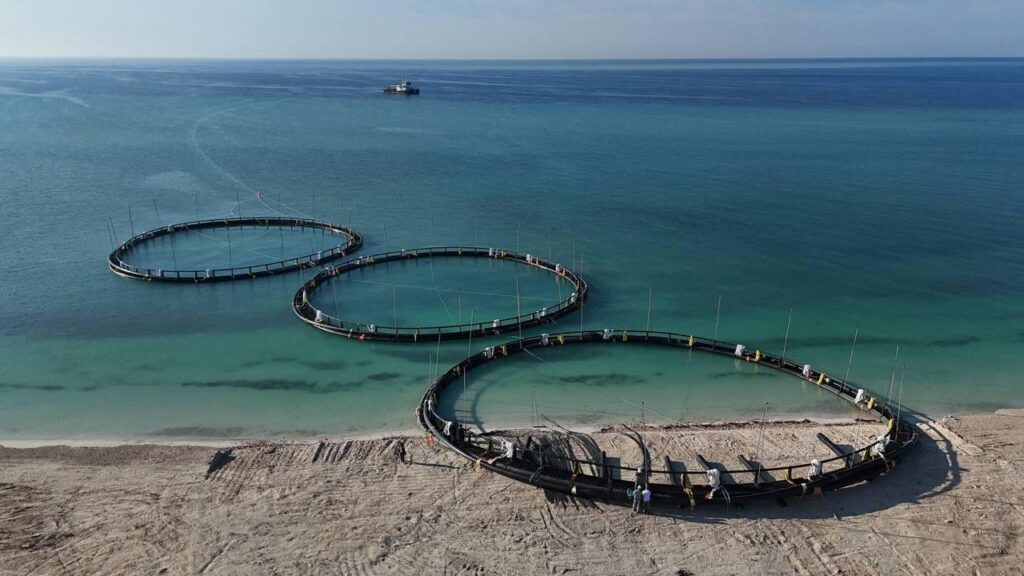
According to the Ministry of Agriculture, Kazakhstan produced 76,800 tons of fish between January and November 2025, marking a 10% increase compared to the same period in 2024. Of this, 38,500 tons were sourced from natural water bodies, also a 10% rise, while aquaculture accounted for 20,900 tons, reflecting a 22% year-on-year increase.

The country currently operates 72 fish processing plants with a combined annual capacity of around 120,000 tons. Of these, 20 facilities are certified to export to the European Union. Kazakhstan exports fish products to 21 countries, including Germany, the Netherlands, Russia, and China.

In 2024, Kazakhstan exported 23,400 tons of fish products valued at $74.7 million. Data for 2025 is not yet available.

During the first 11 months of 2025, the country produced 59,400 tons of processed fish products. This was supported by state-backed measures, including a 70% reduction in VAT and preferential loans at 5% annual interest, aimed at expanding the fish processing sector.

Investment in the industry also continues to grow. Between 2021 and 2024, Kazakhstan implemented 87 aquaculture projects totaling 21.4 billion tenge (USD 41.9 million). An additional 4.6 billion tenge (USD 9 million) was invested in fisheries development during the first 11 months of 2025.

One of the key projects under development is the modernization of the Atyrau Sturgeon Farm, which aims to increase the annual production of sturgeon fry from 5 million to 7.5 million.

In 2025, 21.92 million juveniles of valuable fish species, including sturgeon, were released into natural and artificial water bodies across the country. With ongoing modernization of state-run hatcheries, total production capacity is expected to rise significantly from 18.4 million to 80.5 million fry per year.

Kazakhstan’s fishing sector has entered a stage of sustainable growth. Increased government support, rising investment, and infrastructure modernization are laying a strong foundation for further expansion in fish production and processing, while also contributing to the conservation of aquatic ecosystems and improving access to high-quality fish products for the population.

Kazakhstan Mandates BIM Design for All New Buildings

Kazakhstan has approved a digitalization plan for its construction sector that mandates the use of Building Information Modeling (BIM) for all new residential and commercial developments.

According to the press service of the Prime Minister of Kazakhstan, Deputy Prime Minister  Minister of Artificial Intelligence and Digital Development Zhaslan Madiev and Minister of Industry and Construction Yersayin Nagaspayev have jointly endorsed the 2026-2027 plan to digitize the construction industry. The initiative outlines the sector’s digital transformation across the full lifecycle of facilities from planning and design to construction, commissioning, and post-construction operation.

“The plan includes a series of practical measures aimed at simplifying and accelerating construction processes,” the press service stated. “Among the priorities are mandatory BIM design, automation of public services in construction, creation of digital facility passports, and conversion of building norms and standards into machine-readable formats. These changes are expected to reduce manual processes, minimize errors, and improve predictability in project delivery.”

BIM design integrates data on geometry, technical characteristics, and construction processes into a unified digital model, enabling stakeholders to coordinate changes, assess design decisions, and identify potential issues prior to construction. Its adoption is expected to enhance quality, efficiency, and coordination throughout a project’s lifespan from conception to demolition.

The digitalization drive is also intended to increase transparency in the sector, reduce costs and timelines, lower administrative barriers, and improve the safety and quality of construction projects.

In a related development, President Kassym-Jomart Tokayev recently signed a new Construction Code aimed at streamlining regulations in architecture, urban planning, and construction. The code seeks to improve procedural transparency and establish uniform rules for all market participants.

The document clarifies permit procedures, reinforces quality control, and standardizes construction materials and technologies. Following criticism from the business community, the Ministry of Industry and Construction revised the draft to address key concerns.

Nazira Usenova, deputy chair of the board of the Atameken National Chamber of Entrepreneurs, noted that some provisions risked complicating processes and increasing bureaucratic burdens. “What is important for the industry is not the number of control mechanisms, but their effectiveness and predictability,” she said.

Compromise solutions were ultimately reached on the most sensitive issues. Experts have cautioned, however, that some provisions will require further scrutiny during implementation.Viktor Mikryukov, president of the Association of Developers of Kazakhstan, said transparency and consistency were essential. “The new rules must not become a tool for excessive pressure on entrepreneurs. Their application must avoid broad interpretation by regulators and ensure uniformity across Kazakhstan.”

Among the key agreements reached was the retention of a five-year warranty period for completed construction projects and a ten-year warranty for structural elements, including the load-bearing frame, facade, and roof. The Code also promotes self-regulation, improves engineering and technical certification standards, furthers digitization, strengthens oversight in seismic zones, expands the powers of local maslikhats, and enhances public involvement in urban planning.

The Construction Code will come into force on July 1. As previously reported by The Times of Central Asia, Kazakhstan launched a unified electronic construction platform on January 1.

Kazakhstan and Kyrgyzstan Plan Shorter Route from Almaty to Lake Issyk-Kul

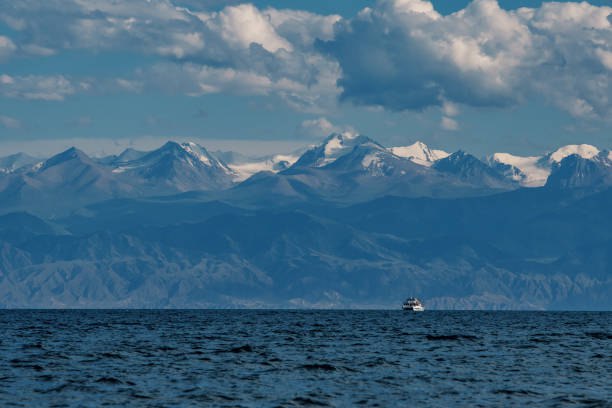
Kazakhstan has formed a working group to develop a shorter road route from Almaty to Lake Issyk-Kul in Kyrgyzstan, which could reduce travel time by nearly half. The initiative, reported by Kazakh media, aims to improve regional connectivity and enhance tourism flows between the two countries.

According to Kazakhstan’s Ministry of Transport, the proposed route will serve as an alternative to the current 460-kilometer drive through Korday and Bishkek. The new road is expected to be approximately 277 kilometers long, with a travel time of about three hours.

Preliminary estimates indicate the road will traverse roughly equal distances in both countries: 127 kilometers in Kazakhstan and 150 kilometers in Kyrgyzstan. Much of the required infrastructure is already in place. Kazakhstan will need to repair about 80 kilometers of road, while Kyrgyzstan is expected to reconstruct just six kilometers.

The project was initiated by the Asian Development Bank (ADB), which has committed grant funding for the development of a feasibility study. An agreement to that effect was signed in December 2024.

In spring 2025, Kazakhstan and Kyrgyzstan established a joint working group to develop infrastructure for the Almaty-Bishkek and Almaty-Issyk-Kul economic corridors. That summer, both countries also began upgrading border crossing facilities. The current phase of the project involves preparing the feasibility study.

The study, led by the Kazakh authorities in collaboration with the Eurasian Development Bank, is expected to be completed by September 2026. It will determine the road’s exact route, classification, projected traffic volume, financial model, and potential toll structure. Early indications suggest the road may operate as a toll road.

Once approved by both governments, the feasibility study will serve as the basis for a final construction decision. Project financing is expected to follow a public-private partnership model, including the formation of a joint venture between Kazakhstan and Kyrgyzstan.

The idea of creating a direct route to Issyk-Kul for Kazakh tourists has been under discussion for decades. Since Kyrgyzstan’s independence, successive presidents have expressed support for the project, but political disagreements have repeatedly stalled progress.

Similar political issues prevented the reopening of a once-popular hiking trail from Almaty to Issyk-Kul. During the Soviet era, tourists could walk from Kol-Sai to Issyk-Kul via the Kyrgyz village of Tyup, roughly a 30-kilometer journey. The trail remained active until the 2000s, when it was closed due to bilateral tensions.

A final attempt to revive cross-border tourism occurred in August 2022, when a delegation of politicians, journalists, and tourism experts retraced the route. While the two governments agreed on border and passport control protocols, the initiative was soon suspended again.

Experts suggest that, with sustained political will, both the highway project and the restoration of the historic hiking route could be implemented in the future.