• KGS/USD = 0.01144 0%
  • KZT/USD = 0.00212 0%
  • TJS/USD = 0.10456 0.19%
  • UZS/USD = 0.00008 0%
  • TMT/USD = 0.28490 0%
  • KGS/USD = 0.01144 0%
  • KZT/USD = 0.00212 0%
  • TJS/USD = 0.10456 0.19%
  • UZS/USD = 0.00008 0%
  • TMT/USD = 0.28490 0%
  • KGS/USD = 0.01144 0%
  • KZT/USD = 0.00212 0%
  • TJS/USD = 0.10456 0.19%
  • UZS/USD = 0.00008 0%
  • TMT/USD = 0.28490 0%
  • KGS/USD = 0.01144 0%
  • KZT/USD = 0.00212 0%
  • TJS/USD = 0.10456 0.19%
  • UZS/USD = 0.00008 0%
  • TMT/USD = 0.28490 0%
  • KGS/USD = 0.01144 0%
  • KZT/USD = 0.00212 0%
  • TJS/USD = 0.10456 0.19%
  • UZS/USD = 0.00008 0%
  • TMT/USD = 0.28490 0%
  • KGS/USD = 0.01144 0%
  • KZT/USD = 0.00212 0%
  • TJS/USD = 0.10456 0.19%
  • UZS/USD = 0.00008 0%
  • TMT/USD = 0.28490 0%
  • KGS/USD = 0.01144 0%
  • KZT/USD = 0.00212 0%
  • TJS/USD = 0.10456 0.19%
  • UZS/USD = 0.00008 0%
  • TMT/USD = 0.28490 0%
  • KGS/USD = 0.01144 0%
  • KZT/USD = 0.00212 0%
  • TJS/USD = 0.10456 0.19%
  • UZS/USD = 0.00008 0%
  • TMT/USD = 0.28490 0%

Kazakhstan Blocked Nearly 85 Million Fraudulent Phone Calls in 2025

Kazakhstan’s law enforcement agencies blocked approximately 85 million fraudulent phone calls in 2025, according to Interior Minister Yerzhan Sadenov. The announcement was made during a meeting of the Ministry of Internal Affairs.

“Systematic work continues to combat cybercrime and internet fraud,” Sadenov stated. “A total of 84.5 million fraudulent calls were blocked, helping to prevent significant financial losses and reduce citizen exposure to fraudulent schemes. Thirteen call centers were shut down, including some located abroad. Fifty-six criminal cases have been launched against individuals involved in so-called ‘dropperism,’ aiding internet fraudsters.”

Sadenov also highlighted Kazakhstan’s signing of the United Nations Convention on Combating Cybercrime, which he said will strengthen international cooperation in addressing cross-border digital crimes.

As part of its broader digital transformation, Kazakhstan introduced the Law and Order service last autumn, a new tool enabling citizens to interact with law enforcement agencies. Integrated into eGov Mobile, the government’s digital services platform, as well as the Kaspi.kz and Halyk Bank mobile apps, the service is accessible nationwide. In addition to reporting offenses, users can submit complaints against police officers and send text, voice, photo, and video messages.

Every report submitted through the service is automatically registered in the Ministry’s information system, with users receiving real-time updates on the status of their submissions.

To support these initiatives, the Ministry of Internal Affairs has established a Department of Digitalization and Artificial Intelligence. The department is tasked with integrating smart technologies into law enforcement. One of its flagship projects is the National Video Monitoring System, which uses video analytics to enhance street and public safety, including the ongoing development of the Safe City initiative.

As previously reported by The Times of Central Asia, engineers in Karaganda unveiled three prototype unmanned aerial vehicles last year aimed at improving public safety across Kazakhstan.

Families in Tajikistan Relocated from Zones at High Risk from Disasters

Authorities in Tajikistan have relocated hundreds of families from areas vulnerable to natural disasters, continuing a multi-year effort to reduce risk to life and property.

Jamshed Kamolzoda, Head of the Main Directorate for Civil Protection and Territories under the Committee for Emergency Situations and Civil Defense, outlined the scope of the relocation initiative, the primary threats identified, and the state resources allocated for disaster prevention.

According to Kamolzoda, 328 households were moved from high-risk zones in 2024-2025. Of these, 154 were relocated in 2024, and 174 followed in 2025. The relocations were carried out under the government-approved “Medium-Term Plan for the Organized Resettlement of Environmental Migrants for 2024-2026,” which mandates the annual resettlement of 175 households based on risk assessments.

Kamolzoda emphasized that the Committee annually conducts geological and engineering evaluations of vulnerable areas and develops corresponding risk-reduction measures in cooperation with other agencies. A central component of this effort remains the relocation of at-risk populations.

“Special working groups have been established under the Committee, comprising experts in engineering, geology, construction, and emergency response,” he said.

These groups inspect residential buildings and infrastructure on-site and issue recommendations grounded in technical and scientific analysis. Their findings form the basis for resettlement decisions.

The relocation program is part of the broader National Strategy for Disaster Risk Reduction for 2019-2034, which aims to minimize human and material losses, bolster preventative measures, and improve public preparedness for emergencies.

Mudslides, earthquakes, and avalanches are the most frequent natural disasters in Tajikistan, with earthquakes considered the most  dangerous due to their potential scale. With 93% of the country’s territory classified as mountainous, the most at-risk regions include the Gorno-Badakhshan Autonomous Oblast (GBAO), the Rasht Valley, the Zeravshan Valley, and the mountainous areas of the Sughd Region.

In 2025 alone, the Committee recorded 287 emergency incidents across Tajikistan, 12 of

which were natural disasters. The total estimated damage exceeded $2.2 million.

Ukraine Says it Hit Russian Oil Targets in Caspian Sea

The Ukrainian military says it has struck three Russian oil drilling platforms in the Caspian Sea, an area that is vital to Central Asia’s role in trade linking China and Europe.

“Direct hits have been recorded,” the Ukrainian military said on Telegram on Sunday. “The extent of the damage is being assessed.”

The statement said the drilling infrastructure belongs to Russia’s Lukoil Corporation and it identified the targets as the V. Filanovsky, Yuri Korchagin and Valery Grayfer platforms.

The Ukrainian military did not provide details about how it carried out the attack, though unverified video circulating on social media appeared to show an aerial drone approaching a platform during the operation.

Ukraine has used drones to conduct other strikes on Russian oil targets in the Caspian Sea in recent weeks, as well as long-range missions against oil installations in many parts of Russia. Five countries have shores along the Caspian: Russia, Kazakhstan, Turkmenistan, Iran and Azerbaijan.

Ukrainian authorities say Russian energy infrastructure is a legitimate target because it generates revenue to support Russia’s invading forces in Ukraine as well as Russian air strikes on Kyiv and other civilian centers. Russia describes Ukrainian attacks on its oil industry as terrorism.

Ukrainian military operations have also hit infrastructure belonging to the Caspian Pipeline Consortium (CPC) near the Russian port of Novorossiysk on the Black Sea, leading to diplomatic protests from Kazakhstan. The Central Asian country relies heavily on the port´s facilities for the transhipment of oil from Kazakh fields to international markets.

Kazakhstan’s Bublik Breaks Into Top 10 With Ninth Title Win

After a stellar 2025 season, Alexander Bublik of Kazakhstan has started 2026 by becoming a top 10 player for the first time.

Bublik defeated Italian Lorenzo Musetti 7-6 (2), 6-3 in the final of the ATP tournament in Hong Kong on Sunday and will move up one spot to world No. 10 when the new rankings come out on Monday. It’s the first time that Kazakhstan has had a player among the 10 best tennis players in the world.

Smiling broadly, Bublik went down on one knee after winning the match on a Musetti forehand into the net. In his on-court victory speech, he said Hong Kong would always be a special place because of what he achieved there.

“I’m being honest with you,” Bublik said. “If you tell me that, at the beginning of my career or last April, that I’m going to be standing here, 10 in the world… I would probably not believe you.”

The Russia-born, 28-year-old player had his best season last year, winning four titles after struggling early in 2025. With the Hong Kong win, he has won a total of nine titles in his career.

Bublik now has a 3-1 head-to-head record over Musetti, a top 10 player. Despite his success, Musetti has lost his last seven tour finals. In his speech, Bublik said that he too had lost a lot of finals and that he expected the Italian to build on those losses and achieve “some very big moments of your career.”

Bublik told the Hong Kong crowd that he “can’t wait” to return next year.

New U.S. Ambassador to Kazakhstan to Build “Momentum” on Trade, Diplomacy

Julie Stufft, the new U.S. ambassador to Kazakhstan, is a career diplomat who has said her goal is to ensure that U.S. companies in the Central Asian country have not just an “even playing field” but are also “the partners of choice” in a region where Russia and China are the dominant trading partners.

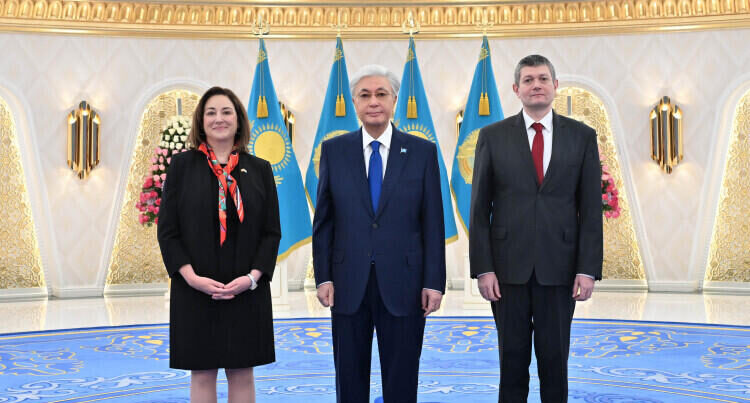
Stufft, who made those remarks during her confirmation hearing in the U.S. Congress in July, presented her credentials to President Kassym-Jomart Tokayev of Kazakhstan in Astana on Friday. She has previously worked on COVID-19 travel policies and U.S. visa processing worldwide and was most recently deputy assistant to the president and executive secretary of the National Security Council. Stufft has served as deputy chief of mission in the U.S. Embassies in Moldova and Djibouti, and was also a diplomat in Russia, Ethiopia, and Poland.

One of Stufft’s daughters, Nora, is a student at the U.S. Air Force Academy in Colorado.

After the credentials ceremony in Astana, Stufft said Tokayev and U.S. President Donald Trump have a “very close relationship” and that there was impetus for further collaboration between Kazakhstan and the United States.

“We have so much momentum from President Tokayev´s recent visit to Washington that we have to build on this,” Stufft said in reference to a November summit hosted by Trump and attended by the leaders of Kazakhstan, Kyrgyzstan, Tajikistan, Turkmenistan, and Uzbekistan.

The meeting focused on securing big trade deals as well as U.S access to minerals in Central Asia that are critical to energy and other industries. Another U.S. goal is to counter the longstanding influence of Russia and China in Central Asian countries, whose leaders seek to balance their relationships with the big powers.

Last month, in another round of diplomatic outreach, Trump invited Tokayev and President Shavkat Mirziyoyev of Uzbekistan to attend the G20 summit in Miami later this year.

In addition to holding large reserves of critical minerals, Kazakhstan is a top uranium producer and a major oil exporter. China and Russia are its biggest overall trading partners. While U.S. trade with Kazakhstan is relatively small in comparison, the relationship is growing.

“My goal as ambassador, if confirmed, would be to make sure that U.S. companies have an even playing field so that they can do investment in Kazakhstan, and also that U.S. companies are the partners of choice in Kazakhstan, instead of Chinese or other companies,” Stufft said in her confirmation hearing last year.

The previous U.S. ambassador to Kazakhstan, Daniel Rosenblum, resigned from the post in January 2025.

Insider’s View – Primary Healthcare 2030: Why Uzbekistan Is Shifting from Hospitals to Prevention and Local Care

For decades, health systems across the world have followed a familiar path: investing in hospitals, expanding specialized care, and treating disease when it becomes severe. Yet evidence from both high- and middle-income countries increasingly shows that this model is costly, inefficient, and poorly suited to today’s disease burden. Uzbekistan’s health reform agenda through 2030 reflects this global rethinking by placing primary healthcare and prevention at the center of the system.

The logic is straightforward. The more health problems are resolved at the primary care level, before complications arise, the less pressure there is on hospitals, and the lower the overall cost of care. This principle underpins the World Health Organization’s approach to Universal Health Coverage (UHC) and is now explicitly shaping Uzbekistan’s national strategy. According to the report, “A reformed service delivery system in Uzbekistan should be able to manage about 80% of the population’s outpatient and 85% of inpatient health needs at the primary health care/district level.”

The cost of a hospital-centered model

Noncommunicable diseases (NCDs) are the main driver behind this shift. In Uzbekistan, as in many countries in the WHO European Region, cardiovascular disease, diabetes, cancer, and chronic respiratory conditions account for the majority of premature mortality. WHO assessments note that the burden of these conditions is rising and that health systems built around inpatient treatment tend to intervene too late, when care is most expensive, and outcomes are poorest.

Economic estimates cited in national policy discussions place annual losses associated with NCDs at around $1 billion. These losses are not limited to public spending; they include foregone productivity, long-term disability, and avoidable premature deaths. Without early detection of hypertension, elevated blood glucose, and cholesterol at the primary care level, health systems end up financing complications rather than preventing disease.

Diabetes illustrates this dynamic clearly. International projections show a steady rise in adult diabetes prevalence in Uzbekistan through 2045. The most cost-effective interventions, including routine screening, lifestyle counseling, and continuous follow-up, are delivered through primary healthcare. Dialysis, stroke rehabilitation, and complex inpatient care are not.

Uzbekistan 2030: from strategy to system design

Uzbekistan’s National Health System Strategy 2030 translates this logic into concrete system objectives. Developed with support from the World Bank and international partners, the strategy emphasizes integrated service delivery, strengthened family medicine, and expanded preventive services throughout the country.

A central performance objective is resolving the majority of patient needs at the primary healthcare level. This is not about convenience alone; it is about reallocating resources toward early intervention and chronic disease management, while allowing hospitals to focus on cases that genuinely require inpatient treatment.

Prevention is being operationalized through specific policy instruments. The strategy includes expanded access to preventive services and micronutrient support, particularly for children and vulnerable groups, with an expected reduction in the prevalence of selected infectious and noncommunicable conditions. This marks a shift from abstract commitments to prevention toward interventions with measurable public health impact.

Progress toward UHC provides additional context. According to WHO and World Bank reporting, Uzbekistan’s UHC service coverage index increased from the mid-50s in 2000 to the mid-70s by 2021, reflecting expanded access to essential health services. The next phase of progress depends less on hospital capacity and more on the quality, accessibility, and continuity of primary care.

Financial protection and primary care

Uzbekistan’s UHC commitments through 2027 include raising service coverage further and reducing out-of-pocket spending, which remains high by international standards. Such a reduction is unlikely without a strong primary care system and a clearly defined, guaranteed benefits package. Otherwise, households continue to rely on self-treatment, private services, or hospital admissions, all of which drive out-of-pocket costs upward.

Recent reforms to outpatient medicine coverage illustrate how primary care can improve financial protection. Under new arrangements, the State Health Insurance Fund reimburses essential medicines for priority NCDs at the primary healthcare level, initially piloted in Syrdarya region and now expanding nationwide. WHO Representative in Uzbekistan, Dr. Asheena Khalakdina, described this reform as one that “paves the way for greater affordability and equitable access to essential medicines” and noted its importance for improving treatment adherence and outcomes.

Institutional reform: making primary care the entry point

Regulatory reforms adopted in 2025 reinforce this strategic direction. A presidential resolution on healthcare reform outlines a reorganization of service delivery so that primary healthcare becomes the main entry point into the system, supported by updated referral pathways and financing mechanisms.

WHO Europe has described Uzbekistan’s reform trajectory as one that provides “practical guidance and timely recommendations on how to proceed with the health system reform rollout,” emphasizing the importance of sequencing, institutional clarity and workforce readiness.

Policy dialogues hosted by the Ministry of Health and WHO have also focused on human resources for health, particularly the training and deployment of family doctors and nurses, who are critical to effective community-level prevention and chronic disease management.

Global lessons: prevention works

Uzbekistan’s approach aligns closely with international experience. The Declaration of Alma-Ata, adopted in 1978, stated that primary healthcare “forms an integral part both of the country’s health system… and of the overall social and economic development of the community.”

Subsequent experience has reinforced this principle. Countries that invested consistently in primary care and prevention achieved sustained reductions in avoidable mortality and financial hardship. Thailand’s UHC reform, built on a strong primary care network and a guaranteed benefits package, sharply reduced out-of-pocket spending over two decades. Brazil’s Family Health Strategy demonstrated that team-based primary care with household outreach could significantly reduce infant mortality at the municipal level. Even highly digitalized systems, such as Estonia’s, show that continuity and coordination anchored in primary care improve efficiency and patient outcomes.

From hospitals to health

The lesson across countries and income levels is consistent: prevention and primary healthcare deliver durable health gains at a lower cost than hospital-centered systems. For Uzbekistan, Primary Healthcare 2030 is not a rejection of hospitals, but a rebalancing of the system. Hospitals remain essential, but only when primary care is strong enough to prevent avoidable admissions.

As WHO Europe leadership has repeatedly emphasized, achieving UHC requires sustained political commitment, integrated service delivery, and a focus on equity and quality across the life course. With NCDs driving the majority of deaths, continuing to prioritize hospital expansion without investing in primary care would mean paying more to treat consequences rather than causes. The shift toward prevention, early detection, and local care is therefore not only a health reform but a fiscal, social, and economic necessity.