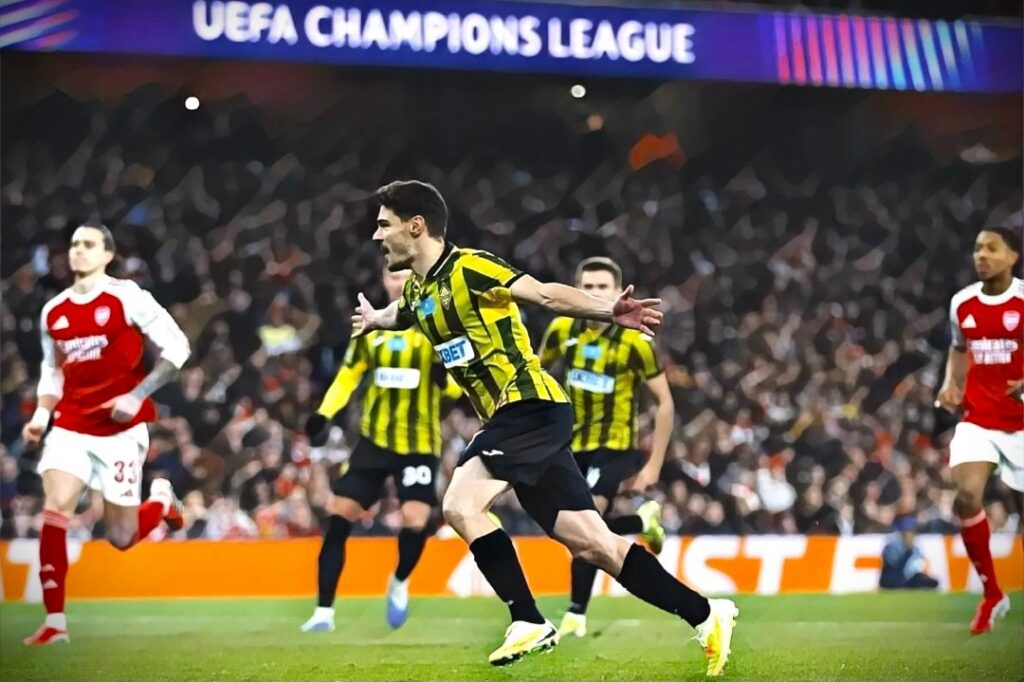
On a chilly Wednesday evening in London, Kairat Almaty’s debut season in the UEFA Champions League ended with a 3-2 loss to English league leaders Arsenal.
It completed a drawn-out baptism of fire in European football for the Kazakh champions, who finished bottom of the 36-team league, earning just one point from eight games. That point came from a 0-0 draw at home to Cypriot club Pafos, also debutants in the competition, and who played almost that entire game with ten men after their striker Joao Correia was sent off in the fourth minute.
“We clearly see the difference in speed, decision-making, pace, and level between top European clubs and those in our league,” the club’s owner, Kairat Boranbaev, told The Times of Central Asia in the build-up to the Arsenal match. “It became clear that European success isn’t a one-season undertaking.”
The club’s fans were also sober in their analysis. “The main lesson is that even small mistakes are costly in European competitions,” Kairat fan Rauan Mutair told TCA.
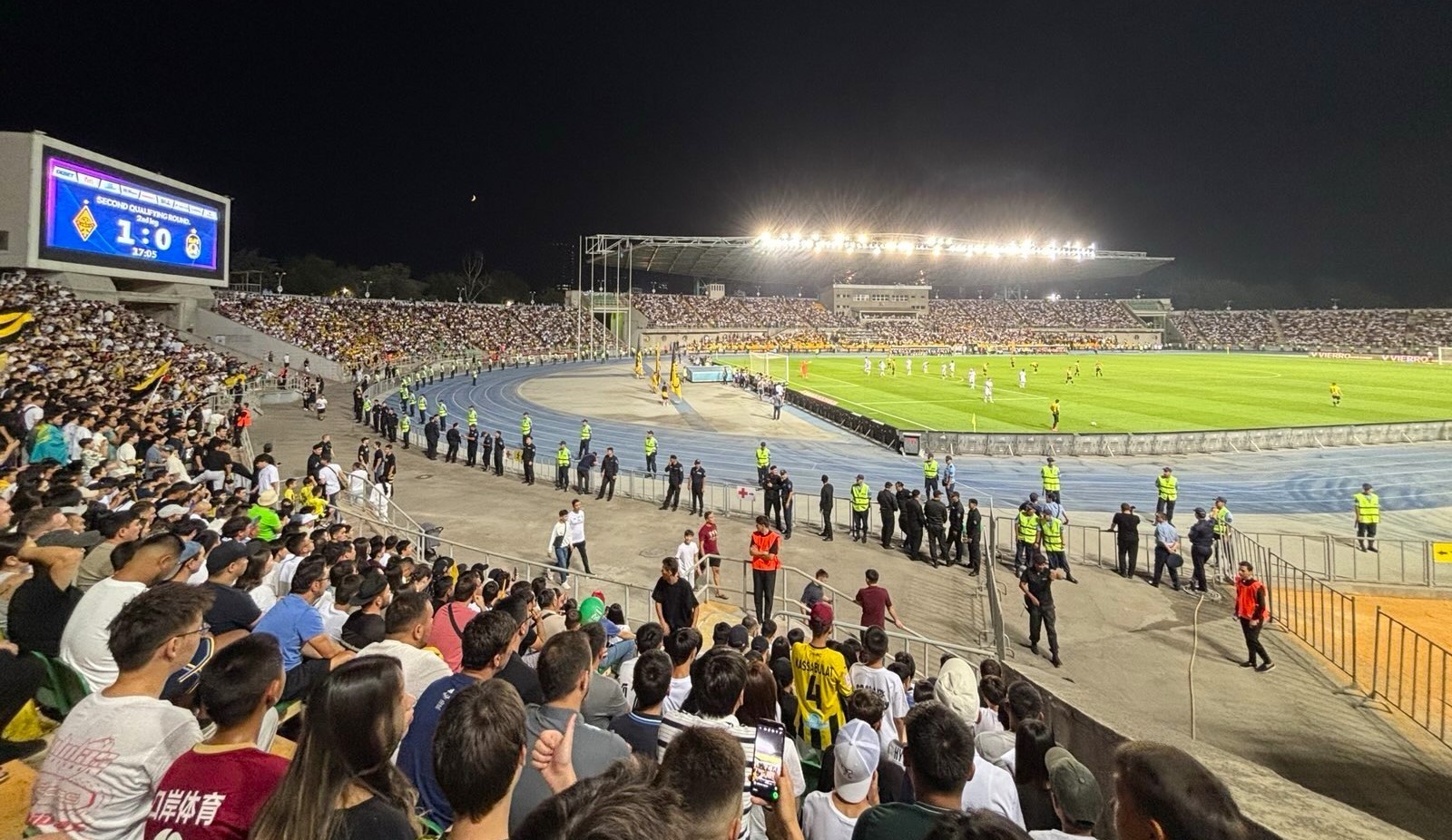
Kairat in the second qualifying round of the Champions League; image: Joe Luc Barnes
Silver Linings Playbook
Nevertheless, Boranbaev was determined to take positives from the experience. He described the campaign as “a crucial moment in Kairat’s growth as a club,” and declared that his team “not only participated but were competitive.”
He saw the campaign as a vindication of the Kairat model, which focuses on developing youth players. Now, he believes, that model needs “acceleration and scaling.”
Despite the defeats, the competition has also served to raise the profile of Kazakh football. Kairat were just the second Kazakh side to compete in the competition after FC Astana in 2015, and they produced creditable displays in their highest profile away games, losing by just one goal to Arsenal and Milan’s Internazionale.
Back home, even the least likely bars and restaurants screened Kairat’s games, creating a wave of excitement amongst a new cohort of fans.
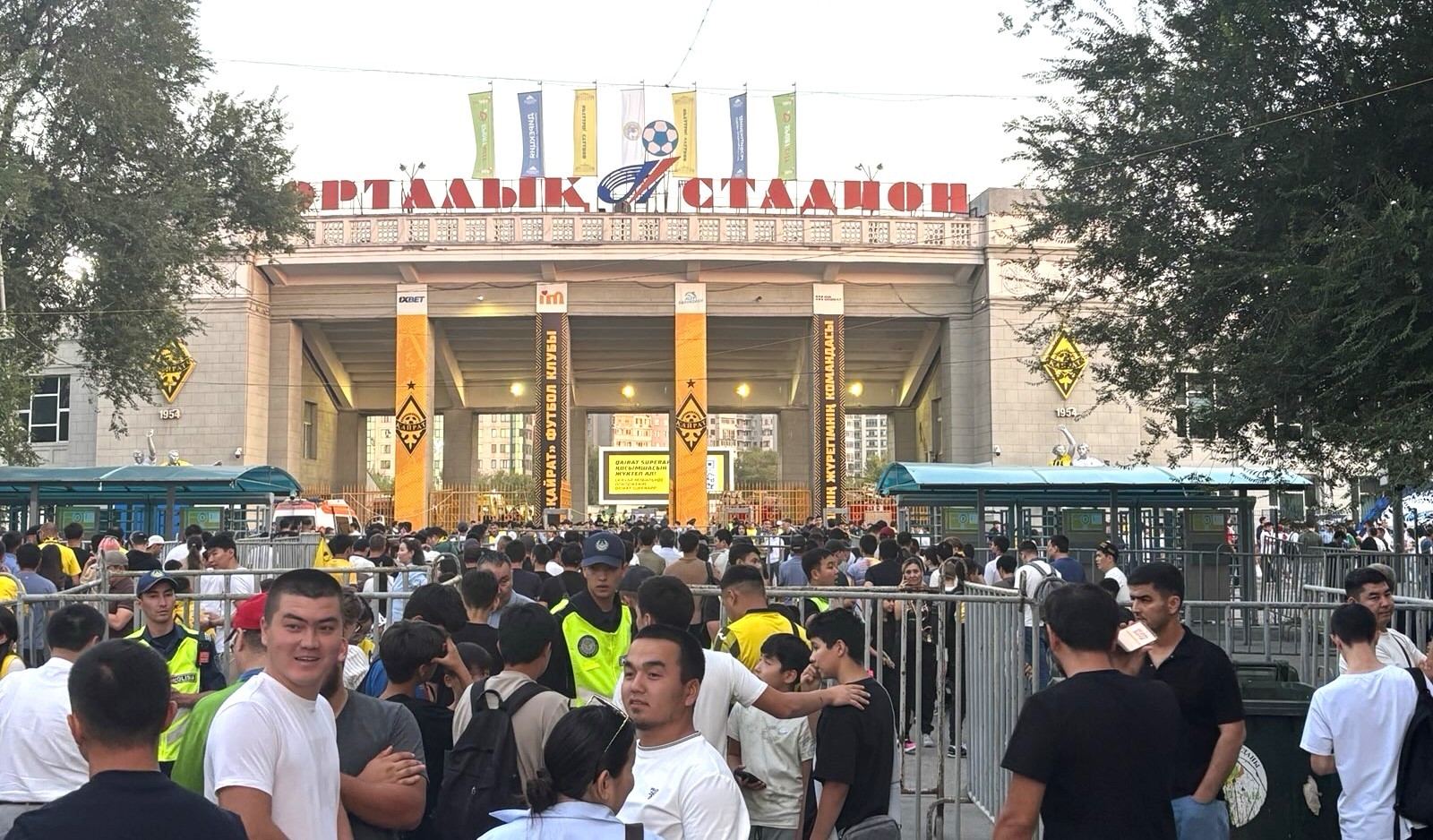
Kairat has seen packed attendances for both its league and Champions League games this season; image: Joe Luc Barnes
New Signings
Kairat’s campaign is not the only tailwind for Kazakh football. The domestic season will start in March, and the Kazakh league’s profile has been given a further boost after two high-profile signings this week.
The first of these was Luis Nani, the former Manchester United winger, who has joined FK Aktobe. The following day, Kaysar Kyzylorda made an even more unlikely splash by signing Victor Moses, once of Chelsea.
Earlier in their careers, the pair gained fame as regulars in the English Premier League. While neither was a superstar, both were part of the furniture of the competition, the type of player known as a “Barclaysman” to nostalgic fans.
Nani initially struggled to stand out in a Manchester United side that included Cristiano Ronaldo, Wayne Rooney, Carlos Tevez, and a silvery Ryan Giggs, but he nevertheless became a key part of title-winning sides in 2011 and 2013.
He retired from football over a year ago, saying that he wished to focus on setting up his own academy, but the 39-year-old appears to have had a change of heart.
He arrived in Aktobe on Monday morning on a private jet and was given the traditional Kazakh greeting of baursak (fried bread) upon disembarking.
“I was very impressed with the club’s vision for the future and will work hard to take us to new heights,” he said in a statement on his Instagram page.
Meanwhile, 1,000 kilometers away, Moses was presented to the Kyzylorda public. In the subsequent press conference, his agent claimed that there was interest from other clubs in Kazakhstan, although Kaysar’s “ambition” led him to choose them.
The moves came as a major surprise to the football world, with neither player known to have links to Kazakhstan, although both have spent time in Russia. Moses spent four years at Russian side Spartak Moscow from 2021 to 2024, while Nani came to Moscow to participate in two separate friendly competitions last year, in May and September.
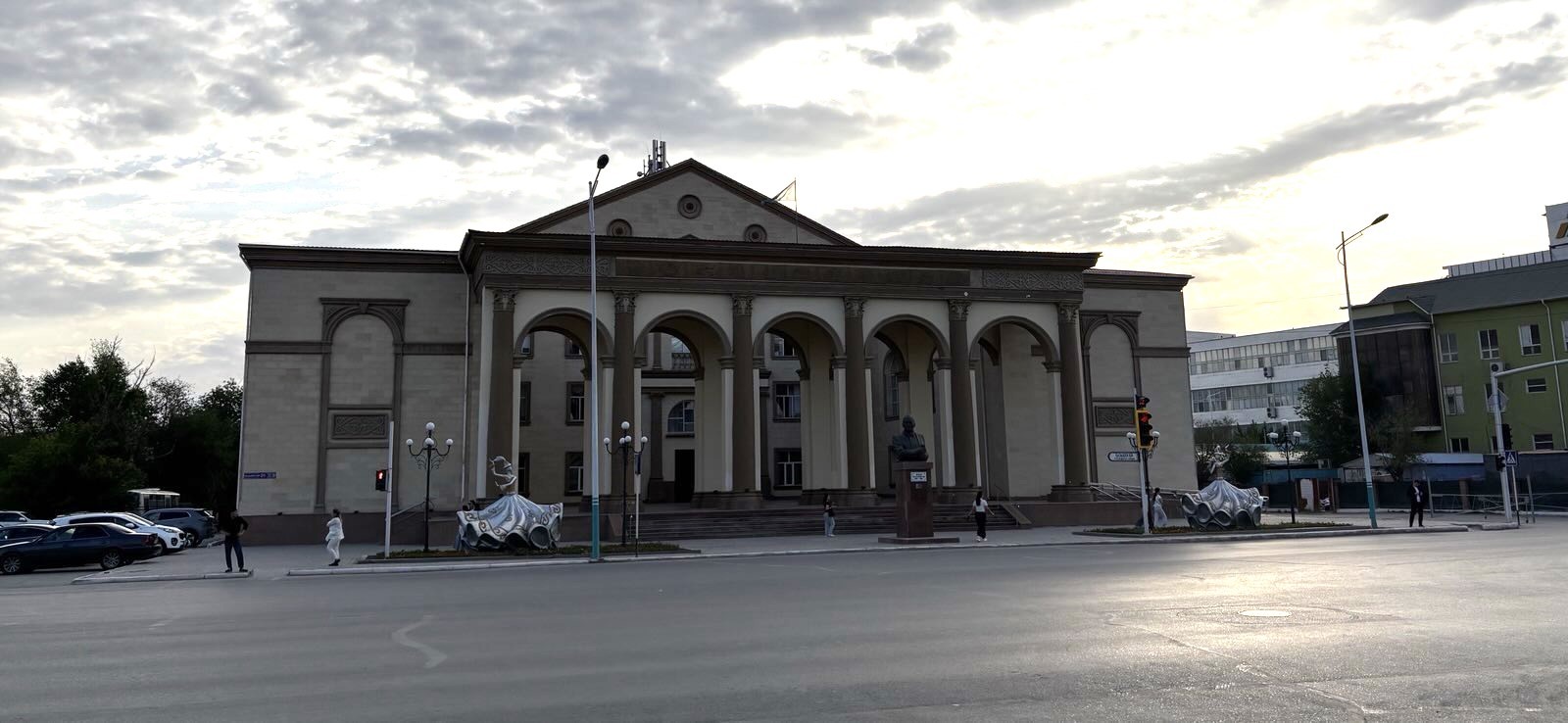
The main square in Kyzylorda; image: Joe Luc Barnes
The New Order
Whatever the players’ motivations, their arrivals have come at an interesting time for Kazakh football. The league will increase in size this season, from fourteen to sixteen teams. Clubs from Aktau, Pavlodar, and Ust-Kamenogorsk have all been added to the competition in the hope of increasing both the number of games and its visibility across the country.
Meanwhile, half a dozen clubs, including Kaysar and Aktobe, have come under new ownership in the off-season as part of President Tokayev’s plans to privatize the sport and remove dirty money from the game.
Islamgali Kozbakov acquired Kaysar in October, whereas Aktobe was bought earlier this month by Nurlan Artykbayev. They are respectively the owners of TAU Group and Qazaq Story, both major construction firms.
Other clubs purchased by Kazakhstan’s oligarchs include Shakhter Karaganda by Timur Turlov, the Russian-born owner of Freedom Bank, and Zhenis Astana, purchased by his rival Mikheil Lomtadze of Kaspi.
Whether this will remove dirty money from the game is up for debate, but it will at least mean that taxpayers will have washed their hands of a sport often known for corruption. Local governments will also no longer be funding the purchase of expensive foreign players – something that Tokayev has now explicitly banned by law.
However, the prospect of oligarchs bringing foreign stars into the country is quite different, and it has even led fans of other clubs to be excited by the prospect.
“Such players will undoubtedly draw attention to the league,” said Kairat fan Mutair. “The number of fans will increase, and the image of the championship will improve.” That said, he warned that players should be purchased for their quality, rather than simply for marketing purposes.
Relatively successful examples of superstar signings in Central Asia include Rivaldo, who signed a €10 million contract for Tashkent club Budyonkor in 2008, while in Kazakhstan, former Arsenal forward Andrei Arshavin played for three seasons at Kairat in the twilight of his career.
While Nani, at 39 and having spent a year out of the game, is unlikely to be lighting up any stadiums, the relatively youthful Moses could well prove a key asset for Kaysar.
At Kairat, fresh from their European humbling, there are no plans to turn to the superstars of yesteryear. Boranbaev will continue to do things his way. “Sustainable growth of a team and a league is not built solely on stars. Rather, investment in academies and youth, the quality of club management, work, and sporting culture,” he said.