• KGS/USD = 0.01144 0%
  • KZT/USD = 0.00213 0%
  • TJS/USD = 0.10456 0.19%
  • UZS/USD = 0.00008 0%
  • TMT/USD = 0.28490 0%
  • KGS/USD = 0.01144 0%
  • KZT/USD = 0.00213 0%
  • TJS/USD = 0.10456 0.19%
  • UZS/USD = 0.00008 0%
  • TMT/USD = 0.28490 0%
  • KGS/USD = 0.01144 0%
  • KZT/USD = 0.00213 0%
  • TJS/USD = 0.10456 0.19%
  • UZS/USD = 0.00008 0%
  • TMT/USD = 0.28490 0%
  • KGS/USD = 0.01144 0%
  • KZT/USD = 0.00213 0%
  • TJS/USD = 0.10456 0.19%
  • UZS/USD = 0.00008 0%
  • TMT/USD = 0.28490 0%
  • KGS/USD = 0.01144 0%
  • KZT/USD = 0.00213 0%
  • TJS/USD = 0.10456 0.19%
  • UZS/USD = 0.00008 0%
  • TMT/USD = 0.28490 0%
  • KGS/USD = 0.01144 0%
  • KZT/USD = 0.00213 0%
  • TJS/USD = 0.10456 0.19%
  • UZS/USD = 0.00008 0%
  • TMT/USD = 0.28490 0%
  • KGS/USD = 0.01144 0%
  • KZT/USD = 0.00213 0%
  • TJS/USD = 0.10456 0.19%
  • UZS/USD = 0.00008 0%
  • TMT/USD = 0.28490 0%
  • KGS/USD = 0.01144 0%
  • KZT/USD = 0.00213 0%
  • TJS/USD = 0.10456 0.19%
  • UZS/USD = 0.00008 0%
  • TMT/USD = 0.28490 0%

Drone Delivery Pilot Project to Launch in Almaty

A pilot project for drone-based goods delivery is set to launch in Kazakhstan’s largest city, Almaty. The initiative follows the signing of a memorandum between the Ministry of Artificial Intelligence and Digital Development of Kazakhstan and the private company Freedom Lifestyle.

According to the ministry, the agreement outlines plans to jointly test drone delivery services in urban settings, with an emphasis on safety, regulatory compliance, and public convenience. Freedom Lifestyle will finance and implement the project, integrating unmanned delivery into its digital platforms. Since early 2025, the company has been building a team of drone operators and testing technology at its Freedom X R&D laboratory.

The ministry will focus on developing regulatory frameworks, ensuring aviation safety, and facilitating the integration of drone technology into the urban infrastructure. Gizzat Baitursynov, Chairman of the Committee on Digital Assets and Breakthrough Technologies, stated that the pilot phase will help test the system in real-world conditions and inform the creation of long-term regulatory solutions.

The pilot will involve drone delivery of food, daily necessities, and medicines. Each drone will be capable of carrying up to 10 kilograms over a 3-kilometer radius between locations in the upper and central parts of the city. Flights are scheduled to take place during daylight hours and in favorable weather.

To minimize risks, drones will operate primarily over green zones and along designated street corridors. Each vehicle is equipped with safety systems, including parachutes and autonomous control in case of communication loss. As the system’s safety and efficiency are validated, the number of drones and service coverage will be expanded, including potential rollouts in rural areas.

Kazakhstan has already seen increasing adoption of drone technologies. As previously reported by The Times of Central Asia, unmanned systems are currently used for agricultural land monitoring and are being developed for public safety applications.

Development Spending in Kyrgyzstan Surpasses Social Spending for the First Time

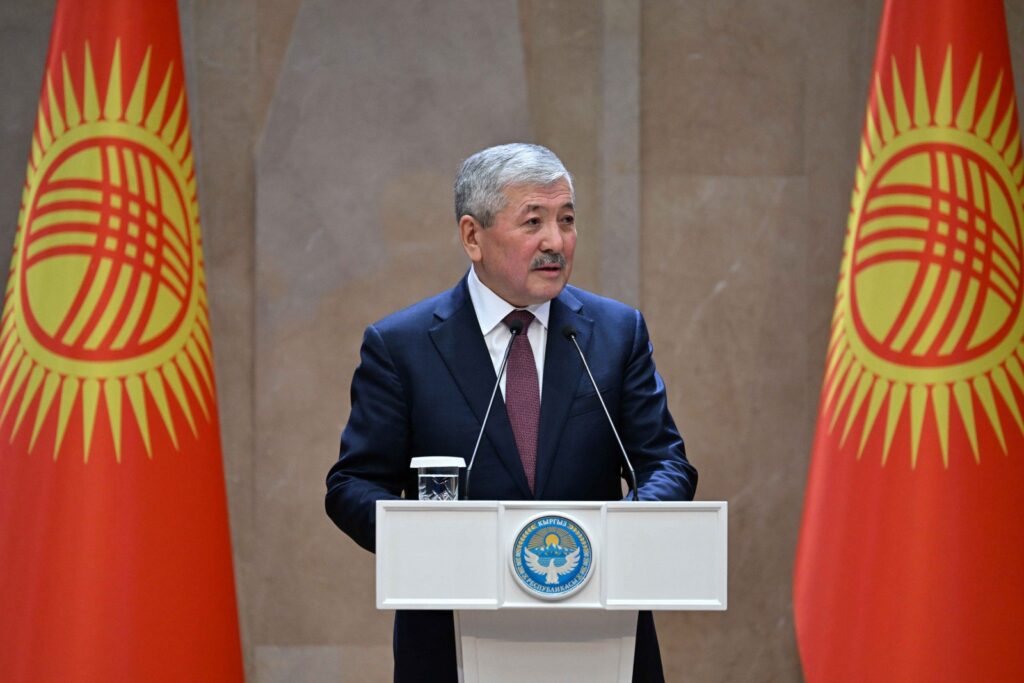
The Kyrgyz government has reported strong economic performance in 2025, highlighting robust GDP growth and strengthened public finances. At a year-end meeting, Chairman of the Cabinet of Ministers Adylbek Kasymaliev announced that all state objectives had been met despite challenging conditions.

According to Kasymaliev, gross domestic product is expected to grow by more than 10% by year’s end, positioning Kyrgyzstan among the global leaders in economic growth. The country’s GDP reached $20.5 billion, and for the first time in its history, the consolidated budget surpassed $11.5 billion. A budget surplus of $392 million was recorded, which Kasymaliev described as a sign of growing financial stability.

He emphasized the country’s accelerated infrastructure development, with 341 new facilities commissioned in 2025. Projects include roads, parks, cultural and sports centers, and residential buildings, many implemented under State Mortgage Company initiatives. Notably, for the first time, development expenditures outpaced social expenditures, a shift aligned with the recommendations of international financial institutions.

Macroeconomic improvements were also supported by data from the National Bank of Kyrgyzstan. As of the third quarter of 2025, the banking sector showed strong lending growth: the overall loan portfolio rose by 10.5% over the quarter and approximately 33% year-on-year. Consumer loans made up the largest share at 16.6%, followed by mortgages at 10.5% and agricultural loans at 3.1%.

Expansion in the construction sector has been driven by both state spending and foreign investment. Meanwhile, the dollarization of the loan portfolio continued to decline, falling to 17.8% from over 20% at the start of the year.

“High activity among the population and businesses has contributed to an increase in lending in the national currency over the nine months of 2025,” the National Bank stated.

Are Kazakhstan’s Small Businesses Really Leaving Over Taxes?

As Kazakhstan prepares for tax reforms set to take effect in 2026, a new wave of panic has surfaced in the national discourse, one suggesting that small businesses are facing a stark choice: shut down or relocate to neighboring countries promising more favorable tax environments.

This narrative has gained traction twice in the second half of 2025. The first wave came in mid-autumn, triggered by reports suggesting that Kazakhstani entrepreneurs were looking to move operations to Kyrgyzstan or Uzbekistan. These claims quickly spread across Kazakh social networks, particularly Threads.

However, early signs indicated that the alarm was not being sounded by small businesses themselves, but by representatives of the B2B services sector, especially consultants and accountants. Media outlets amplified comments that stirred fear, reinforcing what increasingly appeared to be media-driven panic.

One such moment came in late September when the Kazakhstan Association of Tax Consultants hosted a presentation by its chairman, Saken Karin, titled “Tax Reality 2026: Opportunities and Risks.” Karin warned that the proposed reforms would “tear apart the B2B and B2C sectors,” criticizing state approaches to tax administration.

Even then, experts argued that large-scale relocation of Kazakhstani businesses made little practical sense.

“Which Kazakhstani businesses can realistically relocate to Kyrgyzstan? Probably only IT companies, which are location-independent. Most SMEs in Almaty rely on the quasi-public sector or the domestic market, which is considerably larger and wealthier than that of our neighbors,” said financier Rassul Rysmambetov.

The numbers back this up: in 2024, the economy of Almaty alone reached $60 billion, compared to Kyrgyzstan’s national GDP of approximately $17.5 billion.

Despite this, a second wave of panic is now gaining momentum, this time shifting focus to Uzbekistan as a destination for potential business migration. Once again, social networks, particularly Threads, are amplifying the noise, citing interviews such as one with tax expert Maxim Baryshev, who praised the tax systems of Uzbekistan and Kyrgyzstan.

Baryshev represents the professional accounting organization Uchet.kz. His colleague, Uchet.kz manager Timur Abiev, has previously spoken out against what he views as unfounded panic surrounding tax reform.

Despite growing anxiety on social media, government officials have yet to launch a strong counter-narrative. This lack of response reinforces the idea that panic is being stoked by peripheral sectors rather than the business community itself.

When Finance Minister Madi Takiev was asked about claims of a mass relocation of small businesses to neighboring countries, he dismissed them as unfounded. He argued that tax thresholds and turnover requirements in those countries are broadly comparable to Kazakhstan’s and noted that businesses relocating abroad would still be subject to domestic taxation if their economic center of interest remained in Kazakhstan, making such moves economically unviable.

As for the accounting industry, its vocal opposition to reform may be tied to structural weaknesses. Kazakhstan’s accounting sector has been slow to adapt to changing demands and is struggling to train enough professionals to meet market needs. The number of established training institutions remains small.

A recent government meeting focused on SME support included plans for the Ministry of Finance to launch a “People’s Accountant” campaign in early 2026. The program aims to assist individual entrepreneurs and small businesses in preparing and submitting accounting and tax reports. It will include online consultations via official platforms and Telegram, as well as webinars and seasonal advisory sessions.

With the state stepping in to support small businesses and build accounting capacity, existing players in the professional services market may indeed feel under pressure. Whether this justifies the ongoing panic is another matter.

Uzbekistan Proposes Ban on Marriages Between Relatives

Uzbekistan’s Ministry of Justice has drafted legislation that would ban marriages between distant blood relatives, including unions between uncles and nieces, aunts and nephews, and cousins up to the third degree, UzNews.uz reported.

The proposed penalties for violating the ban include fines or correctional labor of up to two years. Exceptions would apply only in cases where one of the prospective spouses is an adopted child and no biological relationship exists.

Under current law, Uzbekistan’s Family Code prohibits marriages between close blood relatives in a direct ascending or descending line, as well as between full and half-siblings and between adoptive parents and adopted children.

The proposal follows alarming findings from a recent study highlighting the genetic risks associated with consanguineous marriages. According to Zamin.uz, researchers from the Center for Advanced Technologies have identified dozens of new genetic mutations in Uzbek individuals.

The study revealed that every second child tested carried a hereditary mutation, and nearly 86% of children were found to be carriers of at least one damaged gene, twice the international average. Researchers attribute this trend to the high prevalence of kinship marriages, which in some Uzbek regions account for roughly one-quarter of all unions.

Experts warn that these genetic anomalies not only increase the likelihood of hereditary disorders but also elevate the risks of diabetes, cardiovascular conditions, and cancer.

The study’s authors strongly recommend introducing genetic testing for couples prior to marriage as a public health measure.

Bishkek Officially Inaugurates Central Asia’s First Waste-to-Energy Plant

Bishkek marked a major environmental milestone on December 27 with the official inauguration of Central Asia’s first waste-to-energy plant. President Sadyr Japarov attended the ceremony, underscoring the project’s strategic and environmental importance.

The facility received its first pilot batch of municipal solid waste on November 14 and has since become the region’s first operational plant generating electricity through waste incineration.

Located at Bishkek’s primary landfill, the plant was constructed by China’s Hunan Junxin Environmental Protection Co. Ltd., which invested $95 million in the project. Initially, the facility will process 1,000 tons of waste per day, with future expansion plans to increase capacity to 3,000 tons.

The plant is equipped with advanced technology and complies with international environmental standards. It also includes a processing line to convert slag and ash from incineration into construction materials.

Speaking at the ceremony, Japarov said the plant would significantly improve the capital’s environmental conditions and contribute to electricity generation. He noted that the facility was built in just 1.5 years and operates under a 35-year concession agreement, after which it will be fully transferred to the state.

Designed to process up to 365,000 tons of waste annually, the plant features a 30 MW turbo-generator power unit that will save approximately 80,000 tons of coal and reduce carbon dioxide emissions by about 100,000 tons per year.

Japarov also met with residents living near the landfill. Many shared that they had long suffered from health issues due to constant smoke from burning garbage and waste blown by the wind. They expressed hope that the new plant would dramatically improve local living conditions.

Opened in 1974, Bishkek’s municipal landfill has accumulated around 20 million tons of waste. In recent years, the city has struggled to manage growing volumes of solid waste, receiving up to 1,500 tons per day which has severely impacted the urban environment.

The Bishkek plant is the first of three waste-to-energy projects by Hunan Junxin in Kyrgyzstan. In June 2025, the company began constructing a similar facility in Osh, the country’s second-largest city. On October 25, it launched another plant in Karakol, the administrative center of Issyk-Kul region.

Hunan Junxin is also expanding regionally. In August, Kazakhstan’s Ministry of Ecology and Natural Resources announced that the company would build Kazakhstan’s first waste-to-energy plant in Almaty.

Kazakhstan vs. Uzbekistan: A Footballing Derby with an Uncertain Outcome

The Uzbekistan national football team has qualified for the 2026 World Cup, which will take place across three North American countries: the U.S., Canada, and Mexico. Meanwhile, one of Kazakhstan’s leading clubs, FC Kairat Almaty, continues to gain experience competing in the UEFA Champions League. Football in Central Asia has become a mirror of the region’s growing economic and political ambitions, with Uzbekistan and Kazakhstan at the forefront. Their rivalry, which dates back to the Soviet era, has adapted to this new chapter.

Kazakhstan and the Road to Europe

Matches between Almaty’s Kairat and Tashkent’s Pakhtakor were once marquee events during the Soviet era, filling stadiums and energizing fans across the republics. Following the collapse of the USSR, however, the footballing paths of these two historical rivals began to diverge.

Initially, both Kazakhstan and Uzbekistan joined the Asian Football Confederation (AFC), which includes countries from across Asia and parts of the Pacific, including former Oceania Football Confederation members such as Australia and Guam.

Kazakhstan became a full member of the AFC in 1992, followed by Uzbekistan in 1994. However, Kazakhstan soon grew disillusioned with the level of competition within the AFC and began to explore other avenues. Its early attempts to join UEFA were rebuffed in the mid-1990s. Rakhat Aliyev, then head of the Football Union of Kazakhstan and son-in-law of former President Nursultan Nazarbayev, later described the process as being dismissed “without really getting to the heart of the matter.”

Despite this, both Kazakhstan and Uzbekistan quickly showed they were a cut above most AFC members at the time. Kazakhstan won the inaugural Central Asian Cup in 1992, while Uzbekistan claimed gold at the 1994 Asian Games in Hiroshima, defeating China 4-2 in the final.

Eventually, Kazakhstan succeeded in joining UEFA. Spearheaded by Aliyev, the Football Union of Kazakhstan (FSC) lobbied hard for admission, culminating in meetings with FIFA and UEFA presidents Lennart Johansson and Joseph Blatter in Moscow in late 2000 and early 2001. The AFC issued a statement on May 10, 2001, allowing Kazakhstan to make its own decision, and five days later Johansson confirmed that UEFA would welcome Kazakhstan as its 52nd member.

“Joining UEFA has given all of us who work in football a powerful boost,” Aliyev said at the time. “We will strive to use this momentum to raise the level of our national football.”

Uzbekistan and the Central Asian Football Association

Unlike Kazakhstan, Uzbekistan chose to remain in the AFC, where it has steadily risen in prominence. In 2014, it became a founding member of the Central Asian Football Association (CAFA), a regional sub-group within the AFC. Officially operational since 2015, CAFA also includes Afghanistan, Iran, Kyrgyzstan, Tajikistan, and Turkmenistan. The organization is currently chaired by Rustam Emomali, son of Tajik President Emomali Rahmon.

Uzbekistan is ranked second in the CAFA, behind Iran, and has consistently reached the quarterfinals of the AFC Asian Cup in 2004, 2007, 2015, and 2023. Much of this success is due to sustained investment in youth development, training systems, and football infrastructure.

“Uzbekistan is the best country in Central Asia in terms of football development,” said former Kyrgyz national team coach Alexander Krestinin, who currently manages a club in Tashkent.

These efforts culminated in a historic moment: Uzbekistan qualified for the 2026 World Cup. A goalless draw with the UAE in the ninth round of the third stage of Asian qualifiers secured second place in Group A with 18 points, clinching a direct berth with a game to spare.

Though it remains to be seen how the team will perform in North America, experts widely regard this iteration of the national team as its strongest ever. Former head coach Srečko Katanec, a seasoned Slovenian tactician, spent four years building a disciplined, tactically mature squad with a strong youth foundation. Fabio Cannavaro, the former Italy captain and 2006 Ballon d’Or winner, will lead Uzbekistan at the 2026 World Cup

Key players include defender Abdokadir Khusanov, who plays for Manchester City, attacking midfielder Abbosbek Faizullaev of CSKA Moscow, Roma striker Eldor Shomurodov, and creative midfielder Oston Urunov, currently with Persepolis in Iran.

“Compared to Kazakhstan, Uzbekistan has made great strides in football development. They were the first in Central Asia to reach the World Cup, and Khusanov is now playing in the English Premier League,” noted Andrei Kanchelskis, the former Manchester United and Russia winger who has coached in both Uzbekistan and Kazakhstan. “Yes, Kazakhstan has some good players, but persistent problems hinder progress. Uzbekistan’s infrastructure is now among the best in the post-Soviet space.”

Kanchelskis’ assessment may sting for Kazakh fans, but FIFA rankings echo his sentiment. Uzbekistan currently sits at 50th in the world, while Kazakhstan lags at 114th, just ahead of Mauritania.

At least for now, this round of the Central Asian football rivalry appears to go to Uzbekistan.