• KGS/USD = 0.01144 0%
  • KZT/USD = 0.00212 0%
  • TJS/USD = 0.10432 0%
  • UZS/USD = 0.00008 0%
  • TMT/USD = 0.28490 0%
  • KGS/USD = 0.01144 0%
  • KZT/USD = 0.00212 0%
  • TJS/USD = 0.10432 0%
  • UZS/USD = 0.00008 0%
  • TMT/USD = 0.28490 0%
  • KGS/USD = 0.01144 0%
  • KZT/USD = 0.00212 0%
  • TJS/USD = 0.10432 0%
  • UZS/USD = 0.00008 0%
  • TMT/USD = 0.28490 0%
  • KGS/USD = 0.01144 0%
  • KZT/USD = 0.00212 0%
  • TJS/USD = 0.10432 0%
  • UZS/USD = 0.00008 0%
  • TMT/USD = 0.28490 0%
  • KGS/USD = 0.01144 0%
  • KZT/USD = 0.00212 0%
  • TJS/USD = 0.10432 0%
  • UZS/USD = 0.00008 0%
  • TMT/USD = 0.28490 0%
  • KGS/USD = 0.01144 0%
  • KZT/USD = 0.00212 0%
  • TJS/USD = 0.10432 0%
  • UZS/USD = 0.00008 0%
  • TMT/USD = 0.28490 0%
  • KGS/USD = 0.01144 0%
  • KZT/USD = 0.00212 0%
  • TJS/USD = 0.10432 0%
  • UZS/USD = 0.00008 0%
  • TMT/USD = 0.28490 0%
  • KGS/USD = 0.01144 0%
  • KZT/USD = 0.00212 0%
  • TJS/USD = 0.10432 0%
  • UZS/USD = 0.00008 0%
  • TMT/USD = 0.28490 0%

After Leaders’ Calls with Trump, Kazakhstan and Uzbekistan’s G20 Invitations Are a Signal to Central Asia

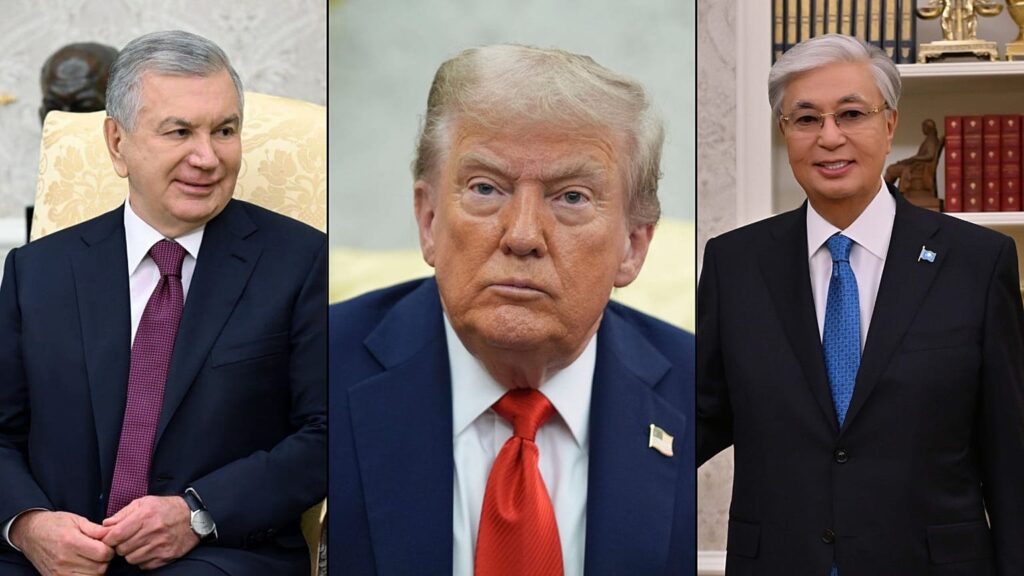
Reports of telephone conversations between the presidents of Kazakhstan and Uzbekistan with U.S. President Donald Trump came the day before a notable event on the international agenda. Trump has publicly announced his intention to invite the leaders of the two most influential Central Asian countries to the G20 summit, which the U.S. plans to hold in Miami in 2026.

Despite the brevity of the official releases, they indicate not only the steady development of bilateral relations, but also a broader geopolitical signal.

This statement has attracted increased interest from the international media, from the Los Angeles Times and Chicago Tribune to Agenzianova and Economic Times, which in itself highlights the increased attention to the Central Asia region.

The report by Akorda, Tokayev’s press service, on the conversation between him and the U.S. president emphasizes that the conversation was “lengthy”. Tokayev noted the complexity of resolving the war in Ukraine, expressing his view that the territorial issue remains key and requires compromises, taking into account the real situation “on the ground.” 

In this regard, Kazakhstan called on all parties to show patience and flexibility, stressing that it does not seek to act as a mediator but is ready to provide a platform for negotiations if necessary.

It is noteworthy that the topic of peace talks is reflected in the Kazakh release but is absent from Trump’s own statement. At the same time, the Akorda statement makes no mention of a possible invitation to Kazakhstan to attend the G20 summit.

The situation is similar with the official statement from the administration of Shavkat Mirziyoyev. It focuses on the growth in political contacts, the launch of joint projects worth tens of billions of dollars, the creation of an American-Uzbek business and investment council, as well as the development of regional cooperation and the C5+1 format. However, possible participation in the G20 summit is also not mentioned.

Meanwhile, Trump himself wrote directly on his social network Truth Social that the U.S. will host the G20 summit next year and intends to invite the presidents of Kazakhstan and Uzbekistan as guests.

At this point, it appears to be only an intention, not a formal invitation. Nevertheless, even this signal indicates a noticeable shift in the priorities of U.S. foreign policy towards Central Asia. If Kazakhstan and Uzbekistan receive an official invitation (even as guests), this will be a de facto recognition of their role as “middle powers” in contemporary world politics.

The context of what is happening also deserves attention. The telephone conversations with Trump took place immediately after an informal meeting of CIS leaders in St. Petersburg, an event that was more of a ritual in nature. 

The last summit was notable for the conspicuous absence of the president of Azerbaijan, Ilham Aliyev, despite previously announced meetings in the Kremlin. Officially, Baku explained that this was due to Aliyev’s busy schedule.

Although there is still considerable time before the G20 summit, preparations for it have already begun. In mid-December, the first meeting of G20 “sherpas” was held in Washington, featuring representatives of the world’s leading economies and international associations. 

Poland was the only full guest of the U.S. presidency this year. The U.S. State Department announced that Washington had identified the key priorities for the upcoming summit: stimulating economic growth, access to reliable and affordable energy, and the development of innovative technologies.

The G20 is not an international organization in the classical sense. In essence, it is a forum whose decisions are advisory in nature and are often complicated by the divergent interests of its participants. However, even under such conditions, the possible participation of Kazakhstan and Uzbekistan would open up a rare opportunity for them to directly convey their position to the leaders of the world’s leading economies. 

This is especially true given that the countries of Central Asia have their own agenda and resources that they are ready to offer, in the context of global economic development and sustainable growth.
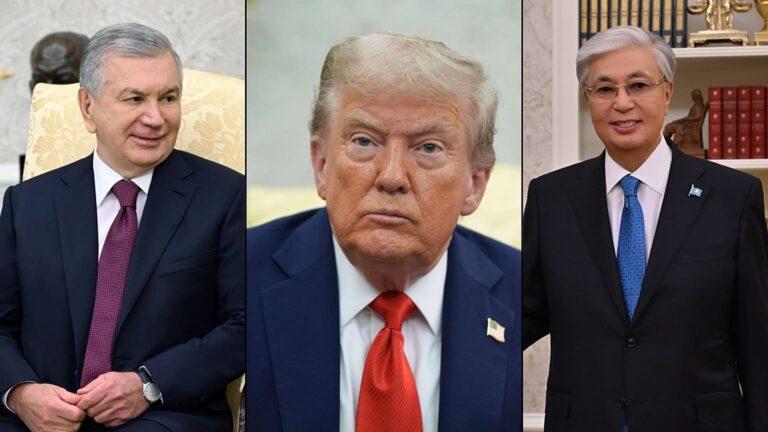

Trump Signals G20 Invitation in Outreach to Kazakhstan and Uzbekistan

Recent telephone conversations between the presidents of Kazakhstan and Uzbekistan and United States President Donald Trump have generated significant international attention. Beyond routine diplomatic communication, the exchanges carry broader geopolitical implications for Central Asia.

Trump has publicly stated his intention to invite the leaders of both countries to the G20 summit, which the United States will host in Miami in 2026. The announcement drew widespread international media coverage, highlighting growing global interest in the region.

Official statements from Kazakhstan’s presidential office said that President Kassym-Jomart Tokayev held a lengthy conversation with Trump that covered a range of issues, including the conflict in Ukraine. Tokayev described the situation as complex, noting that territorial concerns remain central and require realistic compromises. He reiterated Kazakhstan’s readiness to offer a platform for negotiations, while clarifying that the country does not seek to act as a mediator.

Notably, Kazakhstan’s official summary did not mention a potential G20 invitation, nor did the U.S. readout refer to peace talks. Uzbekistan’s statement likewise focused on strengthened political engagement, the launch of joint projects worth billions of dollars, the establishment of an American-Uzbek Business and Investment Council, and expanded regional cooperation, including within the C5+1 format, without explicitly mentioning the G20 summit

Despite these omissions, Trump confirmed on his social network Truth Social that the U.S. plans to host the G20 next year and intends to invite the presidents of Kazakhstan and Uzbekistan as guests. At this stage, the announcement appears to be an expression of intent rather than a formal invitation. Nevertheless, the signal marks a notable shift in U.S. foreign policy priorities toward Central Asia.

Even guest invitations for Kazakhstan and Uzbekistan would amount to recognition of their growing roles as “middle powers” in global affairs, giving them a rare platform to engage directly with the world’s leading economies.

Regional Context and Broader Dynamics

The timing of the calls is significant. They followed an informal meeting of Commonwealth of Independent States (CIS) leaders in St. Petersburg, an event observers characterized as largely ceremonial. The summit was marked by the conspicuous absence of Azerbaijan’s president, who cited scheduling conflicts for his nonattendance.

Preparations for the 2026 G20 summit are already underway. In mid-December, the first meeting of G20 Sherpas was held in Washington, bringing together representatives from the world’s leading economies and international organizations. Poland was invited as the only full guest of the U.S. presidency for this meeting. The State Department outlined key priorities for the upcoming summit: stimulating economic growth, ensuring access to reliable and affordable energy, and advancing innovative technologies.

While the G20 is a forum rather than a formal international organization, and its decisions are advisory and shaped by differing member interests, participation would still provide Kazakhstan and Uzbekistan with an influential platform. Direct engagement at this level would allow both countries to present their priorities on economic development and sustainable growth to a global audience.

Dushanbe Teen Develops Tajikistan’s First AI Legal Assistant

Tajikistan has launched its first AI-powered legal assistant, designed to simplify access to legal information by explaining laws in plain language. The project, called Moni, was developed by 15-year-old Foteh Azizov, a tenth-grade student at School No. 6 in Dushanbe. Already, the platform is being used not only by the general public but also by practicing lawyers. 

Azizov said the idea for Moni came from his own experience. While helping with content and promotion at his uncle’s law firm, he noticed how difficult it was for ordinary people and even himself, to understand the complex language used in legal documents.

“Laws are often written in a complicated style, full of terminology,” Azizov explained. “That’s when I came up with the idea of creating a tool that explains the law in simple and accessible language for everyone.”

He pitched the idea to his uncle, who supported the initiative and helped organize the project.

“My motivation only grew, I wanted to build something that could really help people,” Azizov said.

He taught himself the fundamentals of artificial intelligence, working through trial and error to create a functional prototype. A professional programmer later joined the team, assisting with website development and refining the platform’s features.

Since its launch, Moni has proven useful not just to citizens but also to legal professionals, who use it as a convenient reference tool.

The service is a free AI assistant specializing in Tajik law. It helps users locate relevant articles across a wide range of legal areas, including tax, land, labor, civil, and administrative law.

Moni supports queries in multiple languages, including Tajik, Russian, English, and Kazakh. All inquiries are anonymous, and the platform does not collect any personal data. Its responses are based solely on publicly available legal documents.

The most frequently asked questions revolve around taxes, business regulations, employment law, civil rights, and administrative violations.

Looking ahead, Azizov says the team has many ideas for improving the platform, but their immediate goal is to continue developing the current product.

“Our aim is to remain a free, user-friendly resource and become an indispensable legal advisor for everyone,” he said.

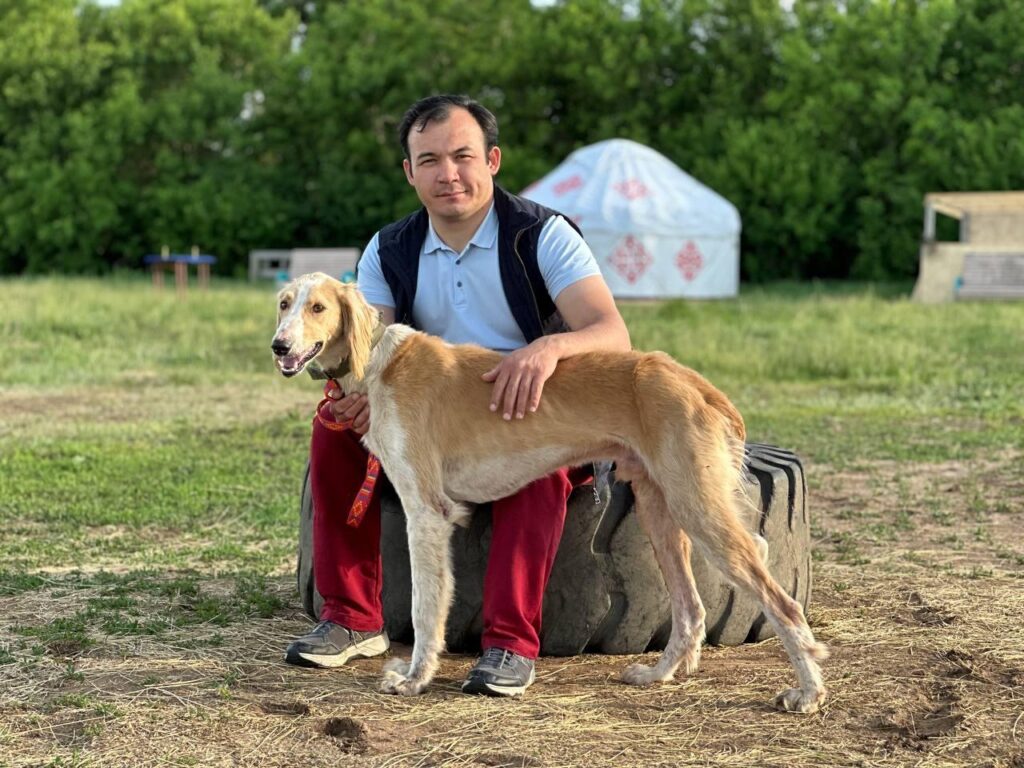
Kazakhstan’s Tazy: The Ancient Hunting Dog of the Steppe

For centuries, nomadic tribes across the steppe that now forms modern Kazakhstan absorbed outside influences and adapted them to local conditions, creating something uniquely Kazakh.

This adaptability is evident in many aspects of steppe life, including the development of the Tazy, the Kazakh greyhound. Bred over generations to protect what nomads valued most, their livestock, the Tazy is now considered one of the seven national treasures of Kazakhstan.

“If we look at history, we can say that the progenitor of the Kazakh breed, the Tazy, was the Arabian greyhound saluki,” said breeder Abzal Dosyman in an interview with The Times of Central Asia. “Arab missionaries brought it to our lands. The Tazy and the saluki are similar, but over time, given the needs of the nomads and the harsh climate of the steppe, the breed adapted and transformed. Here, their descendants were trained to guard livestock and protect people from wolves.”

Dosyman described the unique methods traditionally used to raise Tazys for such a role. As soon as puppies were born, wolf skin was placed nearby so they would learn the predator’s scent. At four or five months, the young dogs were taken on hunts, but only after a brief starvation period. They were then fed wolf meat, which, after the fast, was considered a delicacy.

“Some may see this as cruel,” he acknowledged. “But this is how hunters were raised who dared to face wolves on the steppe. For centuries, Tazys helped Kazakhs protect their herds, which were their livelihood.”

Though known for their gentle nature, Tazys transform during a hunt, becoming fast, fearless, and relentless. “They are friendly toward people and non-aggressive with other animals, but they are implacable toward the grey predator,” Dosyman said.

He noted that many countries have their own hunting greyhounds. Russia has the Borzoi, Kyrgyzstan the Taigan, meaning “graceful,” and Spain the Galgo. All descend, like the Tazy, from the ancient Arabian saluki. But it was in Kazakhstan that the Tazy acquired its distinct characteristics, shaped by the local way of life. In 2024, the General Committee of the Fédération Cynologique Internationale granted provisional recognition to the Kazakh Tazy as an official breed, confirming Kazakhstan as the holder of its breed standard. The FCI currently recognizes 350 breeds worldwide.

Tazy Diplomacy

Following independence, Kazakh enthusiasts began reviving the Tazy and promoting national traditions. In 2019, Dosyman presented a Tazy puppy to President Kassym-Jomart Tokayev, who named it Ronnie. He later received Nancy, and another dog named Nauryz was gifted by breeder Anna Zakharova.

These steps helped draw state-level support for efforts to preserve and expand the Tazy population. A photograph of the grown Tazys at a reception hosted by the French president for the King of Denmark even appeared in international media, symbolizing what Dosyman calls “Tazy diplomacy.”

“This is the moment the Kazakh greyhound becomes a national brand,” he said. “The French have the rooster, the Chinese the panda. Remember when China gifted a panda to another country and it later died due to improper care? The Chinese Foreign Ministry protested. Kazakhstan must also protect its national treasures.”

Created for Hunting, Not for Entertainment

Despite its revered status, the Tazy faces a modern threat: the loss of its inherent hunting instinct, Dosyman warned.

“A new trend unknown to earlier generations is emerging in Kazakhstan: dog racing and coursing. These are spectacular events where dogs chase mechanical or live lures, and spectators admire their speed and agility. There’s nothing wrong with that per se. In Europe, coursing built joyful communities of dog lovers. But in countries where this became an industry, problems followed.”

European-style entertainment is spreading in Kazakhstan, where dogs have traditionally been valued not only as companions but also as protectors. However, Dosyman cautioned that, as in Europe, some now treat dogs as sports equipment.

“A puppy that performs gets training, vet care, and competition entries. But if injured or slowed, the dog is cast off. Some go to shelters, others are simply abandoned. That’s how hundreds of ‘former athletes’ appear, now cared for not by trainers, but by animal rights activists.”

As a result, some countries have imposed regulations or even banned dog racing altogether. “The focus has shifted from ‘how beautifully a greyhound runs’ to ‘what happens to it after the applause ends,’” he said.

Do We Need Coursing?

There is also a lesser-known downside to coursing, Dosyman warned. Unlike real hunts, dogs do not chase live game but artificial lures. “For a true hunting dog, the goal is to catch the prey, to complete the hunt and receive its reward. Without that, the dog performs a series of unfulfilled tasks.”

He continued: “If we raise hunting breeds exclusively for this format, within 10 to 20 years, we could produce lines of dogs whose instinct has faded. Motivation fades when there is no satisfaction in the outcome. Outwardly, they may still run fast, but the internal hunting ‘program’ is being erased.”

If Kazakhstan focuses only on speed and spectacle, he warned, the country could soon face the same controversies seen elsewhere, including protests, scandals, and the abandonment of injured or retired animals.

“We still have time to do things differently,” Dosyman said. “As we develop the sport, we must also talk about rules, about owner responsibility, veterinary oversight, what happens after a dog’s career ends, and who helps rehome former ‘athletes.’ We need not just regulations, but a culture of respect for the Tazy, our national treasure.”

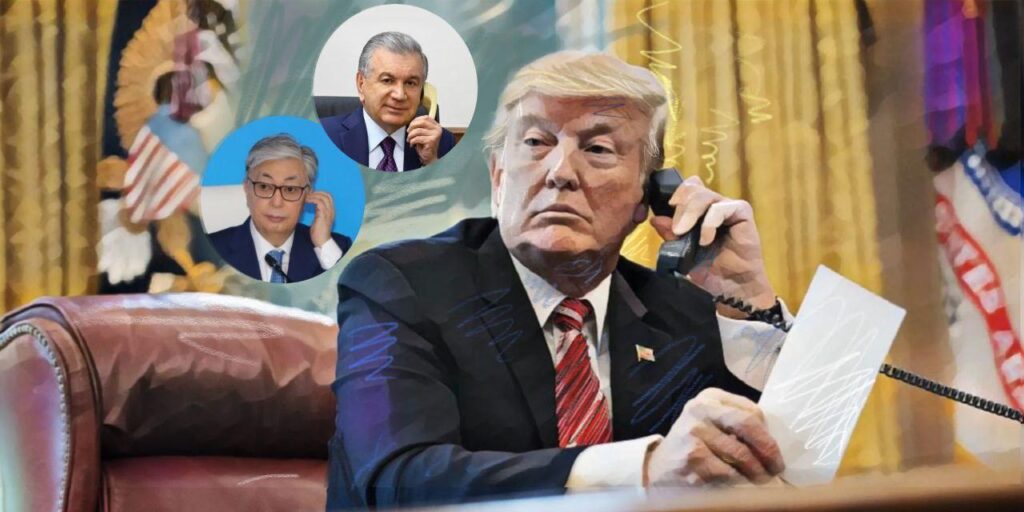
Tokayev, Mirziyoyev Have Telephone Conversations with Trump

According to Akorda, a phone conversation took place today between Kazakhstan’s President Kassym-Jomart Tokayev and U.S. President Donald Trump.

The leaders spoke about their bilateral agenda and the current international situation, including in Ukraine.

Tokayev confirmed his commitment to implementing the agreements reached during his visit to Washington in November of this year. He emphasized the complexity of resolving the war in Ukraine. Tokayev also invited Trump to visit Kazakhstan.

Almost at the same time, Trump wrote on his social media site, Truth Social: “This morning, I had two wonderful phone conversations with Kassym-Jomart Tokayev, President of the Republic of Kazakhstan, and Shavkat Mirziyoyev, President of the Republic of Uzbekistan. We discussed the importance of establishing peace in ongoing conflicts, as well as expanding trade and cooperation between our countries. Relations with both countries are impressive. The United States will host the G20 summit next year, and we will invite both of these leaders to join us as guests at this very important event, which will take place in Miami!”

Central Asia Considers Single Gas Ring to Link Regional Energy Systems

A proposal to connect the five Central Asian capitals into a unified, synchronized gas network has generated widespread debate among regional energy experts following a major industry forum in Tashkent. The idea, referred to as the “Central Asia Gas Ring,” was introduced by Kazakh oil and gas analyst Askar Ismailov during the Central Asia Oil & Gas Forum in early November. An analysis of the proposal was later published by the Uzbek outlet Upl.uz, citing assessments from regional and international experts.

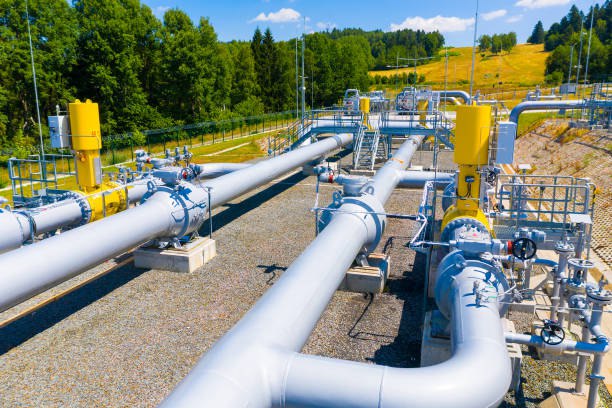
The concept envisions physically linking the gas transportation systems of Uzbekistan, Kazakhstan, Turkmenistan, Kyrgyzstan, and Tajikistan into an integrated regional ring, modeled on the existing Central Asian Unified Power System, which already enables cross-border electricity coordination. According to Ismailov, natural gas should be seen not only as a tradable resource but as a strategic instrument for regional integration and energy security, especially in the context of growing geopolitical volatility.

Experts cited by Upl.uz argue that a gas ring could help countries better manage seasonal fluctuations in demand and reduce the risk of widespread energy shortages. Recent winter blackouts, particularly in Uzbekistan, have heightened concerns about supply resilience. The proposed system could also ensure more stable gas flows to Kyrgyzstan and Tajikistan, which lack significant domestic hydrocarbon resources and frequently experience shortages.

The initiative has attracted interest beyond Central Asia. Valérie Ducrot, head of the Global Gas Center, described the plan as a new model of energy cooperation that could attract international investment if the five participating states align their energy policies. Research groups such as SPIK and SpecialEurasia, also cited in the analysis, view the project as a potential cornerstone of regional infrastructure, aligning national interests around shared goals for stability and integration.

Economic incentives vary across the region. For Turkmenistan, Uzbekistan, and Kazakhstan, the ring could provide enhanced flexibility in export routes and pricing mechanisms. For gas-dependent Kyrgyzstan and Tajikistan, the proposal promises greater energy security, seen as essential for long-term economic and social development. External stakeholders, including China and the European Union, are expected to show interest in financing the project, while Russia is likely to seek continued influence over pricing structures and logistics.

Ismailov estimates the total cost at between $4 billion and $5 billion, with most of the funding needed for modernization of aging Soviet-era pipelines and construction of select new infrastructure segments. While Upl.uz notes that technical and political hurdles remain, the proposal highlights growing momentum toward collective energy solutions in Central Asia.