• KGS/USD = 0.01144 0%
  • KZT/USD = 0.00212 0%
  • TJS/USD = 0.10432 0%
  • UZS/USD = 0.00008 0%
  • TMT/USD = 0.28490 0%
  • KGS/USD = 0.01144 0%
  • KZT/USD = 0.00212 0%
  • TJS/USD = 0.10432 0%
  • UZS/USD = 0.00008 0%
  • TMT/USD = 0.28490 0%
  • KGS/USD = 0.01144 0%
  • KZT/USD = 0.00212 0%
  • TJS/USD = 0.10432 0%
  • UZS/USD = 0.00008 0%
  • TMT/USD = 0.28490 0%
  • KGS/USD = 0.01144 0%
  • KZT/USD = 0.00212 0%
  • TJS/USD = 0.10432 0%
  • UZS/USD = 0.00008 0%
  • TMT/USD = 0.28490 0%
  • KGS/USD = 0.01144 0%
  • KZT/USD = 0.00212 0%
  • TJS/USD = 0.10432 0%
  • UZS/USD = 0.00008 0%
  • TMT/USD = 0.28490 0%
  • KGS/USD = 0.01144 0%
  • KZT/USD = 0.00212 0%
  • TJS/USD = 0.10432 0%
  • UZS/USD = 0.00008 0%
  • TMT/USD = 0.28490 0%
  • KGS/USD = 0.01144 0%
  • KZT/USD = 0.00212 0%
  • TJS/USD = 0.10432 0%
  • UZS/USD = 0.00008 0%
  • TMT/USD = 0.28490 0%
  • KGS/USD = 0.01144 0%
  • KZT/USD = 0.00212 0%
  • TJS/USD = 0.10432 0%
  • UZS/USD = 0.00008 0%
  • TMT/USD = 0.28490 0%

Kazakhstan Boosts Solid Waste Recycling and Environmental Oversight

Kazakhstan is steadily increasing its municipal waste recycling rate, in line with national efforts to transition to a circular economy. According to the Ministry of Ecology and Natural Resources, the recycling rate for newly generated solid waste rose to 28.6% in 2025, up from 25.8% the previous year.

The country generates more than 4.5 million tons of municipal waste annually. To accelerate recycling efforts, the government is deploying a preferential financing mechanism funded by waste collection fees. In 2025, 63 waste management projects were approved, with 22 already financed at a total of approximately $174 million. The overall program allocates more than $360 million to modernize waste collection fleets and develop sorting and recycling infrastructure. Authorities expect these investments to push the solid waste recycling rate to 40% by 2030.

Efforts to eliminate unauthorized landfills are also intensifying. Satellite monitoring identified 3,827 illegal dumps in 2025, of which 91% or 3,464 sites were removed. Environmental and law enforcement agencies recorded over 3,000 environmental violations during joint inspections.

Infrastructure development remains central to Kazakhstan’s waste strategy. Construction is planned for three waste incineration plants in Astana, Almaty, and Shymkent, backed by investment agreements worth approximately $570 million. The facilities are expected to be completed within two to three years.

Kazakhstan’s environmental initiatives are closely tied to international climate commitments. As a signatory to the Paris Agreement and a participant in the UN Framework Convention on Climate Change, the country aims to reduce greenhouse gas emissions by 15% from 1990 levels by 2030. Its Updated National Contribution sets a more ambitious target of a 17% reduction by 2035.

By the end of 2025, regulatory emissions from the country’s largest enterprises are projected to fall by 148,000 tons, or 7.2%, compared to 2022. Transparency has improved through automated monitoring systems, 74 of the 78 installed systems now transmit real-time air pollution data.

Ecosystem restoration remains a national priority. Between 2021 and 2025, 18.1 million trees were planted in populated areas, exceeding initial targets. Under the broader goal of planting 2 billion seedlings, 1.5 billion have been planted over the past five years, with 208 million more planned for 2026. On the dried seabed of the Aral Sea, forest reclamation has been carried out across more than 920,000 hectares.

The Caspian region is another focus area. A new Kazakh Scientific Research Institute of the Caspian Sea has been established by presidential initiative, and Kazakhstan is working with neighboring countries to develop an intergovernmental program for water conservation. The country has also proposed the creation of a UN agency for global water resource management.

Tokayev Proposes Regional AI Partnership Center with Japan in Astana

President Kassym-Jomart Tokayev has proposed establishing a regional center in Astana to facilitate cooperation between Central Asian nations and Japan in digital transformation and artificial intelligence (AI) development.

Speaking at the inaugural summit of the Central Asia-Japan Dialogue, Tokayev endorsed Tokyo’s initiative to build an AI partnership with the region. He noted that Kazakhstan has committed to developing a digital state and highlighted recent milestones, including the launch of the Alem.ai International Artificial Intelligence Center, the deployment of two supercomputers in 2025, and the ongoing implementation of the Digital Qazaqstan strategy.

Kazakhstan is prepared to serve as a platform for regional AI collaboration, Tokayev said, suggesting that the proposed initiative be anchored at the Astana Hub and Alem.ai, both of which possess advanced infrastructure and a growing international tech ecosystem. He expressed particular interest in Japan’s expertise in water management digitalization, including water conservation, scientific research, and remote sensing.

The president also proposed cooperation in sustainable agriculture, citing Kazakhstan’s interest in Japanese technologies for smart farming, drought-resistant crop development, and resource-efficient agricultural practices. He invited Japanese scientists to participate in establishing a joint research platform and proposed holding the first expert meeting in Astana.

Tokayev further emphasized Kazakhstan’s interest in Japanese technology and investment in the energy sector from coal industry modernization and clean energy development to nuclear power. He noted that Kazakhstan supplies roughly 40% of the world’s nuclear fuel and holds substantial reserves of rare earth and critical minerals essential to the global energy transition.

As  previously reported by the Times of Central Asia, Kazakhstan recently launched the region’s most powerful supercomputer and reached an agreement with NVIDIA to roll out AI education programs through the Deep Learning Institute.

From GDP to AI: EAEU Leaders Review Integration Milestones in St. Petersburg

The leaders of the Eurasian Economic Union (EAEU) gathered on December 21 at the Yeltsin Presidential Library in St. Petersburg, Russia, to assess the bloc’s progress and outline future integration priorities. The summit was attended by the leaders of EAEU member states, President of Russia, Vladimir Putin, President of Belarus, Aleksandr Lukashenko, Prime Minister of Armenia, Nikol Pashinyan, President of Kazakhstan, Kassym-Jomart Tokayev, President of Kyrgyzstan, Sadyr Zhaparov, and Chairman of the Board of the Eurasian Economic Commission, Bakytzhan Sagintayev. In an expanded format, representatives of Uzbekistan, Indonesia, Iran, and Cuba also participated.

The meeting took place against the backdrop of continued global economic fragmentation, as the EAEU looks to position itself as a stable integration platform within an increasingly multipolar economic order.

Image: Akorda

Opening the meeting, Vladimir Putin proposed a year-end review and highlighted key decisions aimed at deepening cooperation. He stated that the EAEU has solidified its position as an independent and self-sufficient center within the evolving multipolar world. Putin pointed to rising combined GDP figures and noted that EAEU membership has contributed to economic stability and improved living standards across member states. These assessments framed the EAEU not only as a regional trade bloc but as a long-term economic center adapting to shifting global alignments.

Image: Akorda

Putin also cited progress in building the union’s payment infrastructure, removing trade barriers, and enhancing transport connectivity. Among individual economies, Kyrgyzstan stood out with a GDP growth rate of around 10%. Much of the focus, however, remained on translating macroeconomic gains into deeper market integration across energy, finance, and logistics.

Belarusian President Alexander Lukashenko, addressing the summit as chair of the EAEU, called for renewed approaches to economic engagement with third countries over the next five years. He endorsed deeper ties with what he termed the “global majority,” while acknowledging existing challenges, such as delays in establishing unified energy markets and hesitancy among member states to form a common financial market. Nonetheless, he described the Union State of Russia and Belarus as the “locomotive of integration” in the post-Soviet region. The discussion highlighted a recurring tension for the bloc: expanding external partnerships while still completing core internal market harmonization.

Image: Akorda

Kazakh President Kassym-Jomart Tokayev emphasized the EAEU’s milestone year as it entered its second decade. He projected a 2% increase in the union’s combined GDP in 2025 and noted that intra-union direct investment had surpassed $20 billion. Kazakhstan alone saw a nearly sevenfold increase in EAEU-related investment from $600 million in 2015 to $4 billion in 2024.

Image: Akorda

Tokayev also proposed the systematic integration of artificial intelligence technologies into EAEU operations, from trade forecasting to customs duties assessment. He highlighted the union’s potential as a global transport and logistics hub and advocated for the swift implementation of the Caspian Sea shipping agreement.

Uzbek President Shavkat Mirziyoyev noted that Uzbekistan’s trade with EAEU countries had nearly doubled to $20 billion over its four years of observer status. He called for the phased removal of trade barriers and suggested creating a joint Uzbekistan-EAEU coordination group to address tariff and non-tariff restrictions.

Uzbekistan’s engagement, alongside other observer states and partners, underscored the EAEU’s effort to broaden its reach beyond its original framework. Officials emphasized practical cooperation as a pathway toward gradual market alignment.

Image: Akorda

Kyrgyz President Sadyr Japarov reported that intra-EAEU trade had approached $100 billion in 2025, describing this as a reflection of “trust and genuine interest” among member states. He highlighted a GDP growth rate of 10.2% for Kyrgyzstan over the first eleven months of the year and reaffirmed the country’s focus on food and energy security.

Image: Akorda

The leaders agreed that the pace at which agreed measures are implemented will be critical to maintaining momentum in the Union’s second decade. As the EAEU moves from agenda-setting to execution, the credibility of the bloc will increasingly be judged not by the scale of its ambitions, but by the speed and consistency with which agreed mechanisms are translated into functioning common markets. Kazakhstan will assume the EAEU chairmanship in 2026. The next summit of the Supreme Eurasian Economic Council is scheduled for May 28-29 in Astana.

Kazakh Authorities Open Investigation After Temir Mayor Found Dead

The authorities in Kazakhstan’s Aktobe Region have opened a pre-trial investigation after the mayor (akim) of Temir city, Erkin Dalmagambetov, was found dead on December 20. The Aktobe regional police department confirmed the death and said the circumstances are being established. “Police have opened a pre-trial investigation into the suicide. The circumstances of the incident are being investigated,” according to an official statement.

Local officials also confirmed the death. Almas Zhaksylykov, the akim of Temir District, told reporters that Dalmagambetov was found at home on the evening of December 20 and that authorities were conducting checks. Several Kazakh outlets reported that Dalmagambetov was 46 and left six children.

Dalmagambetov led Temir, a small city in western Kazakhstan, for less than two years. He was appointed on June 3, 2024, after local elections held the day before, according to a Temir District akimat announcement published on the government’s portal.

Temir is the administrative center of the Temir District in the Aktobe Region. The area sits in western Kazakhstan, a region known for energy, mining, and transport routes. The Aktobe Region has a population of about 928,000, based on recent official estimates.

Kazakhstan’s akims serve as local executive leaders, with responsibilities that range from municipal services and budgeting to implementing national programs at a local level. In smaller cities such as Temir, the mayor’s office is often closely tied to day-to-day issues such as utilities, roads, schools, and public order.

The case has drawn wide attention online. The authorities have not announced funeral arrangements or any interim leadership decision for Temir city. The Temir District akimat has not published additional details beyond confirming the death, with the police saying they will not disclose more information during the investigation.

No Disneyland Planned as Uzbekistan and Disney Hold Exploratory Talks

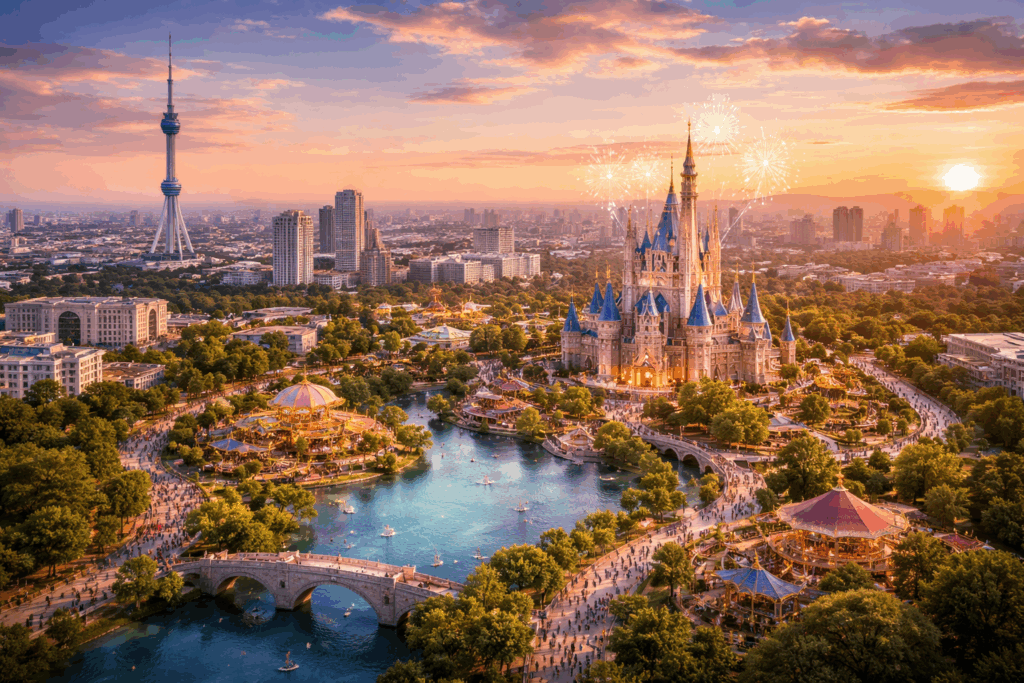
Uzbekistan has held early-stage discussions with The Walt Disney Company on possible cooperation in children’s media and creative industries, but no agreement has been announced to build a Disneyland or theme park in the country.

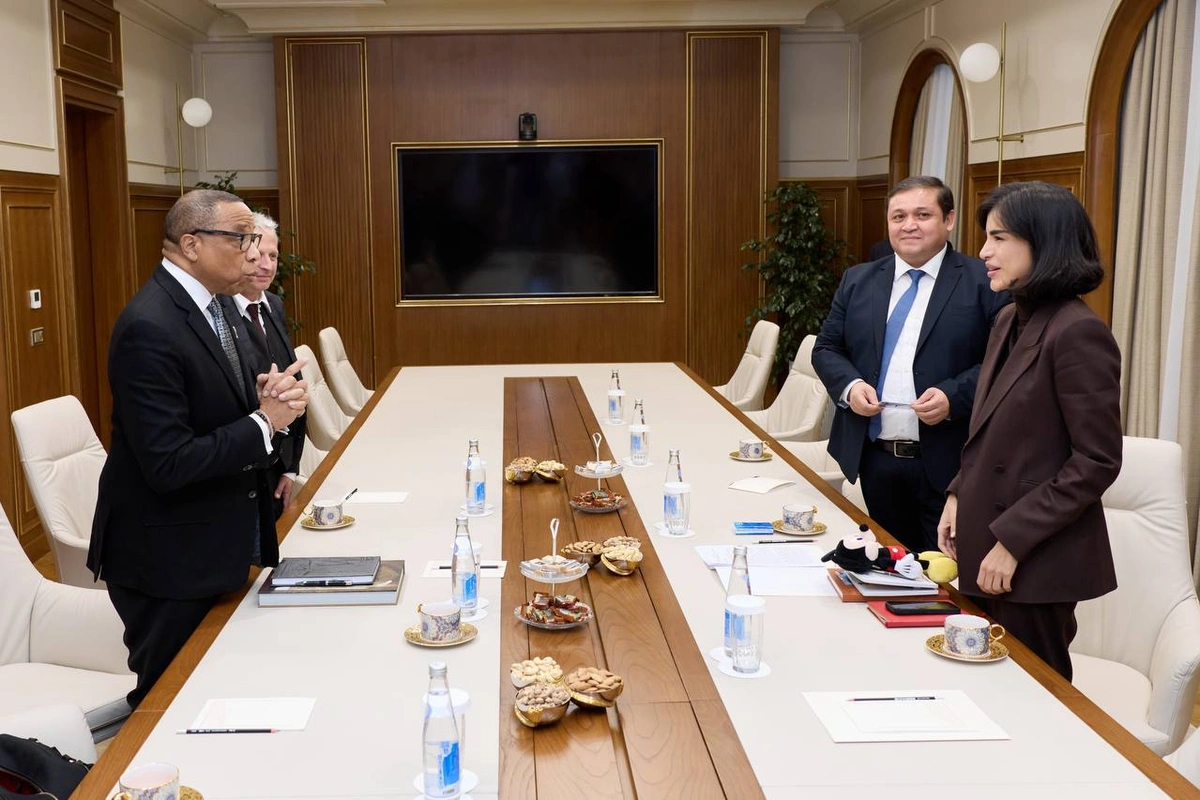
The talks took place during a meeting between Saida Mirziyoyeva, the Uzbek president’s daughter and head of the Presidential Administration, and a Disney vice president responsible for international partnerships. According to an account cited by Uzbek media, the sides discussed potential cooperation in producing Uzbek-language children’s content, training specialists in animation and filmmaking, and developing a creative hub focused on film and media production.

Image: Saida Mirziyoyeva, Telegram

Public attention intensified after Zamin.uz published an English-language article titled “Disneyland Park Planned for Construction in Uzbekistan.” The article itself, however, stated that the idea was under discussion rather than approved, and did not cite any signed agreements, confirmed investment figures, or construction timelines.

Subsequent reporting by other Uzbek outlets aligned more closely with the official summaries, with Gazeta.uz reporting that the meeting focused on content production, professional training, and the possible opening of a Disney regional office serving Central Asia, without reference to a theme park project. UzDaily similarly reported discussions centered on children’s television programming and creative education initiatives, noting that the talks were exploratory in nature.

Neither Disney nor the Uzbek authorities have released statements confirming plans to build a theme park. No land allocation, development partner, regulatory approval, or financing structure has been announced. Disney has not included Uzbekistan in its list of active or planned theme park developments.

Disney theme park projects are typically announced only after extended negotiations and formal agreements. When the company confirmed a new theme park resort project in Abu Dhabi in 2025, it disclosed the local development partner, project framework, and governance structure at the time of announcement.

Uzbekistan has made the creative industries and tourism development policy priorities in recent years, seeking partnerships with major international companies to expand film production, animation, and cultural exports. Officials say discussions with global media firms are part of that broader strategy.

For now, the talks with Disney remain preliminary. Until formal agreements are announced by both sides, officials have indicated that references to a Disneyland under construction in Uzbekistan do not reflect the current status of discussions.

Mirziyoyev Begins Japan Visit With Central Asia Leaders’ Reception in Tokyo

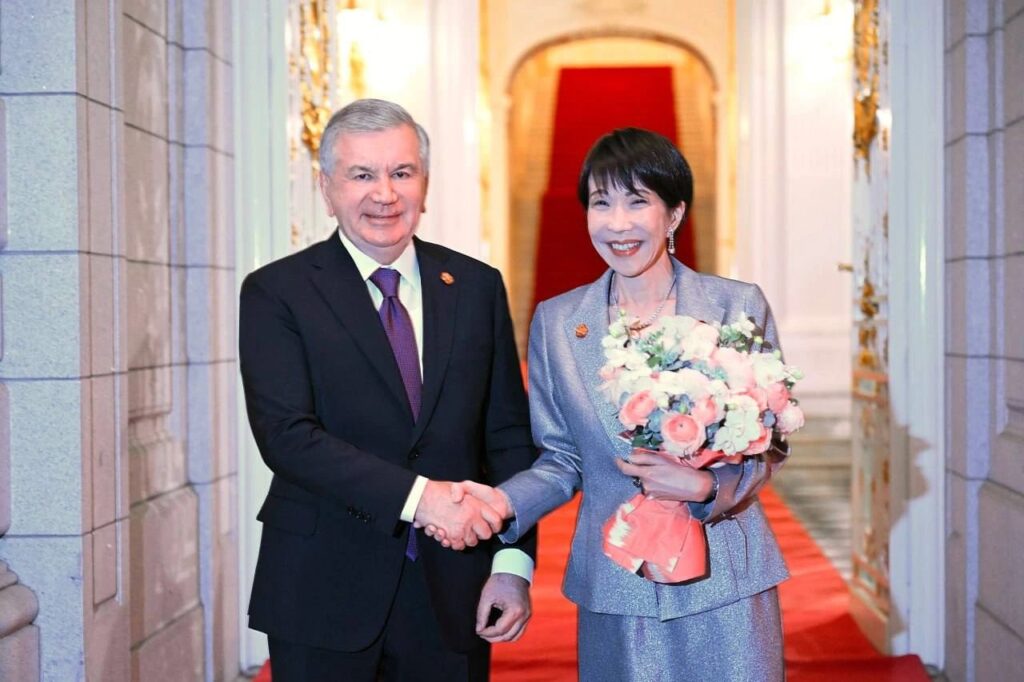
President Shavkat Mirziyoyev of Uzbekistan began his visit to Japan on Thursday by attending an official reception hosted by Japan’s Prime Minister Sanae Takaichi at the Akasaka Palace in Tokyo. The event marked the opening of a series of engagements bringing together the leaders of Central Asia and Japan, with a focus on strengthening regional cooperation.

The reception brought together the presidents of all five Central Asian states. Alongside Mirziyoyev were President Kassym-Jomart Tokayev of Kazakhstan, President Sadyr Japarov of Kyrgyzstan, President Emomali Rahmon of Tajikistan, and President Serdar Berdimuhamedov of Turkmenistan. The gathering underscored Japan’s effort to engage the region as a group, rather than solely through bilateral ties.

Mirziyoyev’s presence at the Akasaka Palace, a venue reserved for state-level diplomacy, highlighted Uzbekistan’s growing role in Central Asia and its expanding foreign policy outreach beyond the immediate region. In recent years, Tashkent has sought to deepen ties with Asian partners, including Japan, in areas ranging from infrastructure and energy to education and technology.

According to the visit programme, Mirziyoyev will hold high-level talks with Japanese government officials on December 20. Those discussions are expected to focus on trade and investment, technological cooperation, and sustainable development, including green energy and climate resilience. Japan has been a long-standing development partner for Uzbekistan, providing loans, grants, and technical assistance through agencies such as the Japan International Cooperation Agency.

The visit will feature the inaugural leaders-level “Central Asia + Japan” Dialogue Summit, bringing all six sides together in a multilateral format. The summit is intended to build on earlier dialogue mechanisms and explore joint approaches to economic connectivity, regional stability, and long-term growth.

For Mirziyoyev, the Tokyo meetings offer an opportunity to reinforce Uzbekistan’s reform agenda on an international stage and to position the country as an active participant in shaping Central Asia’s collective engagement with major partners such as Japan.