• KGS/USD = 0.01144 0%
  • KZT/USD = 0.00212 0%
  • TJS/USD = 0.10456 0.19%
  • UZS/USD = 0.00008 0%
  • TMT/USD = 0.28490 0%
  • KGS/USD = 0.01144 0%
  • KZT/USD = 0.00212 0%
  • TJS/USD = 0.10456 0.19%
  • UZS/USD = 0.00008 0%
  • TMT/USD = 0.28490 0%
  • KGS/USD = 0.01144 0%
  • KZT/USD = 0.00212 0%
  • TJS/USD = 0.10456 0.19%
  • UZS/USD = 0.00008 0%
  • TMT/USD = 0.28490 0%
  • KGS/USD = 0.01144 0%
  • KZT/USD = 0.00212 0%
  • TJS/USD = 0.10456 0.19%
  • UZS/USD = 0.00008 0%
  • TMT/USD = 0.28490 0%
  • KGS/USD = 0.01144 0%
  • KZT/USD = 0.00212 0%
  • TJS/USD = 0.10456 0.19%
  • UZS/USD = 0.00008 0%
  • TMT/USD = 0.28490 0%
  • KGS/USD = 0.01144 0%
  • KZT/USD = 0.00212 0%
  • TJS/USD = 0.10456 0.19%
  • UZS/USD = 0.00008 0%
  • TMT/USD = 0.28490 0%
  • KGS/USD = 0.01144 0%
  • KZT/USD = 0.00212 0%
  • TJS/USD = 0.10456 0.19%
  • UZS/USD = 0.00008 0%
  • TMT/USD = 0.28490 0%
  • KGS/USD = 0.01144 0%
  • KZT/USD = 0.00212 0%
  • TJS/USD = 0.10456 0.19%
  • UZS/USD = 0.00008 0%
  • TMT/USD = 0.28490 0%

Kyrgyzstan Prioritizes Export Support as External Trade Declines

Kyrgyzstan is intensifying efforts to support domestic exporters as the country faces a sustained decline in foreign trade. Authorities now regard export development as a central pillar of economic policy.

First Deputy Chairman of the Cabinet of Ministers Daniyar Amangeldiyev reiterated this position during a meeting of the Export Development Council on March 24.

The government is considering a range of practical measures aimed at strengthening export capacity. Among them is a pilot programme to partially reimburse transportation and logistics costs. The initiative is intended to reduce the price of Kyrgyz goods in foreign markets and enhance their competitiveness.

At the same time, officials plan to expand access to financing through a new preferential credit facility titled “Export Contract Financing.” The mechanism is designed to address exporters’ cash-flow constraints and support working capital, backed by insurance instruments and state guarantees.

These steps come amid a significant deterioration in trade performance. According to the National Statistical Committee, Kyrgyzstan’s exports fell by 20.3% in January 2026, while imports increased by 6.1%.

The decline reflects a broader trend. In 2025, exports dropped by 44.5%, while imports rose by 3.9%. Total foreign trade turnover reached $15.8 billion, representing a decrease of 10.2% compared to 2024.

Kyrgyzstan’s export geography remains relatively concentrated. In 2025, the country’s main export destinations were Russia (22.9%), Kazakhstan (15.9%), Switzerland (15.4%), Uzbekistan (14.2%), and the United Kingdom (8.2%). Imports, meanwhile, were dominated by China (37.2%), followed by Russia (24.6%) and Kazakhstan (10.9%).

Such concentration increases the economy’s vulnerability to fluctuations in demand among a limited number of trading partners.

The sharp fall in exports was driven largely by declining gold shipments, Kyrgyzstan’s principal export commodity. According to the Ministry of Economy, gold exports fell by a factor of 3.7 in 2025.

Gold accounted for 23.9% of total exports, underscoring the country’s dependence on a single commodity.

Both external and domestic factors contributed to the downturn. Weaker demand in key partner markets, including Russia and Kazakhstan, reduced export volumes. At the same time, temporary government restrictions on the export of certain goods, such as scrap metal and livestock, also constrained trade flows.

Turkmenistan and CNPC Sign Deal on New Phase of Galkynysh Gas Field Development

Turkmenistan has signed a new agreement with China National Petroleum Corporation (CNPC) to advance the fourth phase of development at the Galkynysh gas field, one of the largest gas deposits in the world. 

According to the state news agency TDH, CNPC will design and construct production facilities on a turnkey basis, including gas wells and infrastructure capable of processing up to 10 billion cubic meters of marketable gas annually.

The agreement follows a presidential decree authorizing the state concern Turkmengaz to conclude a contract with CNPC’s subsidiary, CNPC Amudarya Petroleum Company Ltd. The document provides for the construction of gas treatment facilities and the drilling of a sufficient number of production wells to maintain the planned output level.

According to reports by industry publication Nebit-Gaz, work on the fourth phase was expected to begin in early 2026. The overall development plan for the Galkynysh field is divided into seven phases. Information published on the Turkmengaz website, citing the international conference “Oil and Gas of Turkmenistan, 2025,” indicates that the first phase has already been completed and is operational. It includes three gas processing plants with a combined annual capacity of 30 billion cubic meters.

Turkmenistan possesses the world’s fourth-largest proven reserves of natural gas, yet its export routes remain limited. The majority of gas exports, estimated at between 80% and 90%, are directed eastward through the Central Asia-China pipeline network, often referred to as the Turkmenistan-China corridor. This has resulted in a high degree of dependence on a single export destination.

Efforts to diversify export routes have encountered persistent challenges. Proposed projects involving increased deliveries through Iran, trans-Caspian connections via Azerbaijan, or pipeline routes toward South Asia have been constrained by infrastructure limitations, financing issues, and geopolitical factors. 

Analysts also note that delays in engaging with initiatives such as the European Union’s Southern Gas Corridor in the early 2000s reduced opportunities to expand Turkmenistan’s export geography.

Kazakhstan Seeks to Expand Oil Exports Amid Geopolitical Uncertainty

Kazakhstan is seeking to reinforce its status as a stable oil supplier while accelerating the diversification of export routes and revising the terms of cooperation with foreign investors amid growing geopolitical uncertainty.

These priorities were outlined by Energy Minister Yerlan Akkenzhenov during a speech at the CERAWeek conference in Houston and in a series of meetings with major international oil and gas companies.

Discussions focused on structural changes in the global oil industry, ranging from geopolitical instability to the reconfiguration of logistics chains. According to the minister, Kazakhstan remains resilient while adapting to evolving conditions.

Energy security continues to be a central concern for the sector, particularly the reliable operation of the Caspian Pipeline Consortium (CPC), through which the majority of Kazakhstan’s oil exports are transported. This route remains the most cost-effective and strategically important option. Authorities have openly acknowledged its critical role in the national economy, stressing the need to ensure uninterrupted transit.

At the same time, efforts to develop alternative routes, including the Trans-Caspian corridor and increased shipments to China, are part of a strategy to reduce logistical and political risks.

On the sidelines of the forum, government officials held talks with leading energy companies including Chevron, ExxonMobil, and Shell, all key investors in Kazakhstan’s oil and gas industry.

Discussions with Chevron focused on expanding production at the Tengiz and Karachaganak fields, as well as developing export infrastructure. ExxonMobil reaffirmed its interest in increasing output at Tengiz and Kashagan, where localization levels are high, with Kazakhstani specialists accounting for more than 90% of the workforce.

Talks with Shell focused on boosting production and expanding refining capacity, including refinery modernization and the production of winter-grade diesel fuel. In addition to operational issues, the discussions addressed the question of redistributing roles within joint projects. Kazakhstan is considering independently implementing certain gas-processing initiatives after partners failed to reach a final investment decision on the Karachaganak project.

The development of the petrochemical industry and the expansion of refining capacity have been identified as separate priorities. Kazakhstan plans to double its oil-refining capacity to meet domestic demand and increase exports of petroleum products.

To attract investment, the government has introduced a revised model contract offering tax incentives and encouraging geological exploration.

Experts say Central Asia’s role in the global energy sector is increasing, with Kazakhstan playing a key part in regional stability.

The minister said the country’s strategic objective is to maintain the sector’s investment appeal while ensuring maximum economic returns for the national economy.

“Kazakhstan remains a predictable and reliable supplier of energy resources and is ready to translate the trust of its partners into the development of technological projects within the country,” Akkenzhenov said.

The Times of Central Asia previously reported that Italian energy company Eni is accelerating the expansion of its projects in Kazakhstan. The company plans to complete construction of a hybrid power plant in Zhanaozen, one of the country’s main oil and gas hubs, by the end of the year.

Asian Development Bank: Poverty in Tajikistan Declining, But Inequality Rising

Tajikistan is experiencing mixed socioeconomic trends. While the country’s poverty rate has declined markedly in recent years, inequality and structural economic constraints remain significant challenges. This assessment is outlined in the Asian Development Bank’s (ADB) country partnership strategy for 2026-2030.

According to the ADB, the share of the population living below the national poverty line fell from 30.9% in 2020 to 19.9% in 2024.

However, the improvement has been driven largely by rising incomes linked to wage growth and remittances from labor migrants rather than by sustained job creation within the domestic economy. Analysts note that this development may contribute to widening inequality, particularly in rural and remote areas where access to economic opportunities remains limited.

Most of Tajikistan’s population lives in southern and central regions, where economic activity is heavily dependent on agriculture. These areas face heightened social risks. Women remain among the most vulnerable groups due to restricted access to employment opportunities and higher levels of food insecurity.

Despite overall progress in poverty reduction, food security challenges persist. Approximately 1.5 million people are considered vulnerable, while around 50,000 are experiencing acute food shortages.

In the 2025 Global Hunger Index, Tajikistan ranked 63rd out of 123 countries, the lowest position among Central Asian states.

The ADB identifies weak economic diversification as a key structural issue. Heavy reliance on agriculture leaves the country exposed to external shocks and climate-related risks. Private sector development has been slow, constrained by shortages of skilled labor, underdeveloped infrastructure, and a complex regulatory environment. Limited integration into regional and global markets further hampers growth.

Infrastructure quality remains among the weakest in the region. Restricted access to transport networks and logistics services continues to hinder industrial development and trade expansion.

The energy sector also faces structural challenges. Dependence on hydropower increases vulnerability to climate change, particularly through declining water availability and glacier melt.

At the same time, gaps in education and vocational training contribute to persistent shortages of qualified workers.

These pressures are intensified by high levels of labor migration, especially among young people. As a result, the domestic economy experiences workforce shortages in sectors that could otherwise drive long-term growth.

Although agriculture remains central to livelihoods, it is increasingly exposed to climate risks and constrained by limited access to markets, financing, and modern technologies.

Games, Ambitions, and a New Industry: How Esports are Developing in Kazakhstan

Just ten years ago, esports in Kazakhstan were widely seen as little more than a hobby for teenagers and university students. Today, the situation has changed dramatically. The industry is expanding, international tournaments are being hosted in the country, and Kazakhstani players are competing on the global stage. The development of infrastructure, growing government support, and the success of individual esports athletes are gradually making Kazakhstan a visible player on the global esports map.

From Computer Clubs to International Arenas

The first esports competitions in Kazakhstan were held in small computer clubs, which became centres for the formation of local gaming communities. Over time, the standard of tournaments rose, and audiences grew.

Today, Kazakhstan hosts major international competitions. One such event was the PGL Astana 2025 Counter-Strike 2 tournament, held in the capital. Featuring some of the world’s strongest teams, the event had a prize pool of $1,250,000. Team Spirit defeated Astralis in the final. The tournament attracted thousands of spectators to the arena and a large online audience worldwide.

Mobile esports are developing in parallel. In spring 2025, Almaty hosted the PUBG Mobile Super League Central & South Asia Spring 2025. Teams from across the region took part, competing for a total prize pool of $200,000. Alpha Gaming won the tournament after demonstrating consistent performance throughout the championship.

Hosting events at this scale highlights Kazakhstan’s growing attractiveness as a venue for international esports tournaments.

Government Support and Future Plans

The rising popularity of esports has prompted the government to view the sector as a promising area for development. In 2025, the Concept for the Development of Esports in Kazakhstan for 2025-2029 was approved.

The document outlines plans to create a comprehensive system for player development. These include expanding school and university leagues, organising regional tournaments, and developing infrastructure for training professional teams. According to projections, the country’s esports audience could reach around 5 million people by 2026.

Kazakhstan is also preparing to host the international “Games of the Future” in 2026, a large-scale “phygital” event combining traditional sports and esports. Organisers have indicated a multi-million dollar prize fund, with figures varying depending on the competition structure.

Hosting such a tournament could become one of the biggest esports milestones in the region’s history.

A New Generation of Stars

Kazakhstan’s esports scene has long been regarded as one of the strongest in the CIS region, particularly in Counter-Strike 2 and Counter-Strike: Global Offensive. In recent years, several players from the country have gained international recognition.

Among them is Abay “HObbit” Khasenov, champion of one of the biggest CS:GO tournaments, PGL Major Kraków 2017. Also well-known are Alexey “Qikert” Golubev, who played for Virtus.pro, and Dauren “AdreN” Kystaubayev, one of the most experienced players on the Kazakhstani scene and a winner of major international championships. Their achievements have helped shape Kazakhstan’s reputation as a country with a strong Counter-Strike tradition.

A new generation is continuing this legacy. One of its most notable representatives is Counter-Strike 2 player Danil “molodoy” Golubenko, who is widely considered one of the most promising players in his role. In 2025, he received the HLTV Rookie of the Year award, given annually to the best newcomer on the global Counter-Strike scene. His confident performances and professionalism made him one of the most talked-about players of the season.

Kazakhstani players also compete in international multi-sport esports events. In 2023, the national team took part in the qualification tournament Road to Asian Games 2022, held from June 15 to July 2. More than 400 esports athletes from 28 Asian countries participated in the qualifiers, representing the entire region, from Western to Southeast Asia.

Kazakhstan competed in three disciplines, with a total of 14 esports athletes representing the country and achieving solid results against strong international opposition.

Women’s esports is also developing. In Almaty, the first season of the Female Pro League by Olimpbet, an international Counter-Strike 2 league created and organised in Kazakhstan, has concluded. The tournament brought together some of the strongest women’s teams in the world.

The emergence of such initiatives marks an important step in developing the women’s scene. Kazakhstan is making an increasingly strong statement on the global esports map. While PGL Astana 2025 demonstrated the country’s ability to host tier-1 tournaments, the launch of the Female Pro League showed that Kazakhstan can also create its own international competitions.

Computer Clubs – The Heart of Local Esports

Despite the growth of large arenas and professional leagues, computer clubs remain the foundation of esports culture. Local tournaments are held there, and new generations of players take their first steps.

Entrepreneur Tair Olzhabekov, owner of the “52” computer club in Astana, says interest in esports among young people has grown significantly.

“When we first opened, people came just to play with friends. Now, many come to train and participate in tournaments. Young players now have a goal: to become professional gamers. We regularly hold small championships, and the level of play is growing literally before our eyes,” he says.

According to Olzhabekov, such clubs often serve as the first platform for aspiring players to test themselves in competition and begin a professional career.

An Industry Still Taking Shape

Today, esports in Kazakhstan is undergoing a period of active formation. New tournaments, teams, and training infrastructure are emerging across the country.

Esports have already moved beyond simple entertainment. For many young people, it is becoming a viable career path, whether as a player, coach, analyst, or tournament organiser.

If current growth continues, Kazakhstan could strengthen its position in the coming years and become one of Central Asia’s key esports hubs.

Kyrgyzstan Establishes State-Owned Company to Implement Satellite Technologies in Agriculture

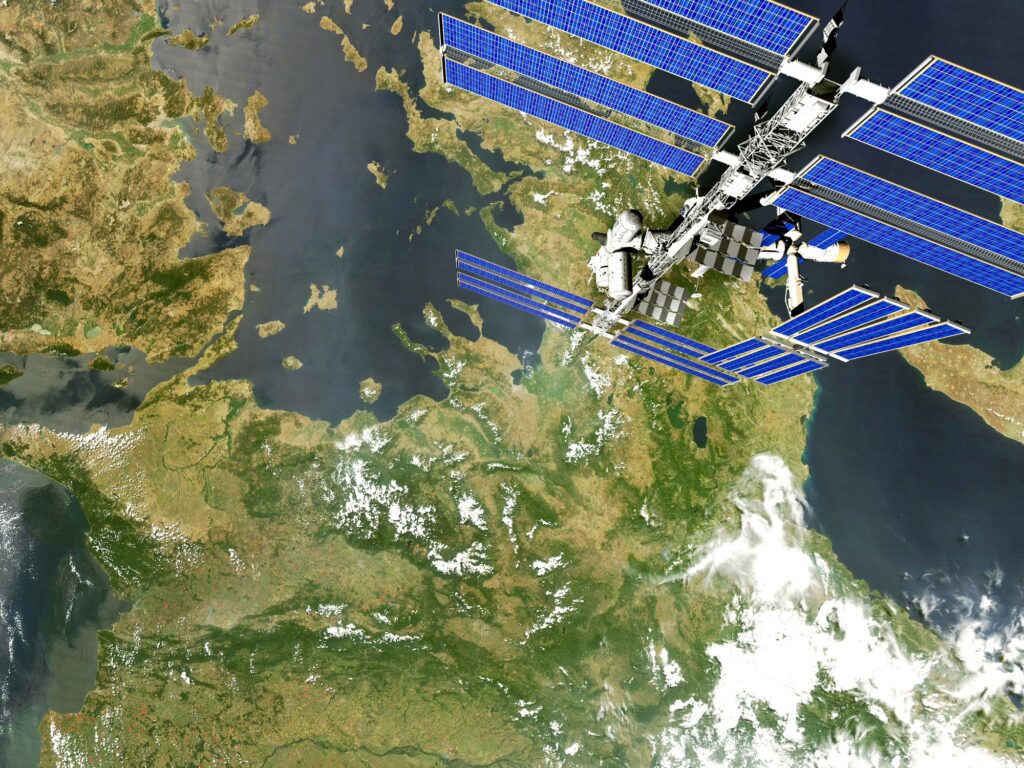
The Kyrgyz authorities are taking a step towards the digitalization of agriculture and natural resource management. The country’s Cabinet of Ministers has decided to establish a state-owned company, Kyrgyz Sputnik, which will focus on the use of satellite data in key economic sectors. The new entity will be created as an open joint-stock company with 100% state ownership. Its founder will be the Ministry of Water Resources, Agriculture, and Processing Industry.

Kyrgyz Sputnik is expected to serve as a tool for expanding the use of aerospace data in natural resource management. The company’s infrastructure will be located in the city of Karakol in the Issyk-Kul region.

The creation of Kyrgyz Sputnik is intended to lay the groundwork for developing national expertise in space technologies and strengthening the country’s technological independence. The authorities view the project as a long-term investment in sustainable development, security, and the growth of an innovation-driven economy.

At the same time, Kyrgyzstan has already begun implementing satellite solutions in agriculture. According to Deputy Minister of Agriculture Asel Kenenbaeva, the ministry is cooperating with international operators that provide high-resolution satellite imagery. Kenenbaeva said such data can be used to monitor crop conditions and cultivated areas, as well as oversee pasture use. It can also help analyse water resources and detect plant diseases.

The information obtained will be made available to farmers, enabling them to assess the condition of their fields in near real time and receive recommendations on cultivation and fertilisation.