• KGS/USD = 0.01144 0%
  • KZT/USD = 0.00211 0%
  • TJS/USD = 0.10678 0%
  • UZS/USD = 0.00008 0%
  • TMT/USD = 0.28490 0%
  • KGS/USD = 0.01144 0%
  • KZT/USD = 0.00211 0%
  • TJS/USD = 0.10678 0%
  • UZS/USD = 0.00008 0%
  • TMT/USD = 0.28490 0%
  • KGS/USD = 0.01144 0%
  • KZT/USD = 0.00211 0%
  • TJS/USD = 0.10678 0%
  • UZS/USD = 0.00008 0%
  • TMT/USD = 0.28490 0%
  • KGS/USD = 0.01144 0%
  • KZT/USD = 0.00211 0%
  • TJS/USD = 0.10678 0%
  • UZS/USD = 0.00008 0%
  • TMT/USD = 0.28490 0%
  • KGS/USD = 0.01144 0%
  • KZT/USD = 0.00211 0%
  • TJS/USD = 0.10678 0%
  • UZS/USD = 0.00008 0%
  • TMT/USD = 0.28490 0%
  • KGS/USD = 0.01144 0%
  • KZT/USD = 0.00211 0%
  • TJS/USD = 0.10678 0%
  • UZS/USD = 0.00008 0%
  • TMT/USD = 0.28490 0%
  • KGS/USD = 0.01144 0%
  • KZT/USD = 0.00211 0%
  • TJS/USD = 0.10678 0%
  • UZS/USD = 0.00008 0%
  • TMT/USD = 0.28490 0%
  • KGS/USD = 0.01144 0%
  • KZT/USD = 0.00211 0%
  • TJS/USD = 0.10678 0%
  • UZS/USD = 0.00008 0%
  • TMT/USD = 0.28490 0%

Kazakhstan Looks Abroad in Push to Recover Illegal Assets

Kazakhstan has taken a first step toward joining the Warsaw Convention, a Council of Europe treaty that would make it easier for prosecutors to follow suspected criminal assets across borders. The move remains tentative, however. The draft ratification law appeared on the Open NPA portal on April 23 with public discussion scheduled until May 20, but was removed to an archive two days later after the developer withdrew it for a “press release correction.”

For now, the measure remains procedural. Its purpose is more concrete: to give prosecutors a stronger route into foreign jurisdictions where disputed wealth may sit behind companies, property, bank accounts, trusts, or nominees.

The Warsaw Convention – formally called the Council of Europe Convention on Laundering, Search, Seizure and Confiscation of the Proceeds from Crime and on the Financing of Terrorism – was opened for signature in Warsaw on May 16, 2005, and entered into force on May 1, 2008. Its purpose is practical. States that join it must maintain tools to identify criminal proceeds, freeze them, confiscate them, and cooperate with foreign authorities.

For Kazakhstan, that framework would fit a campaign that has grown steadily since the unrest of January 2022. President Kassym-Jomart Tokayev has made the return of illegally acquired assets part of his wider domestic agenda, linking it to social justice, public finances, and the channeling of seized assets into public projects.

A Campaign Moving Abroad

Kazakhstan built the domestic legal base in 2023, when Tokayev signed the law on the return of illegally acquired assets to the state. This created procedures for identifying assets, negotiating voluntary returns, filing court claims, and managing property transferred to the state. It also applies to property located abroad when it was allegedly acquired with income illegally received in Kazakhstan.

The system gained a sharper foreign component in January 2026, when a new Asset Recovery Service began work under the General Prosecutor’s Office. Its mandate includes representation in foreign courts, requests to freeze property, checks on asset origin, and direct cooperation with overseas authorities. Those tasks are exactly where domestic law alone often runs out of road.

Assets rarely sit in one obvious place. They can be routed through companies, trusts, bank accounts, nominees, family members, or real estate in several countries. A Kazakh court order may be the start of a case, but it is far from the end of it. Foreign authorities usually need treaty channels, legal-assistance requests, and evidence that meets their own standards before they freeze or return property.

Ratifying the Warsaw Convention would not solve those problems by itself, but it would give Kazakhstan another legal route for cooperation when cases cross borders. That could be important in corruption, money laundering, tax, organized crime, and terrorism-financing cases where property has moved through several jurisdictions.

What the Convention Would Change

The convention would add practical tools rather than automatic powers. It covers the tracing, freezing, seizure, and confiscation of criminal proceeds, and also applies to property used for financing terrorism, even when the property itself was legally obtained.

The most sensitive clause concerns unexplained wealth after conviction. In serious crime cases, a court may require an offender to show that contested property came from a lawful source of income. Domestic law would still set the procedure, but the pressure in court would shift.

Kazakh legal analysts have focused on that burden-of-proof issue. For business owners, former officials, and politically exposed figures, weak paperwork trails could become a liability. Tax records, beneficial ownership files, loan agreements, company documents, and source-of-funds evidence would carry more weight.

The tax angle gives the treaty extra reach. When tax offenses overlap with laundering or asset tracing, Kazakhstan could seek help abroad. That would put more pressure on money routed through offshore firms, low-tax jurisdictions, nominees, or layered companies.

Returned Assets and Public Use

The sums in question are already large. By March 2026, return measures covered more than 1.3 trillion tenge (roughly $2.5 billion). Of that amount, 1.076 trillion tenge had been returned, including 968.5 billion tenge in cash and 107.7 billion tenge in property, figures from the General Prosecutor’s Office show.

The inventory includes real estate, land, company stakes, vehicles, jewelry, luxury goods, and property abroad. Prosecutors have also cited investment obligations worth 5.2 trillion tenge (about $11.2 billion) in industry, transport, logistics, tourism, sport, healthcare, and education.

The Special State Fund turns recovered wealth into visible projects. By March 2026, it had financed 434 projects worth about 480 billion tenge. These include 227 water-supply facilities, 183 healthcare facilities, 11 schools, five sports sites, and eight large infrastructure projects, including airport upgrades in Pavlodar, Arkalyk, and Balkhash.

That public spending gives the campaign political force. A confiscated mansion or company stake is easier to justify when the money becomes a clinic, school, water network, or airport terminal. It also fits Tokayev’s post-2022 message on inequality and the return of disputed wealth to society.

Legal Limits and Business Risk

Stronger tools can help in corruption, money laundering, and organized crime cases. They can also unsettle lawful business if standards are vague, enforcement appears selective, or third parties are drawn into disputes over property acquired in good faith.

Kazakhstan’s 2023 asset-recovery law includes protections for bona fide acquirers and creditors. The government has also said the system should not interfere with normal business activity or harm conscientious investors. Those guarantees will be tested in large cases involving political connections, complex ownership chains, or foreign courts.

The convention would strengthen Kazakhstan’s hand, but not remove the legal steps. Foreign assets would still have to be pursued case by case, through evidence, court orders, formal requests, and cooperation from the country where the property is held.

Implementation will therefore matter as much as ratification. A wider international toolkit may make concealment harder, but it will also require transparent procedures and credible protections for lawful owners.

A Wider Search for Hidden Wealth

Kazakhstan’s move sits within a broader international trend. Governments are putting more effort into following money linked to corruption, organized crime, fraud, sanctions evasion, laundering, and tax offenses. In January 2025, Interpol published its first Silver Notice, a tool for locating property connected to criminal activity. A Silver Notice helps member states request information on real estate, vehicles, bank accounts, companies, and other holdings. That information can then support later legal action under national laws.

Kazakhstan has already used the mechanism. In August 2025, Interpol issued Kazakhstan’s first Silver Notice, allowing the authorities to seek information on allegedly illegal movable and immovable property, financial resources, and other valuables.

For now, the proposal is only a signal: Kazakhstan wants stronger tools to pursue criminal wealth across borders. If the Warsaw Convention is ratified, the test will be whether that reach comes with enough certainty to satisfy courts, investors, and legitimate owners.

Opinion: The Reform Paradox for Uzbekistan: Global Capital, Political Control

In mid-May, Uzbekistan is preparing to take a major step onto the global financial stage – one that reflects its broader, decade-long push to open its economy to international investors.

The country’s National Investment Fund (UzNIF), a $2.4 billion vehicle holding minority stakes in 13 strategic state-owned enterprises, is preparing to list 30% of its capital on the London and Tashkent stock exchanges — the first time such a state-backed investment vehicle is being listed on international equity markets.

For President Shavkat Mirziyoyev, the move signals that Uzbekistan wants to be seen as an investable, reforming, and globally connected state.

But the planned listing also captures the central paradox of Uzbekistan’s current trajectory: the country is opening economically while remaining politically closed.

Foreign investors are being invited in. State assets are being partially exposed to market discipline. Capital markets are being developed. Yet the political system remains tightly managed, with limited opposition, weak institutional pluralism, and few independent channels for releasing social pressure.

That is why Uzbekistan’s stability should not be read only as a strength. It should also be read as a system test: can controlled modernization keep producing legitimacy without creating political mechanisms for absorbing the expectations it generates?

Mirziyoyev as a Controlled Modernizer

Shavkat Mirziyoyev’s political style is not that of a frontline strongman constantly mobilizing society against enemies. His approach is administrative, developmental, and transactional: reform from above, personnel control, investment attraction, infrastructure, market opening, and the redistribution of economic flows.

In this sense, Mirziyoyev is best understood not as a liberal reformer in the Western sense, but as a controlled modernizer.

The reform agenda is real. Uzbekistan has moved to attract foreign capital, open selected state assets, improve its business image, and position itself as a more predictable investment destination. The UzNIF listing fits this broader effort: it is designed to deepen capital markets, signal openness to international investors, and show that the state is willing to place parts of its economic architecture under market scrutiny.

But the political architecture remains tightly managed. Freedom House continues to rate Uzbekistan as “Not Free” — 12 points out of 100 in its 2026 report — citing the concentration of power in the executive branch, the absence of a genuine parliamentary opposition, and severe restrictions on independent journalists and human rights defenders.

This is the central tension: Uzbekistan is reforming economically, but not politically.

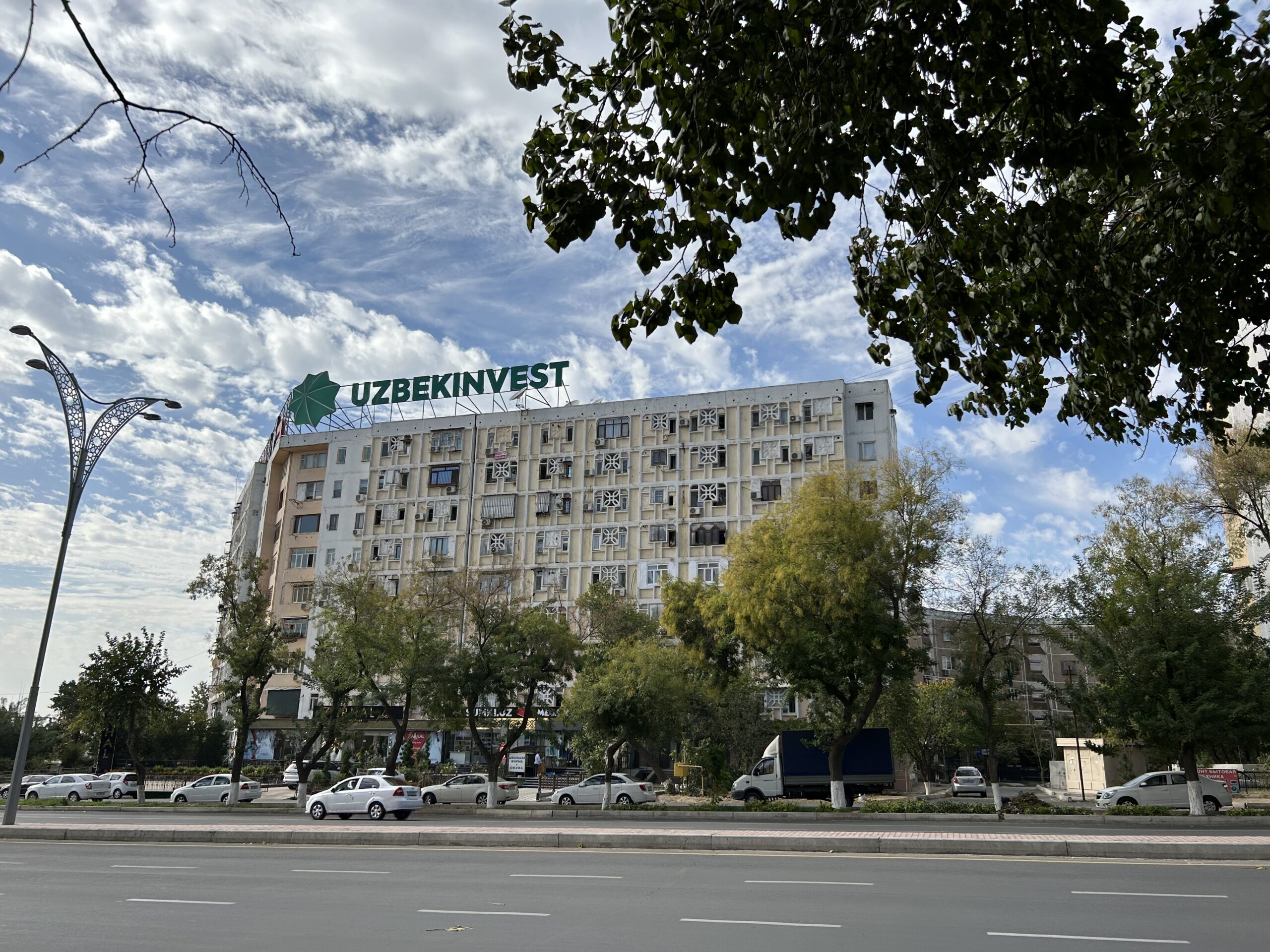
Tashkent has opened up to investment over the past decade. Image: Joe Luc Barnes

Growth as Legitimacy

For now, the model works because growth provides legitimacy.

The World Bank expects Uzbekistan’s economy to grow by around 6.4% in 2026, following 7.7% growth in 2025 – supported by domestic demand, private consumption, and continued investment. Public debt remains comparatively moderate at around 28% of GDP, and the country benefits from the perception that it is one of the more dynamic economies in the region.

This gives the ruling system room to maneuver. The reform narrative allows the leadership to present itself as forward-looking without opening the system to real political competition.

But growth also creates expectations.

A young and expanding population expects jobs, services, mobility, housing, education, and visible improvements in living standards. Urban groups expect modernization to be felt not only in macroeconomic indicators but in everyday life. Investors expect regulatory predictability. Regions expect inclusion in the national development story.

This is where the risk begins.

Uzbekistan’s problem is not mass poverty in a classic crisis sense. It is the stress of rising expectations. When a state promises modernization, society eventually asks whether modernization is being distributed fairly, whether opportunity is real, and whether the political system allows grievances to be expressed before they become explosive.

The Missing Release Valve

Uzbekistan’s political manageability is high. The parliament is not an autonomous center of power. Courts are not independent. Opposition parties do not function as genuine vehicles for alternative government, while civil society and media operate under significant constraints.

This gives the state stability. But it also limits the system’s ability to release pressure.

In more open systems, frustration can move through elections, parties, independent media, courts, protests, and civic bargaining. In Uzbekistan, many of these channels are weak, controlled, or politically risky. That means pressure may remain invisible for long periods, until it suddenly appears in localized form.

The most important lesson remains Karakalpakstan.

The 2022 unrest, triggered by proposed constitutional amendments that would have downgraded the autonomous republic’s status, showed that regional identity and perceived threats to autonomy can generate sudden political shock. The amendments were withdrawn under pressure, but Human Rights Watch and other monitors have continued to document the lack of accountability and ongoing pressure on activists associated with the events.

The lesson is not that Uzbekistan is unstable. It is that the state can look highly stable until a regional or social trigger exposes accumulated pressure.

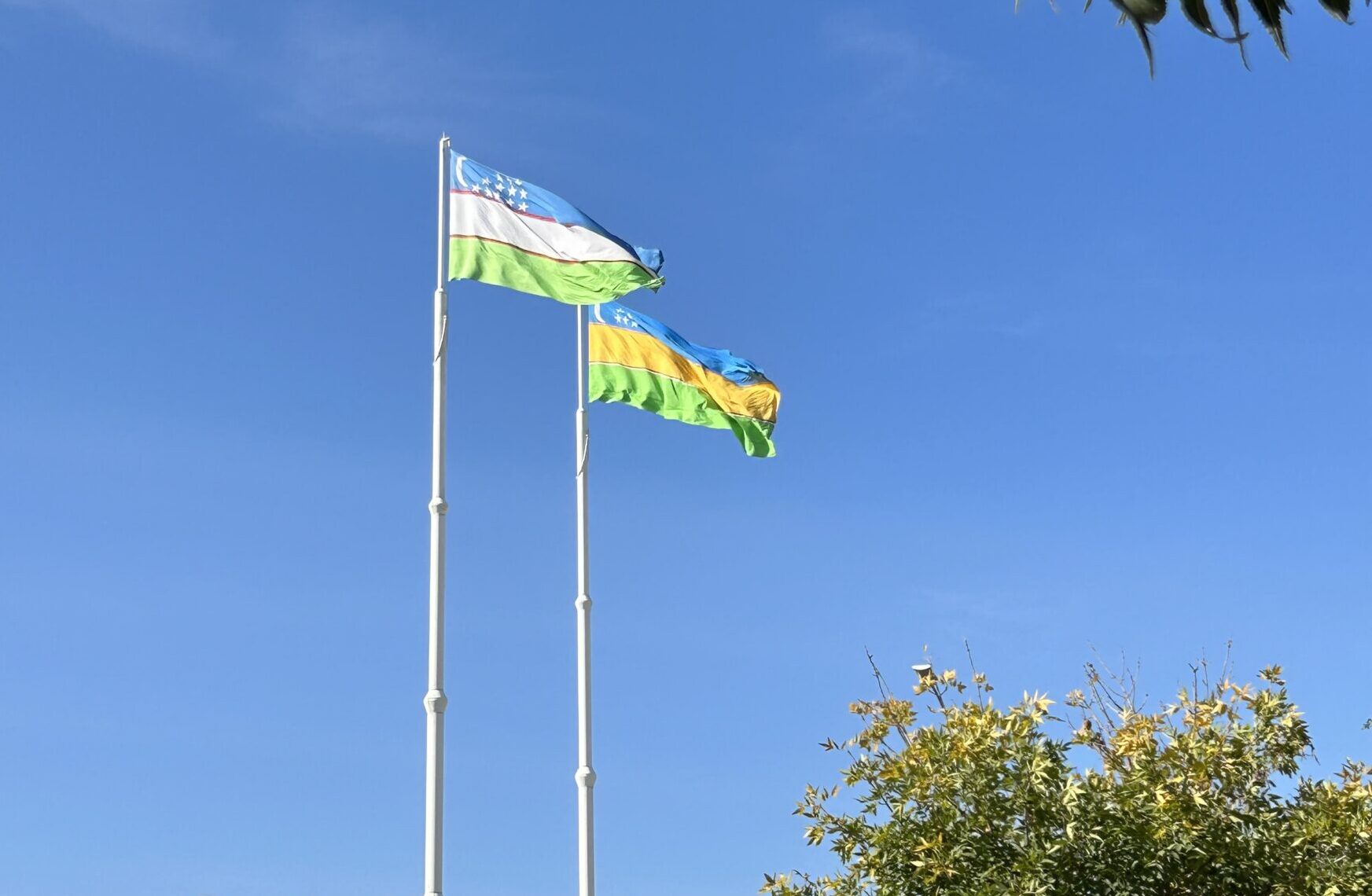
The flags of Uzbekistan and its northwestern autonomous region of Karakalpakstan. Image: Joe Luc Barnes.

No Visible Elite Split – For Now

Unlike some other Central Asian systems, Uzbekistan does not appear to have a clear second center of power capable of challenging the president. The elite system looks centralized and dependent on Mirziyoyev’s role as the manager of reform, patronage, and state direction.

This creates another vulnerability: excessive dependence on the center.

When a system is highly centralized, stability depends heavily on the leader’s ability to keep reforms credible, elites balanced, regions contained, and external partners engaged. If growth slows, if public expectations outrun delivery, or if a regional issue is mishandled, pressure may move quickly because there are few independent institutions capable of absorbing it.

The danger is not a coup or elite split in the near term. The more realistic danger is reform fatigue under authoritarian control.

External Balancing

Uzbekistan’s external position is more comfortable than that of some neighbors, but not simple.

Tashkent is balancing between Russia, China, the United States, the European Union, Turkey, and regional partners. It benefits from being seen as a large, stable, strategically important Central Asian state with a young population and economic potential. The West is increasingly interested in Uzbekistan, especially in critical minerals and supply-chain diversification.

This gives Tashkent leverage. But it also increases the complexity of its balancing act.

Uzbekistan must attract Western investment without provoking excessive suspicion from Russia or China. It must deepen global economic integration while maintaining domestic political control. It must look open enough for investors but closed enough to protect the ruling architecture.

That balance is manageable, until internal or external shocks begin to converge.

The Real Risk: Local Shock, Not National Collapse

Over the next 6–12 months, Uzbekistan’s baseline scenario remains stable, controlled modernization. Growth continues, the reform narrative remains credible, and the center retains control over the state apparatus.

But the key risks are clear.

The first is economic disappointment. If growth remains strong on paper but households do not feel improvement, frustration may rise quietly.

The second is energy and infrastructure stress. Rapid development requires reliable electricity, water management, transport, and urban services. Failures in these areas can quickly become political.

Thirdly is the issue of regional sensitivity: a new dispute involving autonomy or resource distribution could generate a localized crisis faster than national observers expect.

The fourth is information control: a more controlled media environment can delay the visibility of pressure, but it can also make the state slower to recognize the depth of local anger.

Finally there is reform fatigue. If modernization becomes associated with inequality or its opportunities are captured by insiders, the reform narrative could lose moral force.

In such a scenario, Uzbekistan would probably not collapse. The regime’s resilience remains high. More likely, the state would shift into a hard stabilization mode: tighter control, stronger administrative pressure, more restrictive information management, and a slower, more cautious reform agenda.

That would not mean the end of Mirziyoyev’s system. But it would change its character.

Markers to Watch

Five indicators will show whether Uzbekistan remains in controlled modernization or begins moving toward reform fatigue.

First, whether economic growth continues to translate into household-level confidence, employment, and visible improvements in living standards.

Second, whether energy, water, and infrastructure stress become politically sensitive rather than merely technical issues.

Third, whether regional grievances, especially in sensitive areas such as Karakalpakstan, remain contained or begin to re-emerge.

Fourth, whether new restrictions emerge on civil society, online expression, or independent media – particularly any expansion of existing legal frameworks on extremism or “foreign influence.”

Fifth, whether foreign investment and privatization are perceived as national modernization or as elite capture under a reform label.

These markers matter because Uzbekistan’s risk is unlikely to appear first as open national confrontation. It is more likely to appear as pressure accumulation: economic expectations, regional sensitivity, infrastructure strain, and restricted political channels reinforcing one another.

The Real Question

Uzbekistan’s future is often described through the language of reform. That framing is correct, but incomplete.

The deeper question is whether controlled modernization can continue producing legitimacy without creating political mechanisms for releasing pressure.

For now, the answer appears to be yes. The system is stable, the economy is growing, and the leadership retains control.

Uzbekistan’s challenge over the next 6–12 months is not regime survival in the immediate sense. It is whether the state can continue modernizing without allowing accumulated social and regional pressure to harden beneath the surface.


The views expressed in this article are those of the author and do not necessarily reflect the official policy or position of the publication, its affiliates, or any other organizations mentioned.

Turkmenistan Ranks 173rd in Global Press Freedom Index

Turkmenistan ranked 173rd out of 180 countries in the 2026 World Press Freedom Index, a slight improvement from 174th place in 2025.

According to the report compiled by Reporters Without Borders (commonly known by its French acronym, RSF), the highest-ranked country in Central Asia was Kyrgyzstan in 146th place, followed by Uzbekistan (147th), Kazakhstan (149th), and Tajikistan (155th). Russia ranked 172nd, just one position above Turkmenistan.

The authors note that Eastern Europe and Central Asia remain the second-worst-performing regions globally in the 2026 index.

“The region is increasingly resembling a vast laboratory of inverted values, where legality is artificial and primarily serves the interests of those in power rather than protecting the right to information,” the report states.

In Kazakhstan, RSF says tightening legal frameworks are combined with indirect pressure, increasing online harassment, and a climate of impunity. Kyrgyzstan, meanwhile, is following a similar trend, with declining legal protections for journalists.

Among the lowest-ranked countries are Belarus, Azerbaijan, Russia, and Turkmenistan, all of which scored particularly poorly in the legal category, with ratings ranging from 22 to 32 out of 100.

More broadly, the report highlights a global decline in press freedom. “For the first time in the history of the index, conditions in more than half of all countries are classified as ‘difficult’ or ‘very serious.’ Over 25 years of observation, the global average has never been this low,” the authors note.

According to RSF, the introduction of laws restricting press freedom, often justified by national security concerns, has contributed to a steady deterioration in media conditions since 2001, affecting not only authoritarian states but also democracies.

“The legal indicator saw the sharpest decline this year, reflecting the growing number of legal proceedings against journalists and media outlets,” the report concludes.

Heavy Rain and Mudflows Kill Four in Tajikistan

Heavy rain and landslides have swept parts of Tajikistan in recent days, killing at least four people and damaging dozens of homes, as well as roads and farmland. In one incident, a boat carrying students capsized in a river but all the passengers were rescued.

Three people were killed and three others were hospitalized in the southern city of Kulob after an overnight deluge, the press office of Tajikistan’s presidency said on Saturday. President Emomali Rahmon expressed condolences and instructed top officials to go to the scene of the disaster and help affected families.

Intense rainfall continued over the weekend. One person died and two others were seriously injured in a lightning strike in Kaduchi village on Sunday afternoon, according to Tajikistan’s Committee for Emergency Situations and Civil Defense. The victims were taken to a hospital in the western city of Tursunzoda.

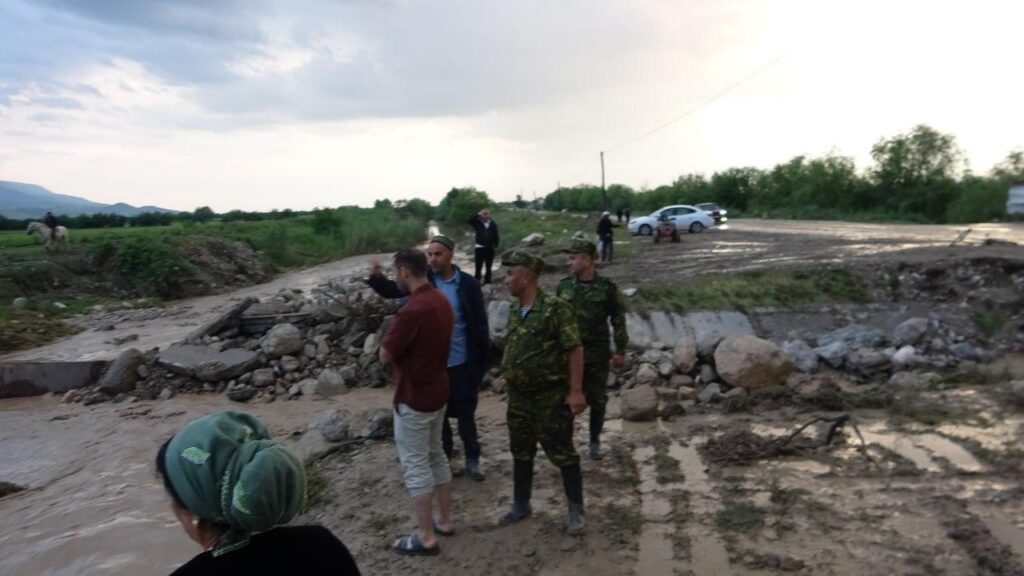
Mudflows damaged homes, roads, and other infrastructure in several villages and settlements. Some canals filled with mud, stones, and gravel before overflowing into nearby streets. Emergency workers brought in heavy machinery and pumps to clear debris and water.

The boat that capsized on Sunday afternoon was carrying seven secondary school students and their class teacher on the Syr Darya River, which runs through the northern city of Khujand. The group had arrived at a cultural and entertainment park for the excursion. Boatmen and other people rescued the students, according to an official account.

Opinion: Kazakhstan’s Critical Minerals Promise Is Running Out of Time

Kazakhstan has long been defined by what lies beneath its soil. Oil, uranium, copper, zinc, lead, chromium, gold, and other minerals have shaped the country’s post-Soviet economy and supplied the budget, export revenues, and industrial base that supported three decades of state-building.

That model is now entering a more complex phase. In the first quarter of 2026, Kazakhstan’s industrial output slipped as mining and quarrying fell by 11.4%, with crude oil production down 19.8%, natural gas output down 20%, and other mineral extraction down 15.1%, according to figures reported from the Bureau of National Statistics. The oil decline also reflected specific disruptions. Kazakhstan’s energy minister said oil and gas condensate production fell 20% year-on-year in the first quarter, while production at Tengiz had only recently resumed after an outage linked to a fire at a power unit. Reuters reported that the field’s restart was gradual.

Those short-term shocks should not be confused with the whole story. They expose a deeper vulnerability: Kazakhstan has been highly successful at extracting known deposits, but far less successful at replacing them. The World Bank’s mining sector diagnostic put the problem plainly. Kazakhstan is underexplored, greenfield exploration has been almost non-existent for about 30 years, and much of the geological data inherited from the Soviet period is incomplete or outdated.

This is not a story of geology alone. It is a story of institutions, incentives, and time. Deposits deplete whether governments plan for it or not. The difference between a mature resource economy and a vulnerable one is whether exploration, processing, regulation, and regional diversification keep pace with extraction.

The Arithmetic of Depletion

Kazakhstan still has one of the strongest mineral endowments in Eurasia. President Kassym-Jomart Tokayev has described rare and rare-earth metals as having “essentially become new oil,” and told the government to expand geological and geophysical exploration from 1.5 million square kilometers to at least 2.2 million by 2026, according to Akorda.

OECD analysis published in 2026 underlines why the stakes are high. Kazakhstan’s metals mining sector accounted for 12.1% of GDP in 2024. The country is the world’s largest uranium producer, can currently export 21 of the 34 critical raw materials on the European Union’s official list, and has some of the world’s largest reserves of chromium, zinc, and lead.

Yet reserve strength on paper does not remove the operational pressure at existing mines. In 2022, Kazakhstan’s prime minister warned that reserve growth for many minerals had not been compensated and that major metal deposits in eastern Kazakhstan, including Orlovskoye, Maleyevskoye, Tishinskoye, and Ridder-Sokolnoye, could be mined out within the next decade, according to the government’s own account of its 2023-2027 geology concept.

Gold shows a similar tension between headline potential and mine-level pressure. Industry reporting has linked a fall in Kazakhstan’s 2025 mining output targets partly to changes at Vasilkovskoye, one of the country’s largest gold deposits, where operations are shifting from open-pit to underground mining as easily accessible ore becomes harder to extract. MINEX Forum reported that the transition reduced production volumes and lowered the sector’s physical output index. Underground mining can extend a deposit’s life, but it changes the economics and raises costs.

Oil adds another layer. Kazakhstan remains heavily dependent on a small number of large fields and on export infrastructure that runs through Russia. The Caspian Pipeline Consortium remains the main artery for Kazakh crude exports, and The Times of Central Asia previously reported that Kazakhstan pumps roughly 80% of its oil exports through the CPC system. Geological concentration and route dependence, therefore, reinforce each other. When production or export infrastructure is disrupted, the effect reaches far beyond the energy sector.

Institutional Challenge, Not Geological Fate

It would be easy to describe depletion as inevitable. That would be too simple. The sharper problem is that Kazakhstan has historically relied heavily on known reserves and is now seeking to strengthen the exploration pipeline for the next generation of deposits.

The World Bank diagnostic found that the country’s mining industry faces a double challenge: depleting reserves and insufficient exploration investment to replenish them. It also noted that few new mining projects had been developed over the previous 30 years, apart from open-pit copper and gold. In other words, the system became better at producing from known assets than at generating future ones.

Regulation has improved, but slowly. The 2017 Subsoil and Subsoil Use Code introduced a more modern licensing framework for solid minerals. EITI notes that the system moved mining licenses toward a first-come, first-served model, replacing earlier direct negotiations for many mineral rights. The World Bank also described the code as a major improvement because it separated solid minerals from hydrocarbons and uranium and simplified procedures.

Still, investors in exploration do not respond only to laws on paper. They respond to predictability. Regulatory changes, uncertainty over taxes and royalties, limits on contract transparency, and uneven implementation can raise the perceived risk of long-cycle projects. Exploration may take years. Commercial extraction can take 15 to 20 years from the first serious geological work. A country that waits until depletion becomes visible may lose valuable time.

The Critical Minerals Paradox

Kazakhstan is now being courted because the world needs exactly the minerals it may be best placed to supply. Copper, lithium, cobalt, nickel, tungsten, rare earths, uranium, and other inputs are central to electrification, batteries, defense industries, and clean-energy infrastructure.

Western interest has risen quickly. Kazakhstan joined the Minerals Security Partnership Forum in July 2024 alongside several other resource-rich states. In April 2025, Reuters reported that Kazakhstan had announced the discovery of a major rare earth metals deposit estimated at more than 20 million metric tons. The finding, if commercially developed, could strengthen the country’s claim to a larger role in global supply chains.

But critical minerals are not an opportunity simply because they exist underground. They become an opportunity only when a country can explore them accurately, certify reserves to international standards, finance development, process materials locally, and connect production to buyers. Kazakhstan’s challenge is not the absence of potential. It is the gap between potential and bankable, processed, export-ready supply.

That gap carries a familiar risk. Without more processing capacity, Kazakhstan will continue to export raw or semi-processed materials while other countries capture more of the value through refining, component manufacturing, and technology supply chains. The country can be a supplier of strategic minerals, or it can become a strategic industrial player. Those are not the same thing.

Reform Has Started, But the Clock Is Ticking

The government has begun to respond. The 2023-2027 geology concept focuses on replenishing the mineral resource base, digitizing geological information, improving infrastructure, and developing human resources. The government has also created the National Geological Service and the Kaznedra information platform to improve access to geological data.

Exploration investment is rising from a low base. The Times of Central Asia previously reported that Kazakhstan plans to invest more than $470 million over three years in the study of mineral resources, its most ambitious geological exploration program in more than 15 years. Government-linked reporting in April 2026 said new exploration activity had added reserves of 136 tons of gold, 152 tons of silver, 75,000 tons of copper, and 1.3 million tons of phosphorites, while around 3,000 solid-mineral exploration licenses had been issued. Qazinform also reported that companies including Rio Tinto, Teck, Fortescue, Barrick Gold, First Quantum, and Ivanhoe had been attracted to the sector.

These are real gains, but they do not erase the problem. New reserve additions help, but they do not instantly replace aging mines, solve processing bottlenecks, or shorten the long geological timetable between discovery and production. Nor do licenses alone guarantee investment. Companies will commit capital only if rules on taxation, royalties, environmental standards, infrastructure, and dispute settlement remain stable across political and budget cycles.

Fiscal reform is therefore not a technical side issue. The Mineral Extraction Tax has long been criticized by industry because it can penalize lower-grade and harder-to-recover deposits. A better-designed royalty system, combined with predictable incentives for technically difficult reserves, could make more deposits commercially viable. But any reform must be durable. Investors can adapt to strict rules more easily than to unstable ones.

The Social Risk Beneath the Geological One

The depletion debate is often conducted in the language of reserves, licenses, and tax codes. That misses the human geography of Kazakhstan’s resource economy. Mining regions are not abstract production zones. They contain towns where the mine is the dominant employer, the tax base, and often the anchor for roads, schools, hospitals, and local services.

When a mine in East Kazakhstan loses its reserve base, the issue is not only lost output. It is whether the local economy has a credible replacement. Production declines can place pressure on municipal budgets, employment, migration patterns, and public services. Kazakhstan’s recent history shows the importance of addressing socioeconomic pressures in resource-dependent regions early, before they become more difficult to manage.

That is why geological policy cannot be separated from regional development policy. If Kazakhstan wants to avoid a managed decline in its mining regions, it needs more than new maps and more licenses. It needs retraining, local industrial diversification, infrastructure investment, and credible plans for single-industry towns before depletion forces the issue.

A Narrower Window Than It Looks

Kazakhstan still has advantages many countries would envy: mineral wealth, a strategic location between Europe and Asia, a growing critical-minerals profile, and rising international interest. But the strongest warning in the current moment is that geological potential is not the same as readiness. A deposit that is unmapped, uncertified, unfinanced, or unprocessed cannot support the budget, employ workers, or shift the country up the value chain.

The opportunity of the 2000s was to use high commodity revenues to finance a broad geological revival. Much of that opportunity was not converted into a sustained exploration revival. The task now is more urgent and less forgiving: to prevent today’s reserve pressure from becoming a deeper structural crisis in the 2030s and 2040s.

Kazakhstan does not lack resources. It now faces a narrower window to turn geological potential into industrial strength.

The views expressed in this article are those of the authors and do not necessarily reflect the official policy or position of the publication, its affiliates, their institution, or any other organizations mentioned.

Tajikistan Hosts Grand Slam Judo, Wins Three Golds

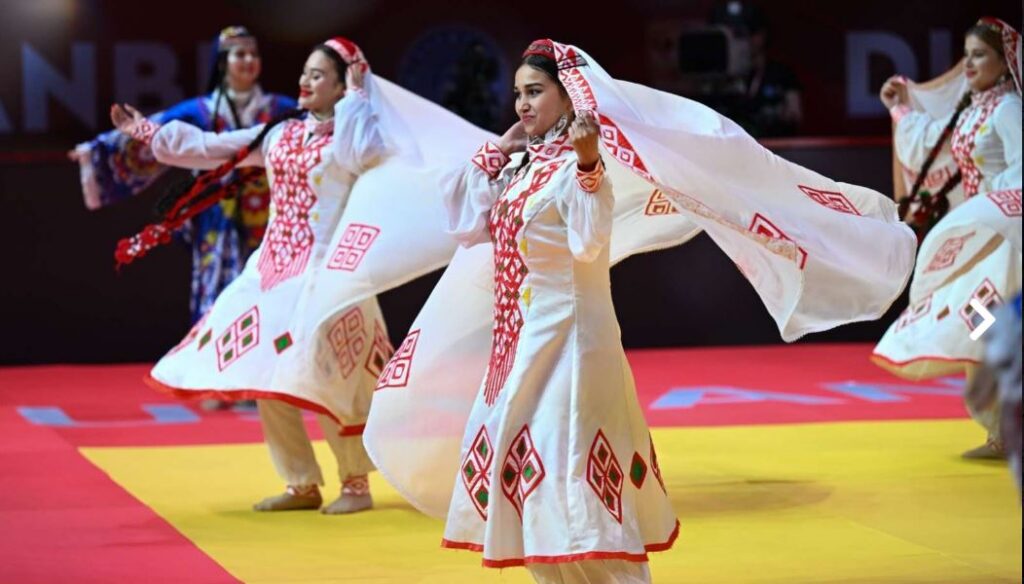
Tajikistan showcased its world-class judo skills during the Dushanbe Grand Slam over the weekend, picking up three gold medals in a competition that featured 240 judoka, or practitioners of the martial art, from about three-dozen countries.

While Russia topped the standings with three golds, three silvers and six bronze medals, Tajikistan’s second-place finish (three golds and one bronze) reflected the high priority of the sport in a country that is also promoting gushtingiri, a traditional form of Tajik wrestling that has some similarities to judo. Mongolia came third with two golds, two silvers and one bronze.

Tajikistan’s capital has become a fixture on the international judo circuit in the last few years. The city hosted the 2024 World Junior Championships, and the Dushanbe Grand Slam was upgraded from Grand Prix status, making it a more prestigious tournament that awards a greater number of ranking points.

Dushanbe will also host the World Judo Masters tournament on December 18-20, an event that Ismoil Mahmadzoir, president of the Tajikistan Judo Federation, has said will help Tajikistan’s judoka prepare for the Olympic Games in Los Angeles in 2028.

Tajikistan’s emergence as a world judo power reflects years of investment and youth training in the sport, setting an example for the development of other sports in a country with relatively limited resources. Rasul Boqiev won Olympic bronze, the country’s first judo medal at the games, in Beijing in 2008. At the Paris Olympics in 2024, judokas Somon Makhmadbekov (in the -81kg weight category) and Temur Rakhimov (+100kg) also won bronze medals in their weight classes.

The focus on judo in Tajikistan is sometimes associated with the legacy of gushtingiri, a traditional form of Tajik wrestling that has some similarities. In gushtingiri, a contestant tries to grab the belt of an opponent and execute a throw to the ground.

While the sport goes back thousands of years in the wider region and has different names, the International Gushtingiri Federation was registered in 2022 in Switzerland, an international hub of sports associations, to standardize the rules and broaden its appeal. President Emomali Rahmon of Tajikistan is the honorary president of the federation, a sign of support for gushtingiri at the highest political level.

At the May 1-3 Grand Slam in Dushanbe, Makhmadbekov – seventh in the world in his weight category – defeated Bernd Fasching of Austria for the gold, saying he was delighted to win in front of a home crowd. Makhmadbekov secured the world junior title in 2019.

Tajikistan’s other gold medal winners in Dushanbe were Muhiddin Asadulloev, who is fourth in the world in his -73kg weight category, and Nurali Emomali (-66kg). Emomali is ranked second in the world in his category, and another Tajik athlete, Obid Zhebov, is just behind him in third place.

Enthusiastic crowds at the Qasri Tennis area in Dushanbe delighted some of the athletes. Among them was Italian veteran Odette Giuffrida, who won gold in her -52kg category, according to tournament reports.

“I wanted to compete in Dushanbe before I retire because many people told me that there is nowhere like Tajikistan, and they were right!” said 31-year-old Giuffrida, whose career medal haul includes Olympic silver in Rio de Janeiro and Olympic bronze in Tokyo. “The atmosphere here gave me power.”

The Italian said she will be back in Dushanbe for the Masters in December.