• KGS/USD = 0.01144 0%
  • KZT/USD = 0.00194 0%
  • TJS/USD = 0.10879 -0.18%
  • UZS/USD = 0.00008 0%
  • TMT/USD = 0.28490 0%
  • KGS/USD = 0.01144 0%
  • KZT/USD = 0.00194 0%
  • TJS/USD = 0.10879 -0.18%
  • UZS/USD = 0.00008 0%
  • TMT/USD = 0.28490 0%
  • KGS/USD = 0.01144 0%
  • KZT/USD = 0.00194 0%
  • TJS/USD = 0.10879 -0.18%
  • UZS/USD = 0.00008 0%
  • TMT/USD = 0.28490 0%
  • KGS/USD = 0.01144 0%
  • KZT/USD = 0.00194 0%
  • TJS/USD = 0.10879 -0.18%
  • UZS/USD = 0.00008 0%
  • TMT/USD = 0.28490 0%
  • KGS/USD = 0.01144 0%
  • KZT/USD = 0.00194 0%
  • TJS/USD = 0.10879 -0.18%
  • UZS/USD = 0.00008 0%
  • TMT/USD = 0.28490 0%
  • KGS/USD = 0.01144 0%
  • KZT/USD = 0.00194 0%
  • TJS/USD = 0.10879 -0.18%
  • UZS/USD = 0.00008 0%
  • TMT/USD = 0.28490 0%
  • KGS/USD = 0.01144 0%
  • KZT/USD = 0.00194 0%
  • TJS/USD = 0.10879 -0.18%
  • UZS/USD = 0.00008 0%
  • TMT/USD = 0.28490 0%
  • KGS/USD = 0.01144 0%
  • KZT/USD = 0.00194 0%
  • TJS/USD = 0.10879 -0.18%
  • UZS/USD = 0.00008 0%
  • TMT/USD = 0.28490 0%
15 December 2025

Tokayev in Bishkek: Deals, Diplomacy, and a Golden Bridge

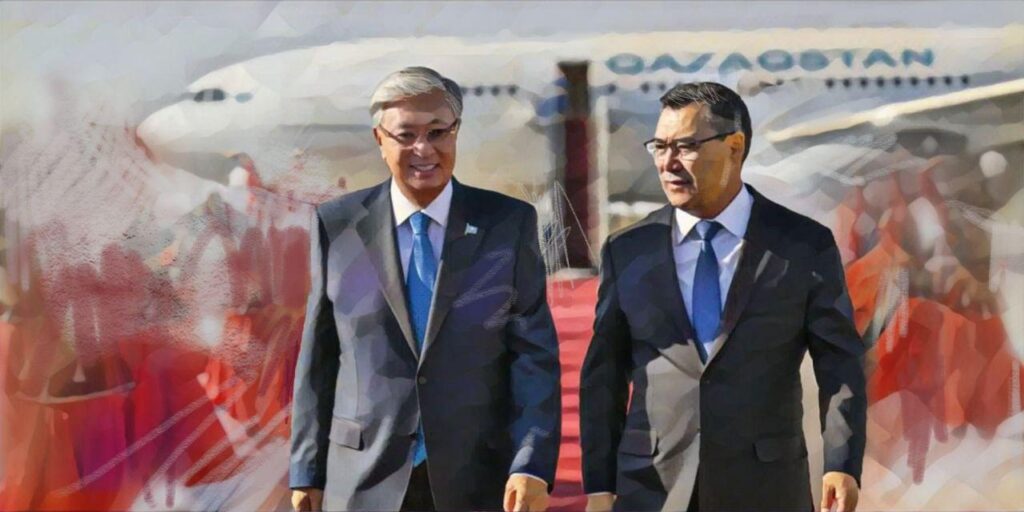
Kazakh President Kassym-Jomart Tokayev arrived in Kyrgyzstan on 21 August for an official visit that rolls into a full day of talks in Bishkek on 22 August, including a session of the Supreme Interstate Council. The Kyrgyz capital implemented rolling traffic restrictions around motorcade routes, a sign of how tightly choreographed the program is. The visit’s centerpiece is a Tokayev–Japarov meeting in both narrow and expanded formats, alongside a packed slate of bilateral events that underscore deepening political, economic, and cultural ties between the neighbors.

Tokayev’s schedule blends state protocol with public-facing diplomacy. Alongside presiding over the seventh meeting of the Supreme Interstate Council, the two leaders are set to unveil the “Golden Bridge of Friendship” monument in Bishkek’s Yntymak Park – an attempt to give symbolic form to a relationship both sides have labored to institutionalize over the past two years. The program is also set to include the inauguration of the Consulate General of Kazakhstan in Osh, the launch of a branch of L.N. Gumilyov Eurasian National University in Kyrgyzstan’s south, the third Kyrgyz-Kazakh Youth Forum, and Days of Kazakhstan Cinema – events designed to anchor cooperation beyond chancelleries and boardrooms.

This public show of diplomacy is being matched by concrete steps. The new Consulate General in Osh is intended to smooth consular services, support cross-border business, and expand cultural ties in a region where Kazakh–Kyrgyz trade and travel flows are accelerating. Central government, city, and regional officials joined Kazakh diplomats at the ribbon-cutting, underscoring the practical, day-to-day value for citizens who live and work across the southern corridor.

Optics aside, the substance is in the talks. Astana and Bishkek have spent the last 18 months upgrading their legal architecture. In April 2024, the presidents signed a Treaty on Deepening and Expanding Allied Relations, moving the relationship beyond the basic language of partnership and into a framework that touches upon security, transport, energy, agriculture, and cultural cooperation. Kazakhstan’s Parliament later approved, and the president signed implementing legislation, putting the allied-relations commitments on a firmer legal footing domestically. This trip is widely viewed in both capitals as a chance to translate that framework into specific projects – some of which are already in motion.

Trade and connectivity top the economic agenda. Bilateral trade hit roughly $1.7 billion in 2024, and both governments have repeatedly floated a target of $3 billion within the decade. The composition of flows is familiar: Kazakhstan ships metals, grain, fuels, and construction materials, while Kyrgyzstan supplies gold, coal, light-industry goods, and services. Reaching the next rung, however, will require more predictable border procedures, harmonized standards, and dedicated logistics capacity – areas where ministerial roadmaps are already in circulation.

Energy and water cooperation is the other pillar. Kyrgyzstan’s Kambarata-1 hydropower project – envisioned as a 1,860 MW plant on the Naryn River – has become a regional test case for practical integration. Since mid-2024, Kyrgyzstan, Kazakhstan, and Uzbekistan have built a joint track with the World Bank and other partners to complete feasibility work, structure financing, and coordinate future operations. With winter electricity deficits and summer surpluses a recurring headache across Central Asia, Tokayev’s support for Kambarata-1 is as much about smoothing seasonal exchanges and future swaps as it is about kilowatt-hours.

For Kyrgyzstan, the benefits of closer alignment are palpable at the human level. The Youth Forum and Cinema Days draw students, creatives, and entrepreneurs into the relationship, helping seed the soft infrastructure, personal networks, and trust that make formal agreements stick. For Kazakhstan, the Osh consulate and university branch extends its institutional footprint into a region central to transit and trade with China and Uzbekistan, and to emerging Trans-Caspian corridors that now carry growing volumes westward via Azerbaijan and Türkiye.

The precise talking points in Bishkek track longstanding friction points. Businesses on both sides have asked to streamline sanitary and phytosanitary controls, digitize paperwork, and standardize AEO (Authorized Economic Operator) recognition to cut border waiting times. Officials also want to codify predictable, rules-based responses to episodic bottlenecks, whether caused by weather-related closures on the Caspian, maintenance and congestion at key crossings, or temporary curbs on sensitive goods. The Supreme Interstate Council format gives the presidents a way to push these fixes across ministries at once, then assign deadlines. A public accounting of such deadlines has been a hallmark of Tokayev’s bilateral diplomacy in the region and is likely to surface in the joint communiqués.

This week’s program also highlights the role of symbolic venues. Tokayev began his visit with a wreath-laying at the Ata-Beyit memorial complex outside of Bishkek, which commemorates victims of Stalin-era repression and honors the writer Chingiz Aitmatov – names and places woven into shared Soviet and post-Soviet memory. The symbolism matters: the presidents are pairing concrete deliverables with gestures meant to signal reconciliation with a difficult shared history and respect for each other’s national narratives.

Why now? The near-term answer is that both economies are growing and increasingly intertwined with new east–west and north–south routes; the strategic answer is that Astana and Bishkek are locking in redundancy. As Central Asia recalibrates around sanctions frictions, supply-chain shocks, and sharper great-power competition, the neighbors are building options – multiple corridors across the Caspian and Caucasus, southward access via Uzbekistan and Turkmenistan, and smoother intra-EAEU movements where the rules are clear. Kyrgyzstan’s south – Osh, Jalal-Abad, and Batken – sits astride feeder lines to both China and Uzbekistan, making day-to-day consular and educational infrastructure there a practical enabler of larger trade goals.

If there is a theme to this visit, it is institutional maturity. The allied relations treaty signed in April 2024 gave both sides a common language to troubleshoot frictions and scale successes; the consulate, university branch, youth forum, and film days translate that language into services and communities. The Supreme Interstate Council, meanwhile, is the steering wheel, an annual venue where leaders can measure progress against long-stated aims such as the $3 billion trade goal, and adjust course accordingly. Joint statements are therefore likely to emphasize border facilitation, energy cooperation – with Kambarata-1 front and center – and cultural and educational ties, with timelines duly attached.

Nigora Fazliddin: The Social Media Storyteller Bringing Life in Tajikistan to the World

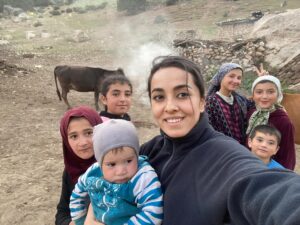
For all its beauty and Silk Road history, Tajikistan remains one of the least visited countries on earth. Life in its epic mountain ranges is rarely captured by photographers, and documentary films are few and far between – mainly half-hearted vlogs by the foreigners who pass through on the Pamir Highway. But in recent years, one Tajik filmmaker and travel influencer has made it her mission to show both her own people and the wider world what makes her homeland so extraordinary.

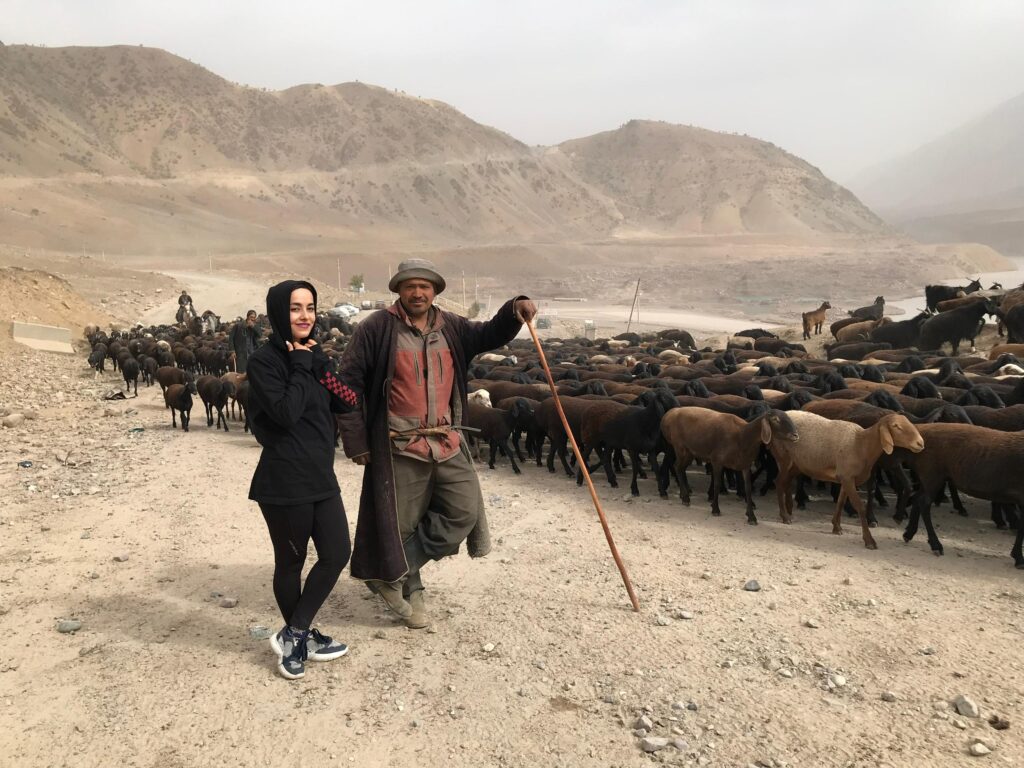
Nigora Fazliddin, a former journalist from Dushanbe, is part of a new generation of creators using social media to bridge cultural distances. Posting simple videos and photographs from her journeys in Tajikistan, she captures the landscapes and communities that outsiders, and even many Tajiks, rarely get to see. “This love I have for our land – its wild beauty, its silence, its soul – I try to share with others,” she tells The Times of Central Asia.

“On X I mostly reach an international audience, since it’s not very popular in Tajikistan. But on Instagram, it’s a different story. That’s where Tajiks find me, and where I find them.”

Image: Nigora Fazliddin

One of her favorite discoveries, she says, is Shirkent National Park in the south-west of the country, where fossilized dinosaur footprints mark the earth. “It gives you goosebumps to stand there and imagine creatures walking those same paths millions of years ago,” she adds.

Then there are the Pamirs, often called “the roof of the world.” At 7,495 meters, Peak Somoni attracts mountaineers from Central Asia and further afield. The region is also home to the rare Marco Polo sheep and shaggy yaks, which are found only here. But what lingers most for Fazliddin is not the challenge of climbing or the sight of wildlife, but the solitude of valleys so remote that no car can reach them.

She also cherishes journeys into the Yaghnob Gorge, where people still live as their ancestors did. There she met a shepherd in his seventies, Mirzoali, who has spent four decades with his flock among the peaks. “He told me, “I’ve been a shepherd for 40 years – and I never get tired of it.’” His secret? Clean air, peace, a healthy routine – and living in the mountains year-round. That’s the kind of wisdom you can only find in the mountains,” she says.

Image: Nigora Fazliddin

What Fazliddin shares online is more than travel content. For many Tajiks, especially those in cities, her images bring new perspectives to familiar places. “My Instagram has become like a mirror where people can see themselves, their roots, and the beauty they grew up with – but may have never really looked at,” she explains.

The responses have been moving. Her social media followers now invite her to visit their villages. For Fazliddin, these moments confirm that her work is worth doing: “It makes me feel like what I do matters – even in small ways.”

Surprisingly, she says, being a woman filmmaker in a patriarchal country like Tajikistan has not brought any resistance. Instead, “people welcome the content that I share. I think people see the sincerity behind my simple reels, and they feel proud.”

Image: Nigora Fazliddin

Tajikistan is among the countries most vulnerable to climate change. Its glaciers, which supply water to millions across Central Asia, are melting at an alarming rate. For Fazliddin, this crisis underscores the potential power that her storytelling carries.

“Climate change is no longer a distant threat – it’s here, and Tajikistan is already feeling its impact,” she says. “Through our lenses, we don’t just see the problem – we feel it.” For her, filmmaking and photography are not just creative pursuits but forms of activism, connecting communities across borders. “A single image of a disappearing glacier, a dried-up riverbed, or a farmer struggling with drought can move people in ways statistics never will.”

Image: Nigora Fazliddin

Despite her passion, Fazliddin is candid about the challenges of working in Tajikistan’s small travel media community. Funding is scarce, with global grants shrinking. “As a result, this important format is slowly becoming less popular,” she says.

Instead, Tajik filmmakers often turn to feature films and fictional YouTube series, which resonate more with local audiences and can be monetized more easily. Yet Fazliddin remains committed to her solo documentary projects. It is about preserving heritage, raising awareness, and ensuring that Tajikistan’s myriad stories are not forgotten.

Kyrgyz President Denounces “Politicized” Sanctions on Banks

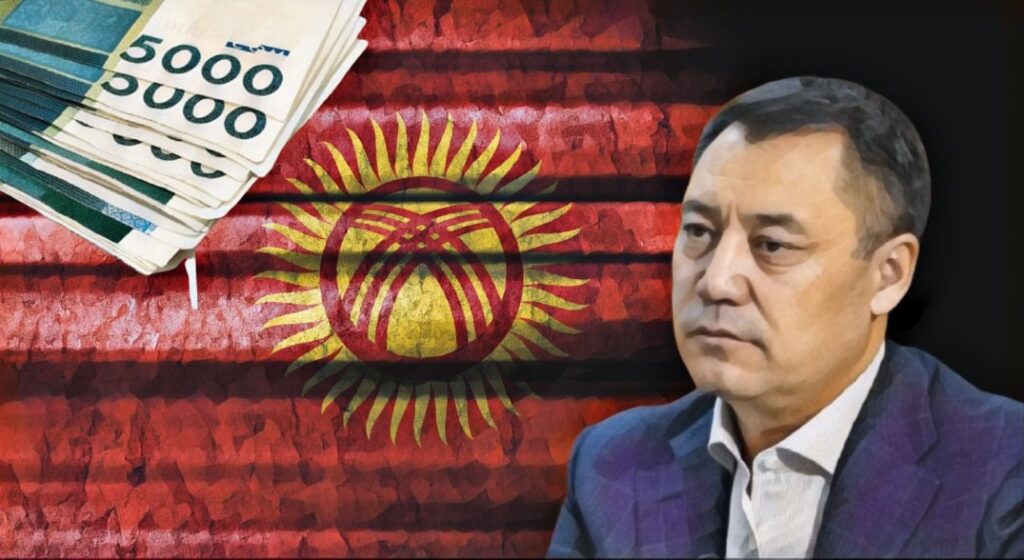
President Sadyr Japarov has sharply criticized the United States and United Kingdom for imposing what he has called unfounded sanctions on Kyrgyz financial institutions, urging Western leaders to stop “politicizing the economy.” In an interview with state news agency Kabar, Japarov defended two state-owned banks – Keremet Bank and Capital Bank – against allegations that they helped Russia skirt international sanctions, insisting that no evidence of violations has been presented. Neither the UK nor the U.S. has provided a single fact of violation… such facts simply do not exist,” Japarov said, dismissing the sanctions as politically motivated.

UK and U.S. Target Kyrgyz Banks for Russia Sanctions Evasion

Japarov’s comments come after a new wave of Western measures targeting Kyrgyzstan’s banking and crypto sectors for purported links to Russian sanctions evasion. On August 20, London sanctioned Kyrgyzstan-based Capital Bank – along with its director, Kantemir Chalbayev – alleging the bank was being used by Moscow to pay for military goods as part of a “convoluted scheme” to evade sanctions. The British authorities also blacklisted two Kyrgyz cryptocurrency exchanges – Grinex and Meer – that ran the infrastructure for a new rouble-backed crypto coin called A7A5, which moved an estimated $9.3 billion in just four months and was “intentionally created to evade sanctions.”

The UK’s sanctions minister, Stephen Doughty, warned that “laundering transactions through dodgy crypto networks” would not soften the blow of Western sanctions.

These steps followed a U.S. Treasury designation in January 2025 against Keremet Bank, a mid-sized Kyrgyz lender, for creating a hub for trade payments that helped Moscow evade restrictions. U.S. officials allege that Keremet Bank facilitated cross-border transactions for Russia’s sanctioned Promsvyazbank and even sold a controlling stake to a firm linked to a pro-Kremlin oligarch – moves Washington viewed as part of a secret channel to re-export dual-use goods and finance Russia’s defense sector. Those actions marked one of the first instances of Western “secondary sanctions” against Central Asian entities – penalties on third-country institutions accused of abetting a sanctioned nation’s activities.

Kyrgyz Government’s Defensive Measures

President Japarov contends that Kyrgyzstan has been proactive in compliance and that the West’s suspicions are misplaced. He noted that 21 banks operate in Kyrgyzstan, and authorities deliberately limited all Russian rouble transactions to just two state-controlled banks to shield the rest of the financial sector from any inadvertent sanctions breach. “To prevent any of them from falling under sanctions, we decided that only the state-owned Keremet Bank would work with the Russian rouble… All operations are under state control, and the income goes directly to the state treasury,” Japarov stated.

Earlier this year, the government expanded this approach by channeling rouble remittances and payments through Capital Bank, which was brought under 100% state ownership in April. The National Bank of Kyrgyzstan ordered that all cross-border transfers in roubles – including the billions of roubles sent home by Kyrgyz migrant workers each day – be processed exclusively via Capital Bank. Kyrgyz officials argued this centralization was meant to “ensure transparency of financial flows and minimize sanctions risks” under state oversight.

Western regulators, however, have viewed these measures with suspicion. The UK’s sanctions announcement asserts that Russia “turned to the Kyrgyz financial sector” and “opaque financial networks” (including crypto conduits) to bypass sanctions. In Washington’s view, Kyrgyzstan’s state banks became conduits for illicit finance: the U.S. Treasury reported that after Russia invaded Ukraine, a firm associated with Moldovan oligarch Ilan Shor – a fugitive under U.S. sanctions – purchased a controlling stake in Keremet Bank, allegedly to create a sanctions-evasion hub.

The British authorities similarly signaled their concern that Capital Bank might be following “the same path” as Keremet, pointing out that Chalbayev was formerly a top executive at Keremet Bank. Notably, the UK’s latest sanctions also targeted Altair Holding (a Luxembourg-registered company tied to Shor that had acquired a stake in Keremet, underscoring London’s focus on any Shor-linked networks in Kyrgyzstan.

Japarov: No Evidence, Calls Western Claims Unfounded

President Japarov rejects the narrative that Kyrgyz banks are abetting Russia, stressing that neither Washington nor London has provided proof of sanction violations by Kyrgyz institutions. “In January, the U.S. imposed sanctions against Keremet Bank… however, they were unable to provide a single fact confirming this. And they will not be able to, because such facts simply do not exist,” he told Kabar.

Following the U.S. designation of Keremet, Japarov’s government says it sought dialogue and transparency. First Deputy Prime Minister Daniyar Amangeldiev met with U.S. Ambassador Leslie Viguerie in Bishkek and later traveled to Washington, D.C. to engage with the Treasury’s Office of Foreign Assets Control (OFAC) about the sanctions. Japarov recounted that the Kyrgyz side offered to arrange an independent audit of both Keremet Bank and Capital Bank – inviting neutral experts to scrutinize their operations – but the U.S. declined the offer. “We proposed to involve independent audit companies to check… and then make a decision. But they refused,” he said.

According to Japarov, American officials “were unable to present any facts” of wrongdoing even in private, instead telling Kyrgyz envoys only that “we have information.” The president alleges that this unspecified “information” came from questionable sources: “We understand perfectly well where this ‘information’ comes from – it is transmitted by local NGOs and our internal opponents in the form of anonymous denunciations. Sanctions are imposed on the basis of this false data,” Japarov said, suggesting that hostile domestic actors fed Western governments unsubstantiated reports.

The pattern repeated, Japarov says, with the UK’s blacklisting of Capital Bank. “Now, as in the case of Keremet Bank, the UK is imposing sanctions against Capital Bank – and again without a single piece of evidence. Everything is based only on doubts,” he asserted.

The president framed the sanctions as politically driven rather than based on facts, musing as to whether the pressure might be a response to Kyrgyzstan’s rapid economic rise: “Is this connected with the fact that the Kyrgyz economy is developing at a high rate? Our GDP has grown by 11.7%, and we are ahead of the CIS countries. Perhaps this is how they put pressure on us, because large countries are not interested in other countries developing quickly.”

Kyrgyzstan’s economy has expanded robustly in the past two years – by around 9% annually according to official figures – thanks in part to booming re-exports and inflows from Russia. Japarov insinuated that Western powers find such success inconvenient: “It is more profitable for them when other countries are dependent and look up to them,” he said, implying that sanctions are meant to keep Kyrgyzstan in check.

Appeals to Western Leaders and Citing “Double Standards”

In an unusual personal touch, Japarov directly appealed to prominent Western politicians to intervene. “I would go to the top leadership of these countries – Donald Trump and Keir Starmer. Maybe they are not getting the message,” he said. “There is no need to politicize the economy.”

Japarov argued that Kyrgyzstan pursues a balanced, multi-vector foreign policy and is seeking cooperative economic ties with both East and West. As evidence, Japarov pointed out that despite the UK sanctioning a Kyrgyz bank, Britain remains a top buyer of Kyrgyz gold – about $1 billion worth each year – and that trade between Kyrgyzstan and Western countries continues in other sectors. He also cited data highlighting ongoing Western commerce with Russia: “In 2024, EU countries traded with Russia for $141 billion, of which $36 billion were imports from Russia. The UK, which imposed sanctions against our bank, itself traded $2.2 billion with Russia in 2024,” Japarov stated. “It turns out that they leave the opportunity to cooperate for themselves, but prohibit others,” he added.

Analysts have also observed that several major economies maintain significant trade with Russia despite sanctions, especially in energy and commodities. By Japarov’s account, this amounts to a double standard. “The attitude you [Western nations] demonstrate is unfair. If you do not trust us, bring your data. Our banks are ready to show all the reports,” he said.

Limited Impact at Home – Pledging Resilience

For now, Kyrgyz officials assert that these sanctions – while diplomatically vexing – have not crippled the local banking system or economy. Both Keremet Bank and Capital Bank continue to operate under the Ministry of Finance’s control, serving clients and processing transactions, albeit now effectively cut off from U.S. dollar and British-linked dealings. Japarov emphasized that everyday life in Kyrgyzstan will carry on as normal despite the Western measures. “We are ready to fulfill international obligations and are doing so. But I will not allow the interests of our citizens and the economic development of the country to be sacrificed,” he declared. Even “under the pressure of sanctions, we will continue to live and work,” Japarov concluded, vowing to safeguard Kyrgyz citizens’ economic interests and avoid any interruption to vital financial flows such as remittances.

Western governments, however, have signaled that they will keep scrutinizing channels that could aid Russia’s war effort. The U.S. and UK moves suggest a broader strategy to tighten secondary sanctions enforcement in Central Asia – essentially warning regional banks, businesses, and even crypto platforms against becoming backdoors for sanctioned Russian entities. This places Kyrgyzstan – closely tied to Russia through trade, migrant labor, and investment, yet also seeking positive relations with the West – in a delicate position. Japarov’s administration has walked a fine line, professing neutrality in the Russia-Ukraine conflict and pivoting to whichever partners can spur development. The showdown over sanctions on its banks highlights the rising pressure on such third countries to police any dealings that might undermine the sanctions regime on Moscow.


Editor’s Note: Parts of this article are based on a translated interview with President Sadyr Japarov published by the state news agency Kabar. All trade figures and statements attributed to the president have not been independently verified by The Times of Central Asia.

New Drought Monitoring System Could Save Tajikistan Millions

Tajikistan stands to save between $4 million and $6 million annually by adopting a satellite-based drought monitoring system designed to reduce crop losses and improve water management.

Regional Project Launch

On August 20, a major regional initiative to monitor droughts in Central Asia was launched in Tashkent. The project, spearheaded by the United Nations Economic and Social Commission for Asia and the Pacific (ESCAP), will employ Earth Remote Sensing (ERS) technologies. The budget for the first phase is $300,000.

The system will initially be piloted in Uzbekistan for two years, with implementation in Tajikistan and Kyrgyzstan expected by 2027.

According to project analysts, Tajikistan’s annual savings will come from reduced agricultural losses, more efficient water use, and timely responses to drought conditions.

Agriculture at High Risk

Climate change poses a significant threat to Tajikistan. Over the past three decades, average temperatures in Central Asia have risen by 1.2°C, well above the global average of 0.85°C. Meanwhile, precipitation has decreased by 15-20%, increasing the frequency and severity of droughts.

Agriculture accounts for 22% of Tajikistan’s GDP, and approximately 1.5 million people — 15% of the population — live in drought-prone areas. The country’s mountainous landscape and limited water resources further magnify the impact of even minor climate shifts.

Current meteorological stations lack the capacity to monitor local variations. Weather conditions in mountainous areas can differ dramatically over short distances, rendering traditional methods insufficient.

The new system will rely on satellite data from Europe’s Sentinel-2 and the U.S.’s Landsat-8. These satellites measure the normalized difference vegetation index (NDVI), soil moisture, and surface temperature. Forecasts are updated every 5-10 days and have an accuracy rate of 80-85%. This will enable farmers to better plan irrigation schedules, select suitable crops, and conserve water resources.

Implementation Timeline

The initiative builds on a 2024 pilot project that developed monitoring methodologies and collected baseline data. In 2025, trials began in Uzbekistan (in Karakalpakstan and the Fergana Valley). Nationwide implementation in Uzbekistan is scheduled for 2026, followed by rollout in Tajikistan and Kyrgyzstan in 2027.

As part of the program, 150 specialists will be trained, and satellite data will be integrated into national meteorological systems.

Tajikistan is expected to cut annual crop losses by 10-15%, boosting food security and delivering $4-6 million in economic benefits. The project also aims to mitigate social pressures in rural areas.

In Uzbekistan, similar climate stresses displaced an estimated 120,000 people between 2018 and 2023 due to water shortages. By reducing drought-induced income loss, the system could help slow climate-related migration in Tajikistan as well.

The initiative draws on successful international models. Australia’s Drought Watch program has cut agricultural losses by 12%, while India’s INSAT-3D satellite has improved forecast accuracy to 78%. Both approaches will be adapted for Central Asian conditions.

Challenges Ahead

Despite the promise, Tajikistan faces several hurdles. Internet access reaches only 55% of rural communities, there is a shortage of trained remote sensing specialists, and the system’s annual maintenance is estimated at $50,000.

To address these challenges, ESCAP will provide training and technical support and integrate Tajikistan’s platform with global systems like Copernicus and UN-SPIDER.

Following implementation in Tajikistan, the system will be extended to Kazakhstan and Turkmenistan. In future phases, artificial intelligence tools will be introduced to boost forecast accuracy to 90%.

The long-term goal is the establishment of a unified regional water management system to help all Central Asian countries tackle mounting climate risks.

Cholpon-Ata to Host ‘Day of German Economy in Kyrgyzstan’

On August 26, Kyrgyzstan will host one of its most prominent international business events of the year, the Day of German Economy in Kyrgyzstan, alongside the 4th meeting of the Kyrgyz-German Business Council. The events are organized by the National Investment Agency under the President of the Kyrgyz Republic.

According to the agency, the forum will take place at two venues in the resort city of Cholpon-Ata: the Rukh Ordo Cultural Center and the No. 2 State Residence of the President of the Kyrgyz Republic.

The event is expected to bring together high-level participants, including government officials, business leaders, industry associations, and investors from both Germany and Kyrgyzstan.

Welcoming remarks will be delivered by Adylbek Kasymaliyev, Chairman of the Cabinet of Ministers of Kyrgyzstan, and Professor Reinhold Krämmel, Honorary Consul of Kyrgyzstan in Munich and Deputy Co-Chairman of the Kyrgyz-German Business Council.

The forum will feature two thematic panel sessions:

  • “Energy Projects for German-Kyrgyz Economic Cooperation”focusing on opportunities in green energy and infrastructure development.
  • “Export Potential and Logistics in the Transition Period: Opportunities of the Middle Corridor” examining evolving trade routes and modern logistical challenges.

In addition, Kasymaliyev will attend the meeting of the Kyrgyz-German Business Council. Discussions will center on the theme: “Kyrgyz-German Trade, Economic and Investment Cooperation: Finance as an Integral Part of the Partnership.”

The primary aim of the event is to deepen economic dialogue, enhance trade and investment relations, and strengthen the strategic partnership between Kyrgyzstan and Germany.

Kyrgyzstan Drafts Program to Preserve Lake Issyk-Kul

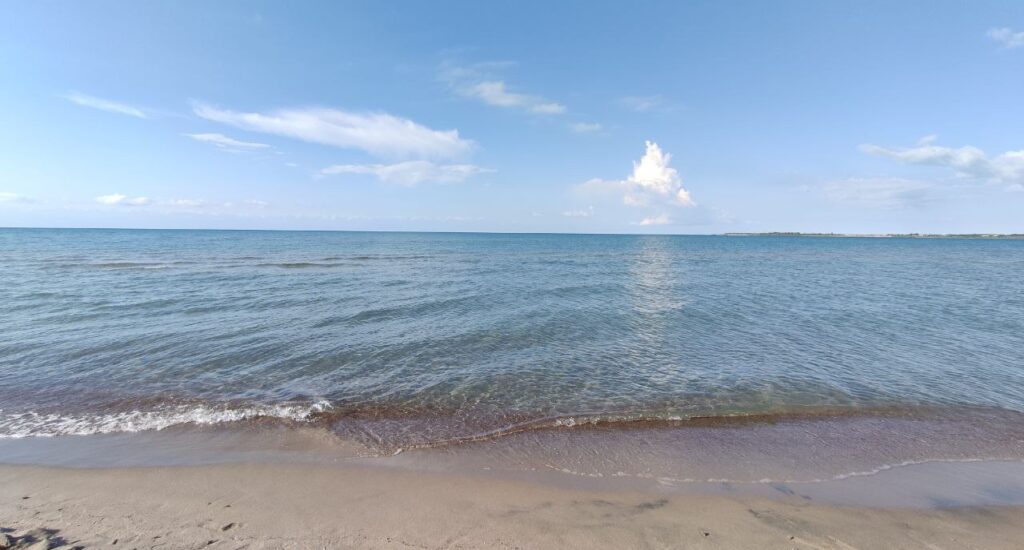
Kyrgyzstan’s Ministry of Natural Resources, Ecology, and Technical Supervision has released a draft Concept for the Sustainable Development of the Ecological and Economic System of Lake Issyk-Kul until 2030 for public discussion. The proposal addresses mounting environmental challenges that threaten the future of the lake, a vital component of the country’s climate system, biodiversity, and tourism industry.

Located in northeastern Kyrgyzstan, Issyk-Kul is the nation’s largest lake and one of its most important ecological assets and tourist destinations. The new Concept outlines a roadmap for sustainable management amid signs of accelerating environmental degradation.

Falling Water Levels

The lake’s water level has dropped by 2.75 meters between 1927 and 2003. To reverse this trend, the Concept recommends restoring hydrological monitoring infrastructure, including groundwater observation and river hydro-posts. It also proposes enforcing irrigation water accounting and transitioning local agriculture to water-saving technologies.

Glacier Retreat and River Flow

The 957 glaciers in the Issyk-Kul basin, spanning 560.8 km², are rapidly melting due to climate change. These glaciers feed roughly 120 rivers flowing into the lake, though only 80 reach it during the summer, largely due to irrigation withdrawals. To mitigate the loss, the government plans to introduce modern irrigation systems across 100,000 hectares of farmland, potentially redirecting up to 200 million cubic meters of water back into the lake annually.

Wastewater and Sewerage Infrastructure

Untreated wastewater from settlements and tourism infrastructure poses a serious threat to the lake’s ecosystem. The Concept includes measures to upgrade wastewater treatment, promote the reuse of treated water for irrigation, and expand sewerage systems. Over the past five years, 47 new treatment facilities have been built in the Issyk-Kul region.

2030 Environmental Goals

The Concept sets several targets for the next five years:

  • Reduce untreated wastewater discharge by 40%
  • Expand specially protected natural areas to cover 20% of the region
  • Implement ecotourism standards at all recreational facilities
  • Introduce separate waste collection in all district centers
  • Involve at least 80% of schoolchildren in environmental education programs

“Issyk-Kul is a strategic resource for Kyrgyzstan. The Concept aims to ensure clean water, protect the shoreline, create safe recreation areas, and boost tourism and entrepreneurship,” said Meder Mashiev, Minister of Natural Resources, Ecology, and Technical Supervision.