• KGS/USD = 0.01144 0%
  • KZT/USD = 0.00193 -0%
  • TJS/USD = 0.10876 0.55%
  • UZS/USD = 0.00008 0%
  • TMT/USD = 0.28490 0%
  • KGS/USD = 0.01144 0%
  • KZT/USD = 0.00193 -0%
  • TJS/USD = 0.10876 0.55%
  • UZS/USD = 0.00008 0%
  • TMT/USD = 0.28490 0%
  • KGS/USD = 0.01144 0%
  • KZT/USD = 0.00193 -0%
  • TJS/USD = 0.10876 0.55%
  • UZS/USD = 0.00008 0%
  • TMT/USD = 0.28490 0%
  • KGS/USD = 0.01144 0%
  • KZT/USD = 0.00193 -0%
  • TJS/USD = 0.10876 0.55%
  • UZS/USD = 0.00008 0%
  • TMT/USD = 0.28490 0%
  • KGS/USD = 0.01144 0%
  • KZT/USD = 0.00193 -0%
  • TJS/USD = 0.10876 0.55%
  • UZS/USD = 0.00008 0%
  • TMT/USD = 0.28490 0%
  • KGS/USD = 0.01144 0%
  • KZT/USD = 0.00193 -0%
  • TJS/USD = 0.10876 0.55%
  • UZS/USD = 0.00008 0%
  • TMT/USD = 0.28490 0%
  • KGS/USD = 0.01144 0%
  • KZT/USD = 0.00193 -0%
  • TJS/USD = 0.10876 0.55%
  • UZS/USD = 0.00008 0%
  • TMT/USD = 0.28490 0%
  • KGS/USD = 0.01144 0%
  • KZT/USD = 0.00193 -0%
  • TJS/USD = 0.10876 0.55%
  • UZS/USD = 0.00008 0%
  • TMT/USD = 0.28490 0%
11 December 2025

Tajikistan Authorities Step Up Crackdown on Illegal Mining and Electricity Theft

Tajikistan’s Prosecutor General Khabibullo Vokhidzoda has reported a rise in illegal cryptocurrency mining operations and electricity theft across the country.

Illegal Cryptocurrency Mining

In the first half of 2025, authorities identified and recovered 32 million somoni ($3.52 million) in damages linked to stolen electricity used to power cryptocurrency mining equipment.

“There are individuals who import mining equipment from abroad and operate cryptocurrency farms illegally,” Vokhidzoda said.

Currently, 4-5 criminal cases are under investigation involving the installation and operation of such devices. Cryptocurrency, he noted, is a digital currency maintained through a decentralized payment system, with mining requiring high-powered computers, stable internet, and substantial electricity consumption.

Although Tajikistan does not have a legal framework regulating cryptocurrency mining, law enforcement regularly shuts down illegal farms. Recently, the Sughd Region Prosecutor’s Office uncovered seven cases in which 135 mining devices were found operating inside residential buildings, causing an estimated 287,939 somoni ($31,673) in damages.

Widespread Electricity Theft

Illegal electricity use remains a major problem. Since January, 3,988 individuals have faced administrative or disciplinary action, while 190 criminal cases have been opened. The total damages recovered so far amount to 38.7 million somoni ($4.26 million).

Electricity debts are also mounting: subscribers accumulated 273 million somoni ($30 million) in unpaid bills in the first half of 2025. Nationwide, total arrears stand at 4.6 billion somoni ($506 million), with 1.6 billion somoni ($176 million) owed by households and the rest by enterprises and organizations.

Tougher Penalties Introduced

This year, Tajikistan increased fines for electricity theft and non-payment. Under the Criminal Code, violations can now result in fines from 27,000 to 90,000 somoni ($2,970-$9,900) or imprisonment for three to ten years.

The Administrative Offenses Code also provides for fines ranging from 1,500 to 22,500 somoni ($165-$2,475) for misuse of electricity and heat.

Kazakhstan Details Use of Russian Loan for First Nuclear Power Plant

Kazakhstan’s Atomic Energy Agency (AEA) has confirmed that Russian preferential export financing for the country’s first nuclear power plant will be directed toward the purchase of long-cycle equipment and major construction works. Key components to be covered include the reactor, steam generators, and main circulation pumps.

The 2.4 GW twin-unit plant will be built near the village of Ulken on the shores of Lake Balkhash in the Almaty region. The loan’s terms and parameters will be set during the drafting of an intergovernmental agreement.

Construction Management

The project has been entrusted to Kazakhstan Atomic Power Plants LLP (KAP), a subsidiary of Samruk-Kazyna. In July, KAP was placed under the trust management of the AEA and will later become state property.

The agency is also studying potential sites for the second and third nuclear power plants, taking into account geological, seismic, infrastructural, and environmental factors, along with electricity demand and public opinion. All studies are being conducted in line with International Atomic Energy Agency (IAEA) standards.

Fuel Production in Kazakhstan

The AEA also highlighted plans to produce nuclear fuel domestically. The Ulba-TVS plant has reached its design capacity of 200 tons of finished fuel in low-enriched uranium terms, equivalent to about 1,600 tons of natural uranium annually, enough to reload six reactors.

A joint venture with China’s CGNPC, the plant currently manufactures 440 fuel assemblies per year for Chinese nuclear power stations, each weighing about half a ton and produced to a French Framatome design. Moving to two-shift production could double output.

While Kazakhstan lacks uranium conversion and enrichment facilities, authorities plan to develop this segment to establish a full nuclear fuel cycle. The AEA and Kazatomprom aim to ensure a steady fuel supply for the plant’s entire operational life.

Project Costs and Local Involvement

Russia’s financing will primarily fund equipment with long manufacturing lead times. The total cost of construction will be set after design completion and expert review.

The AEA noted that costs will depend on site-specific engineering and survey results, local seismic and meteorological conditions, use of international equipment, the degree of domestic production of materials, and the involvement of local contractors and specialists.

Kazakh suppliers will have priority in providing materials and labor, provided they meet certification standards. “It is economically unfeasible to import construction materials and workers from Russia if the necessary resources and specialists are available in Kazakhstan at more competitive prices,” the agency stated.

Kyrgyzstan’s Kazarman Airport Reopens After 20-Year Hiatus

Kazarman Airport in Kyrgyzstan’s southern Jalal-Abad region has reopened after more than 20 years, following a major reconstruction project by JSC Airports of Kyrgyzstan. Located near the village of Kazarman, the airport is now ready to receive flights once again.

The renovation included repairs to the 1,840 meter runway, taxiways, aircraft parking areas, and the passenger terminal. The facility can accommodate aircraft weighing up to 22 tons and currently operates during daylight hours.

Built in 1985, Kazarman Airport previously served flights to Bishkek, Osh, and Jalal-Abad. On August 12, state-owned Asman Airlines made its first flight to the renovated airport, and regular flights to Bishkek are scheduled to begin in early September.

“The return of Kazarman Airport to operation is an important step for the development of the country’s transport network. Now residents and visitors of the Jalal-Abad region will be able to get to Bishkek faster and more conveniently,” said Manasbek Samidinov, Chairman of the Board of JSC Airports of Kyrgyzstan.

The reopening comes as Kyrgyzstan continues to expand its aviation infrastructure. In May 2025, construction began on a new international airport in Jalal-Abad, the country’s third-largest city, designed to handle passenger and cargo aircraft including Boeing 737s and Airbus A320/A321s.

At the groundbreaking, President Sadyr Japarov highlighted rising demand for both domestic and international flights. Since 2021, passenger traffic has grown by 46% and the number of flights by 31%, he said. Asman Airlines has restored all domestic routes linking Bishkek with Talas, Karakol, and Kerben, and in 2024 added two Bombardier Dash 8 Q400 short-haul aircraft to its fleet.

The Kazarman and Jalal-Abad projects are part of a broader strategy to modernize Kyrgyzstan’s airports. Work began in February 2025 on a new complex at Osh International Airport, and Karakol International Airport and Talas Airport have already opened. Renovations are also underway at Issyk-Kul International Airport and Naryn Airport.

Kyrgyzstan Hosts Inaugural World Festival of Traditional Culture and Music “Rukh Sanat”

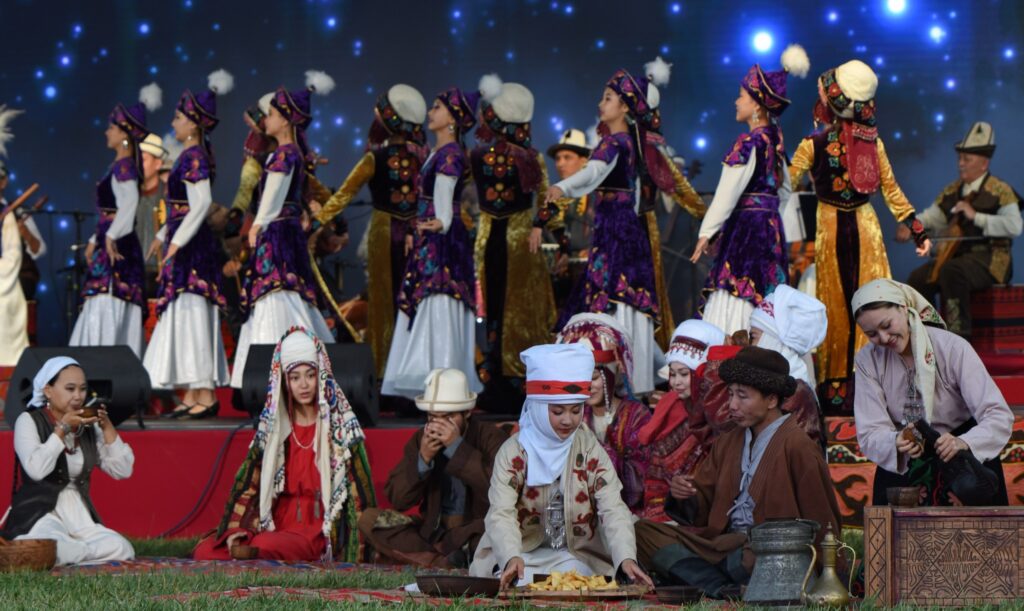
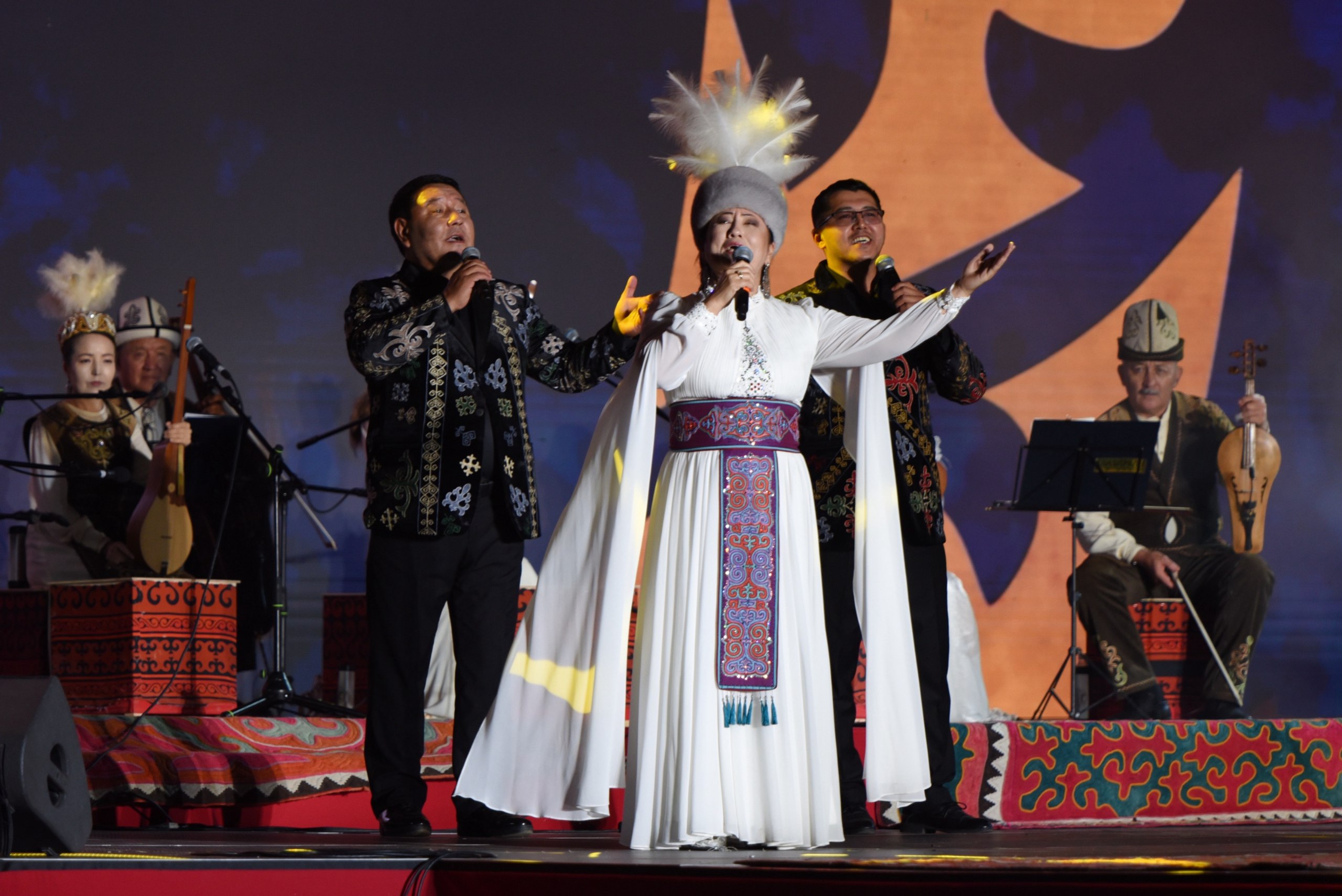
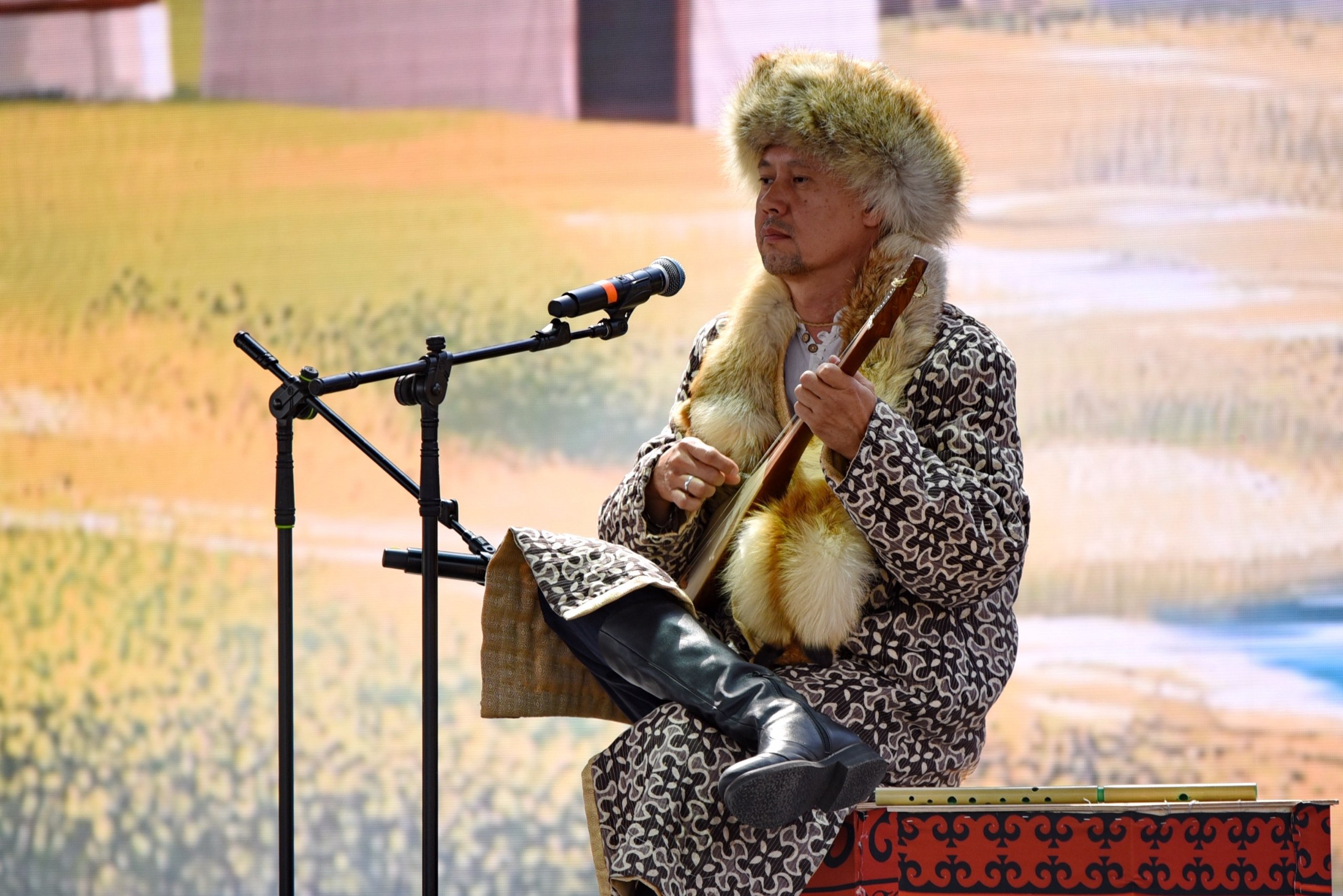
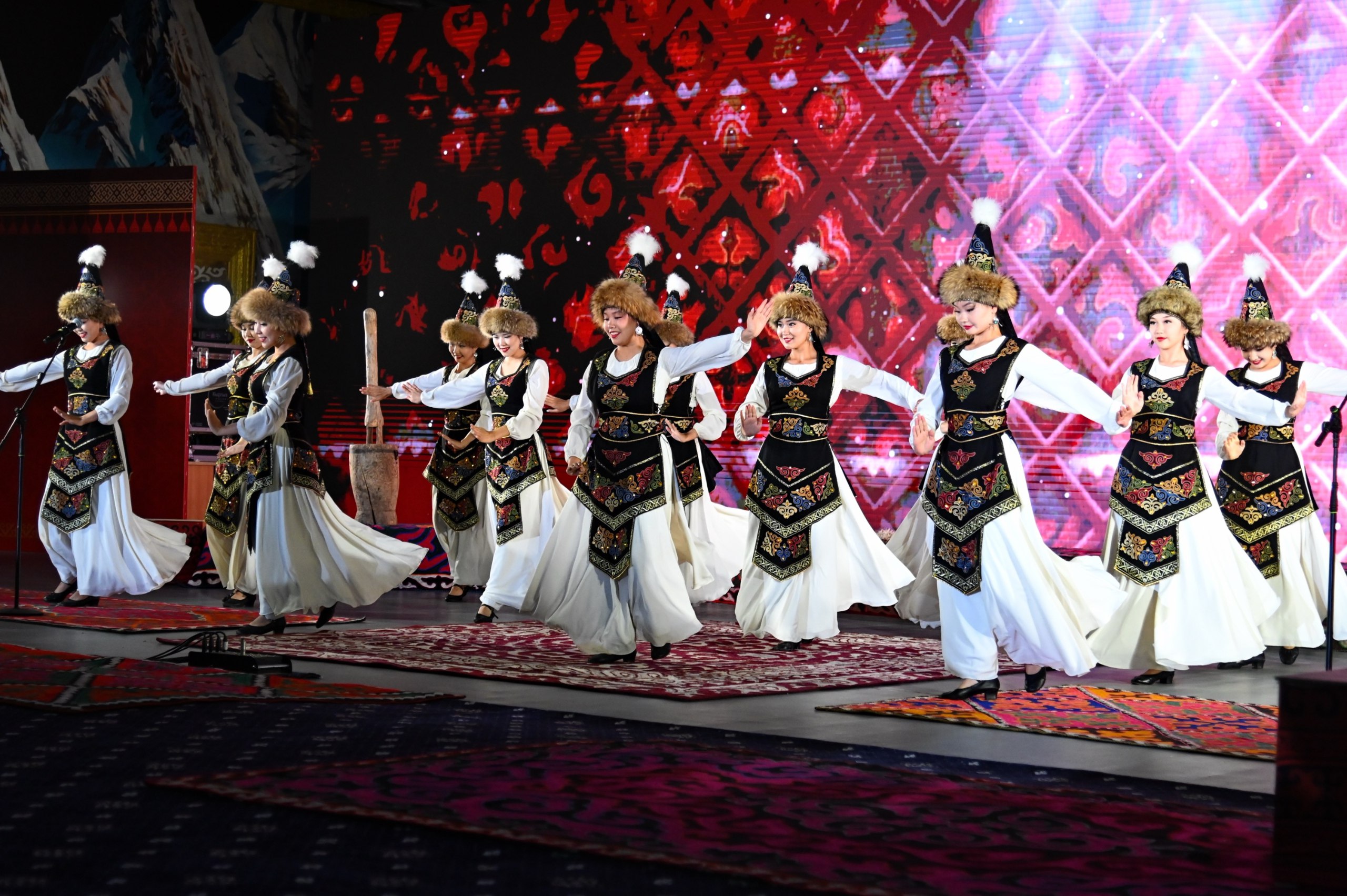
From August 1-3, the cultural and ethnographic complex Rukh Ordo, on the shores of Lake Issyk-Kul, hosted Kyrgyzstan’s first World Festival of Traditional Culture and Music, Rukh Sanat. The event brought together more than 130 performers, researchers, and artisans from 37 countries.

The festival opened with a parade of participants and a theatrical ceremony celebrating nomadic traditions and harmony with nature. Kyrgyz Minister of Culture, Information and Youth Policy Mirbek Mambetaliev described Rukh Sanat as “a new cultural doctrine” where tradition “sounds, lives, and interacts.”

Image: TCA/Maria Malinovskaya

Image: TCA/Maria Malinovskaya

The program included an International Competition of Oral-Professional Musical Art, featuring 82 soloists and ensembles from 14 countries. The Grand Prix was awarded to the Kyrgyz ensemble Akak, while laureates included performers from Kazakhstan, Uzbekistan, Russia, South Korea, and India.

Image: TCA/Maria Malinovskaya

Image: TCA/Maria Malinovskaya

Alongside the performances, the International Council for Traditional Music and Dance (ICTMD) held a symposium attended by more than 100 scholars from 40 countries, addressing the preservation and transformation of intangible cultural heritage.

The festival concluded on August 3 with a gala concert of laureates. Deputy Chairman of the Cabinet of Ministers Edil Baisalov announced that the next Rukh Sanat will be held in Kyrgyzstan’s Jalal-Abad region in 2027.

Image: TCA/Maria Malinovskaya

Image: TCA/Maria Malinovskaya

Organizers see the festival as an important step toward strengthening Central Asia’s cultural presence on the global stage.

Kyrgyzstan’s Eduard Kubatov Conquers K2 Without Supplemental Oxygen

Eduard Kubatov, the head of Kyrgyzstan’s Mountaineering Federation, has reached the summit of K2 in Pakistan (8,611 meters), the world’s second-highest peak after Mount Everest. He accomplished the climb without supplemental oxygen, according to the Russian mountaineering club, 7 Summits Club, which congratulated him on achieving “the summit of his dreams.” The joint team from Seven Summit Treks and 14 Peaks Expedition made it to the top of K2 on August 11. Kubatov, alongside three Chinese, a Turkish mountaineer, and five Nepalese Sherpas, was climbing with a Nepal-based operation.

K2 is widely regarded as the most technically challenging mountain to climb. Its steep slopes, frequent avalanches, and unpredictable weather make it more dangerous than Everest.

“This year, K2 was rather unkind to climbers. The sieges lasted longer than usual, and it was quite possible there would be no ascents at all. Most expeditions had ended without a serious summit attempt. The strongest and most persistent remained, and fortune smiled upon them. Congratulations to our friend Eduard Kubatov on his ascent of K2, the summit of his dreams! An outstanding athlete, no less an outstanding businessman, organizer, and leader, Kubatov has headed the Mountaineering Federation of Kyrgyzstan and achieved impressive results,” 7 Summits Club said.

Kubatov is no stranger to high-altitude success. In May 2024, he summited both Lhotse and Makalu, each over 8,000 meters, without supplemental oxygen. He also became the second Kyrgyz climber to reach Everest’s summit in May 2021, following Dmitry Grekov, who first achieved the feat in 1997.

From Boom to Bust: Kyrgyzstan Grapples with Falling Birth Rate

The population of Central Asia when the Soviet Union collapsed in late 1991 and the five Central Asian republics became independent countries was some 50 million people. Thirty-four years later, the population of the region is about 80 million. However, in Kyrgyzstan, the birth rate has been declining in recent years, and it has officials confused and alarmed.

The Data

Kyrgyz parliamentary deputy Dastan Bekeshev raised the matter on August 7, noting the country has seen a steady fall in the number of babies born from 2019, when it reached a record of some 173,000, to about 140,000 in 2024. Bekeshev was responding to recently released figures from Kyrgyzstan’s National Statistics Committee that showed the birth rate for 2020 was 156,112, for 2021 it was 150,164, climbing a bit to 150,225 in 2022, then dropping to 145,977 in 2023, and 140,419 in 2024.

According to the Health Ministry’s chief specialist on demography, Raisa Asylbasheva, there are currently some 1.8 million women in Kyrgyzstan considered to be of childbearing age.

Asylbasheva said it could be cyclical and “in five years, possibly, there will be an increase.”

Bekeshev, however, has pointed out that if the trend continues, “In 15-20 years, there will be fewer young people in the country who can work, pay taxes, and provide for pensioners.”

The Reasons

Among the statistics cited on birth rate, one catches the eye immediately: the average age of a mother giving birth in Kyrgyzstan in 2024 was 28.4 years old. Traditionally, people marry young in Central Asia, and new mothers are often in their late teens or early 20s. It is not uncommon, especially in rural areas, to encounter grandmothers who are not even 40 years old.

Many factors potentially play into the reasons for this decline in birth rate, but the general consensus is that socio-economic conditions are the primary cause. Asylbasheva said young people are concentrating on their careers and choosing to marry later than was previously the case. “The literacy rate of the population is growing; young people are already planning a family, trying to create conditions for a child,” Asylbasheva explained.

Asylbasheva also mentioned that difficulties in obtaining a family-sized flat or house are causing some young couples to wait before having children.

Baktygul Bozgorpoyeva, director of the Alliance for Family Planning, said state support for young families is sorely lacking and there needs to be government programs to help mothers and fathers raise their children “from adolescence to adulthood.” According to Kyrgyzstan’s National Statistics Committee, the average monthly wage in Kyrgyzstan in 2025 is a little more than 40,000 som (about $458), though many people receive considerably less than that amount.

Kyrgyzstan’s authorities do offer some financial help. Under the “Balaga Suyunchu” (Happy for a child) scheme established in 2018, the state provides a one-time payment to parents of 4,000 som (about $46) after the birth of each child. In the event of triplets or more babies, the state gives a one-time payment of 50,000 som (about $572) for each child.

Parliamentary Deputy Bekeshev has called the Balaga Suyunchu payments “inadequate” and stated that even if parents received 100,000 som for each newborn, it would not make much difference in helping to raise the child. “There should be a [state] program,” Bekeshev said; “there must be an opportunity to provide for [children’s] future – a normal upbringing and a good education.”

In June, Deputy Chairman of the Cabinet of Ministers Edil Baisalov proposed establishing a program that provided benefits to parents until a child is three years old. Baisalov noted that 21% of children in Kyrgyzstan are in low-income families, and these children are in desperate need of more state support.

The Kyrgyz government is about to implement the “Bala Bereke” (A child is a blessing) program to encourage families living in high-altitude and remote areas of the country to have many children. The program will start on January 1, 2026, and provide a one-off payment of 100,000 som (about $1,145) upon the birth of a fourth child, 600,000 som for a fifth child, and 800,000 som for a sixth. Families will receive one million som ($11,448) for a seventh child, with the amount continuing to increase to see a family receive two million som for the birth of a tenth child.

The Neighbors

Bekeshev’s comment about the need for more children to guarantee the country has an adequate workforce and revenue from taxes in the future is not unique to Kyrgyzstan; other countries with declining birth rates are facing the same problem. However, another dilemma for Kyrgyzstan is that its immediate neighbors all have larger populations.

Kyrgyzstan’s population is some 7.3 million. China, of course, is far larger, with some 1.4 billion people, but even in China’s Xinjiang Uyghur Autonomous Region, which borders Kyrgyzstan, there are approximately 26 million people. Kazakhstan’s population is some 20.3 million, and Uzbekistan’s population is set to reach 38 million in the coming months.

However, Kyrgyz officials have more reason to watch their southern neighbor, Tajikistan, where the population is currently some 10.3 million.

Kyrgyzstan and Tajikistan signed an agreement on March 13, 2025, that aimed to end more than a decade of escalating tensions along the two countries’ border. One of the causes of these tensions was the outmigration of Kyrgyz residents from the border area, as many sought better fortunes in other areas of Kyrgyzstan or as migrant laborers in Russia and other countries. Areas of farmland and pastures for herds were left unattended in an area where both are in short supply, and in some cases, departing Kyrgyz illegally sold their land to neighboring Tajiks.

Population size has been important to all the Central Asian states since they became independent in late 1991. Inhabited settlements on the ground mark a country’s territory.

That is another reason why the declining birth rate in Kyrgyzstan is a cause for concern: the populations of Kazakhstan, Tajikistan, and Uzbekistan continue to grow. Kyrgyzstan’s population has increased by more than 70% since independence in 1991, but in Tajikistan and Uzbekistan, the two countries with which Kyrgyzstan has experienced the most problems over territorial claims, the populations have nearly doubled in that time.

Asylbasheva has said the declining birth rate might be an anomaly that will self-correct in the coming years. If the reduction is a trend, the Kyrgyz authorities will have to consider introducing new incentives and benefits for young families, but the possibilities remain limited for the cash-strapped government to convince and support people to have large families, or even more than two children.