• KGS/USD = 0.01144 0%
  • KZT/USD = 0.00211 0%
  • TJS/USD = 0.10438 0%
  • UZS/USD = 0.00008 0%
  • TMT/USD = 0.28490 0%
  • KGS/USD = 0.01144 0%
  • KZT/USD = 0.00211 0%
  • TJS/USD = 0.10438 0%
  • UZS/USD = 0.00008 0%
  • TMT/USD = 0.28490 0%
  • KGS/USD = 0.01144 0%
  • KZT/USD = 0.00211 0%
  • TJS/USD = 0.10438 0%
  • UZS/USD = 0.00008 0%
  • TMT/USD = 0.28490 0%
  • KGS/USD = 0.01144 0%
  • KZT/USD = 0.00211 0%
  • TJS/USD = 0.10438 0%
  • UZS/USD = 0.00008 0%
  • TMT/USD = 0.28490 0%
  • KGS/USD = 0.01144 0%
  • KZT/USD = 0.00211 0%
  • TJS/USD = 0.10438 0%
  • UZS/USD = 0.00008 0%
  • TMT/USD = 0.28490 0%
  • KGS/USD = 0.01144 0%
  • KZT/USD = 0.00211 0%
  • TJS/USD = 0.10438 0%
  • UZS/USD = 0.00008 0%
  • TMT/USD = 0.28490 0%
  • KGS/USD = 0.01144 0%
  • KZT/USD = 0.00211 0%
  • TJS/USD = 0.10438 0%
  • UZS/USD = 0.00008 0%
  • TMT/USD = 0.28490 0%
  • KGS/USD = 0.01144 0%
  • KZT/USD = 0.00211 0%
  • TJS/USD = 0.10438 0%
  • UZS/USD = 0.00008 0%
  • TMT/USD = 0.28490 0%

The Athletic Names Khusanov Among World’s Most Underrated Footballers

Abdukodir Khusanov, a defender for the Uzbekistan national team and English Premier League club Manchester City, has been included in a list of the world’s most underrated footballers compiled by The Athletic.

In its analysis, The Athletic noted that Khusanov’s early reputation was influenced by a difficult debut against Chelsea last season, when he conceded a goal and struggled during the opening minutes. This performance led some observers to underestimate the 22-year-old center-back.

However, The Athletic added that he quickly recovered, demonstrating the qualities that prompted Manchester City to sign him and showing further improvement during the current campaign.

The report highlights Khusanov’s pace, strong reading of defensive situations, and willingness to challenge opponents aggressively. While noting that his style can at times be overly assertive, The Athletic suggests these aspects can be refined with experience. It also emphasizes his composure in possession, describing him as “a genuine top prospect.”

Khusanov appears on the list alongside several high-profile players from leading European clubs, including Federico Valverde of Real Madrid, Harry Maguire of Manchester United, Bernardo Silva of Manchester City, João Neves of Paris Saint-Germain, Harry Kane and Aleksandar Pavlović of Bayern Munich, Eric García of Barcelona, Victor Osimhen of Galatasaray, Jurriën Timber of Arsenal, and Tyrick Mitchell of Crystal Palace.

Earlier, Khusanov was named Asia’s Best Young Footballer of 2025 by the outlet Goalpost, marking another milestone in his development. Over the past year, he has experienced a breakthrough period in his career. In January, he became the first Uzbek player to make his debut in the English Premier League following his transfer to Manchester City, according to English-language media reports.

Since joining the club, Khusanov has gradually established himself in the squad, making nine appearances this season. His inclusion in The Athletic’s list reflects growing recognition of his potential at the highest level of European football.

Kyrgyzstan Plans $10 Million Animal Vaccine Plant to Strengthen Livestock Sector

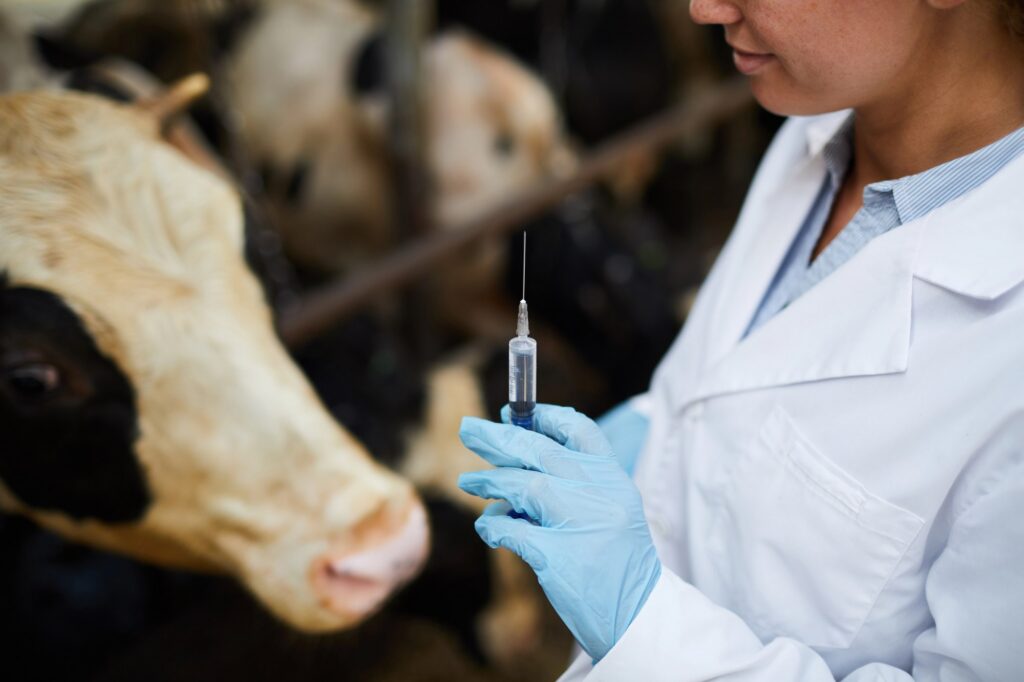
Kyrgyzstan is planning to build a modern animal vaccine production facility as part of broader efforts to improve disease prevention and support the development of its livestock sector.

The project was discussed on March 17 during a meeting between Minister of Water Resources, Agriculture, and Processing Industry Erlist Akunbekov and representatives of Altyn Tamyr Joint-Stock Company.

Altyn Tamyr is currently the country’s only producer of veterinary biopreparations, supplying the domestic market and exporting products to Kazakhstan, Uzbekistan, Afghanistan, Tajikistan, and Azerbaijan.

Akunbekov described the planned facility as a strategic initiative and instructed officials to ensure that construction and commissioning proceed as quickly as possible.

Preliminary estimates put the cost of the project at approximately $10 million. The government is expected to support the initiative through preferential financing and by creating favorable conditions for investors.

Officials say the plant will help strengthen veterinary safety standards and improve productivity in the livestock sector. Once operational, it is also expected to enable Kyrgyzstan not only to meet domestic demand for veterinary vaccines but also to expand exports.

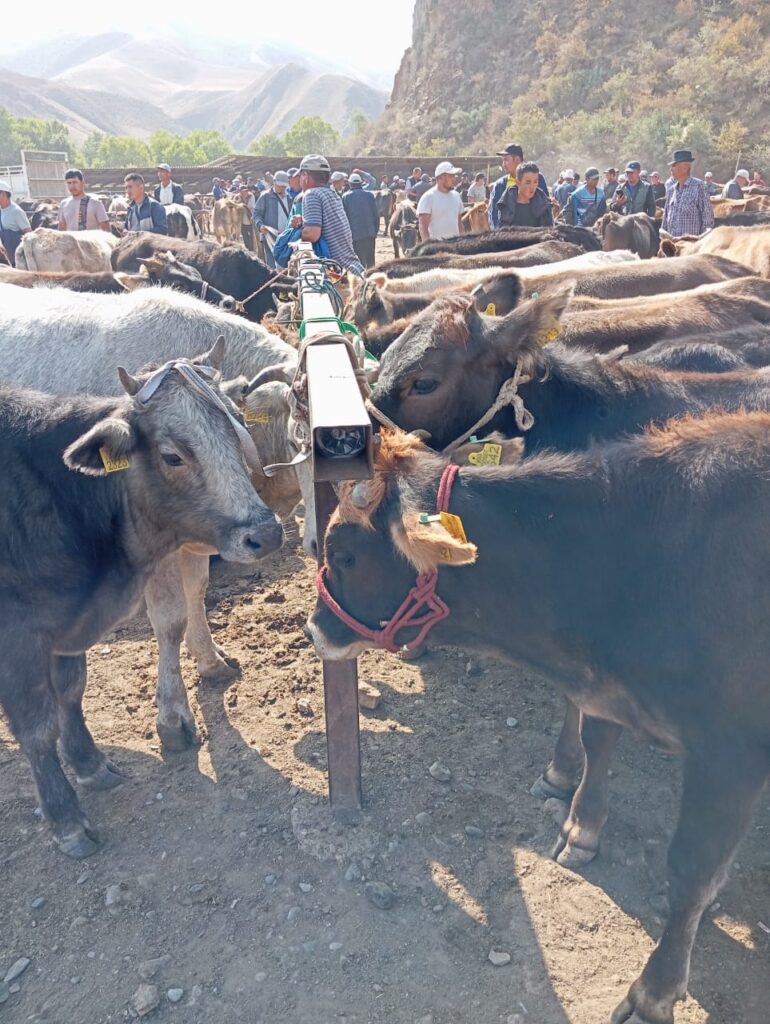
The project comes amid continued growth in the country’s livestock population. According to the Ministry of Agriculture, as of the end of 2024 Kyrgyzstan had 1,828,527 head of cattle, an increase of 1.5% compared with the previous year, including 918,638 cows, up 1.8%.

The number of sheep and goats reached 6,282,810, a year-on-year increase of 1.1%, while the horse population grew by 2% to 553,531 head. Poultry numbers rose more sharply, increasing by 10.5% to 7,724,314.

To obtain more precise data, Kyrgyzstan plans to conduct a nationwide agricultural census from March 20 to April 10, 2026.

Experts note that strengthening veterinary infrastructure will be crucial for sustaining growth in the livestock sector and expanding the country’s agricultural exports.

Livestock Numbers Are Growing in Kyrgyzstan as Authorities Expand Pasturelands

Spring fieldwork has begun in Kyrgyzstan, including the sowing of wheat and barley and efforts to expand the forage base for livestock farming. The Ministry of Water Resources, Agriculture, and Processing Industry has also started planting pastures with forage crops. Myktybek Kalandarov, head of the Department of Breeding Livestock Production, confirmed the work in an interview on state radio.

Kalandarov said that approximately 15,000 hectares of pastureland have already been sown with forage crops this year. A further 10,000 hectares of high-altitude pastures were planted in the autumn. Authorities plan to continue expanding pasture resources, with another 10,000 hectares scheduled for planting in the coming months.

About $570,000 has been allocated in 2026 to support these measures. Kalandarov added that revenue generated from pasture use should be reinvested in their restoration and development.

“Revenue comes from payments for pasture use, about $0.23 per sheep or goat grazed and approximately $1.15 per cow,” he said.

The increase in pasture investment is linked to rising livestock numbers. According to data from the National Statistical Committee, the country’s total livestock population has grown by 6.6% over the past five years.

As of the end of 2025, farms across all categories had approximately 1.8 million cattle, a 1.7% increase compared with the previous year. The number of sheep and goats reached 6.3 million, up 0.8%.

Positive trends have also been recorded in horse breeding, poultry farming, pig farming, and yak breeding.

Agricultural sector representatives say growing demand for animal feed is influencing crop patterns. Zakir Koombayev, director of a farm in the Chui Region, told The Times of Central Asia that farmers are increasingly diversifying their forage crops.

“Previously, we mainly planted spring crops such as wheat and barley. Now, given the growth in livestock numbers, we have ordered feed corn seeds from southern Russia,” he said.

Experts note that the future development of livestock farming in Kyrgyzstan will largely depend on effective pasture management and the sustainability of the country’s feed base.

From VHS Tapes to Cannes and the Academy: Kazakh Cinematographer Yerkinbek Ptyraliyev on His Craft

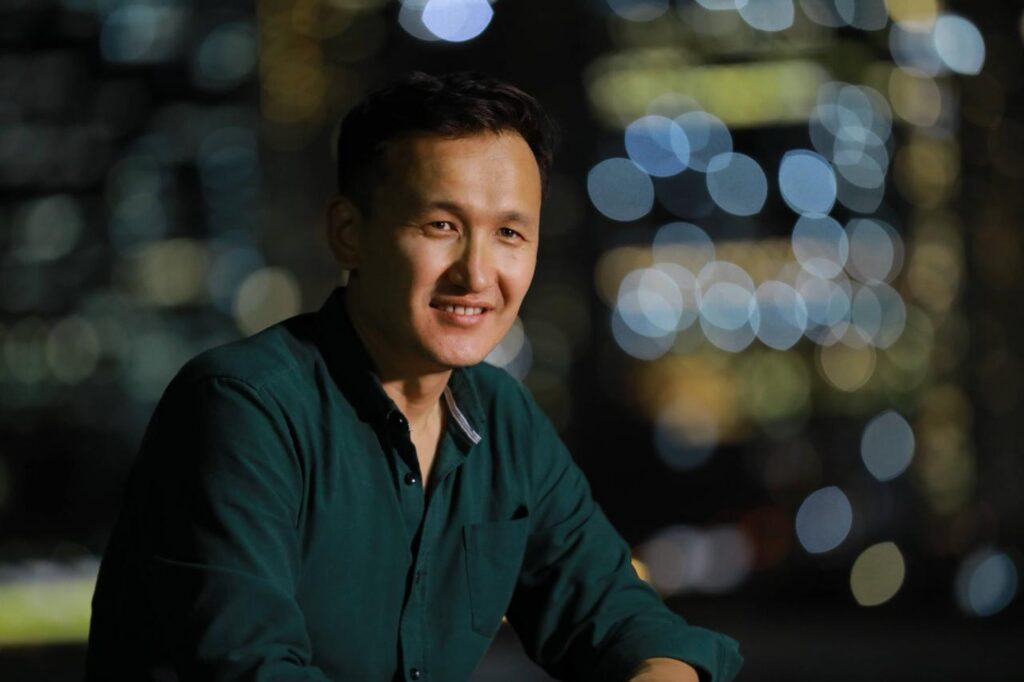
Kazakh cinematographer Yerkinbek Ptyraliyev has built an international reputation through his collaborations with director Adilkhan Yerzhanov. Their film The Masters, released in 2014, was selected for the Cannes Film Festival and later screened at major festivals in Venice, Berlin, and other international venues. In 2024, Ptyraliyev became the first Kazakh cinematographer invited to join the Academy of Motion Picture Arts and Sciences.

In an interview with The Times of Central Asia, he spoke about the role of a cinematographer, the technical challenges of filming night scenes in the steppe, and why the Kazakh school of cinematography is increasingly recognized as a distinct brand.

TCA: You recently returned from the Berlin International Film Festival, where your team’s new film, Adilkhan Yerzhanov’s Turghaud, was screened. What are your impressions?

Yerkinbek: Very positive. Our film was received very warmly. There was an engaging discussion after the screening, and it is always valuable to receive immediate feedback rather than hearing reactions later. We sat in the theater and listened to what the audience was saying. It was especially interesting to hear their interpretations. There were many different perspectives.

TCA: Does the perception of foreign audiences differ significantly from that of Kazakh audiences? When I watched the film, it seemed primarily aimed at a domestic audience.

Yerkinbek: I think every filmmaker wants their work to be seen everywhere. I am convinced that cinema has no borders. This year, the Golden Bear at the Berlinale went to a Turkish film, a movie entirely in Turkish, about Turks and Turkey, but shot in Berlin. That did not prevent it from winning.

Language and national context are not limitations; on the contrary, they are resources. We need to support them both in everyday life and in cinema. Adilkhan’s films are universal precisely because he speaks about issues that matter to any modern person. That is why they resonate beyond our own country.

TCA: I remember receiving accreditation for the Cannes Film Festival as a journalist when Adilkhan Yerzhanov was invited there for the first time with the film The Hosts, which you shot. Did that open the door to major cinema for you?

Yerkinbek: Absolutely. It was my debut film and such an immediate success. After that project, foreign directors began to notice me. For example, I started receiving invitations to work in Turkey, where I shot two contemporary dramas. The first passed relatively quietly, but the second attracted significant attention from Turkish audiences.

It was directed by Nazif Tun. Until then, he had spent his career making television films and series, but that project was his feature-film debut. I watched his previous work, it was very close to cinematic language, even though he himself insisted it was television rather than cinema.

TCA: Did you ever consider moving to Turkey? The market there is still larger than ours.

Yerkinbek: No. In recent years I have not even had the opportunity to go there. First, the timing has not worked out. Second, not every story resonates with me. So far, there has been no material compelling enough to make me want to relocate.

TCA: I assumed that, in that sense, it might not matter to a cinematographer what they are shooting.

Yerkinbek: On the contrary, the story has to captivate me. If it does not resonate with you, it is very difficult to work on. I have had that experience before, after two such films, I realized I no longer wanted to take on projects that did not speak to me.
From a personal archive

TCA: Today, the phrase “Kazakh cinematographer” almost sounds like a mark of quality. We really do have strong professionals. Do you think Kazakh cinematographers have a distinctive style?

Yerkinbek: I believe so. Thirty-five years ago, our country gained independence, and with that came a sense of creative freedom. From this emerged our own perspective and the ability to express ourselves fully.

There were talented cinematographers before, but it was harder for them to work because fewer films were being made. Today, production has become easier, and more cinematographers are emerging. I think we now have a very strong school of cinematography. This is no longer the story of a single individual; it is an entire community.

TCA: Is the director of photography the head of the cinematography team? How many people do you usually supervise?

Yerkinbek: It depends on the scale of the project. When I was filming in Turkey, I had a very large crew, 23 people. The cinematography department there includes everyone, from camera assistants to lighting specialists and the grip department.

Grip refers to crew members responsible for setting up and maintaining camera equipment and mechanical support systems such as tracks, cranes, rigs, and other devices used to move the camera.

TCA: Do you assign tasks to each person personally?

Yerkinbek: No, the system works differently. The head of the camera crew is the director of photography. He has a key assistant, in Hollywood this is known as the first assistant camera, while here, following Soviet tradition, we often call this role the “second cameraman.” If necessary, he can fully replace the director of photography.

Next is the gaffer, the head of lighting. His team usually consists of five to seven people, depending on the complexity of the scenes. Then there is the head of the grip department. I explain the tasks to the second cameraman, the gaffer, and the grip team leader, and they distribute the work among their teams.

For example, on the historical film about Zhambyl Zhabayev, our crew consisted of around 17 or 18 people. But on Steppe Wolf, especially during night shoots, the camera crew expanded to 35-40 people.

TCA: Because shooting at night is more difficult?

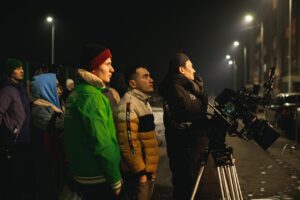
Yerkinbek: Yes, because night scenes require a great deal of light. Adilkhan Yerzhanov and I have worked on about ten projects together, but we only truly executed a large-scale night scene for the first time on Steppe Wolf.

I remember that while working on The Yellow Cat, which Kazakhstan later submitted for an Academy Award, Adilkhan wrote a beautiful night scene in the script. I read it, studied the director’s notes, and asked to move the scene to daytime.

TCA: Because of the high cost of lighting, especially given that Yerzhanov often works with limited budgets?

Yerkinbek: Yes. Lighting such a scene at night in the way it required was practically impossible. I had the necessary equipment, but because the location was in the open steppe, everything would have looked artificial, almost theatrical.

TCA: Why is it so difficult to film the steppe at night?

Yerkinbek: Because once the sun sets, you can only illuminate a limited area. Every piece of equipment has a range beyond which there is simply darkness.

It can feel as though you have built a fragment of the steppe in a studio, surrounded by black emptiness. Adilkhan asked whether there was absolutely no solution. I told him there was not, at least not until we had a larger budget.

When we began filming Steppe Wolf, we finally had the opportunity to create a real night scene exactly as he envisioned. He said he wanted a pitch-black night that would resemble hell. I said we could do it.

TCA: How much lighting did you ultimately need?

Yerkinbek: In the end, we installed more than 200 kilowatts of lighting.

TCA: Is that a lot?

Yerkinbek: I am not sure how impressive that sounds, but the scale was enormous. Normally we use one generator, here we needed three. The location spanned three hills, each with its own generator and a large number of lighting fixtures.

When I first sketched the lighting diagram on paper, it did not seem nearly as dramatic.

TCA: And then it turned out to be epic?

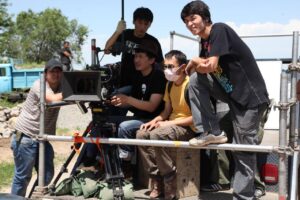
Yerkinbek: Exactly. I arrived on set, one truck pulled up, then another, because the lighting rigs were huge. Then a five-ton truck arrived near the yurt, its bed filled entirely with cables, kilometers of cables of different diameters.
From a personal archive

TCA: And I imagine there were many people on set as well?

Yerkinbek: Yes. Three or four minivans arrived carrying crews from various rental companies, almost all the rental companies were involved. I sat there thinking, “Did I really order all this?”

But when everything was installed and the lights were switched on, the night truly came alive. It was no longer an imitation but a fully realized environment.

TCA: Are there cinematographers you admire or learn from?

Yerkinbek: Of course. You can learn something from any film. We live in an era when many great cinematographers are still actively working, some of them already quite elderly.

Take Roger Deakins, for example. He is nearly 80 and continues to win Academy Awards. He has received Oscars for 1917 and Blade Runner 2049, though in my opinion he could have won for almost every film he has shot, The Shawshank Redemption, No Country for Old Men, and many others.

In the West, experience and time are valued. The older a professional becomes, the deeper their understanding of the craft.

TCA: Here, however, there seems to be greater demand for youth, resilience, and speed.

Yerkinbek: Unfortunately, experience and longevity are not yet our top priorities. That is probably why many people aspire to work in Hollywood, professionals are highly valued there. Even so, it is not easy to find work. You still have to prove you are the best.

It is rare for a debut director and a debut cinematographer to be paired on a major project. If the director is new, they will usually be matched with an experienced cinematographer. That is how the system works.

TCA: You are originally from Shymkent, correct? It has always seemed to me that the city has a unique cultural character, many artists and creative figures come from there. Does one’s place of origin shape a person?

Yerkinbek: I left Shymkent 20 years ago and rarely visit, perhaps once or twice a year. My parents still live there, but my schedule is very busy. One project follows another, and the preparation period is also intense. By that stage, I am already living inside the film.

Does birthplace shape us? I think so. There really are many creative people in Shymkent. It is warm and peaceful there, you can walk around freely from morning until night. I suppose it is easier to create in such an environment.

TCA: Did you go to movie theaters as a child?

Yerkinbek: We mostly watched films on VHS tapes featuring Jean-Claude Van Damme, pirated copies with single-voice dubbing, where you could sometimes still see silhouettes moving across the screen.

I also loved REN TV, which broadcast good films on Thursdays. Now I realize many of them were American B-movies, including those starring Van Damme. But we watched them until morning. That was when I fell in love with cinema, and later in college I began to study it as a major art form.

TCA: Many directors make films about their childhood. What about cinematographers?

Yerkinbek: We bring to life the world imagined by the director. But I believe childhood is crucial for any creative professional, director, cinematographer, or screenwriter. That is when much of the foundation is formed.

We spent most of our childhood outdoors, running, playing, coming home only at night. We lived on the outskirts of town, in a neighborhood that felt almost like a village. We looked after livestock and helped with haymaking. There was little else to do. You would lie in the grass, read a book or a newspaper, daydream, there was almost nothing around, just the sky, and occasionally a plane passing overhead. I think that had a profound influence on me.

I grew up in the mid-1990s, when electricity was often cut off. We could not watch television or read in the evenings, so we played chess by candlelight.

The chessboard kept getting lost, so my father simply drew one on the table where we ate. I still remember the glow of the candle or kerosene lamp, the crackling of the stove. We would all play chess with him. It was impossible to beat him, so we took turns trying. The rest of us sat nearby, waiting and playing with the shadows on the walls.

TCA: It sounds almost like a painting, Kazakh, steppe-like, with shadows, fire, and light.

Yerkinbek: Yes, that image still lives in my memory. I am very grateful to my parents for the childhood they gave me.

Hormuz Crisis: Transit Routes Through Afghanistan, Pakistan Would Be an Opportunity for Central Asia

The Strait of Hormuz has long been regarded as a central artery of global energy trade. A substantial share of oil and gas exports moves through this corridor, and regional crises are often framed in terms of energy security. For Central Asia, however, current tensions carry broader implications. They may increase demand for alternative food supply chains and transit routes linking the region to the Arabian Sea and Gulf markets.

Recent tensions involving Iran also point to the strait’s growing role in food logistics. For Gulf states, Hormuz remains an energy chokepoint and a vital route for essential goods. For Central Asian policymakers, this shift matters. Any prolonged disruption could raise the region’s importance as both a supplier of agricultural commodities and a transit hub.

Member states of the Gulf Cooperation Council (GCC) are among the world’s most import-dependent food markets. According to Reuters, between 80% and 90% of food consumed in GCC countries is imported. This reliance creates external demand that could increasingly draw Central Asia into Gulf food security planning.

At the same time, the geography of these supplies remains relatively concentrated. Analysts estimate that more than 70% of the region’s food imports transit the Strait of Hormuz. This pattern could heighten interest in Central Asia as a source of food exports and a transit route.

Amid ongoing regional tensions, this dependence has attracted growing attention from experts. Reuters described recent developments as “the greatest test of the Gulf countries’ food strategy since the 2008 global food crisis.”

In recent years, regional governments have sought to diversify suppliers and build strategic reserves. Analysts nevertheless warn that stockpiles and diversification measures may provide only limited protection. If disruptions persist, logistical constraints could drive up prices and extend delivery times. This would create both a market shock and new commercial opportunities in Central Asia.

Under such conditions, GCC food security depends on access to global markets as well as the resilience of transport routes. This is where Gulf vulnerabilities begin to intersect more directly with Central Asia’s economic geography.

The infrastructure of major regional ports plays a central role in this system. One of the key logistics hubs is Jebel Ali Port in Dubai, the largest container port in the Middle East and a major re-export center. A substantial share of food shipments destined for GCC states and neighboring markets passes through this facility.

Estimates suggest that disruptions at major logistics hubs such as Jebel Ali could affect supply chains on which tens of millions of people depend. This concentration of logistics flows increases the region’s strategic exposure to maritime instability. For Central Asian economies, this raises the strategic value of diversified overland and multimodal routes.

Food security concerns are also linked to agricultural inputs. Industry analyses suggest that roughly 25–30% of global nitrogen fertilizer exports transit the Strait of Hormuz, including about 31% of global urea trade.

During the initial weeks of heightened tensions, urea prices in Middle Eastern markets reportedly rose by about $70–80 per ton, from roughly $470 to $550–590 per ton, an increase of 17–20%.

These shifts have broader implications. Disruptions in fertilizer supplies affect both the cost of imported food and the future cost of agricultural production worldwide. The crisis therefore impacts food systems through two channels at once: logistical constraints and rising input costs. Central Asia is exposed on both sides of this equation.

Against this backdrop, discussion has intensified around alternative transport routes that could reduce dependence on Hormuz. In this context, Central Asia’s relevance reflects its location as well as its agricultural output, existing transport infrastructure, and growing focus on export diversification. 

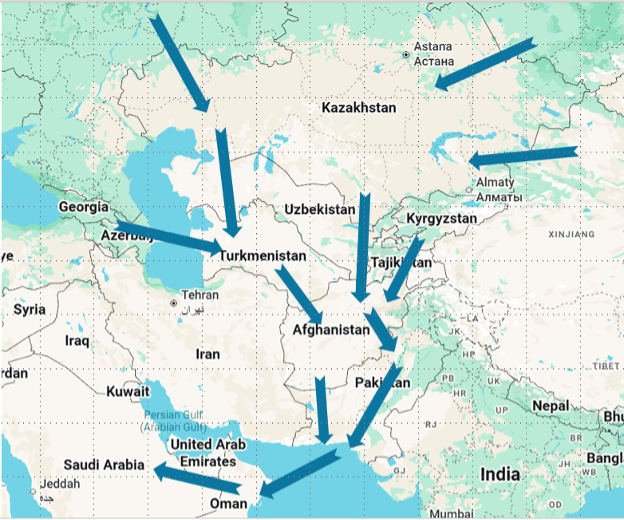
One proposed configuration involves a multimodal corridor linking Central Asia, Afghanistan, and Pakistan to ports on the Arabian Sea, with onward connections to Oman and GCC markets. In this setup, Central Asia serves as the northern anchor of an alternative supply corridor rather than a peripheral segment of a broader Eurasian route.

Within this structure, the region could supply key agricultural exports, particularly grain, while also serving as a transit link between northern Eurasian markets and the Indian Ocean. For Kazakhstan, and for Uzbekistan’s broader logistics ambitions, this could expand southbound export options and strengthen the region’s bargaining position in Eurasian trade.

This potential rests on tangible, though uneven, regional capacities. Kazakhstan already has significant agricultural export potential, especially in grain and flour, while Uzbekistan has increasingly positioned itself as a logistics and manufacturing hub with an interest in expanding southbound connectivity. Across the region, existing rail networks, dry ports, storage facilities, and trade corridors provide a foundation for deeper integration, even if they were not originally designed for a Gulf-oriented food route.

In that sense, Central Asia’s role would not start from zero. The region already possesses part of the infrastructure needed to support such a corridor, though substantial improvements in coordination, border management, and transport reliability would still be required.

Elements of such a system already exist, including transport links between Central Asia, Afghanistan, and Pakistan, the Pakistani ports of Karachi and Gwadar, and Oman’s logistics infrastructure. The concept therefore centers on expanding and institutionalizing existing connections rather than creating an entirely new route. For Central Asian states, this distinction matters. The challenge is not to create a new route, but to make the southern vector commercially viable.

Oman could play a particularly important role. Its deep-water ports at Sohar, Duqm and Salalah provide direct access to the Indian Ocean and are integrated into global shipping networks. They also create additional logistics options that help diversify supply routes alongside existing Persian Gulf infrastructure. For Central Asian exporters, these ports could provide additional maritime access to Gulf and global markets.

The principal obstacle to this scenario remains persistent tension between Afghanistan and Pakistan. In recent years, their border has seen periodic clashes, mutual accusations, and temporary closures of trade crossings.

For transit projects, such instability poses a significant risk. As long as relations between Kabul and Islamabad remain strained, establishing reliable trade flows will be difficult. From a Central Asian standpoint, any opportunity tied to southbound connectivity remains inseparable from security risk.

At the same time, economic incentives could influence political behavior. If transit becomes a meaningful source of revenue, all parties may have a stronger interest in maintaining a minimum level of stability.

This does not imply a comprehensive political settlement. Rather, it reflects a pragmatic approach in which economic interests may help limit escalation and sustain functional cooperation. Even a limited degree of predictability could prove significant if it allows cargo flows to continue.

For Central Asian states, the implications would be practical: expanded export outlets, increased infrastructure investment, and reduced reliance on existing transport corridors. For GCC states, the priority would remain securing stable food supplies and managing price risks. Infrastructure investment, transit agreements, insurance mechanisms, and financial guarantees could all form part of such a strategy.

Diplomatic dynamics also merit attention. Under current conditions, China may be better positioned than GCC countries to play a mediating role between Afghanistan and Pakistan, given its economic influence and regional engagement.

In this scenario, GCC states could act as financial and commercial stakeholders in a transit corridor, while China assumes a more active political role. This would present both opportunity and risk for Central Asia. Gulf capital could support corridor development, while Chinese involvement might help manage instability but also deepen external dependence.

The development of such a corridor would likely unfold in stages, each involving a different balance between commercial gain and political exposure for Central Asian states.

In the short term, initial measures could include guaranteed transit windows for cargo, expanded transport insurance, expedited customs procedures, and priority clearance for food shipments originating in or passing through the region.

Over the medium term, a more stable transit regime could emerge, with regular freight services, expanded dry port infrastructure, and the development of specialized cold chain logistics across key Central Asian nodes as well as along the Afghan–Pakistani segment, building on existing but fragmented capacities.

In the longer term, broader cooperation could take shape through an international infrastructure consortium involving GCC states, Central Asian countries, Afghanistan, Pakistan, and international financial institutions. Such a framework could support investment in transport corridors, logistics hubs, and storage facilities, while consolidating the region’s role in broader supply chains.

If realized, this process could gradually transform parts of the trans-Afghan corridor from zones of instability into components of Eurasian trade networks. This would give Central Asia a more direct and diversified connection to Arabian Sea trade.

Ultimately, the key question is whether economic incentives can outweigh political tensions. For Central Asian states, the issue is whether this corridor can become a credible channel for exports, diversification, and regional leverage rather than another unrealized connectivity project. For GCC states, the priority remains supply stability and price pressures, while Afghanistan and Pakistan would weigh transit revenues against the economic costs of recurring border disruptions.

Logistics systems evolve slowly, but once established, transport routes and infrastructure can shape regional economic relationships for decades, often outlasting acute political crises. This is why even limited progress along the southern vector could carry implications that extend well beyond the immediate Hormuz crisis.

Foreign Leaders Congratulate Tokayev After Kazakhstan Approves New Constitution

Updated March 24, 2026: This article has been updated to include remarks from French President Emmanuel Macron and congratulatory messages from Turkish President Recep Tayyip Erdoğan and Pakistani President Asif Ali Zardari. https://x.com/aqorda_press/status/2036454765148905967?s

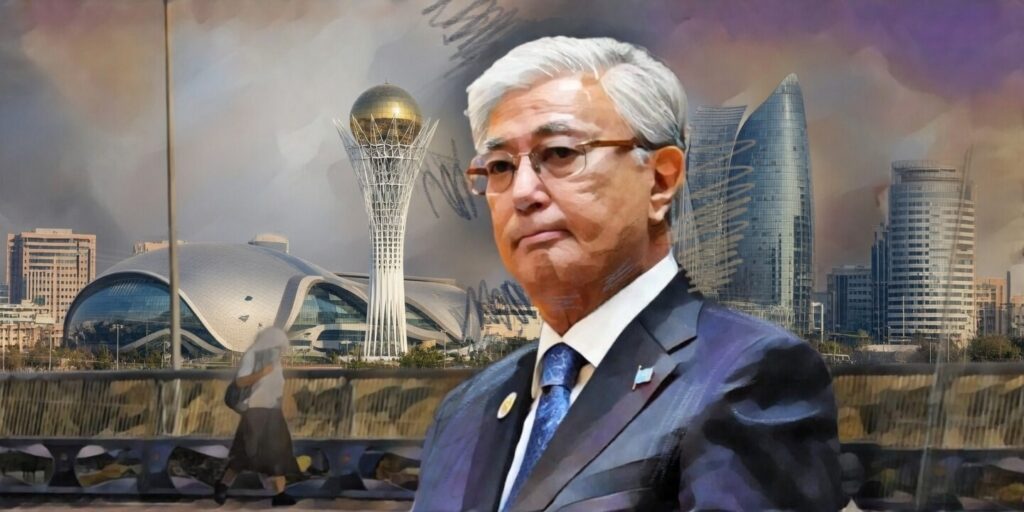
President Kassym-Jomart Tokayev began receiving congratulations from foreign leaders on March 16 after Kazakhstan announced that voters had approved a new constitution in a nationwide referendum. As reported by The Times of Central Asia, turnout reached 73.12%, with 87.15% of voters supporting the proposed amendments.

The March 15 referendum backed sweeping institutional changes aimed at modernizing the political system and strengthening state institutions to meet the demands of a rapidly changing global landscape, including replacing Kazakhstan’s bicameral parliament with a single chamber, restoring the post of vice president, and creating a new People’s Council (Kurultai) with the power to initiate legislation and referendums.

Several regional leaders reached out directly to Tokayev after the results were announced. Uzbek President Shavkat Mirziyoyev congratulated Tokayev during a telephone conversation on March 16. Russian President Vladimir Putin, Kyrgyz President Sadyr Japarov, Azerbaijani President Ilham Aliyev, Belarusian President Alexander Lukashenko, Serbian President Aleksandar Vucic, Armenian Prime Minister Nikol Pashinyan and Pakistani President Asif Ali Zardari also sent congratulatory messages. French President Emmanuel Macron likewise congratulated Tokayev during a March 17 telephone call, describing the referendum as a historic step forward in Kazakhstan’s modernization and expressing interest in deepening bilateral cooperation, particularly in industry and energy. Recep Tayyip Erdoğan congratulated Kassym-Jomart Tokayev on successfully holding a national referendum and adopting a new constitution, expressing confidence that it would strengthen Kazakhstan’s future development and global standing in a call on March 24.

Beyond Kazakhstan’s immediate regional partners, the U.S. Mission to Kazakhstan also publicly congratulated the people of Kazakhstan in a post on X following the referendum.

Tokayev has described the vote as a historic moment that will shape the country’s future political system. The government is now expected to begin implementing the constitutional changes, including preparing for new parliamentary elections under the revised framework.