• KGS/USD = 0.01144 0%
  • KZT/USD = 0.00196 -0%
  • TJS/USD = 0.10904 0%
  • UZS/USD = 0.00008 0%
  • TMT/USD = 0.28490 0%
  • KGS/USD = 0.01144 0%
  • KZT/USD = 0.00196 -0%
  • TJS/USD = 0.10904 0%
  • UZS/USD = 0.00008 0%
  • TMT/USD = 0.28490 0%
  • KGS/USD = 0.01144 0%
  • KZT/USD = 0.00196 -0%
  • TJS/USD = 0.10904 0%
  • UZS/USD = 0.00008 0%
  • TMT/USD = 0.28490 0%
  • KGS/USD = 0.01144 0%
  • KZT/USD = 0.00196 -0%
  • TJS/USD = 0.10904 0%
  • UZS/USD = 0.00008 0%
  • TMT/USD = 0.28490 0%
  • KGS/USD = 0.01144 0%
  • KZT/USD = 0.00196 -0%
  • TJS/USD = 0.10904 0%
  • UZS/USD = 0.00008 0%
  • TMT/USD = 0.28490 0%
  • KGS/USD = 0.01144 0%
  • KZT/USD = 0.00196 -0%
  • TJS/USD = 0.10904 0%
  • UZS/USD = 0.00008 0%
  • TMT/USD = 0.28490 0%
  • KGS/USD = 0.01144 0%
  • KZT/USD = 0.00196 -0%
  • TJS/USD = 0.10904 0%
  • UZS/USD = 0.00008 0%
  • TMT/USD = 0.28490 0%
  • KGS/USD = 0.01144 0%
  • KZT/USD = 0.00196 -0%
  • TJS/USD = 0.10904 0%
  • UZS/USD = 0.00008 0%
  • TMT/USD = 0.28490 0%
08 December 2025

UN Adopts AI Resolution for Central Asia at Tajikistan’s Initiative

On July 25, 2025, the United Nations General Assembly unanimously adopted a resolution titled “The Role of Artificial Intelligence in Creating New Opportunities for Sustainable Development in Central Asia.” The resolution was spearheaded by Tajikistan.

A Historic Decision by the General Assembly

According to Tajikistan’s Ministry of Foreign Affairs, the resolution sets a “historic precedent” in shaping a global framework for the ethical and secure use of artificial intelligence. It also emphasizes the importance of responsible governance, including mechanisms for national and regional self-regulation and oversight of AI technologies.

Regional AI Center to Be Established in Dushanbe

A central component of the resolution is the proposal to establish a Regional Artificial Intelligence Center in Dushanbe. The center will coordinate AI-related efforts across Central Asian countries, facilitating joint research, startup development, specialist training, and regulatory alignment.

The center’s key objectives include:

  • Launching joint educational initiatives and supporting AI start-ups via regional technology parks;
  • Promoting scientific and applied research at universities, laboratories, and research institutes throughout Central Asia;
  • Creating a unified data center network to improve access to computational resources;
  • Harmonizing national monitoring and self-regulation systems in AI;
  • Advancing international cooperation with global partners and specialized organizations.

Tajikistan Steps onto the Global AI Stage

The resolution stresses the need to develop “safe, trustworthy, and transparent AI systems,” promoting a balance between innovation and regulatory oversight. This, it states, will support sustainable development and digital transformation across the region.

Tajikistan’s initiative, culminating in this UN resolution, marks a significant step in the country’s aspirations to position itself as a regional hub for artificial intelligence.

Kazakh Scientists Unveil Facility Capable of Preserving Agricultural Products for 50 Years

Researchers at Al-Farabi Kazakh National University have developed a mobile unit capable of processing and storing agricultural products for up to 50 years. The unit, named “Dayar 20,” utilizes freeze-drying technology and is designed to be transported directly to fields and orchards, an essential advantage for remote agricultural operations.

Takeaway Food with a Half-Century Shelf Life

The underlying technology is lyophilization, which involves removing water from frozen products by evaporation under low pressure. The process allows food to retain its taste, color, aroma, shape, and nutritional content.

“Products dried using the Dayar 20 unit remain usable for a long time, retaining their taste, color, smell, shape, and vitamins,” said project manager Yerbol Ikhsanov, PhD in chemistry.

The unit can process a variety of goods, including fruits, vegetables, meat, dairy products, and ready-to-eat meals. Shelf life ranges from three years at room temperature to 10 to 50 years when vacuum-sealed. The innovation is expected to improve the sustainability of Kazakhstan’s agricultural sector and enhance its export potential.

Breakthrough in Hydrogen Production

This is not the only recent scientific achievement in Kazakhstan. Researchers at the Institute of Combustion Problems have developed a reactor that decomposes hydrocarbon gases into hydrogen and carbon using low-temperature plasma, without the need for catalysts and with minimal energy input.

Inside the plasma reactor, gases are heated to temperatures between 1,800 and 2,700°C, triggering pyrolysis. The result is hydrogen with a purity of up to 98.9% and technical carbon. Notably, scientists also identified giant carbon nanotubes, up to 100 nanometers in diameter, within the by-product. These nanotubes are considered a promising material for super-strong fibers and composites, far exceeding typical size expectations under normal conditions.

The method offers nearly 100% efficiency in hydrocarbon recycling and significantly accelerates hydrogen production.

Kazakh Anti-Cancer Drug Shows Early Promise

In another separate development, Kazakh scientists have made progress on an anti-cancer drug that has yielded promising results in early clinical trials. Dos Sarbasov, Vice President of the National Academy of Sciences, reported that tumor growth had ceased in six patients and shrunk by 30% in one case.

“After the first dose of the drug, the condition of fifteen cancer patients stabilized, and in six of them, the tumor stopped growing,” Sarbasov said.

The drug targets cells that actively absorb glucose and has shown no signs of toxicity. Clinical testing began two years ago and has already passed two phases. The trials, conducted at the Kazakh Institute of Oncology and Radiology, are expected to conclude within the next two to three years. The drug has received international patent protection.

Kazakhstan PM Urges Joint Action to Save the Caspian Sea

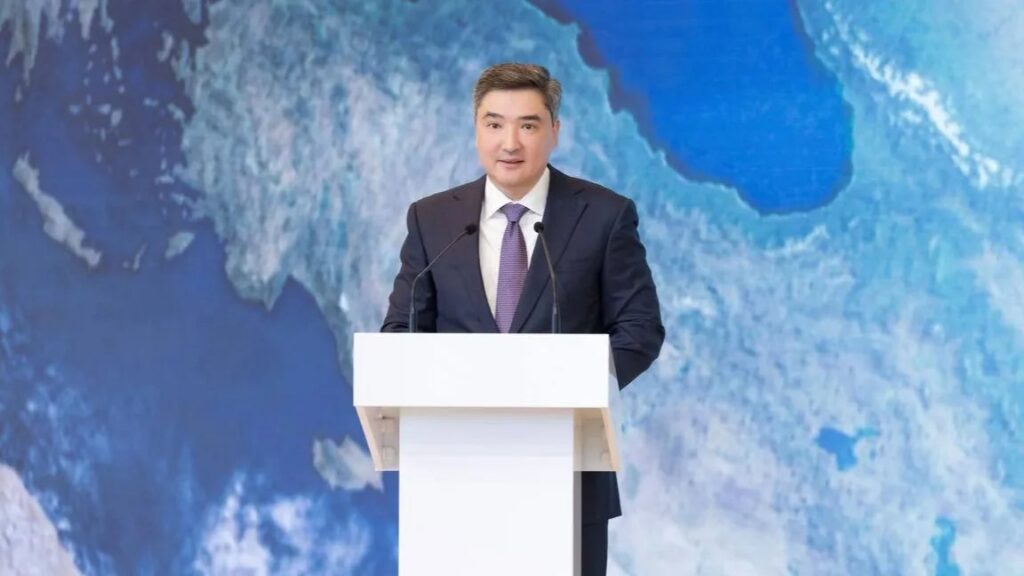
Kazakh Prime Minister Olzhas Bektenov has urged the five Caspian littoral states to coordinate efforts in response to the steadily declining water levels of the Caspian Sea, describing it as one of the region’s most pressing environmental threats.

Speaking at the inaugural International Environmental Conference in Manzherok, Russia, Bektenov emphasized the urgency of a collective response.

“Since the early 2000s, the water level in the Caspian Sea has been steadily declining. To study this and other challenges, Kazakhstan has established the Caspian Sea Research Institute. Scientists’ forecasts are alarming. We need decisive joint measures,” Bektenov stated, according to his press service.

The Caspian Sea is bordered by Kazakhstan, Russia, Iran, Azerbaijan, and Turkmenistan. As previously reported by The Times of Central Asia, the sea’s water level dropped to less than 29 meters below sea level by summer 2025, a historic low. The northern Caspian, which borders Kazakhstan and Russia, is experiencing the most rapid desiccation.

In addition to the Caspian issue, Bektenov addressed other major environmental concerns. He highlighted Kazakhstan’s work in the Aral Sea region, where the country currently chairs the International Fund for Saving the Aral Sea. Key priorities include reinforcing the Kokaral Dam, restoring the Syr Darya delta, revitalizing the fishing industry, and reforesting the dried seabed.

Kazakhstan is also establishing a saxaul nursery on the desiccated Aral seabed to produce 1.5 million seedlings annually. The goal is to cover up to 40% of Kazakhstan’s portion of the former sea with saxaul forests.

Bektenov also underscored the growing threat of glacier melt. Experts warn that Central Asia’s glaciers could shrink significantly by 2100. The UNESCO Central Asian Regional Glaciological Center, based in Almaty, is already serving as a key platform for research and monitoring.

Kazakhstan, he added, is ready to implement joint hydrotechnical initiatives, including reservoir regulation and the introduction of automated water accounting systems.

Bektenov concluded by noting the symbolic importance of the forum’s location in the Altai region, often regarded as the cradle of Turkic civilization and a cornerstone of cultural and humanitarian cooperation.

Kyrgyzstan Grows Toward Food Security with Surplus Potato and Carrot Harvests

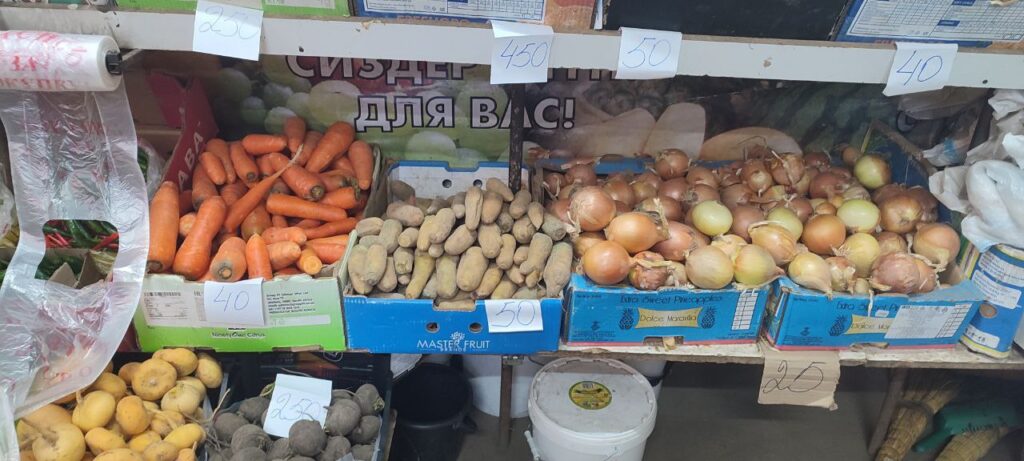
The Kyrgyz government is stepping up efforts to ensure food security and stabilize prices for socially important goods, including staple vegetables such as potatoes and carrots. In response to rising prices, the Ministry of Water Resources, Agriculture, and Processing Industry has decided to maintain existing potato crop volumes while expanding carrot cultivation.

According to the ministry, the active open-field growing season is currently underway. In 2025, potato planting areas reached over 64,000 hectares, with a projected harvest exceeding 1.1 million tons. Domestic demand is estimated at approximately 760,000 tons annually, allowing for surplus exports. However, the ministry cautioned farmers against indiscriminately expanding potato acreage in pursuit of higher profits, warning that an oversupply could depress prices and reduce incomes.

“To prevent unjustified price increases for socially significant products, the Ministry of Agriculture continues to monitor market prices daily. If risks of domestic shortages arise due to excessive exports or speculative practices by intermediaries, temporary export restrictions will be considered,” the ministry stated.

Amid recent price surges for carrots, the government has expanded carrot cultivation by 223 hectares in the Chui region.

“The second carrot harvest will ensure a stable domestic supply and help contain price increases,” said Agriculture Minister Bakyt Torobaev.

The ministry attributes the current price increases to heightened demand for Kyrgyz vegetables from member states of the Eurasian Economic Union (EAEU) and neighboring countries. Uzbekistan remains the largest importer of Kyrgyz potatoes. In 2024, Kyrgyz exports to Uzbekistan doubled to 68,500 tons, prompting state intervention and temporary export restrictions to prevent domestic shortages and inflation.

In addition to Uzbekistan, Kyrgyzstan annually exports over 10,000 tons of potatoes to Kazakhstan, as well as smaller volumes to Russia and Azerbaijan.

Uzbekistan Day on Capitol Hill Highlights Deepening Ties With the U.S.

On July 23, the U.S. Capitol hosted “Uzbekistan Day,” a significant event co-organized by the Congressional Uzbekistan Caucus to reaffirm growing ties between Uzbekistan and the United States. More than a hundred participants — including lawmakers, diplomats, officials from the State Department and Pentagon, business leaders, and journalists — gathered to engage with the Uzbek delegation and explore new areas for bilateral cooperation.

The forum focused on Uzbekistan’s ongoing political and socio-economic reforms and its foreign policy vision centered on regional stability and international cooperation. A central priority discussed was Uzbekistan’s accession to the World Trade Organization (WTO), with officials framing it as a vital step to ensuring long-term reform and global market integration.

U.S. Lawmakers Praise Reforms

At the event, Congressman Trent Kelly, Co-chairman of the Caucus on Uzbekistan, praised President Shavkat Mirziyoyev’s leadership, stating, “I want to express my gratitude to President Shavkat Mirziyoyev. He is a bold reformer, a reliable partner, and a sincere friend of the U.S. Under his leadership, Uzbekistan is confidently moving along the path of change. Human rights are being strengthened, democratic institutions expanded, and opportunities for international cooperation opened. These achievements inspire all of us.”

On a more personal note, Kelly added, “I have had the opportunity to visit Uzbekistan four times, and each visit left a deep impression on me. I was moved by the kindness of the Uzbek people, the richness of their cultural heritage, and the hospitality of your country. Music, cuisine, and deep traditions — all of this makes Uzbekistan truly unique… We will soon remove the Jackson-Vanik Amendment from our agenda because Uzbekistan is doing everything right and carrying out reforms,” he concluded.

Senator Steve Daines, Co-chairman of the Caucus on Central Asia, described himself as a “sincere friend of Uzbekistan.” Reflecting on his March 2024 trip to Tashkent, he said, “I felt at home and among friends. This meeting strengthened my desire to continue supporting the Central Asian countries.”

Montana Senator Steve Daines, Co-chairman of the Caucus on Central Asia

Congresswoman Carol Miller, also part of the March delegation, spoke of her personal connection to Uzbekistan’s heritage. “Uzbekistan, with its ancient history, has long aroused my professional interest, since I am a historian by education. The opportunity to see the country’s unique historical and cultural heritage in person was an invaluable experience.” Miller emphasized that, “The conversation took place in a trusting and open atmosphere. The topics raised during the meeting were not only relevant but also extremely promising from the viewpoint of the future development of Uzbek-American relations.”

West Virginia Congresswoman Carol Miller

Miller underscored her commitment to concrete legislative goals: “The removal of the Jackson-Vanik Amendment regarding our country and support for Uzbekistan’s accession to the WTO are priority tasks. I am currently working closely with members of Congress to accelerate these issues.”

Economic Cooperation and Business Confidence

The event also featured remarks from American business leaders highlighting Uzbekistan’s economic potential. Peter Flanagan, Senior Vice President of FLSmidth, spoke about a major copper mining project in Almalyk, the implementation of the which “will lead to production volumes four times greater than those of the world’s largest copper deposit [in] Kennecott (Utah, U.S.” FLSmidth is ready to “become a reliable partner in the development of Uzbekistan’s mining industry,” he stated.

Miles Hansen, President of the Stirling Foundation, echoed the importance of socio-economic development. “The innovative policy of President Shavkat Mirziyoyev gives a strong impetus to the country’s socio-economic development, increasing the world’s interest in the republic. Uzbekistan pursues an agenda in which human dignity is paramount.”

Trade Normalization and Strategic Outlook

The forum spotlighted growing momentum in Congress to normalize trade relations. The repeal of the Jackson-Vanik Amendment and granting Uzbekistan permanent normal trade relations are seen as key to deepening commercial and diplomatic ties.

Congressman Kelly and Congresswoman Miller reaffirmed their legislative efforts to remove outdated barriers. “I am currently working closely with members of Congress to accelerate these issues,” Miller emphasized.

Media outlets and analysts described “Uzbekistan Day” as a timely and effective platform for demonstrating the country’s reforms and expanding bilateral cooperation. As one observer noted, “In conditions of global turbulence, such initiatives not only contribute to strengthening mutual understanding and trust, but also serve as evidence of Uzbekistan’s significantly increased international authority.”

The event reinforced Uzbekistan’s position as a strategic and reform-oriented partner in Central Asia. With expanding business engagement and bipartisan support in Washington, the U.S.–Uzbekistan partnership appears poised for sustained growth across political, economic, and cultural domains.

Uzbek Official Dismissed After Viral Lap-Sitting Video Sparks Gender Debate

A government official in Uzbekistan has been dismissed following the circulation of a video showing him with a female subordinate sitting on his lap during an online meeting. The footage, which went viral on social media, prompted a public backlash, with the Ministry of Employment and Labor issuing a statement describing the incident as a “violation of the ethics of a civil servant.”

The dismissal of the head of the district department of employment and poverty reduction in Samarkand was confirmed by the ministry. The woman in the video, reportedly an assistant at the agency, has not been publicly named and is believed to have resigned voluntarily.

The incident has sparked a broader discussion about workplace conduct, gender dynamics, and women’s rights in Uzbekistan, where traditional norms continue to influence professional and personal life.

Gender and Power in the Uzbek Workplace

In recent years, Uzbekistan has made significant progress regarding the participation of women in public life. Women currently hold about 32 seats in the 150-member Legislative Chamber of the Oliy Majlis (national parliament). However, their visibility in executive positions and technical fields remains limited.

In Uzbekistan, only 35.4 % of the population aged between 15–64 in the labor force are women, and they earn about 34 % less than men. The World Bank estimates that equal participation and wages could boost the country’s GDP by 29 % and lift over 700,000 people out of poverty.

The government has introduced various reforms aimed at improving gender equality, including protections against domestic violence, promoting women’s entrepreneurship, and gender budgeting initiatives. However, critics argue that these measures are often symbolic or inconsistently enforced.

Cultural Taboo and Social Media

The lap-sitting video has sparked a wave of internet commentary from both men and women in Uzbekistan, where public discussions of gender roles are often muted. Some saw the video as a clear example of workplace harassment and power imbalance, while others downplayed its significance or blamed the woman involved.

Observers argue that the case highlights deeper structural issues within Uzbek institutions, where entrenched gender hierarchies and informal power dynamics often go unchallenged. In many areas of public and private life, the country remains deeply patriarchal, and whilst public discourse around consent, professional boundaries, and gender equality is growing, it remains nascent.

A Moment for Change?

The government’s decisive response to the video may signal a growing awareness of public expectations and international scrutiny. For activists and reformers, the hope is that this moment can serve as more than a spectacle and lead to more conversations about power, professionalism, and the role of women in modern Uzbekistan.

As one widely shared comment on Telegram put it: “It’s not about the lap. It’s about who gets to sit at the table.”