• KGS/USD = 0.01144 0%
  • KZT/USD = 0.00193 -0%
  • TJS/USD = 0.10811 -0.28%
  • UZS/USD = 0.00008 0%
  • TMT/USD = 0.28490 0%
  • KGS/USD = 0.01144 0%
  • KZT/USD = 0.00193 -0%
  • TJS/USD = 0.10811 -0.28%
  • UZS/USD = 0.00008 0%
  • TMT/USD = 0.28490 0%
  • KGS/USD = 0.01144 0%
  • KZT/USD = 0.00193 -0%
  • TJS/USD = 0.10811 -0.28%
  • UZS/USD = 0.00008 0%
  • TMT/USD = 0.28490 0%
  • KGS/USD = 0.01144 0%
  • KZT/USD = 0.00193 -0%
  • TJS/USD = 0.10811 -0.28%
  • UZS/USD = 0.00008 0%
  • TMT/USD = 0.28490 0%
  • KGS/USD = 0.01144 0%
  • KZT/USD = 0.00193 -0%
  • TJS/USD = 0.10811 -0.28%
  • UZS/USD = 0.00008 0%
  • TMT/USD = 0.28490 0%
  • KGS/USD = 0.01144 0%
  • KZT/USD = 0.00193 -0%
  • TJS/USD = 0.10811 -0.28%
  • UZS/USD = 0.00008 0%
  • TMT/USD = 0.28490 0%
  • KGS/USD = 0.01144 0%
  • KZT/USD = 0.00193 -0%
  • TJS/USD = 0.10811 -0.28%
  • UZS/USD = 0.00008 0%
  • TMT/USD = 0.28490 0%
  • KGS/USD = 0.01144 0%
  • KZT/USD = 0.00193 -0%
  • TJS/USD = 0.10811 -0.28%
  • UZS/USD = 0.00008 0%
  • TMT/USD = 0.28490 0%
10 December 2025

Kazakh Archaeologists Contribute to Landmark Discovery on the Origins of Dog Domestication

A groundbreaking study co-authored by Kazakh archaeologists has challenged long-held assumptions about the history of dog domestication. The research, titled “Wide Diversity of Dogs Thousands of Years Before Modern Breeding Methods,” was published in Science, the oldest scientific journal in the U.S.

The study was led by researchers from the University of Exeter (UK) and France’s National Center for Scientific Research and included contributions from 40 institutions worldwide. Kazakh scientists V.K. Merz and I.V. Merz of Toraygyrov University, along with E.R. Usmanova and V.V. Varfolomeev of the E.A. Buketov Karaganda National Research University, were among the co-authors.

The international team conducted a comprehensive comparative analysis of 643 dog and wolf skulls spanning the last 50,000 years from the Pleistocene to the present day. Using high-resolution 3D scanning, they analyzed over 600 specimens, revealing that dogs already displayed significant morphological diversity during the early Holocene epoch.

This diversity, previously believed to be the result of 19th-century selective breeding, was shown to have originated far earlier. The analysis traced the emergence of distinct dog types, including variations in size and skull structure, as early as 11,000 years ago. By the Mesolithic and Neolithic periods, dogs had already begun to differ in form, likely reflecting specialized roles such as hunting, guarding, and herding within human societies.

The researchers concluded that functional differentiation was a key driver in the development of what would eventually become distinct breeds. Their findings refute the common belief that modern breed variation is a relatively recent phenomenon. In fact, many differences in skull shape and size long predate the advent of formal breeding practices.

Kazakhstan’s archaeological collections and local expertise played a significant role in the project, underscoring the country’s growing contributions to global archaeozoological research.

Kazakhstan’s Broader Scientific Advances

In addition to this landmark discovery, Kazakh scientists continue to make technological strides across disciplines.

Researchers at the Institute of Combustion Problems have developed a device capable of converting hydrocarbon gases into 98.9% pure hydrogen and technical carbon in a single stage. Operating at plasma temperatures of up to 2,700°C, the unit requires no catalysts and consumes less energy than traditional methods. It also produces giant nanotubes with diameters reaching 100 nanometres.

Meanwhile, scientists at Al-Farabi Kazakh National University have introduced a mobile preservation unit capable of drying and storing a wide range of food products from fruit to fish for up to 10 to 50 years using specialized packaging.

These developments signal Kazakhstan’s expanding role in cutting-edge research and innovation across multiple scientific domains.

Tajikistan to Repay Over $500 Million to Foreign Creditors in 2026

Tajikistan plans to allocate $548 million to repay its principal external debt in 2026, according to the country’s draft state budget. This would be one of the largest annual external debt payments in recent years for the republic.

Most of the repayment will be covered directly from the national budget. A portion will also come from state-owned companies and enterprises that previously received sub-loans backed by government guarantees. These entities are now participating in the repayment process.

In addition to external debt, Tajikistan’s domestic obligations in 2026 are projected at more than $51 million. Of that amount, $16 million will be serviced from the budget, while the remaining $34.5 million will be financed through the Ministry of Finance’s deposits at the National Bank of Tajikistan, as well as revenue from the sale and lease of assets belonging to the now-liquidated Agroinvestbank and Tajiksodirotbank, both of which have been transferred to state ownership.

Despite these substantial repayments, Dushanbe plans to continue attracting foreign financing for development purposes. More than $678 million is earmarked for state investment projects in 2026, with funding to be directed toward the energy, infrastructure, and social sectors.

According to the Ministry of Finance, as of October 1, Tajikistan’s total external debt stood at $3.037 billion, down $151 million, or 4.7%, from the beginning of the year. The figures indicate a gradual reduction in the country’s debt burden.

The vast majority of the debt, 95.5%, or nearly $2.9 billion, is classified as direct government debt. Debt secured by state guarantees amounts to slightly over $138 million.

China remains Tajikistan’s largest creditor, with over $700 million in outstanding loans. Other major lenders include the World Bank, the Asian Development Bank, the Islamic Development Bank, and the European Bank for Reconstruction and Development.

Kazakhstan to Establish National Register of Crypto Wallets Linked to Criminal Activity

Kazakhstan’s Financial Monitoring Agency (FMA) will create a national register of cryptocurrency wallets linked to criminal proceeds, according to Rashid Orazbek, Head of the agency’s operational analysis department. The announcement was made during a Senate session.

Orazbek stated that the FMA is being granted new powers to maintain a centralized database of crypto wallets involved in illicit transactions and money laundering schemes. The system will enable authorities to apply advanced blockchain analytics, accelerate transaction risk assessments, and prioritize oversight of crypto-related activities.

He added that the Financial Action Task Force (FATF) has recommended Kazakhstan implement licensing for cryptocurrency service providers. In response, new anti-money laundering (AML) regulations are being developed, and supervisory powers are being expanded to ensure compliance.

A key requirement under the proposed framework is adherence to the “travel rule,” which mandates that crypto service providers identify both parties to a transaction and retain counterparty information. This data must be stored and made available to authorities upon request. Transactions lacking this information will be suspended, and failure to meet deadlines for disclosure will result in cancellation. The FMA expects these measures to substantially curb the criminal use of digital assets.

Miras Zakiev, Deputy Chairman of the Committee on Digital Assets and Breakthrough Technologies, highlighted plans to integrate cryptocurrency into everyday financial operations. He said the “CryptoCity” initiative aims to create an ecosystem in which Kazakhstani citizens can pay for goods and services using cryptocurrency via bank terminals.

According to Zakiev, the National Bank’s regulatory “sandbox” is currently testing the integration of crypto exchange tools and mechanisms developed by the Astana International Financial Centre into Kazakhstan’s banking infrastructure. At the same time, second-tier banks are upgrading their terminals to support crypto transactions.

Zakiev also clarified Kazakhstan’s mining regulations, noting that two categories of mining activities require licenses: data center owners and individuals or firms operating equipment housed in leased facilities. All miners must work through accredited domestic mining pools and are subject to corporate income tax, as well as capital gains tax for individuals.

The digital asset sector has already generated significant fiscal returns. According to the State Revenue Committee, the industry contributed $14.8 million to the national budget in the first half of 2025. Zakiev said these figures reflect sustained positive momentum in the sector.

Separately, Deputy Chairman of the National Bank Berik Sholpankulov told reporters that the government is exploring a potential investment of approximately $300 million in crypto assets. He described these instruments as comparable to securities and derivatives traded on global financial markets. If deemed profitable and viable, they may be included in Kazakhstan’s broader investment portfolio.

Previously, The Times of Central Asia reported that the country is also considering converting part of the National Fund’s assets, as well as gold and foreign exchange reserves, into cryptocurrency.

Kazakh Businessmen in Talks to Acquire Stakes in KazZinc and Kazakhmys

Kazakh entrepreneurs Shakhmurat Mutalip and Nurlan Artikbayev are in negotiations to acquire stakes in two of Kazakhstan’s largest industrial giants, KazZinc and Kazakhmys, according to a report by Bloomberg, citing unnamed sources.

Bloomberg reports that Mutalip, the owner of construction firm Integra Construction KZ, has been offered the chance to purchase Glencore’s 70% stake in KazZinc. Meanwhile, Artikbayev, the majority shareholder of Qazaq Stroy, is in discussions over acquiring a stake in Kazakhmys.

Sources emphasized that the negotiations are still in early stages. No final agreements have been reached, and key terms such as pricing and payment structures remain unresolved.

As of the end of 2024, 99.1% of Kazakhmys shares are held by Kazakhmys Copper, through its parent entity Kazakhmys Holding Limited, which is registered with the Astana International Financial Centre (AIFC).

KazZinc is majority-owned by Glencore International AG, which controls 69.74% of the shares. The remaining 29.82% is held by the state-owned enterprise Tau-Ken Samruk, with 0.44% owned by minority shareholders.

Both businessmen have recently been received by President Kassym-Jomart Tokayev. Artikbayev, ranked 44th on Forbes Kazakhstan’s 2025 list, met with the president on November 4, while Mutalip met with him on November 21. Both meetings focused on the development of Kazakhstan’s construction sector and the role of private business in infrastructure projects.

Financial analyst Rasul Rysmambetov suggested that the potential deals reflect an effort to consolidate domestic control over key strategic assets.

“This looks like an unfolding of what I call economic nationalism. Local players are expected to control subsoil assets, as they can invest more intensively in downstream processing. Much like Korea’s chaebols, the goal will be to extend the value chain within the country,” he wrote on his Telegram channel.

Opinion: Abraham Accords Can Help Kazakhstan Reshape Its Energy Future

On 6 November 2025, after speaking with Kazakhstan’s President Kassym-Jomart Tokayev and Israel’s Prime Minister Benjamin Netanyahu, U.S. President Donald Trump announced that Kazakhstan would join the Abraham Accords. Astana and Jerusalem have maintained full diplomatic relations since 1992, but Kazakhstan’s entry pushes the Accords beyond the Middle East and North Africa and into the Eurasian heartland. This matters at a time when Washington wants to re-energize the initiative and deepen its C5+1 engagement with the region.

Kazakhstan’s decision fits its multi-vector policy. The decision also builds on the country’s role as a key component of the Trans-Caspian International Transport Route (TITR, “Middle Corridor”), which links Chinese production to European markets. Cargo volumes reached about 4.5 million tons in 2024 and are expected to rise to around 5.2 million tons in 2025. A recent report by Boston Consulting Group expects rail freight through the Middle Corridor to quadruple by the decade’s end.

The Accords do not change Kazakhstan’s formal status with Israel. The question is, rather, whether they unlock deeper economic cooperation. The Times of Central Asia has already reported on clear opportunities for cooperation in sectors such as water and agricultural efficiency, grid and industrial productivity, and cybersecurity and administrative modernization. In the energy sector, like the others, the Accords give Israeli companies a clearer political and legal framework for working with Kazakhstan’s energy and infrastructure sectors. Gulf Cooperation Council states, and the United Arab Emirates (UAE) in particular, could provide project finance as well.

Hard Energy, Nuclear Fuel, and Israeli Technology

Astana’s principal concern in the energy sector is how to raise net revenue: the goal here is to make the sector more resilient to external pressure without incurring prohibitive capital costs. Israeli firms can address that problem at an operational level. The PrismaFlow sensing system developed by Prisma Photonics is a proven technology that uses existing optical fiber as a sensing system. Thousands of kilometers of pipeline can be monitored in real time for leaks, third-party interference, and attempted theft, without having to install physical sensors along the route. KazTransOil and Prisma Photonics could develop a program through an Abraham Accords framework to overlay this technology on selected trunk network segments and on the systems that deliver crude to export pipelines.

Energy-sector cybersecurity is another area where Israeli companies can help Kazakhstan’s hard-energy system. The Israeli firm Radiflow specializes in operational-technology (OT) cybersecurity for oil and gas installations, tailored to pipeline and production environments. Its systems provide continuous network visibility and better anomaly detection. Its risk-based threat management reduces both the likelihood and the cost of cyber incidents that might interrupt flows or force precautionary shutdowns. KazMunayGas, KazTransOil, and their joint ventures could implement a structured audit and remediation program with Radiflow as a strategic partner.

The uranium sector presents another opportunity for Kazakhstan–Israel cooperation, potentially a more strategic one. OT security systems can provide monitoring and control layers for uranium mining, in-situ leaching fields, and logistics chains. Kazakhstan accounts for over 40% of the world’s uranium mine output. Kazatomprom maintains at least a 20% share of global primary production through an asset base of 14 uranium mining operations. Under an Abraham Accords umbrella, a partnership linking Kazatomprom, selected Israeli technology providers, and interested Gulf or U.S. utilities would strengthen Kazakhstan’s access to premium markets and long-term contracts.

Energy Transition, Water, and Critical Minerals

Kazakhstan has set medium and long-term targets for a structural shift in its power mix. The official goal is that renewables should reach roughly 15% of generation by 2030 and 50% by 2050. Progress has been uneven, though, and coal still dominates. Grid operator KEGOC, a subsidiary of the Samruk-Kazyna sovereign wealth fund, is planning multibillion-dollar upgrades and new transmission lines. These will integrate large volumes of wind and solar while connecting the western power zone more tightly to the unified system. The UAE company Masdar has already entered Kazakhstan’s market through a 1-gigawatt wind farm with a 600 MWh battery in the Zhambyl region. Israeli technology could slot into ongoing Gulf-financed projects under the Abraham Accords umbrella in other regions as well.

Israel’s renewable-energy sector has several company types that fit Kazakhstan’s needs right now. Consortia could be structured as Kazakhstan–Israel operational partnerships with the UAE or wider GCC financing under an Abraham Accords label. A “Middle Corridor Renewables Integration Program” under KEGOC and Samruk-Energy, for instance, could invite Israeli firms to co-design grid-friendly solar and wind clusters near key rail and logistics nodes. Israeli control systems and forecasting tools would reduce curtailment and help balance variable output. Ecoppia, another Israeli company, deploys water-free robotic cleaning systems that would be useful in Kazakhstan’s arid regions for large solar fields.

Kazakhstan’s position in critical minerals rounds out the opportunity. These minerals sit upstream of the clean-energy and electronics supply chains central to Israel’s technology economy and to Western industrial policy. Abraham Accords cooperation could mean joint feasibility studies and demonstration plants for low-carbon processing of battery and magnet materials. Potential Kazakhstani partners include Eurasian Resources Group, Kazgeology, and Tau-Ken Samruk. On the Israeli side, numerous firms are involved in process optimization, AI, and environmental engineering. UAE and Saudi investors want secure, ESG-compliant feedstock. A cooperative structure would let Kazakhstan host higher-value industrial operations drawing on Israeli know-how and Gulf capital.

Finance, Gulf Capital, and Multi-vector Diplomacy

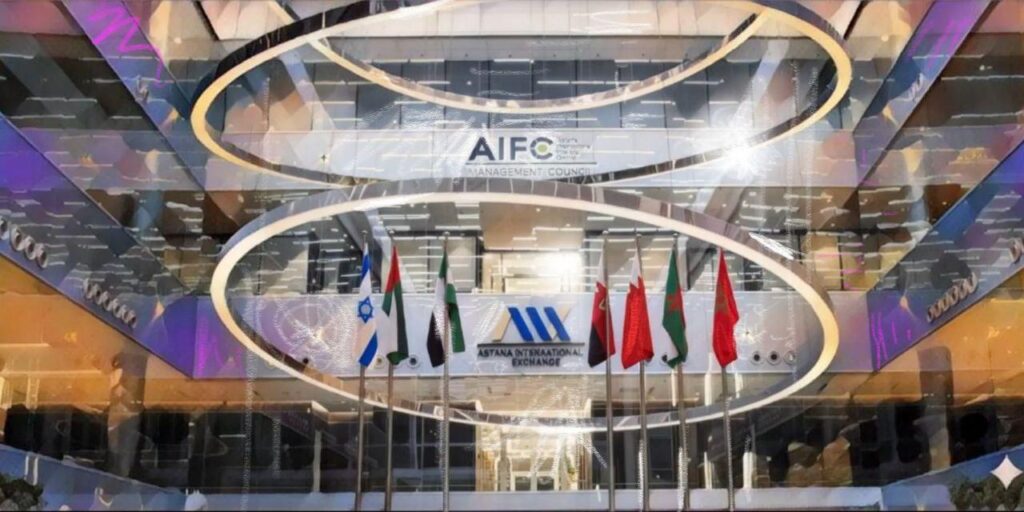
The financial architecture for Kazakhstan–Israel cooperation under the Abraham Accords already exists, at least in outline. Using this would, by itself, be an expression of Tokayev’s diplomatic method. The Astana International Financial Centre (AIFC) operates under a common-law framework and hosts the Astana International Exchange, which has attracted several billion dollars in capital to Kazakhstan’s economy. Within it, the AIFC Green Finance Centre has become a regional reference point for green and sustainability-linked instruments. This institutional design was not accidental. The separate Astana International Forum (AIF), which developed from the Astana Economic Forum and has its own history, increasingly works in parallel with AIFC where appropriate. These structures were developed by Tokayev as instrumentalities for bringing in diversified capital and signaling regulatory compatibility with global markets.

Institutional investors and venture platforms on the Israeli side have already used the Abraham Accords framework to identify opportunities in the Gulf and North Africa. An “Abraham Accords Energy Window” at AIFC could structure bonds for projects in Kazakhstan and help raise long-dated capital for complex infrastructure less expensively. In such AIFC-registered projects, Masdar or other Gulf developers might lead construction while Israeli firms supply equipment and software, and Kazakhstani companies serve as long-term off-takers and operators. Tokayev could point to this arrangement to show how his decision to enter the Accords translates into actual investment flows, channeled through institutions Kazakhstan itself has built.

Tokayev has framed the new initiatives primarily as tools for economic modernization, climate resilience, and better regional connectivity. These opportunities still fit within a non-aligned foreign-policy framework that remains explicitly multi-vector. The expansion of Kazakhstan–Israel cooperation under a U.S.-brokered framework, backed by Gulf capital, weaves together three vectors: two Middle Eastern, one trans-Atlantic. It shows Kazakhstan’s diplomacy under Tokayev playing a leading role in raising Central Asia’s profile in the international system.

Kazakhstan Adjusts Its Multi-vector Diplomacy

Kazakhstan’s decision to enter the Abraham Accords is about upgrading its relationship with Israel, but it is also Astana’s way of updating multi-vectorism for a new era. Cooperation with Israel and the UAE can extend Kazakhstan’s Caspian energy and technology corridor not just through the South Caucasus, but all the way to the Gulf and the eastern Mediterranean. Tokayev wants to use institutions like the AIFC to structure this cooperation, embedding the corridor in rules and practices that global capital markets recognize and trust.

For Central Asia as a whole, Kazakhstan’s move sets a benchmark. If the Abraham Accords yield a modest but concrete portfolio of projects over the next several years – in hydrocarbons, nuclear fuel, renewables, and critical minerals – the decision will look like an early step toward a more diversified regional energy order. Other states in the region will draw their own conclusions about whether and how to engage, and they may test their own versions of energy and technology partnerships with Israel and the Gulf. For now, the initiative underlines that Kazakhstan remains Central Asia’s principal node where Eurasian transit, energy transition, and cross-regional diplomacy converge.

For Tokayev personally, joining the Abraham Accords fits how he has governed since taking office. It is another incremental move that shifts Kazakhstan’s position in a changing world without breaking old relationships. In recent months, he has become more active in the C5+1 process and launched a targeted search for technological partners in fields that determine long-term competitiveness, all while preserving the formal language of multi-vectorism. By choosing to connect Kazakhstan’s energy system to Israeli innovation and Gulf capital inside a U.S.-brokered framework, he is exploring whether a more fragmented world economy will limit the strategic options of a medium-sized state.


The views expressed in this article are those of the author and do not necessarily reflect the official policy or position of the publication, its affiliates, or any other organizations mentioned.

How the Kyrgyz Republic’s High Technology Park is Quietly Building a Digital Powerhouse

In an exclusive two-part interview with The Times of Central Asia, Elena Nechaeva, Head of Communications at the High Technology Park of the Kyrgyz Republic (HTP), offers a rare and detailed look into one of Central Asia’s most underreported digital ecosystems.

While much attention has been given to the tech potential of Uzbekistan and Kazakhstan, Kyrgyzstan is quietly and deliberately attempting to build a globally connected digital economy, and, in recent years, it has gone from strength to strength. With deepening links to Silicon Valley and a new generation of ambitious startups and entrepreneurs, the country’s tech talent is emerging as some of the most competitive in the region.

In this special series, The Times of Central Asia reveals the start-ups, entrepreneurs, and trends shaping Kyrgyzstan’s regional innovation space and why international investors should start paying attention.

TCA: Can you briefly describe the mission and strategic goals of the High Technology Park (HTP)?

Elena Nechaeva: The High Technology Park of the Kyrgyz Republic is built on a simple belief: the internet is our ocean.

For a landlocked country, digital technologies open limitless space, a borderless world where geography no longer defines opportunity. The High Technology Park was created to help Kyrgyz companies export their talent and products and integrate into the wider global technology economy.

As a government-backed organization, our mission is to accelerate the country’s economic growth through IT and to create global opportunities for local talent whilst developing the Kyrgyz Republic as an emerging hub for innovation.

In the long term, our strategy is focused on three clear priorities. Firstly, we want to reach $1 billion in annual revenue generated by HTP resident companies. We aim to scale Kyrgyz IT exports by supporting companies with a favorable tax regime. This means 0% VAT, 0% corporate income tax, 0% sales tax, 5% personal income tax, to help them grow internationally.

Then, we want to enable the first unicorn startup founded in the Kyrgyz Republic. The High Technology Park supports startups through international programs, accelerators, and a number of global partnerships, allowing them to access networks in Silicon Valley, Europe, and Asia.

We have also set an ambitious target to train and empower 50,000 software developers. Developing these skills is perhaps the most important thing that we do. We are working closely with universities, schools, bootcamps, and private EdTech companies to cultivate a new generation of engineers and digitally savvy professionals.

Image courtesy of The High Technology Park, Kyrgyz Republic @ the 2025 Gitex Expo in Dubai

TCA: How has the High Technology Park evolved since its inception? What have been the most significant milestones to date?

Nechaeva: Since its inception, the High Technology Park has evolved from a small initiative into a fast-growing IT hub.

The Kyrgyz tech ecosystem began developing in 2008, originally with the founding of the Kyrgyz Association of Software and Service Developers – the first professional organization uniting the country’s tech companies. This laid the foundation for a specialized IT regime.

The High Technology Park was then formally established in 2011, when the Kyrgyz Parliament adopted the Law “On the High Technology Park of the Kyrgyz Republic” and introduced a unique tax regime designed to stimulate IT export.

A further major milestone came in 2022, when the HTP tax regime was made perpetual. This significantly strengthened investor confidence in the long-term opportunities and allowed companies to plan for the future more effectively.

Today, the High Technology Park is the most established IT hub in Central Asia, shaping the region’s digital future.

TCA: What role does the High Technology Park play in the broader economic development strategy of the Kyrgyz Republic? How supportive is the Kyrgyz government?

Nechaeva: The High Technology Park plays a central role in the Kyrgyz Republic’s economic strategy by driving growth through IT exports. In 2024, Kyrgyz IT specialists exported services to more than 63 countries, reaching $130 million.

Government support is strong. From making the HTP tax regime perpetual to initiating collaborative programs and public endorsements, the Kyrgyz government has shown consistent backing. President Sadyr Japarov recently reaffirmed that the digital economy is a national priority and reiterated the HTP slogan: “Live in the Kyrgyz Republic, work with the world.”

TCA: Which startups or resident companies within HTP are currently the most promising or disruptive?

Nechaeva: The High Technology Park now brings together more than 500 resident companies, along with dozens of startups supported through various programs. Many are doing impressive work across software development, AI, gaming, logistics tech, and digital media. A few have particularly stood out this year for their global traction.

NineNineSix is a fantastic example. Their real-time open-source Text To Speech (TTS) model – Kani TTS – already supports eight languages, with quality competitive to international peers. Thousands of developers worldwide have downloaded and tested it. For a team from the Kyrgyz Republic to contribute at this level to the global AI ecosystem is a major milestone.

Another fantastic start-up is Loadex AI. This also represents a great success story. They raised over $1 million this year and are already working with clients in the United States. Their product automates dispatch operations for trucking companies and is scaling quickly, an example of HTP companies building for global markets from day one.

In gaming, 4Tale Production had a breakthrough year. Their studio now employs over 120 people, and the trailer for their new game, Steel Ark, received tens of thousands of views within days on major gaming platforms. It’s a clear sign that creative tech and game development can become strong export industries for the Kyrgyz Republic.

And then there’s DBillions, one of the world’s most successful kids’ content creators. Their videos collect billions of views, and the channel has millions of global subscribers.

TCA: Can you name a few recent success stories coming out of the park that exemplify the HTP’s impact?

Nechaeva: A recent standout is ArtSkin, a startup developing artificial skin for prosthetic limbs. Launched in 2024 by CEO Iliias Dzheentaev, who spent three years studying human skin, receptors, and the nervous system, ArtSkin is creating a prototype that allows real tactile sensations.

Dzheentaev’s journey with HTP began through the Dive into Silicon Valley program and the Unicorn from KG pre-accelerator. In 2025, the company received a $50,000 grant from HTP to build a technical laboratory. By early 2026, they plan to develop a flexible prototype with 16 sensors capable of transmitting both temperature and touch pressure, with a patent application targeted for summer 2026.

ArtSkin recently ranked 4th out of 400 startups in the TechCrunch Disrupt 2025 regional selection by Silkroad Innovation Hub and will now pitch on the global stage at TechCrunch Disrupt in Silicon Valley, one of the world’s most prestigious tech conferences.

TCA: Are there specific sectors (e.g., fintech, AI, ed-tech, agri-tech) where Kyrgyz startups are gaining traction?

Nechaeva: SaaS is currently one of the strongest sectors. Growave is a prime example, a Kyrgyz-built product used by over 8,000 clients in more than 100 countries. It demonstrates that teams from the region can develop scalable global B2B products.

AI is growing rapidly as well. Enji AI is a standout team that analyzes developer productivity using code and task-tracking data and has already gained recognition from international accelerators.

Logistics and fintech are also gaining traction. Loadex AI, for instance, raised $1.5 million after joining a leading U.S. accelerator, a major achievement for a Kyrgyz B2B startup working directly with the American market.

In summary, SaaS, AI, and logistics-fintech are currently the most dynamic sectors for Kyrgyz startups.

TCA: How does the park support early-stage versus growth-stage startups differently?

Nechaeva: For early-stage founders, HTP focuses on education, mentoring, and early validation. Teams like ArtSkin began their journey by participating in the Dive into Silicon Valley program and local bootcamps to test their ideas and build initial prototypes.

For more advanced and deep-tech teams, HTP offers programs like the MIT & Kuo Sharper Center Deep Tech initiative and Unicorn from KG. These are tailored for startups that already have market traction or a scalable product and now need expert guidance to grow.

For later-stage companies, HTP supports international expansion, helping them enter global accelerators, pitch to investors, and, crucially, participate in major tech exhibitions and conferences where they can meet partners, clients, and VCs.

TCA: What kinds of resources and services does HTP provide to its resident companies (e.g., tax incentives, mentoring, funding access, international partnerships)?

Nechaeva: HTP offers resident companies much more than its well-known tax incentives, though the tax regime is one of the most competitive in the region.

Beyond tax benefits, companies gain access to international exhibitions and tech conferences, where we connect them with investors, partners, and clients. They also benefit from active networking and community support.

Residents can host their own events, join events organized by other HTP companies, and use the broader community as a platform for faster growth. Our doors are always open, and we support teams with all kinds of requests, including the unexpected. This is a key part of the culture we’ve built: a place where founders can come at any stage and receive real, practical help.

TCA: How does the park collaborate with local universities, research institutions, or international partners?

Nechaeva: HTP works actively with local universities and international partners because talent and research are essential to a strong tech ecosystem.

Locally, HTP has formal MoUs (Memorandums of Understanding) with several universities, collaborating on events, hackathons, and workshops. We regularly host student tours and run hands-on programs where young developers learn how real products are built.

HTP also signed a cooperation agreement with the CAEDMI Institute to collaborate on engineering, R&D, and STEM education. We work closely with international organizations like UNDP to support digital skills and STEM initiatives for youth.

Internationally, HTP partners with global institutions, including deep-tech programs like MIT Deep Tech, creating a direct bridge to the Massachusetts Institute of Technology, one of the world’s top engineering and AI research centers. And this is just the beginning. HTP is actively preparing to expand partnerships with other leading global universities.

TCA: Are there incubation or acceleration programs currently running or in development?

Nechaeva: Yes, HTP runs several programs tailored to different stages of a startup’s development.

Dive into Silicon Valley is our early-stage exposure program. Twice a year, we take founders to Silicon Valley, connect them with the local tech community, and provide access to mentors, startup visits, and real market insights. It’s ideal for teams that are shaping their product and seeking early validation and a global perspective.

Unicorn from KG is based on the Draper Hero Training platform, developed by Tim Draper, an iconic Silicon Valley investor known for early bets on Tesla, SpaceX, Hotmail, and Skype. This program trains advanced startups using Draper’s methods to prepare for fundraising, improve their pitch, and learn to scale globally.

The MIT + Kuo Sharper Center Deep Tech Program is our most specialized track, aimed at science-driven, engineering-heavy startups. It connects founders with MIT-linked experts and deep-tech mentors in fields like robotics, AI, biotech, and advanced hardware.

TCA: What are the biggest challenges currently facing Kyrgyz tech entrepreneurs?

Nechaeva: From an entrepreneur’s perspective, the main challenges include:

Talent and senior leadership. The Kyrgyz Republic has a population of just seven million, and the IT education system is still developing. The biggest bottleneck is a shortage of experienced specialists and managers.

A small domestic market. Most serious tech companies must focus on exports from the outset. The internal market is too limited to sustain large-scale products, so founders must compete globally from day one, requiring English proficiency, technical depth, speed, competitive pricing, and robust support systems.

Lack of local capital. There’s minimal startup investment within the country. Angel investors are rare, and true venture funds are almost non-existent. Prize money from hackathons can’t sustain company growth. Without capital across all stages, from pre-seed to scale, it’s difficult for major startup successes to emerge.

Scale-up and management expertise. Managing a team of 5-10 developers is very different from leading 100-200 people across multiple teams and products. Many founders are strong engineers, but the ecosystem is still learning how to build effective management structures, product organizations, and sales operations.

Regulatory environment. Venture legislation, state support instruments, and long-term digital policy are still catching up, which complicates the lives of founders.

TCA: How is HTP addressing brain drain or attracting skilled professionals back to the Kyrgyz Republic?

Nechaeva: HTP takes a different view on brain drain. We don’t aim to stop people from leaving; in fact, we’re proud when Kyrgyz professionals succeed at global tech companies. Many of them eventually return home with valuable experience and begin building locally.

There are already strong examples:

Tilek Mamutov was the first engineer from the Kyrgyz Republic to join Google. After years abroad, he returned home, founded his own startup, and now mentors local founders and supports the broader ecosystem.

Kainar Kamalov worked at top global institutions, including MIT and Microsoft, but chose to return to the Kyrgyz Republic to launch his startup and contribute to the local engineering community.

These are just two among many Kyrgyz professionals who have returned to support the growing ecosystem.

HTP is also creating an environment where people don’t have to choose between a global career and staying home. Our philosophy is simple: “Live in the Kyrgyz Republic, and work with the world.”

And it’s already working. With 500 HTP resident companies exporting to 63 countries, founders and engineers can enjoy a high quality of life, low living costs, and a strong community, while earning global-level salaries and building international products.

In short, the best solution to brain drain is opportunity. If people can build global careers from the Kyrgyz Republic, many will stay, and many who have left will return.

TCA: Thank you, Elena, for such an in-depth behind-the-scenes look at one of Central Asia’s most innovative start-up ecosystems. Next week, we will bring you the second part of our deep dive into Kyrgyzstan’s innovative High Technology Park.

In the meantime, you can find out more about the HTP, the companies and entrepreneurs featured in this interview at: https://htp.kg/