• KGS/USD = 0.01144 0%
  • KZT/USD = 0.00193 -0%
  • TJS/USD = 0.10811 -0.28%
  • UZS/USD = 0.00008 0%
  • TMT/USD = 0.28490 0%
  • KGS/USD = 0.01144 0%
  • KZT/USD = 0.00193 -0%
  • TJS/USD = 0.10811 -0.28%
  • UZS/USD = 0.00008 0%
  • TMT/USD = 0.28490 0%
  • KGS/USD = 0.01144 0%
  • KZT/USD = 0.00193 -0%
  • TJS/USD = 0.10811 -0.28%
  • UZS/USD = 0.00008 0%
  • TMT/USD = 0.28490 0%
  • KGS/USD = 0.01144 0%
  • KZT/USD = 0.00193 -0%
  • TJS/USD = 0.10811 -0.28%
  • UZS/USD = 0.00008 0%
  • TMT/USD = 0.28490 0%
  • KGS/USD = 0.01144 0%
  • KZT/USD = 0.00193 -0%
  • TJS/USD = 0.10811 -0.28%
  • UZS/USD = 0.00008 0%
  • TMT/USD = 0.28490 0%
  • KGS/USD = 0.01144 0%
  • KZT/USD = 0.00193 -0%
  • TJS/USD = 0.10811 -0.28%
  • UZS/USD = 0.00008 0%
  • TMT/USD = 0.28490 0%
  • KGS/USD = 0.01144 0%
  • KZT/USD = 0.00193 -0%
  • TJS/USD = 0.10811 -0.28%
  • UZS/USD = 0.00008 0%
  • TMT/USD = 0.28490 0%
  • KGS/USD = 0.01144 0%
  • KZT/USD = 0.00193 -0%
  • TJS/USD = 0.10811 -0.28%
  • UZS/USD = 0.00008 0%
  • TMT/USD = 0.28490 0%
10 December 2025

Kazakhstan PM Urges Joint Action to Save the Caspian Sea

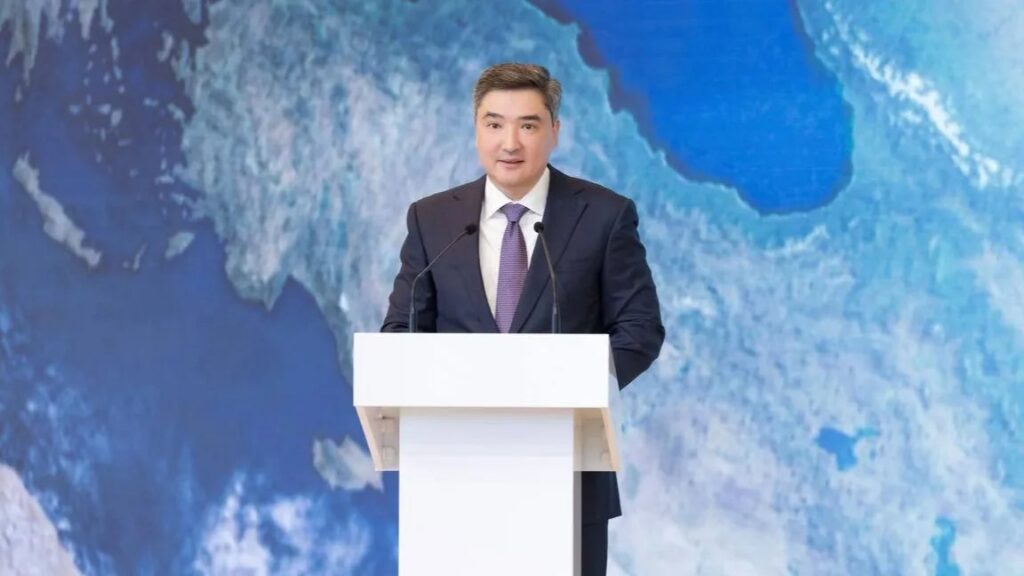
Kazakh Prime Minister Olzhas Bektenov has urged the five Caspian littoral states to coordinate efforts in response to the steadily declining water levels of the Caspian Sea, describing it as one of the region’s most pressing environmental threats.

Speaking at the inaugural International Environmental Conference in Manzherok, Russia, Bektenov emphasized the urgency of a collective response.

“Since the early 2000s, the water level in the Caspian Sea has been steadily declining. To study this and other challenges, Kazakhstan has established the Caspian Sea Research Institute. Scientists’ forecasts are alarming. We need decisive joint measures,” Bektenov stated, according to his press service.

The Caspian Sea is bordered by Kazakhstan, Russia, Iran, Azerbaijan, and Turkmenistan. As previously reported by The Times of Central Asia, the sea’s water level dropped to less than 29 meters below sea level by summer 2025, a historic low. The northern Caspian, which borders Kazakhstan and Russia, is experiencing the most rapid desiccation.

In addition to the Caspian issue, Bektenov addressed other major environmental concerns. He highlighted Kazakhstan’s work in the Aral Sea region, where the country currently chairs the International Fund for Saving the Aral Sea. Key priorities include reinforcing the Kokaral Dam, restoring the Syr Darya delta, revitalizing the fishing industry, and reforesting the dried seabed.

Kazakhstan is also establishing a saxaul nursery on the desiccated Aral seabed to produce 1.5 million seedlings annually. The goal is to cover up to 40% of Kazakhstan’s portion of the former sea with saxaul forests.

Bektenov also underscored the growing threat of glacier melt. Experts warn that Central Asia’s glaciers could shrink significantly by 2100. The UNESCO Central Asian Regional Glaciological Center, based in Almaty, is already serving as a key platform for research and monitoring.

Kazakhstan, he added, is ready to implement joint hydrotechnical initiatives, including reservoir regulation and the introduction of automated water accounting systems.

Bektenov concluded by noting the symbolic importance of the forum’s location in the Altai region, often regarded as the cradle of Turkic civilization and a cornerstone of cultural and humanitarian cooperation.

Kyrgyzstan Grows Toward Food Security with Surplus Potato and Carrot Harvests

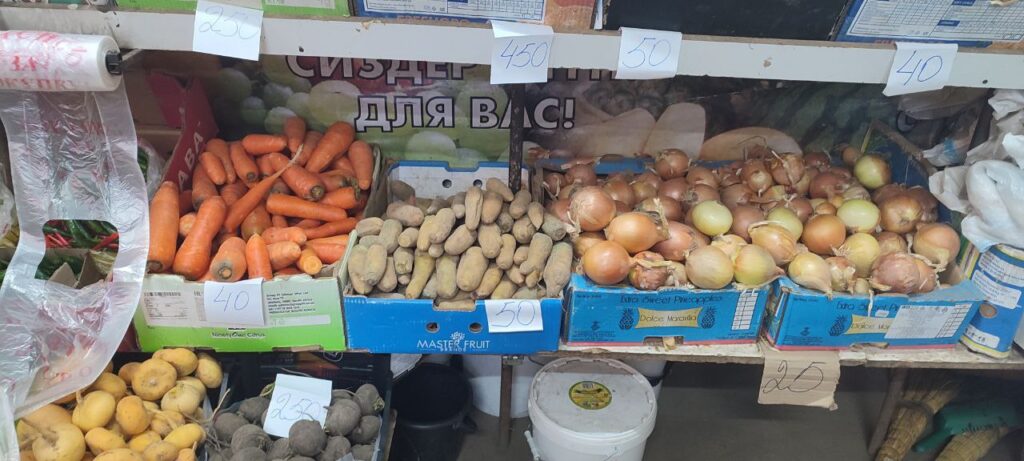
The Kyrgyz government is stepping up efforts to ensure food security and stabilize prices for socially important goods, including staple vegetables such as potatoes and carrots. In response to rising prices, the Ministry of Water Resources, Agriculture, and Processing Industry has decided to maintain existing potato crop volumes while expanding carrot cultivation.

According to the ministry, the active open-field growing season is currently underway. In 2025, potato planting areas reached over 64,000 hectares, with a projected harvest exceeding 1.1 million tons. Domestic demand is estimated at approximately 760,000 tons annually, allowing for surplus exports. However, the ministry cautioned farmers against indiscriminately expanding potato acreage in pursuit of higher profits, warning that an oversupply could depress prices and reduce incomes.

“To prevent unjustified price increases for socially significant products, the Ministry of Agriculture continues to monitor market prices daily. If risks of domestic shortages arise due to excessive exports or speculative practices by intermediaries, temporary export restrictions will be considered,” the ministry stated.

Amid recent price surges for carrots, the government has expanded carrot cultivation by 223 hectares in the Chui region.

“The second carrot harvest will ensure a stable domestic supply and help contain price increases,” said Agriculture Minister Bakyt Torobaev.

The ministry attributes the current price increases to heightened demand for Kyrgyz vegetables from member states of the Eurasian Economic Union (EAEU) and neighboring countries. Uzbekistan remains the largest importer of Kyrgyz potatoes. In 2024, Kyrgyz exports to Uzbekistan doubled to 68,500 tons, prompting state intervention and temporary export restrictions to prevent domestic shortages and inflation.

In addition to Uzbekistan, Kyrgyzstan annually exports over 10,000 tons of potatoes to Kazakhstan, as well as smaller volumes to Russia and Azerbaijan.

Uzbekistan Day on Capitol Hill Highlights Deepening Ties With the U.S.

On July 23, the U.S. Capitol hosted “Uzbekistan Day,” a significant event co-organized by the Congressional Uzbekistan Caucus to reaffirm growing ties between Uzbekistan and the United States. More than a hundred participants — including lawmakers, diplomats, officials from the State Department and Pentagon, business leaders, and journalists — gathered to engage with the Uzbek delegation and explore new areas for bilateral cooperation.

The forum focused on Uzbekistan’s ongoing political and socio-economic reforms and its foreign policy vision centered on regional stability and international cooperation. A central priority discussed was Uzbekistan’s accession to the World Trade Organization (WTO), with officials framing it as a vital step to ensuring long-term reform and global market integration.

U.S. Lawmakers Praise Reforms

At the event, Congressman Trent Kelly, Co-chairman of the Caucus on Uzbekistan, praised President Shavkat Mirziyoyev’s leadership, stating, “I want to express my gratitude to President Shavkat Mirziyoyev. He is a bold reformer, a reliable partner, and a sincere friend of the U.S. Under his leadership, Uzbekistan is confidently moving along the path of change. Human rights are being strengthened, democratic institutions expanded, and opportunities for international cooperation opened. These achievements inspire all of us.”

On a more personal note, Kelly added, “I have had the opportunity to visit Uzbekistan four times, and each visit left a deep impression on me. I was moved by the kindness of the Uzbek people, the richness of their cultural heritage, and the hospitality of your country. Music, cuisine, and deep traditions — all of this makes Uzbekistan truly unique… We will soon remove the Jackson-Vanik Amendment from our agenda because Uzbekistan is doing everything right and carrying out reforms,” he concluded.

Senator Steve Daines, Co-chairman of the Caucus on Central Asia, described himself as a “sincere friend of Uzbekistan.” Reflecting on his March 2024 trip to Tashkent, he said, “I felt at home and among friends. This meeting strengthened my desire to continue supporting the Central Asian countries.”

Montana Senator Steve Daines, Co-chairman of the Caucus on Central Asia

Congresswoman Carol Miller, also part of the March delegation, spoke of her personal connection to Uzbekistan’s heritage. “Uzbekistan, with its ancient history, has long aroused my professional interest, since I am a historian by education. The opportunity to see the country’s unique historical and cultural heritage in person was an invaluable experience.” Miller emphasized that, “The conversation took place in a trusting and open atmosphere. The topics raised during the meeting were not only relevant but also extremely promising from the viewpoint of the future development of Uzbek-American relations.”

West Virginia Congresswoman Carol Miller

Miller underscored her commitment to concrete legislative goals: “The removal of the Jackson-Vanik Amendment regarding our country and support for Uzbekistan’s accession to the WTO are priority tasks. I am currently working closely with members of Congress to accelerate these issues.”

Economic Cooperation and Business Confidence

The event also featured remarks from American business leaders highlighting Uzbekistan’s economic potential. Peter Flanagan, Senior Vice President of FLSmidth, spoke about a major copper mining project in Almalyk, the implementation of the which “will lead to production volumes four times greater than those of the world’s largest copper deposit [in] Kennecott (Utah, U.S.” FLSmidth is ready to “become a reliable partner in the development of Uzbekistan’s mining industry,” he stated.

Miles Hansen, President of the Stirling Foundation, echoed the importance of socio-economic development. “The innovative policy of President Shavkat Mirziyoyev gives a strong impetus to the country’s socio-economic development, increasing the world’s interest in the republic. Uzbekistan pursues an agenda in which human dignity is paramount.”

Trade Normalization and Strategic Outlook

The forum spotlighted growing momentum in Congress to normalize trade relations. The repeal of the Jackson-Vanik Amendment and granting Uzbekistan permanent normal trade relations are seen as key to deepening commercial and diplomatic ties.

Congressman Kelly and Congresswoman Miller reaffirmed their legislative efforts to remove outdated barriers. “I am currently working closely with members of Congress to accelerate these issues,” Miller emphasized.

Media outlets and analysts described “Uzbekistan Day” as a timely and effective platform for demonstrating the country’s reforms and expanding bilateral cooperation. As one observer noted, “In conditions of global turbulence, such initiatives not only contribute to strengthening mutual understanding and trust, but also serve as evidence of Uzbekistan’s significantly increased international authority.”

The event reinforced Uzbekistan’s position as a strategic and reform-oriented partner in Central Asia. With expanding business engagement and bipartisan support in Washington, the U.S.–Uzbekistan partnership appears poised for sustained growth across political, economic, and cultural domains.

Uzbek Official Dismissed After Viral Lap-Sitting Video Sparks Gender Debate

A government official in Uzbekistan has been dismissed following the circulation of a video showing him with a female subordinate sitting on his lap during an online meeting. The footage, which went viral on social media, prompted a public backlash, with the Ministry of Employment and Labor issuing a statement describing the incident as a “violation of the ethics of a civil servant.”

The dismissal of the head of the district department of employment and poverty reduction in Samarkand was confirmed by the ministry. The woman in the video, reportedly an assistant at the agency, has not been publicly named and is believed to have resigned voluntarily.

The incident has sparked a broader discussion about workplace conduct, gender dynamics, and women’s rights in Uzbekistan, where traditional norms continue to influence professional and personal life.

Gender and Power in the Uzbek Workplace

In recent years, Uzbekistan has made significant progress regarding the participation of women in public life. Women currently hold about 32 seats in the 150-member Legislative Chamber of the Oliy Majlis (national parliament). However, their visibility in executive positions and technical fields remains limited.

In Uzbekistan, only 35.4 % of the population aged between 15–64 in the labor force are women, and they earn about 34 % less than men. The World Bank estimates that equal participation and wages could boost the country’s GDP by 29 % and lift over 700,000 people out of poverty.

The government has introduced various reforms aimed at improving gender equality, including protections against domestic violence, promoting women’s entrepreneurship, and gender budgeting initiatives. However, critics argue that these measures are often symbolic or inconsistently enforced.

Cultural Taboo and Social Media

The lap-sitting video has sparked a wave of internet commentary from both men and women in Uzbekistan, where public discussions of gender roles are often muted. Some saw the video as a clear example of workplace harassment and power imbalance, while others downplayed its significance or blamed the woman involved.

Observers argue that the case highlights deeper structural issues within Uzbek institutions, where entrenched gender hierarchies and informal power dynamics often go unchallenged. In many areas of public and private life, the country remains deeply patriarchal, and whilst public discourse around consent, professional boundaries, and gender equality is growing, it remains nascent.

A Moment for Change?

The government’s decisive response to the video may signal a growing awareness of public expectations and international scrutiny. For activists and reformers, the hope is that this moment can serve as more than a spectacle and lead to more conversations about power, professionalism, and the role of women in modern Uzbekistan.

As one widely shared comment on Telegram put it: “It’s not about the lap. It’s about who gets to sit at the table.”

Kazakhstan–U.S. Tariff Question Indexes a Broader Geopolitical Pattern

When the United States announced a 25% tariff on selected imports from Kazakhstan, effective August 1, it offered little explanation beyond a vague appeal to restoring the trade balance. At first glance, this seemed routine, indeed almost perfunctory. However, the timing, context, and symbolic weight of the move suggest otherwise. Kazakhstan’s exports to the U.S. are modest, and key commodities are unaffected, yet the signal was received clearly in Astana.


What the Tariff Means in the Broader Picture

In the current phase of the international system’s evolution, tariffs no longer function solely as instruments of commercial redress. They have become vectors of strategic pressure, deployed to influence positions in a broader geopolitical context. From this perspective, Kazakhstan appears less as a trade partner than as a node within a larger and shifting strategic-connectivity network.

To interpret the tariff imposed by the United States on Kazakhstan as a bilateral irritant would be to miss its deeper significance. The target may be marginal in economic scale, but the symbolism is central. What is at stake is not merely the movement of goods, but the movement of expectations. What is at issue is how middle powers such as Kazakhstan read global cues and signal their response. The tariff is a point of entry into an evolving geoeconomic pattern.

Kazakhstan’s answer to the American move thus becomes an exercise in managing uncertainty under shifting rules. Astana has moved quickly by dispatching a delegation, issuing public reassurances, and subtly shifting its narrative. This is not a crisis for Kazakhstan, but it is not something that can be ignored either. What seems to have triggered the tariff is not the trade volume, but the context.

Kazakhstan’s longstanding ties with both Russia and China have complicated its attempts to preserve its autonomous balance in a tightening global field. The U.S. move may be part of a wider American effort to pressure states seen as too hesitant or too exposed. Kazakhstan’s early response is thus less a tactical correction than a move to preempt misunderstanding.

Background: A Cascade of Tariff Announcements

The tariff targeting Kazakhstan came at the end of a months-long sequence of trade announcements that began to accelerate in early 2025; it was not an isolated action. On April 2, under the now-familiar slogan of restoring reciprocity, the Trump administration unveiled a broad tariff package affecting more than 180 countries at a base level of 10%. Russia and Belarus were notably untouched, but Kazakhstan was singled out for a rate of 27%. No one could quite justify why, and Washington did not seem interested in explaining the move.

On July 7, Astana received a second notice: a revised tariff, now fixed at 25%, would take effect on August 1. This replaced the earlier measure and applied to a more specific set of goods. Without mentioning Kazakhstan by name, President Trump followed with a comment on social media about restoring “balanced flows” and correcting “distortions.”

More than twenty other countries — an eclectic list including Brazil, Japan, Laos, Mexico, and others — received similar notices around the same time. The criteria were opaque, with rates ranging from 20 to 50%. In most cases, there was no known dispute. What these countries seemed to share was some vague perception in Washington that they had failed to realign themselves with evolving U.S. expectations — whether on trade, supply chains, or political posture.

Kazakhstan’s inclusion in this group stood out, all the more so given its limited trade volume with the U.S. In 2024, its total exports to the American market were less than one billion dollars, most of which were concerned with commodities exempted from the new tariff. What remains is a small set of industrial exports, plus the question: Why now? The answer likely lies in the pattern of the American tariff policy, in which Kazakhstan is only one of many parts.

Tariffs, Rules, and Institutional Risk

Kazakhstan’s most significant shipments — crude oil, uranium, ferroalloys, and silver — are exempt from the new tariff. These four categories alone accounted for over 90% of total exports to the U.S. in 2024. The new tariff applies only to a narrow segment of Kazakhstan’s exports to the United States, mainly lesser-known industrial items such as steel pipes, specialty chemicals, and certain machine parts.

The real significance of the tariff lies not in revenue loss but in rules-based issues. Kazakhstan joined the World Trade Organization (WTO) in 2015, and WTO members make commitments to stability, predictability, and non-discrimination in market access. The U.S. tariff, by contrast, was announced unilaterally, without consultation, and without any WTO process. Punitive tariffs targeting specific countries outside a formal dispute resolution framework may be incompatible with the obligations assumed under the WTO’s Most Favored Nation (MFN) principle.

For Kazakhstan, the question becomes a tangible reputational risk. The country has heavily invested in its image as a rules-respecting member of the global trading system, so this is not an abstract concern. The WTO’s Director-General has warned that such selective bilateral tariff approaches threaten the core MFN foundation of global trade law.

The country has spent the past decade cultivating foreign capital, especially in infrastructure, mining, and logistics. If American tariff policy starts to look erratic, then other governments and firms may begin building risk premiums into their Kazakhstan strategy.

Kazakhstan’s Countermoves and Strategic Repositioning

In this context, diplomatic action functions as a counter-signal aimed at re-establishing interpretive control. Within days of receiving the July 7 notice, the government of Kazakhstan announced that it would send a senior delegation to Washington. The purpose of this move was to reframe the situation. Kazakhstan was not looking for a public concession but rather, at a minimum, to be heard.

Part of the delegation’s strategy is to shift the conversation away from tariffs and toward strategic value. Kazakhstan has quietly become a meaningful player in the global supply of critical minerals. Its deposits of rare-earth elements, particularly in the Karaganda region, are not to be neglected. Western companies have already begun exploratory partnerships, and it is not impossible that they can tip the conversation in Kazakhstan’s favor.

At the same time, Astana has already begun to assess potential fallout at the domestic level. The exporters affected by the tariff are relatively few in number, and none appear to be existentially threatened. The government may still offer them targeted relief such as export credits, transport subsidies, or tax offsets. Legal consultations are reportedly underway to explore filing a WTO case; this, however, would be a slow process, and likely only a symbolic one.

Possible Scenarios and Their Implications

The tariff’s immediate impact is modest, but its symbolic threshold is real. It introduces friction at a moment when Kazakhstan is seeking a stable economic and diplomatic orientation without crisis. Three scenarios are plausible:

  1. Astana persuades U.S. policymakers to soften or narrow the tariff, an outcome that would validate Kazakhstan’s geoeconomic relevance and normative alignment.
  2. The tariff persists, prompting Kazakhstan to redirect exports or adapt supply chains; such realignment could accelerate its turn toward Eurasian or Southeast Asian partners, while the U.S. remains a symbolic but not a strategic partner.
  3. If similar pressures are exerted against other middle powers, the tariff pattern may herald a broader strategic realignment, as these states will hedge more aggressively as confidence in the multilateral frameworks erodes.

At present, the unfolding of events will control the narrative. The test for Kazakhstan lies not in reversing the tariff itself, but in managing its constraints with sovereign agency. Its ability to navigate this space will determine the trajectory of its profile as a strategic regional actor.

Kazakhstan: Aircraft Debris Found in Search for Missing Military Helicopter

Search teams in Kazakhstan have discovered an oil slick on a lake and aircraft fragments that appear to belong to a military-operated helicopter carrying three people that was reported missing.

Kazakhstan’s Ministry of Emergency Situations launched an intensive search and rescue operation after contact with the EC145 helicopter was lost on Friday in the area of Otar, a village west of Almaty. Satellite detection methods spotted oily water on Lake Sorbulak, about 40 kilometers northwest of Almaty, and searchers working through the night found aircraft debris “presumably belonging to” Kazakhstan’s Air Defense Forces, the ministry said on Friday.

It said echo sounders as well as aerial and underwater drones were being used in the operation.

“About 200 personnel, 40 units of equipment, 15 watercraft, 4 canine units, and 2 aircraft of the Ministry of Emergency Situations are involved,” the ministry said.

The Ministry of Defense said the helicopter had been on a scheduled flight and that “a special commission has been dispatched to determine the circumstances of the incident.”

The Eurocopter EC145 is a twin-engine, light utility aircraft.