• KGS/USD = 0.01144 0%
  • KZT/USD = 0.00213 0%
  • TJS/USD = 0.10607 0.57%
  • UZS/USD = 0.00008 0%
  • TMT/USD = 0.28530 0%
  • KGS/USD = 0.01144 0%
  • KZT/USD = 0.00213 0%
  • TJS/USD = 0.10607 0.57%
  • UZS/USD = 0.00008 0%
  • TMT/USD = 0.28530 0%
  • KGS/USD = 0.01144 0%
  • KZT/USD = 0.00213 0%
  • TJS/USD = 0.10607 0.57%
  • UZS/USD = 0.00008 0%
  • TMT/USD = 0.28530 0%
  • KGS/USD = 0.01144 0%
  • KZT/USD = 0.00213 0%
  • TJS/USD = 0.10607 0.57%
  • UZS/USD = 0.00008 0%
  • TMT/USD = 0.28530 0%
  • KGS/USD = 0.01144 0%
  • KZT/USD = 0.00213 0%
  • TJS/USD = 0.10607 0.57%
  • UZS/USD = 0.00008 0%
  • TMT/USD = 0.28530 0%
  • KGS/USD = 0.01144 0%
  • KZT/USD = 0.00213 0%
  • TJS/USD = 0.10607 0.57%
  • UZS/USD = 0.00008 0%
  • TMT/USD = 0.28530 0%
  • KGS/USD = 0.01144 0%
  • KZT/USD = 0.00213 0%
  • TJS/USD = 0.10607 0.57%
  • UZS/USD = 0.00008 0%
  • TMT/USD = 0.28530 0%
  • KGS/USD = 0.01144 0%
  • KZT/USD = 0.00213 0%
  • TJS/USD = 0.10607 0.57%
  • UZS/USD = 0.00008 0%
  • TMT/USD = 0.28530 0%

Uzbekistan’s Economy to Remain Strong in 2026, IMF Forecasts 6.8% Growth

The International Monetary Fund (IMF) has released its latest assessment of Uzbekistan’s economy, reporting strong growth in 2025 alongside recommendations for continued fiscal discipline and structural reforms.

According to the IMF, Uzbekistan’s real GDP grew by 7.7% in 2025, driven by robust domestic consumption and investment. Growth was broad-based, with the services and construction sectors expanding the fastest. At the same time, the unemployment rate declined to 4.8%, down 0.7 percentage points from the previous year.

Inflation showed a downward trend, with annual consumer price growth falling to 7.3% by the end of 2025, compared to 9.8% a year earlier. The IMF attributed this to the fading impact of energy price increases introduced in May 2024, a stronger national currency, and what it described as an “appropriately tight monetary policy stance.” Core inflation also declined over the same period.

External balances improved. The current account deficit narrowed to 3.9% of GDP, supported by strong exports and remittance inflows. International reserves remained stable, covering around 13 months of imports, while the fiscal deficit fell to 2.1% of GDP, below the government’s 3% target.

“The economic outlook remains favorable,” the IMF said, while pointing to increasing global uncertainties, particularly linked to geopolitical tensions and the conflict in the Middle East. Economic growth is projected at 6.8% in 2026, before moderating to around 6% in 2027.

Inflation is expected to remain above the Central Bank’s 5% target in 2026, partly due to higher global oil prices, before easing toward the target level in 2027. The IMF stressed that monetary policy should remain focused on price stability, noting that the policy rate has been held at 14% since March 2025.

The report also highlighted risks related to global economic conditions, including trade disruptions and commodity price volatility, as well as domestic challenges such as potential pressure for increased public spending and vulnerabilities linked to state-owned enterprises.

The IMF recommended limiting additional government spending in 2026 to avoid fuelling inflation. It also called for targeted social support measures instead of broad subsidies, alongside continued reforms in tax policy, public financial management, and state-owned enterprises.

Further recommendations included accelerating the privatisation of state-owned banks, strengthening financial sector oversight, and improving governance standards. The IMF also emphasised the importance of maintaining exchange rate flexibility to help the economy absorb external shocks.

The findings build on last year’s IMF assessment, which reported 7.6% growth in the first nine months of 2025, also driven by strong consumption and investment, while inflation showed signs of easing.

Kazakhstan Aims to Increase Agricultural Exports to Turkey

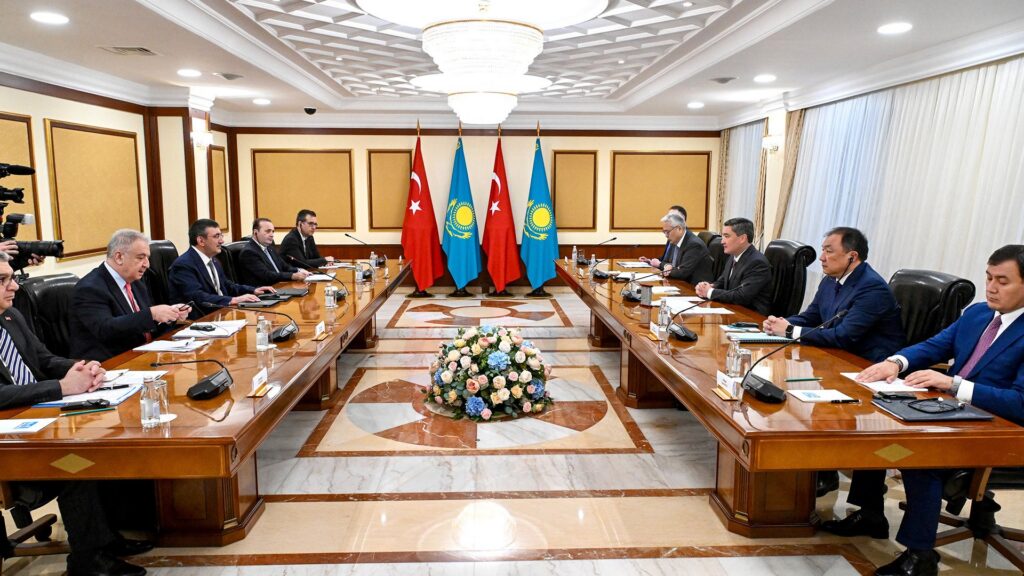
Kazakhstan is seeking to expand exports of agricultural products to the Turkish market, Prime Minister Olzhas Bektenov said during a meeting of the Kazakhstan-Turkey Intergovernmental Commission held in Astana.

According to Bektenov, trade turnover in the agro-industrial sector between the two countries increased by more than 25% in 2025, reaching $360 million. “In the coming period, it is important to diversify trade in this sector, expand the export product range, and launch joint high value-added production. We are interested in exporting wheat, lentils, animal feed, and oilseeds to Turkey,” he said.

The prime minister also said that relevant government agencies and businesses in Kazakhstan and Turkey have established exchanges of experience in agricultural technologies and insurance. To support further export growth, he added, cooperation in veterinary and phytosanitary control needs to be strengthened.

In 2025, approximately $390 million in Turkish investment was attracted to Kazakhstan’s economy, bringing the cumulative total over the past 20 years to more than $6 billion.

By the end of 2025, bilateral trade had increased by 9%, while Kazakhstan’s overall exports rose by more than 17% to $3.9 billion.

Turkey’s Vice President Cevdet Yılmaz, who led the Turkish delegation, emphasised the importance of cooperation not only at the bilateral level but also within multilateral frameworks.

“We attach particular importance not only to bilateral interaction between Turkey and Kazakhstan, but also to our joint work within the Organization of Turkic States and other international structures. These platforms enable us to enhance coordination, expand economic opportunities, and translate political dialogue into practical outcomes,” Yılmaz said.

The parties also noted a 35% increase in railway freight transportation between Kazakhstan and Turkey in 2025 and reaffirmed the priority of developing the Trans-Caspian International Transport Route, also known as the Middle Corridor. Key objectives include infrastructure modernisation, eliminating bottlenecks, expanding port and terminal capacity, implementing digital solutions, and coordinating tariff policies.

In addition to agriculture, the sides discussed prospects for energy cooperation, including joint projects in the oil and gas sector and geological exploration. Potential cooperation in IT education, fintech, cybersecurity, and e-government services was also highlighted.

As previously reported by The Times of Central Asia, Turkey is considered a promising market for Kazakh meat producers, as it is willing to pay higher prices than other markets.

1853 Map of the Aral Sea Published in the Journal of the Royal Geographical Society

An 1853 map of the Aral Sea, published in the Journal of the Royal Geographical Society, depicts the vast inland water body at a time when it was near its historical peak. The engraving, created by German cartographer August Petermann, was based on findings from a scientific expedition conducted in 1848-1849, according to historical materials referenced in the project.

The expedition, led by Russian naval officer Alexey Butakov, produced one of the first detailed studies of the Aral Sea. Researchers measured its depth, mapped its coastline, and documented its islands, providing a comprehensive picture of a body of water that would later become a symbol of environmental degradation.

Although widely referred to as a sea, the Aral is in fact a lake. In the 20th century, it ranked as the world’s fourth-largest lake. Scientific evidence suggests it formed around 17,600 years ago as a result of glacial melt. Initially freshwater, it became increasingly saline over time, while its water levels fluctuated over centuries.

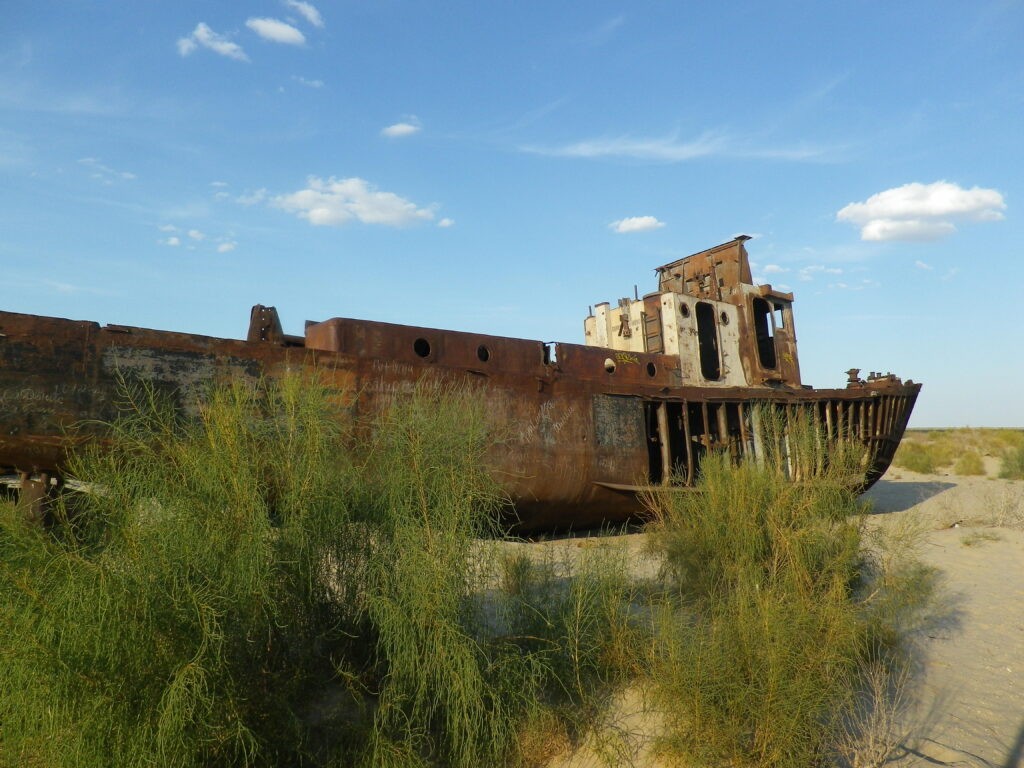
From the 1960s, however, the lake began to shrink rapidly. Large-scale irrigation projects diverted water from the Amu Darya and Syr Darya rivers, primarily for cotton cultivation. Over the following decades, the Aral Sea lost more than 90% of its volume, transforming much of the region into desert and salt plains, and severely disrupting ecosystems and local livelihoods.

In 1989, the lake split into two separate bodies. The southern part, largely located in Uzbekistan, has almost completely dried up, forming the Aralkum Desert. The northern section has shown some stabilisation, supported in part by infrastructure such as the Kokaral Dam.

This transformation, and its historical context, will be explored in Uzbekistan’s cultural exhibition When Apricots Blossom, which draws on archival materials and contemporary interpretation. The exhibition takes its name from a poem by Hamid Olimjon, written in the 1930s, symbolising hope and renewal.

According to organisers, the project will combine history, art, and environmental reflection to present the story of the Aral Sea to an international audience. The exhibition will run from April 20 to 26, at Palazzo Citterio in Milan’s Brera district as part of Milan Design Week.

Welcome to Turkmenistan? President Says He Wants International Tourists to Visit

Turkmenistan, one of the world’s most closed countries, is hosting an international tourism conference this week.

The “TurkmenTravel – 2026” event in the capital of Ashgabat aims to attract foreign visitors to a country that is generally difficult to visit because of tight controls, including required letters of invitation and the need to have licensed guides. While some travel agencies aim to address those challenges for tourists, Turkmenistan remains a little-understood country and lags far behind regional countries such as neighboring Uzbekistan in terms of infrastructure and accessibility for travelers.

But the three-day tourism conference, which ends on Thursday, could be a tentative sign that Turkmenistan wants to open up, selectively, and within the limits of a tightly controlled system that restricts the internet and other sources of information for its citizens.

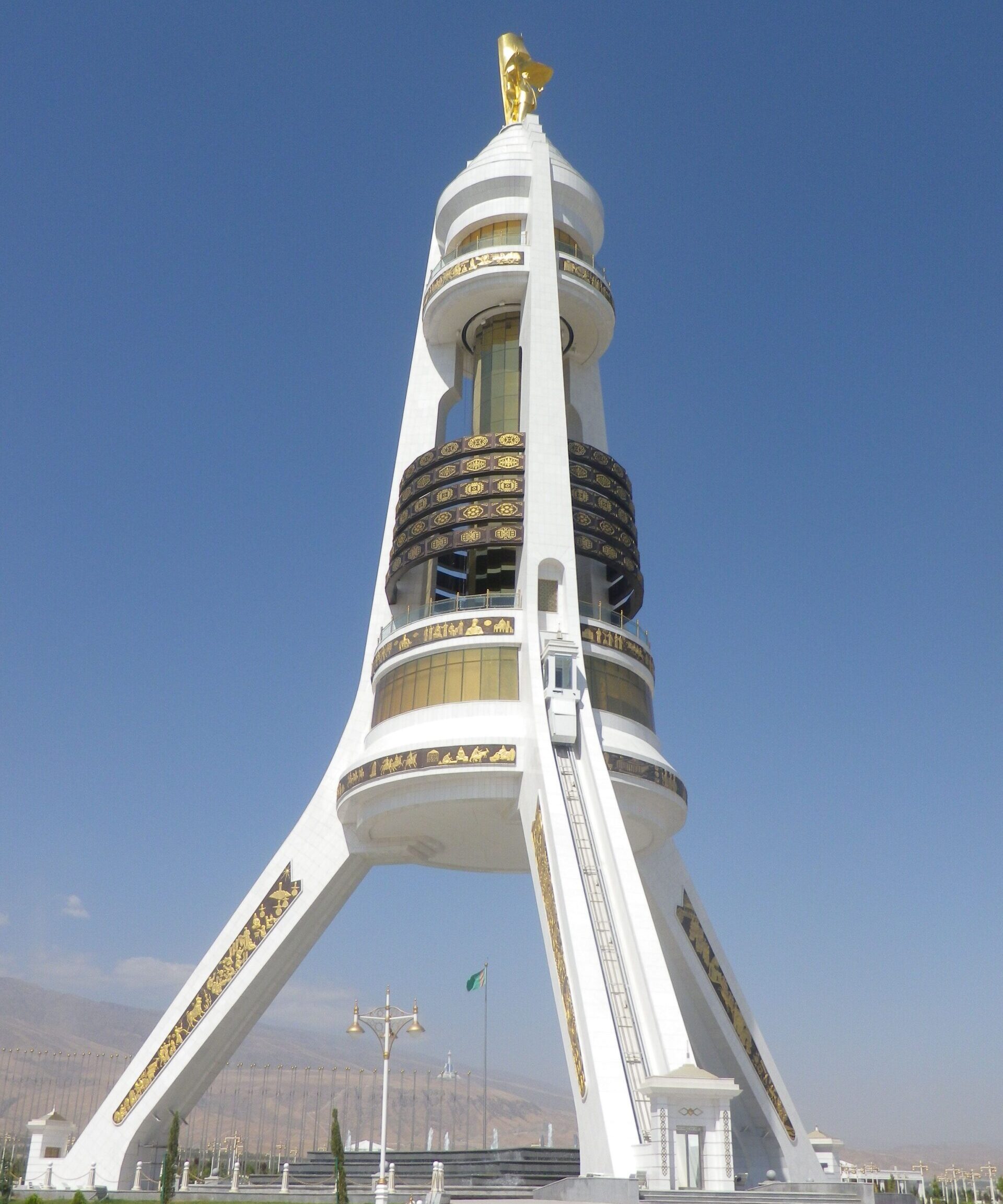
Ashgabat Arch of Neutrality; image: Stephen M. Bland

Across Central Asia, governments increasingly treat tourism as both an economic sector and a tool of international image-building. Turkmenistan now appears to want some of that attention, but on its own carefully managed terms.

The event was a priority for Turkmenistan’s government. President Serdar Berdimuhamedov delivered a message of encouragement to the participants and said tourism was growing in the Central Asian country whose stated policy is one of neutrality in international affairs. Statistics on tourism growth and other metrics are hard to come by in Turkmenistan, however.

That makes the message from Ashgabat especially striking: a state known less for openness than for control is publicly promoting tourism growth while offering little transparent data to show how far that growth has actually come.

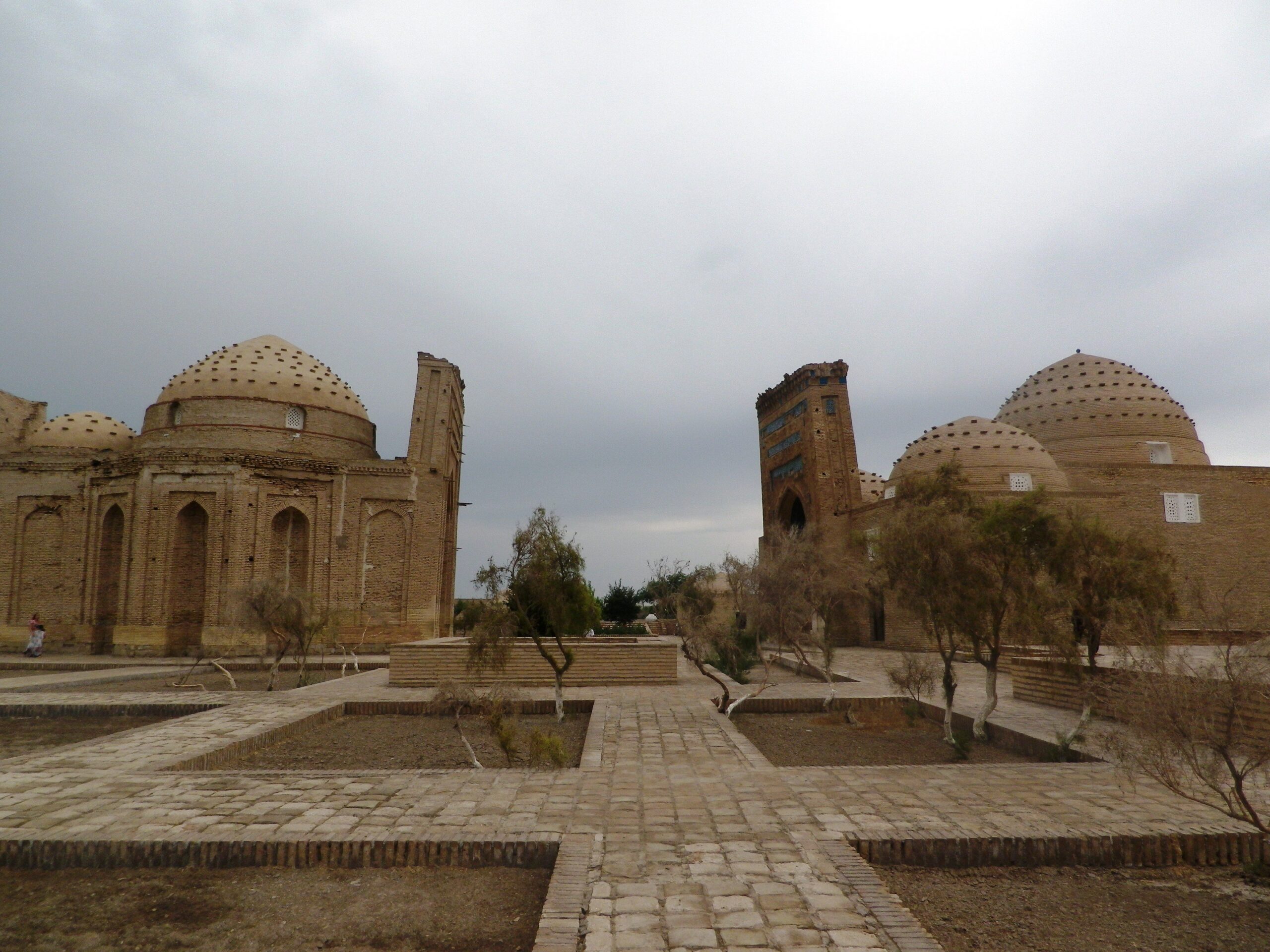
Kunya-Urgench- The ancient Nejameddin Kubra and Sultan Ali Mausoleums; image: Stephen M. Bland

“Permanently neutral, Turkmenistan places great importance on expanding international cooperation in this area,” the president said. He noted collaboration with the U.N. World Tourism Organization and other international institutions.

For years, Turkmenistan’s image abroad has rested less on mass tourism than on mystery: the white-marble capital, vast desert landscapes, major Silk Road sites, and a political system that has often kept outsiders at a distance.

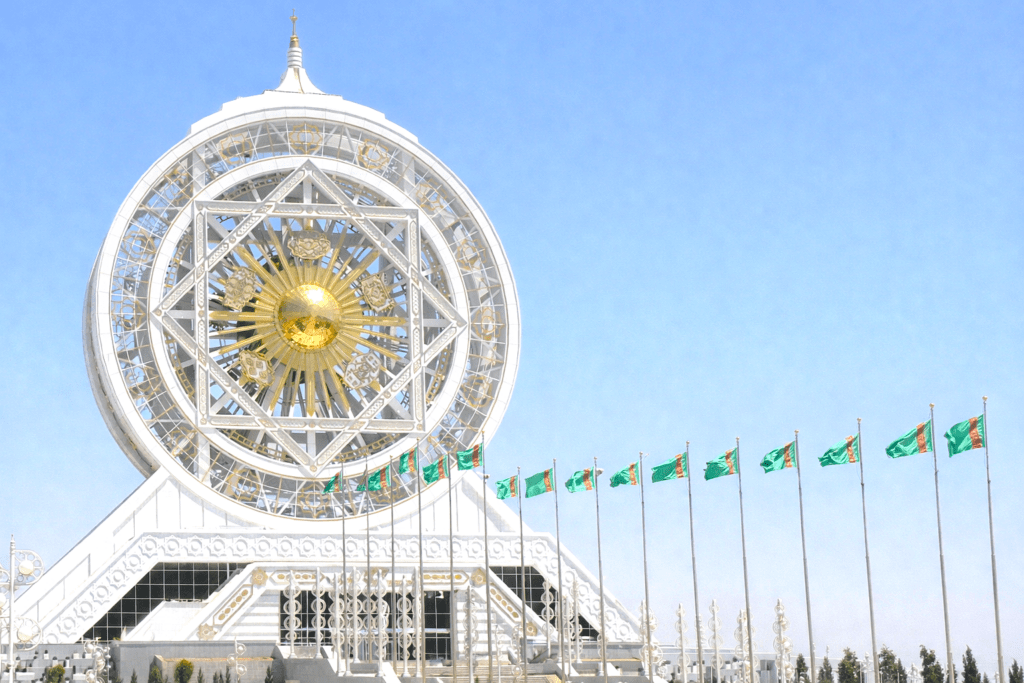
In Ashgabat, that mystery is part of the experience from the start. White marble towers rise in regimented lines, fountains splash into largely empty spaces, and broad avenues can feel strangely still. The city is visually extravagant but tightly controlled, with an atmosphere that can leave visitors unsure whether they are in a showcase capital, a stage set, or both.

Berdimuhamedov listed some of Turkmenistan’s attractions: Ancient Merv, Nisa, and Kunya-Urgench, the Bereketli Garagum and Gaplaňgyr nature reserves, desert ecosystems, and the elaborate architecture in Ashgabat.

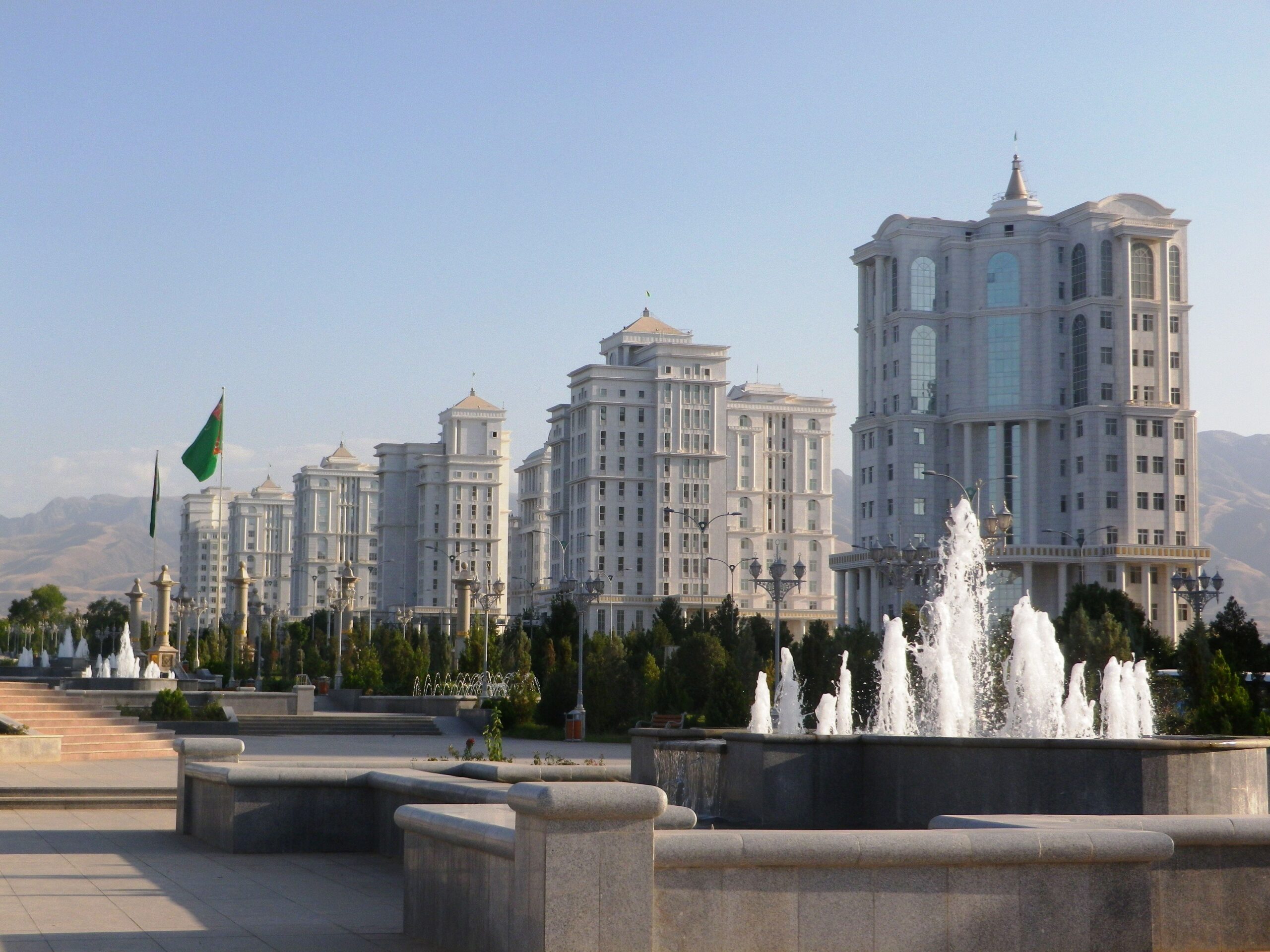
Ashgabat – A row of marble towers in the Berzengi district; image: Stephen M. Bland

Cordula Wohlmuther, regional director for Europe of U.N. Tourism, was one of the listed speakers at the tourism conference. The agenda for the event included a session titled “How to promote Central Asian culture on the world stage.”

One company, Asia Odyssey Travel, portrays Turkmenistan as a destination that hasn’t been explored by tourists in the way many other countries have. Among the adjectives it uses to describe the country is “surreal.”

The real test, though, is not conference branding but whether Turkmenistan becomes easier to enter, easier to navigate, and easier to understand from the outside. Until then, any tourism push will look selective rather than transformative.

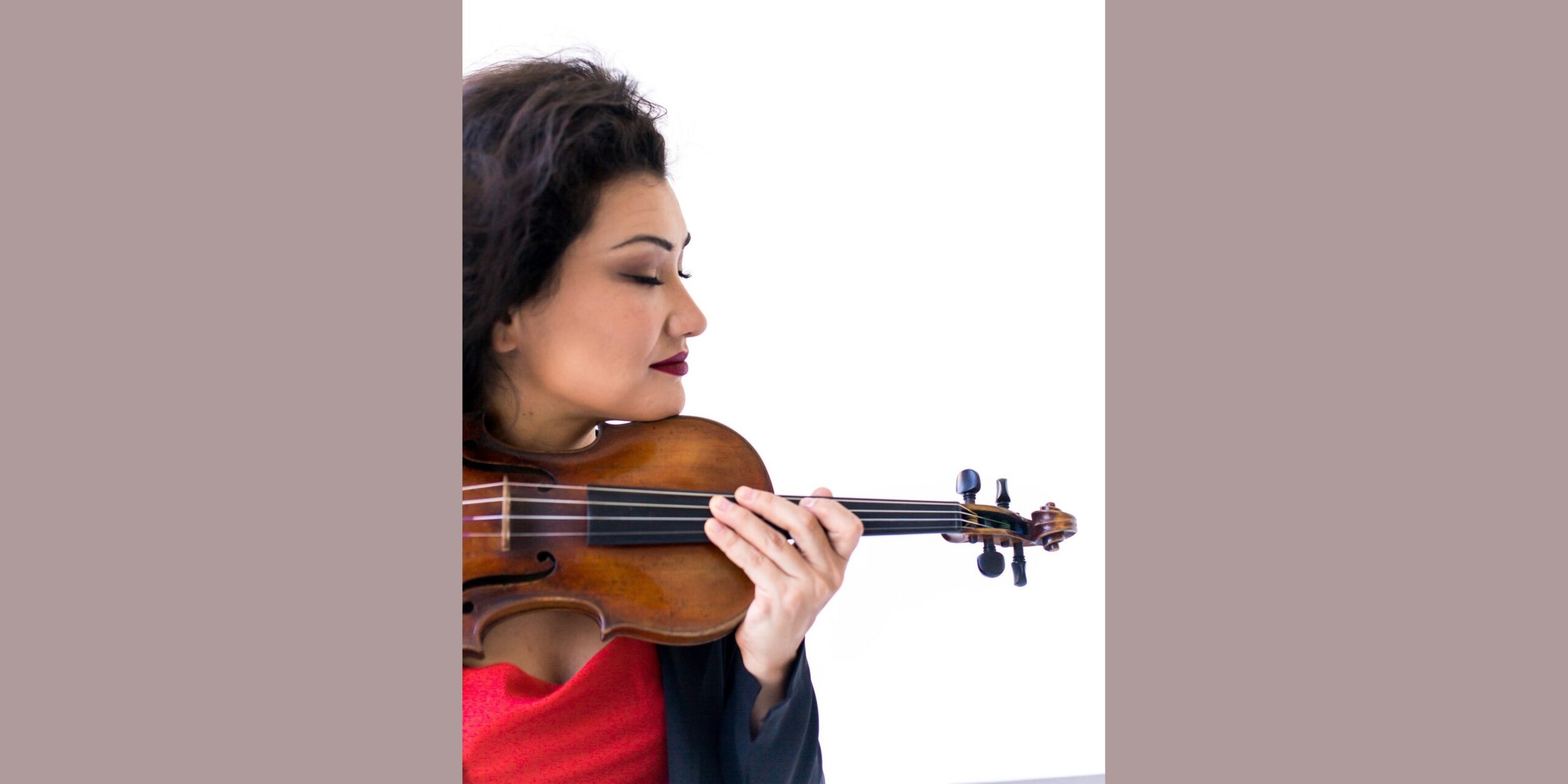
Kazakh Violinist Dinara Bazarbayeva-Sakhaman on Sound, Identity, and the Demands of the Stage

Dinara Bazarbayeva-Sakhaman, a soloist at the Zhambyl Kazakh State Philharmonic, spends much of her time moving between countries and concert halls, performing with international orchestras and collaborating with musicians from different traditions.

Behind these appearances lies not only a demanding touring schedule, but also rigorous discipline: long hours of rehearsal, complete dedication on stage, and a constant search for the right sound. Speaking to The Times of Central Asia, she reflects on the Kazakh violin school, the nature of talent, and the enduring pull of her instrument.

TCA: Dinara, your career has taken you to many countries. What has that experience been like?

Dinara: Not the entire world, of course, but I’ve visited many countries thanks to my profession. The only time I traveled without my violin was when I went to Thailand, and throughout the trip, I felt as if something was missing. It was unusual, waking up on the plane and thinking, “Where is my violin?”

TCA: Do you usually travel with an orchestra?

Dinara: It varies, but more often I travel alone. There are projects where orchestras are assembled from musicians from different countries. For example, the renowned violinist and now conductor Marat Bisengaliev does this in India. For the Symphony Orchestra of India, he invites musicians from around the world. I have been collaborating with this orchestra for quite some time; it is an excellent ensemble.

Working in such groups, sharing cultures, performing for diverse audiences, and collaborating with musicians from different parts of the world is one of the most fascinating aspects of our profession.
TCA: Are there any distinctive features of the Indian violin school?

Dinara: I performed in Mumbai, where there are several schools. One was founded by Marat Bisengaliev at the National Centre for the Performing Arts, and another by Mehli Mehta. In Bisengaliev’s school, classical violin is taught based on our educational system while incorporating elements of Indian tradition.

What surprised me most was the number of self-taught violinists.

TCA: And how do they play?

Dinara: Surprisingly well. Their path is very different, yet the results are impressive. In our system, if you don’t start learning the violin at the age of five or six, seven at the latest, it is believed that you will not catch up and will likely remain an amateur.

However, I know someone who began playing at 33 and now performs in a professional orchestra, knowing first violin parts almost by heart. He has a beautiful tone and excellent intonation. For me, this is a unique case.

TCA: At what age did you start playing?

Dinara: At five. That means I’ve spent 36 years with the violin and cannot remember life without it. I often joke that it is my lifelong implant—an inseparable part of me, with only its size changing as I grew.

TCA: How would you describe the Kazakh violin school?

Dinara: The foundation of our school lies in the Russian-Soviet tradition. During World War II, many teachers were evacuated to Kazakhstan and remained here, educating new generations of musicians.

Today, however, the boundaries between schools have blurred. Styles have merged, and it is no longer easy to determine where a musician studied based solely on their playing.

TCA: Can we speak of a “Kazakh violin school” as a recognizable brand?

Dinara: Absolutely. We have outstanding violinists from the older generation, such as Aiman Musakhodzhaeva, Marat Bisengaliev, and Gaukhar Murzabekova, who carry Kazakhstan’s flag on the international stage.

Among the younger musicians, Ruslan Talas became the first Kazakh finalist of the Queen Elisabeth Competition, and Sherniyaz Mussakhan works as a concertmaster in Switzerland. Within the professional community, Kazakhstan is well known for its strong musicians.

TCA: What do Kazakh classical musicians bring to international audiences? Is there a distinct identity in their playing?

Dinara: In academic music, we are still on the path toward forming a distinctive “Kazakh sound.” However, beyond classical music, we possess something truly unique: our traditional instruments.

The dombra, kobyz, and sybyzgy create a musical language unlike anything else in the world. For example, the ethno-ensemble Turan enjoys great popularity abroad, particularly in Turkey. In this sense, our main distinction lies in our living national musical tradition.

TCA: Do you have your own personal playing style?

Dinara: It’s difficult for me to judge, but I’m often told that I fully immerse myself in the process. Every detail matters to me, and I am very demanding of both myself and my musical partners.

There are pianists and ensembles with whom I’ve worked for many years and developed a deep artistic connection. At the same time, not everyone is ready for such emotional dedication, and I respect that.

TCA: How challenging is preparing for a concert?

Dinara: The concert itself is not the hardest part; the preparation is. To perform a 90-minute program, I rehearse for seven to eight hours a day. After a performance, I’m completely exhausted because I give everything I have.

TCA: In your experience, what matters more in the long run — talent or perseverance?

Dinara: Both. They’re simply different paths to the summit. Talent must be nurtured, while perseverance allows one to understand the process deeply and reproduce results consistently.

TCA: Which violinists do you consider truly great?

Dinara: Among the musicians whose recordings have been preserved with good sound quality, I especially admire Jascha Heifetz, David Oistrakh, Leonid Kogan, and Philippe Hirshhorn. They represent the tradition that inspires and guides me.

TCA: How much does the sound depend on the instrument itself?

Dinara: Very much so. I currently play a violin from the state collection, crafted by Nicola Amati, the teacher of Antonio Stradivari. Such an instrument becomes a true partner; it responds to your touch and allows you to produce sounds you could never have planned. It’s an extraordinary feeling.

TCA: Does the violin possess a kind of magic?

Dinara: Yes, absolutely. Sometimes during a concert, when you feel physically exhausted and doubt you can manage a difficult passage, everything suddenly works perfectly, as if the instrument itself supports you.

When instruments survive for 200-300 years, they begin to feel like something far greater than mere objects. There is an inexplicable magic in them.

TCA: How do you respond to claims that classical music is “no longer needed”?

Dinara: Calmly. I once had a conversation with a psychologist who asked, “Why do you need this? Who needs it?” I thought: you may not need it, but I do. I love it, and that is enough for me.

I don’t aim to convince everyone to love the violin or classical music.

TCA:
You also organize candlelight concerts. Is this a successful combination of art and marketing?

Dinara:
The idea emerged quite by chance. Over time, it evolved into a full-fledged and beautiful project. People want not only to listen to music but also to experience it through atmosphere. This combination of sound and visual ambiance proved very appealing.

TCA: Do you have any recent news for your fans?

Dinara: I’ve recorded half of my debut album. It includes violin works by Tomaso Vitali, Maurice Ravel, and variations on an original theme by Henryk Wieniawski. The project is still in progress, and I’m very curious to see how it will be received.

Kazakhstan Moves to Launch National Credit Ratings Agency to Cut Reliance on Foreign Firms

Kazakhstan plans to establish its own credit ratings agency, a move that would give authorities greater control over how companies are assessed by investors and reduce reliance on foreign firms that dominate global markets.

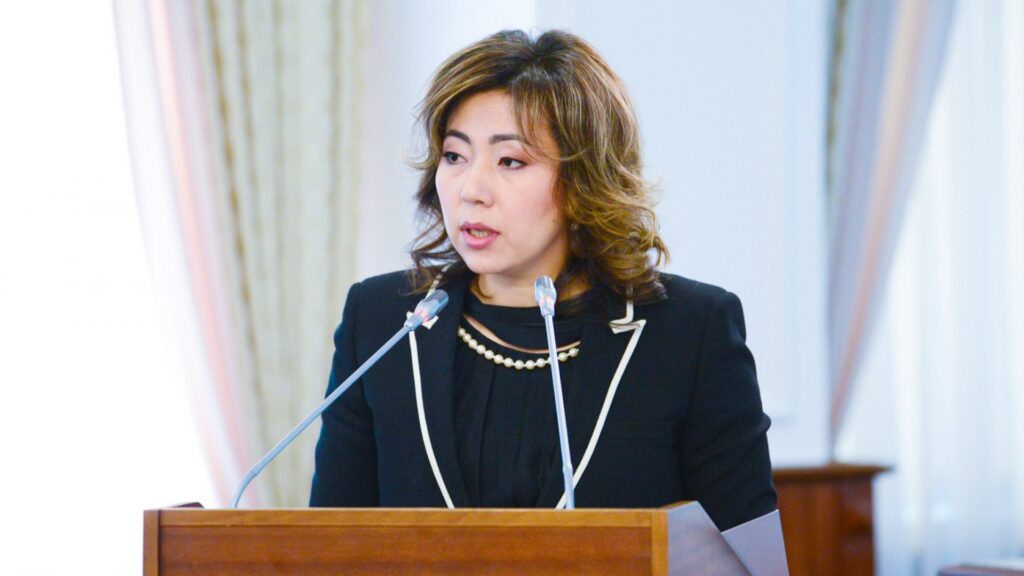
Madina Abylkassymova, chair of the Agency for Regulation and Development of the Financial Market (ARDFM), said the proposed agency would be set up with participation from the National Bank of Kazakhstan, an international ratings firm, and local financial institutions.

At present, Kazakhstan does not have a fully domestic ratings system. Creditworthiness is assessed primarily by the “big three” global agencies — Standard & Poor’s, Moody’s, and Fitch — as well as by Expert RA and ACRA, which are accredited for prudential regulation.

The ARDFM has drafted legislation to create a national ratings framework and regulate agencies operating in the market. The Mazhilis, the lower house of parliament, approved the bill in its first reading on April 15.

“It is planned to establish a Kazakh rating agency as an independent institution for national credit assessment,” Abylkassymova said. “Its shareholders will include the National Bank, an international rating agency, and financial institutions.”

Officials say the National Bank’s involvement will help underpin financial stability and build confidence among market participants. At the same time, the draft law introduces safeguards intended to preserve independence. Analysts’ remuneration will not be tied to clients’ financial performance, and restrictions will be placed on affiliations, including a ban on holding financial instruments issued by rated entities.

The legislation also limits any single shareholder’s stake in the agency to 10% and requires at least half of the board of directors to be independent.

The agency’s authorized capital is expected to reach about $21 million. Authorities say the new system should make it easier for companies — particularly small and medium-sized enterprises — to access capital markets.

Abylkassymova said the reform would help reduce borrowing costs, improve transparency, and expand investment opportunities for institutional investors such as banks, pension funds, and insurers.

Alongside the new agency, both domestic and foreign rating firms will be allowed to operate in Kazakhstan, subject to regulatory oversight. The ARDFM will have the authority to recognize agencies, monitor their activities, conduct inspections, and revoke their status if necessary.

To enter the market, international and foreign agencies will need to meet qualification standards, including at least five years of operational experience, sufficient capital, a verified methodology, and institutional independence. All agencies will also be required to publish their methodologies, pricing policies, and any potential conflicts of interest.

The Times of Central Asia previously reported that S&P Global Ratings confirmed Kazakhstan’s long-term sovereign rating in March while forecasting a slowdown in GDP growth in 2026.