• KGS/USD = 0.01144 0%
  • KZT/USD = 0.00213 0%
  • TJS/USD = 0.10607 0.57%
  • UZS/USD = 0.00008 0%
  • TMT/USD = 0.28530 0%
  • KGS/USD = 0.01144 0%
  • KZT/USD = 0.00213 0%
  • TJS/USD = 0.10607 0.57%
  • UZS/USD = 0.00008 0%
  • TMT/USD = 0.28530 0%
  • KGS/USD = 0.01144 0%
  • KZT/USD = 0.00213 0%
  • TJS/USD = 0.10607 0.57%
  • UZS/USD = 0.00008 0%
  • TMT/USD = 0.28530 0%
  • KGS/USD = 0.01144 0%
  • KZT/USD = 0.00213 0%
  • TJS/USD = 0.10607 0.57%
  • UZS/USD = 0.00008 0%
  • TMT/USD = 0.28530 0%
  • KGS/USD = 0.01144 0%
  • KZT/USD = 0.00213 0%
  • TJS/USD = 0.10607 0.57%
  • UZS/USD = 0.00008 0%
  • TMT/USD = 0.28530 0%
  • KGS/USD = 0.01144 0%
  • KZT/USD = 0.00213 0%
  • TJS/USD = 0.10607 0.57%
  • UZS/USD = 0.00008 0%
  • TMT/USD = 0.28530 0%
  • KGS/USD = 0.01144 0%
  • KZT/USD = 0.00213 0%
  • TJS/USD = 0.10607 0.57%
  • UZS/USD = 0.00008 0%
  • TMT/USD = 0.28530 0%
  • KGS/USD = 0.01144 0%
  • KZT/USD = 0.00213 0%
  • TJS/USD = 0.10607 0.57%
  • UZS/USD = 0.00008 0%
  • TMT/USD = 0.28530 0%

UNESCO Conference in Samarkand Highlights Uzbekistan’s Heritage

At the opening ceremony of the 43rd session of the UNESCO General Conference in Samarkand, Uzbek President Shavkat Mirziyoyev highlighted Uzbekistan’s growing role in global cultural dialogue and its expanding cooperation with UNESCO. Held on October 30, the event marked the first time in four decades that the conference had convened outside UNESCO’s headquarters in Paris.

The ceremony welcomed high-level participants, including UNESCO Director-General Audrey Azoulay, Serbian President Aleksandar Vučić, Slovak President Peter Pellegrini, and representatives from UNESCO member states.

In his address, Mirziyoyev said that hosting such a prominent international forum reflects global recognition of Uzbekistan’s reform efforts and its active role in cultural and educational cooperation. He commended UNESCO’s decades-long contributions to education, science, culture, and media, noting Samarkand’s symbolic importance as one of the world’s oldest cities.

“Samarkand has always been a crossroads of civilizations, science, and tolerance,” Mirziyoyev said.

The president highlighted the 2023–2027 cooperation program between Uzbekistan and UNESCO, which focuses on cultural heritage preservation, educational reform, and digital innovation. He also noted that Khiva, Bukhara, Shahrisabz, and Samarkand are inscribed on UNESCO’s World Heritage List, and that the Zarafshan-Karakum Corridor was recently added as part of the Silk Roads network.

Uzbekistan’s rich intangible heritage, including Shashmaqom music, the Lazgi dance, Navruz celebrations, and traditional crafts such as embroidery and ceramics, has also earned UNESCO recognition, strengthening the country’s identity as a cultural hub in Central Asia.

During the session, Mirziyoyev proposed several initiatives for UNESCO’s consideration:

  • Establishing a UNESCO Platform for Inclusive Education with AI-integrated learning tools;

  • Organizing a Global Summit on Vocational Education to prepare youth for future professions;

  • Declaring November 19 as the International Day of Documentary Heritage;

  • Creating an International Digital Heritage Institute under UNESCO auspices;

  • Launching a UNESCO Academy for Women Leaders to advance women’s participation in science, culture, and education; and

  • Hosting a World Forum of Women Researchers and Artists in Samarkand.

Addressing global challenges, the president called for stronger international cooperation on climate issues and proposed designating a “UNESCO Ecological Capital” each year to recognize cities promoting sustainable environmental practices.

Mirziyoyev also spoke about the dangers of misinformation, calling for improved media literacy among young people and greater support for responsible journalism and intercultural dialogue.

Concluding his speech, the president reaffirmed Uzbekistan’s readiness to serve as a bridge between East and West and to actively support UNESCO’s mission to promote peace, sustainable development, and mutual understanding around the world.

Kazakhstan to Block Foreign Marketplaces for Unpaid Taxes

Foreign online platforms that do not complete conditional VAT registration and begin paying taxes in Kazakhstan by January 1, 2026, will be blocked in the country, according to Edil Azimshayyk, head of the VAT Administration Department at the State Revenue Committee under the Ministry of Finance.

Speaking at a briefing in Astana, Azimshayyk said a new mechanism, conditional VAT registration for foreign companies, will take effect at the beginning of 2026. Under this system, the tax authorities will create a registry of foreign companies liable for VAT. The new rules will primarily target foreign suppliers of goods, services, and works that operate in Kazakhstan’s digital marketplace.

To register, a foreign company must submit a confirmation letter containing its corporate details to Kazakhstan’s tax authority within one month of receiving its first payment from a buyer in Kazakhstan. The date of this initial payment will determine when the company is recognized as a VAT payer. Once registered, these companies will be required to pay VAT on a monthly basis.

“We will send them notifications requiring registration,” Azimshayyk stated. “However, blocking their banking operations is not applicable, as they do not open accounts in Kazakhstan. Instead, if they fail to comply with the registration notification, access to their online platforms will be suspended.”

The State Revenue Committee, in cooperation with the National Bank and commercial banks, will identify non-compliant companies by analyzing payments made by Kazakhstani citizens to foreign marketplaces.

The VAT rate for such foreign platforms will also increase from 12% to 16% starting in 2026.

Kazakh companies that are not yet registered for VAT will likewise receive notifications and be given 30 working days to comply. “If the notification is ignored, expenditure transactions on the taxpayer’s bank accounts will be suspended. This restriction will be lifted once the company completes registration,” Azimshayyk added.

As previously reported by The Times of Central Asia, foreign online purchases in Kazakhstan totaled $1.3 billion in 2023, representing approximately 20% of the country’s total online sales. Overall e-commerce volume exceeded $4.8 billion, accounting for 13% of total retail trade.

The Kazakh government aims to raise the share of e-commerce in total retail trade to 18.5% by 2029 and 20% by 2030.

Uzbekistan Sends Over 20 Crop Varieties to Global Seed Vault in Norway

Uzbekistan has deposited more than 20 types of agricultural crop seeds, including varieties of watermelon, melon, and eggplant, into the Svalbard Global Seed Vault, the world’s most secure seed storage facility, located in the Norwegian archipelago of Svalbard, the Ministry of Agriculture has announced.

According to the ministry, the seed samples represent ancient and local Uzbek crop varieties and were delivered through a joint effort involving Uzbekistan’s Ministry of Agriculture, the Scientific Research Institute of Plant Genetic Resources, the UN Food and Agriculture Organization (FAO), and the Nordic Genetic Resource Center (NordGen).

Officials say the initiative marks a significant step in Uzbekistan’s efforts to preserve genetic diversity, strengthen its national gene pool, and contribute to global food security. The seeds deposited include traditional varieties of melon, watermelon, tomato, pepper, eggplant, carrot, onion, and wheat. Among these, the native “Qayroqtosh” wheat variety is of particular cultural and agricultural importance.

Representatives from the Institute of Plant Genetic Resources emphasized that the initiative reflects Uzbekistan’s ongoing commitment to protecting plant biodiversity, supporting global food resilience, and safeguarding genetic material for future generations.

The Svalbard Global Seed Vault, located deep within the Arctic permafrost and maintained at a constant temperature of -18°C, currently stores more than 1.1 million seed samples from around the world. Operated by the Norwegian government in partnership with the Crop Trust and NordGen, the vault provides a secure backup for global seed collections, offering protection against threats such as climate change, natural disasters, or geopolitical crises.

Kazakh Oil Service Providers Urge Government to Curb Chinese Dumping

The Oil and Gas Council of Kazakhstan (PetroCouncil) has appealed to Prime Minister Olzhas Bektenov to address what it describes as unfair pricing practices by Chinese subcontractors in the oil and gas chemical industry.

PetroCouncil, an association representing around 150 Kazakh oil service providers, engineering firms, and manufacturers, published an open letter to the prime minister on its Telegram channel. The letter highlights growing concern over the involvement of foreign companies, particularly from China, in major industrial and oil and gas chemical projects across Kazakhstan.

“By offering services at prices up to 70% below market rates, they are effectively driving out domestic companies,” the council stated. “This creates risks of reduced Kazakhstani content, loss of tax revenue, job cuts, a decline in engineering expertise, and potential threats to quality and industrial safety.”

PetroCouncil argues that the current situation demands systematic government intervention. The organization has proposed several measures aimed at restoring fair competition and supporting domestic industry players.

Among its recommendations is a cap on price dumping in tenders, setting a minimum price threshold no more than 20% below the average market rate. The council also suggests strengthening the weight of the “Kazakh content” criterion when evaluating bids and introducing a “second-best price” principle, favoring local companies when cost differences with foreign bidders are minimal.

Further proposals include stricter oversight of foreign worker permits, enhanced enforcement of labor laws, and the establishment of a national registry of domestic producers involved in oil and gas chemical projects.

As previously reported by The Times of Central Asia, Russian energy giant Lukoil has announced plans to divest its international assets in response to Western sanctions. Kazakh authorities are assessing potential implications for the projects in which Lukoil is currently involved within the country.

Tajikistan’s Government to Introduce AI Browser for Administration

Tajikistan has announced plans to integrate AI into government operations for the first time, aiming to support data-driven decision-making across public administration.

The announcement was made at the AI CONF conference in Dushanbe, one of Central Asia’s largest forums focused on AI. During the event, more than 20 agreements and partnerships were signed, totaling over $117 million.

The headline development was an agreement between Perplexity AI, Epsilon3.ai, and the Ministry of Industry and New Technologies of Tajikistan to launch the Comet AI Browser, described as the world’s first agent-based AI browser tailored specifically for the public sector.

“This collaboration contributes to the formation of a sovereign artificial intelligence ecosystem in the region,” said Epsilon3.ai co-founder Najima Noyoftova. “By combining Perplexity’s cutting-edge technology with our experience in creating government AI systems, we are laying the foundation for self-sufficient digital governance and setting a new standard for responsible AI innovation in Central Asia.”

The Comet browser will replace manual document search and analysis processes, allowing officials to receive real-time analytical reports and policy recommendations. The goal is to accelerate administrative workflows and improve transparency across ministries.

Comet uses natural language processing and deep data analysis to interpret queries, compare sources, and deliver conclusions. It can assist with gathering statistics, drafting regulatory documents, and monitoring procurement activities or economic trends. By automating routine tasks, it is expected to reduce staff workloads and lower the risk of human error.

The project’s pilot phase is scheduled for fall 2025, during which 140 employees at the Ministry of Industry will be trained to use the browser. If successful, the platform will be rolled out to additional government agencies in 2026.

AI Creator Ilona Brazhnik on Kazakh Myths and Creative Freedom

Alena Brazhnikova, better known by her pseudonym Ilona Brazhnik, is in many ways a product of her time. A decade ago, she was transferring art onto skin as a tattoo artist. Today, she creates viral videos powered by artificial intelligence, bringing to life mermaids, Zvezdy, and mythological girls with hooves and wings, symbols of a digital era in which neural networks replace paintbrushes, yet the pursuit of beauty, meaning, and freedom remains unchanged.

TCA: Ilona, did your artistic journey begin with tattooing?

Brazhnik: Yes, it all started rather quickly. When I began, there weren’t many artists in Karaganda, a mining town in central Kazakhstan, offering the style I worked in. At the time, “old school” tattoos with bold, rough lines were popular. But I wanted to explore subtlety, fine lines, and detailed work. Inspired by European artists, I posted an ad online. Within a month, I was fully booked for the next three months. My client base grew on its own because I was offering something different.

TCA: Are there particular tattoo motifs that resonate with you?

Brazhnik: I wouldn’t say I have one favorite. I rotate motifs regularly to avoid burnout. But I do love working with thin lines and soft dot shading, it gives the image depth and detail.
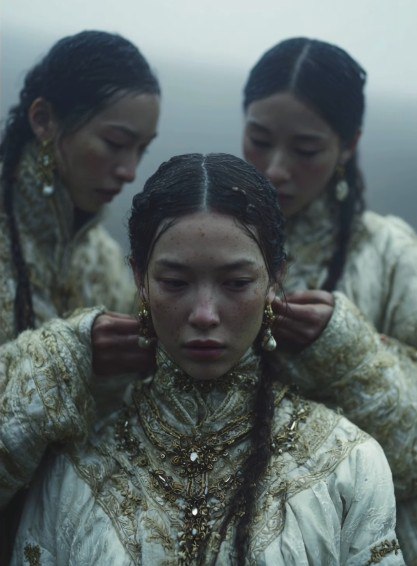
@ilona_brazhnik

TCA: The tattoo trend seems to have quieted. Is that your impression too?

Brazhnik: Absolutely. The hype has passed. There was a time when everyone was getting tattooed just for the sake of it. Now, people are more thoughtful. They take their time, consult with others, and carefully choose their designs. The “everyone’s doing it, so I will too” trend ended around eight years ago.

TCA: You’ve transitioned to AI and now earn money creating videos?

Brazhnik: You could put it that way. There’s definitely demand for AI-generated content. But I didn’t start doing it for the money, I just found it interesting. When people started to respond positively to my work, I thought, why not?

TCA: Your videos are visually striking. How much does a project like that cost?

Brazhnik: It depends on the complexity. Is it a brand advertisement or a fantasy story? Do you need to showcase clothing, jewelry, or a specific location? Will the same character appear throughout? And of course, duration matters. I can only quote a price once I receive the technical brief.

TCA: Are brand commissions more expensive?

Brazhnik: Not necessarily. I never charged tattoo clients more just because they could afford it. It depends on the task. Brand work is usually more technically demanding. AI doesn’t like repetition; it redraws objects each time, so logos, packaging, and inscriptions often need to be added manually. I once made a video where glasses were disassembled into ornaments and then reassembled. When asked to replicate it, it took 20-30 failed attempts. AI just doesn’t do “exactly the same.”

TCA: Did you start making videos to grow your TikTok and monetize content?

Brazhnik: In Kazakhstan, you can’t earn money from views on TikTok. The only monetization is through livestreams, donations, and gifts, and that’s not for me. I can’t even imagine doing it. I’d probably need another pseudonym to go live.

TCA: So, you work under a pseudonym now?

Brazhnik: Yes. My real name is Alena. The pseudonym helped me step into the public eye. I used to have a regular job, didn’t use social media, and didn’t share anything personal. But I wanted to express myself creatively. So, I chose: stay hidden or come forward. Ilona was born. Alena is reserved; Ilona is creative and media-savvy.

@ilona_brazhnik

TCA: Be honest, are you real, or is Ilona a fictional persona created by a team?

Brazhnik: (Laughs.) I’m real. You can check: scroll down my feed, and you’ll see it used to be a personal account with old photos. I never deleted them.

TCA: With the rise of neuro-actresses, are you concerned people might confuse you with them?

Brazhnik: I understand the concern. But neuro-characters are still distinguishable, at least to me. I once did a neuro-photo session using my face. It looked realistic to others, but I could tell it wasn’t me.

TCA: Your videos feature complex lighting and camera angles. Where did you learn that?

Brazhnik: My tattoo work taught me. For ten years, I photographed clients after their sessions. You learn how to light a shot, position the subject, and make the design look appealing.

TCA: Fog is notoriously hard to render in graphics, yet you use fog and underwater scenes. What’s most challenging for AI to generate?

Brazhnik: Water movement. Simple swimming is fine, but realistic motion with splashes is hard. I did a scene for a fitness club, someone swimming beside a dolphin. Nothing looked right. Limbs moved like propellers, and physics broke down. Fast movements are still difficult. Birds flapping their wings look off, though gliding birds are fine. But that’s for videos made from still photos, which is what I work with. Videos generated from scratch might fare better. Interestingly, AI handles animal movement better than humans.

TCA: One of your videos shows a knight in pierced chainmail with a cat on his shoulder, like a short film on loneliness. Have you submitted such works to AI festivals?

Brazhnik: Not yet, but I plan to. I heard about a competition in Dubai. Maybe I’ll enter.
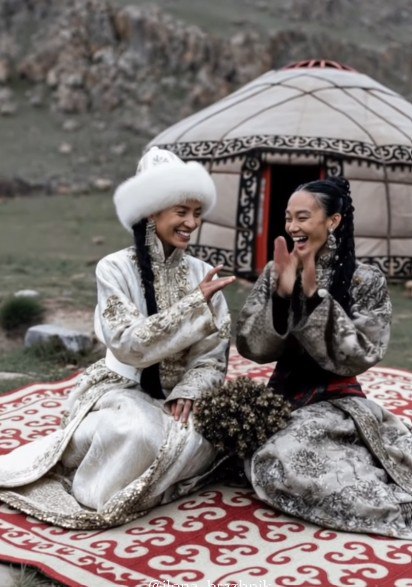
@ilona_brazhnik

TCA: Many AI creators say neural networks struggle with Kazakh ornaments. Yet your work includes many. How do you manage it?

Brazhnik: I often add them manually. Sometimes AI gets close, but usually it’s off. For accurate Kazakh decorations, I use Photoshop, AI assistance, or draw by hand. The issue is the training data; AI has lots of Chinese elements, but very little Kazakh content. We don’t have enough users uploading such images.

TCA: You have a video featuring Tuyaqty Kyz (Tұяқты қыз), a girl with hooves. How did you achieve that effect?

Brazhnik: At first, AI didn’t get it. It showed furry slippers, paws, everything except hooves. Then I found a photo of hoof-shaped shoes in a museum. That helped. I used them as a visual reference and explained, “These are the shoes.” Then the AI understood.

TCA: Does your work get stolen often? Is there any protection?

Brazhnik: It happens a lot. Someone recently downloaded my mermaid video, removed my signature, and posted it as their own. Social media platforms are better now at detecting plagiarism, and exact copies are less likely to spread. I get alerts when someone reposts my work. If they credit me, great, it boosts exposure. But stealing for profit is frustrating. Legally, the only protection is copyright registration.

TCA: You were born in Karaganda, spent your childhood in Almaty, and now live in Astana. Which feels like home?

Brazhnik: Astana. I like its pace; everyone is moving, working, doing something. Almaty is more laid-back; I go there for the mountains. Karaganda is dear to me too. I suppose I’ll always be a Karaganda girl at heart.

TCA: What do you dream of as an artist?

Brazhnik: Freedom. The freedom to express myself, to show people my inner world. To tell my story, to show my soul, and to be understood. That’s what I dream of.