• KGS/USD = 0.01144 0%
  • KZT/USD = 0.00210 0%
  • TJS/USD = 0.10528 0.19%
  • UZS/USD = 0.00008 0%
  • TMT/USD = 0.28571 0.28%
  • KGS/USD = 0.01144 0%
  • KZT/USD = 0.00210 0%
  • TJS/USD = 0.10528 0.19%
  • UZS/USD = 0.00008 0%
  • TMT/USD = 0.28571 0.28%
  • KGS/USD = 0.01144 0%
  • KZT/USD = 0.00210 0%
  • TJS/USD = 0.10528 0.19%
  • UZS/USD = 0.00008 0%
  • TMT/USD = 0.28571 0.28%
  • KGS/USD = 0.01144 0%
  • KZT/USD = 0.00210 0%
  • TJS/USD = 0.10528 0.19%
  • UZS/USD = 0.00008 0%
  • TMT/USD = 0.28571 0.28%
  • KGS/USD = 0.01144 0%
  • KZT/USD = 0.00210 0%
  • TJS/USD = 0.10528 0.19%
  • UZS/USD = 0.00008 0%
  • TMT/USD = 0.28571 0.28%
  • KGS/USD = 0.01144 0%
  • KZT/USD = 0.00210 0%
  • TJS/USD = 0.10528 0.19%
  • UZS/USD = 0.00008 0%
  • TMT/USD = 0.28571 0.28%
  • KGS/USD = 0.01144 0%
  • KZT/USD = 0.00210 0%
  • TJS/USD = 0.10528 0.19%
  • UZS/USD = 0.00008 0%
  • TMT/USD = 0.28571 0.28%
  • KGS/USD = 0.01144 0%
  • KZT/USD = 0.00210 0%
  • TJS/USD = 0.10528 0.19%
  • UZS/USD = 0.00008 0%
  • TMT/USD = 0.28571 0.28%

Aliyev–Tokayev Talks Rekindle Momentum for Trump’s Peace Corridor

Azerbaijani President Ilham Aliyev’s state visit to Kazakhstan this week highlights the deepening strategic alignment between the two Caspian neighbors. Both are united by a drive to reshape Eurasia’s transport map through the Middle Corridor — a trans-Caspian route linking Central Asia to Europe — and its politically sensitive South Caucasus extension, the Zangezur Corridor.

The meeting comes amid renewed optimism following the August 2025 U.S.-brokered declaration between Armenia and Azerbaijan. The accord envisions a transit route linking mainland Azerbaijan with its Nakhchivan exclave via a roughly 20-32 km stretch of Armenia’s Syunik region. Under the framework, the United States would receive exclusive long-term development rights for infrastructure (railways, pipelines, fibre-optic cables) on that corridor — while Armenia retains full territorial sovereignty and the route operates under Armenian law.

U.S. President Donald Trump, who hosted the White House summit that produced the deal, said: “Thirty-five years they fought, and now they’re friends and they’re going to be friends for a long time.” The project is also known as the “Trump Route for International Peace and Prosperity” (TRIPP),

From Framework to Reality

TRIPP remains far from implementation: Armenia and Azerbaijan still must ratify the agreement as a binding treaty, finalize the terms of U.S. development rights, and attract major investment for rail, energy and digital networks. Meanwhile, peace between the two remains fragile.

Resistance from Iran, wary of being bypassed, and Russia, whose influence has waned since the war in Ukraine, complicates progress. Turkey’s backing, as a champion of trans-Turkic connectivity, will be crucial. Whether the “peace route” becomes operational or stalls as another geopolitical mirage depends on political consensus and sustained stability.

A Trans-Caspian Lifeline

For Aliyev and President Kassym-Jomart Tokayev, these uncertainties strengthen the case for deeper transport cooperation. During the visit, the two leaders will focus on transport integration, energy transit, and digital infrastructure, with attention to coordination among the Aktau, Kuryk, and Baku ports, building on existing MoUs and ongoing Middle Corridor initiatives.  Discussions will also cover customs digitization and rail interoperability along the Trans-Caspian International Transport Route (TITR).

Although the Zangezur Corridor is not formally on the agenda, diplomats in both capitals suggest it looms large behind the logistics talks. For Kazakhstan, a functioning Zangezur link would tighten its connection to Turkish and European markets, reducing dependence on routes that traverse Russian or Iranian territory. For Azerbaijan, it would complete the east–west chain that underpins Baku’s Middle Corridor strategy — linking the Caspian directly to the Mediterranean through a unified Turkic transport system.

For Kazakhstan, the Middle Corridor represents a strategic alternative to disrupted Russian transport routes, preserving the continuity of its westward trade and reinforcing its role as a key Eurasian transit state. The route—linking Kazakhstan across the Caspian Sea to Azerbaijan, and continuing through Georgia and Turkey—provides access to European markets while reducing dependence on northern pathways. For Azerbaijan, it consolidates its position as a central hub connecting the Turkic world to global trade networks.

Presidents Kassym-Jomart Tokayev and Ilham Aliyev have both framed the Middle Corridor as a cornerstone of regional connectivity and stability. Tokayev emphasized Kazakhstan’s commitment to expand the route’s capacity, noting that “4.5 million tons of cargo were transported along this route last year … we aim to reach 10 million tons in the near future” (AzerNews). Aliyev described the corridor as playing a “key role in ensuring stable and efficient connectivity between Azerbaijan and Kazakhstan,” underlining Baku’s ambition to serve as a central hub connecting the Turkic world to global markets.

The Zangezur Link

Though absent from the official program, the Zangezur Corridor — the planned route through southern Armenia — remains the missing link in the east–west transport chain from Ankara to Almaty. For Kazakhstan, the project would shorten supply lines and enhance predictability across politically sensitive regions. As Farid Shafiyev, Chairman of the Baku-based Center of Analysis of International Relations (AIR Center), writes in the Times of Central Asia, Central Asian states “have long sought secure, diversified links to Europe,” especially as “Russia’s war has made northern routes through its territory unreliable.” By connecting to the Caucasus network through Azerbaijan, Kazakhstan and its neighbors would gain a more stable and direct path to European markets.

The project remains delicate, with Armenian Prime Minister Nikol Pashinyan calling the agreement “a significant milestone in Armenia–Azerbaijan relations,” and affirming that new transport links will function “based on the principles of sovereignty, territorial integrity, and jurisdiction.” Azerbaijan, meanwhile, continues to push for unimpeded passage linking its mainland with Nakhchivan. The U.S. role as developer and facilitator under the TRIPP framework adds a new geopolitical layer, expanding Washington’s influence in a region watched closely by Moscow and Tehran.

Strategic Calculus and the Turkic Energy Nexus

The Aliyev–Tokayev partnership is driven by expanding energy ties and shared Turkic integration goals. Kazakhstan is routing more oil through Azerbaijani pipelines and ports, diversifying beyond its northern links. Baku solidifies its role as a Caspian–Black Sea hub, with both states advancing cooperation in a region where Moscow remains an influential actor.

Both leaders coordinate through the Organization of Turkic States (OTS) to harmonize customs, tariffs, and multimodal logistics — turning corridor development into a vehicle for collective economic resilience.

For Azerbaijan, cooperation with Kazakhstan solidifies its role as the South Caucasus’s connectivity leader and bridge between Asia and Europe. For Kazakhstan, it adds redundancy to trade routes and reduces dependence on Russian infrastructure constrained by sanctions.

Yet corridor diplomacy remains sensitive. Iran fears exclusion, Russia resists diminished influence, and Western powers see an opportunity to anchor the South Caucasus in a rules-based framework. The interplay of these interests will shape Eurasia’s emerging trade map.

Looking Ahead

As Aliyev and Tokayev meet, the convergence of energy, transport, and diplomacy signals a wider realignment across the Caspian basin. The Middle Corridor — and its southern extension through Armenia — is more than a logistics project: it is a test of whether regional actors, backed by global powers, can transcend old conflicts to build a new architecture of cooperation.

If successful, the Aliyev–Tokayev partnership could position the Caspian as a bridge rather than a boundary — a step toward a more connected Eurasia. If legal ambiguities or geopolitical rivalries persist, corridor diplomacy may remain a vision deferred — another missed opportunity at the crossroads of continents.

Bottlenecked: Eurasia’s Freight Lifelines Falter

Amid heightened geopolitical tensions and stricter border regulations, key transit routes linking China and Europe via Kazakhstan and Belarus have experienced severe disruptions. The resulting bottlenecks have exposed the fragility of Eurasian logistics and cast doubt on the reliability of the overland corridors central to China’s Belt and Road Initiative.

From Military Maneuvers to Transport Gridlock

For over two decades, Kazakhstan has invested heavily in developing its transit potential, aiming to become the main bridge between China and Europe. But in September and October this year, logistical bottlenecks began to appear, chiefly at border crossings.

The disruptions were triggered by the closure of Belarusian‑Polish checkpoints following the launch of the Zapad 2025 military exercises (12‑16 September 2025) conducted by Russia and Belarus. On September 12, the day the exercises began, Poland suspended road and rail traffic after drones reportedly entered its airspace.

Belarus claimed the drones had veered off course due to electronic warfare measures involving Russia and Ukraine. Despite this explanation, Poland invoked Article 4 of the NATO charter, prompting the alliance to launch Operation Eastern Sentry to bolster its eastern flank.

The closure lasted nearly two weeks, during which more than 130 freight trains from China, carrying cargo worth billions of euros, were stranded.

The China Factor and Limited Alternatives

China responded diplomatically: on 15 September, Foreign Minister Wang Yi held talks in Warsaw; on 22 September, Politburo member Li Xi visited Minsk. Despite these efforts, border reopening was not immediately expedited.

Alternative routes proved inadequate. The Trans‑Caspian International Transport Route (Middle Corridor) — through Kazakhstan and the Caspian Sea — is growing but still modest in capacity. In 2022 its potential was assessed at around 80,000 TEU annually. Some forecasts estimate it may rise to 10 million tons per year by 2027, but it remains well short of the volumes handled by the northern rail corridor.

According to Logistan, the route currently has a monthly capacity of under 10,000 TEU, far short of the 40,000 TEU demand. The World Bank estimates that upgrading Middle Corridor infrastructure will require $27-$29 billion over 15 years, primarily for rail and port development.

Amid these limitations, China tested a new maritime option: in September, an ice-class container vessel departed Ningbo-Zhoushan for the UK via the Northern Sea Route. The move indicates Beijing’s growing interest in Arctic alternatives to land corridors.

Kazakhstan-Russia Hubs and “Gray” Transit

As disruptions continued on the western flank, issues emerged in the south. Since mid-June, Russian logistics companies have reported delays at Kazakhstan’s border crossings. Kazakhstan’s Ministry of Finance attributed the slowdowns to increased inspections aimed at intercepting counterfeit goods. Forbes reported that roughly 7,000 trucks, carrying Chinese cargo worth hundreds of millions of dollars, were stranded. Many shipments used simplified declarations, often disguised as textiles or raw materials, and sometimes included dual-use items.

Despite denials from both Kazakh and Russian authorities, freight companies cited congestion stretching for kilometers. The situation worsened after Russia imposed new migration rules restricting Kazakh drivers to 90 days of stay per year. The Kazakh government appealed to the Eurasian Economic Commission, and an exemption was agreed earlier this month.

China-Kazakhstan Border: A New Wave of Delays

In early October, further delays hit the China-Kazakhstan border. Kazakhstan’s Ministry of Finance reported that domestic carriers had exhausted their quota of border crossing permits. The Ministry of Transport later announced an agreement with Beijing to exchange 6,000 permits weekly.

Meanwhile, Kazakhstan Railways temporarily halted shipments of grain and ore through the Dostyk-Alashankou checkpoint, citing congestion caused by the buildup of hundeds of trains.

China also imposed new tax regulations, requiring export agents to provide full documentation, including manufacturer details and formal invoices (fapiao). In the absence of this information, taxes are levied on the total value of the cargo as if it were the agent’s income.

Stress Test for Stability

These widespread disruptions across Eurasia highlight the extreme interdependence of nations involved in transit. Any political or regulatory misalignment can quickly trigger a domino effect from Minsk to Dostyk.

An analyst from Logistan described the situation as “a media-driven issue,” suggesting that such border congestion is cyclical and indicative of administrative hurdles rather than diplomatic fallout.

Nonetheless, the events of recent months underscore the vulnerability of Eurasia’s overland transit routes. Despite substantial investment, the Belt and Road Initiative could devolve into a patchwork of logistical bottlenecks unless participating countries achieve greater political coordination and regulatory transparency.

Pipelines Under Pressure: Ukraine War Hits Kazakhstan Energy Arteries

The ongoing war between Ukraine and Russia continues to have indirect but notable implications for Kazakhstan’s energy sector. Following the September drone attack in Russia’s Novorossiysk that damaged the offices of the Caspian Pipeline Consortium (CPC) – which exports the majority of Kazakhstan’s oil – another incident has raised concern: the October 19 strike on Russia’s Orenburg Gas Processing Plant, which handles gas from Kazakhstan’s Karachaganak field.

The CPC confirmed that its export terminal continued operating after the September 24 incident, though two employees were injured and part of its office complex was damaged. The consortium remains the backbone of Kazakhstan’s oil exports, handling over 80% of national crude shipments to world markets. This concentration has long been viewed as a vulnerability because nearly all flows depend on infrastructure inside Russian territory. The war has underscored that risk, prompting Astana to accelerate plans for alternative routes across the Caspian Sea toward Azerbaijan and Georgia. Astana has been working with Baku and Tbilisi to expand capacity along the Trans-Caspian International Transport Route (Middle Corridor), supported by EU and World Bank funding commitments.

Kazakhstan’s Ministry of Energy confirmed that the plant, located about 150 kilometers northwest of Kazakhstan’s Karachaganak field across the Russian border, was temporarily shut down following the UAV strike. “According to information from PJSC Gazprom, on October 19, 2025, an emergency situation occurred at the Orenburg gas processing plant as a result of a UAV attack, in connection with which the plant temporarily stopped receiving raw gas from the Karachaganak field.”

The Ministry added that gas supplies to domestic consumers remain unaffected and that consultations are underway with field operators to assess potential disruptions and losses. No details on the extent of the damage or repair timelines have been released by the Russian side. Ukraine’s military confirmed responsibility for the attack as part of its campaign against Russian energy infrastructure, according to statements reported by Interfax-Ukraine and Ukrainska Pravda.

Industry analysts, however, remain cautious. Journalist Oleg Chervinsky noted that the Orenburg plant processes up to nine billion cubic meters of Karachaganak gas annually, a portion of which is returned to Kazakhstan’s northern regions. He warned that a prolonged shutdown could lead to supply shortages, particularly during the winter months. The timing of the Orenburg attack – just before the start of the heating season – adds a seasonal risk dimension.

Olzhas Baidildinov, an expert in the energy sector, criticized delays in constructing a domestic gas processing facility at Karachaganak, arguing that reliance on foreign infrastructure heightens Kazakhstan’s vulnerability to regional conflict and economic disruptions. The replacement of damaged equipment, including components from France’s Technip, could also be complicated by sanctions and supply chain issues, ultimately impacting tariffs and consumer costs.

The cumulative effect of reduced gas processing capacity and potential production slowdowns at Karachaganak could weigh on Kazakhstan’s already strained budget. While some observers note that reduced output may help the country align with its OPEC+ production commitments, previously exceeded at major fields including Kashagan, Tengiz, and Karachaganak, such compliance comes at the expense of export revenue.

In this context, Astana’s muted diplomatic posture toward Kyiv may reflect a broader strategy of balancing competing priorities amid geopolitical and economic uncertainty. The Kazakh government has not publicly criticized drone attacks by Kyiv, and has maintained a neutral stance on the conflict, refusing to recognize the self-proclaimed “quasi-state territories” of Luhansk and Donetsk republics, and restricting the re-export of sanctioned or dual-use goods to Russia.

The Orenburg facility, built in Soviet times and operated by Gazprom Pererabotka, is crucial for both Russia and Kazakhstan. It processes up to nine billion cubic meters of gas annually from Karachaganak – about one-third of the field’s total output – and returns a portion of the processed gas to Kazakhstan for domestic use.

The disruption highlights Kazakhstan’s dependence on Russian downstream infrastructure. Because the Karachaganak field produces both oil and large volumes of associated gas, any interruption in gas processing can indirectly constrain oil production. A reduction in gas intake at Orenburg therefore risks curtailing liquids output as well.

Discovered in 1979, Karachaganak was developed in the mid-1980s, and is now operated by the KPO consortium, comprising KazMunayGas (10%), Eni (29.25%), Shell (29.25%), Chevron (18%), and LUKOIL (13.5%). The field contributes roughly 15% of Kazakhstan’s total hydrocarbon production.

Earlier this year, a joint Russian–Kazakh LPG venture associated with Orenburg suspended operations because of EU restrictions on Russian propane and butane exports, underlining the impact of sanctions on cross-border energy projects.

The sequence of attacks on energy infrastructure underscores how the Russia–Ukraine war has spilled over into broader regional energy systems. Kazakhstan’s multi-vector diplomacy – maintaining balanced relations with both Moscow and Kyiv while accelerating alternative export routes – reflects a pragmatic effort to shield its economy from conflict spillover and to balance geopolitical risk against economic necessity.

Kazakhstan Launches Electronic Queue System at Border Crossing with Kyrgyzstan

Kazakhstan is expanding the use of its CarGoRuqsat electronic queue system at border crossings with neighboring countries, aiming to streamline freight transport. The system allows transport operators to pre-book border crossing times online or via a mobile app, making the process more efficient and predictable.

Beginning October 20, CarGoRuqsat will be implemented at the Karasu checkpoint on the Kazakh-Kyrgyz border, according to the State Revenue Committee of Kazakhstan’s Ministry of Finance.

The move has been welcomed by Kyrgyz freight operators, who in recent years have faced multi-day delays at the border, often while transporting perishable agricultural goods. The electronic system is expected to ease these bottlenecks and improve the overall efficiency of cross-border logistics.

CarGoRuqsat is part of Kazakhstan’s broader digitalization initiative across its borders with member states of the Eurasian Economic Union (EAEU), which includes Armenia, Belarus, Kazakhstan, Kyrgyzstan, and Russia. The system is already operational at Kazakhstan’s borders with China, Uzbekistan, Turkmenistan, Russia, and Kyrgyzstan. Since its launch, more than 500,000 trucks have used the platform across 33 border crossings with EAEU countries.

A similar initiative has also been introduced on the Kyrgyz-Uzbek border. As previously reported by The Times of Central Asia, an Electronic Queue Management System (e-QMS) was recently launched at the Dostuk checkpoint, the main crossing between Kyrgyzstan and Uzbekistan on the Osh-Andijan highway.

That system, like CarGoRuqsat, enables drivers to reserve crossing slots digitally, reducing wait times, easing congestion, and improving the reliability of transit.

Crimes Against Individuals Decrease in Kazakhstan

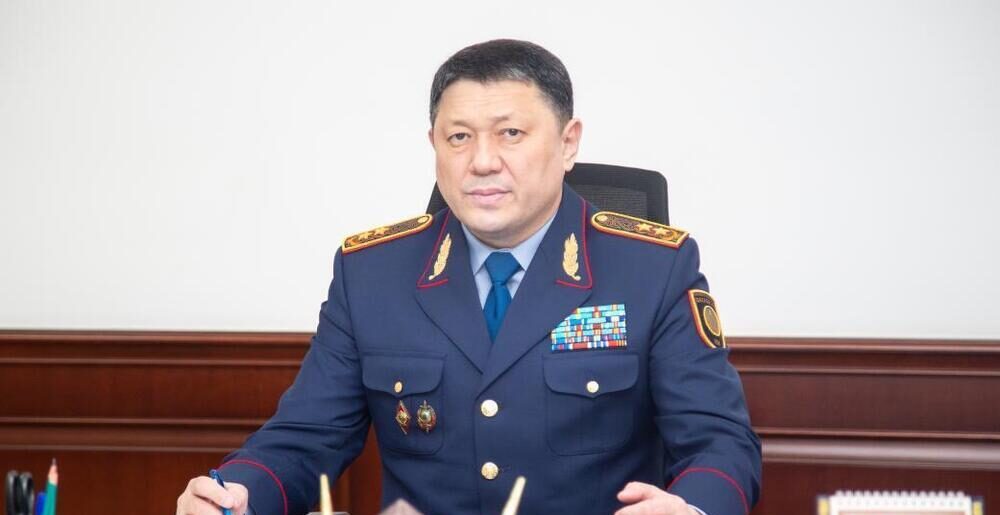
Kazakhstan’s Minister of Internal Affairs Yerzhan Sadenov has reported a decline in serious crimes and public offenses for the January-September 2025 period. According to Sadenov, comprehensive measures implemented by the Ministry of Internal Affairs have produced tangible results: overall crime fell by 7%, a reduction of 6,000 cases, compared to the same period in 2024.

Declines were recorded across key categories, including murder, grievous bodily harm, robbery, assault, hooliganism, and theft. Offenses committed in streets and other public spaces also decreased.

“The main thing is people’s safety: fewer crimes against individuals means greater protection for citizens,” the minister said.

The ministry also reported progress in dismantling criminal organizations. Over the past nine months, 70 criminal cases have been initiated against organized crime groups, including 13 transnational operations, with 248 individuals brought to justice. Priorities include combating illegal extraction of natural resources and ensuring the security of freight transport.

Road safety remains a top concern: more than 26,000 traffic accidents have been recorded so far in 2025, although the number of fatalities has decreased. Meanwhile, efforts to prevent domestic violence have intensified. In the same period, over 70,000 protective orders were issued, and 6,500 women and children were referred to crisis centers.

To strengthen crime prevention and response, Sadenov has called for broader implementation of digital tools, the development of operational control centers, and improved crime detection rates.

Kazakhstan has also expanded its surveillance infrastructure. As previously reported by The Times of Central Asia, more than 19,000 AI-enabled CCTV cameras have been installed nationwide, enabling law enforcement to respond more quickly to incidents.

Kazakh Surgeons Use MAKO Robotic System in Tashkent for the First Time

Kazakh surgeons have performed groundbreaking joint replacement procedures in Uzbekistan’s capital Tashkent using the MAKO robotic system, an advanced technology in orthopedic surgery. The operations were a centerpiece of the event ‘Days of Kazakh Medicine in Uzbekistan’.

A surgical team led by traumatologist-orthopedist Timur Baidalin, head of the endoprosthetics department at the Batpenov National Scientific Center for Orthopedics and Traumatology, successfully conducted two joint replacements, one knee and one hip, using the MAKO robotic assistant. The system enables surgeons to plan and execute procedures with exceptional precision and reduced risk of complications.

Developed by the U.S. based company Stryker, the MAKO system functions as an intelligent surgical assistant using 3D modeling technology. It creates a virtual replica of the patient’s joint, allowing the surgical team to pre-calculate the optimal implant angle, depth, and trajectory.

During the procedure, the surgeon guides the MAKO manipulator, which operates with micromillimeter accuracy. This significantly lowers the risk of tissue damage and extends the lifespan of the implanted prosthesis.

“The main advantage of MAKO is the ability to combine the surgeon’s experience with machine precision. This sets a new standard in endoprosthetics,” said Baidalin.

For Uzbek specialists, the event served as a hands-on masterclass. In addition to observing the procedures, local doctors operated the system under the supervision of the Kazakh team.

“We’ve been anticipating this technology for a long time. Today, we not only saw it in action but experienced the difference. This is a milestone for Uzbek orthopedics, and we’re grateful to our Kazakh colleagues for the opportunity to gain this experience,” said Odil Valiev, head of the adult orthopedics department at Uzbekistan’s Republican Specialized Scientific and Practical Center for Traumatology and Orthopedics.

This collaboration follows another recent highlight: in spring 2025, Kazakh specialists from UMC, led by cardiac surgeon Yuri Pii, presented the ALEM device at EXPO 2025 in Osaka. The technology enables the long-term preservation of donor organs and represents another significant advance in regional medical innovation.