• KGS/USD = 0.01144 0%
  • KZT/USD = 0.00192 -0%
  • TJS/USD = 0.10879 0.28%
  • UZS/USD = 0.00008 0%
  • TMT/USD = 0.28571 0%
  • KGS/USD = 0.01144 0%
  • KZT/USD = 0.00192 -0%
  • TJS/USD = 0.10879 0.28%
  • UZS/USD = 0.00008 0%
  • TMT/USD = 0.28571 0%
  • KGS/USD = 0.01144 0%
  • KZT/USD = 0.00192 -0%
  • TJS/USD = 0.10879 0.28%
  • UZS/USD = 0.00008 0%
  • TMT/USD = 0.28571 0%
  • KGS/USD = 0.01144 0%
  • KZT/USD = 0.00192 -0%
  • TJS/USD = 0.10879 0.28%
  • UZS/USD = 0.00008 0%
  • TMT/USD = 0.28571 0%
  • KGS/USD = 0.01144 0%
  • KZT/USD = 0.00192 -0%
  • TJS/USD = 0.10879 0.28%
  • UZS/USD = 0.00008 0%
  • TMT/USD = 0.28571 0%
  • KGS/USD = 0.01144 0%
  • KZT/USD = 0.00192 -0%
  • TJS/USD = 0.10879 0.28%
  • UZS/USD = 0.00008 0%
  • TMT/USD = 0.28571 0%
  • KGS/USD = 0.01144 0%
  • KZT/USD = 0.00192 -0%
  • TJS/USD = 0.10879 0.28%
  • UZS/USD = 0.00008 0%
  • TMT/USD = 0.28571 0%
  • KGS/USD = 0.01144 0%
  • KZT/USD = 0.00192 -0%
  • TJS/USD = 0.10879 0.28%
  • UZS/USD = 0.00008 0%
  • TMT/USD = 0.28571 0%
12 December 2025

Almaty to Issyk-Kul Flights Open Scenic Cross-Border Gateway

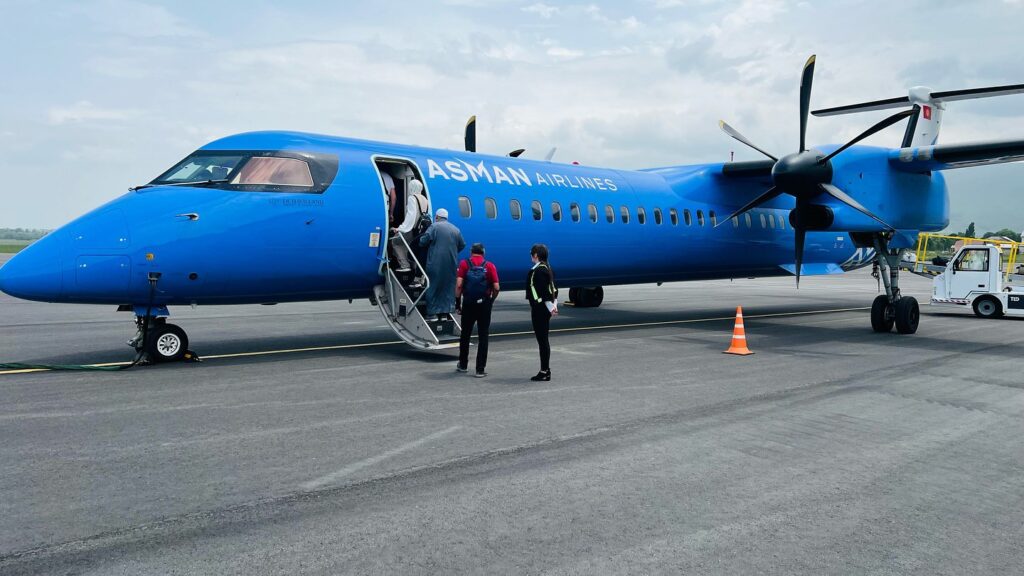
Regular passenger flights now link Almaty, Kazakhstan’s largest city, to Lake Issyk-Kul, Kyrgyzstan’s premier tourist destination. The new air service was launched by Kyrgyzstan’s Asman Airlines on June 27, according to Kazakhstan’s Ministry of Transport. The airline will operate two weekly flights, on Mondays and Fridays, between Almaty and Tamchy airport, located on the lake’s northern shore. Kazakhstan’s low-cost carrier Fly Arystan is also set to launch direct flights between Almaty and Issyk-Kul, beginning July 3. These flights will run twice a week, on Thursdays and Sundays.

Lake Issyk-Kul remains a favored summer destination for tourists across the region, particularly among Almaty residents seeking weekend getaways. The new air routes are expected to improve access for travelers from southern Kazakhstan, significantly reducing travel time and simplifying logistics during the peak tourist season.

The Asman Airlines flight between Almaty and Issyk-Kul takes approximately one hour and 20 minutes. Previously, travelers had to drive over 460 kilometers via Bishkek, a journey that typically took about eight hours.  Efforts to shorten this overland route continue.

The Times of Central Asia recently reported on the advancement of a long-discussed highway project aimed at directly linking Almaty to Issyk-Kul. Although the two locations are only 80 kilometers apart in a straight line, mountain ranges force travelers to detour through the Kyrgyz capital.

The lake has also become more accessible to tourists from Uzbekistan. On June 22, Uzbek budget airline Fly Khiva launched regular flights from Tashkent to Tamchy. These flights will operate every Sunday through August 10, 2025.

Uzbekistan Extends Sentences for Religious Prisoners Amid Longstanding Security Fears

Two Muslim prisoners of conscience in Uzbekistan — both previously jailed for nonviolent religious activity — have had their sentences extended in recent months under charges that human rights observers describe as vague and politically motivated. While the cases have drawn criticism from international monitors, they also highlight the Uzbek government’s enduring fears over political Islam, concerns shaped by geography, history, and national security calculations.

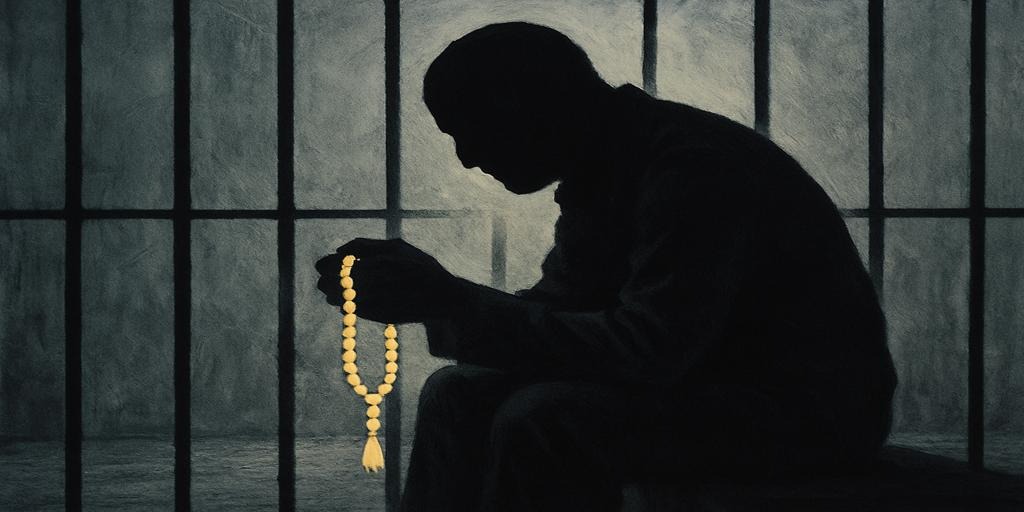
Tulkun Astanov, a 54-year-old activist originally imprisoned in 2020 for defending the rights of fellow Muslims, was sentenced to an additional three years and two months in a strict-regime labor camp this May. Authorities accused him of refusing to attend morning exercises in prison and of disobeying lawful orders. Astanov, who has suffered multiple strokes in custody, submitted a written request to be excused from physical activity on medical grounds — documentation which was reportedly dismissed by prison officials. His family and legal counsel contend the new case was fabricated to prevent his scheduled release later this year. The U.S. State Department has documented repeated concerns about his treatment in its 2022 International Religious Freedom Report.

A second prisoner, Fariduddin Abduvokhidov, 30, was arrested in 2020 after participating in private Islamic study circles. He was originally given an 11-year sentence, but earlier this year, his term was extended twice: by ten years in March and an additional year in April. According to his family, the new charges relate to alleged “religious propaganda” while in detention. They say he was not fully informed of the basis of the charges and declined to appeal, citing emotional fatigue and lack of faith in the process.

International monitors, including Human Rights Watch, have raised alarm about Uzbekistan’s use of vague extremism provisions to prosecute peaceful religious expression. Trials are often held behind closed doors, with little transparency or legal recourse for defendants. In both cases, court documents have not been made available to families or the public.

Uzbekistan shares a 144-kilometer border with Afghanistan, where groups like the Taliban and ISIS-K remain active. During the 1990s and early 2000s, Uzbekistan suffered violent attacks from the Islamic Movement of Uzbekistan (IMU), a jihadist group aligned with the Taliban and later al-Qaeda. Those experiences left a lasting impact on both policymakers and public opinion, contributing to an enduring suspicion of independent Islamic activism.

Several OECD democracies, including France, Belgium, and Austria, have enacted bans on face coverings in public. While controversial, those policies were introduced through public debate and are subject to judicial review. In Uzbekistan, by contrast, the lack of independent courts, competitive elections, and free media means that state regulation of religion is rarely subject to institutional checks.

Uzbekistan has made real progress in other aspects of governance. Since independence in 1991, the country has implemented reforms in public administration, economic policy, and digital infrastructure, and it is currently pursuing accession to the World Trade Organization. Engagement with the OECD and OSCE has also deepened.

For many observers, Uzbekistan’s evolution will be gradual, and should be allowed to proceed on its own terms. But the continued imprisonment of individuals like Astanov and Abduvokhidov underscores the lingering tension between state security and personal freedom. The question ahead is not whether Uzbekistan should protect itself from extremism, but whether it can do so while embracing the pluralism that defines a more open society.

At the same time, lasting democratic development will require not only rights and representation but also the consistent application of law and order. For Uzbekistan, the task is to build a system where security and justice reinforce — not undermine — each other.

Dynastic Politics Take Shape in Uzbekistan

More than a week after President Shavkat Mirziyoyev restructured Uzbekistan’s presidential administration — formally elevating his daughter, Saida Mirziyoyeva, to one of the most powerful posts in the country — the political ramifications are still unfolding. The move, which reintroduced the post of Head of the Presidential Administration and placed it in family hands, has drawn both domestic scrutiny and international attention for what it signals: the clearest step yet toward dynastic succession in post-Soviet Central Asia.

President Shavkat Mirziyoyev reinstated the position of Head of the Presidential Administration through a presidential decree. The office had previously been abolished in August 2023, but her appointment formalizes what had become an influential de facto position.

Since 2019, Saida Mirziyoyeva has steadily risen through the ranks of Uzbekistan’s political system, from deputy director of the Agency for Information and Mass Communications to head of the Information Policy sector, and most recently, First Assistant to the President.

Her meeting with the Russian presidential administration in June 2025 is seen as a sign of international positioning, with Moscow reportedly signaling that it would not oppose a dynastic transition as long as its strategic interests remain intact.

Analysts have pointed out that this appointment cements Saida’s formal role, casting her status within the government apparatus in stone and making any reversal unlikely. While some see this as a move toward a dynastic handover, others argue she still faces competition from within the elite.

One such rival is Otabek Umarov, the president’s son-in-law, who holds a powerful position in the Security Service and is considered the ‘gray cardinal’ of Uzbek politics.

In a dramatic twist, Komil Allamjonov — former head of the Information Policy Department and a close ally of Saida — has returned as her advisor. He previously resigned in September 2024 amid a reported feud with Umarov and survived an assassination attempt in October 2024.

His return is seen by many as a sign of Umarov’s waning influence, though analysts caution that he still retains significant power in security structures. The rivalry could deepen internal fractures within the ruling elite, raising the risk of future instability.

Opinion: Mirziyoyev’s Historic Visit Opens New Era for Uzbekistan-Mongolia Ties

Uzbekistan’s President Shavkat Mirziyoyev embarked on a historic journey to Mongolia on June 24-25, marking a significant milestone in the relationship between the two nations. This landmark visit, the first of its kind in over thirty years since the establishment of diplomatic ties, signifies a new era of collaboration and potential growth in Central Asia. Accompanied by his wife, Mirziyoyev was warmly received in Ulaanbaatar by Mongolian Foreign Minister Batmunkh Battsetseg and a host of other dignitaries. Their arrival set the stage for discussions aimed at unlocking vast opportunities for multifaceted cooperation and development, reflecting a shared vision for a prosperous future.

Despite the significant geographical distance that separates Uzbekistan and Mongolia, the two nations are witnessing a remarkable evolution in their bilateral relations. This burgeoning partnership spans several domains, including diplomacy, economics, transportation, culture, and humanitarian efforts. A pivotal moment in this relationship was marked by the recent inauguration of the Mongolian Embassy in Tashkent, which symbolizes a commitment to fostering closer ties. Additionally, the increased frequency of intergovernmental and interparliamentary dialogue reflects a shared ambition to enhance collaboration. The signing of 14 bilateral agreements further underscores a mutual desire to cultivate trust and strengthen the partnership, paving the way for a promising future.

In recent years, the partnership between Uzbekistan and Mongolia has experienced a remarkable surge in trade and investment. This dynamic growth is underpinned by a robust and multifaceted cooperation that spans numerous sectors, showcasing the commitment of both nations to strengthening ties. Between 2018 and 2023, trade between Uzbekistan and Mongolia experienced a significant increase, rising by more than 8.8 times. This impressive upward trajectory has continued into the early months of 2025, with preliminary data indicating a sustained expansion.

Uzbekistan exports a variety of goods to Mongolia, including vital agricultural and industrial products, while Mongolia has ramped up its livestock exports, enriching the trading landscape. The establishment of numerous joint ventures exemplifies, with many ventures operating in Uzbekistan featuring 100% Mongolian capital, primarily in the realms of trade and services. Both nations are actively identifying and pursuing opportunities for collaborative projects in critical areas, including logistics, agro-processing, and machinery manufacturing. A particular emphasis is placed on joint production initiatives in sectors such as leather, wool, and cashmere processing, as well as the fabrication of electrical equipment, machinery, and construction materials.

Agricultural cooperation is also a key focus, with plans for joint clusters and projects aimed at the processing and production of meat, dairy, wool, and leather products. Enhancing transport interconnectivity and developing innovative logistics routes are prioritized, with a direct air service between the capitals anticipated to be in place by the end of the year. Cultural and humanitarian exchanges are being fostered through initiatives such as the Days of Uzbek Culture, which take place in Ulaanbaatar, and the return of Mongolian students to Uzbek universities.

The recent meeting between the President of Uzbekistan and the President of Mongolia, Ukhnaagiin Khurelsukh, marked a significant step toward enhancing bilateral cooperation. Both leaders engaged in productive discussions aimed at strengthening the negotiation process. Mirziyoyev praised Mongolia’s noteworthy successes in implementing socio-economic reforms, highlighting how the country’s dedication to fostering a peace-loving foreign policy serves as a model for reliable cooperation.

Mongolia’s economy is currently experiencing remarkably high growth rates, a testament to its ongoing modernization efforts across key sectors, including industry, agriculture, and infrastructure. In particular, the large-scale reconstruction of the historic city of Karakorum is expected to make a substantial contribution to the nation’s development. As a result of its consistent, pragmatic, and dynamic international policy, Mongolia’s global standing is steadily rising.

During the discussions, the primary focus was on economic cooperation, with both leaders setting ambitious goals to significantly increase trade turnover in the coming years. This objective includes expanding the range and variety of products available for trade. A pivotal milestone towards achieving this is the establishment of the Uzbek Trading House, which will feature an exhibition hall in Ulaanbaatar, serving as a practical foundation for enhancing trade relations.

The successful organization of a Business Forum, alongside meetings held between Uzbek and Mongolian entrepreneurs before the visit, was highlighted positively. The leaders expressed satisfaction with the signing of new contracts and agreements and reinforced their commitment to fostering an environment that inspires entrepreneurship. Khurelsukh emphasized the importance of regional cooperation, agreeing that Uzbekistan and Mongolia are laying the groundwork for a comprehensive strategic partnership designed for mutual benefit and a positive-sum game. This burgeoning partnership is seen as having the potential not only to enhance bilateral relations but also to create new growth opportunities across the wider Central Asian region.

The leaders also agreed to promote cultural exchanges, planning joint concerts, exhibitions, film screenings, and participation in various festivals to deepen mutual understanding and friendship. In a demonstration of goodwill, Mirziyoyev expressed Uzbekistan’s eagerness to resume educational opportunities for Mongolian students at its leading universities. As part of their commitment to effective collaboration, both governments plan to adopt a comprehensive “roadmap” aimed at ensuring the timely execution of all mutually agreed-upon initiatives. In concluding his address, Mirziyoyev extended a warm invitation to Khurelsukh for an official visit, underscoring his desire to strengthen their partnership further.


The views expressed in this article are those of the author and do not necessarily reflect the official policy or position of the publication, its affiliates, or any other organizations mentioned.

Opinion: Beyond the Steppe and the Oasis – Uzbekistan and Mongolia Forge a New Eurasian Axis

When Uzbekistan’s President Shavkat Mirziyoyev arrived in Ulaanbaatar on June 24, for the first state visit of its kind in over thirty years of bilateral relations, it marked far more than a ceremonial milestone—it inaugurated a new continental bridge between Central and Northeast Asia. This long-overdue rapprochement, anchored in pragmatism and shared strategic aspirations, signals a transformative shift in Eurasian diplomacy.

It is a moment not just of bilateral relevance, but of regional consequence. The significance of this visit rests not only in its unprecedented nature, but also in its scope and timing. Concluding just a year after Mongolian President Ukhnaagiin Khurelsukh’s landmark 2024 visit to Tashkent—which laid the groundwork by opening Mongolia’s embassy in Uzbekistan and producing 14 foundational agreements—Mirziyoyev’s trip has formalized the momentum into a ‘Comprehensive Partnership Declaration’.

The outcomes include new trade commitments, transport corridors, cultural and academic ties, and a political alignment that subtly redraws the map of Eurasian cooperation.

Rediscovering Strategic Geography

What makes this partnership compelling is the rediscovery of geography in a post-globalization world. Uzbekistan and Mongolia are both landlocked, Uzbekistan doubly so, and lie at the crossroads of larger powers—Russia, China, and increasingly, the emerging economic spheres of South and West Asia.

For years, both nations were seen as peripheral actors in global politics. Today, however, shifting supply chains, energy diversification, and regional infrastructure projects such as China’s Belt and Road Initiative (BRI) have brought new relevance to their geography. This state visit demonstrated a clear strategic calculus of connectivity, resilience, and regional integration. With the rise of multi-vector diplomacy—long a staple of Mongolia’s foreign policy—Uzbekistan is mirroring similar principles to diversify its partnerships and mitigate geopolitical dependence.

In Mirziyoyev’s words, both countries “agreed to jointly develop efficient transportation routes,” echoing a growing realization that infrastructure is destiny. The immediate fruit of this understanding is the first direct air link between Tashkent and Ulaanbaatar, to be operated by Hunnu Air and Uzbek partners starting in fall 2025.

On the ground, both sides are accelerating the development of a road corridor via Kyrgyzstan and China, creating an East-West axis that could become a vital alternative to congested or politically fraught transit routes. In this regard, the Uzbek-Mongolian corridor aligns with academic assessments that argue for multimodal, decentralized connectivity in post-pandemic Eurasia.

Economic Diplomacy in Action

Although bilateral trade remains modest in volume—just $14 million in 2023—it is growing rapidly, nearly doubling year-on-year. More importantly, it is underpinned by complementary economies. Uzbekistan exports automobiles, textiles, and agricultural products, while Mongolia offers livestock, wool, leather, and minerals. This isn’t simply a matter of goods exchanged, but of value chains being stitched together. The presence of a Chevrolet dealership in Ulaanbaatar and the arrival of over 1,400 Mongolian sheep in Navoi region of Uzbekistan are not anecdotal oddities—they’re signs of a nascent, multidimensional trade ecosystem.

More than 150 companies participated in a bilateral business forum in Ulaanbaatar, resulting in new contracts and a decision to establish a ‘Joint Business Council’. Further, the agreements on investment protection and double taxation avoidance are in the pipeline, vital legal scaffolding for long-term investment and industrial collaboration. These include targeted areas such as mining, agricultural processing, textile manufacturing, and logistics hubs. The potential for livestock clusters, with Mongolian expertise and Uzbek veterinary infrastructure, represents a practical case of south-north agro-cooperation that is rare in continental Asia.

Such economic diplomacy is consistent with the recent shift toward regionally embedded growth strategies, highlighted in recent publications such as the Asian Development Outlook and CSIS. The narrative of “Eurasia rising” is no longer just Chinese-driven—it is now populated with middle powers like Uzbekistan and Mongolia asserting their agency.

Knowledge, Culture, and a Shared Past

Mirziyoyev’s visit also highlighted the human and historical dimension of the partnership. Uzbekistan has offered to increase educational quotas for Mongolian students and revitalize academic exchange, including through universities in Tashkent, Samarkand, and Urgench. Joint archaeological missions and cultural festivals—such as the Days of Uzbek Culture in Ulaanbaatar and Mongolian orchestras performing in Tashkent—serve as more than diplomatic niceties. They are vital threads in a civilizational reconnection between two peoples that once shared the routes of the Great Silk Road.

Indeed, this soft power investment aligns with broader regional aspirations. In both countries, eco-tourism and cultural tourism are gaining prominence. With Uzbekistan’s UNESCO-listed cities and Mongolia’s pristine steppe landscapes, a collaborative Ecotourism Action Plan has already been signed, including joint projects for nature reserves and conservation knowledge sharing.

This also fits with what scholars such as Peter Frankopan, in his book The Silk Roads, have long argued that Eurasia’s future depends on rediscovering the connective tissue of its past. By rooting their cooperation in shared heritage and mutual curiosity, Uzbekistan and Mongolia are fostering a partnership that is durable, not transactional.

Political Alignment and a Quiet Strategic Signal

The political alignment emerging from this visit is subtle but significant. Both nations are constitutionally neutral, but firmly support multilateralism, peaceful development, and regional dialogue. They collaborate in forums such as the United Nations and Shanghai Cooperation Organisation (SCO), and Mongolia has expressed interest in deeper ties with the Organization of Turkic States—where Uzbekistan is a key member.

In this context, the Uzbek-Mongolian declaration of comprehensive partnership is not aimed at countering any major power but at asserting autonomy. It contributes to the emerging architecture of what some scholars call “Eurasian middle diplomacy”—a model where mid-sized states collaborate laterally rather than solely through traditional great-power channels. For Mongolia, this relationship offers access to Central Asia’s population of over 75 million and a platform to reach the Persian Gulf, South Asia, and beyond through Uzbek infrastructure.

For Uzbekistan, it opens the door to East Asia via a partner that, while small in population, is geopolitically agile and resource-rich. It is a mutually empowering alignment, built not on dependence but on co-development.

Shared Environmental Challenges

Beyond trade and transport, both nations face acute environmental vulnerabilities—desertification, water stress, and climate volatility. The convergence of Uzbekistan’s “Yashil Makon” initiative with Mongolia’s “Green Belt” reforestation program indicates a willingness to jointly address ecological degradation. Scholars and climate institutions alike have called for greater cooperation across arid and semi-arid states in Eurasia.

This visit demonstrates such calls are being heeded. A particular area of collaboration could be pastureland rehabilitation, where Mongolian herders possess traditional knowledge and Uzbekistan can offer modern water management and remote sensing tools. This synergy could be critical in managing both climate adaptation and rural development, especially in fragile zones of both nations.

Looking Ahead

This visit has rightly been called historic—but its enduring value lies not in symbolism, but in systems. With a joint road map adopted, clear implementation mechanisms, and monitoring responsibilities assigned, the usual fate of high-level visits—diplomatic inertia—may well be avoided.

Of course, challenges remain. Trade volumes must be scaled up from millions to hundreds of millions. Transport corridors require security, funding, and inter-governmental synchronization. Further, bureaucratic inertia can also dilute private sector enthusiasm. But the political will, institutional alignment, and public enthusiasm on both sides offer a rare combination. In an era where de-risking, regional hedging, and economic fragmentation dominate global headlines, the Uzbekistan-Mongolia partnership offers a quiet but powerful counterpoint.

It is the story of two nations long on the periphery of international narratives, finally turning to each other and discovering opportunity in proximity. The path ahead is not without obstacles—but if nurtured, it may very well shape a new axis of Eurasian cooperation.


The views expressed in this article are those of the author and do not necessarily reflect the official policy or position of the publication, its affiliates, or any other organizations mentioned, including Samarkand State University.

Two Duishens: 60 Years of a Seminal Soviet Kyrgyz Film

Andrei Konchalovsky’s First Teacher, an adaptation of Chingiz Aitmatov’s famous work of the same name about an educator who undertakes the task of tutoring the kids in a remote Kyrgyz village, re-tailors the protagonist and the plot to convert a coming-of-age symphony into a triumph over tragedy while maintaining the book’s core values.

In one of the earlier frames of First Teacher (Konchalovsky, 1965), the well-meaning beggar-turned-Komsomol member Duishen tears into a young student who suggests that the impermanence of life might also apply to, besides everyone else, Lenin.

Duishen’s God-like reverence for the father of the Soviet experiment is also present in Chingiz Aitmatov’s novel of the same name. And yet, unlike the reserved and understanding protagonist of the book, who has the qualities if not qualifications of an educator and would’ve perhaps counselled the young one in the situation mentioned above, Konchalovsky’s teacher is an obstinate simpleton who is almost always on the edge and yearning for the village’s respect.

Inna Merkoulova and Marina Merkoulova, in their brilliant essay ‘The first teacher: A case of intersemiotic translation. When Chingiz Aitmatov’s short story becomes Andrei Konchalovsky’s film’ discuss how the movie adaptation is a case of intersemiotic translation by the director, wherein the work transforms from Aitmatov’s drama into Konchalovsky’s tragedy through the usage of various film techniques.

In fact, I believe that Duishen’s character undergoes a severe reinterpretation, from a Leninist disciple trying to do his bit for the Proletarian dictatorship by educating the kids in the book to a hot-headed agitator eager to force the Soviet will on the local populace in the film.

In this work, we’ll analyse how the ‘two Duishens’ manage to achieve their objectives and meet at a similar end despite existing in vastly different frameworks.

The ‘first Duishen’ from Chingiz Aitmatov’s book is sketched by an older Altynai, the Red Army soldier’s favourite disciple, who after achieving success as an academician in Moscow, looks back fondly at the bold Duishen of her childhood in the 1920s. A man who used the meagre resources at his disposal to become the village’s first educator. Someone who helped her achieve her potential.

Duishen’s teachings have an importance that is much greater than the bookish knowledge that the soldier imparts. Duishen’s education is an act of courage, for they come from a man who is barely literate himself, his teachings restricted to basic numerals, letters and political wordings.

But it assumes significance in the fact that Duishen shows the fortitude to overcome his circumstances, and becomes more than what fate had assigned him. Further, he indoctrinates the other illiterates, especially the weakest sections of a conservative society: women and children, to follow suit and take first steps towards their emancipation.

Aitmatov’s hero is moulded as a Soviet ideal, and sits closer to the cinematic Duishen’s imagination of ‘hundreds and thousands’ steel-like party members who would keep the revolution alive after Lenin’s demise.

He shows balanced wisdom in judgments, the heart of a soldier in peril, and an appreciation of the simpler things like the rich nature, which he shows by planting two Poplar trees in Altynai’s memory. When Altynai’s aunt seeks to harm her, the teacher uses his wit and becomes her de facto guardian, and looks after her best interests to the end.

The ’other Duishen’ from Andrei Konchalovsky’s film, which came nearly three years after the book, interacts with a village that is undergoing upheaval following the Soviet takeover in the early 20s. This is unlike the novel, set around the 50s-early 60s, where Duishen’s struggles are shown as an occurrence of the past. 

The narrative lens also shifts, from a sympathetic individual (Altynai) to a communal one, wherein the entire village or community becomes the perspective. The locals who are never quite sure of the nature of the Soviet regime, which gives them freedoms but at the same time puts restrictions on their traditional beliefs, direct their suspicions on the ‘New Soviet Man’, never at ease with his progressive principles.

This is a big difference, as in the book, the village as a whole doesn’t take extreme stances beyond the discussion on education.

Compounding the situation is Duishen’s character, which is of an unyielding ideologue who, as if by the force of will, wants to meld the village into the Soviet state. He is impulsive in his reactions and visceral in his tactics.

This clash of principles is best on display when Duishen mocks a former landlord, as a depraved oppressor, whereas the majority of the villagers cower before their former master. 

In this setup, while a few seek to instigate Duishen time and again, the majority merely want to stick to life as it has been. For Duishen, this primitive state is unacceptable. Thus, in an already tense situation, Duishen’s heads-on approach acts like a catalyst, adding fuel to the fire and giving the plot a tension that is generally lacking in the book.

Unlike the book’s Duishen, who was meant to symbolise hope amidst darkness, the film’s version is a corrosive agent representing intrusion and a clash of civilisations between the new pro-women’s Soviet power and the centuries-old ethno-religious traditions.

The characterisation and construction of the two ‘Duishens’ pitches the novel and its screen adaptation in opposition.

Altynai’s optimism, no doubt informed by her prestigious present, pervades into her recollection of the past in the former, whereas the fault lines that emerge with Duishen’s appearance in the film introduce a bleaker tone that remains to the very end in the latter.

This is visible during the sequences depicting Altynai’s sexual assault in the respective works.

While the book skims through the event hastily, and repairs it with a sequence of Altynai’s ‘rebirth’ in a lake with her ally Duishen by her side, thus reinforcing the positivity prevalent through the rest of the work, the movie painstakingly shows Altynai’s fight, and even the ‘rebirth’ sequence, a powerful admixture of natural sound and images, maintains that an irretrievable change has occurred.

Despite these inherent differences, which are showcased in their respective endings, the two works achieve unity in their principles.

Take the instance of romance between Altynai and Duishen, which blossoms as an innocent teenage infatuation but never really meets a fulfilling end in the book, given Duishen’s dedication to his cause, which means separating from Altynai to send her away for studies. However, it remains a strong undercurrent throughout the work that informs Altynai’s pain for several years after she moves away. It wouldn’t be a stretch to say that losing Duishen was a greater loss for Altynai than leaving her homeland when she is taken to Russia.

On the other hand, the intimate interaction between them is restricted in the movie, yet the rawness present in the two instances that it is shown, when firstly, Duishen accidentally caresses her near the stream and secondly the ‘kiss’ right before Altynai’s departure, builds on the themes of unsaid attraction (in the first case) and intense feeling of longing (in the second), thus successfully evoking the values of Aitmatov’s work.

At the end of the film, Duishen’s final stand against the regressive village traditions make him an unpopular yet unyielding figure on the verge of becoming a victim of the village’s wrath. Although Altynai has begun her journey towards a new life, one where she’ll find success and fame as depicted in the novel, the director keeps the lens on Duishen and finishes his work at a particularly tense moment, with the villagers encircling him even as the soldier vows to keep fighting for his cause.   

Literary adaptations of films often reinvent the story to give it a novel theme, like Vijay Anand’s adaptation of R.K. Narayanan’s famous work The Guide (1958). In the movie, Raju’s spiritual rejuvenation takes precedence and overruns the writer’s humorous critique of organized religious systems.

However, Duishen’s last stand reinforces the romantic communist ideals present in Aitmatov’s work. When the novel begins, old Duishen is treated as an outcast and a nobody, often laughed at for his endeavour to educate people despite being barely literate himself, perhaps writer’s way of mirroring ambitious initiatives undertaken by Soviets at a time when the country lacked means of exploiting its resources. 

But we learn over time that Duishen’s journey would not entail fame or recognition as an end goal. He found meaning in being a cog in the machine, giving it all to achieve the socialist dream, whether as an educator, a soldier, or a deliveryman. 

The village transitioned from traditionalism to socialism, with schools and collective farms opening to all, regardless of gender, and the system’s opponents became loyal citizens of the Soviet republic. 

In the narrative of the locals in both works, Duishen’s servitude to his cause is something to be mocked at. But it is this very servitude that connects Aitmatov’s novel and Konchalovsky’s film. In their respective styles, both of them show us that Duishen, despite all his shortcomings, was truly committed to the idea of being a ‘communist’.