• KGS/USD = 0.01144 0%
  • KZT/USD = 0.00195 -0%
  • TJS/USD = 0.10861 0.18%
  • UZS/USD = 0.00008 0%
  • TMT/USD = 0.28571 0%
  • KGS/USD = 0.01144 0%
  • KZT/USD = 0.00195 -0%
  • TJS/USD = 0.10861 0.18%
  • UZS/USD = 0.00008 0%
  • TMT/USD = 0.28571 0%
  • KGS/USD = 0.01144 0%
  • KZT/USD = 0.00195 -0%
  • TJS/USD = 0.10861 0.18%
  • UZS/USD = 0.00008 0%
  • TMT/USD = 0.28571 0%
  • KGS/USD = 0.01144 0%
  • KZT/USD = 0.00195 -0%
  • TJS/USD = 0.10861 0.18%
  • UZS/USD = 0.00008 0%
  • TMT/USD = 0.28571 0%
  • KGS/USD = 0.01144 0%
  • KZT/USD = 0.00195 -0%
  • TJS/USD = 0.10861 0.18%
  • UZS/USD = 0.00008 0%
  • TMT/USD = 0.28571 0%
  • KGS/USD = 0.01144 0%
  • KZT/USD = 0.00195 -0%
  • TJS/USD = 0.10861 0.18%
  • UZS/USD = 0.00008 0%
  • TMT/USD = 0.28571 0%
  • KGS/USD = 0.01144 0%
  • KZT/USD = 0.00195 -0%
  • TJS/USD = 0.10861 0.18%
  • UZS/USD = 0.00008 0%
  • TMT/USD = 0.28571 0%
  • KGS/USD = 0.01144 0%
  • KZT/USD = 0.00195 -0%
  • TJS/USD = 0.10861 0.18%
  • UZS/USD = 0.00008 0%
  • TMT/USD = 0.28571 0%
18 December 2025

Kazakhstan Signals Early Review of Oil Production Sharing Agreements

The question of revisiting Kazakhstan’s production-sharing agreements (PSAs) with foreign oil companies is once again gaining prominence both within the country and internationally. While the Ministry of Energy is formally responsible for managing these contracts, growing pressure is coming not only from civil society but also directly from President Kassym-Jomart Tokayev, who has publicly questioned the long-standing terms of these deals since 2022.

Confidential Terms, Public Scrutiny

Recent revelations have further fueled this debate. The International Consortium of Investigative Journalists (ICIJ) recently detailed the ongoing arbitration dispute between Kazakhstan and the North Caspian Operating Company (NCOC), which manages the Kashagan field. The stakes are high: $160 billion is under contention. Yet what shocked the Kazakh public most was not the litigation itself, but that the state receives just 2% of the field’s profits, with a staggering 98% flowing to foreign stakeholders.

Such findings offer context for why the Ministry of Energy is reluctant to release details of these 1990s-era agreements, originally negotiated with significant involvement from Kazakhstan’s first president, Nursultan Nazarbayev. In a recent court case, the ministry successfully blocked a lawsuit by Vadim Ni, founder of the Save the Caspian Sea movement, who demanded public disclosure of PSA terms affecting environmental interests in the Caspian.

The ministry argued that Kazakhstan’s adherence to international confidentiality clauses is essential to avoid multibillion-dollar lawsuits and maintain its reputation as a stable investment destination. However, the ministry also emphasized that confidentiality does not shield violators from environmental penalties.

Calls for transparency and revision have come from various quarters. Members of the Ak Zhol party and the Parasat Business Alliance have joined the chorus, urging the government to review the PSAs. In this context, President Tokayev’s consistent remarks suggest a coordinated state policy shift.

A Change in Presidential Tone

Tokayev first broached the subject in a 2022 interview with Russia 24, reflecting on the constraints Kazakhstan faced during the early years of independence. At the time, the country had no legal framework for foreign investment and had to rely on companies like Chevron to develop its energy sector. The president acknowledged the success of some ventures but also suggested the need for a “correction” to reflect current realities.

Fast forward to 2023, and the government launched a $5 billion lawsuit against NCOC over alleged environmental violations. Although Kazakhstan has been temporarily barred from collecting the fines pending arbitration, the case marks a significant escalation.

In April 2024, the Parasat Business Alliance held a public briefing demanding more local participation in procurement contracts tied to oil fields such as Karachaganak, Kashagan, and Tengiz. Kazakh companies reportedly receive less than 5% of $12 billion in annual procurements, a figure viewed as unacceptable by domestic businesses.

By January 2025, Tokayev’s rhetoric had hardened. Speaking at an expanded government meeting, he instructed his cabinet to actively renegotiate PSA terms before their expiration. “The implementation of these agreements has helped Kazakhstan become a reliable global energy supplier,” he said, “but large investments require updated terms that benefit our nation.”

The Government’s Calculated Approach

In February, then-Energy Minister Almasadam Satkaliev clarified the government’s strategy: renegotiation would occur during specific competitive periods when contracts approach their expiration window. These negotiations would cover potential extensions, increased local stakes, or even changes to participating companies. Satkaliev stressed that while confidentiality would be maintained, following international norms, internal preparations were underway.

Yet, only a month later, Satkaliev was reassigned to lead the newly created Agency for Atomic Energy, reporting directly to the president. While the move was officially presented as a promotion, the timing raised eyebrows. Many saw it as a signal that Tokayev was dissatisfied with the pace, or tone, of Satkaliev’s handling of the PSA issue.

Looking Ahead

The timeline matters. Kazakhstan’s stabilized contract for the Tengiz field with Tengizchevroil expires in 2033. Karachaganak’s PSA ends in 2037, and Kashagan’s in 2041. Tokayev’s term runs until 2029. The message is clear: the president does not intend to wait until the eleventh hour to address what he sees as legacy imbalances in Kazakhstan’s oil contracts.

In the coming years, the push to revise PSAs will likely test Kazakhstan’s balancing act between honoring investor commitments and asserting greater control over its strategic resources. What remains to be seen is whether the government can strike a new equilibrium, one that satisfies domestic expectations without undermining international confidence.

Kyrgyzstan to Unveil New Air Defense Systems at Military Parade

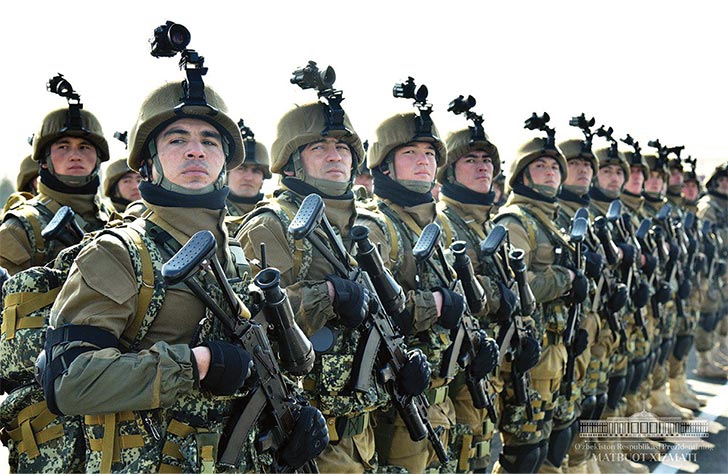
During recent rehearsals in the town of Tokmok, local residents spotted modern Tor-M2KM air defense systems mounted on KamAZ trucks, marking the first public appearance of these advanced missile systems in Kyrgyzstan’s arsenal.

According to the General Staff of the Armed Forces of Kyrgyzstan, the country’s Victory Day military parade will be held on May 8 in Ala-Too Square in Bishkek. More than 120 military and special-purpose vehicles, including artillery, armored vehicles, and air defense systems, will participate in the event, alongside 8,000 service personnel. The aerial portion of the parade will feature flyovers by both Kyrgyz and Russian aircraft, with the latter based at the Kant airbase.

“The technical component of the parade will feature the most modern equipment acquired through the national budget,” the Defense Ministry stated. “For the first time, Tor-M2KM and Pechora-2BM missile systems, as well as S-300PS long-range surface-to-air missile launchers, will be on display in Ala-Too Square.”

Residents of Tokmok were the first to capture images of the Tor-M2KM systems during rehearsals. The system, known for its short-range effectiveness, is designed to counter a wide range of aerial threats including aircraft, helicopters, drones, and cruise missiles. The units were painted in the camouflage colors of the Kyrgyz armed forces, indicating their official deployment.

Notably, the appearance of the S-300PS systems comes just days after their reported transfer from the Russian armed forces to Kyrgyzstan. These long-range missile systems are designed to provide strategic air defense coverage.

The upcoming parade is expected to highlight the rapid modernization of Kyrgyzstan’s military capabilities and will be closely watched both domestically and by regional observers.

Tajikistan Has the Harshest Fines Relative to Income in Central Asia

Tajikistan ranks first among Central Asian countries in the ratio of maximum fines to average salaries, a disparity that has sparked growing dissatisfaction among the population.

Structure and Scale of Fines

Fines in Tajikistan fall into two categories: administrative and criminal. Administrative fines apply to less serious infractions, such as traffic violations, breaches of sanitary rules, and disorderly conduct. Criminal fines, by contrast, target serious offenses including fraud, tax evasion, and property crimes. Administrative penalties are more common and tend to disproportionately impact ordinary citizens.

As of January 1, 2025, the minimum administrative fine for individuals and sole proprietors is 75 Tajikistani somoni (TJS), or approximately $7.20. For government officials, the minimum fine is 225 TJS ($21), and for legal entities it is 750 TJS ($72).

The upper threshold for administrative fines is capped at $780 for individuals, $1,400 for officials, $2,120 for entrepreneurs, and $7,200 for legal entities.

Regional Comparisons

Compared to its neighbors, Tajikistan’s fine-to-salary ratio is starkly higher. In Kazakhstan, the maximum fine for individuals is roughly $1,537, or about 80.5% of the average monthly salary ($851 as of January 2025).

In Kyrgyzstan, the maximum individual fine of approximately $229 represents just 50.9% of the average salary ($450). In Uzbekistan, where the maximum individual fine is limited to $145, it amounts to about 35% of the average salary of $414.

In contrast, the maximum administrative fine in Tajikistan for individuals exceeds the country’s average monthly income by more than 2.8 times, placing it at the bottom of the regional ranking in terms of fairness and affordability.

Calls for Reform

Experts have proposed that Tajikistan consider adopting a proportional system of fines based on the offender’s income. Such systems, already implemented in various European countries, aim to ensure that penalties are equitable across income groups.

In Finland, traffic fines are linked to annual income; in Sweden and Norway, they depend on monthly earnings. Other countries, including Germany, Switzerland, Austria, and France, also tailor financial penalties to income. Estonia and Latvia have initiated similar reforms, signaling a broader European trend.

Adopting such a model in Tajikistan could improve perceptions of justice and encourage compliance with laws, particularly among higher-income groups. However, experts caution that successful implementation would require sweeping legal reforms, along with mechanisms to accurately monitor and verify income levels.

U.S. Offers $1,000 Incentive for Voluntary Self-Deportation

The U.S. Department of Homeland Security (DHS) has launched a new program offering financial and travel assistance to undocumented immigrants who voluntarily leave the United States. Announced on May 5, the initiative provides a $1,000 stipend and covers airfare for eligible individuals who arrange their departure through the CBP Home mobile app. 

DHS Secretary Kristi Noem described the program as a “historic opportunity” that is safer, more orderly, and more cost-effective than traditional deportation methods. According to DHS estimates, the average cost of arresting, detaining, and deporting an individual is approximately $17,121. The self-deportation program is projected to reduce these costs by about 70%. 

Participants are required to submit an “Intent to Depart” via the CBP Home app, formerly known as CBP One. Upon confirmation of their return to their home country through the app, they will receive the stipend. DHS noted that individuals who engage with the program and demonstrate progress toward departure will be deprioritized for detention and removal. 

The first reported participant, a Honduran national, utilized the program to return from Chicago to Honduras. Additional departures are scheduled in the coming weeks. 

The Embassy of Kazakhstan in the United States has advised its citizens residing illegally in the U.S. to consider this program to avoid legal consequences and potentially preserve the option for future legal entry.

This initiative aligns with President Donald Trump’s broader immigration policy, which emphasizes strict enforcement and cost-efficiency. Since taking office in January, the administration has deported approximately 152,000 individuals. 

Critics argue that the program may mislead participants regarding the possibility of future legal re-entry, as no specific pathways have been outlined. Immigration advocates caution that individuals considering this option should consult legal counsel to understand the potential implications for their immigration status.

After Securing Ukraine Agreement, U.S. Eyes Central Asia for Rare Earths

After months of negotiations, the United States and Ukraine have finally signed an agreement to co-finance the development of Ukraine’s mineral resources, hydrocarbons, and infrastructure. According to The National Interest, the U.S. will not assume ownership of Ukraine’s assets; instead, profits will be directed into a joint investment fund, with full reinvestment in Ukraine.

Ukraine’s First Deputy Prime Minister Yulia Svyrydenko described the deal as a mutually beneficial partnership. U.S. Treasury Secretary Scott Bessent hailed it as a “historic economic partnership,” underscoring America’s enduring commitment to a “free and prosperous Ukraine.”

Since his return to office in January, President Donald Trump has prioritized securing access to rare earth minerals. This move is part of a broader U.S. strategy to reduce reliance on China, which currently dominates the sector with control over approximately two-thirds of global production. By contrast, the United States accounts for only about 12%.

While Ukraine possesses 22 of the 50 minerals identified as critical by the U.S. government, it holds just around 5% of global reserves. As a result, Washington is looking beyond Ukraine and Central Asia has emerged as a strategic alternative.

Reports from the Caspian Policy Center and the International Tax and Investment Center highlight the region’s significant rare earth potential. The countries of Central Asia have already taken steps toward deeper cooperation. In 2024, the United States and Uzbekistan signed a Memorandum of Understanding to enhance collaboration on critical minerals.

However, competition for access remains stiff. China maintains robust trade links across the region, and Russia continues to wield considerable economic influence. Nonetheless, regional dynamics are shifting.

In recent years, Central Asian states have increasingly sought to diversify their partnerships, reducing dependence on Moscow and Beijing. They have moved to deepen ties with the United States, the United Kingdom, and the European Union. In September 2023, then-President Joe Biden met with Central Asian leaders to discuss regional cooperation, including rare earth supply chains. This was followed by the June 2024 meeting of the U.S.-Central Asia Trade and Investment Framework Council, where both parties emphasized the need for increased trade and integration.

Like Ukraine, Central Asian nations stand to gain from U.S. investment, particularly in energy infrastructure and broader economic development. If implemented effectively, rare earth revenues could be retained within the region, supporting long-term local growth.

For the United States, enhanced access to Central Asian resources represents a step toward greater energy security and reduced strategic vulnerability. While China and Russia maintain structural advantages, Washington now has a meaningful opportunity to deepen its presence in Central Asia and forge enduring partnerships.

Kazakh Acrobats Enter Guinness World Records with Daring Feat

Batyr Zhanuzak and Marlen Maratov, acrobats from the Almaty Circus, have entered the Guinness World Records following a breathtaking performance at the international show Lo Show Dei Record in Milan.

The duo stunned both the jury and audience when Zhanuzak climbed up and down a ladder twice, all while balancing Maratov in a one-arm handstand on his head. Their feat, completed in 36 seconds, was recognized as a world record in the category: “Fastest time climbing and descending two ladders with a person standing on their hands on the head.”

“We already have four records with the team, though not all are officially recorded,” said 32-year-old Zhanuzak. “If someone breaks our record, we’re ready for a rematch. But for now, we’re aiming for new heights.”

For 29-year-old Maratov, the accomplishment reflects years of preparation.

“I spent four years training for this, to balance on one hand. But always with safety equipment,” he explained. “I think I’m the first to do it without any. It’s extremely dangerous.” He added that one previous attempt nearly ended in a fall, but Zhanuzak caught him at the last second. That moment became a turning point, a realization of their shared capabilities.

Both performers are part of the internationally acclaimed “Serbat” circus troupe and have represented Kazakhstan in high-profile competitions worldwide. Their resume includes appearances in the finals of major talent shows in the United States, United Kingdom, and China. Their performances are widely praised for their originality, technical mastery, and artistic flair.

Maksat Zhaikov, director of the Kazakh State Circus, called the achievement “not only a personal triumph but a contribution to the development of Kazakh circus art.” He added that the record reinforces Kazakhstan’s reputation on the global performing arts stage.

Zhanuzak and Maratov are already planning their next challenge, incorporating a third ladder into their act. But their primary goal, they emphasize, is to show the world that Kazakh artists rank among the best.