• KGS/USD = 0.01144 0%
  • KZT/USD = 0.00192 -0%
  • TJS/USD = 0.10879 0.28%
  • UZS/USD = 0.00008 0%
  • TMT/USD = 0.28571 0%
  • KGS/USD = 0.01144 0%
  • KZT/USD = 0.00192 -0%
  • TJS/USD = 0.10879 0.28%
  • UZS/USD = 0.00008 0%
  • TMT/USD = 0.28571 0%
  • KGS/USD = 0.01144 0%
  • KZT/USD = 0.00192 -0%
  • TJS/USD = 0.10879 0.28%
  • UZS/USD = 0.00008 0%
  • TMT/USD = 0.28571 0%
  • KGS/USD = 0.01144 0%
  • KZT/USD = 0.00192 -0%
  • TJS/USD = 0.10879 0.28%
  • UZS/USD = 0.00008 0%
  • TMT/USD = 0.28571 0%
  • KGS/USD = 0.01144 0%
  • KZT/USD = 0.00192 -0%
  • TJS/USD = 0.10879 0.28%
  • UZS/USD = 0.00008 0%
  • TMT/USD = 0.28571 0%
  • KGS/USD = 0.01144 0%
  • KZT/USD = 0.00192 -0%
  • TJS/USD = 0.10879 0.28%
  • UZS/USD = 0.00008 0%
  • TMT/USD = 0.28571 0%
  • KGS/USD = 0.01144 0%
  • KZT/USD = 0.00192 -0%
  • TJS/USD = 0.10879 0.28%
  • UZS/USD = 0.00008 0%
  • TMT/USD = 0.28571 0%
  • KGS/USD = 0.01144 0%
  • KZT/USD = 0.00192 -0%
  • TJS/USD = 0.10879 0.28%
  • UZS/USD = 0.00008 0%
  • TMT/USD = 0.28571 0%
12 December 2025

Uzbekistan Launches $153 Million Forest Restoration Project with World Bank Support

Uzbekistan, in collaboration with the World Bank, has launched a major initiative to restore forests and rehabilitate degraded lands across the country. The Uzbekistan Resilient Landscapes Restoration Project (RESILAND) was officially announced during the Samarkand Climate Forum on April 5.

The World Bank will provide $153 million in funding, consisting of a combination of low-interest loans and grants. This initiative forms part of a broader regional strategy aimed at combating land degradation and enhancing climate resilience throughout Central Asia.

RESILAND will initially target six provinces: Samarkand, Surkhandarya, Syrdarya, Jizzakh, Namangan, and Kashkadarya. Its objectives include forest restoration, improved land management, and the creation of new jobs through afforestation and nature-based business ventures.

Uzbekistan’s Minister of Ecology, Aziz Abdukhakimov, emphasized that the project will play a critical role in helping the country achieve its goal of expanding forested areas to 6.1 million hectares by 2030. “The project will also support food systems, infrastructure, and nature tourism,” he said.

Currently, only 10.6% of Uzbekistan’s territory is forested. In recent years, the government has intensified efforts to increase forest cover, particularly on the desiccated seabed of the Aral Sea.

Tatiana Proskuryakova, World Bank Regional Director for Central Asia, welcomed the initiative, noting, “The World Bank values the opportunity to support the government of Uzbekistan in its efforts to restore degraded lands.”

As part of the project, Uzbekistan plans to rehabilitate forests on 176,000 hectares, improve pasture conditions, combat soil erosion in mountainous regions, and develop agroforestry and industrial forest sectors. An additional 5,000 hectares will be allocated for the cultivation of medicinal plants.

RESILAND will also provide support for small and medium-sized enterprises, offer training for local farmers, and promote eco-tourism in protected areas. The initiative includes plans to improve the infrastructure of the Forestry Agency and to launch Uzbekistan’s first National Forest Inventory.

A new partnership between the Forestry Agency and the Green University near Tashkent will further use grant funding to advance forestry education and research.

The project is part of the wider RESILAND CA+ program, which encompasses similar initiatives in Kazakhstan, Kyrgyzstan, Tajikistan, and Turkmenistan.

Kazakhstan Launches $20 Million Olive Cultivation and Oil Production Project

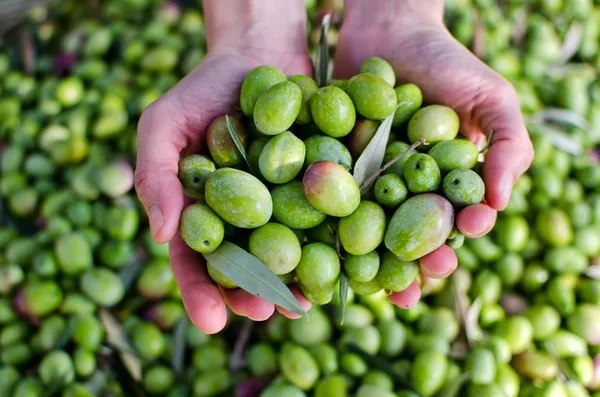
A major agricultural initiative valued at $20 million is underway in Kazakhstan, where the country’s first olive plantations have been established. By 2025, the total cultivated area is expected to reach 100 hectares.

Laying the Groundwork for Investment

Kazakhstan’s Minister of Agriculture, Aidarbek Saparov, recently met with George Svanidze, President of Global Olive Corporation, to discuss the ongoing implementation of the olive cultivation and olive oil production project.

Launched in 2023, the project is a joint effort involving Kazakh companies QVM Technology, Ordabasy Group, and Ervira, in partnership with Georgia’s Olive Georgia. Initial pilot plantations were established in the Zhetysu, Turkestan, and Mangistau regions, where over 6,000 olive seedlings were planted, an effort that achieved a remarkable 99.7% survival rate.

From Pilot Plantings to Industrial Production

In spring 2024, the project expanded with new seedlings imported from Spain and Turkey. By the end of 2025, the cultivated area is expected to reach 100 hectares, with the first harvest anticipated within five years.

Saparov emphasized the strategic value of the initiative, which aligns with Kazakhstan’s broader efforts to expand its food processing industry:

“Our goal is to increase the share of processed agricultural products to 70%. The development of the olive industry is strategically important for the agro-industrial complex. We are committed to providing comprehensive support for this project,” Saparov said.

Target: One Million Trees and Domestic Oil Production

George Svanidze outlined ambitious plans to establish a sustainable olive industry in Kazakhstan, including planting up to one million olive trees, constructing a modern olive oil production facility, and setting up a nursery for seedling propagation.

“We are ready to bring in international experts, train Kazakhstani agronomists, and share advanced technologies,” said Svanidze.

According to preliminary estimates, annual yields could reach 150,000 tons of olives, enabling the production of up to 30,000 tons of olive oil.

Kazakh partner QVM Technology confirmed the Ministry of Agriculture’s active support for the project. The meeting concluded with the signing of a Memorandum of Understanding and the preparation of a Road Map outlining the key implementation stages.

Exotic Crops on Kazakh Soil

Kazakhstan has previously experimented with cultivating non-native crops. In Turkestan region, bananas are grown successfully on a five-hectare plantation, yielding around 1,000 tons. Local authorities are also supporting efforts to expand tropical fruit cultivation, including mangoes and avocados, on a planned 90-hectare site.

These initiatives reflect Kazakhstan’s commitment to modernizing its agricultural sector, diversifying crop production, and enhancing both food security and export potential.

Kazakhstan to Receive 3.7 Billion Cubic Meters of Syr Darya Water in 2025

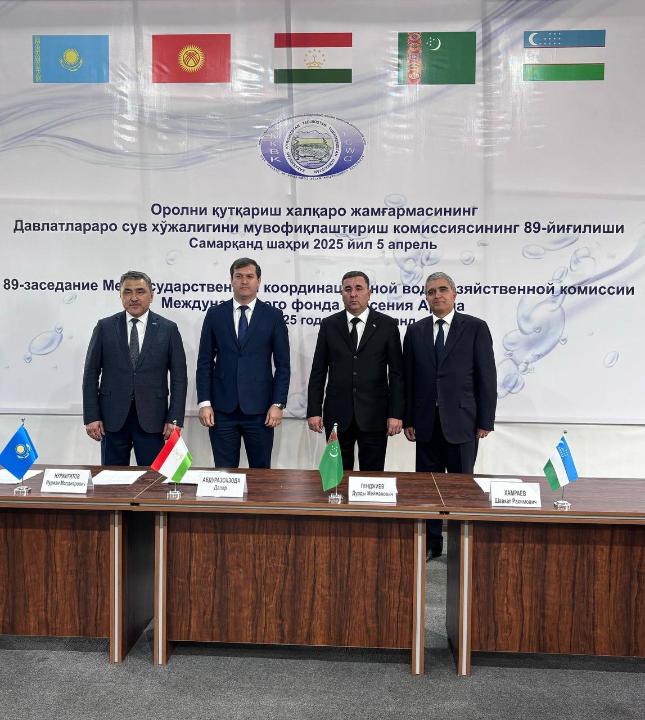
In the 2025 irrigation season, Kazakhstan is set to receive approximately 3.7 billion cubic meters of water via the Syr Darya River. The agreement was finalized during negotiations involving officials from Tajikistan, Turkmenistan, and Uzbekistan.

The deal was reached at the 89th meeting of the Interstate Water Commission of Central Asia, held in Samarkand, Uzbekistan.

As part of the agreement, Kazakhstan will receive 909 million cubic meters of water through the interstate Dostyk Canal during the irrigation period. Additionally, 975 million cubic meters are slated for transfer to the Northern Aral Sea.

“We began negotiations last year, we must prepare for the water season in advance, particularly in the southern regions where every drop counts. All water from the Syr Darya will be collected in the Shardara Reservoir and directed toward agricultural needs. At present, we are channeling floodwaters into lakes and rivers and storing them in reservoirs,” said Kazakhstan’s Minister of Water Resources and Irrigation, Nurzhan Nurzhigitov.

A day earlier, Nurzhigitov also addressed a climate forum in Samarkand. He noted that Uzbekistan had supplied 12.6 billion cubic meters of water to Kazakhstan from October of last year through April 1, exceeding the planned amount by 1.7 billion cubic meters.

Earlier reporting by The Times of Central Asia highlighted that eight regions in Kazakhstan face a heightened risk of spring flooding.

Tajik Ophthalmologist Parvina Mirakhmedova Wins Innovation Award in London

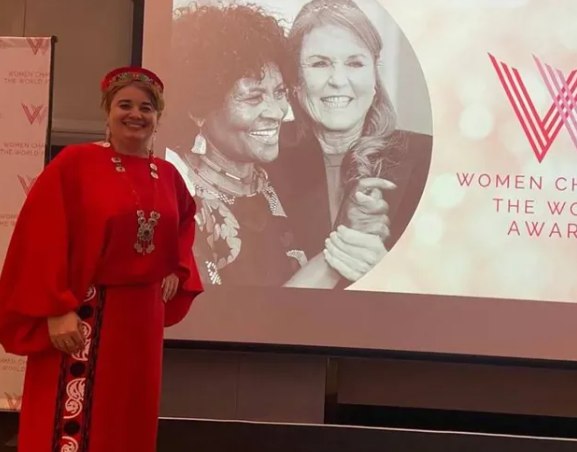
Parvina Mirakhmedova, a Tajik ophthalmologist and researcher, has won international acclaim at the prestigious Women Changing the World Awards, held in London. She was the only representative from Central Asia among participants from 55 countries.

Mirakhmedova was nominated in three Industry Award categories: Women in Health, Tech Innovation, and Innovation. She won the Tech Innovation Award and took second place in the Women in Health category.

Sarah Ferguson, the Duchess of York, personally presented Mirakhmedova with the Golden Heart Award, honoring both her professional accomplishments and the broader social impact of her work.

In her acceptance speech, Mirakhmedova expressed gratitude to those who supported her journey to London, emphasizing the importance of showcasing Tajikistan’s scientific talent on the global stage.

Transforming Ophthalmology with Innovation

Over recent years, Mirakhmedova has significantly advanced the field of ophthalmology. She developed a new diagnostic algorithm for early-stage glaucoma detection, dramatically lowering the risk of vision loss.

Additionally, she created cell-counting software that has standardized the diagnosis of ocular inflammation, notably improving treatment accuracy for uveitis. Her work has been published in peer-reviewed journals indexed in Scopus.

Among her most accessible innovations is a Telegram bot (@ophthalmo_test_bot) that helps doctors monitor inflammation in uveitis, enabling timely treatment adjustments.

Personal Struggles Behind the Science

Mirakhmedova’s professional journey is rooted in personal adversity.

“I lost my father to cancer, and later, my mother became seriously ill. I experienced first hand what patients and their families endure,” she said.

These experiences inspired her to drive change in Tajikistan’s medical system. She advocates for the integration of global medical innovations, asserting, “The world is moving forward, innovations are transforming medicine, and Tajikistan must not fall behind.”

A Decade of Determination

Mirakhmedova began her career at the international Solim Med and private Nurafzo clinics and underwent further training in Germany. Initially, her ideas were met with skepticism.

“Innovations are always resisted at first. But eventually, they become indispensable,” she noted.

Despite early challenges, she remained committed to her vision, bolstered by support from her mentors at the Abuali Ibni Sino Department of Ophthalmology at the Tajik State Medical University, her family, and her own perseverance.

Reaching the award finals marked a turning point.

“I felt a deep sense of satisfaction. To those who once said my ideas were useless, this is the answer,” she said.

Her recognition in London is not just a personal triumph, it affirms her contributions to medicine on an international scale and signals the potential for transformative change in ophthalmology across the region.

Balancing Secularism and Belief: Central Asia Grapples with Rising Islamization

Although the Central Asian republics officially uphold secular governance, they may be experiencing a subtle, creeping Islamization beneath the surface. While state-controlled media across the region maintain that religious movements are well-managed, occasional incidents suggest a growing divergence between official narratives and societal realities.

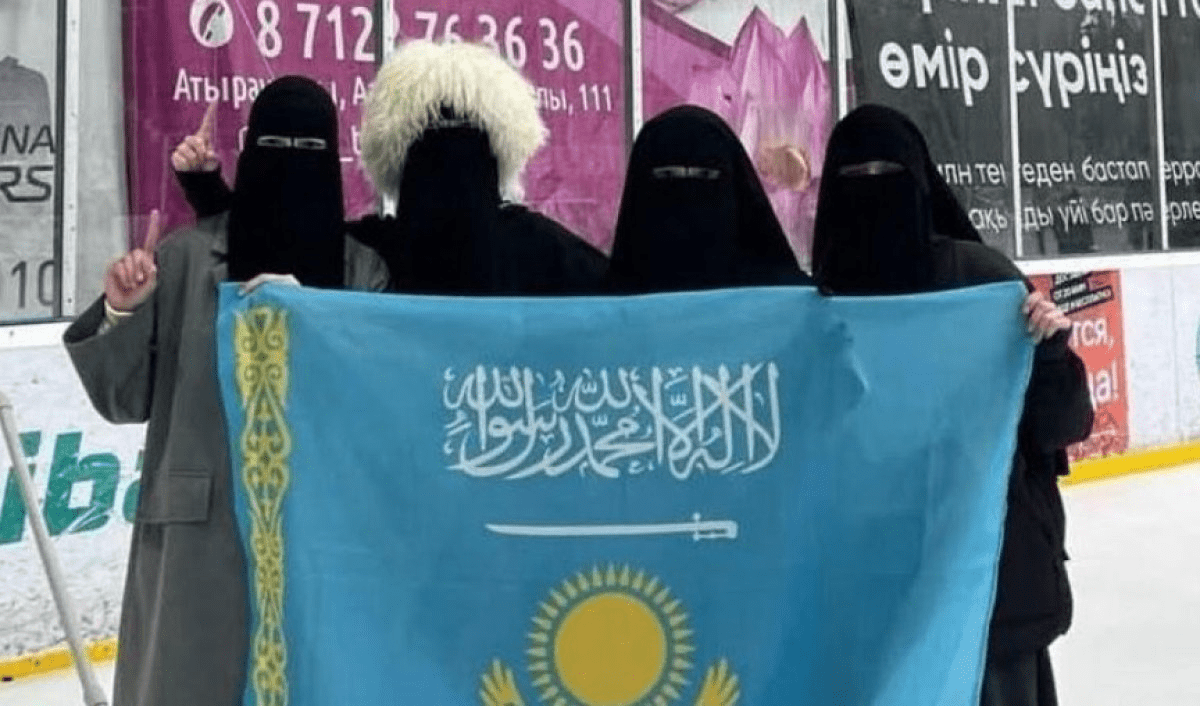
One such incident recently drew attention in Kazakhstan, where a photo circulated online showing girls in burkas holding a Kazakh flag inscribed with Arabic script. The image prompted Mazhilis Deputy Yermurat Bapi to call on the government to intensify efforts against radical religious movements.

“Our attention was drawn to the fact that the inscriptions on the flag in Arabic script were produced with a special printing tool. This is not just hooliganism or inappropriate behavior. It is a direct challenge to our society, our statehood, and our national traditions,” Bapi said.

Citing “national interests, traditions, and culture,” Bapi has previously campaigned for a ban on religious clothing, specifically hijabs and niqabs, in public places.

On social media, proponents of a Central Asian caliphate have railed against national traditions, denouncing Nauryz, criticizing local costumes and instruments, and rejecting pre-Islamic cultural heritage.

Since President Shavkat Mirziyoyev took office in 2016, Uzbekistan has cautiously liberalized its religious policy. However, strict state control persists. Imams must be approved by the Muftiate, unregistered religious groups are banned, and mosque inspections are routine. The state endorses the Hanafi madhhab as the “national form of Islam” and recognizes Naqshbandi Sufism as part of its cultural heritage. Salafi and extremist movements are actively suppressed, and while former “black lists” of suspected extremists are being revised, some religious prisoners are being rehabilitated. Islamic education is expanding through madrasas, Islamic colleges, and the Islamic Academy of Uzbekistan.

Tajikistan has pursued an aggressive campaign to secularize public life. The Islamic Renaissance Party, once a legal political force, was banned in 2015 as “extremist.” The state restricts youth access to mosques, prohibits the hijab in schools and public offices, and has shuttered over 1,500 mosques since 2011. As previously reported by TCA, a 2024 law bans “foreign clothing” – widely interpreted as targeting Arabic attire, including the hijab – to promote national dress. Islam is framed as a cultural element within state ideology, with the Committee on Religious Affairs closely monitoring clerics.

Kyrgyzstan is widely viewed as the most religiously open state in the region. Post-Soviet liberalization allowed Islam to grow organically, with little initial oversight. Today, numerous Islamic groups, including Salafis, operate within the country. Rural communities and youth increasingly identify with Islam. Private madrasas and Islamic NGOs are flourishing, and hijab adoption is on the rise. Though the government has begun tightening oversight following incidents of radicalization, Salafi influence continues to grow. By 2023, there were 130 Islamic educational institutions, including 34 madrasas for girls.

In Turkmenistan, one of the world’s most closed societies, religious freedom is strictly curtailed. All religious activity is monitored, and Islamic institutions are intertwined with nationalist and presidential cult rhetoric, often referred to as “Turkmen Islam.” Unregulated Islamic movements and foreign affiliations are prohibited. State-sanctioned mosques are part of a highly controlled religious landscape.

Kazakhstan’s constitution guarantees religious freedom, yet Islam is tightly managed through the Spiritual Administration of Muslims of Kazakhstan (DUMK). Interest in Islam is surging, particularly among youth and in southern regions such as Turkestan and Zhambyl. The number of mosques and Hajj pilgrims continues to climb. Although officially secular, signs of creeping Islamization are emerging. Analysts point to the appointment of religiously affiliated individuals, often educated in Islamic institutions abroad or tied to religious NGOs, into governmental roles. Some suggest an unspoken “quota” system exists to appease devout constituencies.

While the state promotes “traditional” Hanafi Islam, this narrative may mask the influence of soft political Islam. In the 2000s, religious graduates from Egypt, Saudi Arabia, and Pakistan began occupying influential roles in NGOs and religious foundations with access to public funding. State-led initiatives such as Rukhani Zhangyru (Spiritual Renewal) infuse Islamic values into national development projects, reinforcing Islam as a moral pillar of society.

Prominent elites have also played a role. Convicted in September 2022 for grand theft, Kairat Satybaldyuly, nephew of former President Nursultan Nazarbayev, has been linked to the Salafi movement, reportedly funding mosques and supporting related causes. In 2023, MP Yermurat Bapi accused Satybaldyuly of promoting Wahhabism with Nazarbayev’s tacit approval, a claim Satybaldyuly denied, stating his efforts were focused on Islamic development with his uncle’s blessing. The Salafi movement was reportedly among the forces destabilizing Kazakhstan during the January 2022 unrest, when national stability was seriously threatened.

The question of Islamist penetration into the political and civic fabric of Central Asian states remains unresolved. While authorities project an image of controlled secularism, the growing influence of religious ideology, both overt and subtle, calls for deeper scrutiny, particularly in Kazakhstan’s evolving landscape.

Culture, Climate, and Clean Water: Summit Outlines New Efforts to Restore the Aral Sea Region

From April 4 to 6, the first Aral Culture Summit took place in Karakalpakstan, bringing together local and international scientists, artists, and activists. Their goal: to find creative ways to support the social and environmental recovery of the Aral Sea region. The summit is the first in a series of global cultural initiatives taking place throughout 2025 and supported by Uzbekistan Art and Culture Development Foundation.

Scheduled to be held every 18 months, the summit is designed to act as a space for exchanging ideas and building new solutions. This year’s program included panels, cultural events, and a pop-up market featuring local artists and businesses. It focused on how art, design, and science can help Karakalpakstan grow in sustainable ways and attract new eco-friendly businesses.
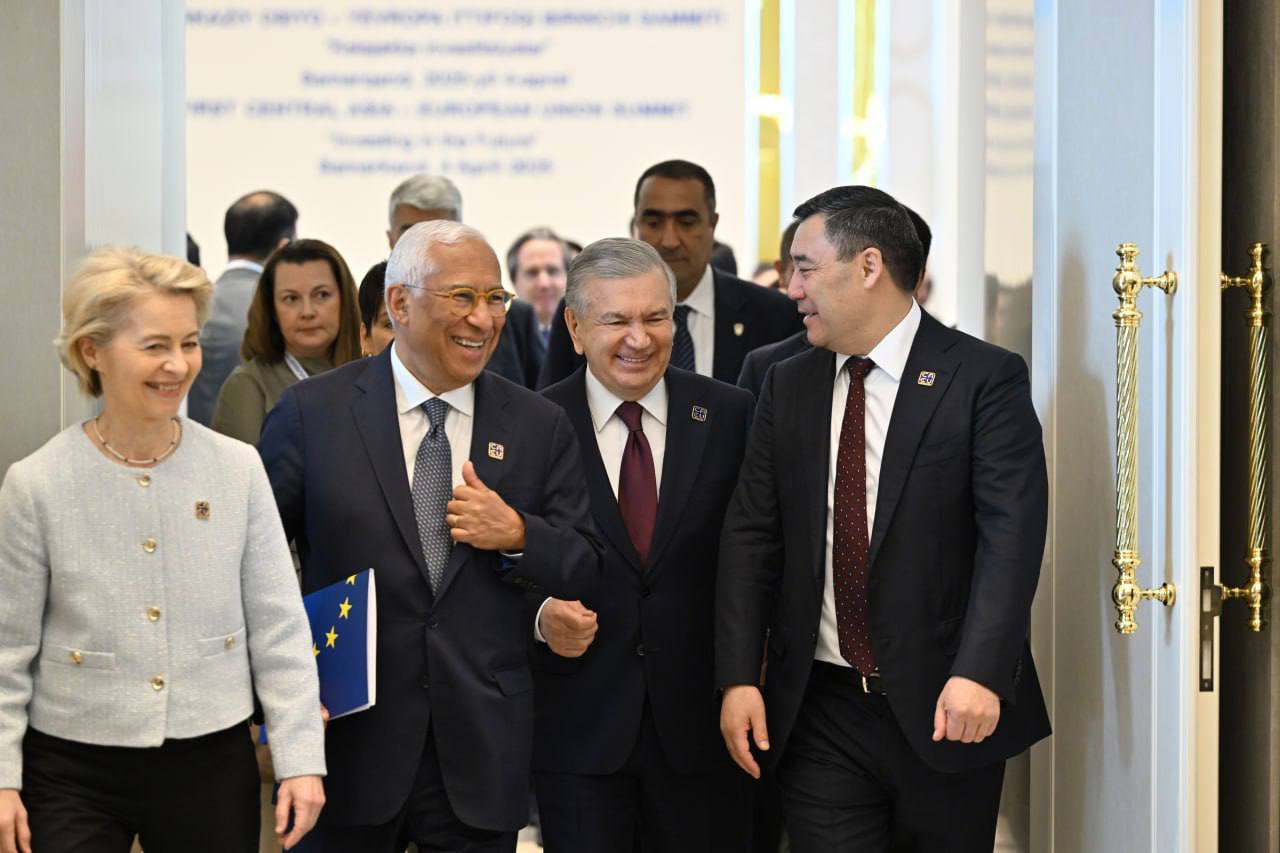
Summit opening in Samarkand; image: ACDF

The first day of the summit was linked with the Samarkand International Climate Forum, which was attended by over 2,000 foreign guests, including top officials from the European Union, the United Nations, and Central Asian governments. They discussed urgent climate problems in the region, including desertification, water shortages, and rising temperatures.

Uzbekistan’s President Shavkat Mirziyoyev spoke about steps being taken to slow land degradation. “To reduce the area of degraded lands and mitigate the consequences of climate change, Uzbekistan has been carrying out large-scale greening in the framework of the Yashil Makon project. Additionally, over two million hectares of the deserted Aral Sea region is now covered with drought-resistant plants,” he said. Mirziyoyev also warned that water shortages will increase in the region by 2040 and stressed the need for stronger cooperation, telling those assembled, “We urge our partners to join the efforts and launch a Regional Program for Implementation of Water Saving Technologies in Central Asia.”

Kazakhstan’s President Kassym-Jomart Tokayev also shared concerns about climate challenges, pointing out that the “temperature in the region is rising twice as fast as the global average.” Tokayev highlighted joint efforts with Uzbekistan to green the dried bottom of the Aral Sea.

“Central Asia is profoundly affected by the global climate crisis,” Gayane Umerova, Chairperson of the Uzbekistan Art and Culture Development Foundation (ACDF) told those in attendance. “Rising temperatures, altered rainfall patterns, and intensified droughts are severely impacting agriculture, water resources, and livelihoods across our region. No example illustrates this better than the tragedy of the Aral Sea. But healing the land goes hand in hand with healing communities.”

Desert ship, Moynaq; image: TCA, Stephen M. Bland

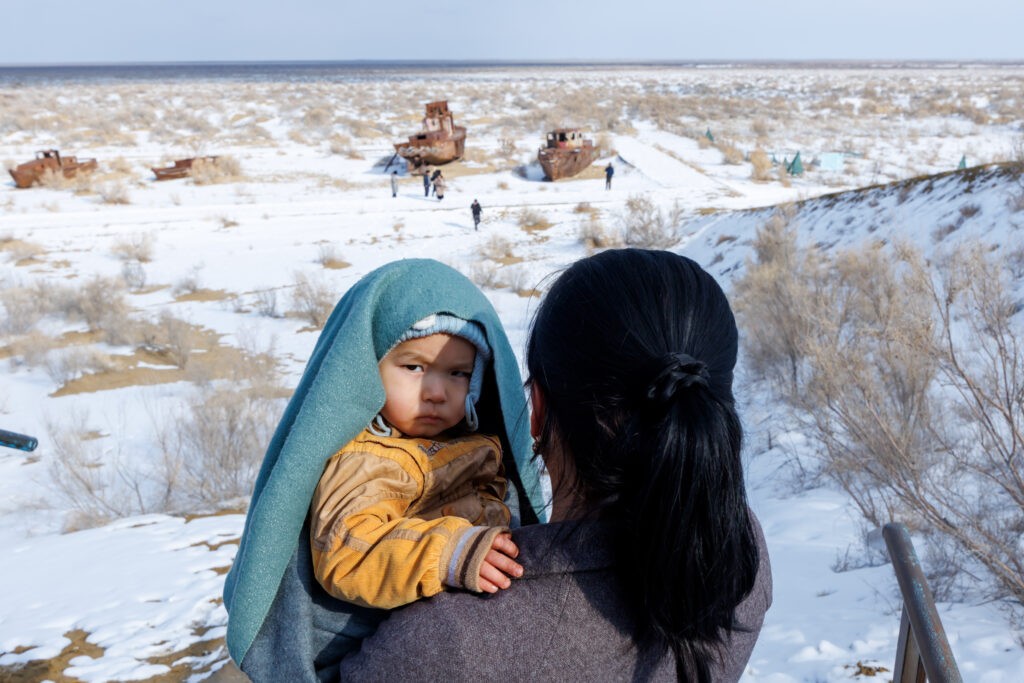
A striking example of the shrinking of the Aral Sea is the forgotten hamlet of Moynaq. At its peak, the town was home to 60,000 people, mostly fishermen and their extended families, with the Aral Sea producing up to 30% of the Soviet catch and saving Russia from widespread famine in the 1920s. Accessible only by air and ferry well into the 1970s, Moynaq also served as a popular beach resort for well-heeled bureaucrats, its airport hosting fifty flights a day at its peak. By the eighties, however, tourism had dried up. With the sea’s major source, the Amu Darya River no longer reaching its historic terminus, digging channels through the sand in pursuit of the diminishing sea, Moynaq’s fishermen discarded their ships where they became grounded.

Today, the town’s population number less than 2,000, the remnants of the Aral Sea almost two hundred kilometers away. With the sea gone, the region is subject to searing summers and freezing winters, 500 species of bird, 200 mammals, a hundred types of fish and countless insects unique to the region all now extinct.

Given this startling decline, it is no surprise that some of the most powerful stories came from local leaders like Gulnaz Abutova, one of the summit’s featured speakers and founder of the Clean Water project.
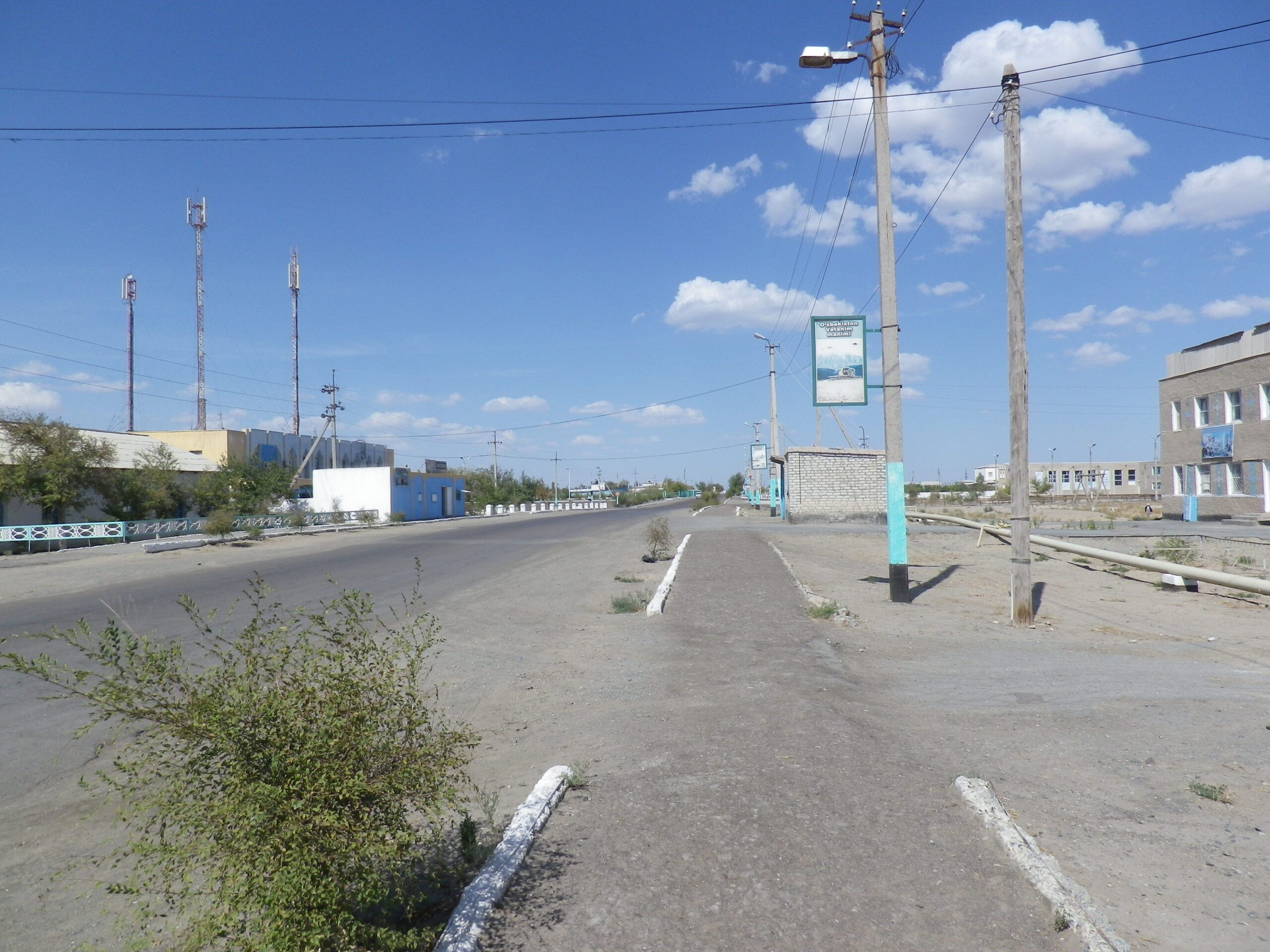
Moynaq; image: TCA, Stephen M. Bland

“I was born and raised in Nukus, Karakalpakstan, an area that lies in an ecologically vulnerable zone,” she told TCA. “Growing up, I often heard stories from the older generation about the once full-flowing Aral Sea, the famous Aral canned goods, and the profound sadness they felt witnessing its near-total disappearance.”

Abutova said she clearly remembers when she saw the crisis with her own eyes. “In 2014, during my first year at university, we were sent to Turtkul to pick cotton. There, I saw the full extent of the crisis with my own eyes. Local people were forced to drink and bathe in contaminated water from ‘baspa taps’ — makeshift water sources,” she explained. “I even saw people using water from irrigation channels (aryks) for cooking, boiling it and adding it to their food.”

In 2024, after attending a leadership program in Tashkent, Abutova decided to act. “I chose to focus on building water treatment stations for remote villages in Karakalpakstan, aiming to address the acute water crisis in the region,” she told TCA. “My proposal received unanimous support from the group.”

It was not easy in the beginning. “As we had no experience in the charity sector, fundraising was our first major hurdle,” Abutova recalled. “We got some help from relatives, but many charity organizations either didn’t focus on water projects or didn’t believe we could follow through. Thankfully, the Uzbekistan Volunteer Association agreed to help, but only if we set clear deadlines and targets. That gave us the push we needed.”

Aral Culture Summit 2025. Image courtesy of ACDF

Since then, eight water stations have been built, providing clean drinking water to over 8,380 people. “While numbers and statistics are important, I always prefer to focus on the people,” Abutova said. “Clean water has not only reduced waterborne diseases and improved overall health, but it’s also strengthened immune systems because our stations enrich the water with essential minerals.”

Looking to the future, Abutova says there are plans for four more stations. “Though I initiated the idea for the project, I’ve stepped back from day-to-day involvement as the project has grown. Now, many individuals and teams are dedicated to its expansion, and I continue to offer guidance on organizational matters.”

Abutova hopes to turn the project into a registered NGO so they can raise funds on a larger scale. “Donations are always welcome, and individuals can contribute through various channels,” she told TCA. “Raising awareness is equally crucial. By sharing our story and spreading the word, you can help amplify the impact of this important work.”

Even when small, Abutova believes local action can be powerful. “Ultimately, we hope that our efforts will inspire others to take similar actions in their own regions.”

——-

To learn more or support the Clean Water project, Gulnaz Abutova can be contacted at gulnaz_abutova@mail.ru or on Instagram @nazik_abutova and @clean.water.uz.