• KGS/USD = 0.01144 0%
  • KZT/USD = 0.00194 0%
  • TJS/USD = 0.10841 -0.37%
  • UZS/USD = 0.00008 0%
  • TMT/USD = 0.28571 0.28%
  • KGS/USD = 0.01144 0%
  • KZT/USD = 0.00194 0%
  • TJS/USD = 0.10841 -0.37%
  • UZS/USD = 0.00008 0%
  • TMT/USD = 0.28571 0.28%
  • KGS/USD = 0.01144 0%
  • KZT/USD = 0.00194 0%
  • TJS/USD = 0.10841 -0.37%
  • UZS/USD = 0.00008 0%
  • TMT/USD = 0.28571 0.28%
  • KGS/USD = 0.01144 0%
  • KZT/USD = 0.00194 0%
  • TJS/USD = 0.10841 -0.37%
  • UZS/USD = 0.00008 0%
  • TMT/USD = 0.28571 0.28%
  • KGS/USD = 0.01144 0%
  • KZT/USD = 0.00194 0%
  • TJS/USD = 0.10841 -0.37%
  • UZS/USD = 0.00008 0%
  • TMT/USD = 0.28571 0.28%
  • KGS/USD = 0.01144 0%
  • KZT/USD = 0.00194 0%
  • TJS/USD = 0.10841 -0.37%
  • UZS/USD = 0.00008 0%
  • TMT/USD = 0.28571 0.28%
  • KGS/USD = 0.01144 0%
  • KZT/USD = 0.00194 0%
  • TJS/USD = 0.10841 -0.37%
  • UZS/USD = 0.00008 0%
  • TMT/USD = 0.28571 0.28%
  • KGS/USD = 0.01144 0%
  • KZT/USD = 0.00194 0%
  • TJS/USD = 0.10841 -0.37%
  • UZS/USD = 0.00008 0%
  • TMT/USD = 0.28571 0.28%
17 December 2025

Scientists of Ancient Central Asia Still Relevant in the Modern World; The Idea of the Averaged Turkic Language

There is a debate on social media between Uzbek and Tajik communities about the medieval scholar Ibn Sina. The discussion revolves around the question of nationality — was Ibn Sina Tajik, Uzbek, or something else? Similar debates have emerged about other medieval scholars, including Al-Farabi.

Ibn Sina (commonly known in the West as Avicenna) and Al-Farabi were two of the most influential scholars of the Islamic Golden Age. Ibn Sina, known for his contributions to medicine, philosophy, and science, wrote The Canon of Medicine, a foundational text in medical education for centuries. First published in 1025, his work stood as the standard medical textbook in Europe from its translation into Latin in the twelfth century through to the 1650s. Al-Farabi, often called the Second Greatest Teacher after Aristotle, made significant contributions to philosophy, logic, and political theory, shaping intellectual thought in the Islamic world and beyond.

To explore this further, TCA spoke with two scholars — Fakhriddin Ibragimov, PhD, and Dr. Bakhtiyor Karimov — who have studied the lives and works of Ibn Sina and Al-Farabi extensively.


Fakhriddin Ibragimov; image courtesy of the subject.

Fakhriddin Ibragimov, a researcher at the Abu Rayhan Biruni Institute of Oriental Studies, has spent nearly 15 years studying Ibn Sina. According to Ibragimov, historical sources provide no direct evidence of Ibn Sina’s nationality.

“Ibn Sina (980 – 1037) was born in the village of Afshona, near Bukhara. Nowhere in his works or those written by his contemporaries is his nationality mentioned,” Ibragimov told TCA. “However, he is identified as a Muslim, like most people in Central Asia at the time. Also, many manuscript sources indicate that he was from Bukhara.” Ibragimov explains.

Ibragimov also highlights that Ibn Sina himself wrote about his upbringing, describing how he was raised in an intellectual environment where philosophical and religious discussions were common: “We had a lot of scientific discussions, debates, and gatherings at home. Issues of faith were also raised there. My father and brother adhered to the Ismaili faith [one of the religious movements in Islam that was widespread in the Near and Middle East in the 10th and 11th centuries], but I did not join them,” Ibn Sina wrote. However, he did not mention any ethnic identity in his works or in those written by his contemporaries.
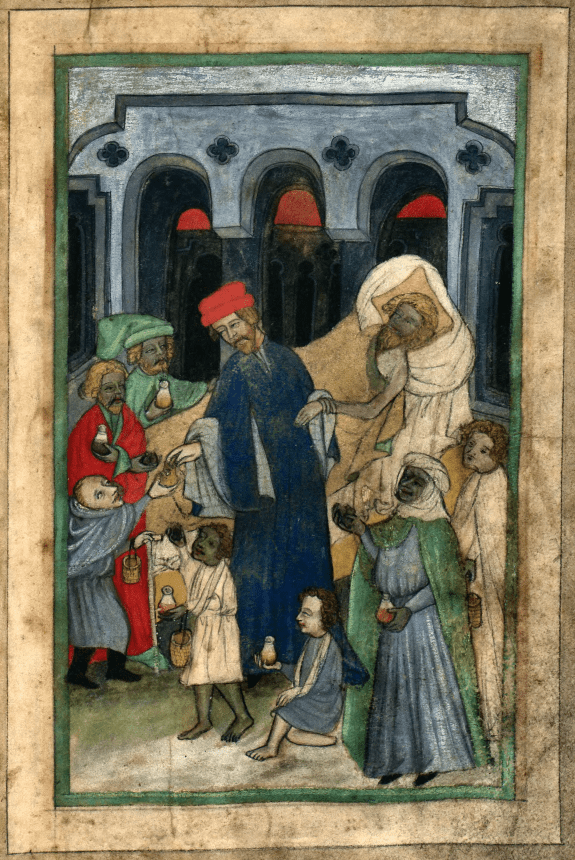
Avicenna at the sickbed, miniature by Walenty z Pilzna, Kraków (ca 1479–1480); image: jbc.bj.uj.edu.pl

The claim over Ibn Sina’s legacy is widespread. While Uzbeks and Tajiks both regard him as one of their own, Iranians also consider him Persian due to the language of his writings. In 2018, a bust of Abu Ali Ibn Sina was installed in front of the campus of the Autonomous University of Madrid as a gift from the Iranian embassy. The inscription on the bust reads, “Persian physician and philosopher.” Even Jewish scholars have cited him as part of their intellectual heritage. However, Ibragimov argues that Ibn Sina should be seen as a global figure rather than being tied to any single nationality. “He was a product of the Bukhara civilization, but his influence belongs to the world,” he told TCA.
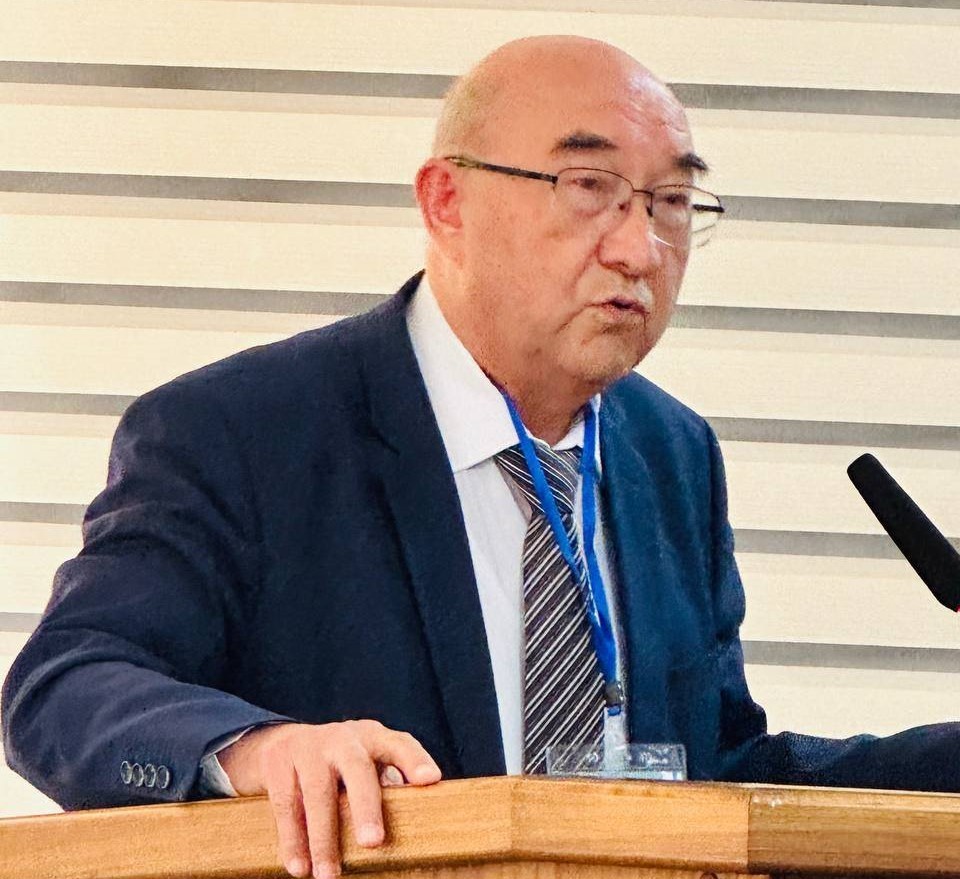

Bakhtiyor Karimov; image courtesy of the subject.

Similar discussions surround Al-Farabi, the renowned philosopher and scientist. Dr. Bakhtiyor Karimov, a leading researcher at the same institute, believes the evidence is clearer in Al-Farabi’s case.

Karimov argues that Al-Farabi’s nationality is not ambiguous. “His full name — Muhammad ibn Muhammad ibn Tarkhan ibn Uzlak Farabi at-Turki — indicates his Turkic origins. Historians of the time, such as Ibn Abu Usaybiya, explicitly referred to him as a Turkic.”

Karimov highlights that national identities were fluid in that era, and the names of distinct Turkic peoples emerged only much later. “Thousands of years ago, both Kazakhs and Uzbeks were named after a single Turkic people. National names appeared later; this was a slow process. The division into separate nations occurred about 2,500 years ago, but there are still about 20 Turkic peoples who speak a language closely related to each other. It is inappropriate to argue about whether a scientist is an Uzbek or a Kazakh – Farabi was a scholar of the Turkic world.

Pages from a 17th-century manuscript of al-Farabi’s commentary on Aristotle’s metaphysics; image: Bodleian Library, University of Oxford.

“Not only Kazakhs and Uzbeks, but also representatives of Central Asia and all Turkic civilizations, and, of course, all of humanity, can be proud of Farabi. Studying Al-Farabi and his works would lead people to ask new questions about historical events. In my view, people would make a discovery through learning the scholars works, they would invent the O‘rtaturk tili [Averaged Turkic language], a language that would be understandable for all Turkic peoples,” notes Karimov. He believes that a shared linguistic system would help unify Turkic-speaking nations and strengthen cultural ties.

“There are around 300 million Turkic speakers worldwide. Many of these languages share a high degree of mutual intelligibility, with common words and similar grammatical structures. By standardizing these shared elements, we could create a language that would be understood by all Turkic peoples,” he explained.

Karimov first formulated this idea of the Averaged Turkic language with his colleague Shoahmad Mutalov 51 years ago, but due to political constraints at the time, they could not openly promote it. However, in 1992, after Uzbekistan gained independence, they published a book titled O‘rtaturk tili (The Averaged Turkic Language) to further elaborate on their concept.

In a recent speech, Karimov suggested that the Averaged Turkic Language could become a world language. “Six presidents of independent Turkic states (Turkish, Azerbaijani, Turkmen, Uzbek, Kyrgyz, Kazakh) might write a letter to UN Secretary-General, Mr. António Guterres, requesting to include the Averaged Turkic language among world languages. Because about 150 million people speak Russian, and about 75 million speak French as native languages. About 300 million people speak various Turkic languages, but as I said above, speakers of these languages can understand each other 70-80% without an interpreter.”

TCA will explore this idea in greater depth in an upcoming article, examining its potential impact on cultural and linguistic unity among Turkic nations.

——-

Experts agree that the intellectual achievements of Ibn Sina, Al-Farabi, and other scholars of the 9th-12th centuries belong to all of humanity. Doctor of Historical Sciences Mirsodiq Is’hakov emphasizes the importance of unity rather than division: “The civilization of that time belongs to everyone. Our cultural past is shared. The scientists of that period are a collective heritage.

Language played a key role in the dissemination of knowledge. In particular, Arabic and Persian or Tajik were widely used in the Middle Ages, and Turkic languages also played a special role in cultural processes. “In those times, Persian was widely used for administrative and scholarly work. Even in Babur’s court in India, Persian remained the official language until 1858. But this does not mean everyone was Persian or Tajik,” Is’hakov clarified.

The debate over nationality may continue, but one thing remains clear: these scholars’ legacies transcend borders, enriching not just Central Asia but the entire world.
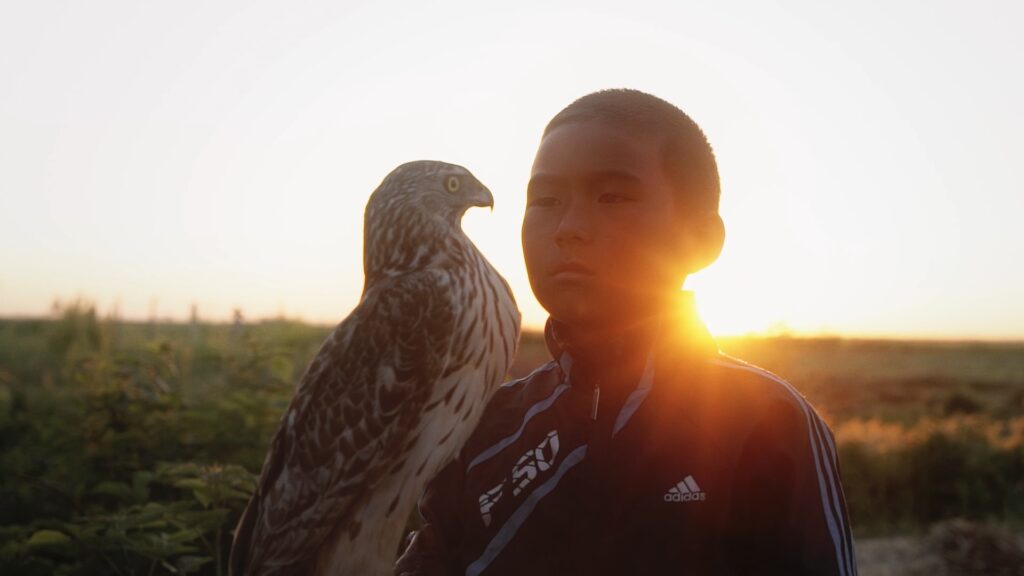

Segiz: Exploring Kazakhstan’s Beauty on the Road Less Traveled

The Times of Central Asia’s cinematographer for the World Nomad Games, Ilyas Otan, is on a mission to put Kazakhstan’s tourism on the map. An independent film producer and fixer, Otan took a bold step to showcase his vision, producing Segiz with director Almas Maksut, a captivating short documentary that brings together eight international travelers to uncover the secrets of a mysterious mountain lake in Central Asia. The film premiered at the 2021 Eurasian Film Festival and snagged the Best Documentary award at Czechia’s International Road Movie Festival. Now, it is available to stream.

A Werner Herzog quote opens the film, setting the tone for a brooding, atmospheric nod to late sixties and early seventies indie cinema. It’s not about the plot or commercial tourism — it’s all about ambiance, feelings, and the road less traveled. The narrator paints Kazakhstan as a land steeped in epic history, from Genghis Khan’s sweeping conquests to the first nuclear test. Then the adventurers are introduced, and lured by the wild unknown they share what drove them to wander off the beaten path.

A vivid taste of Kazakhstan’s rich culture and rugged beauty, this film dives headlong into an existence deeply connected to nature. Sampling the charms of nomadic life such as camel milk, majestic falcons, galloping horses, and cozying up in yurts. It’s a meat lover’s paradise — not exactly a menu for vegans, vegetarians, or the fainthearted.

The soundtrack amplifies the sixties’ folky vibe, layering guitars, ukuleles, kalimbas, lutes, shakers, drums, harmonicas, and flutes for immersive incidental music. Two of the travelers, both talented singers and musicians, perform 20th-century ballads on the move, transporting listeners to long-lost worlds and forgotten eras.

It’s rare to see a short documentary road movie about Kazakhstan hit streaming platforms. You can now catch this unique short film on TV+, Megogo and venture into the pioneer tourism of Kazakhstan today.

Traditional Storytellers in Kyrgyzstan Face Scrutiny From Authorities

Asylbek Maratov is a performer of folk-style poetry in Kyrgyzstan, a form of cultural expression that dates from the time when nomads roamed Central Asia and involves music and improvisation, often delivered at ceremonies and other special events as well as on social media

Lately, Maratov and some other akyns, as these oral storytellers are known, have faced pressure in a country where the government is tightening up on expression as a way to ensure what it calls ‘national stability’. The tension points to sensitivities about how freely they can sing or talk about issues that they think are relevant to society as part of a tradition that is steeped in epic tales of the past and has been recognized by UNESCO as intangible cultural heritage.

Maratov said he got a warning from the State Committee for National Security for performing songs on political topics at a concert, the Kloop news organization reported this week. It said the performer commented about a caution from the state authorities on Facebook on Wednesday, though a link to the social media post says the content is unavailable.

“I received a warning, now may God help me. I don’t wish prison on anyone, let the people have joy,” Maratov said in the post, according to Kloop.

Maratov has previously performed his craft at the World Nomad Games, an event that celebrates culture and sports in Central Asia and is held every two years. He has commented on corruption, a sensitive topic for a government that has promised to curb graft but faces questions about transparency and accountability.

Late last year, President Sadyr Japarov signed a new law that toughens punishments and restrictions, for example, barring people convicted of corruption from holding state and municipal jobs. The president has said that his family members won’t get mixed up in state affairs, but reports such as the one last year that his son planned to build the biggest golf course in Central Asia raised some concerns about business ethics.

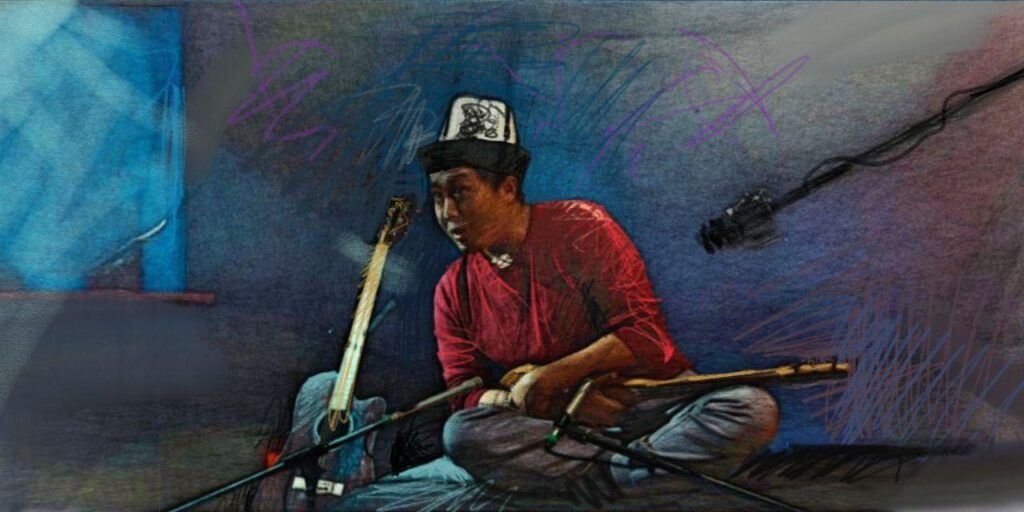
Akyns draw from a tradition that goes back centuries, evoking history, philosophy, and spirituality in their commentaries and sometimes engaging in competitions similar to rap battles. They play instruments such as the Kazakh dombra or Kyrgyz komuz. There is a school for akyns in Kyrgyzstan. They are able to reach a much wider audience than in the past because of YouTube and other social media platforms, and a few in Kyrgyzstan have directed sharp criticism at their country’s leadership.

This month, Kyrgyzstan’s Supreme Court upheld a lower court’s sentence of three years in prison for Askat Zhetigen, an akyn who was found guilty of calling for the violent seizure of power, the 24.kg news service reported. Zhetigen had used harsh language while criticizing the authorities on social media.

Kloop, the investigative news outlet that reported on the warning against Maratov, was closed under a court order in Kyrgyzstan last year in what media advocates said was a targeting of journalists and a shrinking of free speech in the country. Kloop continues to publish online. President Japarov has said the government is going after people and institutions that engage in slander and false information.

The climate for expression in Kyrgyzstan appears to have been more expansive a few years ago than it is now. In 2022, in an interview published on the CABAR.asia news site, Maratov said:

“There is no censorship against akyns. Akyns have raised essential social questions for a long time, and I don’t think anything has changed now because we have the freedom of speech, which is valuable to us. We criticize the authorities, raise painful questions.”

Kazakhstan’s Altyn-Emel Named Among World’s Most Incredible National Parks

Kazakhstan’s Altyn-Emel National Park has been ranked in the world’s top 10 most impressive national parks outside the United States, according to a recent article in the American travel magazine Travel + Leisure.

The article praised the park’s natural diversity, rich wildlife, and distinctive landscapes. Among the standout attractions highlighted were the Singing Barchan sand dune, the Saka-era burial mounds at Besshatyr, the Kapshagai Reservoir, and the Sholak Mountains, a favored destination for birdwatchers.

“In Kazakhstan’s Altyn-Emel National Park, you can encounter rare and endangered species such as the Przewalski’s horse and the snow leopard,” the article explains.

@altynemel.kz/Sakka burial mounds

A Park of History and Biodiversity

Established in 1996 in Kazakhstan’s Zhetysu region, in the east of the country, Altyn-Emel National Park spans 307,600 hectares, having expanded from its original area of 209,000 hectares. The park is situated in the Ili River valley and encompasses desert plains, the foothills of the Dzungarian Alatau, and isolated rocky outcrops. The name Altyn-Emel means “Golden Saddle.”

The park experiences a sharply continental climate, with dry, hot summers and limited annual precipitation of just 300-330 millimeters. Its varied landscapes include sand dunes, clay formations, and mountain zones composed of ancient Paleozoic rock, some of which date back 400 million years.

@altynemel.kz/The singing barchan

A Sanctuary for Rare Flora and Fauna

Altyn-Emel is home to more than 1,800 species of plants, including 21 listed in Kazakhstan’s Red Book of endangered species. Unique vegetation includes black and white saxaul, ironwood groves, and the wild Sivers apple tree, an ancestor of modern cultivated apples.

The park hosts 393 species of vertebrates: 78 mammals, 260 birds, 25 reptiles, four amphibians, and 26 species of fish. Among the rarest animals are argali sheep, goitered gazelles, kulans, and snow leopards. The park is especially proud of its Turkmen kulan population, reintroduced in 1982, which now numbers more than 2,000 individuals.

@altynemel.kz/Petroglyphs

Nature’s Wonders

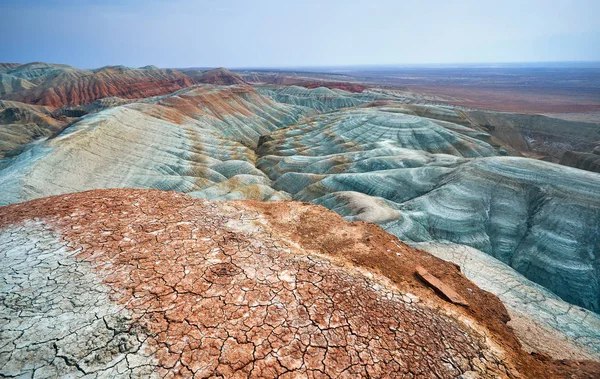
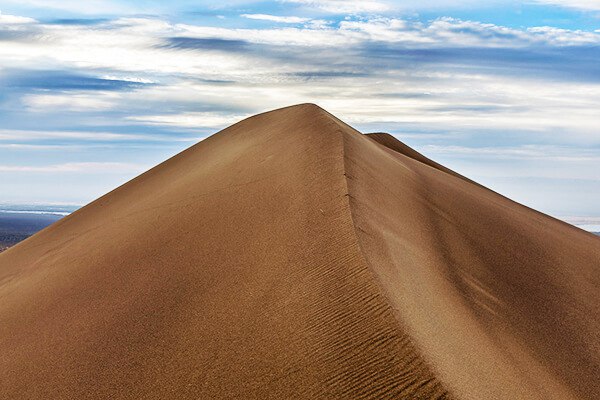
The park’s most iconic feature is the Singing Barchan, a sand dune stretching 1.5 kilometers and rising to 130 meters in height. In dry weather, the dune emits a humming sound reminiscent of organ music. Other geological and historical landmarks include the multi-colored Aktau clay mountains, the volcanic Katutau rocks, Chokan Valikhanov’s spring, and the Besshatyr necropolis of Saka nobility. Ancient petroglyphs in the Taigak area are also of interest to visitors.

Promoting Kazakhstan’s Natural Heritage

Efforts to promote Kazakhstan’s national parks internationally continue through initiatives such as the Qazaq National Parks project. In 2024, an exhibition in New York showcased a digital display of the country’s natural wonders. Among the highlights was the book Ile-Alatau Stories, a collection chronicling the lives of individuals committed to conservation efforts.

Global Recognition

Altyn-Emel shares its top-10 ranking in Travel + Leisure with other spectacular national parks:

  • Galápagos National Park (Ecuador)
  • Mana Pools (Zimbabwe)
  • Plitvice Lakes (Croatia)
  • Killarney National Park (Ireland)
  • Kaz Dağları National Park (Turkey)
  • Rishiri-Rebun-Sarobetsu National Park (Japan)
  • Bandhavgarh National Park (India)
  • The Azores (Portugal)
  • Namib-Naukluft National Park (Namibia)

Kazakhstan Mandates Sports Federations to Help Detect Extremism

Sports federations in Kazakhstan will now be required to assist in preventing extremism and terrorism, under new provisions in the updated Law “On Physical Culture and Sport.” The amendment stems from concerns over the growing influence of religious movements in the sports environment, according to Vice-Minister of Tourism and Sports Serik Zharasbayev.

Speaking to reporters on the sidelines of a Senate session, Zharasbayev explained that the measure is being implemented in cooperation with the National Security Committee.

“This provision was introduced in collaboration with the National Security Committee due to the need to address emerging risks. We are working within the framework of the Anti-Terrorist Center and have already developed a roadmap through 2027,” he said.

Previously, sports federations were not involved in national security matters, but Zharasbayev stated that “the time has come” for them to take part in identifying potential threats and reporting relevant information to state authorities.

Currently, the focus is strictly on preventive measures. In April, specialists from the Anti-Terrorist Center will begin traveling to the regions to provide detailed briefings on the new requirements.

“By the end of April or early May, we’ll meet with all federations to clarify these norms. For now, it’s solely about prevention,” he added. The government also plans to involve theologians with experience in countering extremist ideologies as part of the outreach.

The urgency of the issue was underscored by President Kassym-Jomart Tokayev during the fourth session of the National Kurultai in Burabay in early March.

“Mazhilis deputy Yermurat Bapi has raised concerns about the country’s religious climate. Kurultai members Daniya Kydyrbayeva and Olzhas Suleimen have also noted the growing influence of non-traditional religious movements among youth, especially in the sports sector,” Tokayev said.

He reaffirmed that while freedom of religion is constitutionally protected, “disorder and permissiveness are unacceptable.” The president called for preventing destructive ideologies and using regulatory frameworks to promote national unity.

The new obligation for sports federations is part of a broader legislative package recently passed by the Senate in two readings. According to Deputy Asem Rakhmetova, the amendments aim to improve legal frameworks in the field of physical culture and sports, while also clarifying the division of powers between central and local executive bodies as part of ongoing administrative reforms. In total, the bill modifies two codes and five laws.

Similar concerns have arisen outside Kazakhstan. In Russia, State Duma deputy Sergei Mironov recently requested that the Prosecutor General’s Office investigate MMA clubs for possible links to radical groups. He warned that the “uncontrolled functioning” of such organizations could pose a threat to state security, citing reports that terrorists involved in the Crocus City Hall attack had trained at one such club.

Kazakhstan’s sports organizations are now being tasked with responsibilities beyond their traditional scope. As Zharasbayev put it, “Federations must pay attention to such risks”, and this is no longer optional, but a formal obligation under the law.

Uzbekistan Tops Central Asia in 2024 Healthcare Ranking

Uzbekistan has been ranked as having the best healthcare system in Central Asia, according to the 2024 Health Care Index published by CEOWORLD magazine. The country placed 64th globally with a score of 36.26. Kazakhstan followed in 78th place with 34.28 points, while Turkmenistan ranked 95th with 27.3 points.

The index evaluates 110 countries based on the quality of healthcare services, including infrastructure, the competency of medical professionals, and access to care. Taiwan topped the global list with a score of 78.72, while El Salvador came in last with 18.6 points. Other countries ranking in the top 10 include South Korea (2nd), Sweden (5th), and Germany (8th).

Healthcare and Tourism Growth

The report coincides with a notable increase in foreign tourism to Uzbekistan. In January–February 2025, the country welcomed 1.3 million international visitors, a 37.1% increase compared to the same period in 2024. Officials suggest that improved healthcare services could further enhance the country’s appeal as a travel destination, potentially boosting medical and wellness tourism.

Uzbeks Rank High in Global Happiness Index

In another recent international ranking, Uzbekistan also stood out for overall wellbeing. The Centre for the Study of Wellbeing at the University of Oxford and the Gallup Institute placed Uzbekistan 53rd in its global happiness index, above Kyrgyzstan and Tajikistan.

The study includes two key components. The first is based on respondents’ self-assessment of life satisfaction on a scale from 0 to 10; in Uzbekistan, the average score was 6.2. The second examines responses related to charitable giving, lawfulness, helping strangers, and reactions to emotional experiences, both positive and negative.